
Keep people and pets out of water that may touch outlets or appliances. Do not turn power on in a flooded room until a licensed electrician checks it. If you smell gas, leave and call 911. Then stop the source if it is safe, photograph everything, and call (845) 555-0147.
What the Service Includes in Poughkeepsie
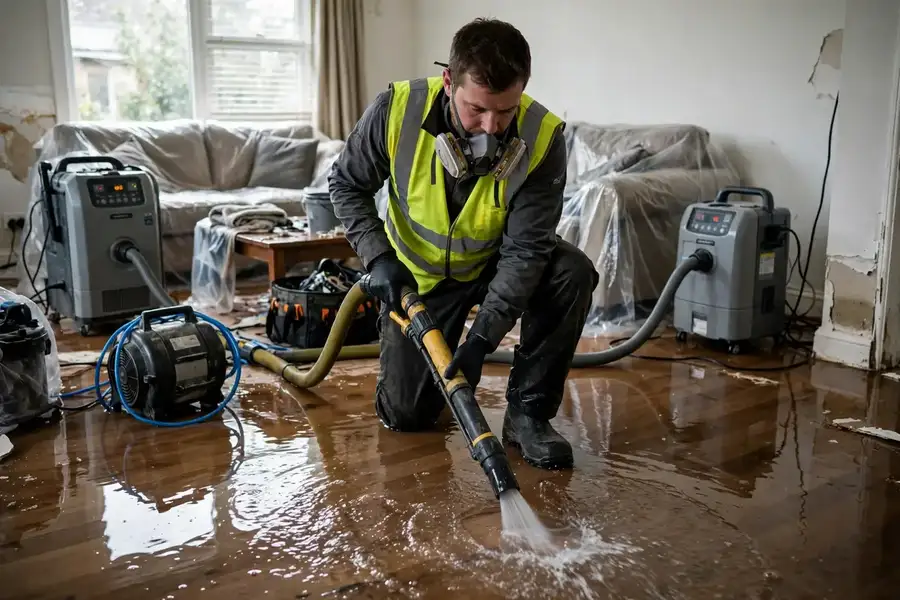
Good water damage restoration Poughkeepsie New York work is a sequence, not a single visit. Water is removed, hidden moisture is found with meters, the structure is dried to a measured goal, contaminated material is handled safely, and only then is anything rebuilt. Each visit should leave readings behind, so you can see the drying curve rather than trust a promise.
- Emergency water damage restoration response
- Water extraction and removal
- Structural drying and dehumidification
- Moisture mapping with daily readings
- Contents drying and cleaning
- Mold prevention after water damage
- Insurance claim documentation
- Fall Kill and riverfront flood response
- Basement water removal and drying
- Sewer backup cleanup
- 24/7 emergency response
- Written scope of work
- Daily drying logs
- Direct insurance billing
- Reconstruction and repairs
The First Six Steps, in Order
Stop the water before anything else
If it is safe, close the main valve for a burst pipe or turn off the appliance feeding the leak. Keep people away from water near electrics and call a licensed electrician if a flooded area may involve outlets or the panel.
Call for help and tell the insurer
Call (845) 555-0147 for emergency extraction, then notify your insurer promptly and note the claim number, the time of the call and the name of the person you spoke with.
Photograph everything before anything is moved
Take wide and close photos of every wet room, the source, and damaged belongings before cleanup starts. This record supports the claim and the written scope.
Get a written scope with drying logs before work starts
Ask for a written scope naming rooms, materials, equipment and the drying goal, with daily moisture readings logged until materials read dry.
Dry the structure before rebuilding
Do not close walls, lay floors or paint over damp material. Rebuild only once the structure reads dry, or trapped moisture can feed mold and ruin the new work.
Keep every record for the insurance claim
Keep the contract, permits, photos, receipts, drying logs and insurer letters together. Regulation 64 and NFIP clocks run from documents, so the file matters.
Why Poughkeepsie Homes Get Wet
Poughkeepsie sits on the east bank of the Hudson River, about 75 miles north of Manhattan. The City was chartered in 1854, covers about 5.14 square miles, and counted 31,577 people in the 2020 Census, with a 2024 estimate of 32,340. The City and the Town of Poughkeepsie are separate municipalities, and that split matters for permits and services.
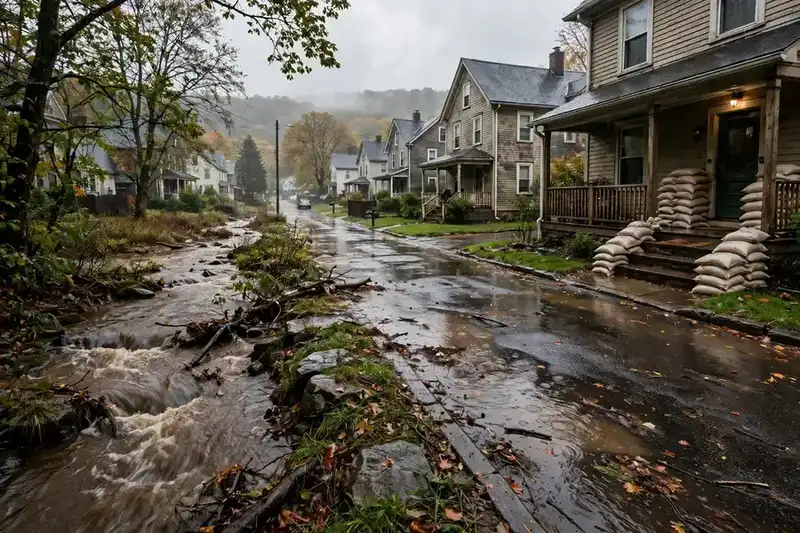
The Fall Kill runs through the city to the Hudson. Local crews point to Fall Kill flooding, Hudson waterfront flooding, combined sewers and undersized storm drains as the repeat causes after heavy rain, along with the everyday causes everywhere: burst pipes in cold snaps, failed water heaters, leaking roofs, washing machine hoses and sump failures in basements. Older housing makes each cause worse, because old plumbing, stone or block foundations and finished basements give water more places to hide.
Basements are the problem room
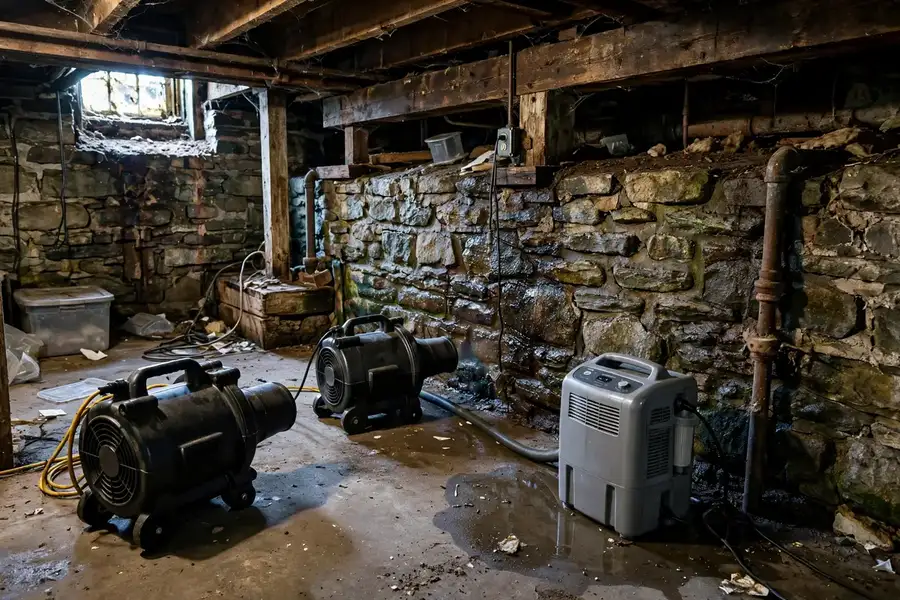
A Poughkeepsie basement often holds the furnace, water heater, breaker box, washer, dryer and years of stored belongings in one below grade space. Pump it, dry it and check every system. Ask a licensed plumber about sump discharge and backwater valves for your home, and never send sump water into the sanitary sewer.
What Ida taught Dutchess County
On Sep 1 and 2, 2021, the remnants of Hurricane Ida dropped 3 to 7 inches of rain, with the southern half of Dutchess County highly impacted, according to the National Weather Service in Albany. The county saw 35 roads damaged or closed, at least one bridge washed out, a state of emergency, a Metro-North shutdown, up to 2,000 customers without power, and a federal major disaster declaration for Dutchess County. The Dutchess County Hazard Mitigation Plan, kept by the county Department of Emergency Response, carries a City annex and a Town annex for exactly this kind of event. No verified local figures were found for Irene or Lee in Poughkeepsie, so this page makes no claim about them.
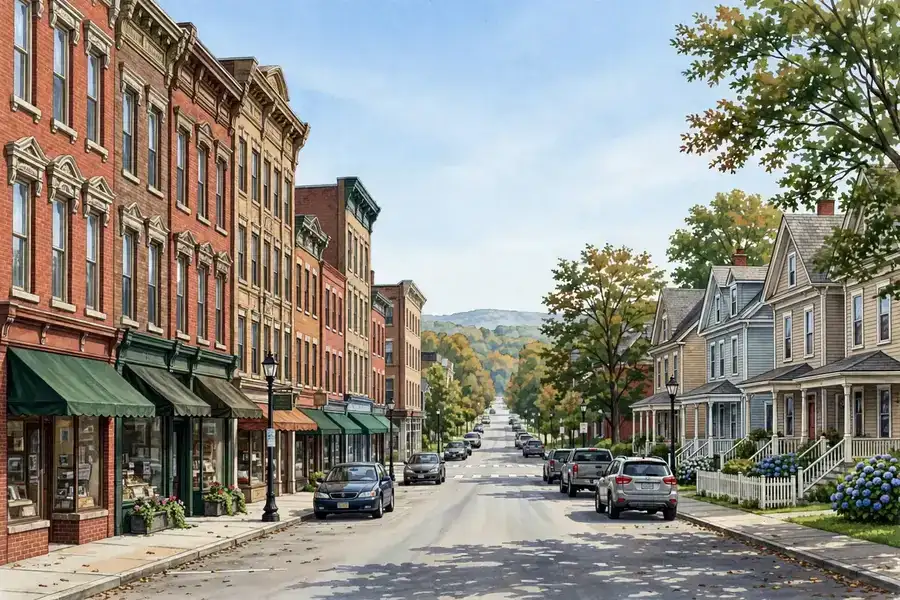
Neighbourhoods and nearby areas covered
- Poughkeepsie
- Arlington
- Spackenkill
- Red Oaks Mill
- Southside
- Union Street
- Northside
- College Hill
- Fairview
- Hyde Park
- Wappingers Falls
- Beacon
- Fishkill
- East Fishkill
- Rhinebeck
- Dutchess County
Nearby colleges shape the rental stock around the city. Marist, Vassar and Dutchess Community College are in the Town of Poughkeepsie, and the Culinary Institute of America is in Hyde Park, about 3 miles north. None of them sits inside city limits, and this page says nearby on purpose. Landlords and tenants near those campuses should still agree in advance who calls, who pays and who keeps the records when a pipe bursts.
The Walkway and the riverfront
The Walkway Over the Hudson opened in October 2009, with its east entrance at 61 Parker Ave, 12601. Riverfront and low lying homes near it should know their flood history, keep drains clear, test sump pumps before storm season, and move storage off the basement floor.
Watch: Two Local Videos, Linked Not Embedded
This page links out to video rather than embedding it, so the page stays fast. Both videos are from other local firms, so treat them as general background, not as this service.
- First Steps to Take When You Experience Water Damage in the Hudson Valley, First Call Restoration, 7 minutes 32 seconds, Nov 7, 2023. A real person on camera walks through first steps for the Hudson Valley, and the description confirms Poughkeepsie coverage.
- PuroClean of Poughkeepsie promo, 57 seconds, Oct 21, 2024. A short competitor promo focused mainly on fire services, useful only to see how a local firm presents itself.
A Hudson Valley homeowner on Reddit r/homeowners asked on Sep 18, 2023, Found mold in basement, how concerned should I be. That post was later deleted by its user, so only the title survives. It is answered in the FAQs below with that caveat stated plainly. No Poughkeepsie specific question was found on Reddit, Quora, WikiHow or Medium in the verified research, so none is invented here.
Permits, Contracts, Mold Law and Insurance Clocks
Permits in the city
City of Poughkeepsie Building Department, 62 Civic Center Plaza, City Hall, 2nd Floor, Poughkeepsie, NY 12601, phone (845) 451-4007. Hours: Monday, Wednesday and Friday 8:30 to 4:30; Tuesday and Thursday 8:30 to 3:30. The department handles permits for most construction including alterations and renovations, roofing, siding, fences, windows and doors, pools, electrical work and alarms, and the city has a Floodplain Development Permit Application. State exemption wording is discretionary, and whether the city has adopted specific exemptions was not verified, so ask the department about your exact job. No emergency work filing deadline was found, so none is published here.
Your contract
General Business Law section 771 requires a written, signed contract in plain, legible English, with a copy for you before work starts. It must cover contractor details, dates, work and materials, lien and deposit notices, a progress payment schedule, cancellation rights to midnight of the third business day after signing, and an insurance disclosure. The section sets no maximum deposit.
Mold work
Article 32 requires licensed assessors and remediators for mold projects over 10 square feet, with the assessor independent of the remediator, standards under section 946, and reports kept for 3 years. Dry fast to avoid reaching that stage: the EPA guidance is that mold will not grow in most cases if wet items are dried within 24 to 48 hours.
Insurance clocks
Regulation 64, section 216.6: the insurer has 15 business days after proof of loss to accept or reject, then 5 business days to pay after agreement. Insurance Law section 2618 is disaster only: 15 business days to decide and 4 business days to pay. NFIP: proof of loss within 60 days of the loss, a 30 day wait before a new flood policy usually takes effect, limited basement cover, and program authorisation scheduled through Dec 11, 2026. Help lines: Department of Financial Services (800) 342-3736 and the disaster hotline (800) 339-1759.
New York City only rules do not apply in Poughkeepsie. Follow the city Building Department and New York State law instead.
Water in your Poughkeepsie home right now?
Call for extraction and drying today, with a written scope and daily drying logs.
How to Compare Local Companies
Ranking locally today are SERVPRO of Western Dutchess County at number 1 and Paul Davis of Mid-Hudson Valley at number 2 in the fresh SEMrush check on Nov 24, 2026, followed by Yelp, KPM, PuroClean and others. KPM published the most locally detailed page, naming the Fall Kill, combined sewers and city neighbourhoods. Compare every firm on the same points: written scope, daily drying logs, mold licensing where needed, permit handling, contract terms under section 771, and a finish point based on moisture readings. Response time claims vary by firm and were not treated as verified facts here.
Room by Room: What Drying Really Involves
Every room fails differently. Kitchens hide leaks under dishwashers and fridge lines, and cabinets trap moisture against walls. Bathrooms leak at tubs, toilets and supply lines, often for weeks before a stain shows. Living rooms suffer when a pipe above bursts or a roof leak finds the ceiling. Bedrooms matter most for health, because people sleep for hours in the air of a damp room. A good crew maps each room separately, sets a drying goal for each material, and logs readings room by room until each one passes.
Winter Pipes, Summer Storms
Dutchess County winters freeze exposed pipes in crawl spaces, exterior walls and unheated additions. When a frozen pipe splits, the flood often starts at thaw, not at the freeze. Summer brings the other pattern: short, heavy rain that overwhelms drains, the Fall Kill and low streets near the Hudson at the same hour. Prepare for both. Insulate exposed pipes, know the main valve, test the sump pump with a bucket of water each spring, and keep the number (845) 555-0147 saved before you need it.
Tenants, Landlords and Who Does What
In a rental, the tenant should report water fast, protect belongings and allow access. The owner is usually responsible for the structure, plumbing and drying, and for keeping the home habitable. Put notices in writing, keep copies, and photograph the damage together where possible. Students renting near the nearby colleges in the Town and in Hyde Park face the same duties. Disagreements go faster when the drying logs and photos already exist.
Shops, Offices and Small Buildings
A wet shop on Main Street or a small office near the riverfront loses money every closed day. Commercial drying adds after hours extraction, protection for stock and equipment, and documentation for business interruption claims. Ask for a phased plan that dries the public areas first where safety allows, and confirm who signs off on reopening each area. Permits for commercial repairs run through the same City Building Department.
Sewer Backup: The Job Nobody Should Rush
Sewage changes the rules. Porous items that sewage touched often cannot be cleaned safely and must go. Hard surfaces need cleaning and sanitising, and the air system may need checking before reuse. Keep children and pets out until clearance, bag waste safely, and wash hands and tools after any contact. If the backup came from a public line, report it to the city as well as cleaning your own space, so the record exists for the next storm.
What a Fair Written Scope Looks Like
A fair scope names the source and how it was stopped, lists each room and material affected, states what will be removed and what will be dried in place, lists equipment by room, sets the drying goal in readings, promises daily logs, and names the rebuild steps separately from drying. Vague scopes protect nobody. If a scope has no readings, no room list and no finish point, ask for a better one before you sign, and remember your section 771 contract rights.
Fall Kill Flooding on the North Side
The Fall Kill runs through the city toward the Hudson River, and the north side feels it first when rain is heavy. Parts of the channel pass between old stone channel walls, and streets in the 1st, 3rd and 5th wards sit close to the water. Local crews name Fall Kill flooding, combined sewers and undersized storm drains as the repeat causes when homes on this side of the city take water. That mix is why water damage restoration poughkeepsie new york on the north side so often starts with drain water and creek water arriving in the same hour, not with a single clean leak inside the house.
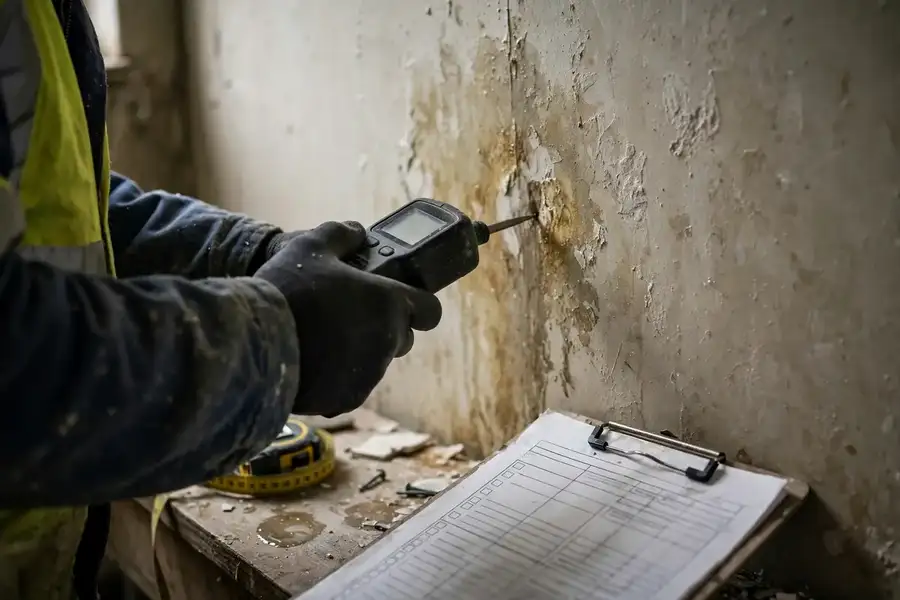
Extraction comes before drying, and the order matters in the Fall Kill corridor on the north side. Standing water is pumped or vacuumed out first, because air movers cannot dry a puddle through basement floors, lower walls and stored belongings. Once the free water is gone, the crew reads the room with meters and marks the wettest points on a simple map. That map decides where equipment goes and how long it stays. In water damage restoration poughkeepsie new york, the map is not paperwork for its own sake. It is the plan the owner can check at every visit, reading by reading, until each marked point reaches its goal.
Air quality during drying deserves plain talk in the Fall Kill corridor on the north side. Fans move air, and air in a wet building can carry dust and spores from disturbed material. Rooms being dried should stay closed to the rest of the house where possible, and people with breathing problems should sleep in the driest part of the home. If visible growth is found and the area is over 10 square feet, New York Article 32 licensing applies to the mold work. Ask early, because the answer changes who may do that part of the job.
Documentation starts before the first pump in the Fall Kill corridor on the north side. Photograph every room wide and close, the source of the water, the street or drain outside where it matters, and basement floors, lower walls and stored belongings before anything is moved. Then start the written list: room, item, and what the water did to it. In water damage restoration poughkeepsie new york, that first hour of photos carries the whole claim, because it shows the loss as it was found, not as it was remembered after a week of drying and decisions.
Storage habits decide how much a flood can ruin in the Fall Kill corridor on the north side. Keep boxes off basement and ground floors on shelves or pallets, store papers and photos high, and leave a clear path to the main valve, the panel and the sump. Where basement floors, lower walls and stored belongings meet the floor, a small rise in storage height is the difference between wet shelves and ruined records. After this job, restock the room the way the water taught you to. The next event, if it comes, should find less to hurt.
Judge the work in the Fall Kill corridor on the north side by its finish point. A crew that can state the drying goal for basement floors, lower walls and stored belongings in readings, and show the log moving toward it, is describing a measurable job. A crew that offers only a number of days is describing a hope. Ask what happens if a reading stalls, and who decides that a material must come out instead of drying in place. The answers tell you how the firm thinks. In water damage restoration poughkeepsie new york, those questions are welcome at the first visit, and the answers go into the scope.
After any Fall Kill rise, walk the lowest rooms first and note the highest line the water reached.
Hudson River Riverfront Properties and Flood Risk
Poughkeepsie stands on the east bank of the Hudson River, and the streets nearest the water sit on the lowest ground in the city. Riverfront homes and small buildings there face a double risk: river levels that stay high after storms upriver, and local rain that cannot drain away while the river is up. Ground floors, basements and utility rooms take the water first. Owners who book water damage restoration poughkeepsie new york for a riverfront property should expect the crew to ask about past high water, drain behaviour and sump history before a single fan is placed, because the source decides the whole drying plan.
Drying is set by material, not by the calendar, and the riverfront blocks near the Hudson is no exception. ground floor walls, basement slabs and utility rooms each give up moisture at a different speed, so the crew sets a goal for each one and reads them separately. A floor can pass while the wall behind it is still wet, and a room can feel dry while a cavity is not. The equipment in water damage restoration poughkeepsie new york stays until the slowest material in the room reaches its goal. That patience is what stops a second round of work a month later, when a closed room starts to smell.
Do not rush the cleanup of ground floor walls, basement slabs and utility rooms in the riverfront blocks near the Hudson with household chemicals mixed at the sink. Bleach and other cleaners react badly in combination, and strong products on the wrong surface add damage to damage. The crew scope should name what will be cleaned, with what, and what will be removed instead. Where water came from river water and storm water pushing into low ground, cleaning follows removal of the source first. A room cleaned before the leak is fixed is a room that will be cleaned twice.
Do not throw damaged items away before they are recorded in the riverfront blocks near the Hudson, unless they are a health hazard that cannot wait. Photograph them, list them, and where the insurer wants to see them, keep them bagged in one place until the visit is done. This applies to ground floor walls, basement slabs and utility rooms removed during the work as well as to belongings. A short note of what was discarded, when and why, signed by the crew, closes the gap. In water damage restoration poughkeepsie new york, disposal is documented like everything else, because an empty room proves nothing by itself.
Maintenance dates matter in the riverfront blocks near the Hudson. Water heaters age, hoses harden, sump pumps tire and roof seals crack on a schedule nobody writes down, until a failure writes it for them. Keep a simple home log with install years for the heater, the washer hoses, the sump and the roof work, and replace on age rather than on failure where the item is cheap and the flood is not. The log takes ten minutes a year. It is the dullest page in the house and one of the most valuable.
Compare firms on the same points in the riverfront blocks near the Hudson: written scope, daily drying logs, honest talk about what cannot be saved, licensing where mold work needs it, permit handling for the rebuild, and contract terms that match New York law. Response time matters in an emergency, but it is the first hour of a job that runs for days. The cheapest promise and the fastest promise are both weak evidence. In water damage restoration poughkeepsie new york, the strongest evidence is a plan you can read and a log you can check.
Keep a simple dated note of every high water event at the property, even the ones that stayed outside.
Hurricane Ida in Dutchess County: What the Record Shows
The National Weather Service in Albany recorded the Ida remnants on Sep 1 and 2, 2021, with 3 to 7 inches of rain and the southern half of Dutchess County highly impacted. In Dutchess County, 35 roads were damaged or closed, at least one bridge was washed out, a state of emergency was declared, Metro-North shut down, up to 2,000 customers lost power, and a federal major disaster was declared for Dutchess County, with minor river flooding including Roundout Creek and Wappingers Creek. The one fatality noted on that Weather Service page was in northwest Connecticut, not in Dutchess County. Homes dried under water damage restoration poughkeepsie new york after that storm taught the county how fast small creeks and drains can fail together.
Air movement and dehumidification work as a pair in homes across Dutchess County. Air movers push dry air across roads, bridges, basements and ground floors so moisture leaves the surface, and dehumidifiers pull that moisture out of the air before it settles somewhere else in the house. Placement follows the moisture map, and the setup changes as readings change. A good crew moves equipment during the job instead of leaving the first layout untouched for days. In water damage restoration poughkeepsie new york, those small daily adjustments are the difference between a room that dries in days and a room that stalls just above the goal.
Pets react to a flooded home before people do, and homes across Dutchess County is no different. Move animals to a dry, quiet room with their food and litter, and keep them out of work areas where cords, equipment and open materials wait. Photograph pet belongings that were ruined for the claim list, and wash or replace bedding that sat in the water. If the family must leave for a night, note where the animals went and keep the receipt. The claim file should read like the week actually happened.
Permits and papers belong in the same file as the photos in homes across Dutchess County. If the rebuild needs a permit from the local building department, the application and the approval go in the folder with the contract. If mold work over 10 square feet is involved, the assessment and clearance papers join them, kept for at least 3 years under Article 32. An owner who can hand over one complete file gets decisions faster. In water damage restoration poughkeepsie new york, the last visit includes a file check, so nothing the claim needs is left in a truck or an inbox.
Prevention in homes across Dutchess County starts with the path water took this time. If the entry was the remnants of Hurricane Ida on Sep 1 and 2, 2021, the fix list names that path first: the drain, the hose, the seal, the slope of the ground at the wall. Generic advice helps less than one honest look at your own building. Walk the route with the crew before they leave and ask what they would watch if this were their house. Write the answer down. A short, specific watch list, checked each season, prevents more water than any single device.
Rebuild promises should be separated from drying promises in homes across Dutchess County. The scope for drying ends at readings. The rebuild, floors, walls, cabinets and paint, is its own written agreement with its own permits and dates, and it starts only once the structure reads dry. Keeping the two apart protects the owner twice: the drying cannot be rushed to suit a rebuild date, and the rebuild cannot be blamed for moisture it did not create. In water damage restoration poughkeepsie new york, that separation is stated in writing before the first fan is placed.
Treat Ida as the planning case for this county: the rain total mattered less than how many systems failed at once.
The Dutchess County Hazard Mitigation Plan and Your Home
Dutchess County keeps a Hazard Mitigation Plan through its Department of Emergency Response, and the plan carries a City of Poughkeepsie annex, numbered 9.3, and a separate Town of Poughkeepsie annex, numbered 9.17, because the city and the town are separate municipalities. The research for this page found no adoption year stated for the plan, so this page states none. The plan matters to a homeowner because it is the county record of where water has hurt homes before and what the county intends to do about it. Reading your annex before storm season makes water damage restoration poughkeepsie new york faster when it is needed, because you already know your risk and your first calls.
Hidden moisture is the part of the job owners cannot see, and it decides the result in homes covered by the county plan. Water from the flood and storm risks the county plans for travels along framing, under floors and inside wall cavities, often well past the visible stain. Meters that read inside materials, not just on the surface, find that travel. Where readings stay high, a crew may lift a baseboard, open a small inspection point or remove a section that cannot dry in place, and the written scope should say why. In water damage restoration poughkeepsie new york, every opening is explained by a reading, never by habit.
Safety rules in homes covered by the county plan do not change with the size of the job. Keep people and pets out of water that may contact outlets, appliances or cords. Do not turn power on in a flooded area until a licensed electrician has checked it. If gas is smelled, leave the building and call 911 from outside. Treat every wet floor as slippery, every wet ceiling as heavy, and every unknown water source as contaminated until the crew says otherwise. These habits cost nothing and prevent the injuries that turn a property loss into a personal one.
Where a neighbour, a landlord or a tenant shares the loss in homes covered by the county plan, put notices in writing and keep copies. A shared wall, a shared drain or an upstairs bath means more than one household holds part of the story of the flood and storm risks the county plans for. Written notice with a date protects everyone, including the person who sent it. Photograph together where you can, and agree who keeps the master file. In water damage restoration poughkeepsie new york, shared losses go fastest when the record is shared too, instead of rebuilt from memory by each side.
Insurance readiness is part of prevention in homes covered by the county plan. Photograph each room in its normal state once a year, keep the policy and the claim numbers where a phone can reach them, and know whether flood cover is in place before the storm, remembering that a new flood policy usually carries a 30 day wait. Renters should hold their own contents cover and their own photo record. None of this dries a room. All of it decides how heavy the loss feels while the room is drying.
Ask who will actually be in the house in homes covered by the county plan. The person who scopes the job, the crew who run the drying and the people who rebuild may be three different teams, and the owner should know how readings and decisions pass between them. One named contact, one log, one file. Where a job involves the flood and storm risks the county plans for, ask what experience the team has with that exact kind of water. In water damage restoration poughkeepsie new york, clear handoffs are part of the service, because most drying failures are really communication failures.
Ask the county for the annex that matches your address, city or town, and keep it with your insurance papers.
Older Poughkeepsie Homes and Why Water Hits Them Harder
Much of Poughkeepsie was built long before modern drainage and vapour control. The city holds 19th century brick rowhouses and Victorians, rowhouses that share walls with the house next door, homes over old stone cellars, and post war capes on the outer streets. Freeze and thaw cycles work on old joints and masonry every winter, and shared walls mean a leak on one side can wet both homes. Stone cellars breathe moisture even in dry weeks. That is why water damage restoration poughkeepsie new york in an older Poughkeepsie home spends so long on hidden moisture: the building itself hides water in places a newer house does not have.
Contents need their own drying decisions in the older housing stock across the city. Furniture, rugs, boxes and appliances that met leaks and floods meeting old materials are sorted into what can be dried and cleaned in place, what should be moved out to dry, and what cannot be saved safely. The sorting is photographed and listed, because the list becomes part of the claim. Drying contents in a wet room slows the room itself, so the plan treats structure and belongings as one job with two tracks. That is how water damage restoration poughkeepsie new york keeps a family record of what was saved, what was lost and where each item went.
Children and older relatives need a clear rule while work runs in the older housing stock across the city: the wet rooms are closed rooms. Tape a simple note on the door if it helps. Keep medicines, food and bedding out of rooms being dried, and wash hands after handling anything the water touched. Where leaks and floods meeting old materials involved drains or soil, treat soft furnishings with extra care and ask the crew what can be cleaned safely. A calm household routine around the work keeps the job faster and the family healthier.
Receipts are claim documents, and the older housing stock across the city owners should keep every one: emergency work, temporary repairs, a night away from home, replacement of ruined essentials. Keep the paper and a photo of it, because ink fades and pockets empty. The written scope, the daily drying logs and the final readings join the same folder. When the adjuster asks what was done and when, the folder answers. That is the quiet strength of water damage restoration poughkeepsie new york: a loss that can be shown, step by step, without argument.
Know your shutoffs in the older housing stock across the city before you need them. The main water valve, the valves under sinks and behind toilets, the breaker panel and the gas shutoff should each be findable in the dark by every adult in the home. Label them. A valve that has not moved in years can seize, so turn the main valve once a year to keep it free, and note the date. When a pipe bursts at midnight, the person holding the torch should already know the route.
The final walkthrough in the older housing stock across the city is a reading, not a tour. Go room by room with the log, check stone cellars, plaster, hardwood and old pipework at the marked points, look behind doors and inside closets, and smell each room with the door closed. Anything that still reads high or smells wrong goes back on the list in writing before the crew leaves. Sign only for what has been shown. In water damage restoration poughkeepsie new york, the walkthrough ends with the complete file in the owner hands: scope, logs, final readings, contract and permits together.
In a shared wall rowhouse, tell the neighbour the same day you find water, because their side may already be wet.
Basement Flooding in Poughkeepsie, Step by Step
A Poughkeepsie basement often holds the furnace, the water heater, the breaker box, the washer and years of stored belongings in one below grade room, so one flood touches every system the house depends on. Stay out of standing water that may contact outlets, appliances or cords, and do not turn power on until a licensed electrician has checked the space. Once the room is safe, pumping, extraction and measured drying follow in that order. Many owners also talk with a licensed plumber about sump pumps and backwater valves in general terms. This page claims no code rule that requires either device. It presents them as options to discuss, which is the honest basis for water damage restoration poughkeepsie new york below grade.
The last day of drying in Poughkeepsie basements should look boring. Readings on furnaces, water heaters, breaker boxes and stored belongings sit at the goal, the log shows them holding there, and equipment comes out room by room rather than all at once. If one point still reads high, that point gets more time while the rest of the room is released. Owners should ask for the final readings in writing, with the date, before any rebuild is discussed. In water damage restoration poughkeepsie new york, the finish line is a set of numbers the owner keeps, not a feeling in the room on the day the fans stop.
Electrical care is its own step in Poughkeepsie basements. Water and wiring meet in basements, kitchens and laundry rooms, exactly where furnaces, water heaters, breaker boxes and stored belongings also need drying. Breakers for wet areas stay off until checked, extension cords never run through standing water, and drying equipment is plugged into dry circuits the crew has identified. If the panel itself got wet, only a licensed electrician decides what happens next. No drying deadline is worth a shock or a fire, and a careful crew will say so out loud.
Tell the insurer promptly, and write down the claim number, the date and time of the call, and the name of the person who took it. In Poughkeepsie basements, owners who keep a call log settle questions in minutes that otherwise take weeks of letters. Every later call goes on the same page: who, when, what was agreed. Where groundwater, sump failure and drain backup is disputed, that log plus the photo record is the owner evidence. In water damage restoration poughkeepsie new york, the file is treated as part of the work from day one, not as an errand after it.
Gutters, downspouts and grading do quiet work for Poughkeepsie basements. Water that is carried away from the foundation cannot press against it, and a downspout that ends at the wall undoes a season of good intentions. After heavy rain, walk the outside walls and note where water stands, where soil has sunk and where a drain cover sits buried in leaves. Those notes, fixed in dry weather, are prevention in its cheapest form. Ask the crew what they saw outside, because they read a building from the street as well as from the basement.
A written scope is the contract of the drying itself in Poughkeepsie basements. It names the source and how it was stopped, lists each room and the furnaces, water heaters, breaker boxes and stored belongings affected, states what will be removed and what will be dried in place, lists equipment by room, sets the drying goal in readings, and promises daily logs. Read it before you sign, and ask for any room or material that is missing from it to be added in writing. In water damage restoration poughkeepsie new york, the scope is the document both sides work from, so a vague scope is fixed at the start, not argued at the end.
Test the sump pump with a bucket of water each spring, before the heavy rain arrives.
Sewer Backup in Poughkeepsie: Inside the Home
Parts of Poughkeepsie are served by combined sewers, and in heavy rain a combined line can push water back through floor drains and the lowest fixtures in the house. Sewage water is contaminated, so the work inside the home follows stricter rules than a clean water leak: keep children and pets out, do not run more water into the drains, and expect porous materials the water touched to be removed rather than cleaned. Document everything with photos, times and a written list, and tell the insurer promptly, because the cause and the timing shape the claim. Report a suspected public line problem to the city as well. Careful records turn water damage restoration poughkeepsie new york after a backup from an argument into a file.
Extraction comes before drying, and the order matters in homes on streets served by combined sewers. Standing water is pumped or vacuumed out first, because air movers cannot dry a puddle through flooring, lower drywall and anything porous the water touched. Once the free water is gone, the crew reads the room with meters and marks the wettest points on a simple map. That map decides where equipment goes and how long it stays. In water damage restoration poughkeepsie new york, the map is not paperwork for its own sake. It is the plan the owner can check at every visit, reading by reading, until each marked point reaches its goal.
Air quality during drying deserves plain talk in homes on streets served by combined sewers. Fans move air, and air in a wet building can carry dust and spores from disturbed material. Rooms being dried should stay closed to the rest of the house where possible, and people with breathing problems should sleep in the driest part of the home. If visible growth is found and the area is over 10 square feet, New York Article 32 licensing applies to the mold work. Ask early, because the answer changes who may do that part of the job.
Documentation starts before the first pump in homes on streets served by combined sewers. Photograph every room wide and close, the source of the water, the street or drain outside where it matters, and flooring, lower drywall and anything porous the water touched before anything is moved. Then start the written list: room, item, and what the water did to it. In water damage restoration poughkeepsie new york, that first hour of photos carries the whole claim, because it shows the loss as it was found, not as it was remembered after a week of drying and decisions.
Storage habits decide how much a flood can ruin in homes on streets served by combined sewers. Keep boxes off basement and ground floors on shelves or pallets, store papers and photos high, and leave a clear path to the main valve, the panel and the sump. Where flooring, lower drywall and anything porous the water touched meet the floor, a small rise in storage height is the difference between wet shelves and ruined records. After this job, restock the room the way the water taught you to. The next event, if it comes, should find less to hurt.
Judge the work in homes on streets served by combined sewers by its finish point. A crew that can state the drying goal for flooring, lower drywall and anything porous the water touched in readings, and show the log moving toward it, is describing a measurable job. A crew that offers only a number of days is describing a hope. Ask what happens if a reading stalls, and who decides that a material must come out instead of drying in place. The answers tell you how the firm thinks. In water damage restoration poughkeepsie new york, those questions are welcome at the first visit, and the answers go into the scope.
Bag anything sewage touched that must go out, and wash hands and tools after any contact with the room.
Mold in Poughkeepsie Homes and Article 32
New York Labor Law Article 32 sets the mold rules that apply in Poughkeepsie. A mold project over 10 square feet needs a licensed assessor and a licensed remediator, and the assessor and the remediator must be independent of each other on the same project. Project reports must be kept for 3 years. The fastest way to stay out of that process is speed at the start: the Environmental Protection Agency guidance is that, in most cases, mold will not grow if wet or damp items are dried within 24 to 48 hours. That is the clock water damage restoration poughkeepsie new york works against in every damp basement and wall cavity in the city.
Drying is set by material, not by the calendar, and Poughkeepsie homes after a wet week is no exception. drywall, insulation, wood and basement finishes each give up moisture at a different speed, so the crew sets a goal for each one and reads them separately. A floor can pass while the wall behind it is still wet, and a room can feel dry while a cavity is not. The equipment in water damage restoration poughkeepsie new york stays until the slowest material in the room reaches its goal. That patience is what stops a second round of work a month later, when a closed room starts to smell.
Do not rush the cleanup of drywall, insulation, wood and basement finishes in Poughkeepsie homes after a wet week with household chemicals mixed at the sink. Bleach and other cleaners react badly in combination, and strong products on the wrong surface add damage to damage. The crew scope should name what will be cleaned, with what, and what will be removed instead. Where water came from mold growth on materials that stayed damp, cleaning follows removal of the source first. A room cleaned before the leak is fixed is a room that will be cleaned twice.
Do not throw damaged items away before they are recorded in Poughkeepsie homes after a wet week, unless they are a health hazard that cannot wait. Photograph them, list them, and where the insurer wants to see them, keep them bagged in one place until the visit is done. This applies to drywall, insulation, wood and basement finishes removed during the work as well as to belongings. A short note of what was discarded, when and why, signed by the crew, closes the gap. In water damage restoration poughkeepsie new york, disposal is documented like everything else, because an empty room proves nothing by itself.
Maintenance dates matter in Poughkeepsie homes after a wet week. Water heaters age, hoses harden, sump pumps tire and roof seals crack on a schedule nobody writes down, until a failure writes it for them. Keep a simple home log with install years for the heater, the washer hoses, the sump and the roof work, and replace on age rather than on failure where the item is cheap and the flood is not. The log takes ten minutes a year. It is the dullest page in the house and one of the most valuable.
Compare firms on the same points in Poughkeepsie homes after a wet week: written scope, daily drying logs, honest talk about what cannot be saved, licensing where mold work needs it, permit handling for the rebuild, and contract terms that match New York law. Response time matters in an emergency, but it is the first hour of a job that runs for days. The cheapest promise and the fastest promise are both weak evidence. In water damage restoration poughkeepsie new york, the strongest evidence is a plan you can read and a log you can check.
If growth is already visible or a musty smell survives drying, ask for a licensed assessment instead of guessing.
Insurance Claim Clocks After a Poughkeepsie Loss
Three clocks can run on one Poughkeepsie claim. Under New York Regulation 64, section 216.6, the insurer has 15 business days to accept or reject after proof of loss, and must pay within 5 business days after the claim is agreed. Insurance Law section 2618 covers disaster claims only: 15 business days to decide, and pay within 4 business days after agreement. For a National Flood Insurance Program claim, the policyholder must submit a proof of loss within 60 days of the date of loss, flood cover usually carries a 30 day wait before it starts, and program authorisation is scheduled through Dec 11, 2026. Knowing which clock applies to your claim is part of water damage restoration poughkeepsie new york done properly, because missed days cannot be recovered.
Air movement and dehumidification work as a pair in a Poughkeepsie claim file. Air movers push dry air across the papers, photos and logs that prove the loss so moisture leaves the surface, and dehumidifiers pull that moisture out of the air before it settles somewhere else in the house. Placement follows the moisture map, and the setup changes as readings change. A good crew moves equipment during the job instead of leaving the first layout untouched for days. In water damage restoration poughkeepsie new york, those small daily adjustments are the difference between a room that dries in days and a room that stalls just above the goal.
Pets react to a flooded home before people do, and a Poughkeepsie claim file is no different. Move animals to a dry, quiet room with their food and litter, and keep them out of work areas where cords, equipment and open materials wait. Photograph pet belongings that were ruined for the claim list, and wash or replace bedding that sat in the water. If the family must leave for a night, note where the animals went and keep the receipt. The claim file should read like the week actually happened.
Permits and papers belong in the same file as the photos in a Poughkeepsie claim file. If the rebuild needs a permit from the local building department, the application and the approval go in the folder with the contract. If mold work over 10 square feet is involved, the assessment and clearance papers join them, kept for at least 3 years under Article 32. An owner who can hand over one complete file gets decisions faster. In water damage restoration poughkeepsie new york, the last visit includes a file check, so nothing the claim needs is left in a truck or an inbox.
Prevention in a Poughkeepsie claim file starts with the path water took this time. If the entry was the documented loss the clocks run from, the fix list names that path first: the drain, the hose, the seal, the slope of the ground at the wall. Generic advice helps less than one honest look at your own building. Walk the route with the crew before they leave and ask what they would watch if this were their house. Write the answer down. A short, specific watch list, checked each season, prevents more water than any single device.
Rebuild promises should be separated from drying promises in a Poughkeepsie claim file. The scope for drying ends at readings. The rebuild, floors, walls, cabinets and paint, is its own written agreement with its own permits and dates, and it starts only once the structure reads dry. Keeping the two apart protects the owner twice: the drying cannot be rushed to suit a rebuild date, and the rebuild cannot be blamed for moisture it did not create. In water damage restoration poughkeepsie new york, that separation is stated in writing before the first fan is placed.
Write on the claim file itself which standard the insurer says applies, Regulation 64 or section 2618, and the date you were told.
Building Permits in Poughkeepsie After Water Damage
The City of Poughkeepsie Building Department sits at 62 Civic Center Plaza, City Hall, 2nd Floor, Poughkeepsie, NY 12601, and answers at (845) 451-4007. Hours are Monday, Wednesday and Friday 8:30 to 4:30, and Tuesday and Thursday 8:30 to 3:30. The department handles permits for most construction, including alterations and renovations, roofing, siding, fences, windows and doors, pools, electrical work and alarms, and the city also has a Floodplain Development Permit Application. State exemption wording under section 1203.3(a)(1) is discretionary and local, and its list does not verbatim include plastering, cabinets or floor resurfacing, so no generic no permit list is published here as a statewide rule. Ask the department about your exact repair. That call belongs inside water damage restoration poughkeepsie new york whenever rebuild work follows the drying.
Hidden moisture is the part of the job owners cannot see, and it decides the result in repairs inside the City of Poughkeepsie. Water from permit questions that follow the drying travels along framing, under floors and inside wall cavities, often well past the visible stain. Meters that read inside materials, not just on the surface, find that travel. Where readings stay high, a crew may lift a baseboard, open a small inspection point or remove a section that cannot dry in place, and the written scope should say why. In water damage restoration poughkeepsie new york, every opening is explained by a reading, never by habit.
Safety rules in repairs inside the City of Poughkeepsie do not change with the size of the job. Keep people and pets out of water that may contact outlets, appliances or cords. Do not turn power on in a flooded area until a licensed electrician has checked it. If gas is smelled, leave the building and call 911 from outside. Treat every wet floor as slippery, every wet ceiling as heavy, and every unknown water source as contaminated until the crew says otherwise. These habits cost nothing and prevent the injuries that turn a property loss into a personal one.
Where a neighbour, a landlord or a tenant shares the loss in repairs inside the City of Poughkeepsie, put notices in writing and keep copies. A shared wall, a shared drain or an upstairs bath means more than one household holds part of the story of permit questions that follow the drying. Written notice with a date protects everyone, including the person who sent it. Photograph together where you can, and agree who keeps the master file. In water damage restoration poughkeepsie new york, shared losses go fastest when the record is shared too, instead of rebuilt from memory by each side.
Insurance readiness is part of prevention in repairs inside the City of Poughkeepsie. Photograph each room in its normal state once a year, keep the policy and the claim numbers where a phone can reach them, and know whether flood cover is in place before the storm, remembering that a new flood policy usually carries a 30 day wait. Renters should hold their own contents cover and their own photo record. None of this dries a room. All of it decides how heavy the loss feels while the room is drying.
Ask who will actually be in the house in repairs inside the City of Poughkeepsie. The person who scopes the job, the crew who run the drying and the people who rebuild may be three different teams, and the owner should know how readings and decisions pass between them. One named contact, one log, one file. Where a job involves permit questions that follow the drying, ask what experience the team has with that exact kind of water. In water damage restoration poughkeepsie new york, clear handoffs are part of the service, because most drying failures are really communication failures.
Get the permit answer for your address in writing and keep it in the claim file.
Home Improvement Contracts in Poughkeepsie
General Business Law section 771 requires a written, signed home improvement contract in plain, legible English, and the owner must receive a copy before work starts. The contract should name the contractor with address, phone and licence number where required, give start and completion dates, describe the work and materials, include the lien notice and the deposit or bond notice under Lien Law section 71-a(4), set a progress payment schedule, explain cancellation until midnight of the third business day after signing with the emergency waiver exception, and include the insurance disclosure. Section 771 sets no maximum deposit, and this page publishes no deposit cap. Reading the contract closely is part of water damage restoration poughkeepsie new york that owners control completely, because the emergency ends but the contract runs to the last repair.
Contents need their own drying decisions in the paperwork that governs the rebuild. Furniture, rugs, boxes and appliances that met contract gaps that surface after the emergency are sorted into what can be dried and cleaned in place, what should be moved out to dry, and what cannot be saved safely. The sorting is photographed and listed, because the list becomes part of the claim. Drying contents in a wet room slows the room itself, so the plan treats structure and belongings as one job with two tracks. That is how water damage restoration poughkeepsie new york keeps a family record of what was saved, what was lost and where each item went.
Children and older relatives need a clear rule while work runs in the paperwork that governs the rebuild: the wet rooms are closed rooms. Tape a simple note on the door if it helps. Keep medicines, food and bedding out of rooms being dried, and wash hands after handling anything the water touched. Where contract gaps that surface after the emergency involved drains or soil, treat soft furnishings with extra care and ask the crew what can be cleaned safely. A calm household routine around the work keeps the job faster and the family healthier.
Receipts are claim documents, and the paperwork that governs the rebuild owners should keep every one: emergency work, temporary repairs, a night away from home, replacement of ruined essentials. Keep the paper and a photo of it, because ink fades and pockets empty. The written scope, the daily drying logs and the final readings join the same folder. When the adjuster asks what was done and when, the folder answers. That is the quiet strength of water damage restoration poughkeepsie new york: a loss that can be shown, step by step, without argument.
Know your shutoffs in the paperwork that governs the rebuild before you need them. The main water valve, the valves under sinks and behind toilets, the breaker panel and the gas shutoff should each be findable in the dark by every adult in the home. Label them. A valve that has not moved in years can seize, so turn the main valve once a year to keep it free, and note the date. When a pipe bursts at midnight, the person holding the torch should already know the route.
The final walkthrough in the paperwork that governs the rebuild is a reading, not a tour. Go room by room with the log, check the written scope, dates and payment schedule at the marked points, look behind doors and inside closets, and smell each room with the door closed. Anything that still reads high or smells wrong goes back on the list in writing before the crew leaves. Sign only for what has been shown. In water damage restoration poughkeepsie new york, the walkthrough ends with the complete file in the owner hands: scope, logs, final readings, contract and permits together.
Anyone who quotes you a legal deposit cap should be asked to show you the law it comes from.
Arlington Homes and East Side Streets
Arlington sits on the east side of the Poughkeepsie area, with a mix of family homes, rentals and small shops serving the nearby colleges. Water problems here are the everyday kind done at scale: supply line leaks under sinks, water heaters that fail at the bottom of a basement, roof leaks that stain one ceiling and then the next, and seepage after long rain. Because so many homes are rented, the first call often decides whether the drying starts the same day or after days of messages. Agree in advance who calls, who lets the crew in and who keeps the records. That agreement is what makes water damage restoration poughkeepsie new york in Arlington fast instead of merely available.
The last day of drying in streets in and around Arlington should look boring. Readings on family rooms, finished basements and bedrooms sit at the goal, the log shows them holding there, and equipment comes out room by room rather than all at once. If one point still reads high, that point gets more time while the rest of the room is released. Owners should ask for the final readings in writing, with the date, before any rebuild is discussed. In water damage restoration poughkeepsie new york, the finish line is a set of numbers the owner keeps, not a feeling in the room on the day the fans stop.
Electrical care is its own step in streets in and around Arlington. Water and wiring meet in basements, kitchens and laundry rooms, exactly where family rooms, finished basements and bedrooms also need drying. Breakers for wet areas stay off until checked, extension cords never run through standing water, and drying equipment is plugged into dry circuits the crew has identified. If the panel itself got wet, only a licensed electrician decides what happens next. No drying deadline is worth a shock or a fire, and a careful crew will say so out loud.
Tell the insurer promptly, and write down the claim number, the date and time of the call, and the name of the person who took it. In streets in and around Arlington, owners who keep a call log settle questions in minutes that otherwise take weeks of letters. Every later call goes on the same page: who, when, what was agreed. Where pipe leaks, roof leaks and basement seepage is disputed, that log plus the photo record is the owner evidence. In water damage restoration poughkeepsie new york, the file is treated as part of the work from day one, not as an errand after it.
Gutters, downspouts and grading do quiet work for streets in and around Arlington. Water that is carried away from the foundation cannot press against it, and a downspout that ends at the wall undoes a season of good intentions. After heavy rain, walk the outside walls and note where water stands, where soil has sunk and where a drain cover sits buried in leaves. Those notes, fixed in dry weather, are prevention in its cheapest form. Ask the crew what they saw outside, because they read a building from the street as well as from the basement.
A written scope is the contract of the drying itself in streets in and around Arlington. It names the source and how it was stopped, lists each room and the family rooms, finished basements and bedrooms affected, states what will be removed and what will be dried in place, lists equipment by room, sets the drying goal in readings, and promises daily logs. Read it before you sign, and ask for any room or material that is missing from it to be added in writing. In water damage restoration poughkeepsie new york, the scope is the document both sides work from, so a vague scope is fixed at the start, not argued at the end.
Landlords and tenants on the same street should swap the emergency number before the emergency, not during it.
Spackenkill and Red Oaks Mill Homes
Spackenkill and Red Oaks Mill are residential areas where many homes have finished basements, and a finished basement hides water better than an open cellar. Carpet and padding hold moisture against the slab, panelling hides the wet line on the wall, and storage rooms collect the boxes that suffer most. A slow seep can run for days behind furniture before a smell gives it away. Crews working here map the whole lower level, not just the wet corner, and lift enough material to read what is underneath. That thorough first pass is what water damage restoration poughkeepsie new york means in a finished basement: find all of it, or dry the same room twice.
Extraction comes before drying, and the order matters in Spackenkill and Red Oaks Mill. Standing water is pumped or vacuumed out first, because air movers cannot dry a puddle through finished basements, carpet, panelling and storage rooms. Once the free water is gone, the crew reads the room with meters and marks the wettest points on a simple map. That map decides where equipment goes and how long it stays. In water damage restoration poughkeepsie new york, the map is not paperwork for its own sake. It is the plan the owner can check at every visit, reading by reading, until each marked point reaches its goal.
Air quality during drying deserves plain talk in Spackenkill and Red Oaks Mill. Fans move air, and air in a wet building can carry dust and spores from disturbed material. Rooms being dried should stay closed to the rest of the house where possible, and people with breathing problems should sleep in the driest part of the home. If visible growth is found and the area is over 10 square feet, New York Article 32 licensing applies to the mold work. Ask early, because the answer changes who may do that part of the job.
Documentation starts before the first pump in Spackenkill and Red Oaks Mill. Photograph every room wide and close, the source of the water, the street or drain outside where it matters, and finished basements, carpet, panelling and storage rooms before anything is moved. Then start the written list: room, item, and what the water did to it. In water damage restoration poughkeepsie new york, that first hour of photos carries the whole claim, because it shows the loss as it was found, not as it was remembered after a week of drying and decisions.
Storage habits decide how much a flood can ruin in Spackenkill and Red Oaks Mill. Keep boxes off basement and ground floors on shelves or pallets, store papers and photos high, and leave a clear path to the main valve, the panel and the sump. Where finished basements, carpet, panelling and storage rooms meet the floor, a small rise in storage height is the difference between wet shelves and ruined records. After this job, restock the room the way the water taught you to. The next event, if it comes, should find less to hurt.
Judge the work in Spackenkill and Red Oaks Mill by its finish point. A crew that can state the drying goal for finished basements, carpet, panelling and storage rooms in readings, and show the log moving toward it, is describing a measurable job. A crew that offers only a number of days is describing a hope. Ask what happens if a reading stalls, and who decides that a material must come out instead of drying in place. The answers tell you how the firm thinks. In water damage restoration poughkeepsie new york, those questions are welcome at the first visit, and the answers go into the scope.
Pull storage boxes off the basement floor and onto shelves before storm season, not after the floor is wet.
Southside and Union Street After Heavy Rain
Southside and Union Street include lower streets where local crews point to Fall Kill flooding, combined sewers and undersized storm drains after heavy rain. Homes here can take water from two directions in one storm: surface water at the door and drain water at the floor drain. Rowhouses that share walls add a third path, through the party wall from a flooded neighbour. After a storm, check the lowest room even if your own pipes are sound, and photograph the street and the drain as well as the room. Those outside photos help the claim and the city record. This is the ground where water damage restoration poughkeepsie new york earns its keep in the first six hours.
Drying is set by material, not by the calendar, and Southside and Union Street is no exception. ground floors, basements and shared walls each give up moisture at a different speed, so the crew sets a goal for each one and reads them separately. A floor can pass while the wall behind it is still wet, and a room can feel dry while a cavity is not. The equipment in water damage restoration poughkeepsie new york stays until the slowest material in the room reaches its goal. That patience is what stops a second round of work a month later, when a closed room starts to smell.
Do not rush the cleanup of ground floors, basements and shared walls in Southside and Union Street with household chemicals mixed at the sink. Bleach and other cleaners react badly in combination, and strong products on the wrong surface add damage to damage. The crew scope should name what will be cleaned, with what, and what will be removed instead. Where water came from heavy rain meeting the Fall Kill and old drains, cleaning follows removal of the source first. A room cleaned before the leak is fixed is a room that will be cleaned twice.
Do not throw damaged items away before they are recorded in Southside and Union Street, unless they are a health hazard that cannot wait. Photograph them, list them, and where the insurer wants to see them, keep them bagged in one place until the visit is done. This applies to ground floors, basements and shared walls removed during the work as well as to belongings. A short note of what was discarded, when and why, signed by the crew, closes the gap. In water damage restoration poughkeepsie new york, disposal is documented like everything else, because an empty room proves nothing by itself.
Maintenance dates matter in Southside and Union Street. Water heaters age, hoses harden, sump pumps tire and roof seals crack on a schedule nobody writes down, until a failure writes it for them. Keep a simple home log with install years for the heater, the washer hoses, the sump and the roof work, and replace on age rather than on failure where the item is cheap and the flood is not. The log takes ten minutes a year. It is the dullest page in the house and one of the most valuable.
Compare firms on the same points in Southside and Union Street: written scope, daily drying logs, honest talk about what cannot be saved, licensing where mold work needs it, permit handling for the rebuild, and contract terms that match New York law. Response time matters in an emergency, but it is the first hour of a job that runs for days. The cheapest promise and the fastest promise are both weak evidence. In water damage restoration poughkeepsie new york, the strongest evidence is a plan you can read and a log you can check.
If the street drain outside is covered in leaves before a storm, clearing it is the cheapest prevention on the block.
Northside, College Hill and Fairview Streets
Northside streets sit near the Fall Kill corridor, College Hill rises on the north east side, and Fairview spreads toward the town line, and the three areas share the same older housing problems: old plumbing, old roofs and basements that were never built to be living space. Water here is as likely to come down from a roof or a failed upstairs bath as up from a drain. A stain on a ceiling, a soft spot by a tub and a musty basement can all be one loss. Crews trace the full path before opening anything. Tracing first is the habit that separates careful water damage restoration poughkeepsie new york from fast demolition in these streets.
Air movement and dehumidification work as a pair in Northside, College Hill and Fairview. Air movers push dry air across upper floors, attics, kitchens and baths so moisture leaves the surface, and dehumidifiers pull that moisture out of the air before it settles somewhere else in the house. Placement follows the moisture map, and the setup changes as readings change. A good crew moves equipment during the job instead of leaving the first layout untouched for days. In water damage restoration poughkeepsie new york, those small daily adjustments are the difference between a room that dries in days and a room that stalls just above the goal.
Pets react to a flooded home before people do, and Northside, College Hill and Fairview is no different. Move animals to a dry, quiet room with their food and litter, and keep them out of work areas where cords, equipment and open materials wait. Photograph pet belongings that were ruined for the claim list, and wash or replace bedding that sat in the water. If the family must leave for a night, note where the animals went and keep the receipt. The claim file should read like the week actually happened.
Permits and papers belong in the same file as the photos in Northside, College Hill and Fairview. If the rebuild needs a permit from the local building department, the application and the approval go in the folder with the contract. If mold work over 10 square feet is involved, the assessment and clearance papers join them, kept for at least 3 years under Article 32. An owner who can hand over one complete file gets decisions faster. In water damage restoration poughkeepsie new york, the last visit includes a file check, so nothing the claim needs is left in a truck or an inbox.
Prevention in Northside, College Hill and Fairview starts with the path water took this time. If the entry was storm water, old plumbing and roof leaks, the fix list names that path first: the drain, the hose, the seal, the slope of the ground at the wall. Generic advice helps less than one honest look at your own building. Walk the route with the crew before they leave and ask what they would watch if this were their house. Write the answer down. A short, specific watch list, checked each season, prevents more water than any single device.
Rebuild promises should be separated from drying promises in Northside, College Hill and Fairview. The scope for drying ends at readings. The rebuild, floors, walls, cabinets and paint, is its own written agreement with its own permits and dates, and it starts only once the structure reads dry. Keeping the two apart protects the owner twice: the drying cannot be rushed to suit a rebuild date, and the rebuild cannot be blamed for moisture it did not create. In water damage restoration poughkeepsie new york, that separation is stated in writing before the first fan is placed.
A ceiling stain that grows between readings is still leaking, whatever the first guess said.
Hyde Park, Wappingers Falls and Beacon Calls
Calls from Hyde Park, Wappingers Falls and Beacon share the same Dutchess County weather as the city, and Wappingers Creek saw minor river flooding during Ida in September 2021, as the National Weather Service in Albany recorded. Hyde Park lies just north of the city, Wappingers Falls to the south east and Beacon further south on the river, and each town has its own permit office and its own low ground. The drying work itself does not change at the town line: stop the source, extract, map the moisture and log the readings daily. What changes is the paperwork and the flood history. Local knowledge is why water damage restoration poughkeepsie new york across these towns still starts with questions about your exact street.
Hidden moisture is the part of the job owners cannot see, and it decides the result in Hyde Park, Wappingers Falls and Beacon. Water from creek flooding, river weather and pipe failures travels along framing, under floors and inside wall cavities, often well past the visible stain. Meters that read inside materials, not just on the surface, find that travel. Where readings stay high, a crew may lift a baseboard, open a small inspection point or remove a section that cannot dry in place, and the written scope should say why. In water damage restoration poughkeepsie new york, every opening is explained by a reading, never by habit.
Safety rules in Hyde Park, Wappingers Falls and Beacon do not change with the size of the job. Keep people and pets out of water that may contact outlets, appliances or cords. Do not turn power on in a flooded area until a licensed electrician has checked it. If gas is smelled, leave the building and call 911 from outside. Treat every wet floor as slippery, every wet ceiling as heavy, and every unknown water source as contaminated until the crew says otherwise. These habits cost nothing and prevent the injuries that turn a property loss into a personal one.
Where a neighbour, a landlord or a tenant shares the loss in Hyde Park, Wappingers Falls and Beacon, put notices in writing and keep copies. A shared wall, a shared drain or an upstairs bath means more than one household holds part of the story of creek flooding, river weather and pipe failures. Written notice with a date protects everyone, including the person who sent it. Photograph together where you can, and agree who keeps the master file. In water damage restoration poughkeepsie new york, shared losses go fastest when the record is shared too, instead of rebuilt from memory by each side.
Insurance readiness is part of prevention in Hyde Park, Wappingers Falls and Beacon. Photograph each room in its normal state once a year, keep the policy and the claim numbers where a phone can reach them, and know whether flood cover is in place before the storm, remembering that a new flood policy usually carries a 30 day wait. Renters should hold their own contents cover and their own photo record. None of this dries a room. All of it decides how heavy the loss feels while the room is drying.
Ask who will actually be in the house in Hyde Park, Wappingers Falls and Beacon. The person who scopes the job, the crew who run the drying and the people who rebuild may be three different teams, and the owner should know how readings and decisions pass between them. One named contact, one log, one file. Where a job involves creek flooding, river weather and pipe failures, ask what experience the team has with that exact kind of water. In water damage restoration poughkeepsie new york, clear handoffs are part of the service, because most drying failures are really communication failures.
Keep your own town permit office number with the claim file, because it is not the city office.
Fishkill, East Fishkill and Rhinebeck Calls
Fishkill and East Fishkill sit south of the city and Rhinebeck north across the county, and all three send the same kinds of calls: storm runoff into basements, pipes that split in a cold snap and thaw into a flood, and washers and water heaters that fail without warning. Keyword research for this page found Rhinebeck interest spilling into Poughkeepsie searches, which matches how people actually shop for help: they call the crew that answers and explains, not the one nearest on the map. The answer still has to be local in method. Readings, logs and a written scope travel well. That is the standard water damage restoration poughkeepsie new york should meet in every one of these towns.
Contents need their own drying decisions in Fishkill, East Fishkill and Rhinebeck. Furniture, rugs, boxes and appliances that met storm runoff, frozen pipes and appliance failures are sorted into what can be dried and cleaned in place, what should be moved out to dry, and what cannot be saved safely. The sorting is photographed and listed, because the list becomes part of the claim. Drying contents in a wet room slows the room itself, so the plan treats structure and belongings as one job with two tracks. That is how water damage restoration poughkeepsie new york keeps a family record of what was saved, what was lost and where each item went.
Children and older relatives need a clear rule while work runs in Fishkill, East Fishkill and Rhinebeck: the wet rooms are closed rooms. Tape a simple note on the door if it helps. Keep medicines, food and bedding out of rooms being dried, and wash hands after handling anything the water touched. Where storm runoff, frozen pipes and appliance failures involved drains or soil, treat soft furnishings with extra care and ask the crew what can be cleaned safely. A calm household routine around the work keeps the job faster and the family healthier.
Receipts are claim documents, and Fishkill, East Fishkill and Rhinebeck owners should keep every one: emergency work, temporary repairs, a night away from home, replacement of ruined essentials. Keep the paper and a photo of it, because ink fades and pockets empty. The written scope, the daily drying logs and the final readings join the same folder. When the adjuster asks what was done and when, the folder answers. That is the quiet strength of water damage restoration poughkeepsie new york: a loss that can be shown, step by step, without argument.
Know your shutoffs in Fishkill, East Fishkill and Rhinebeck before you need them. The main water valve, the valves under sinks and behind toilets, the breaker panel and the gas shutoff should each be findable in the dark by every adult in the home. Label them. A valve that has not moved in years can seize, so turn the main valve once a year to keep it free, and note the date. When a pipe bursts at midnight, the person holding the torch should already know the route.
The final walkthrough in Fishkill, East Fishkill and Rhinebeck is a reading, not a tour. Go room by room with the log, check basements, crawl spaces and laundry rooms at the marked points, look behind doors and inside closets, and smell each room with the door closed. Anything that still reads high or smells wrong goes back on the list in writing before the crew leaves. Sign only for what has been shown. In water damage restoration poughkeepsie new york, the walkthrough ends with the complete file in the owner hands: scope, logs, final readings, contract and permits together.
Know where your main water valve is before winter, whichever of these towns you live in.
The Walkway Area and Low Ground Near the River
The Walkway Over the Hudson opened in October 2009, and its east entrance stands at 61 Parker Ave, Poughkeepsie, NY 12601. The streets around the entrance and the riverfront below sit on low ground, where heavy rain, high river levels and slow drains can arrive together. Homes and small businesses here should know their flood history, keep drains and sump systems maintained, and move storage off basement floors before storm season. When water does get in, the first photos should include the street and the drain as well as the room. On low ground, water damage restoration poughkeepsie new york starts outside the front door, with the water path, and only then moves to the rooms.
The last day of drying in the streets near the Walkway east entrance should look boring. Readings on ground floor rooms and basements near the river sit at the goal, the log shows them holding there, and equipment comes out room by room rather than all at once. If one point still reads high, that point gets more time while the rest of the room is released. Owners should ask for the final readings in writing, with the date, before any rebuild is discussed. In water damage restoration poughkeepsie new york, the finish line is a set of numbers the owner keeps, not a feeling in the room on the day the fans stop.
Electrical care is its own step in the streets near the Walkway east entrance. Water and wiring meet in basements, kitchens and laundry rooms, exactly where ground floor rooms and basements near the river also need drying. Breakers for wet areas stay off until checked, extension cords never run through standing water, and drying equipment is plugged into dry circuits the crew has identified. If the panel itself got wet, only a licensed electrician decides what happens next. No drying deadline is worth a shock or a fire, and a careful crew will say so out loud.
Tell the insurer promptly, and write down the claim number, the date and time of the call, and the name of the person who took it. In the streets near the Walkway east entrance, owners who keep a call log settle questions in minutes that otherwise take weeks of letters. Every later call goes on the same page: who, when, what was agreed. Where river weather and storm drains on low ground is disputed, that log plus the photo record is the owner evidence. In water damage restoration poughkeepsie new york, the file is treated as part of the work from day one, not as an errand after it.
Gutters, downspouts and grading do quiet work for the streets near the Walkway east entrance. Water that is carried away from the foundation cannot press against it, and a downspout that ends at the wall undoes a season of good intentions. After heavy rain, walk the outside walls and note where water stands, where soil has sunk and where a drain cover sits buried in leaves. Those notes, fixed in dry weather, are prevention in its cheapest form. Ask the crew what they saw outside, because they read a building from the street as well as from the basement.
A written scope is the contract of the drying itself in the streets near the Walkway east entrance. It names the source and how it was stopped, lists each room and the ground floor rooms and basements near the river affected, states what will be removed and what will be dried in place, lists equipment by room, sets the drying goal in readings, and promises daily logs. Read it before you sign, and ask for any room or material that is missing from it to be added in writing. In water damage restoration poughkeepsie new york, the scope is the document both sides work from, so a vague scope is fixed at the start, not argued at the end.
Photograph the high water line on an outside wall as well as inside, because adjusters read both.
Colleges Nearby and the Rentals Around Them
No college sits inside city limits. Marist University, Vassar College and Dutchess Community College are in the Town of Poughkeepsie, and the Culinary Institute of America is in Hyde Park, about 3 miles north of the city. They are nearby, and the rentals around them house students and staff who need the same fast help after a leak. Rental water damage goes wrong in predictable ways: nobody knows the main valve, nobody is sure who may authorise work, and belongings sit in a wet basement while messages travel. A one page plan in the lease folder fixes most of it. Clear roles are what make water damage restoration poughkeepsie new york near the campuses quick for tenants and owners alike.
Extraction comes before drying, and the order matters in rentals near the nearby colleges. Standing water is pumped or vacuumed out first, because air movers cannot dry a puddle through shared baths, kitchens and basement storage. Once the free water is gone, the crew reads the room with meters and marks the wettest points on a simple map. That map decides where equipment goes and how long it stays. In water damage restoration poughkeepsie new york, the map is not paperwork for its own sake. It is the plan the owner can check at every visit, reading by reading, until each marked point reaches its goal.
Air quality during drying deserves plain talk in rentals near the nearby colleges. Fans move air, and air in a wet building can carry dust and spores from disturbed material. Rooms being dried should stay closed to the rest of the house where possible, and people with breathing problems should sleep in the driest part of the home. If visible growth is found and the area is over 10 square feet, New York Article 32 licensing applies to the mold work. Ask early, because the answer changes who may do that part of the job.
Documentation starts before the first pump in rentals near the nearby colleges. Photograph every room wide and close, the source of the water, the street or drain outside where it matters, and shared baths, kitchens and basement storage before anything is moved. Then start the written list: room, item, and what the water did to it. In water damage restoration poughkeepsie new york, that first hour of photos carries the whole claim, because it shows the loss as it was found, not as it was remembered after a week of drying and decisions.
Storage habits decide how much a flood can ruin in rentals near the nearby colleges. Keep boxes off basement and ground floors on shelves or pallets, store papers and photos high, and leave a clear path to the main valve, the panel and the sump. Where shared baths, kitchens and basement storage meet the floor, a small rise in storage height is the difference between wet shelves and ruined records. After this job, restock the room the way the water taught you to. The next event, if it comes, should find less to hurt.
Judge the work in rentals near the nearby colleges by its finish point. A crew that can state the drying goal for shared baths, kitchens and basement storage in readings, and show the log moving toward it, is describing a measurable job. A crew that offers only a number of days is describing a hope. Ask what happens if a reading stalls, and who decides that a material must come out instead of drying in place. The answers tell you how the firm thinks. In water damage restoration poughkeepsie new york, those questions are welcome at the first visit, and the answers go into the scope.
Put the main valve location and the emergency number in the lease folder, where a new tenant can find both at midnight.
Choosing a Restoration Company in Poughkeepsie
The firms ranking and advertising locally include SERVPRO of Western Dutchess County, Paul Davis of Mid-Hudson Valley, KPM Restoration and PuroClean of Poughkeepsie. Read them as competitors to compare, not as endorsements. In the verified research behind this page, KPM published the most locally detailed page, naming Fall Kill flooding, combined sewers and city neighbourhoods, while SERVPRO and Paul Davis each showed conflicting phone numbers across their own pages and listings, so verify any number on the company own site before you rely on it. Compare written scope, daily drying logs, licensing for mold work, permit handling and contract terms, not response time claims alone. This page publishes no competitor phone number as its own, and that care is part of honest water damage restoration poughkeepsie new york in this city.
Drying is set by material, not by the calendar, and any Poughkeepsie home comparing firms is no exception. the written scope and the drying logs each give up moisture at a different speed, so the crew sets a goal for each one and reads them separately. A floor can pass while the wall behind it is still wet, and a room can feel dry while a cavity is not. The equipment in water damage restoration poughkeepsie new york stays until the slowest material in the room reaches its goal. That patience is what stops a second round of work a month later, when a closed room starts to smell.
Do not rush the cleanup of the written scope and the drying logs in any Poughkeepsie home comparing firms with household chemicals mixed at the sink. Bleach and other cleaners react badly in combination, and strong products on the wrong surface add damage to damage. The crew scope should name what will be cleaned, with what, and what will be removed instead. Where water came from the wrong hire after the right first call, cleaning follows removal of the source first. A room cleaned before the leak is fixed is a room that will be cleaned twice.
Do not throw damaged items away before they are recorded in any Poughkeepsie home comparing firms, unless they are a health hazard that cannot wait. Photograph them, list them, and where the insurer wants to see them, keep them bagged in one place until the visit is done. This applies to the written scope and the drying logs removed during the work as well as to belongings. A short note of what was discarded, when and why, signed by the crew, closes the gap. In water damage restoration poughkeepsie new york, disposal is documented like everything else, because an empty room proves nothing by itself.
Maintenance dates matter in any Poughkeepsie home comparing firms. Water heaters age, hoses harden, sump pumps tire and roof seals crack on a schedule nobody writes down, until a failure writes it for them. Keep a simple home log with install years for the heater, the washer hoses, the sump and the roof work, and replace on age rather than on failure where the item is cheap and the flood is not. The log takes ten minutes a year. It is the dullest page in the house and one of the most valuable.
Compare firms on the same points in any Poughkeepsie home comparing firms: written scope, daily drying logs, honest talk about what cannot be saved, licensing where mold work needs it, permit handling for the rebuild, and contract terms that match New York law. Response time matters in an emergency, but it is the first hour of a job that runs for days. The cheapest promise and the fastest promise are both weak evidence. In water damage restoration poughkeepsie new york, the strongest evidence is a plan you can read and a log you can check.
Ask every firm the same five questions and write the answers side by side before you sign anything.
What to Do in the First Hour
The first hour decides how much of the home can be saved as it is. Put safety first: keep people and pets out of water that may touch outlets, appliances or cords, and do not turn power on in a flooded area until a licensed electrician has checked it. If you smell gas, leave and call 911. If it is safe, stop the source, closing the main valve for a burst pipe or shutting off the appliance that feeds the leak. Then photograph every wet room, wide and close, before anything is moved, and start a written list of what is wet. Call for extraction and tell the insurer promptly. That order, safety, source, photos, call, is the spine of water damage restoration poughkeepsie new york in the first hour.
Air movement and dehumidification work as a pair in a Poughkeepsie home in the first hour. Air movers push dry air across the rooms, belongings and systems in the water path so moisture leaves the surface, and dehumidifiers pull that moisture out of the air before it settles somewhere else in the house. Placement follows the moisture map, and the setup changes as readings change. A good crew moves equipment during the job instead of leaving the first layout untouched for days. In water damage restoration poughkeepsie new york, those small daily adjustments are the difference between a room that dries in days and a room that stalls just above the goal.
Pets react to a flooded home before people do, and a Poughkeepsie home in the first hour is no different. Move animals to a dry, quiet room with their food and litter, and keep them out of work areas where cords, equipment and open materials wait. Photograph pet belongings that were ruined for the claim list, and wash or replace bedding that sat in the water. If the family must leave for a night, note where the animals went and keep the receipt. The claim file should read like the week actually happened.
Permits and papers belong in the same file as the photos in a Poughkeepsie home in the first hour. If the rebuild needs a permit from the local building department, the application and the approval go in the folder with the contract. If mold work over 10 square feet is involved, the assessment and clearance papers join them, kept for at least 3 years under Article 32. An owner who can hand over one complete file gets decisions faster. In water damage restoration poughkeepsie new york, the last visit includes a file check, so nothing the claim needs is left in a truck or an inbox.
Prevention in a Poughkeepsie home in the first hour starts with the path water took this time. If the entry was water still moving through the home, the fix list names that path first: the drain, the hose, the seal, the slope of the ground at the wall. Generic advice helps less than one honest look at your own building. Walk the route with the crew before they leave and ask what they would watch if this were their house. Write the answer down. A short, specific watch list, checked each season, prevents more water than any single device.
Rebuild promises should be separated from drying promises in a Poughkeepsie home in the first hour. The scope for drying ends at readings. The rebuild, floors, walls, cabinets and paint, is its own written agreement with its own permits and dates, and it starts only once the structure reads dry. Keeping the two apart protects the owner twice: the drying cannot be rushed to suit a rebuild date, and the rebuild cannot be blamed for moisture it did not create. In water damage restoration poughkeepsie new york, that separation is stated in writing before the first fan is placed.
A phone photo with the time on it is worth more in a claim than a perfect memory a week later.
Drying and Moisture Mapping With Daily Readings
Drying that cannot be shown in numbers is a promise, not a result. A proper drying plan starts with a moisture map: readings taken across floors, walls and cavities, marked room by room, so the crew and the owner can see where the water went. Air movers and dehumidifiers are then placed against that map, and readings are taken again each day and logged. Materials come off equipment only when they reach the drying goal, not when the room feels dry to a hand. The daily log is also a claim document, because it proves the work was measured. This is the daily discipline inside water damage restoration poughkeepsie new york: map it, dry it, read it, write it down.
Hidden moisture is the part of the job owners cannot see, and it decides the result in every room on the drying plan. Water from hidden moisture in walls, floors and cavities travels along framing, under floors and inside wall cavities, often well past the visible stain. Meters that read inside materials, not just on the surface, find that travel. Where readings stay high, a crew may lift a baseboard, open a small inspection point or remove a section that cannot dry in place, and the written scope should say why. In water damage restoration poughkeepsie new york, every opening is explained by a reading, never by habit.
Safety rules in every room on the drying plan do not change with the size of the job. Keep people and pets out of water that may contact outlets, appliances or cords. Do not turn power on in a flooded area until a licensed electrician has checked it. If gas is smelled, leave the building and call 911 from outside. Treat every wet floor as slippery, every wet ceiling as heavy, and every unknown water source as contaminated until the crew says otherwise. These habits cost nothing and prevent the injuries that turn a property loss into a personal one.
Where a neighbour, a landlord or a tenant shares the loss in every room on the drying plan, put notices in writing and keep copies. A shared wall, a shared drain or an upstairs bath means more than one household holds part of the story of hidden moisture in walls, floors and cavities. Written notice with a date protects everyone, including the person who sent it. Photograph together where you can, and agree who keeps the master file. In water damage restoration poughkeepsie new york, shared losses go fastest when the record is shared too, instead of rebuilt from memory by each side.
Insurance readiness is part of prevention in every room on the drying plan. Photograph each room in its normal state once a year, keep the policy and the claim numbers where a phone can reach them, and know whether flood cover is in place before the storm, remembering that a new flood policy usually carries a 30 day wait. Renters should hold their own contents cover and their own photo record. None of this dries a room. All of it decides how heavy the loss feels while the room is drying.
Ask who will actually be in the house in every room on the drying plan. The person who scopes the job, the crew who run the drying and the people who rebuild may be three different teams, and the owner should know how readings and decisions pass between them. One named contact, one log, one file. Where a job involves hidden moisture in walls, floors and cavities, ask what experience the team has with that exact kind of water. In water damage restoration poughkeepsie new york, clear handoffs are part of the service, because most drying failures are really communication failures.
Ask to see the log at every visit, and photograph it for your own file.
Reconstruction Only Once the Structure Reads Dry
Rebuild is the step owners want most and the step that must wait longest. New drywall, floors, cabinets and paint closed over damp material trap the moisture that feeds mold and ruins the new work, sometimes within one season. The rule on this site is simple: reconstruction starts only once the structure reads dry, on the meter, in the log, room by room. When readings pass, the rebuild still needs the right permits from the City of Poughkeepsie Building Department and a written contract under General Business Law section 771. Patience at this step is not delay. It is the difference between water damage restoration poughkeepsie new york that ends the problem and work that restarts it behind new paint.
Contents need their own drying decisions in rooms waiting for rebuild. Furniture, rugs, boxes and appliances that met new work closed over damp material are sorted into what can be dried and cleaned in place, what should be moved out to dry, and what cannot be saved safely. The sorting is photographed and listed, because the list becomes part of the claim. Drying contents in a wet room slows the room itself, so the plan treats structure and belongings as one job with two tracks. That is how water damage restoration poughkeepsie new york keeps a family record of what was saved, what was lost and where each item went.
Children and older relatives need a clear rule while work runs in rooms waiting for rebuild: the wet rooms are closed rooms. Tape a simple note on the door if it helps. Keep medicines, food and bedding out of rooms being dried, and wash hands after handling anything the water touched. Where new work closed over damp material involved drains or soil, treat soft furnishings with extra care and ask the crew what can be cleaned safely. A calm household routine around the work keeps the job faster and the family healthier.
Receipts are claim documents, and rooms waiting for rebuild owners should keep every one: emergency work, temporary repairs, a night away from home, replacement of ruined essentials. Keep the paper and a photo of it, because ink fades and pockets empty. The written scope, the daily drying logs and the final readings join the same folder. When the adjuster asks what was done and when, the folder answers. That is the quiet strength of water damage restoration poughkeepsie new york: a loss that can be shown, step by step, without argument.
Know your shutoffs in rooms waiting for rebuild before you need them. The main water valve, the valves under sinks and behind toilets, the breaker panel and the gas shutoff should each be findable in the dark by every adult in the home. Label them. A valve that has not moved in years can seize, so turn the main valve once a year to keep it free, and note the date. When a pipe bursts at midnight, the person holding the torch should already know the route.
The final walkthrough in rooms waiting for rebuild is a reading, not a tour. Go room by room with the log, check new drywall, floors, cabinets and paint at the marked points, look behind doors and inside closets, and smell each room with the door closed. Anything that still reads high or smells wrong goes back on the list in writing before the crew leaves. Sign only for what has been shown. In water damage restoration poughkeepsie new york, the walkthrough ends with the complete file in the owner hands: scope, logs, final readings, contract and permits together.
Keep one pre rebuild photo of the meter reading for each room in the claim file.
Records to Keep for the Insurance Claim
Keep photos and video from before anything is moved, a dated list of damaged items, receipts for emergency work and temporary repairs, the written scope of work, daily drying logs with moisture readings, the signed contract, permit papers, and notes of every insurer call with names, dates and what was said. Keep mold project reports for at least 3 years, matching the Article 32 record rule. Store copies outside the wet home, with a family member or in cloud storage, so a second leak cannot destroy the file. Insurers decide from documents, and clocks run from documents. A complete file is the quiet half of water damage restoration poughkeepsie new york, and it is the half owners control themselves.
The last day of drying in the claim file for a Poughkeepsie loss should look boring. Readings on photos, receipts, logs, permits and letters sit at the goal, the log shows them holding there, and equipment comes out room by room rather than all at once. If one point still reads high, that point gets more time while the rest of the room is released. Owners should ask for the final readings in writing, with the date, before any rebuild is discussed. In water damage restoration poughkeepsie new york, the finish line is a set of numbers the owner keeps, not a feeling in the room on the day the fans stop.
Electrical care is its own step in the claim file for a Poughkeepsie loss. Water and wiring meet in basements, kitchens and laundry rooms, exactly where photos, receipts, logs, permits and letters also need drying. Breakers for wet areas stay off until checked, extension cords never run through standing water, and drying equipment is plugged into dry circuits the crew has identified. If the panel itself got wet, only a licensed electrician decides what happens next. No drying deadline is worth a shock or a fire, and a careful crew will say so out loud.
Tell the insurer promptly, and write down the claim number, the date and time of the call, and the name of the person who took it. In the claim file for a Poughkeepsie loss, owners who keep a call log settle questions in minutes that otherwise take weeks of letters. Every later call goes on the same page: who, when, what was agreed. Where a claim weakened by missing papers is disputed, that log plus the photo record is the owner evidence. In water damage restoration poughkeepsie new york, the file is treated as part of the work from day one, not as an errand after it.
Gutters, downspouts and grading do quiet work for the claim file for a Poughkeepsie loss. Water that is carried away from the foundation cannot press against it, and a downspout that ends at the wall undoes a season of good intentions. After heavy rain, walk the outside walls and note where water stands, where soil has sunk and where a drain cover sits buried in leaves. Those notes, fixed in dry weather, are prevention in its cheapest form. Ask the crew what they saw outside, because they read a building from the street as well as from the basement.
A written scope is the contract of the drying itself in the claim file for a Poughkeepsie loss. It names the source and how it was stopped, lists each room and the photos, receipts, logs, permits and letters affected, states what will be removed and what will be dried in place, lists equipment by room, sets the drying goal in readings, and promises daily logs. Read it before you sign, and ask for any room or material that is missing from it to be added in writing. In water damage restoration poughkeepsie new york, the scope is the document both sides work from, so a vague scope is fixed at the start, not argued at the end.
Start the file the first day, in one folder, and add to it at every visit and every call.
Kitchens, Bathrooms and Laundry Rooms After a Leak
The wettest rooms in a house are the ones built around water. Dishwashers leak at the door seal and the supply line, fridge lines split behind the unit, washing machine hoses age and burst, and tubs and toilets leak at seals that nobody sees until the ceiling below stains. Cabinets trap moisture against the wall, tile hides a wet subfloor, and a laundry room leak can run under three rooms before it shows. Crews check behind and under appliances with meters, not guesses, and dry the cavity as well as the room. Room by room care like this is where water damage restoration poughkeepsie new york prevents the second job, the one behind the cabinets.
Extraction comes before drying, and the order matters in kitchens, bathrooms and laundry rooms. Standing water is pumped or vacuumed out first, because air movers cannot dry a puddle through cabinets, tile, subfloors and wall cavities. Once the free water is gone, the crew reads the room with meters and marks the wettest points on a simple map. That map decides where equipment goes and how long it stays. In water damage restoration poughkeepsie new york, the map is not paperwork for its own sake. It is the plan the owner can check at every visit, reading by reading, until each marked point reaches its goal.
Air quality during drying deserves plain talk in kitchens, bathrooms and laundry rooms. Fans move air, and air in a wet building can carry dust and spores from disturbed material. Rooms being dried should stay closed to the rest of the house where possible, and people with breathing problems should sleep in the driest part of the home. If visible growth is found and the area is over 10 square feet, New York Article 32 licensing applies to the mold work. Ask early, because the answer changes who may do that part of the job.
Documentation starts before the first pump in kitchens, bathrooms and laundry rooms. Photograph every room wide and close, the source of the water, the street or drain outside where it matters, and cabinets, tile, subfloors and wall cavities before anything is moved. Then start the written list: room, item, and what the water did to it. In water damage restoration poughkeepsie new york, that first hour of photos carries the whole claim, because it shows the loss as it was found, not as it was remembered after a week of drying and decisions.
Storage habits decide how much a flood can ruin in kitchens, bathrooms and laundry rooms. Keep boxes off basement and ground floors on shelves or pallets, store papers and photos high, and leave a clear path to the main valve, the panel and the sump. Where cabinets, tile, subfloors and wall cavities meet the floor, a small rise in storage height is the difference between wet shelves and ruined records. After this job, restock the room the way the water taught you to. The next event, if it comes, should find less to hurt.
Judge the work in kitchens, bathrooms and laundry rooms by its finish point. A crew that can state the drying goal for cabinets, tile, subfloors and wall cavities in readings, and show the log moving toward it, is describing a measurable job. A crew that offers only a number of days is describing a hope. Ask what happens if a reading stalls, and who decides that a material must come out instead of drying in place. The answers tell you how the firm thinks. In water damage restoration poughkeepsie new york, those questions are welcome at the first visit, and the answers go into the scope.
Pull the fridge out once a year and look at the line and the floor behind it.
Roofs, Attics and Ceilings After a Leak
Water that enters at the roof travels. It runs along joists, soaks insulation, and shows as a stain rooms away from the entry point, which is why ceiling stains are mapped, not just patched. A ceiling that sags or bulges holds water above it and should not be stood under or poked at from below. Attic insulation that stays wet loses its value and feeds mold against the roof boards. Drying an attic and a ceiling assembly means readings in the cavity, not a coat of stain blocker. Owners also ask the City of Poughkeepsie Building Department about permits when a ceiling repair goes beyond surface patching. Asked early, that question keeps water damage restoration poughkeepsie new york and the rebuild on the same plan.
Drying is set by material, not by the calendar, and roofs, attics and ceilings is no exception. ceiling plaster, drywall, insulation and joists each give up moisture at a different speed, so the crew sets a goal for each one and reads them separately. A floor can pass while the wall behind it is still wet, and a room can feel dry while a cavity is not. The equipment in water damage restoration poughkeepsie new york stays until the slowest material in the room reaches its goal. That patience is what stops a second round of work a month later, when a closed room starts to smell.
Do not rush the cleanup of ceiling plaster, drywall, insulation and joists in roofs, attics and ceilings with household chemicals mixed at the sink. Bleach and other cleaners react badly in combination, and strong products on the wrong surface add damage to damage. The crew scope should name what will be cleaned, with what, and what will be removed instead. Where water came from roof leaks and ice season damage, cleaning follows removal of the source first. A room cleaned before the leak is fixed is a room that will be cleaned twice.
Do not throw damaged items away before they are recorded in roofs, attics and ceilings, unless they are a health hazard that cannot wait. Photograph them, list them, and where the insurer wants to see them, keep them bagged in one place until the visit is done. This applies to ceiling plaster, drywall, insulation and joists removed during the work as well as to belongings. A short note of what was discarded, when and why, signed by the crew, closes the gap. In water damage restoration poughkeepsie new york, disposal is documented like everything else, because an empty room proves nothing by itself.
Maintenance dates matter in roofs, attics and ceilings. Water heaters age, hoses harden, sump pumps tire and roof seals crack on a schedule nobody writes down, until a failure writes it for them. Keep a simple home log with install years for the heater, the washer hoses, the sump and the roof work, and replace on age rather than on failure where the item is cheap and the flood is not. The log takes ten minutes a year. It is the dullest page in the house and one of the most valuable.
Compare firms on the same points in roofs, attics and ceilings: written scope, daily drying logs, honest talk about what cannot be saved, licensing where mold work needs it, permit handling for the rebuild, and contract terms that match New York law. Response time matters in an emergency, but it is the first hour of a job that runs for days. The cheapest promise and the fastest promise are both weak evidence. In water damage restoration poughkeepsie new york, the strongest evidence is a plan you can read and a log you can check.
Mark the edge of a ceiling stain in pencil and date it, so growth between visits is visible.
Preparing the Home Before the Next Storm
Preparation is the cheapest restoration there is. Test the sump pump with a bucket of water each spring. Clear the street drain and the yard drains before forecast rain. Move storage off the basement floor and onto shelves. Know the main water valve and show every adult in the house where it is. Keep gutters and downspouts moving water away from the foundation, and photograph each room in its normal state once a year, so a later claim has a before picture. None of this needs a contractor. All of it shortens the next emergency. Owners who prepare turn water damage restoration poughkeepsie new york from a rescue into a shorter, drier job.
Air movement and dehumidification work as a pair in the whole house before storm season. Air movers push dry air across drains, sumps, valves and stored belongings so moisture leaves the surface, and dehumidifiers pull that moisture out of the air before it settles somewhere else in the house. Placement follows the moisture map, and the setup changes as readings change. A good crew moves equipment during the job instead of leaving the first layout untouched for days. In water damage restoration poughkeepsie new york, those small daily adjustments are the difference between a room that dries in days and a room that stalls just above the goal.
Pets react to a flooded home before people do, and the whole house before storm season is no different. Move animals to a dry, quiet room with their food and litter, and keep them out of work areas where cords, equipment and open materials wait. Photograph pet belongings that were ruined for the claim list, and wash or replace bedding that sat in the water. If the family must leave for a night, note where the animals went and keep the receipt. The claim file should read like the week actually happened.
Permits and papers belong in the same file as the photos in the whole house before storm season. If the rebuild needs a permit from the local building department, the application and the approval go in the folder with the contract. If mold work over 10 square feet is involved, the assessment and clearance papers join them, kept for at least 3 years under Article 32. An owner who can hand over one complete file gets decisions faster. In water damage restoration poughkeepsie new york, the last visit includes a file check, so nothing the claim needs is left in a truck or an inbox.
Prevention in the whole house before storm season starts with the path water took this time. If the entry was the next storm, not the last one, the fix list names that path first: the drain, the hose, the seal, the slope of the ground at the wall. Generic advice helps less than one honest look at your own building. Walk the route with the crew before they leave and ask what they would watch if this were their house. Write the answer down. A short, specific watch list, checked each season, prevents more water than any single device.
Rebuild promises should be separated from drying promises in the whole house before storm season. The scope for drying ends at readings. The rebuild, floors, walls, cabinets and paint, is its own written agreement with its own permits and dates, and it starts only once the structure reads dry. Keeping the two apart protects the owner twice: the drying cannot be rushed to suit a rebuild date, and the rebuild cannot be blamed for moisture it did not create. In water damage restoration poughkeepsie new york, that separation is stated in writing before the first fan is placed.
Walk the outside of the house after the first heavy rain of spring and note where water stands.
Final Checks Before a Room Goes Back to Normal Use
A room is finished when the readings say so, not when it looks finished. The final checks are plain: moisture readings at the drying goal in floors, walls and cavities; no musty smell after the room has been closed for a few hours; heating, electrical and plumbing systems checked where water reached them; and the claim file complete, with the final log, the contract, permits and after photos together. If mold work over 10 square feet was part of the job, the Article 32 papers belong in that file too, kept for 3 years. Signing off room by room is how water damage restoration poughkeepsie new york ends: measured, documented and ready for normal life again.
Hidden moisture is the part of the job owners cannot see, and it decides the result in each room at the end of the job. Water from a room returned to use too early travels along framing, under floors and inside wall cavities, often well past the visible stain. Meters that read inside materials, not just on the surface, find that travel. Where readings stay high, a crew may lift a baseboard, open a small inspection point or remove a section that cannot dry in place, and the written scope should say why. In water damage restoration poughkeepsie new york, every opening is explained by a reading, never by habit.
Safety rules in each room at the end of the job do not change with the size of the job. Keep people and pets out of water that may contact outlets, appliances or cords. Do not turn power on in a flooded area until a licensed electrician has checked it. If gas is smelled, leave the building and call 911 from outside. Treat every wet floor as slippery, every wet ceiling as heavy, and every unknown water source as contaminated until the crew says otherwise. These habits cost nothing and prevent the injuries that turn a property loss into a personal one.
Where a neighbour, a landlord or a tenant shares the loss in each room at the end of the job, put notices in writing and keep copies. A shared wall, a shared drain or an upstairs bath means more than one household holds part of the story of a room returned to use too early. Written notice with a date protects everyone, including the person who sent it. Photograph together where you can, and agree who keeps the master file. In water damage restoration poughkeepsie new york, shared losses go fastest when the record is shared too, instead of rebuilt from memory by each side.
Insurance readiness is part of prevention in each room at the end of the job. Photograph each room in its normal state once a year, keep the policy and the claim numbers where a phone can reach them, and know whether flood cover is in place before the storm, remembering that a new flood policy usually carries a 30 day wait. Renters should hold their own contents cover and their own photo record. None of this dries a room. All of it decides how heavy the loss feels while the room is drying.
Ask who will actually be in the house in each room at the end of the job. The person who scopes the job, the crew who run the drying and the people who rebuild may be three different teams, and the owner should know how readings and decisions pass between them. One named contact, one log, one file. Where a job involves a room returned to use too early, ask what experience the team has with that exact kind of water. In water damage restoration poughkeepsie new york, clear handoffs are part of the service, because most drying failures are really communication failures.
Do the closed door smell test in the morning, before the room has been aired.
All Fifty-Six Pages, in One Place
Frequently Asked Questions
What does water damage restoration Poughkeepsie New York mean?
It means the full job of getting a wet Poughkeepsie home or business clean, dry and safe again. Crews remove standing water, extract moisture from floors, walls and belongings, dry the structure with air movers and dehumidifiers, clean and sanitise affected areas, check for mold risk, document the loss for insurance, and repair or rebuild what water ruined. It is not just mopping. Done right, it follows a written scope, daily moisture readings and a clear finish point where materials read dry.
Where is Poughkeepsie New York?
Poughkeepsie is a city on the east bank of the Hudson River in Dutchess County, New York. It sits about 75 miles north of Manhattan and about 73.5 miles south of Albany. The city was chartered in 1854 and serves as the seat of Dutchess County. Its ZIP codes are 12601, 12602, 12603 and 12604. The Walkway Over the Hudson has its east entrance at 61 Parker Ave, 12601, inside the city.
What county is Poughkeepsie New York in?
Poughkeepsie is in Dutchess County, and the city is the county seat. That matters after water damage because county and city offices, the City of Poughkeepsie Building Department, and the Dutchess County Hazard Mitigation Plan all shape permits, flood planning and recovery help. The county plan includes a City of Poughkeepsie annex and a separate Town of Poughkeepsie annex, because the city and the town are separate municipalities.
How far is Poughkeepsie from New York City?
Poughkeepsie is about 75 miles north of Manhattan, measured from the city on the east bank of the Hudson River. Albany is about 73.5 miles in the other direction. Driving time changes with traffic, weather and where in the city you start, so plan the trip rather than trusting a single time. That distance is also why Poughkeepsie water problems differ from city problems downstate. Local crews, local permits and Dutchess County rules apply here.
How do I get from New York City to Poughkeepsie?
Most people drive north on routes toward the Hudson Valley or ride Metro-North on the Hudson Line to Poughkeepsie station, the northern end of that line. During Hurricane Ida on Sep 1 and 2, 2021, Metro-North service was shut down as part of the storm impact in Dutchess County, which shows how fast travel can stop in severe rain. If you are travelling to a flooded home, check road and rail updates first, because 35 roads were damaged or closed in Dutchess County during Ida.
Where is Poughkeepsie New York on the map?
Find the Hudson River in southeastern New York, then look on its east bank in Dutchess County, roughly midway between New York City to the south and Albany to the north. The city covers about 5.14 square miles of land. The Walkway Over the Hudson crosses the river at Poughkeepsie, and the Mid-Hudson Bridge is also at the city. Neighbourhoods and areas served nearby include Arlington, Spackenkill, Red Oaks Mill, Hyde Park and Wappingers Falls.
Is Poughkeepsie a city or a town?
Both exist, and they are separate municipalities. The City of Poughkeepsie is the compact city on the Hudson River, chartered in 1854, with the 2020 Census population of 31,577. The Town of Poughkeepsie surrounds it and is a different local government. This distinction matters for permits and for colleges. Marist, Vassar and Dutchess Community College are in the Town, not inside city limits, even though people often say Poughkeepsie for the whole area.
What is the population of Poughkeepsie New York?
The 2020 Census counted 31,577 people in the City of Poughkeepsie, on about 5.14 square miles of land. The 2024 estimate was 32,340. Use the Census figure when you compare sources, because some commercial pages publish population numbers that conflict with the Census. The city and town together hold many more people, but they are separate municipalities, so do not add their populations together and call the total the city.
What makes water damage in Poughkeepsie different from water damage in New York City?
Poughkeepsie has older houses, deep basements, a riverfront on the Hudson, the Fall Kill running through the city, combined sewers and undersized storm drains in places, and many detached homes rather than large apartment towers. New York State law applies in both places, but New York City only rules do not apply here. HPD deadlines, Local Law 55, Local Law 61, DEP sewer rules and DCWP licensing are city rules for the five boroughs. In Poughkeepsie, the City Building Department and state rules are the ones to follow.
What is the Fall Kill and why does it flood?
The Fall Kill is a creek that runs through Poughkeepsie toward the Hudson River. Local restoration pages describe Fall Kill flooding, Hudson waterfront flooding, combined sewers and undersized storm drains as recurring local causes of water in homes, especially in lower areas near the creek in neighbourhoods such as Southside, Union Street and Northside. Heavy rain can push the creek and drains past capacity at the same time. Treat any company flood history claim about a single street with care unless the city or county record confirms it.
What happened in Poughkeepsie during Hurricane Ida?
The National Weather Service in Albany recorded the Ida remnants on Sep 1 and 2, 2021, with 3 to 7 inches of rain and the southern half of Dutchess County highly impacted. In Dutchess County, 35 roads were damaged or closed, at least one bridge was washed out, a state of emergency was declared, Metro-North shut down, up to 2,000 customers lost power, and a federal major disaster was declared for Dutchess County. There was minor river flooding including Roundout Creek and Wappingers Creek. The one fatality noted on that Weather Service page was in northwest Connecticut, not in Dutchess County.
What should I do first when water is standing in my Poughkeepsie home?
Put safety first. Keep people and pets out of water that may touch outlets, appliances or cords, and do not turn power on in a flooded area until a licensed electrician has checked it. If it is safe, stop the source, such as closing the main water valve for a burst pipe. Then call for emergency extraction, photograph everything before anything is moved, and tell your insurer promptly. Save wet items for the adjuster where you can, and start a written list of damaged rooms and belongings.
Who do I call for a sewer backup in Poughkeepsie?
Call a restoration crew for the cleanup inside your home and call the city to report a suspected public sewer problem, because the cause decides who fixes what. Sewage water is contaminated, so keep children and pets away, do not run more water into drains, and do not try to clear a main line yourself. Inside the home, contaminated materials often need removal, cleaning and sanitising under a written scope. Keep photos, times and receipts for the insurance claim, and ask the crew for daily drying logs.
Does the City of Poughkeepsie Building Department need a permit for water damage repairs?
For most construction in Poughkeepsie, yes, plan on a permit. The City of Poughkeepsie Building Department covers work including alterations and renovations, roofing, siding, fences, windows and doors, pools, electrical work and alarms, and the city also has a Floodplain Development Permit Application. Small cosmetic work can be treated differently, and state exemption wording is discretionary, so do not rely on a generic no permit list. Ask the Building Department about your exact repair before work starts.
What is the City of Poughkeepsie Building Department and where is it?
It is the city office that handles building permits and code enforcement for work inside the City of Poughkeepsie. You will find it at 62 Civic Center Plaza, City Hall, 2nd Floor, Poughkeepsie, NY 12601, phone (845) 451-4007. Hours are Monday, Wednesday and Friday 8:30 to 4:30, and Tuesday and Thursday 8:30 to 3:30. Call before you visit to confirm what forms and drawings your repair needs, and ask whether a Floodplain Development Permit Application applies to your property.
Do I need a permit to repair a water damaged ceiling in Poughkeepsie?
Often yes, if the repair goes beyond surface patching into structure, electrical work, or opening and rebuilding the ceiling assembly. Painting and small surface repairs are usually simpler, but the safe step is to ask the City of Poughkeepsie Building Department at (845) 451-4007 before work starts, and to get the answer for your address in writing. No emergency work filing deadline was found in the verified research for this page, so this page does not publish one. Do not let a contractor invent a deadline to rush your signature.
What are the New York mold rules for a Poughkeepsie home?
New York Article 32 sets the state mold rules that apply in Poughkeepsie. Work on a mold project over 10 square feet needs a licensed assessor and a licensed remediator, and the assessor and remediator must be independent of each other on the same project. The law sets assessment and remediation standards in sections 946 and related sections, and project reports must be kept for 3 years. A licensed assessor should write the plan before removal, and a passed clearance should follow the work.
How long does mold take to grow after water damage in Poughkeepsie?
Mold can start fast on wet materials. The Environmental Protection Agency guidance used across this site is that, in most cases, mold will not grow if wet or damp items are dried within 24 to 48 hours. That clock is why extraction and drying should start the same day, especially in basements and wall cavities that stay damp in older Poughkeepsie homes. Drying means measured drying with readings, not just a fan for an afternoon. If an area already smells musty or shows growth, ask about a licensed mold assessment under Article 32.
What does my insurance claim clock look like after water damage in Poughkeepsie?
Under New York Regulation 64, section 216.6, the insurer has 15 business days to accept or reject a claim after receiving proof of loss, and must pay within 5 business days after the claim is agreed. Keep your own clock too. Report the loss promptly, photograph everything, keep receipts and drying logs, and write down every call. If a claim is denied or delayed, you can contact the Department of Financial Services at (800) 342-3736, and the disaster hotline at (800) 339-1759.
What is Insurance Law 2618 and does it apply to my Poughkeepsie claim?
Insurance Law section 2618 is a disaster only rule. When it applies, the insurer has 15 business days to accept or reject after proof of loss and must pay within 4 business days after agreement. It does not apply to every claim, only to claims covered by its disaster scope. Ask your insurer in writing which standard it is applying to your claim, Regulation 64 or section 2618, and keep the answer with your claim file.
What is the NFIP proof of loss deadline?
For a National Flood Insurance Program claim, the policyholder must submit a proof of loss within 60 days of the date of loss, as FEMA states in its training material. Flood policies also carry a 30 day wait before cover usually starts, so a policy bought during a storm rarely covers that storm. NFIP authorisation is scheduled through Dec 11, 2026. Basement cover under NFIP is limited, so check the policy wording for what building items and contents are covered in a basement.
What should my home improvement contract say in Poughkeepsie?
General Business Law section 771 requires a written, signed home improvement contract in plain, legible English, and you must get a copy before work starts. It should name the contractor with address, phone and licence number where required, give start and completion dates, describe the work and materials, include the lien notice and the deposit or bond notice under Lien Law section 71-a(4), set a progress payment schedule, explain cancellation until midnight of the third business day after signing with the emergency waiver exception, and include the insurance disclosure. Section 771 sets no maximum deposit, so this page publishes no deposit cap. Anyone quoting you a legal cap should show you the law.
What is the Walkway Over the Hudson and where is it?
The Walkway Over the Hudson is a former rail bridge turned into a public walkway over the Hudson River at Poughkeepsie. It opened in October 2009. Its east entrance is at 61 Parker Ave, Poughkeepsie, NY 12601. Homes near the riverfront and the Walkway area sit low by the river, so owners there should know their flood history, keep drains and sump systems maintained, and act fast when river or storm water threatens a basement or ground floor.
Are Vassar, Marist and the Culinary Institute in Poughkeepsie?
No, not inside city limits. Marist University, Vassar College and Dutchess Community College are in the Town of Poughkeepsie, and the Culinary Institute of America is in Hyde Park, about 3 miles north of the city. They are nearby, and students, staff and landlords around them still need fast local help after a leak or flood, but it would be wrong to place them inside the city. When you read any local page, check whether it says in Poughkeepsie or near Poughkeepsie, because the two are different.
What neighbourhoods does water damage restoration cover in Poughkeepsie?
Crews cover the city neighbourhoods and nearby areas listed on this page, including Arlington, Spackenkill, Red Oaks Mill, Southside, Union Street, Northside, College Hill and Fairview, plus Hyde Park, Wappingers Falls, Beacon, Fishkill, East Fishkill, Rhinebeck and the rest of Dutchess County. Lower streets near the Fall Kill and the Hudson waterfront need the fastest response after heavy rain. Tell the crew your exact neighbourhood and ZIP code when you call, so they can judge access, parking and the likely water source.
What should I do about a flooded basement in Poughkeepsie?
Stay out of the water if it may contact outlets, appliances or cords, and do not turn power on until a licensed electrician inspects it. If gas is smelled, leave and call 911. Once it is safe, stop the source if you can, photograph the basement before moving anything, and call for pumping, extraction and drying. Basements in older Poughkeepsie homes often hold furnaces, water heaters, breaker boxes, washers and stored belongings in the same space, so drying must cover structure and contents. Ask about sump pump discharge and whether a backwater valve discussion with a licensed plumber makes sense for your home.
I found mold in my Hudson Valley basement. How concerned should I be?
This question comes from Reddit r/homeowners on Sep 18, 2023, titled Found mold in basement, how concerned should I be. The post was deleted by its user, so only the title and a short snippet remain, and it was a Hudson Valley question, not a Poughkeepsie specific one. The plain answer is to take any basement mold seriously, find and fix the moisture source first, and dry the area fully. In New York, a project over 10 square feet needs a licensed assessor and a licensed remediator who are independent of each other under Article 32.
What records should I keep after water damage in Poughkeepsie?
Keep photos and video from before anything is moved, a dated list of damaged items, receipts for emergency work and temporary repairs, the written scope of work, daily drying logs with moisture readings, the contract, permits, and notes of every insurer call with names, dates and what was said. Keep mold project reports for at least 3 years, matching the Article 32 record rule. Store copies outside the wet home, for example with a family member or in cloud storage, so a second leak cannot destroy the file.
Who are the water damage companies in Poughkeepsie?
The firms ranking and advertising locally include SERVPRO of Western Dutchess County, Paul Davis of Mid-Hudson Valley, KPM Restoration and PuroClean of Poughkeepsie. Read them as competitors to compare, not as endorsements. In the verified research, KPM had the most locally detailed page, naming Fall Kill flooding, combined sewers and city neighbourhoods, while SERVPRO and Paul Davis each showed conflicting phone numbers across their own pages and listings, so verify any number on the company official page before you rely on it. Compare written scope, drying logs, licensing for mold work, permits and contract terms, not just response time claims. This page does not publish competitor phone numbers as its own.
What happens if I wait to fix water damage in Poughkeepsie?
Water keeps moving. Floors swell and buckle, drywall softens, insulation holds moisture, metal rusts, and mold can start within 24 to 48 hours on materials that stay wet. A small leak behind a wall can become a full room rebuild, and a wet basement can damage the furnace, water heater and electrical panel that the whole house depends on. Waiting also weakens an insurance claim, because insurers expect you to limit further loss. The cheapest day to dry a home is almost always the first day.
Ready to get dry?
One call starts extraction, drying and documentation for your claim.