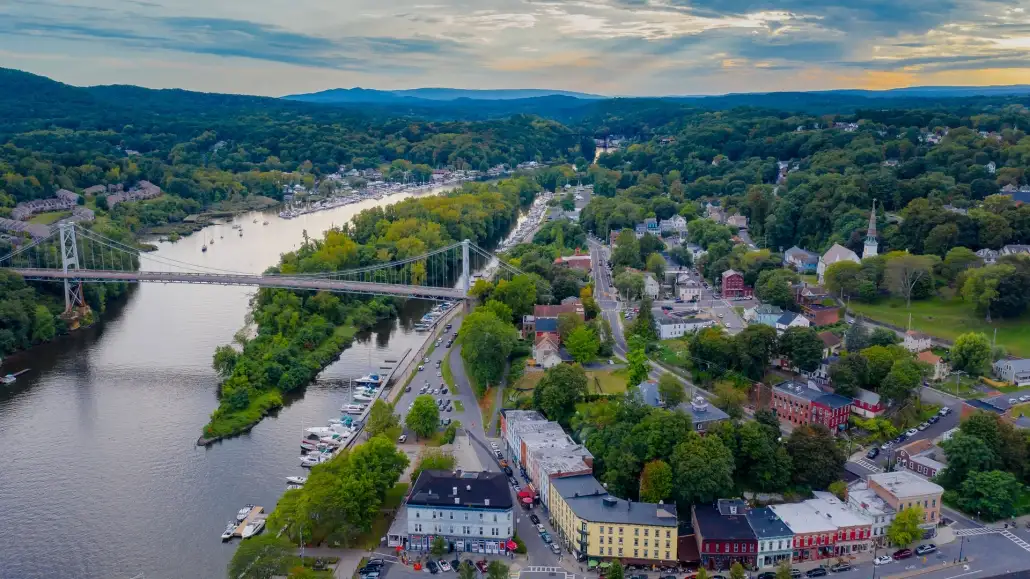
Start here
The Hudson Valley runs about 150 miles along one tidal river, from Troy in the north to Yonkers in the south, and its water damage follows the river, its creeks and its old stone foundations.
This is the twenty-eighth page of this site, and it is the regional hub for the whole valley. The city pages go deep on one place at a time: Poughkeepsie's county is Dutchess, Kingston sits in Ulster, Newburgh and Middletown anchor Orange. This page does the job none of the city pages can. It covers the region as one working map: the tidal river that ties ten counties together, the creeks that flood first in town after town, the dated storms that soaked the whole corridor at once, and the valley wide questions about water damage restoration hudson valley work that belong to no single city. If your town has its own page on this site, read that too. If it does not, this page is written for you.
The valley is not one place, and honest water damage restoration hudson valley work starts by admitting that. A riverfront cottage in Piermont, a stone farmhouse outside Rhinebeck, a brick row building in downtown Newburgh and a raised ranch in Wappingers Falls all take water differently, dry differently and argue with an insurance adjuster differently. What they share is the same river, the same storm systems rolling up the coast or breaking over the Catskills, and the same New York insurance law. This page is organized around that shared ground first, and the local differences second.
Two cautions belong at the top. First, the southern end of this region already has its own county hub: the Westchester County page covers the Lower Hudson towns, the parkway flooding pattern and the Sound Shore in depth, and this page links to it rather than repeating it. Second, the northern end is covered by the Capital District city pages: Albany, Troy and Schenectady each carry their own river history. This page owns the corridor between them: the ten county region, the tidal estuary, and the Mid-Hudson towns on both banks, where water damage restoration hudson valley calls come from river towns and creek towns alike.
Everything on this page is written to be used during a bad week, not just read on a calm one. The first hour guide is near the top. The dated flood cases are here so you can compare your street to a storm that already happened. The insurance sections carry the real New York clocks, because a claim won or lost on paperwork is still won or lost. And the questions at the bottom are the ones valley residents actually ask about water damage restoration hudson valley work, answered without sales talk.
Read the page in the order the water would. Start with the first hour if your loss is live, the cases if you are comparing your street to history, and the insurance sections if the water is out and the argument has begun. That is how water damage restoration hudson valley work itself is sequenced, and the page is built to match it.
Key takeaways
Seven facts worth quoting, each with its source named in the same sentence, because water damage restoration hudson valley decisions run on real numbers, not slogans.
The Hudson River is 315 miles long and its lower half is a tidal estuary whose tides reach as far north as the Federal Dam in Troy, according to the Hudson River Valley National Heritage Area.
The Hudson Valley National Heritage Area covers 10 counties on both banks of the river, from Westchester in the south to Albany and Rensselaer in the north, according to the National Park Service designation.
A New York State 24 hour precipitation record of 11.60 inches was set at Tannersville in Greene County on 28 August 2011 during Tropical Storm Irene, according to the National Weather Service (NWS).
Peak storm tide elevations from Hurricane Sandy in October 2012 were higher than those from Tropical Storm Irene at every measured site on the tidal Hudson, according to United States Geological Survey (USGS) Scientific Investigations Report 2015-5036.
West Point received an estimated 10 inches of rain in a few hours on 9 July 2023, an event Governor Hochul called a 1,000 year event, according to the Governor's office.
The eight core Hudson Valley counties in the table on this page held a combined 2,430,153 people at the 2020 Census, according to the United States Census Bureau figures compiled by citypopulation.de.
New York Insurance Law and Regulation 64 give an insurer 15 business days after proof of loss to accept or reject a claim, according to 11 NYCRR 216, the state regulation that sets the claims clocks.
Each takeaway is stated the way a water damage restoration hudson valley crew would need it on a work order: a number, a place and a source, with nothing rounded into a slogan.
Quick answers
Five direct answers, written to be read aloud by a tired homeowner standing in a wet hallway at two in the morning, anywhere from Catskill to Croton.
Get people and pets to dry ground and keep clear of water near outlets, panels or appliances. Stop the source if it is a pipe. Photograph every room before anything else moves. Then call for extraction, because water damage restoration hudson valley work goes faster and claims go better when the first hour is documented.
For a single home emergency, the aim in water damage restoration hudson valley work is extraction running the same day, usually within hours. In a valley wide storm, when Route 9W or the Taconic is closed, calls are triaged by safety and by how fast water is still rising, and an honest crew will tell you your place in the queue.
Most pipe and appliance losses dry in three to five days once the water is out. River and creek flood losses take longer, because silt, saturated soil and wet stone or plaster hold moisture. In water damage restoration hudson valley jobs, drying ends when meters show materials at a dry standard, not when a fixed number of days passes.
No. A standard homeowners policy excludes rising water from outside, which is what river flooding is. That loss belongs to a flood policy, usually through the National Flood Insurance Program (NFIP). A burst pipe is the opposite case: it belongs to the homeowners policy. In water damage restoration hudson valley claims, photographs from the first hour prove which one you had.
Mold can begin growing on wet materials within 24 to 48 hours in warm conditions, which is why water damage restoration hudson valley drying starts the same day the water is found. In New York, mold work over 10 square feet needs licensed assessors and remediators under Labor Law Article 32, and the two roles must stay separate.
One call starts extraction, drying and the claim paperwork together. Crews cover both banks, from the Highlands to the upper river towns.
These five answers are the short version of this entire page. The long version, with the cases, the tables and the law, follows below for anyone whose water damage restoration hudson valley questions outlast the first night.
Key facts
The water damage restoration hudson valley numbers a homeowner, landlord or adjuster actually needs, each tied to the source that published it.
| Fact | Figure | Source |
|---|---|---|
| Length of the Hudson River | 315 miles, Henderson Lake to New York Bay | Hudson River Valley National Heritage Area |
| Northern limit of the tides | Federal Dam at Troy, about 153 miles from the Battery | USGS storm tide reporting, 2015 |
| Counties in the Heritage Area | 10 counties, both banks of the river | National Park Service designation, 1996 |
| Largest core county by population, 2020 | Orange County, 401,315 people | 2020 Census via citypopulation.de |
| City of Poughkeepsie population, 2020 | 31,577 people (the town is a separate 45,529) | United States Census Bureau QuickFacts |
| New York 24 hour rain record | 11.60 inches, Tannersville, 28 August 2011 | National Weather Service |
| Rain at West Point, 9 July 2023 | About 10 inches in a few hours | Governor's office, July 2023 |
| Insurer accept or reject clock | 15 business days after proof of loss | 11 NYCRR 216, Regulation 64 |
| Disaster payment clock | 4 business days after settlement in a declared disaster | New York Insurance Law 2618 |
| Standard flood policy waiting period | 30 days before cover begins | National Flood Insurance Program |
| Suit limit on a fire or homeowners policy | 24 months from the date of loss | New York Insurance Law 3404 |
| Mold licensing threshold | More than 10 square feet needs licensed assessor and remediator | New York Labor Law Article 32 |
Population figures are 2020 Census counts as compiled by citypopulation.de, used consistently across this page. Storm figures are from the National Weather Service, the United States Geological Survey and the Governor's office statements named in the case sections below.
Print this table if your household keeps a storm folder. It is the one page of water damage restoration hudson valley numbers a homeowner, a landlord and an adjuster can all argue from without arguing about the numbers themselves.
Voice answers
Short spoken answers to the questions people ask a phone or a speaker while the water is still coming in.
The Hudson Valley is the valley of the Hudson River in New York State, running about 150 miles from Yonkers in the south to Troy and Albany in the north. The National Heritage Area counts 10 counties on both banks: Westchester, Rockland, Putnam, Orange, Dutchess, Ulster, Columbia, Greene, Albany and Rensselaer. Those ten counties are the ground this water damage restoration hudson valley page covers.
Say your town, your street, where the water is coming from, and how deep it is. A crew hearing Kingston, Rondout Creek water, basement, six inches, can stage pumps and the right extraction unit before leaving. A crew hearing only water damage has to guess, and in water damage restoration hudson valley work guessing costs the first hour.
If you live anywhere on the river between New York City and Troy, yes. The lower Hudson is a tidal estuary, the flow reverses with the tide all the way to the Federal Dam at Troy, and storm surge can push river levels up far inland. The Mahican name for the river means the river that flows both ways.
Call the crew first if water is still moving, because stopping the loss protects both the house and the claim. Then call the insurer the same day to open the claim and start the New York clocks. Photograph everything before anything is thrown out, and keep every receipt from the first day onward.
Voice answers are kept short on purpose. A spoken question usually means wet hands and a worse problem, so each answer gives the action first and leaves the history of water damage restoration hudson valley to the written sections below.
First hour
The first hour decides more than any later day of drying: how much of the house is saved, whether mold gets a foothold, and how strong the insurance file will be.
There is a valley specific reason the first hour matters here more than in a suburb on high ground. So much of this region drains to one river through steep creeks, which means water that arrives fast also tends to carry things: silt from the Rondout, gravel from Highland Falls side streets, heating oil from an old tank in a Catskill basement, sewage from a combined line in Newburgh. Clean water from a burst pipe is a drying problem. Dirty water is a health problem first and a drying problem second, and the sorting has to happen before anyone starts tearing out drywall. Good water damage restoration hudson valley practice starts with that sorting, not with a fan.
The second valley specific point is the age of the housing. A large share of homes along this river were built before modern drainage, many on fieldstone or rubble foundations that were designed to get a little wet and dry out, in an era before finished basements, wall to wall carpet and gypsum board. Those old walls forgive a flood in ways new materials do not, and punish delay in ways old materials never did. The first hour is when a crew decides what is genuinely historic fabric worth drying in place, and what is modern finish that has to come out before it feeds mold. That judgement, made early and written down, is worth more than any machine on the truck.
Finally, write down the time. The time the water was found, the time the valve was closed, the time the crew was called, the time the insurer was called. New York claim practice runs on dated records, and the homeowner who can say exactly when things happened starts every later conversation from strength. A simple notebook by the phone beats a perfect memory three weeks later.
One more first hour habit separates calm recoveries from chaotic ones: assign the jobs. One adult watches children, pets and the door; one photographs; one makes the calls. In a valley house with a rising creek outside, that small division of labor is water damage restoration hudson valley practice at its most practical.
And if the water is river or creek water, treat the first hour as a health hour as well as a paperwork hour. Boots and gloves before wading, no food from a flooded kitchen, and no sleeping in a room that sewage or river water has entered until it is cleaned. Water damage restoration hudson valley crews carry that rule into every flooded building, and homeowners should borrow it.
Flood case one
Tropical Storm Irene tracked north northeast across eastern New York on Sunday 28 August 2011, and the valley learned that its creeks, not just its river, could destroy whole streets in a day.
Rainfall generally ran 4 to 8 inches across the region, with 8 to 12 inches common across the higher ground of the eastern Catskills and the Schoharie Valley, and localized amounts of 12 to 18 inches, according to the National Weather Service. At Tannersville in Greene County, a National Weather Service gage recorded 11.60 inches in 24 hours, a new New York State record. Record flooding occurred at 10 river gages in east central New York. Record flood stages were reached along the entire length of Schoharie Creek, on the Hudson River at Poughkeepsie, on Rondout Creek at Rosendale, and on Catskill Creek in Catskill.
In Greene County the flooding was catastrophic and countywide, worst in the Catskill Mountain towns, with evacuations, rescues, road closures and houses swept away. The river gage at Prattsville was itself washed away by the flood wave. In the Schoharie Valley, about 5,000 people were evacuated across Esperance, Central Bridge, Schoharie, Middleburgh, Blenheim, Gilboa and Fulton, and the Old Blenheim covered bridge, built in 1855 and the longest single span covered bridge in the country, was destroyed. Ulster County saw extensive damage to roads, bridges and electrical infrastructure. The lower Hudson Valley took 6 to 10 inches of rain with high winds. Statewide, the combined damage estimate for Irene and Tropical Storm Lee, which followed days later, exceeded one billion dollars, stated here in words because this page carries no prices. FEMA (Federal Emergency Management Agency) disaster recovery centers operated across the valley afterward, including in the City of Poughkeepsie on 2, 3 and 4 October 2011.
The lesson Irene left for water damage restoration hudson valley work is about where the water comes from. Most of the worst losses were not on the Hudson itself. They were on the creeks: the Schoharie, the Rondout, the Catskill, the Esopus, and a hundred unnamed runs dropping off the Catskill escarpment and the Shawangunk Ridge. Creek water arrives with almost no warning, carries debris and soil, and drops silt into every wall cavity it touches. A crew that only plans for the big river will be caught out by the small creek behind the house, which is where Irene did its worst work.
Irene also reset what valley homeowners expect from a basement. Thousands of homes that had taken a wet corner in spring storms took feet of water in August 2011, and many were flooded again by Lee within two weeks. The pattern to copy from the Irene recovery is the order of work: pump out only when outside water has dropped, remove silt before it dries into dust, cut wet gypsum early, and dry the structure to meter readings rather than to a calendar. Homes dried that way after Irene mostly stayed dry and clean. Homes that were closed up wet grew mold that cost far more than the flood did.
Irene also changed the valley's building habits quietly. Furnaces, panels and water heaters replaced after 2011 went up on stands across Greene and Ulster counties, and a generation of valley basements was refinished with the flood in mind. Water damage restoration hudson valley veterans can date a basement's last renovation by how high its utilities sit.
Flood case two
Hurricane Sandy, arriving 28 to 30 October 2012 as a hybrid cyclone and nor'easter, proved that a coastal storm could push the Hudson itself up through the whole tidal reach, as far as Albany.
The United States Geological Survey measured Sandy storm by storm tide, and its Scientific Investigations Report 2015-5036 is the careful record. Most peak storm tide elevations from Sandy were greater than about 9.5 feet above the NAVD 1988 datum. Sandy's peak storm tides were higher than those of the December 1992 nor'easter at 24 of 27 sites, most by more than about 0.7 feet. Most striking for this region: Sandy's peak storm tides were higher than Tropical Storm Irene's at every site measured, most by more than about 2.5 feet, or 48 percent. Most peak storm surge magnitudes were greater than about 8.3 feet. The seas rose a record 14 feet in lower Manhattan, and Sandy's surge influenced water levels at Albany, 145 miles north of the Battery.
On the valley's own shore, the emblematic image was a boat stranded on the railroad tracks at Metro-North's Ossining Station on the Hudson Line, left there by the tide. River towns from Piermont and Nyack up through Peekskill, Croton-on-Hudson and the Poughkeepsie waterfront watched the river behave like the sea, because on this reach it is the sea: an estuary, tidal in both directions, all the way to the Federal Dam at Troy, 153 miles from the Battery. Waterfront buildings that had planned for river floods met salt water instead, which changes the cleanup. Salt water attacks wiring, appliances and heating systems in ways fresh water does not, and it has to be rinsed and dried with that in mind.
Sandy is primarily a coastal and New York City story, and this page uses only its Hudson River tidal reach angle on purpose. The valley lesson is narrower and worth keeping: a home near the river in Tarrytown, Nyack or Peekskill carries a storm tide risk, not just a river flood risk, and the two are insured, cleaned and dried differently. When water damage restoration hudson valley crews assess a riverfront loss, the first question is which water it was: rain and creek, river rise, or tide pushed up the estuary. Sandy is the reason that question is asked in that order.
The tide lesson has a practical edge for buyers as well as owners. A waterfront home's flood history should be read against the tide gage as well as the rain record, because on this river the highest water in the file may have arrived on a day when it barely rained locally. Water damage restoration hudson valley assessments on the shore always ask which high water mark came from which kind of storm.
Flood case three
The remnants of Hurricane Ida dropped rain at up to 3 inches per hour on the night of 1 to 2 September 2021, the highest rate ever recorded by the New York State Mesonet, and the emergency covered the valley end to end.
Governor Hochul declared a state of emergency in 14 counties, including Dutchess, Orange, Putnam, Rockland, Ulster and Westchester in this region. FEMA approved a disaster declaration on 2 September 2021 for New York City, Long Island, Dutchess, Orange, Putnam, Rockland, Sullivan, Ulster and Westchester counties, and Dutchess County Individual Assistance followed in October 2021. In the Lower Hudson, the Metro-North Hudson Line sustained the most damage of the three Metro-North lines east of the river, and crews worked for weeks on washed out track beds and clogged culverts. The street level detail of that night in Westchester, the Yonkers mudslides, the Dobbs Ferry culvert and the Hastings-on-Hudson station, belongs to the Westchester County page, and this page links to it rather than retelling it.
What Ida means for the valley as a whole is the rainfall rate. Three inches an hour overwhelms every drain, culvert and sump pump ever installed, no matter how well maintained. Homes flooded in Ida that had never flooded before, including homes well away from any mapped flood zone, because the water arrived through overwhelmed storm drains, backed up sewers and sheer surface flow down streets and driveways. A homeowner asking whether their house can flood should understand that Ida's answer was: in the wrong hour of rain, almost any house in this region can take water.
For water damage restoration hudson valley planning, Ida is the case that justifies the paperwork habits this page keeps repeating. Because the declaration covered so many counties at once, claims were processed in enormous volume, and the files that moved fastest were the ones with first hour photographs, dated notes and a public storm record attached. Homeowners who treated documentation as part of the cleanup, from the first night, consistently had shorter arguments than homeowners who treated it as an afterthought.
Ida's other legacy is in the culverts. Towns across the valley spent the following years upsizing the driveway pipes and road crossings that blew out that night, and the work is still going on. A homeowner whose water arrived through a failed culvert in 2021 should ask the town what has changed since, because the answer belongs in any honest water damage restoration hudson valley risk picture.
Flood case four
On Sunday 9 July 2023 the National Weather Service issued a Flash Flood Emergency for Orange, Putnam, Rockland and Westchester counties, and the Hudson Highlands took the worst rain in living memory.
More than half a foot of rain fell in a few hours. West Point received an estimated 10 inches of rain, nearly the amount that typically falls over an entire summer, and Governor Hochul called it a 1,000 year event. A woman in her 30s from Fort Montgomery was swept away in Highland Falls, Orange County, while trying to check on a family member, after boulders dislodged by the flooding struck her house. Flooding of that magnitude in Highland Falls had not been seen since Hurricane Floyd in 1999.
The infrastructure damage reads like a war report. A portion of US 6 near Fort Montgomery collapsed west of the Palisades Interstate Parkway. Route 9W and Route 218 from Cornwall to West Point were shut down. The Popolopen Bridge, a main access point to Fort Montgomery, washed out. West Point itself, home to the United States Military Academy, was severely flooded, and officials worried about water damage to historic buildings. Metro-North Hudson Line service was suspended between Croton-Harmon and Poughkeepsie, and Amtrak service between New York City and Albany was suspended through Monday. The Governor declared a state of emergency for Orange County, and Senators Schumer and Gillibrand with Representative Ryan called on FEMA to mobilize Disaster Assessment Teams, with early damage estimates expected to total tens of millions of dollars and months of repair. More than a dozen stranded hikers were rescued in Bear Mountain State Park. Residents of Fort Montgomery and Highland Falls lived under boil water notices for several weeks.
The July 2023 flood is the defining Mid-Hudson case for water damage restoration hudson valley work, because it was not a river flood at all. It was rainfall on steep ground: water that came down hillsides, through culverts and under roads, into homes that sit nowhere near the Hudson or any creek on a map. Highland Falls and Fort Montgomery homes flooded from surface water and overwhelmed drainage on slopes. Any valley homeowner on a hill who believes flooding is a riverfront problem should read this case twice.

The recovery pattern in the Highlands also showed the access problem that shapes every valley wide event. When Route 9W, Route 218 and US 6 are all cut at once, a crew's route to a flooded home may double or triple, and the honest answer about arrival times changes by the hour. Crews that stage equipment on both banks and along the I-84 and I-87 corridors, rather than in one yard, reached Highlands homes days sooner in July 2023. Staging is unglamorous, and it is most of the job in a region shaped like this one.
For the families of Highland Falls and Fort Montgomery, the storm is also a measure of neighbors: the rescues, the shared generators, the weeks of boil water notices endured street by street. Recovery in the Highlands ran on that local knowledge as much as on equipment, a fact every water damage restoration hudson valley crew working the corridor learned again that summer.
The river
Understanding this one fact explains most Hudson Valley water damage: the lower Hudson is not a normal river. It is a tidal estuary, deeper than the bay it flows into, and it runs backwards twice a day.
The Hudson River runs 315 miles from Henderson Lake in the Adirondack town of Newcomb, south to New York Bay, where the tidal estuary between New York City and Jersey City drains into the Atlantic Ocean. Its basin covers 14,000 square miles. South of Troy the river averages about 30 feet deep and reaches a maximum depth of 202 feet. Average discharge at Green Island is about 17,400 cubic feet per second, against a recorded minimum of 882 and a maximum of 215,000. The Mahican name for the river, muh-he-kun-ne-tuk, means the river that flows both ways, and it is a precise description: even as far north as Troy, the flow changes direction with the tides, with about two high tides and two low tides a day. At an elevation of 2 feet, the bottom of the Federal Dam at Troy marks the beginning of tidal influence and the start of the lower Hudson River.
For a homeowner, the estuary fact changes three practical things. First, river levels near your house are set by tide and surge as well as by rain, so a moderate storm on a high tide can flood a waterfront street that a heavier storm on a low tide would spare. Second, flood water on this reach can be brackish, carrying salt that corrodes wiring, appliances and heating equipment, so the cleanup standard differs from a freshwater creek flood. Third, the river gives warning differently: river forecasts from the National Weather Service track the tide and the upstream flow together, and a valley homeowner near the shore should learn to read both the rainfall forecast and the tide table.
The river's largest tributary is the Mohawk River, joining at Waterford above Troy, and its valley tributaries do most of the local flooding described on this page. On the east bank: the Kinderhook, the Roeliff Jansen Kill, Wappinger Creek and the Croton River. On the west bank: the Normans Kill, Catskill Creek, Esopus Creek, Rondout Creek, the Wallkill River and the Ramapo River, with the Moodna in Orange County and the Hackensack rising in Rockland. A water damage restoration hudson valley crew reads that tributary list the way a doctor reads a chart: it is where the next call is most likely to come from.
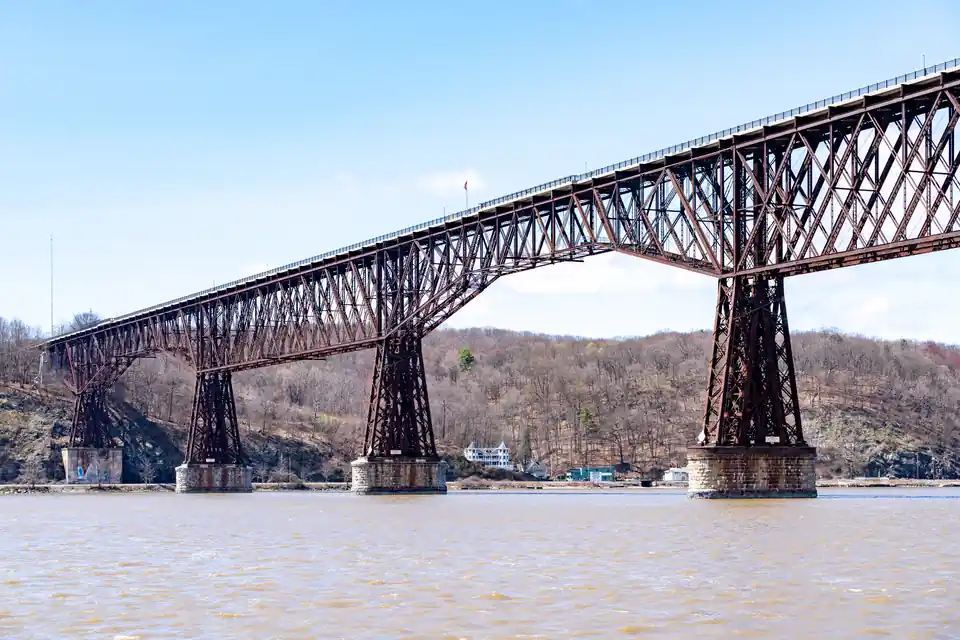
The bridges are the region's other flood gauge, because they mark where people cross when roads along the shore are cut. From south to north on the valley reach: the Governor Mario M. Cuomo Bridge, formerly the Tappan Zee, carrying I-87 and I-287 between Tarrytown and Nyack; the Bear Mountain Bridge; the Newburgh-Beacon Bridge carrying I-84; the Mid-Hudson Bridge carrying US 44 and NY 55 between Poughkeepsie and Highland; the Walkway Over the Hudson, the former Poughkeepsie railroad bridge, now a pedestrian crossing; the Kingston-Rhinecliff Bridge carrying NY 199; and the Rip Van Winkle Bridge carrying NY 23 between Catskill and Hudson. Metro-North's Hudson Line runs the east bank from New York City to Poughkeepsie, and Amtrak continues to Albany.

The estuary also explains the valley's strangest flood sight: the river rising on a calm, sunny day, pushed by a storm still a hundred miles out at sea. Waterfront residents from Nyack to Hudson learn to watch the ocean forecast as carefully as the local one, and water damage restoration hudson valley planning on the shore is built around both.
The creeks
Ask any valley crew where the work is and they will name creeks, not the river. The tributaries rise in hours, carry the debris, and reach the houses that sit a mile from the Hudson and feel safe.
The Rondout drains the southern Catskills through Rosendale to Kingston, where it meets the Hudson at the Rondout waterfront. Irene set a record flood stage on the Rondout at Rosendale in August 2011. Kingston's creekside streets, marinas and restaurants sit at the level where creek flood and river tide can arrive together.
The Esopus runs through the heart of Ulster County, past Phoenicia and Mount Tremper to Saugerties. It is a celebrated trout stream that turns destructive in Catskill rain, and Irene damaged roads, bridges and power lines across its valley. Homes along the Esopus corridor carry some of the highest repeat flood risk in the region.
The Wallkill flows north, unusually, through Orange and Ulster counties, draining a wide flat valley between the Shawangunk Ridge and the Hudson Highlands. Flat land means slow drainage: Wallkill flooding tends to arrive as broad, standing water that stays for days, soaking foundations and septic systems across farm country and villages like Walden and Montgomery.
Wappinger Creek drains central Dutchess County through Wappingers Falls to the Hudson. It powers the falls the village is named for and floods the streets below them. Mill buildings converted to homes and shops along the creek carry old stone lower levels that take water first and dry slowest.
Fishkill Creek runs through Beacon to the river, and Moodna Creek drains Cornwall and the Highland Falls area in Orange County. The Moodna basin sat under the center of the July 2023 rain. Both creeks run through steep, developed watersheds where an hour of extreme rain becomes street flooding the same evening.
The Croton River system feeds the reservoirs above Croton-on-Hudson and flooded valley roads in Ida and again in 2023. The Ramapo River drives flooding in Sloatsburg and the Rockland corridor, and the Hackensack rises in Rockland before crossing into New Jersey. The Saw Mill and Bronx rivers are covered on the Westchester County page.
The working rule that follows from the creek map is simple. In this region, flood risk is a watershed question, not a waterfront question. A house half a mile from the Hudson but fifty feet from the Rondout, the Wallkill or a steep unnamed run can carry more real risk than a house facing the river on a high bank. When a water damage restoration hudson valley assessment begins, the crew should be able to name your creek and its habits before they name their equipment. If they cannot, they are guessing about the water that is most likely to visit you next.
Creek knowledge is local in a way river knowledge is not. The Rondout behaves differently at Rosendale than at Kingston; the Wallkill at New Paltz is not the Wallkill at Montgomery. Ask neighbors which years their street took water, and write the years down. That homemade record is often the best water damage restoration hudson valley planning document a creek side house owns.
The counties
The Hudson River Valley National Heritage Area, designated by Congress in 1996 and renamed the Maurice D. Hinchey Hudson River Valley National Heritage Area in March 2019, counts 10 counties in three subregions. Knowing which third of the valley you live in predicts your water damage restoration hudson valley risk better than your street address does.
The Lower Hudson holds Putnam, Rockland and Westchester: the closest counties to New York City, the most densely built, and the reach where storm tide and creek flood most often arrive together. The Mid-Hudson holds Dutchess, Orange and Ulster: the working heart of the valley, with the three biggest river cities of this page, Poughkeepsie, Newburgh and Kingston, and the Catskill and Shawangunk watersheds behind them. The Upper Hudson and Capital District holds Albany, Columbia, Greene and Rensselaer: Greene and Columbia are covered on this page as river counties, while Albany and Rensselaer are served by their own city pages on this site, the Albany page and the Troy page, with Schenectady just west of them on the Mohawk.
Two other official definitions exist, and honest regional writing names them rather than hiding them. New York State labor and education agencies use a smaller 7 county Hudson Valley region: Dutchess, Orange, Putnam, Rockland, Sullivan, Ulster and Westchester. The Hudson River Valley Greenway law, Environmental Conservation Law section 44-0109, designates 12 counties, adding Saratoga and Washington to the Heritage Area list. Sullivan County appears in the 7 county agency definition but is not one of the 10 Heritage Area counties; it belongs to the Catskills, and this page does not claim it. This page uses the 10 county Heritage Area definition as its primary map.
| County | Subregion | County seat | Population, 2020 Census | Main water |
|---|---|---|---|---|
| Orange | Mid-Hudson | Goshen | 401,315 | Hudson shore, Wallkill River, Moodna Creek |
| Dutchess | Mid-Hudson | Poughkeepsie | 297,021 | Hudson shore, Wappinger and Fishkill creeks |
| Rockland | Lower Hudson | New City | 338,337 | Hudson shore, Ramapo River, Hackensack River |
| Ulster | Mid-Hudson | Kingston | 181,841 | Hudson shore, Rondout and Esopus creeks, Wallkill River |
| Putnam | Lower Hudson | Carmel | 97,678 | Hudson Highlands shore, Croton watershed |
| Columbia | Upper Hudson | Hudson | 61,560 | Hudson shore, Kinderhook Creek, Roeliff Jansen Kill |
| Greene | Upper Hudson | Catskill | 47,932 | Hudson shore, Catskill Creek, Schoharie headwaters |
| Westchester | Lower Hudson | White Plains | 1,004,469 | Covered by the Westchester County page on this site |
Populations are 2020 Census counts compiled by citypopulation.de, one source used consistently for the whole table; the eight counties shown sum to 2,430,153 people. Albany and Rensselaer counties complete the 10 county Heritage Area and are covered by the Albany and Troy pages. The Kiryas Joel, Poughkeepsie and Newburgh Metropolitan Statistical Area, renamed in July 2023 from the Poughkeepsie, Newburgh and Middletown MSA, counted 679,221 people in 2020 across Dutchess and Orange counties.
Area codes follow the same map. Most of the valley, Dutchess, Orange, Ulster, Putnam and Rockland, uses 845, which is why the phone placeholder on this page is an 845 number. Westchester uses 914, and the Albany and Capital District end uses 518. When water damage restoration hudson valley dispatchers take a call, the area code alone tells them which third of the river the truck is heading to, and roughly which roads the storm will have closed.
The three subregions also dry differently. Lower Hudson losses lean tidal and dense; Mid-Hudson losses lean creek and river; Upper Hudson losses lean mountain runoff and old farm drainage. A water damage restoration hudson valley dispatcher sorting a storm night by subregion is sorting by water type, not just by distance.
River city one
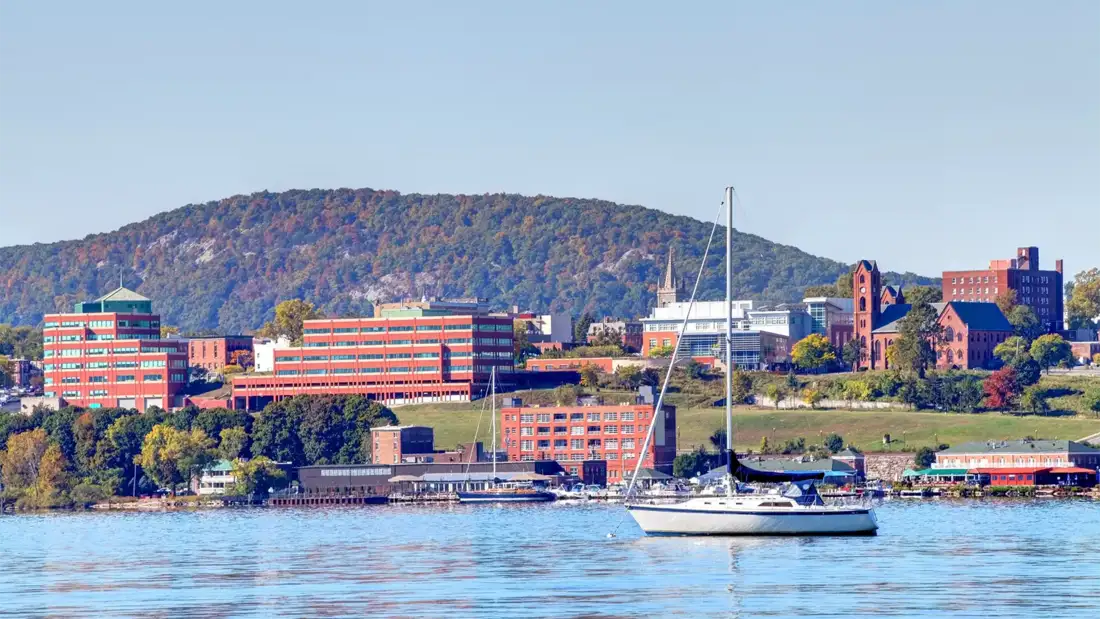
Poughkeepsie, the Dutchess County seat, is the valley's mid point city: a river port, a rail hub and the place where the region's two great bridges stand a short walk apart.
The City of Poughkeepsie held 31,577 people at the 2020 Census, according to Census Bureau QuickFacts. The Town of Poughkeepsie around it is a separate municipality of 45,529, and the two are confused constantly, including in print. On this page, Poughkeepsie means the city unless the town is named. The distinction matters in a flood: city streets drain to city systems and the river, while town neighborhoods drain through Wappinger Creek and a patchwork of town and county roads.
Poughkeepsie's flood record is written on the Hudson itself. Irene set a record flood stage on the Hudson River at Poughkeepsie in August 2011, and the city's waterfront, its train station level and its lowest streets plan around the river accordingly. Inland, Wappinger Creek and the Fall Kill cut through the city and its suburbs, and both have put water into basements and ground floors in storms that never made the river news. The housing stock runs from brick rowhouses near the river to postwar suburbs on the town line, and the drying problems differ floor by floor: old brick and plaster near the waterfront, gypsum and finished basements further out.
The city's working advantage in a valley wide event is position. Poughkeepsie sits at the crossing of the Mid-Hudson Bridge and the Walkway, on the Metro-North Hudson Line and Amtrak, with US 44 and NY 55 running east and Route 9 running north and south. When the July 2023 flood cut the Highlands roads, Dutchess County crews and supplies moved through Poughkeepsie. A water damage restoration hudson valley call in the Mid-Hudson is usually staged from this corridor for exactly that reason.

Poughkeepsie's other water is invisible: an aging network of drains and combined lines under the older streets, which announces itself in basements during the same storms that fill the river. City crews and water damage restoration hudson valley teams meet over the same floor drains in the same weeks, and the photographs that separate a city backup from a river flood are worth real money to the homeowner caught between them.
River city two
Newburgh climbs steeply from its waterfront, and that slope shapes everything about its water: fast runoff, old combined drainage, and basements that sit below the street they face.

The City of Newburgh counts about 28,000 people, with a 2026 estimate of 27,970. It pairs with Beacon across the river, 14,329 people in 2020, joined by the Newburgh-Beacon Bridge carrying I-84, one of the valley's two interstate river crossings. Middletown, about 30,000 people and the largest city of the Orange County interior, drains away from the river toward the Wallkill basin, which gives it a different flood profile: standing water and overwhelmed drainage rather than river rise.
Newburgh's older housing is the valley's hardest drying work. Nineteenth century brick buildings on hillside streets often have lower levels that open at the back below street grade, stone or brick foundations, and layers of later renovation over original fabric. Water entering a Newburgh basement may arrive from the street in front, the slope behind, a combined sewer below, or all three in the same storm, and each source carries a different contamination class. Sorting that out before demolition is the difference between a dried building and a gutted one.
Orange County's growth adds a newer pattern west of the river cities. Subdivisions around Monroe, Goshen, Warwick and Chester sit on former farmland drained by the Wallkill and its tributaries, where the flood arrives slowly and stays. For water damage restoration hudson valley crews, Orange County is two jobs in one county: hillside city work in Newburgh and slow water farm country work in the black dirt and Wallkill flats, sometimes on the same day after the same storm.
Newburgh also teaches the valley's hardest documentation lesson. In a building where street water, slope water and sewer water can all arrive in one night, the first walk through has to record which door, which drain and which wall each water used. Water damage restoration hudson valley files from Newburgh are read closely by insurers for exactly that separation.
River city three
Kingston was New York's first capital, and its Rondout waterfront district still works at creek level, where the Rondout meets the Hudson under the suspension bridge.
Kingston counts about 24,000 people, with a 2026 estimate of 23,875, and serves as the Ulster County seat. The city divides into uptown, on the hill around the old stockade district, and the Rondout, the former port at creek level built on shipping, ice and brick. The Rondout waterfront floods as a creek story and a river story at once: Rondout Creek brings Catskill water down, the tidal Hudson pushes water up, and the lowest streets and marinas sit where the two meet.
Ulster County behind Kingston is the valley's mountain county. Esopus Creek runs through it from the Catskill high peaks, the Rondout drains its south, and the Wallkill crosses its east under the Shawangunk Ridge. Irene damaged roads, bridges and electrical infrastructure across the county, and the pattern has repeated in smaller storms since: a Phoenicia or Boiceville creek flood and a Kingston waterfront flood can be the same weather system arriving by two different waters. Homes in the Esopus corridor, around Mount Tremper, Shandaken and Olive, carry flood histories that predate any living memory of the Hudson flooding them.
Kingston's building stock mixes the oldest stone houses in the state, some from the 1600s and 1700s in the stockade district, with brick commercial blocks on the Rondout and wood frame neighborhoods between. Stone and lime mortar dry slowly and forgive slowly; they should be dried with patience and low heat, not stripped. That judgement, applied street by street, is what water damage restoration hudson valley experience actually means in Ulster County.

The Rondout adds one more Kingston habit: the creek district watches the tide chart and the creek gage together, because the worst Rondout water arrives when a creek flood meets a high tide at the confluence. Marinas haul out, restaurants move the cellar stock, and water damage restoration hudson valley calls from the Rondout start before the water does.
The Highlands
Where the Hudson cuts through the Highlands, the valley narrows to a gorge, the towns cling to slopes, and rain becomes runoff faster than anywhere else on the river.
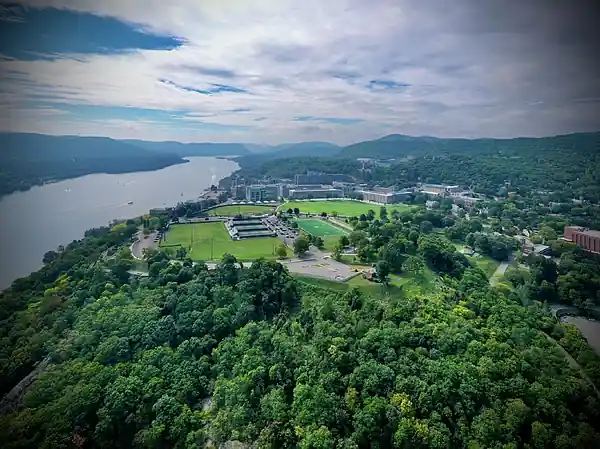
West Point, the United States Military Academy, sits on the west bank at Highland Falls in Orange County, above one of the river's deepest and most dramatic bends. Below and around it, Highland Falls and Fort Montgomery are small towns on steep ground, drained by the Moodna Creek system and a web of short, sharp runs off the hills. The July 2023 flood showed what that geography does in extreme rain: 10 inches at West Point, a collapsed section of US 6, Route 9W and Route 218 closed, the Popolopen Bridge washed out, boil water notices for weeks, and one death in Highland Falls.
Across the river, the Putnam County shore holds Cold Spring and Garrison, villages of nineteenth century houses between the railroad and the hills. Cold Spring's Main Street sits above the river, but its lowest streets and the foundry district by the shore plan around the tide, and the hills behind send storm water down through the village in every hard rain. Storm King Mountain and Breakneck Ridge frame this reach, and the same steepness that makes it the valley's postcard makes it its flash flood core.
The practical lesson of the Highlands is access. There are few roads, they run along the water or over the ridges, and a single washout can isolate a town. Water damage restoration hudson valley work here is planned around redundancy: crews and equipment staged on both banks, routes checked against county road closure lists before dispatch, and honest arrival estimates that change when a culvert fails. Homeowners in Highland Falls, Fort Montgomery, Cold Spring and Garrison should store the essentials for the first night of a flood the way islanders do, because for a few hours in a bad storm, that is what they are.
Highlands homeowners should also know their second river: the road network. When 9W closes, the valley's east bank and the bridges at Newburgh and Poughkeepsie become the corridor, and help routes around the gorge. Building that detour into a household flood plan, with the car parked on the right side of the likely washout, is water damage restoration hudson valley thinking at its most local.
Rockland shore
Rockland County is the smallest county in New York State outside the city, and its river villages face the widest reach of the Hudson, where the tide behaves most like the sea.
At Nyack and Piermont the river opens into the broad Tappan Zee reach, crossed by the Governor Mario M. Cuomo Bridge to Tarrytown. Piermont's pier and its lowest streets were built by the railroad era at marsh level, and Sandy demonstrated the exposure: on this reach the storm tide, not the river's flow, sets the flood. Nyack climbs its hill faster, so its pattern splits between waterfront properties at the bottom and slope drainage problems above. Inland, New City, the county seat, and the Ramapo corridor towns including Sloatsburg answer to the Ramapo River, which drains the Ramapo Mountains and has flooded its valley repeatedly.
Stony Point and Haverstraw, at the county's north end, sit below the Highlands with their own mix of riverfront, creek and hillside water. It is worth noting plainly that when search tools list Hudson Valley restoration results, Rockland names like Stony Point appear near the top through national directories rather than local firms, which is one reason the section on spotting lead generation sites appears later on this page. A Rockland homeowner deserves a crew that knows the difference between a Piermont tide flood and a Sloatsburg river flood, because the cleanup standard for salt and fresh water is not the same.
Rockland's two waters rarely mix in one house, which simplifies the work: a Piermont tide loss is a salt water job from the first hour, while a Sloatsburg Ramapo loss is a fresh water river job with silt. Naming which Rockland you live in, shore or river corridor, is the first line of any water damage restoration hudson valley call from the county.
The county's density helps in one way: no Rockland address is far from a bridge, a highway or a neighboring town with open roads, so storm access is rarely the problem it becomes in the Highlands. The Rockland problem is misidentification, directories outranking firms, which is why this page spends a full section on telling real water damage restoration hudson valley crews from call centers.
Putnam hills
Putnam County is the valley's watershed county: reservoir land, steep hills and small towns, where most water damage starts with wells, septic systems and hillside drainage rather than the river.
Putnam held 97,678 people at the 2020 Census, with Carmel as its county seat. Its western edge is the Highlands shore at Cold Spring, Philipstown and Garrison. Its interior is the Croton watershed, a protected landscape of reservoirs and streams that supply New York City drinking water, where development rules are strict and lots are wooded and sloped. The July 2023 Flash Flood Emergency covered Putnam alongside Orange, Rockland and Westchester, and the county's damage ran to washed out driveways, culverts and roads, with basements flooded by surface water on hillsides.
Putnam losses have their own signature. Private wells and septic systems are common, so a flooded basement can involve a compromised well head or a saturated septic field, both of which change the health side of the cleanup. Long driveways and wooded lots slow equipment access. And because so much of the county drains toward the Croton reservoirs, crews work under watershed awareness: contaminated water and debris are handled so they do not become the reservoir's problem. None of this is exotic. It is simply what water damage restoration hudson valley means in the county where the region's drinking water is gathered.
Putnam's reservoir landscape adds a rule other counties do not need: what is pumped out of a flooded Putnam basement cannot simply be run onto the ground toward a stream if it carries oil, sewage or chemicals. Containment and proper disposal are part of the job in the watershed, and water damage restoration hudson valley crews working Putnam plan for it before the first pump starts.
Upper river
North of Kingston the valley opens into farmland and small river cities again: Hudson in Columbia County, Catskill in Greene County, and the towns that face each other across the Rip Van Winkle Bridge.
The City of Hudson, the Columbia County seat, is a former whaling and shipping port whose Warren Street runs up from a working waterfront. Its flood profile is the tide at the bottom of the hill and creek water on its edges. Catskill, the Greene County seat across the river, answers to Catskill Creek, which set a record flood stage in the village during Irene, and to the Catskill Mountain wall behind it, where Tannersville recorded the state's 24 hour rain record the same day. Greene County's mountain towns, Windham, Hunter, Tannersville and Prattsville just over the Schoharie line, carry the valley's most violent creek flood history relative to their size.
Columbia County's interior towns, Kinderhook, Chatham, Claverack and Germantown among them, drain through Kinderhook Creek and the Roeliff Jansen Kill, in a landscape of farms, orchards and old houses on stone foundations. Flood losses here are fewer and slower than in the Highlands, and the drying work leans toward patience with old materials. North of these counties the valley reaches Albany and Troy, which have their own pages on this site: the Albany page for the capital city and the Troy page for the city at the Federal Dam, where the tides stop. This page's coverage ends where theirs begins, by design, so that no street is written about twice.
The upper river towns also hold the valley's quietest flood pattern: slow, wide, farmland flooding on the Kinderhook and the Roeliff Jansen Kill, where water spreads across fields and into barn and house foundations over days. The damage is real but the tempo is merciful, and water damage restoration hudson valley work there is scheduled in days rather than hours.
Greene County's mountain towns invert that tempo completely. A Tannersville or Windham creek can be at record stage while the Hudson below Catskill is still calm, which is why the upper valley reads two forecasts: the river's and the mountains'. Water damage restoration hudson valley experience in Greene County is mostly creek experience wearing a river county's name.
Causes
Every valley loss starts one of six ways. Naming the right one in the first hour decides the cleanup standard, the drying plan and which insurance policy answers.
The Hudson rises from upstream rain, tide and storm surge, sometimes all three. Water arrives dirty, may be brackish on the lower reach, and belongs to flood insurance, not a homeowners policy. Irene at Poughkeepsie and Sandy at Ossining are the benchmark cases.
The Rondout, Esopus, Wallkill, Wappinger, Moodna, Ramapo and a hundred smaller runs rise in hours after Catskill or Highlands rain. Creek water carries silt, gravel and debris, and it floods homes far from the river, including homes outside mapped flood zones.
The July 2023 pattern: extreme rain on steep or saturated ground overwhelms culverts, storm drains and grading, and water flows through doors, window wells and garage slabs. No waterway needs to flood for a hillside house to take a basement full of water.
The valley's winter loss. Old housing, vacation homes left unheated, and pipes in exterior walls freeze during cold snaps, then burst on the thaw. A pipe loss is clean water at first and belongs to the homeowners policy, which makes it the most straightforward claim of the six.
Combined and aging sewer lines in the older cities, and overloaded septic systems in the rural towns, push sewage back into basements during heavy rain. This is a health job before it is a drying job: porous materials that sewage touched are removed, not dried.
Water heaters, washing machine hoses, ice maker lines and dishwashers fail quietly in finished spaces, and valley roofs take ice dams in winter that push meltwater under shingles. These losses are small in area and large in damage, because they are usually found late.
A single storm can stack several causes in one house: creek water in the basement, a sewage backup through the floor drain, and a roof leak upstairs from wind driven rain. Honest water damage restoration hudson valley documentation separates them, because the insurer will. Photograph each source, note each entry point, and let the drying plan follow the dirtiest water in the building, not the cleanest.
The six causes also age differently. A pipe loss is finished when the drying log closes. A creek or river loss can return with the next storm season, which is why cause identification feeds the prevention walk and the finishing decision later on this page. Water damage restoration hudson valley work that ignores the cause is booking its own return visit.
Drying
The Hudson Valley holds some of the oldest housing in America next to some of its newest suburbs, and drying it well means knowing which century a wall belongs to before any water damage restoration hudson valley crew touches it.
Stone foundations come first, because they are everywhere in the older towns and farm country. Fieldstone and rubble walls set in lime mortar were built to breathe. They take flood water into the wall itself, hold it, and release it slowly for weeks. The right drying approach is patience, air movement and measured readings taken in the wall, not just in the room. The wrong approach is sealing the inside face with modern coatings or blasting the wall with heat, both of which trap moisture and damage lime mortar. A stone basement that smells dry at day five may still be releasing water at day thirty, and the moisture map should say so.
Plaster and lath walls, common in the valley's prewar houses, dry differently from gypsum board. Plaster can often be dried in place after clean water if the lath and keys survive, while gypsum that has soaked through usually comes out. Wide plank and early hardwood floors, chestnut and pine in the farmhouses, cup and crown with moisture and can often be saved by drying from both faces and by tenting, where a plastic chamber concentrates dry air on the floor surface. Modern engineered floors and laminate almost never survive saturation and should be documented and removed early rather than dried hopefully for a week.
River cottages and camps, the small seasonal houses along the creeks and the shore from Saugerties to Stony Point, are their own case. Many sit low, on piers or short foundations, with minimal insulation and plumbing that is drained in winter. Their flood losses repeat, and the honest advice for a cottage that floods every few years is in the finishing section below: design the lower level to get wet and recover, rather than finishing it like a suburban basement and gutting it after every storm. Water damage restoration hudson valley work at its best includes that honest conversation, even when it shortens the job.
Whatever the building, drying ends the same way: readings at a dry standard, taken with pin and pinless meters, logged on the moisture map, including inside wall cavities and under floors. Ask to see the final numbers before the equipment leaves. A crew that dries honestly will show you the log without being asked twice.
One material deserves its own warning: the valley's many log and timber frame buildings, from colonial survivors to modern log homes in the Catskills foothills. Heavy timber dries from the outside in and can read dry on the surface while the core is still wet. Pin readings taken deep, and patience, are the whole method, and any water damage restoration hudson valley crew quoting a fast dry on structural timber should be asked to show its readings.
Mold
Mold growth can begin on wet materials within 24 to 48 hours in warm conditions. In a humid Hudson Valley summer, a flooded basement that waits a week for drying is a mold job wearing a water job's clothes.
New York regulates this work statewide under Labor Law Article 32, in force since 1 January 2016. For mold growth over 10 square feet, the law requires a licensed mold assessor to assess and write the remediation plan, and a separately licensed mold remediator to carry the work out. The assessor and the remediator on the same job must be independent of each other. That separation is the consumer's protection: the person who decides how much mold work is needed cannot profit from doing it. Any valley homeowner quoted for mold work should ask for both licence numbers and check that the two roles sit with different people or firms.
Two warnings belong here because valley pages elsewhere get them wrong. First, the New York City rules that fill most internet advice, Local Law 55, Local Law 61 and the HPD and DEP procedures, are New York City rules. They do not apply in Dutchess, Orange, Ulster, Putnam, Rockland, Columbia or Greene counties. The statewide rules that do apply are Article 32 for licensing, and for renters, the warranty of habitability under Real Property Law 235-b, which a landlord cannot waive, plus Real Property Law 227, which can let a tenant surrender a unit that flooding has made untenantable. Second, mold testing sold as a scare tactic, air samples with alarming lab reports and no remediation plan, is not assessment under the law. A licensed assessment ends in a written plan with quantities and methods.
The cheapest mold work is the mold that never grows, which is why this page keeps returning to speed. Extraction the same day, wet porous material out early, and drying verified by meter: that sequence, done by any competent water damage restoration hudson valley crew, prevents most of the mold jobs that Article 32 then has to regulate.
Valley conditions make the mold clock faster than the textbook version. Summer humidity off the river, shaded hollows in the Highlands and Catskill foothills, and old houses with cool stone basements all hold moisture against materials. The Article 32 structure exists because the region's mold work was once sold by fear; the licence check is the homeowner's way of keeping water damage restoration hudson valley mold work honest.
Commercial and rentals
The valley economy runs on main streets, inns, restaurants, marinas and rental housing, and water closes them differently from how it closes a house.
For a main street business in Beacon, Hudson, Rhinebeck or Woodstock, the loss is measured in closed days. Stock, refrigeration, point of sale systems and health permits all sit inside the drying question, and a restaurant or food shop adds the county health department to the list of people who must be satisfied before reopening. The documentation habit matters even more commercially: insurers and landlords both read the drying log, and business interruption claims live or die on dated records of when the space was wet, when it was dry and when it could trade.
Inns and short term rentals fill the valley, from Hudson and Rhinebeck to the Catskill mountain towns. A flooded inn faces guest safety, booking refunds and a reputation clock that runs faster than any drying clock. The honest practice is to close affected rooms fully rather than dry around guests, document the closure, and let the claim carry the lost nights. Hosts who rush a damp room back into service buy a mold complaint that costs more than the flood.
Landlords and tenants share the valley's rental stock, much of it in the older cities. New York law gives tenants the warranty of habitability under Real Property Law 235-b: the unit must remain fit to live in, and the landlord cannot contract out of that duty. If flooding makes a unit genuinely untenantable, Real Property Law 227 can allow the tenant to surrender it. One limit worth knowing: in Frisch v Bellmarc, decided in 1993, a condominium owner could not raise the habitability warranty against the condominium association, because the duty runs between landlord and tenant, not between an owner and an association. Landlords who dry fast, document the work and communicate in writing rarely meet these sections in a dispute. Landlords who wait usually do.
Marinas and waterfront restaurants deserve a sentence of their own, because their losses arrive with the tide table attached. Docks, fuel systems, health permits and seasonal opening dates all sit inside one Rondout, Nyack or Newburgh waterfront claim. Water damage restoration hudson valley commercial crews plan those jobs backward from the reopening date the business cannot miss.
Farm businesses close the commercial picture. A flooded barn, milk room or equipment shed in the Wallkill flats or Columbia County is a working loss with livestock and food safety inside it, and the cleanup standard follows the use, not the building's age. Water damage restoration hudson valley practice in farm country is agricultural as much as residential.
Insurance
New York insurance law runs on written clocks. A valley homeowner who knows the clocks argues from the statute book instead of from frustration, and the argument usually ends sooner.
Start with the rule that is most often misquoted. Insurance Law 3420(d), the timely disclaimer rule, applies to liability claims for death and bodily injury. It does not apply to property damage claims, as the Court of Appeals confirmed in KeySpan in 2014. There is no 15 day disclaimer clock on your flooded basement claim, and anyone who tells you otherwise is selling urgency, not law. The real clocks on a property claim live in Insurance Law 2601 and Regulation 64, codified at 11 NYCRR 216. Under those rules, the insurer must acknowledge your claim, begin its investigation, and, within 15 business days after receiving your proof of loss, accept or reject the claim. Once a claim is settled, payment is due within 5 business days. These clocks are enforced by the Department of Financial Services (DFS), and a complaint to DFS, at (800) 342-3736, with the disaster hotline at (800) 339-1759 as a separate line, is the remedy when an insurer lets them slide.
After a declared natural disaster, Insurance Law 2618 tightens the screws. The payment clock after settlement is 4 business days, not 3; the 3 day figure comes from a 2021 draft bill, S6595, that did not set the final number, and pages that quote 3 days are quoting a draft. Section 2618 also sets a 15 business day accept or reject clock after proof of loss, extended to 30 where arson is suspected, with one further 15 day extension available. Valley losses after Ida and the July 2023 flood ran under exactly these disaster rules in the declared counties.
Three more numbers decide real claims. The suit limit: under Insurance Law 3404, the standard policy gives 24 months from the date of loss to sue over a denied or underpaid claim, and that deadline is shorter than most people expect. The public adjuster cap: under 11 NYCRR 25.7, a public adjuster may charge at most 12.5 percent of the recovery, and any contract asking for more is asking for more than the regulation allows. And the proof habit that beats both: a file built from the first hour, photographs, dated notes, the crew's drying log with moisture maps, every receipt, and the public storm record for your date. Water damage restoration hudson valley documentation is written to slot straight into that file, because the file is what the adjuster actually reads.
Keep one distinction straight when you file: the clocks above run from proof of loss, not from the day of the flood. A claim reported fast but documented slowly can still miss its own deadlines. This is why the crew's drying log, dated daily, is treated on this page as a legal document wearing work clothes, and why water damage restoration hudson valley paperwork is built to be filed, not just read.
Flood insurance
River, creek and tide water belong to flood insurance, and flood insurance in America usually means the National Flood Insurance Program, with its own clocks that are stricter than the state ones.
The first NFIP fact is the wait: a new flood policy normally takes 30 days to come into force, so the time to buy one is during a dry month, not during a wet week. The second is the proof of loss: after a flood, the policyholder must file a signed, sworn proof of loss within 60 days of the loss. The third is the appeal window: a denial can be appealed to FEMA within 60 days. The fourth is the suit limit: suit on an NFIP claim must be filed within 1 year of the first denial. Miss the 60 day proof of loss and the claim can fail on paperwork alone, whatever the water did. Valley homeowners in the Rondout, Wallkill and Esopus corridors should have these four numbers on the refrigerator door, not in a drawer.
One current fact needs care. NFIP authorization runs through 11 December 2026 at 11:59 p.m., as rechecked on 19 November 2026, with no extension found at that date. That date is an authorization deadline for the program, not a policy expiry date: existing policies stay in force to their own term even if authorization lapses, and a lapse affects new policies and renewals, not claims on policies already running. Anyone selling panic about the December date is misreading it. The practical advice stands regardless: renew on time, do not let a policy lapse during hurricane season, and keep the declarations page with the claim file.
Does flood insurance cover Hudson River storm surge? Yes, when it comes through an NFIP policy: surge is rising water from outside, which is the definition of flood the program insures, and Sandy's tide damage along this river was handled on exactly that basis. What flood insurance does not cover is the pipe that burst upstairs while the river stayed in its banks. The line between the two policies is the source of the water, and the first hour photographs are how the source gets proved. That is why every water damage restoration hudson valley crew on this site photographs the street, the creek or the tide line as carefully as the basement.
One more NFIP habit pays in the valley: photograph your home's exterior in a dry month, from the street and from the creek or river side, and keep the photographs with the policy. After a flood, those baseline images settle arguments about what the water changed. Water damage restoration hudson valley assessors ask for them on almost every river corridor claim.
Decision tables
Three tables that settle the questions valley homeowners argue about most: which policy, which cleanup standard, and what can be dried instead of removed.
| Water source | Policy that answers | Cleanup standard | First move |
|---|---|---|---|
| Hudson River rise or storm tide | Flood policy, usually NFIP | Dirty water protocol, silt removal, possible salt rinse on the tidal reach | Photograph the tide or water line outside and in |
| Creek flood: Rondout, Esopus, Wallkill, Wappinger, Moodna | Flood policy, usually NFIP | Dirty water protocol, silt and debris removal | Wait for the creek to drop before pumping out |
| Surface water through doors and window wells | Flood policy in most policy language | Dirty water protocol | Photograph entry points and street water |
| Burst or frozen pipe | Homeowners policy | Clean water drying, materials dried in place where sound | Close the main valve, then photograph |
| Sewage backup | Homeowners policy, often a specific backup endorsement | Contaminated protocol, porous materials removed | Keep people and pets out of the area |
| Appliance leak found late | Homeowners policy | Clean water drying plus mold check in cavities | Shut the appliance supply line |
| Material | After clean water | After river, creek or sewage water |
|---|---|---|
| Hardwood floor, sound and early | Dry in place, tented drying | Specialist assessment, silt decides |
| Plaster and lath wall | Often dried in place | Open at the base, dry the cavity, assess |
| Gypsum board, soaked | Cut out the soaked section | Cut out above the water line |
| Carpet and pad | Pad usually replaced, carpet assessed | Removed |
| Stone foundation wall | Dried slowly in place, metered in the wall | Rinsed, then dried slowly in place |
| Upholstered furniture | Professional cleaning assessed | Usually removed |
Cleanup standards follow the dirty water principle used across this site: the category of the dirtiest water in the building sets the standard for everything it touched.
Read the tables together and a pattern shows: the policy question, the cleanup question and the first move question all have the same answer underneath, which is the source of the water. Teach everyone in the household to name the source in the first phone call, and most water damage restoration hudson valley claims start life correctly filed.
Choosing carefully
Search this region's restoration keywords and much of what ranks is not a restorer at all. It is directories and lead generation sites selling your call to whoever bids, and valley homeowners meet them at the worst hour of their year.
The pattern is visible in the research behind this page. For this page's own keyword, the top organic results in November 2026 were dominated by national directories: Yelp search pages, the Better Business Bureau (BBB) category pages, HomeAdvisor and Best of the Web, alongside a handful of real local firms. One directory listing for a genuine Poughkeepsie restorer carried an invalid schema type and no street address. Two national franchise pages for valley towns carried no business address or rating in their structured data at all, even though the live pages showed them. None of the 13 competitor pages examined carried a single FAQ in their schema, and the best visible FAQ section anywhere in the set had 4 questions, unmarked. Thin, templated and directory heavy: that is the field, and it explains why a homeowner can click three results and speak to three call centers without reaching a single truck.
The checks that separate a real crew from a reseller are quick. Ask for the firm's own street address in the valley and check it exists. Ask whose trucks come, and whether the person answering works for that firm. Ask for the New York mold licence numbers if mold work is quoted, and expect two separate roles. Ask what the drying log will look like and when you will see the first readings. A real water damage restoration hudson valley firm answers all four without hesitation, because it answers them every working day. A lead generation site will offer to have someone call you back, which is the tell: your call is the product being sold.
This page practices what it preaches, so its own limits are printed on it. The phone number shown is a placeholder, marked as one everywhere it appears, because the business line is not yet live. No reviews are quoted, because there are none to quote yet, and no rating appears in the page's structured data for the same reason. A page willing to say that plainly is a page whose other claims you can weigh fairly.
The same test works in reverse for this page. It names its sources, prints its placeholder status, links its claims to dated storms and statutes, and shows its service list in full. Any water damage restoration hudson valley page that hides those things while asking for your phone number is telling you what it is.
ZIP codes
Thirty one valley communities and their ZIP codes, listed so a homeowner can check in seconds whether their town sits inside the coverage map described on this page. It does.
| Place | ZIP | County | Defining water |
|---|---|---|---|
| Cold Spring | 10516 | Putnam | Hudson shore, Highlands slopes |
| Croton-on-Hudson | 10520 | Westchester | Croton River mouth, Hudson shore |
| Peekskill | 10566 | Westchester | Hudson shore, Peekskill Bay |
| Tarrytown | 10591 | Westchester | Tappan Zee reach, storm tide |
| Carmel | 10512 | Putnam | Croton watershed, hillside drainage |
| Goshen | 10924 | Orange | Wallkill basin edge |
| Haverstraw | 10927 | Rockland | Hudson shore below the Highlands |
| Middletown | 10940 | Orange | Wallkill basin, standing water |
| Monroe | 10950 | Orange | Ramapo headwaters, subdivision drainage |
| New City | 10956 | Rockland | Hackensack River headwaters |
| Nyack | 10960 | Rockland | Tappan Zee reach, storm tide |
| Piermont | 10968 | Rockland | Marsh level pier, storm tide |
| Stony Point | 10980 | Rockland | Hudson shore, Highlands foothills |
| Warwick | 10990 | Orange | Wawayanda and Wallkill drainage |
| Kingston | 12401 | Ulster | Rondout Creek at the Hudson |
| Catskill | 12414 | Greene | Catskill Creek, Hudson shore |
| Saugerties | 12477 | Ulster | Esopus Creek at the Hudson |
| Woodstock | 12498 | Ulster | Catskill mountain runoff |
| Newburgh | 12550 | Orange | Hudson shore, hillside drainage |
| Beacon | 12508 | Dutchess | Fishkill Creek at the Hudson |
| Cornwall-on-Hudson | 12520 | Orange | Moodna Creek, Storm King slopes |
| Fishkill | 12524 | Dutchess | Fishkill Creek |
| Highland | 12528 | Ulster | West shore opposite Poughkeepsie |
| Hudson | 12534 | Columbia | Hudson shore, tidal reach |
| Hyde Park | 12538 | Dutchess | Hudson shore estates and villages |
| New Paltz | 12561 | Ulster | Wallkill River under the Shawangunks |
| Red Hook | 12571 | Dutchess | Saw Kill and Hudson shore |
| Rhinebeck | 12572 | Dutchess | Landsman Kill, Hudson shore |
| Wappingers Falls | 12590 | Dutchess | Wappinger Creek falls and village |
| Poughkeepsie | 12601 | Dutchess | Hudson shore, Fall Kill, Wappinger Creek |
| Port Jervis | 12771 | Orange | Delaware River edge of the region |
ZIP codes are the primary code for each community's main post office. Port Jervis sits at the region's western edge on the Delaware River and is included as the valley's western gateway town.
The ZIP list doubles as a dispatch map: the 105 and 109 codes cluster in the Lower Hudson and Rockland, the 124 codes in the Catskill and Ulster hills, the 125 and 126 codes in the Mid-Hudson. A water damage restoration hudson valley dispatcher reads the first three digits of your ZIP the way a sailor reads a chart.
Mistakes
None of these mistakes requires bad luck. Each one is a decision, usually made in the first two days, and each one is avoidable.
Every mistake on this list has the same shape: a reasonable shortcut taken before the facts were in. The valley punishes shortcuts because its water is varied, its buildings are old and its claims are read closely. Slow down for the first hour, speed up for the drying, and most water damage restoration hudson valley losses stay the size they were when the water stopped.
Prevention
An hour's walk around a valley house, done twice a year, prevents more water damage than any machine. Walk it in spring before the storm season and in autumn before the freeze.
Start at the sump. A valley basement sump should have a working pump, a battery backup for the outages that arrive with the same storm as the water, and a discharge line that carries water well away from the foundation, not onto the slope that drains back to it. Test it by filling the pit, not by pressing the float and hoping. In homes near the Rondout, the Wallkill or the Esopus, add a water alarm at floor level: the cheapest device in this entire page, and the one that saves the first hour.
Then read the slopes. Soil, mulch and paving should fall away from the house on every side. In hillside towns like Newburgh, Highland Falls and Cold Spring, check the uphill side hardest: a blocked swale or a neighbor's regraded drive can redirect a street's worth of storm water at your foundation wall. Window wells need covers and drains that actually drain. Driveways that slope toward the garage need a trench drain that is cleaned out, not just installed.
Septic and well come next in the rural towns. A saturated septic field after a Wallkill flat flood or a Putnam hillside storm can back sewage into the house days after the rain stops. Know where the tank and field are, keep vehicles off the field, and treat any slow drain in flood week as a warning, not an inconvenience. Well heads should sit above grade with a sound cap, and any well that flood water has covered needs testing before the water is drunk.
Finish at the stone. Old foundations want their lime mortar maintained with lime, not hard modern cement that traps moisture and spalls the stone. Interior drains and coatings sold as permanent fixes for a wet stone basement usually move the water rather than solve it. The honest water damage restoration hudson valley prevention advice for a pre-1900 foundation is boring: keep gutters and grading right, keep the sump honest, and accept that the wall breathes, then dry it properly on the rare years the river or the creek wins.
Add one modern item to the walk: a camera. Photograph the foundation, the sump, the grading and the window wells on the day they are right, in spring. After a loss, those photographs prove maintenance to an insurer and show the crew what the house looked like before the water. Prevention records are water damage restoration hudson valley evidence gathered early, while it is still free.
Seasons
The valley has four water seasons, and each one sends a different kind of call.
Deep cold settles into the Catskills and the Highlands first. Pipes in exterior walls, crawl spaces and unheated seasonal houses freeze and split. Ice dams build on north facing roofs from Rhinebeck to Windham, pushing meltwater under shingles into ceilings. The losses are found on the thaw, sometimes weeks after the pipe broke.
Snowmelt off the Catskills meets rain on frozen or saturated ground, and the creeks run high together: the Esopus, the Rondout and the Schoharie headwaters all peak in the same weeks. Sump pumps run for days. Spring is the valley's quiet flood season, less famous than the hurricanes and nearly as busy.
Slow moving thunderstorms park over one watershed and unload. July 2023 was the extreme case, with 10 inches over West Point, but smaller versions flood Highland Falls, Cornwall, Beacon or the Ramapo corridor most summers. Summer losses arrive at night, rise fast and involve the warmest, fastest mold growth of the year.
Irene in August 2011, Lee days later, Ida in September 2021 and Sandy in October 2012: the valley's defining floods are autumn floods, when tropical systems ride the coast and break over the Catskills. Autumn is when flood insurance, the sump backup and the go bag earn their keep, all at once.
The calendar argues for two habits. Buy or renew flood insurance in winter, remembering the 30 day NFIP wait, so the policy is live before the tropical season opens. And service the sump, the backup battery and the generator in spring, before the thaw and the downpours test them. Water damage restoration hudson valley crews can dry almost anything except a loss that was preventable and was not prevented.
The seasons also set the mold stakes. A July loss grows mold at summer speed; a January pipe loss in a heated house grows it more slowly but hides it longer behind closed walls. Crews adjust the urgency, not the standard: the dry standard is the same number in every month of water damage restoration hudson valley work.
Field notes
Three short notes from the kind of jobs this region produces, written the way crews talk about them afterward.
A creekside restaurant row building takes Rondout water at the spring high tide of a storm week: not deep, but silty, under every cooler and into the wall bases. The work that saves the business is not the drying, it is the sequence: silt out before it dries, health department walked through early, drying log kept like a lab book, reopening in stages. Water damage restoration hudson valley commercial work is project management with pumps attached.
A farmhouse on the flats stands in a foot of slow water for three days. Nothing dramatic arrives or leaves; the water simply stays, soaking the septic field, the well apron and the bottom of every wall. The drying takes weeks of patience, and the lesson is the opposite of the Highlands lesson: here, rushing demolition would have destroyed sound old fabric that slow drying saved.
A cottage below a steep drive takes surface water through the garage in a July downpour, the third time in five years. The honest job is small: dry it, then redesign the drive's drainage and the garage threshold so the fourth storm goes around the house. Crews that only dry, in a place like this, are booking their own return visit.
Case studies on video
Two recorded restoration case studies, linked as text rather than embedded, so this page stays fast. Watch them before you hire anyone, and compare what you see with what you are quoted.
The first recording walks through a full residential drying job from the first extraction to the final meter readings: watch the first case study on YouTube. Note the order of work. The crew photographs before it touches, extracts before it demolishes, and takes moisture readings at the same marked points every day. That rhythm, repeated without shortcuts, is what separates drying from merely blowing air around a wet room.
The second recording follows a harder loss with contaminated water and the removal decisions it forces: watch the second case study on YouTube. Note what comes out and what stays, and how the crew explains each call. In a valley house full of old plaster, stone and wide plank floors, those explanations are the job. Any water damage restoration hudson valley firm should be able to narrate its own work the same way, in your hallway, before the first machine starts.
A final viewing tip: watch the floors. In both recordings the crews return to the same marked points on the floor and wall at every visit, and the readings, not the noise of the machines, tell the story. Choose any water damage restoration hudson valley firm by whether it works that way in your hallway too.
Choosing a company
This is the exact question searchers type, word for word, and it deserves a checklist instead of a pitch. Run any firm, including the one behind this page, through all eight checks.
Who is the best water restoration company in the Hudson Valley? The honest answer is that best is local and specific: the best firm for a Kingston stone house is the one that has dried Kingston stone houses and can describe how. Superlatives in advertising are free. Drying logs, licence numbers and addresses are not, which is why the checklist above is built from them.
Services
Fifteen water damage restoration hudson valley services, listed the way they are actually ordered on a job, from the first pump to the last document.
The first water damage restoration hudson valley service on any job: truck mounted and portable extraction for standing water in basements, ground floors and commercial spaces, day and night.
Air movers and low grain dehumidifiers set against a moisture map and run to a documented dry standard.
Water damage restoration hudson valley work for the tidal reach: silt removal, washing and drying for river rise and storm tide losses on the tidal reach, with salt aware cleanup near the lower river.
Rondout, Esopus, Wallkill, Wappinger, Moodna and Ramapo corridor flood work, including debris and silt handling.
The contaminated end of water damage restoration hudson valley work: protocol for sewer backups and septic failures: removal of affected porous materials, cleaning and sanitizing.
Source isolation support, extraction and drying for supply line, heating pipe and frozen pipe failures.
Pumping in stages, sump failure response and full basement drying for finished and unfinished spaces.
Prevention through speed and drying, and remediation support structured around Article 32 licensed assessment.
High volume pumping for deep basements, cisterns, elevator pits and commercial lower levels.
Marked reading points, pin and pinless meter readings and a daily log that doubles as claim evidence.
Tented and mat drying systems for solid and historic plank floors, with cupping monitored daily.
A water damage restoration hudson valley specialty: slow, metered drying for fieldstone and rubble foundations in lime mortar, without sealing or overheating.
Main street, inn, restaurant and marina work planned around reopening dates and health requirements.
Inventory, photography, pack out and drying of salvageable contents, with a disposal list for the rest.
The paperwork half of water damage restoration hudson valley work: first hour photography, source reports, drying records and storm references assembled for the claim file.
Describe the water, where it came from and how deep it is. The right service list follows from the source, every time.
Most real jobs combine four or five of these services in sequence: extraction, a cleanup standard set by the water, drying to a log, and documentation. Ordering them as a bundle is normal; ordering one you do not need is what the checklist on this page is designed to prevent in water damage restoration hudson valley work.
The process
The same six steps, in the same order, on a Poughkeepsie rowhouse, a Kingston stone basement or a Highland Falls hillside home.
You call (845) 555-0147 (placeholder), describe your town, where the water is and where it came from, river, creek, sewer, sump or pipe, and a stocked crew is dispatched with pumps, extraction tools and drying equipment matched to that source.
The crew checks electrics and fuel systems before wading in, confirms the water source is stopped or the river has peaked, and photographs the whole loss before anything is moved.
Standing water is pumped or extracted in stages where outside water is still high, silt is removed before it dries, and contaminated materials are separated from clean ones.
Wet gypsum and pad come out where the water category requires it, moisture is mapped with pin and pinless meters, and air movers and dehumidifiers are placed against the map, not by habit.
Readings are taken at the same marked points each day, equipment is adjusted or removed as materials dry, and antimicrobial treatment is applied where the water category calls for it.
The job ends when readings meet the dry standard everywhere, including inside cavities. You receive the drying log, the moisture maps and the photo record for your insurer, and the rebuild conversation starts from documents, not memory.
Coverage
Coverage follows the water: the river shore towns, the creek corridors and the county seats of the eight core counties on this page, with Westchester and the Capital District served by their own pages on this site.
If your town is not on the chip list, check the ZIP table above or the gazetteer below: the corridors matter more than the list. A water damage restoration hudson valley call from anywhere in Dutchess, Orange, Ulster, Putnam, Rockland, Columbia or Greene county sits inside this page's working map.
Gazetteer
One line each on the places named on this page and the water that defines them, so a new arrival can read the region the way a crew does.
Dutchess seat. Record Hudson flood stage in Irene, 2011. Bridges, rail hub and the valley's mid point.
Orange river city. Hillside streets, combined drainage, I-84 bridge to Beacon.
Ulster seat. Rondout Creek port district where creek flood meets river tide.
Orange interior city. Wallkill basin standing water and drainage losses.
Fishkill Creek meets the Hudson under Mount Beacon. Mill buildings and a revived main street.
Westchester river city at Peekskill Bay, in this page's corridor and the county page's map alike.
Rockland village on the Tappan Zee reach. Storm tide at the bottom, slope drainage above.
Wallkill River town under the Shawangunk Ridge, with Huguenot stone houses on its oldest street.
Columbia seat. Whaling port turned arts city, tidal shore at the bottom of Warren Street.
Greene seat. Catskill Creek record flood in Irene, mountain wall directly behind the village.
Dutchess village. Landsman Kill drainage, fairgrounds, and some of the valley's oldest inns.
Putnam Highlands village. Foundry shore at tide level, hills sending storm water through town.
Croton River mouth and the reservoir system above it. Covered jointly with the Westchester page.
West bank landing of the Cuomo Bridge. Tidal reach, commuter shore, Westchester page territory.
Fishkill Creek town on the I-84 corridor, draining to Beacon and the river.
Built around the falls on Wappinger Creek. Mill village lower levels take creek water first.
Ulster shore town facing Poughkeepsie, west end of the Mid-Hudson Bridge and the Walkway.
Moodna Creek and Storm King. Inside the July 2023 rain bullseye.
Orange seat. Historic village at the edge of the Wallkill and black dirt country.
Growing Orange town near the Ramapo headwaters. Subdivision drainage is its flood story.
Orange farm town near the New Jersey line. Wawayanda water and slow rural drainage.
Delaware River city at the region's western gate, where three states meet.
Esopus Creek reaches the Hudson here. Marina village with a creek flood history.
Catskill mountain town. Steep runoff, wells and septic, and summer downpour risk.
Northern Dutchess village. Saw Kill water, orchard country, Hudson shore nearby.
Roosevelt and Vanderbilt country on the east bank. Estates, villages and shore properties.
Putnam seat. Croton watershed hills, reservoir shorelines and long wooded drives.
Rockland seat. Suburban county center above the Hackensack headwaters.
Rockland pier village at marsh level. The valley's clearest storm tide address.
Rockland town below the Highlands, where directory listings outrank local firms in search.
Brickmaking river town at the widest ferry reach, with hillside and shore water both.
Dispatch
A 150 mile region cannot be served from one yard in a storm. Calls are staged by reach: Lower, Mid and Upper, with equipment on both banks.
The logic is the river's own. In a valley wide event the bridges and the shore roads decide what is reachable: the Cuomo Bridge and I-287 in the south, I-84 at Newburgh and Beacon in the middle, the Mid-Hudson Bridge and the Walkway corridor at Poughkeepsie, NY 199 at Kingston and NY 23 at Catskill and Hudson in the north. A dispatcher who thinks in reaches assigns the nearest crew that can actually arrive, not the nearest crew on the map. July 2023 proved the point when the Highlands roads failed together and only pre-staged equipment reached Highland Falls quickly.
Triage inside a reach runs on three questions. Is anyone unsafe? Is the water still rising? Is the source stopped? A sewage loss with children in the house outranks a deeper clean water loss in an empty seasonal cottage, and an honest dispatcher says the order out loud. Single home emergencies outside storm events run simpler: the call is logged, the source questions are asked, and extraction is aimed at the same day. The promise this page makes is not a minute count, because minute counts in a region of gorges and one lane bridges would be fiction. The promise is a queue you can ask about, a crew that can name your creek, and a drying log from the first visit.
Equipment
The machines are ordinary. What matters is the arithmetic behind them: how much water, in what materials, exchanged how fast, verified how.
Extraction comes first because water removed mechanically is water the dehumidifiers never have to evaporate. Truck mounted extractors and submersible pumps handle depth; weighted extraction tools pull water from carpet and pad in place where the water category allows saving them. Every gallon extracted in hour one is roughly a gallon that does not spend three days migrating into wall bases and subfloors.
Drying is a balance of air movement, dehumidification and, where needed, heat. Air movers drive evaporation from surfaces. Low grain refrigerant dehumidifiers pull that moisture from the air and hold the indoor humidity low enough that drying continues into cavities and dense materials like plaster and stone. Desiccant units earn their place in cold weather and in large commercial volumes. The setup is calculated from the water class and the cubic footage, then corrected daily against the readings: a setup that is never adjusted is a guess left running.
Measurement is the third machine, and the most important. Pin meters read moisture inside wood and drywall; pinless meters scan walls and floors without holes; thermo-hygrometers track the air itself. Readings at marked points, logged daily, are how a water damage restoration hudson valley job proves it is done. If a crew cannot show you the log, the drying is a story. If it can, the drying is a record, and records are what insurers, buyers and building departments accept.
Asked online
The questions that recur on Reddit, Quora and neighborhood forums after every valley flood, answered the way they are answered there at their best: plainly, with the local detail left in.
Bad enough to hold records. Irene set the record flood stage on the Hudson at Poughkeepsie in 2011, and Sandy pushed tide water through both waterfronts in 2012. Day to day, though, both cities flood more often from their creeks and drainage than from the river itself.
Near the Hudson is not the test. Elevation and watershed are. Houses blocks from the river along the Rondout, Wallkill or a steep run can sit in real risk, while houses facing the river on high banks may not. Check the FEMA (Federal Emergency Management Agency) flood map for your parcel, then check your creek, then ask how the street behaved in 2011, 2021 and 2023.
Usually one of four: a sump that is undersized, failed or missing its backup; grading that sends roof and slope water to the foundation; a blocked or broken footing drain; or a water table that rises with the creek. Each has a different fix, and drying the basement answers none of them. Diagnose the path, then fix the path.
Often, yes, if the water was clean or the response was fast. Solid old plank dries with tenting and patience, and cupping frequently settles as moisture equalizes. Sewage soaked floors and floors left wet for a week are the usual losses. The meter, not the calendar, decides.
Everything. The pipe is a homeowners claim with clean water rules. The river is a flood claim, usually NFIP, with dirty water rules, a 60 day proof of loss and its own suit limit. Mixing the two up in the first phone call is how claims get misfiled.
Three to five days for the room air and finishes after a clean water loss, and weeks of slow release from a stone foundation wall behind them. Any honest answer separates the two numbers, because closing the job at the first number is how mold gets started in the second.
Rebuild
Drying ends with a dry, clean shell. Rebuild is the second half of the loss, and in old valley buildings it deserves the same care as the first.
Sequence is the whole game. Insulation goes back only into cavities proven dry. Gypsum and plaster repairs wait for the final readings, not the hopeful ones. Floors are refinished or replaced after the subfloor reads dry, because a beautiful new floor over a damp subfloor is a future claim with better lighting. In stone foundation buildings, repointing and any interior finish work should respect the wall's need to breathe; sealing a freshly flooded lime wall behind modern board and vapor barriers recreates the problem in a more expensive form.
Rebuild is also the moment to change the building's future. A basement that has flooded twice should be rebuilt as a wet tolerant space: tile or sealed concrete instead of carpet, removable wainscot instead of full height gypsum, utilities and storage raised, a backwater valve on the drain, and the sump upgraded with its battery backup. Insurers and buyers both read those choices as competence. The cheapest flood is the one the building shrugs off, and most valley homes can be moved meaningfully in that direction during a rebuild that is already happening.
Budget the rebuild conversation honestly. Insurance settlements, deductibles and the wish to improve the room all pull at the same decision, and the valley's older houses add code and preservation questions on top. A rebuild planned on the drying log, with the wet tolerant options priced beside the like for like ones, is where water damage restoration hudson valley losses finally close.
Warnings
The National Weather Service issues the words in a ladder, and water damage restoration hudson valley residents who know the rungs act a day earlier than those who do not.
A Flood Watch means conditions favor flooding: the rain is coming, the creeks are primed, the tide may be high. Watch is the day to move the basement boxes, test the sump, charge the phones and park the car on high ground. A Flood Warning means flooding is happening or imminent on a named waterway: the Rondout at Rosendale, the Esopus, the Wallkill, the Hudson itself. Warning is when the first hour plan on this page starts, before the water arrives. A Flash Flood Emergency, the wording used on 9 July 2023 for Orange, Putnam, Rockland and Westchester, is the rarest rung: life threatening flash flooding confirmed, the wording the service reserves for events like Highland Falls. At Emergency, the task is safety only. Belongings are replaceable on a schedule that people are not.
Two local reading skills sharpen every warning. First, find your gage: the National Weather Service publishes river forecasts for the Hudson and its tributaries, and learning the flood stage of the gage nearest your home turns a general warning into a personal number. Second, add the tide: on the tidal reach, the same rainfall floods differently at high tide and low, which is why Sandy outflooded Irene on this river despite Irene's greater rain. A water damage restoration hudson valley household that reads gage and tide together is rarely surprised, and surprise is the true cause of most first hour losses.
Sign up for your county's emergency alerts before storm season, and learn the two or three road closures that would cut your street off. In the Highlands that list is short and famous; in the creek towns it is the bridge list. Local knowledge of that kind is the cheapest water damage restoration hudson valley preparation there is.
Finishing a basement
A flooded finished basement forces a question most homeowners would rather skip: finish it the same way again, finish it to survive water, or stop finishing it.
Option one, rebuild as before, is right for the true one off loss: the burst pipe, the failed hose, the freak sump outage in a house with no flood history and high ground. The source is fixed, the risk is genuinely low, and the room returns to family use. Option two, rebuild wet tolerant, fits most creek corridor and river town homes: hard floors, raised systems, removable lower wall panels, no storage at floor level, and a sump with backup treated as an appliance that gets serviced. The room gives up a little softness and gains the ability to be hosed, dried and reopened in days after the next event. Option three, return the basement to utility use, is the honest answer for the repeat addresses: the Rondout and Wallkill homes that have taken water three times in fifteen years. A dry, clean, well lit utility basement beats a third gutted family room on every measure except hope.
What is the difference between water remediation and restoration, a question searchers ask constantly? Remediation is the removal and cleanup half: extraction, demolition of ruined material, cleaning, sanitizing, mold work. Restoration is the whole arc through drying and rebuild, back to a working home. Firms use the words loosely; homeowners should ask which half a quote covers. Can water damage be restored? Almost always, in the sense that the building can be dried, cleaned and rebuilt. What cannot be restored is the week it happened, which is why this page keeps steering the effort to the first hour and the prevention walk.
Whichever option you choose, decide it while the basement is already open and the settlement is already agreed. Retrofitting wet tolerance into a finished room later costs several times what it costs during the rebuild you are already paying for. That timing, more than any product, is the valley's finishing secret, and water damage restoration hudson valley crews see the proof in both directions every year.
Institutions
Some valley buildings carry whole communities through a flood week, and their water damage becomes everyone's problem at once.
Schools sit at the center of valley towns, and many double as the emergency shelter and the information point during floods. A flooded school in a creek town, and Ulster and Orange counties have both lived it, displaces hundreds of families' routines at the exact moment those families are drying their own basements. Districts that keep mechanical systems raised, records digitized and lower levels wet tolerant reopen in days; those that do not can lose a term's rhythm to one storm.
Village halls, fire houses and highway garages hold the response itself. The July 2023 flood cut roads the highway crews needed to reach, and Irene damaged municipal buildings across Greene and Ulster counties. A flooded highway garage or a fire house taking water is a force multiplier for the whole town's loss, which is why municipal buildings deserve the same prevention walk as any house, done by someone with authority to fix what the walk finds.
Historic buildings raise the stakes differently. West Point's flooded historic fabric in 2023, the stone stockade houses of Kingston, the mills of Beacon and Wappingers Falls: these cannot be gutted and rebuilt on a normal commercial logic. Their drying is conservation work, slow, metered and documented for the record, and it is where water damage restoration hudson valley practice meets preservation standards. The rule that governs both trades is identical: dry it honestly, prove it with numbers, and never let a deadline talk you into closing a wet wall.
Private institutions carry the same duty in smaller print: camps on the creeks, marinas on the Rondout, retreat centers in the Catskill foothills. Their seasons are short and their buildings are old, which makes their prevention walks and their drying logs the difference between a lost week and a lost summer for hundreds of guests at a time in water damage restoration hudson valley country.
Claims worked slowly
Three composite claims, built from the patterns that recur across the valley, showing where each one was won or nearly lost.
A supply line bursts in an empty house in January and runs for a weekend. The homeowners claim is clean water and straightforward, and the file wins on speed: the neighbor's call time, the plumber's invoice and the crew's first hour photographs agree to the hour. The argument, such as it is, is only about floor salvage, and the drying log settles it.
Rondout water enters a stone house in a spring flood. The NFIP claim turns on the 60 day proof of loss and on separating the creek's damage from an old, slow roof leak the adjuster tries to fold into the same event. The dated photographs and the gage record for the creek keep the two losses apart, which is where the money was.
A combined sewer backs up into a hillside basement in a summer storm. The claim rides on the backup endorsement in the homeowners policy, and the near loss is a paperwork one: the first report described it as flooding, which would have routed it to the wrong policy entirely. Correcting the source description, with photographs of the floor drain, put it back on the right desk.
The thread through all three is the same: the source, stated correctly and proved early, decides the claim. Everything else, the drying, the demolition arguments, the floor salvage, is negotiation. Get the source wrong in the first call and even perfect water damage restoration hudson valley work spends months climbing out of the wrong file.
About the numbers
Every figure on this page came from a named source at build time in November 2026. This section says what was counted, what was not, and why, so a reader can weigh the page fairly.
Populations are 2020 Census figures from one consistent compilation, citypopulation.de, because mixing census compilations inside one table produces quiet contradictions: Dutchess County appears as both 297,021 and 295,911 in reputable tables, and Orange as both 401,315 and 401,310. This page uses the first of each pair throughout. The City of Poughkeepsie is given as 31,577, its Census QuickFacts figure, and never as 45,529, which is the separate Town of Poughkeepsie. Storm figures are drawn from the National Weather Service, the United States Geological Survey and official statements named beside them. The July 2023 victim is described as a woman in her 30s because reputable reports give her age as both 30 and 35; where sources disagree, this page says so instead of choosing silently.
What this page does not carry is as deliberate. There are no prices or cost figures anywhere, because this is a call driven service and any number printed here would be a guess dressed as a fact. There are no search volume claims for this page's keyword, because the research tools showed no measurable volume for the exact phrase, and inventing one would be exactly the kind of inflation this page criticizes in others. There is no rating in the structured data, because the business has no reviews yet, and the phone number is a marked placeholder for the same reason. Competitor details found during research, their phone numbers, addresses and ratings, are never presented as this firm's own.
One honest limit closes the section. The legal summaries state New York law as verified against statute text in November 2026, and the NFIP authorization date of 11 December 2026 should be rechecked before relying on it after that date. Law and programs move; this page is a snapshot with its date printed on it, which is more than most pages in this field will tell you.
Last updated: November 2026.
FAQs
Thirty questions valley residents actually ask, in the order they tend to ask them: the emergency first, the science second, the insurance last.
Get people and pets to dry, high ground and keep everyone clear of water near outlets, panels or appliances. Do not wade through moving water to save belongings. If it is safe, photograph the water line and the street from a doorway or upper window. Then call a water damage restoration hudson valley crew for extraction once the river peaks, and call your insurer the same day to open the claim. River water is dirty water: treat everything it touched as contaminated until it is cleaned.
Bad enough to set records. Tropical Storm Irene set the record flood stage on the Hudson River at Poughkeepsie in August 2011, and Hurricane Sandy pushed storm tide through both waterfronts in October 2012, with tide levels higher than Irene at every measured site. In ordinary years, though, both cities call water damage restoration hudson valley crews more often for creek, drain and hillside water than for the river itself. Both cities take more water from their creeks, drains and hillsides than from the river itself. The river floods are rarer and bigger; the creek and drainage floods are smaller and far more frequent.
Living near the Hudson does not decide it. Elevation and watershed decide it. A house blocks from the river along Rondout Creek, the Wallkill River or a steep unnamed run can carry serious flood risk, while a house facing the river on a high bank may carry little. Check the FEMA flood map for your parcel, identify your creek, and ask how your street behaved in 2011, 2021 and 2023. Those three answers together beat any single map.
Yes, under a flood policy such as an NFIP (National Flood Insurance Program) policy. Storm surge is water rising from outside the home, which is the program's definition of flood, and Sandy's tide damage along the Hudson was handled on that basis. A water damage restoration hudson valley assessment always starts by naming which side of that line your loss sits on. What flood insurance never covers is an internal plumbing failure, and what a homeowners policy never covers is the river. The two policies divide losses by the source of the water, which is why first hour photographs of the source matter so much.
Mold can begin growing on wet materials within 24 to 48 hours in warm conditions, and a humid valley summer is warm conditions. That clock is why water damage restoration hudson valley extraction and drying start the same day the water is found. In New York, mold growth over 10 square feet falls under Labor Law Article 32, which requires a licensed assessor to write the plan and a separate licensed remediator to do the work. Fast drying is not just tidier; it is what keeps a water claim from becoming a regulated mold job.
The crew first, if water is still moving or still standing, because stopping the loss protects the house and the claim at the same time, and policies expect you to mitigate. Then the insurer, the same day, to open the claim and start the New York clocks under Regulation 64. Keep the claim number with your dated notes. A water damage restoration hudson valley crew that documents from the first hour gives the insurer a file it can act on, which shortens every conversation after.
Two honest numbers. The room itself, its air, finishes and contents, usually dries in three to five days after a clean water loss once extraction is done. The structure behind it, especially a fieldstone or rubble foundation wall, releases stored moisture for weeks and should be metered in the wall, not just in the room. River and creek losses run longer than pipe losses in water damage restoration hudson valley work because silt and saturated soil keep feeding moisture. Drying ends at a documented dry standard, not at a date.
Keep people and pets out of the affected area, ventilate if you can do it safely, and do not try to save porous materials that sewage touched: carpet, pad, upholstered furniture and soaked gypsum come out. Call a crew for contaminated water protocol, and call your insurer, because sewage backup is usually handled under a specific endorsement on the homeowners policy, not under flood insurance. In the older parts of Kingston and Newburgh, combined lines make backups a known water damage restoration hudson valley storm pattern, so photograph the floor drain and any street flooding for the file.
Often, yes. Solid plank floors in the valley's old houses are thick, slow grown timber, and with fast extraction and tented drying they frequently dry flat again; cupping often settles as moisture equalizes through the board. The usual losses are floors soaked in sewage, floors left wet for a week or more, and thin modern engineered floors, which delaminate. A water damage restoration hudson valley crew should meter the floor and the subfloor daily and tell you honestly which way the readings are moving before anyone talks about replacement.
One of four causes explains almost every repeat case: a sump pump that is missing, undersized, failed or without battery backup for storm outages; grading, mulch or paving that sends roof and slope water toward the foundation; a blocked, crushed or undersized footing drain; or a water table that rises with a nearby creek. Each cause has a different fix, and none of them is fixed by drying the basement again. A water damage restoration hudson valley diagnostic visit should end with the cause named in writing. Diagnose the water's path first, then repair the path.
They are different claims on different policies under different rules. A burst pipe is a homeowners policy claim: clean water, state clocks under Regulation 64, and a 24 month suit limit under Insurance Law 3404. River flooding is a flood policy claim, usually NFIP: dirty water rules, a sworn proof of loss within 60 days, an appeal window of 60 days and suit within 1 year of a first denial. Describing a drain backup or a creek flood as the wrong source in the first call can misfile the whole claim.
Ask four questions. What is your street address in the valley? Whose trucks come to my house? If mold work is quoted, what are the assessor and remediator licence numbers? What will my drying log look like? A real firm answers all four at once. A lead generation site offers to have someone call you back, uses a national call center, shows stock town pages for places it has never worked, and cannot name your creek. Your call is its product. Hang up and call a firm that can answer.
There is no honest valley wide answer, because best is specific: the best firm for a Kingston stone house is one that has dried stone houses and can explain lime mortar; the best for a Highland Falls hillside home is one that staged crews through July 2023. Judge by checkable things: a real local address, the firm answering its own phone, a drying log with daily readings, Article 32 licences where mold is involved, and no invented reviews. Any firm, including the one behind this page, should welcome the checklist.
Almost always, in the practical sense: the building can be extracted, dried to a measured standard, cleaned and rebuilt to full use. What varies is how much original material survives. Clean water found early usually costs finishes; dirty water or a late start costs materials, especially gypsum, pad, insulation and thin flooring. Stone, sound plaster and solid old timber survive far more than people expect when drying starts fast. Any water damage restoration hudson valley crew will tell you the same: the thing that cannot be restored is the lost week, which is why speed matters more than any machine.
Remediation is the removal half of the work: extraction, taking out ruined material, cleaning, sanitizing and any mold remediation. Restoration is the whole arc: remediation plus structural drying plus the rebuild that returns the home to use. Firms use the words loosely in advertising, so ask any water damage restoration hudson valley company which half its quote covers, and get the answer in the written scope. A remediation only quote will always look cheaper than a full restoration quote, because it is half the job.
Permanent usually means the material cannot return to a sound, dry, clean state. The signs: gypsum that crumbles or stays dark and soft after drying, engineered flooring that has delaminated, insulation that has matted and holds odor, timber with deep staining and fungal growth into the grain, and stone mortar that has powdered. The meter and a probe tell more than the eye: materials that will not move toward the dry standard after days of correct drying are telling you the answer. Honest water damage restoration hudson valley crews show you those readings and the marked points they came from.
Use the eight checks on this page. A real valley address and named staging towns. The firm answering its own phone. A drying log with moisture maps from day one. Labor Law Article 32 licences, in separate hands, where mold over 10 square feet is involved. Fluency in the New York claim clocks and the NFIP deadlines. Care with old materials before demolition. Checkable proof, or an honest statement that the firm is new. And a written scope before machines start. A water damage restoration hudson valley firm that passes all eight is a firm you can hire during the worst week of your year.
If your home is anywhere on the river between New York City and Troy, yes. The lower Hudson is a tidal estuary: the flow reverses with the tide, about two high tides and two low tides a day, all the way to the Federal Dam at Troy, roughly 153 miles from the Battery. That is why storm surge from a coastal storm can raise the river at Albany, and why water damage restoration hudson valley planning on the shore includes the tide, and why waterfront homeowners from Piermont to Hudson city should read tide tables alongside rain forecasts.
The steep ones. The Moodna in Orange County, the runs off the Highlands around Highland Falls and Cornwall, Esopus Creek in Ulster County and the Catskill Mountain creeks in Greene County can rise within hours of extreme rain. The Wallkill is the opposite case: a flat, slow river whose flooding arrives as broad standing water that stays for days. Rondout Creek and Wappinger Creek sit between the patterns. Your creek's habit, steep and fast or flat and slow, should shape your first hour plan and the water damage restoration hudson valley call you make when it rises.
On 28 August 2011 Irene dropped 4 to 8 inches of rain across the region and up to 18 inches locally in the Catskills. Tannersville in Greene County set a New York State 24 hour record of 11.60 inches. Record flood stages hit the Hudson at Poughkeepsie, Rondout Creek at Rosendale, Catskill Creek and the whole Schoharie Creek, about 5,000 people were evacuated in the Schoharie Valley, and the Greene County flooding was catastrophic. FEMA recovery centers operated across the valley, including in Poughkeepsie that October, and water damage restoration hudson valley work from Irene ran for years in the mountain towns.
On 9 and 10 July 2023 a Flash Flood Emergency covered Orange, Putnam, Rockland and Westchester counties. West Point took an estimated 10 inches of rain in a few hours, an event the Governor called a 1,000 year event. In Highland Falls a woman in her 30s died after boulders dislodged by flooding struck her home. US 6 collapsed near Fort Montgomery, Route 9W and Route 218 closed, the Popolopen Bridge washed out, the United States Military Academy flooded, and boil water notices lasted for weeks.
Yes, in the standard case. A sudden pipe failure inside the home is a plumbing loss under the homeowners policy, including the resulting water damage to floors, walls and contents, subject to your deductible and limits. What the same policy excludes is rising water from outside: river, creek, surface water and surge. The grey zone is storm water entering through doors, windows and drains, which policy language usually treats as flood water however it arrived. Photographs of the source settle most water damage restoration hudson valley arguments before they start.
Sixty days from the date of the loss, under the NFIP standard policy. The proof of loss is a signed, sworn statement of the amount claimed, and missing the deadline can defeat the claim on paperwork alone. Two more NFIP clocks matter: a denial can be appealed to FEMA within 60 days, and suit must be filed within 1 year of the first denial. Also remember the front end clock: a new flood policy normally waits 30 days before it covers anything, so buy in a dry month.
Under Insurance Law 2601 and Regulation 64, 11 NYCRR 216, the insurer must acknowledge the claim, begin investigating, and accept or reject within 15 business days after receiving your proof of loss, then pay within 5 business days of settlement. After a declared disaster, Insurance Law 2618 shortens the payment clock to 4 business days. The suit limit under Insurance Law 3404 is 24 months from the date of loss. If an insurer lets the clocks slide, the Department of Financial Services, at (800) 342-3736, is the enforcement route.
Yes, when the mold growth exceeds 10 square feet. Labor Law Article 32, in force statewide since 1 January 2016, requires a licensed mold assessor to assess the job and write the remediation plan, and a separately licensed mold remediator to carry it out, and the two must be independent of each other. The split protects you: the person sizing the job cannot profit from enlarging it. Ask any water damage restoration hudson valley firm quoting mold work for both licence numbers, and note that New York City local laws you may read about online do not apply in the valley counties.
No. While the creek or the water table is still high, water outside the foundation is pressing back through the wall and floor, and pumping the inside dry against that pressure can crack floors and, in saturated ground, damage walls. Wait for the water outside to drop, then pump in stages, a portion at a time, watching the walls and floor as you go. This is standard water damage restoration hudson valley practice on the Rondout, Wallkill and Esopus corridors, and it is one reason flood extraction is scheduled around the gage, not just the phone call.
Treat both as health items, common in Putnam, Ulster and rural Orange and Greene counties. Do not drink well water that flood water has covered until the well is disinfected and tested. For septic, reduce water use, keep vehicles off the drain field, and watch for slow drains or backup in the days after the flood, because a saturated field fails late. Tell the water damage restoration hudson valley crew about both systems on the first call, since they change the cleanup plan and the order of work.
They are part of the same 10 county Hudson Valley, and this page's coverage links to their own pages rather than repeating them. The Westchester County page covers the Lower Hudson towns, parkway flooding and the Sound Shore. The Albany, Troy and Schenectady pages cover the Capital District at the top of the tidal river. This page owns the corridor between them: Orange, Dutchess, Ulster, Putnam, Rockland, Columbia and Greene counties, the river towns, the creeks and the Highlands.
It depends on the roads, and an honest firm will say so. In July 2023, with Route 9W, Route 218 and part of US 6 closed, some Highlands homes were reachable only by long detours for days, while towns on open corridors were served the same day. Outside storm events, the working standard is extraction the same day, usually within hours. Ask for your place in the triage queue and the reason for it. A water damage restoration hudson valley dispatcher who stages by river reach can give you a straight answer.
Keep five things together from the first hour: photographs and video of the water, the source and every affected room, taken before anything is moved or thrown out; a dated notebook of every call, name and claim number; the crew's drying record, with moisture maps and daily readings; every receipt and invoice, including lodging and meals if you had to leave; and the full correspondence file with your insurer. Add the public storm record for your date, the National Weather Service warning and any gage reading for your creek or the river. Build it from hour one, and every water damage restoration hudson valley conversation after it gets shorter. That file is what moves a claim from the pile to the paid column.
Site map
This Hudson Valley page is the twenty-eighth of thirty three planned pages. Every city gets its own page, written for its own rivers, housing and history, and the topic pages carry the insurance and hidden water guides for the whole state.
The state hub page: city and region guides for water losses across New York.
Brownstone basements, burst pipes and flood cleanup across Brooklyn.
Basement floods, sewer backups and drying across Queens.
River flooding, pipe breaks and basement drying across the Bronx.
Coastal flooding, sump failures and storm water cleanup on Staten Island.
Storm surge, basement floods and drying across Long Island.
High rise leaks, burst pipes and commercial water losses in Manhattan.
All five boroughs, the Hudson and East rivers, one fast response.
Hidden leaks, wet cavities and the drying that happens inside walls.
New York claim clocks, proofs of loss and the paperwork that wins claims.
Fire, smoke and water cleanup after a fire in New York City.
Flood water removal, silt and sanitation for city homes and businesses.
Removal, cleaning and mold aware remediation for city water losses.
Soot, debris and water cleanup after fires across the five boroughs.
Lake effect, river and basement water work in the Finger Lakes city.
The capital city at the top of the tidal Hudson, with its own river history.
Lake storms, frozen pipes and basement drying in Buffalo.
Snow belt pipes, creek floods and drying in Central New York.
The valley's largest city, covered street by street on its own page.
Sound Shore flooding, basements and drying in New Rochelle.
Sewer history, basement floods and drying in Mount Vernon.
Mohawk River flooding and stockade drying in Schenectady.
Mohawk Valley water losses, snow melt and drying in Utica.
The Westchester county seat, with its parkway and downtown water story.
The city at the Federal Dam, where the Hudson tides stop.
River city water work at the falls, from pipes to storm water.
Two rivers, one city: Susquehanna and Chenango flood work in Binghamton.
The Lower Hudson county hub: parkways, Sound Shore and river towns.
Hudson and Mohawk floods, burst pipes, ice jams across the Capital Region.
Lake effect snowmelt, ice jams and creek floods across the eight county region.
Eleven lakes, Genesee River floods and canal towns across the fourteen county region.
Syracuse and Utica, Oneida Lake and the Mohawk River, across two state regions.
Binghamton and Elmira, Susquehanna and Chemung rivers, across eight counties.
The 24 to 48 hour mold timeline, warning signs, and what stops it.
The full restoration process, step by step, from first call to dry home.
What restoration really is, what it includes, and when to call.
New York's licensed remediation system, from assessment to clearance.
Standing water pumped out fast, then dried safe, for every NYC home.
Water damage in NYC explained plainly, with fast help for every home.
Water damage cleanup in Nyack explained plainly, with fast help for every home.
How to choose a water damage restoration company in New York, with every check that protects your home.
How to Choose a Water Damage Restoration Company in New York
Commercial water damage in NYC explained plainly, with fast help for every business.
Commercial Water Damage Restoration NYC | 24/7 Emergency Help
Basement water damage in NYC explained plainly, with fast help for every basement.
Water damage repair in New York explained plainly, with fast help for every home.
Water damage restoration in Poughkeepsie explained plainly, with fast help for every home.
Emergency water damage in NYC explained plainly, with fast help when every minute counts.
Water damage cleanup in NYC explained plainly, from torn-out materials to dry rooms again.
Flood damage restoration NYC explained plainly, from flood events and NFIP claims to dry rooms and a flood-resistant rebuild.
How long water damage restoration takes explained plainly, with real timelines for every stage of the work.
Flood damage cleanup in Washington Heights explained plainly, with fast help for every home.
Whether insurance covers water damage restoration, explained plainly, by cause and New York rule.
Mold that grew after a leak or flood, remediated the New York way, by licensed assessor and remediator.
Compare the companies serving New York: national franchises, regional firms and local independents, and how to verify licences and certification before you hire.
Water damage from an upstairs neighbor in New York City: who pays, what to do in the first hour, and how to document, report and claim.
The trading name for this regional service is being registered. Until it is final, this page carries the service and region name only.
Placeholder(845) 555-0147 is a placeholder number while the business line is being set up. It is marked as a placeholder everywhere it appears.
PlaceholderNo street address is published yet, and none is claimed in the page's structured data, because inventing one would mislead the people this page serves.
PlaceholderNo reviews or ratings are quoted, here or in the structured data. When real customers review the work, they will appear with their sources.
PlaceholderFive region pages remain in the plan after this one, covering the rest of the state's water country the same way. Until they are built, the city pages above carry their regions, and this hub will link them the week they land, because a water damage restoration hudson valley reader should never meet a dead end on this site.