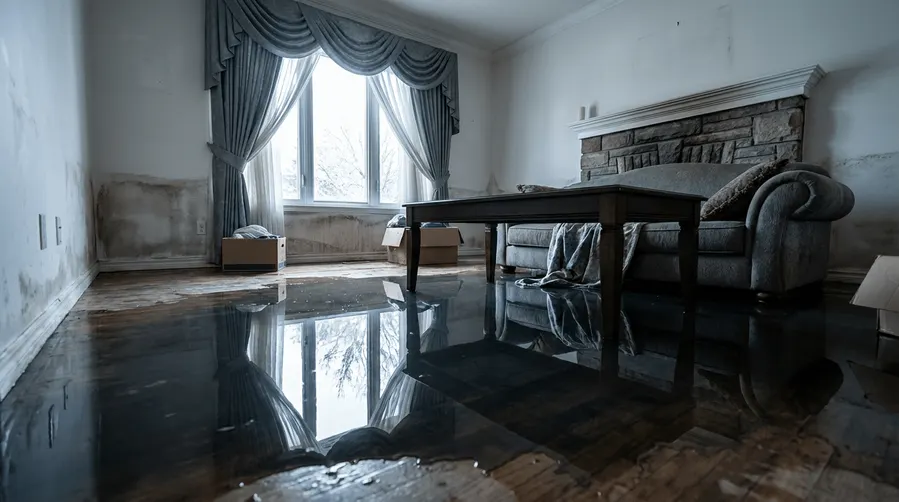
Keep people and pets out of water that may touch outlets or appliances. Never turn power on or off while standing in water. If you smell gas, leave and call 911. Then stop the source if it is safe, photograph everything, and call (212) 555-0147.
What the Service Includes
When you ring for emergency water damage NYC help, you are not booking a single task. You are starting a chain of work that begins with safety and ends with dry rooms and a paper file your insurer can read. The crew that answers this page handles the whole chain, and the list below is the full set of services the chain is built from. Every job uses some of them; a big storm job may use all of them.
The order matters more than the list. Extraction before drying, drying before rebuilding, photographs before everything. A crew that starts by selling you new floors while water is still standing has the order backwards, and the bill for that mistake lands on you and your insurer, not on them. That order is the working habit of every emergency water damage NYC crew on this page.
- Emergency water damage response
- Water extraction and removal
- Structural drying and dehumidification
- Moisture mapping with daily readings
- Contents drying and cleaning
- Mold prevention after water damage
- Insurance claim documentation
- Burst pipe emergency response
- Basement flood emergency response
- Sewer backup emergency cleanup
- 24/7 emergency response
- Written scope of work
- Daily drying logs
- Direct insurance billing
- Reconstruction and repairs
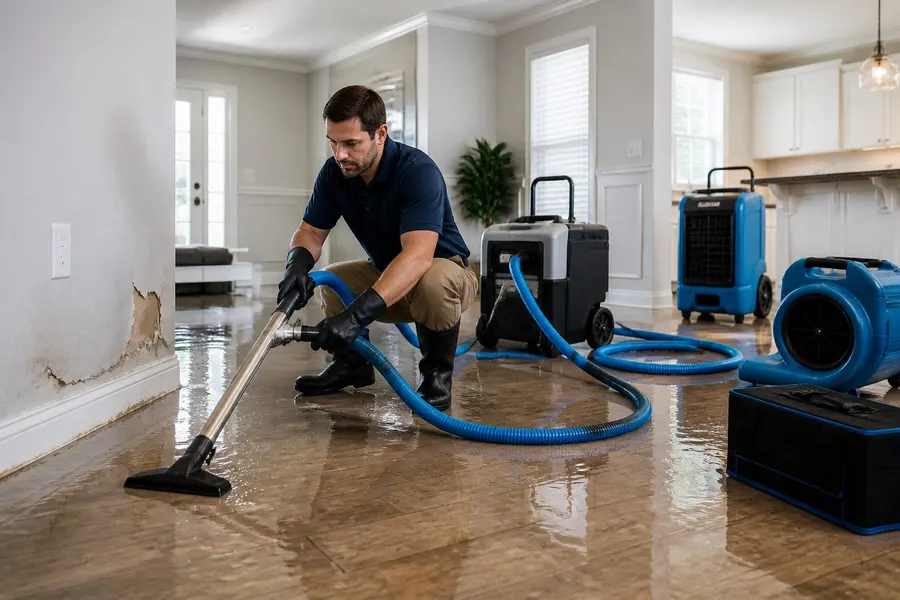
Two items on that list protect you more than any machine. The written scope says what will be done, room by room, before the work starts. The daily drying logs say what the moisture readings were each day, so the end of the job is decided by numbers, not by a guess or by a calendar. Ask for both on the first visit, while the water is still being pulled out.
Direct insurance billing is on the list because most callers ask for it on the first call. It means the crew sends its scope, logs and invoice to the insurer in the shape insurers ask for, while you keep copies of everything. It does not mean the insurer has agreed to anything; that decision follows the clocks set out in the insurance section below. Ask any emergency water damage NYC dispatcher and the same two items get named first.
The First Six Steps, in Order
Call 911 if anyone is in danger
If anyone is hurt, trapped, or at risk from water near electrics or a smell of gas, call 911 first and get everyone out. Nothing in a home is worth a life, and every other step on this list comes after this one.
Stop the water at the main valve
Close the house control valve where the water line enters the home, or the small valve behind the appliance that is leaking. In a flat, tell the super at once, because riser valves belong to the building.
Turn off the power from a dry place
If water is near outlets, cords or the breaker panel, switch the power off only if you can reach the panel with dry feet and dry hands. Never turn power on or off while standing in water.
Call for emergency help and tell the insurer
Call (212) 555-0147 for a crew, then open the insurance claim and note the claim number, the time of the call and the name of the person you spoke with.
Photograph everything before anything is moved
Take wide and close photographs and video of every wet room, the source of the water, damaged belongings and the serial number plates of large appliances, before cleanup starts.
Keep every record for the insurance claim
Keep the photographs, the written scope, the daily drying logs, insurer letters, receipts and the claim number in one file until the claim is closed and paid.
The First Hour, Minute by Minute
People ask what emergency water damage NYC crews actually do with the first hour, so here it is plainly, the way a good run should look. The clock starts when your call is answered, not when the van parks. Everything in this hour has one aim: stop the damage growing, and start the record that proves what happened.
Minutes 0 to 10: the call
The person who answers takes four things: the address and the safest way in, where the water is coming from, whether anyone is hurt or at risk, and whether water is near electrics or smells of gas. If there is danger, you are told to call 911 and get out before anything else is discussed. Then the nearest crew is dispatched and you are given an arrival window. While the van rolls, you get the short list: valve, photographs, insurer, in that order, and only the parts that are safe for you to do.
Minutes 10 to 30: making the home safe
On arrival the crew walks the home before it unloads anything heavy. Power questions come first: is water near the panel, outlets or appliances, and has anything sparked or tripped. The source is confirmed stopped, or stopped now. A flooded basement is looked at from the stairs, not waded into, until the power side is settled. Only when the rooms are safe does the gear come in.
Minutes 30 to 60: water out, record started, drying planned
Extraction starts on the deepest water first. While one pair of hands pulls water, another takes the photographs and the first moisture readings, because both records are worth most before anything changes. Furniture is lifted onto blocks, soaked rugs are rolled, and the drying plan is set: which walls get air movement, which materials need a closer look, and when the crew returns for the next readings. Before the hour closes you should hold a written scope in plain words and know the next visit time.
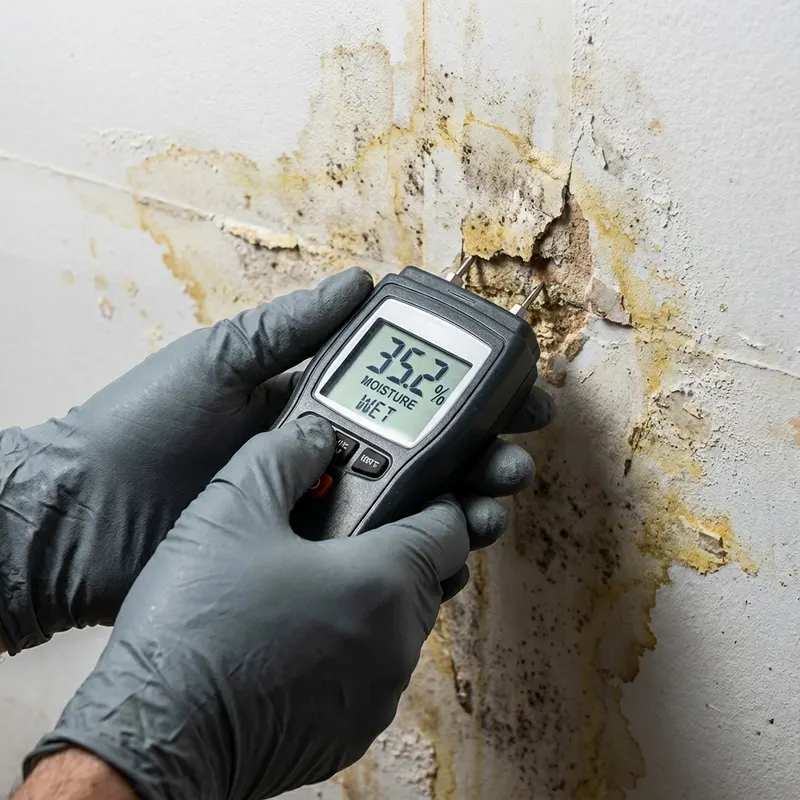
If your first hour looked nothing like this, say so while the job is young. A crew that cannot explain its own first hour in plain words will not explain the fifth day any better, and the time to change crews is before the walls are closed, not after. The same standard is what this emergency water damage NYC page promises on every call.
The Call Itself: What to Say and What to Ask
A good emergency call is short. You do not need the right technical words, and nobody on this line expects them. Say where you are, say what you can see, and say what you can smell. Water running, water standing, water dripping through a ceiling, a smell of gas, a sound of hissing: each one sends the crew in with different gear and a different first move. A short call is the first gift you give an emergency water damage NYC crew.
Three details save real time. The first is access: a doorman, a gate code, a super who must be called, a dog that needs a closed door. The second is the floor and the way up, because extraction gear is heavy and a fifth floor walk up is planned differently from a freight lift. The third is what has already been done: valve closed or not, power off or not, insurer called or not. None of this needs to be exact. A rough answer given fast beats a perfect answer given after the water reaches the next room.
Ask three questions back. When will the crew arrive, and is that a promise or a hope. Who do I speak to if the arrival time slips. And will I get the scope and the readings in writing from the first visit. The answers tell you more about the firm than any advert. On this page the answers are fixed: a crew on site within the hour across the five boroughs, a named person on the line around the clock, and a written scope with daily readings as standard, not as a favour. Those three answers are fixed policy for this emergency water damage NYC service.
If you are calling for someone else, an elderly parent, a tenant, a neighbour whose ceiling is leaking into yours, say so at the start. The crew needs to know who can let them in, who can agree to work, and who the insurer file should name. Sorting that out on the doorstep wastes the very minutes this page exists to save. Naming the decision makers early is standard practice for emergency water damage NYC work in managed buildings.
Safety Before Speed: Power, Gas and Standing Water
Every emergency water damage NYC run starts with the same rule: nobody gets hurt for a floor. Water and electricity are the danger pair, and the guidance from the city Department of Buildings and from federal safety pages lines up word for word. Stay out of flooded buildings until they are checked. Stay away from breaker boxes. Do not enter a flooded basement where wires are present. Turn off electricity at the main breaker only when you can reach it from a dry place.
The Centers for Disease Control and Prevention, in its guidance for going home after a flood, puts the sharpest line in capital letters: never turn power on or off yourself, and never use an electric tool or appliance, while standing in water. That one sentence is worth taping inside a kitchen cupboard. Most home electrocutions in floods come from a reasonable act done in the wrong place: flipping a switch with wet feet.
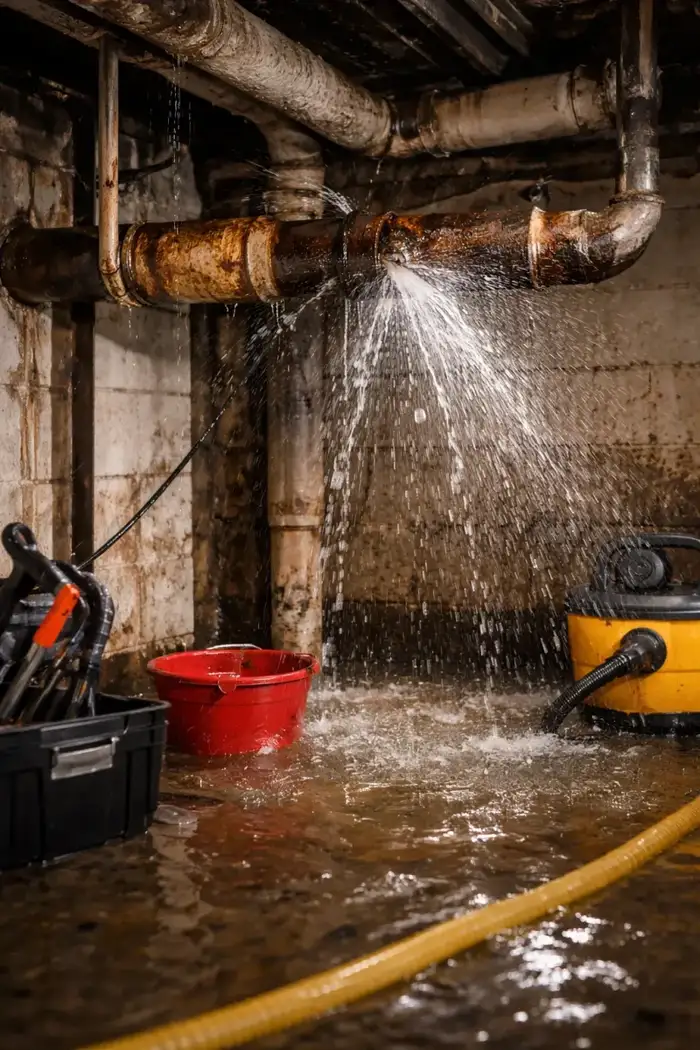
Wiring that went under water is not dried and trusted. It is inspected by a licensed electrician before power comes back, and wiring that sat in salt water is taken out and replaced. That second rule surprises people after coastal storms, but salt leaves corrosion inside fittings that keeps eating the metal long after the wall looks dry.
Gas is the second check. A smell of gas means the job stops being a water job. Turn off the main gas valve on your way out if you can reach it without delay, open windows as you go, leave the home, and call 911 from outside. Nobody restarts work, ours included, until the utility or the fire department clears the building.
The third check is the water itself. Flood water from streets and sewers can carry sewage and chemicals, and the mud it leaves behind can hold both. Keep children and pets out of it, wash any skin it touched, and let the crew handle soaked material with gloves and protection. Clean water from a burst supply pipe is a different class of problem from a sewer backup, and a good crew treats them differently from the first minute. Crews grade water by source on every emergency water damage NYC call for exactly that reason.
Stopping the Water: Valves, Risers and Who Can Shut What
The single most useful sentence in the Reddit thread quoted later on this page is a man admitting, after his home flooded, that he did not even know where his main valve was. Learn yours on a quiet day. In most houses the house control valve sits where the water line enters, low on the front wall of the basement or in a utility space. In flats, your own shutoffs live under sinks and behind the washing machine, while the riser valves that feed a whole line of flats belong to the building.
Know the limits as well as the location. Closing your own house control valve to stop a burst is a temporary shutoff any owner can do. Beyond that, the rules tighten: a licensed plumber is required to shut off or restore service properly, and the city says so in plain words. The City does not provide a water shut off service. If your valve is seized, painted shut or spinning free, do not force it with a wrench and hope. Tell the crew, keep people clear of the water, and let the plumber deal with the valve while the crew deals with the flood. That sentence is quoted on this emergency water damage NYC page because callers argue with it weekly.
In apartment buildings the fastest shutoff is often a person, not a valve: the super or porter who knows which riser feeds your line and holds the key to the room it runs through. Call the super before you call anyone else after 911, and write down the time you called. Buildings that drill this once a year, a valve walk with supers and porters, cut their flood damage hard, because the first ten minutes of a riser leak decide whether one flat or six flats get wet. Buildings that run that drill give every emergency water damage NYC crew a head start.
One more valve matters in winter and in empty homes: the outside tap line and any pipe that runs through an unheated space. Shut and drain those lines before cold snaps if your home has the fittings for it, and keep the heat on in any home that stands empty, even at a low setting. Pipes do not burst at the speed of the freeze; they burst at the thaw, when ice gives way and full pressure finds the split. Winter shutoff habits prevent more emergency water damage NYC calls than any machine prevents.
Burst Pipes and Frozen Lines in Winter
Winter is burst pipe season in this city, and most winter calls for emergency water damage NYC help start the same way: a bang, a hiss, or water through a ceiling on the first mild morning after a hard freeze. The pipe split during the freeze, held shut by its own ice, then let go when the ice melted and full pressure came back. By the time water shows in a room below, it may have been running inside the wall for an hour.
Prevention sits with the homeowner, and the city Department of Environmental Protection publishes the same short list every year. Insulate pipes in unheated spaces. Keep heat running, even low, in empty homes. Open the cabinet doors under sinks on outside walls so warm room air reaches the pipes. Let a tap drip on the coldest nights where a line has frozen before. None of it is glamorous, and all of it is cheaper than one burst.
Thawing a frozen pipe is a gentle job. Open the tap the pipe feeds, shut nothing else down unless you suspect a split, and warm the frozen section slowly with warm air, a hair dryer or towels soaked in warm water, working from the tap back toward the cold spot. Never use a flame. If the pipe has already split, skip the thaw entirely: close the main valve, keep power away from the wet area, and call for help. A gentle thaw is the cheapest emergency water damage NYC visit there is: the one that never happens.
Repairs to the line belong to a licensed master plumber. The drying crew and the plumber should work from one shared record: where the split was, how long it ran, which rooms took water. That shared record is what turns two trades visiting one home into one claim file that an insurer can follow without ringing you for the story a fourth time.
Basement Floods: The Most Dangerous Room in the House
Ask any crew where the worst calls come from and the answer is the same: below grade. A basement holds the furnace, the water heater, the breaker panel, the washer and years of stored belongings in one space that water reaches first and leaves last. It is also the room where flood water can kill, which is why this page gives it its own section and its own rules.
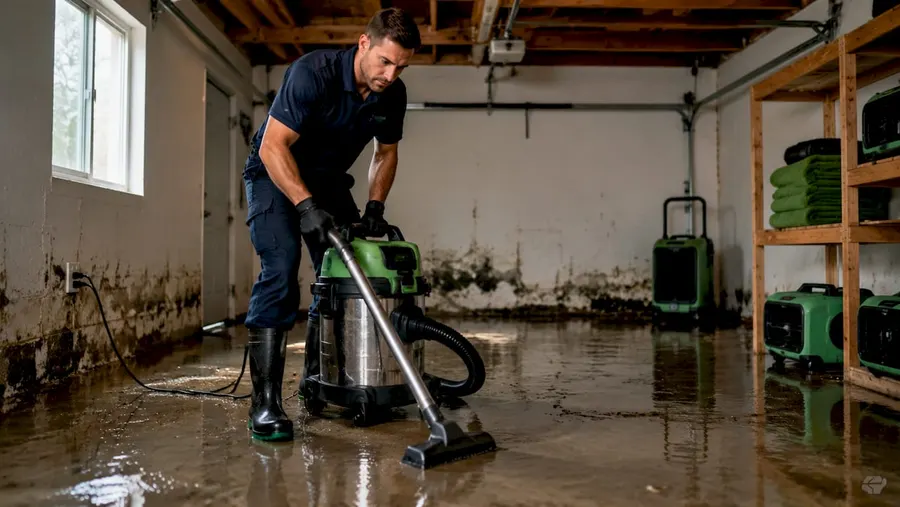
Rule one is the stairs. Look from the top step. If water is over outlets, if the panel is in the water, if anything is sparking or humming that should not be, do not go down. Call 911 if there is immediate danger, and let the power question be settled by people with the right gear. Rule two is the air: a flooded basement that has stood closed for days should be treated as mouldy until checked, and opened up and aired before anyone works in it for long. Rule three is patience with belongings: soaked boxes can wait a day; people cannot un-breathe bad air or un-touch a live wire.
Once the room is safe, the work is methodical. Water is pumped or extracted, the floor is checked for drains and a working sump, belongings are lifted, sorted and photographed, and the heater, boiler and appliances are flagged for the trades that own them. Walls at basement level are often block or concrete that dry slowly and read wet on a meter long after the surface feels dry, which is why basement drying is measured, not guessed. Those three rules open every basement job an emergency water damage NYC crew takes.
Two fittings decide the next flood more than any other: a sump pump that is tested before storm season, with a battery backup where the power often fails, and a backwater valve that stops the city sewer pushing back into your lowest drains. Ask a licensed plumber about both for your home, and never send sump water into the sanitary sewer; it belongs on the storm side or out to grade, by the rules of your building and street. Measured drying is what separates an emergency water damage NYC basement job from a pumping visit.
Sewer Backups and Dirty Water
A sewer backup is the call nobody wants to make and nobody should delay. The water is contaminated by definition, it often arrives through the lowest drains in the home, and it can keep coming as long as the blockage holds. Keep people and pets out of it, stop using water upstairs where you can, because every flush and every drained bath adds to what comes back, and call 311 as well as calling a crew. A backup is the one call where an emergency water damage NYC crew and the city must both be rung.
The city side of a backup runs on a known clock. Report it to 311 and an inspector is sent within 6 hours. The Department of Environmental Protection says the most common cause is a blocked pipe, and the usual suspects are grease poured down sinks and wipes flushed down toilets, whatever the packet claims about them being flushable. The inspector visit note and your 311 reference number belong in your file; if city sewer trouble damaged your property, a claim against the city goes to the Comptroller and must be filed within 90 days.
The crew side is protection first: gloves, boots, and treating every soaked porous item as suspect. Soft furnishings that drank sewage are rarely saved and honest crews say so early rather than billing you to dry what should be binned. Hard surfaces are extracted, cleaned and disinfected, and the drying that follows is the same measured work as any other job, with readings logged until the structure reads dry.
Prevention is dull and effective. Grease goes in a tin, not the sink. Only toilet paper goes in the toilet. A backwater valve, fitted by a licensed plumber, is the one upgrade that changes a backup from a flood to a nuisance, and buildings with a history of backups should treat it as urgent plumbing, not as a someday project. Prevention talk is part of the service on this emergency water damage NYC page, not an extra.
Storms, Flash Floods and the Lessons of Ida and Sandy
This city has been taught the same lesson twice, at terrible price, and any page about emergency water damage NYC help that skips those two storms is not being straight with you. The lesson is that in a true flash flood, water in a basement home is a life safety event first and a property event second, and the order of those two things must never be swapped.
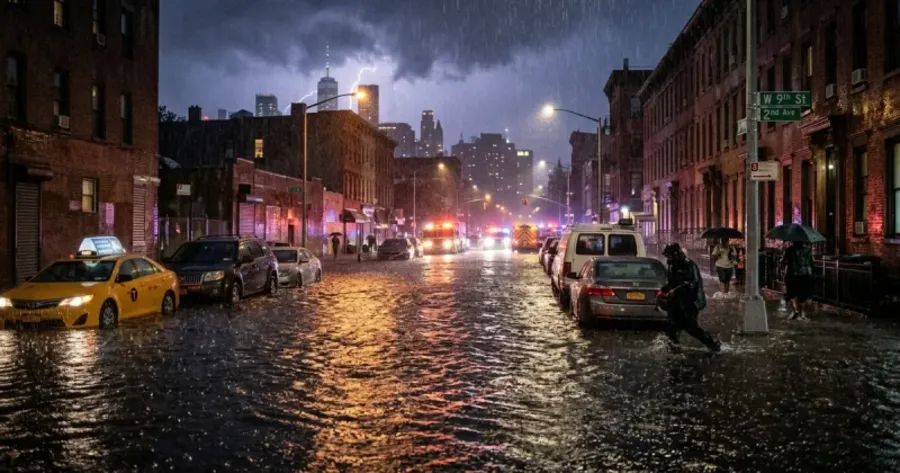
Hurricane Ida, September 2021. Rain fell at up to 3.5 inches per hour in some areas. A study published in the NYU GPH Journal on April 15, 2024 examined 14 deaths from the storm and found 13 directly related to it, 11 of them people who drowned in basement apartments. Many of those homes filled faster than anyone inside could react. When a flash flood warning names your area and water starts rising in a basement home, the instruction is short: get up, get out, go to higher ground, and leave belongings where they lie.
Hurricane Sandy, October 2012. The sea came into streets, tunnels and ground floors across the five boroughs. The city recovery programme records 44 deaths and about 19 billion dollars in damages, while the City Comptroller report of 2022 counts 43 deaths; the two official sources differ by one, and this page shows both rather than hiding the gap. Sandy also wrote the salt water rule into local practice: wiring that sat in seawater is removed and replaced, because corrosion keeps working long after the dry-out ends.
Between the storms sit the smaller events that fill most of the year: summer downpours that overwhelm one street drain, spring thaws, a water main that lets go at 4 AM. The city response times worth knowing are the 311 ones. A water main break brings Department of Environmental Protection crews within 8 hours of the report. A sewer backup brings an inspector within 6 hours. Your own home, in the same hours, is your crew and your valve and your photographs, which is why those three things are drilled all over this page. The 311 clocks are printed here because an emergency water damage NYC caller should never have to hunt for them.
Leaks From Upstairs and Water From a Neighbour's Home
In a city of stacked homes, a large share of emergency calls begin with water that is not yours: a neighbour's water heater, a washing machine hose two floors up, a bathroom overflow that finds the path down through light fittings and ceiling plaster. The RescueDry case study linked later on this page is exactly that story, a water heater that broke in the flat above and sent its water down into a Queens home on a weekend.
Your first moves protect you twice over. Photograph the ceiling, the walls and the dripping before anything dries or is painted, because that record is evidence for two insurers, yours and the neighbour's, and for the building. Tell the neighbour and the super at once, in a form you can date; most upstairs leaks are still running when the downstairs flat notices them, and every minute of delay is more water in your ceiling. Then call a crew for your own home. Do not wait for the neighbour's insurer to send someone before your own rooms are made safe and drying starts. Upstairs leaks are the most common shared wall story in emergency water damage NYC work.
Ceilings deserve respect. A ceiling that bows, sags or shows a growing dark ring may be holding a pool of water above the plaster, and that pool comes down in one go when it comes. Keep people, beds and electronics out from under a bulging ceiling, and tell the crew about it on the call so they can release it in a controlled way rather than meeting it as a collapse.
Who pays is a question for insurers and, where needed, lawyers, and this page will not pretend otherwise. What this page can promise is the part that decides those arguments: a dated, photographed, measured record of what got wet in your home, when it was found, and what was done, made on the day it happened rather than reconstructed weeks later from memory. That record is the real product of the first visit on any emergency water damage NYC job.
Appliance Failures: Heaters, Washers, Fridges and Dishwashers
The quietest floods come from machines. A water heater lets go at the base after years of rust nobody saw. A washing machine hose, cheap rubber under constant pressure, splits at 2 AM and runs until morning. A dishwasher leaks a cupful per cycle for a month into the boards under a kitchen, announcing itself only when the floor starts to smell and lift. Each one is an emergency of a different speed, and each one is handled best by the same habit: find it early, stop its water, record it, dry it.
Every appliance that uses water has a small valve behind or beside it, and every adult in the home should know those valves by touch. Turning the valve behind a washer or under a sink takes five seconds and stops a flood at its source while the main supply stays on for the rest of the home. Rubber supply hoses are wear items: swap them for braided steel lines, and treat any hose that bulges, blisters or rusts at the fitting as a hose that has already told you its plans. Five seconds at a valve is the smallest bill in emergency water damage NYC work.
Water heaters deserve a yearly look. Rust at the base, rumbling, water that runs rusty, a pan that stays wet: each is a warning with time still attached. A heater that fails in a flat rarely floods only that flat. It sends its tank down through the floor, which is why buildings that track heater ages and push replacement before failure have fewer midnight floods than buildings that wait for the bang.
The slow dishwasher and fridge line leaks are the ones that feed hidden mould, because they wet the same boards a little at a time for weeks. If a kitchen floor smells musty, if boards cup or a kick plate shows dark staining, treat it as a water problem until a meter says otherwise. A moisture reading takes two minutes and settles arguments that noses can argue about for months. A two minute meter reading settles what an emergency water damage NYC crew should do next.
Roof Leaks, Windows and Rain Coming In
Rain finds the weak points a building already has: a flat roof ponding over a tired seam, flashing that lifted in a winter storm, a window frame whose seal gave up two summers ago. Roof water is sneaky water. It can travel along a joist or a pipe run and appear in a room far from the hole, which is why the stain on your ceiling is a clue, not a map.
While rain is still coming in, the emergency work is simple and practical: catch it, move what it can ruin, and keep it off electrics. Buckets and plastic sheeting are not defeat; they are correct first aid, and crews use them too. Photograph the active drip and the stain pattern during the storm if you safely can, because a roofer hunting a leak on a dry Tuesday will thank you for a photo of where the water actually entered on a wet Saturday. First aid of that kind is standard on an emergency water damage NYC call, not a makeshift.
Drying a roof leak follows the same measured pattern as any other job, with one extra question: what did the water touch on its way down. Insulation that drank through a ceiling often holds water long after the plaster face reads dry, and wall cavities dry slower than open rooms. Readings are taken in the cavity, not just on the surface, before anyone talks about closing and painting. Cavity readings decide the plan on every roof fed emergency water damage NYC job.
Repairs split by trade. The hole in the roof belongs to a roofer, and non structural roof repairs sit on the city list of work that needs no permit, while structural work is a different matter handled with filings. The wet building below the hole belongs to the drying crew. Getting both trades to write down what they found, in the same file, is what keeps a small roof leak from becoming an argument about an old stain at sale time or claim time.
Flats, Co-ops and Condos: Who Does What in the First Day
A flood in a tower is a team event whether the team agrees to be one or not. The flat owner owns the rooms. The co-op or condo owns the structure, the risers and the roof. The building staff own the valves, the lift bookings and the keys. The insurer owns the clock. Emergency water damage NYC work in a high rise goes well when each of those owners is told early and told in writing, and badly when any one of them hears about it from a neighbour two days later.
Your duties as the flat owner or renter are the fast ones: stop your own valves, protect your belongings, photograph everything, call the crew, call the super, call the insurer. The building duties are the system ones: shut the riser if the leak is in a shared line, check the flats below, log the event, and give the crew lift and access time without a fight at the desk. Good buildings keep a one page flood sheet at the desk with riser maps and staff numbers, and it is worth asking your board whether yours does.
Access decides the drying timetable more than any machine. A crew that can book the freight lift, park a van at the dock and run hoses without crossing a marble lobby in rush hour will finish the wet work hours sooner than a crew fighting the building all day. When you call, name the building rules you know: dock hours, lift booking, insurance certificates the management company wants on file. Sending the crew in with those answers ready is the single kindest thing a caller can do for their own job. Access answers given on the first call are worth an hour on any emergency water damage NYC job.
Certificates deserve one plain sentence. Restoration firms working in managed buildings are routinely asked for insurance certificates naming the building and the management company, and a firm that sighs about the request is telling you it does not work in managed buildings often. Ask on the first call, get the certificate sent before the van rolls, and the desk delay disappears.
Renters: Your Rights When Water Hits a Rental Home
Renters carry the wettest end of most apartment floods and the least control over the building, so this section is written for you directly. Two laws do most of the work. Section 235-B of the Real Property Law gives you a warranty of habitability: the home must be fit to live in, and no lease clause can sign that away. Section 223-b of the same law bars your landlord from punishing you for using it: no retaliatory eviction for a good faith complaint, with a legal presumption of retaliation if the landlord moves against you within one year of the complaint, and damages plus attorney fees and costs if you win. Those two sections of law are the backbone of renter calls to this emergency water damage NYC page.
The working route is owner first, then the city. Tell the landlord or managing agent in writing, dated, with photographs attached, and keep your copy. Give reasonable access for repairs; blocking access is the one move that weakens your own case. If nothing moves, call 311 and ask for a Housing Preservation and Development inspection. That puts the problem on the city record and starts the correction clocks: 90 days for Class A, 30 days for Class B, and for Class C, 21 days for lead paint, 21 days for window guards, mold, mice, cockroaches and rats, 14 days for a self closing door, immediately for heat or hot water, and 24 hours for all other Class C items. The table gives no leak its own deadline, so describe the harm the leak causes, the mold, the ceiling, the electrics, because the class follows the harm.
Keep paying the paper game straight even while you are angry. Photograph before cleanup, keep the 311 reference number with the letters, save receipts for anything the flood forced you to spend on, and write down names and times for every call. Tenants with a tidy file get repairs and settlements; tenants with a story and no dates get sympathy. That is not fair, but it is true, and this page would rather be useful than comforting. A tidy file is the strongest tool a renter brings to any emergency water damage NYC dispute.
One fear can be set down plainly. Reporting a leak, even a bad one, even one that was partly your own appliance, is not grounds for eviction, and a landlord who threatens it after a good faith complaint is walking into section 223-b. If threats start, that is the moment for a tenant lawyer or a housing clinic, and the file you kept is what you take with you.
Landlords, Supers and Managing Agents: Duties in the First Day
Owners reading this page after a tenant call should hear the same facts from the other side. The warranty of habitability is not optional and it is not delegable to the tenant. When water hits a rental home, the owner side owes a fast response, a real repair, and a record of both. The owners who handle floods well treat the first day as a legal day as well as a drying day, because it is.
Speed protects owners too. A crew in the flat within the hour, extracting and drying, is the difference between a repaint and a gut renovation, between one flat and three flats, between a tenant who renews and a tenant who calls 311 and a lawyer in the same week. The correction clocks in the renters section run from the violation, not from when the owner felt ready, and an inspector who finds drying gear running and a scope on paper writes a different report from one who finds a bucket and a promise. Inspectors can tell the difference, and so can tenants choosing whether to renew.
Supers are the hinge of the whole system. The super who knows the risers, keeps the valve keys on one ring, and answers the phone at night is worth more than any single machine in the basement. Owners should pay for that knowledge properly: valve maps drawn and kept at the desk, a yearly walk of every shutoff, and authority for the super to call an emergency crew without waking three managers for permission while water runs.
Document from the owner side as well. Your own photographs, the crew scope, the drying logs and the repair invoices are the file that answers a rent dispute, an insurer query or a housing court question months later. Owners and tenants keeping parallel honest files is not a conflict; it is how a bad week stays a bad week instead of becoming a bad year.
Brownstones, Row Houses and Older Homes
The older housing stock of this city floods in its own accent. Brownstones and row houses carry a century of plumbing layered over itself: galvanised lines beside copper beside plastic, drains that were generous in 1910 and tired now, and cellars that were built for coal and storage, not for finished rooms and electronics. When water lets go in one of these homes it often runs further and hides better than in a new build, because there are more voids, more chases and more old repairs for it to travel through. Older stock is where emergency water damage NYC experience shows most clearly.
Garden level and cellar flats take the first hit, and they are also where the Ida lesson lives. Any below grade bedroom in a flash flood is a room to leave early, and owners who let such rooms should say so to tenants in plain words before storm season, not after. Sump pumps, backwater valves and drains cleared of leaves are the unglamorous trio that decides how a brownstone basement meets a downpour.
Drying older fabric takes a gentler hand. Plaster and lath, old timber and brick party walls all hold water differently from modern board and stud, and aggressive heat can crack what flooding only wetted. Crews who work the older stock read moisture in the actual materials, dry to the material standard, and accept the extra days where the building asks for them. Rushing a brownstone dry is how you buy a second renovation. Gentle, measured drying is the brownstone rule for emergency water damage NYC crews.
Party walls add a neighbour to every job. Water that enters your wall cavity can show in the house next door a day later, and the polite, practical move is to tell the neighbour early and share the crew findings. More than one New York flood has become a feud because a wall was dried on one side and left wet on the other, and the mould that followed did not respect the property line either.
Shops, Offices, Restaurants and Workplaces
Water in a workplace is the same water with a clock attached: stock, bookings, wages and a lease. The first hour rules do not change, safety, source, photographs, crew, but the order of the phone calls grows by two. Tell the landlord or building management at once, because risers, roofs and mains are usually theirs. And tell your own insurer the same day, because business policies carry their own notice habits and the file starts when you say it starts.
Stock and equipment triage is the business version of lifting furniture onto blocks. Get goods off the floor and out of the wet zone first, photograph them where they sat before they move, and keep damaged stock aside for the insurer rather than binning it in the first angry hour. Computers and tills come up off floors, servers get powered down properly where it is safe to do so, and anything electrical that sat in water is treated as suspect until checked. Stock photographed where it sat is a rule on every business emergency water damage NYC job.
Food premises carry a rule of their own: flood water and food do not mix, and stock that flood water touched is not sold, full stop. Kitchens hit by sewer water need cleaning and clearance before service, and the health side of the city has its own say there. Owners who build that pause into the plan reopen once, cleanly, instead of reopening twice with a closure in between.
Drying a trading space is often night work, and crews that serve businesses plan for it: extraction and loud drying while the shutters are down, readings and checks in the morning before opening. Ask for that pattern on the first call if you need it. The scope should say which hours the crew will work, because a scope that assumes a silent empty building is a scope written for the wrong job. Night working is a normal request for an emergency water damage NYC crew serving trading premises.
Manhattan: High Rises, Doormen and Tight Access
Manhattan water emergencies run on logistics. The water behaves the same as anywhere, but the crew must cross a lobby, a lift and a management office before it touches a hose. Doormen and desk staff are allies worth having: tell them a crew is coming, give the firm name and the flat number, and the van gets waved to the dock instead of circling the block while your ceiling drips.
The borough stacks more homes over more businesses than anywhere else in the city, so one riser leak can wet a law office, two flats and a restaurant in a single run. Buildings here also hold the oldest risers and the newest towers side by side, sometimes on the same block, and the drying plan for a pre war co-op with plaster walls looks nothing like the plan for a glass tower with board and vinyl. Crews should ask which building they are entering before they promise a timetable, and callers should be suspicious of any timetable promised without the question. Asking about the building first is a mark of an emergency water damage NYC crew that works the borough weekly.
Weekday mornings are the borough pinch point: dock queues, lift bookings and streets at a standstill. The within the hour promise on this page is kept by sending the nearest crew, not the crew that happens to be at a yard, and by taking access details on the first call. If you are the caller, the flat number, the lift rules and the super phone number are the three gifts you can give that promise.
Brooklyn: Brownstones, Garden Flats and Big Borough Distances
Brooklyn is the most populous borough and the most varied: brownstone blocks, garden flats, big apartment houses, warehouses turned into homes, and neighbourhoods where the nearest crew base can be a real drive in bad traffic. That variety is why local knowledge matters here. A crew that knows which streets flood at the underpasses, which blocks are all cellar flats, and which buildings keep a live in super will beat a crew with a faster van and no map in its head. Local knowledge is a real tool in Brooklyn emergency water damage NYC work, not a slogan.
The borough pattern of loss is basements and garden levels, again and again: storm water at the back door, a sewer that surcharges in a downpour, a boiler room that takes the first foot of any flood. If you live at garden level, the prep list later on this page was written with your flat in mind: storage up on shelves, drains kept clear, a torch and boots by the door, and a bag packed on the nights the warnings name your streets.
Brooklyn callers should also know the neighbour rule in its row house form. Shared walls and shared drains mean your flood can be the house next door by morning. A knock on the door with the news, early and friendly, is worth more than any letter sent later, and crews will happily check the party wall readings on both sides while the gear is out.
Queens: Houses, Basements and One Very Wet Weekend
Queens mixes suburban streets with dense apartment blocks, and its water emergencies follow the houses: basements that take storm water, water heaters that let go in attached homes, and upstairs leaks in the borough many smaller multi family buildings. The case study on this page happened here, on a weekend, when a water heater broke in the flat above and the home below filled fast enough to need emergency extraction the same day. Weekend heater failures are a Queens pattern every emergency water damage NYC dispatcher knows.
The borough also holds some of the city lowest ground, near the bays and creeks, where storm surge and creek flooding are living memory rather than history. Homes there should read the storm section of this page as local news: know whether your street took water in Sandy, know your sump and your valve, and treat a coastal flood watch as a working instruction, not background noise on the radio.
For the attached and semi detached houses that fill so much of Queens, the shared systems matter: a neighbour's blocked drain can back up into your basement, and your tree roots can be the blockage in theirs. When a backup repeats on a street, the fix is often a camera down the line and a conversation between neighbours and the city, and the 311 inspector report from each backup is the paper that gets that conversation taken seriously.
The Bronx: Older Stock, Winter Bursts and River Streets
The Bronx runs a heavy share of the city older apartment stock, buildings where risers, radiators and steam heat have served through decades of winters. Winter is the borough hard season for water: frozen lines in exposed runs, radiator leaks that scald and soak at once, and boiler rooms that flood from their own failures. A radiator leak is a two hazard job, hot water and steam first, wet floors second, and nobody should be reaching past a hissing valve to save a rug. Winter discipline in the big pre war buildings is Bronx emergency water damage NYC work at its most routine.
The river streets and the low ground near the Harlem and Bronx rivers carry the borough flood risk, and the basements under the older houses there have met river water before. For those homes the same trio rules: sump tested, backwater valve fitted, storage off the floor. Add a fourth for river streets: a plan for the car, because a flooded car is a total loss that a half hour of foresight often prevents.
Bronx callers in the big pre war buildings should use the building as the tool it is. Porters and supers in those houses have seen every riser in the building let go at least once and know which valve is a liar and which stairwell runs fastest. Ring the desk early, get the event logged, and the crew arrives to a building that is already working the problem from its side.
Staten Island: Surge Memory and Low Ground
Staten Island met the sea in Sandy in a way no other borough did, street by street along its eastern and southern shores, and the borough still plans with that memory in the room. Homes there live with surge risk as a standing fact: raised utilities, flood vents, storage kept high, and a household habit of treating a storm surge watch as a day to act, not a day to watch.
The borough houses are mostly houses, which changes the emergency shape. There is no super and no riser; there is your valve, your sump, your roof and your drains, and the nearest neighbour is across a yard, not across a wall. That makes the prep lists on this page the whole game for island homes: the owner who knows the valve and tests the sump in October has a different storm night from the owner who meets both for the first time in the dark. Owner knowledge is the whole first response in island emergency water damage NYC calls.
Salt water rules apply here with force. Any wiring, appliance or heating gear that sat in seawater is on the replace list, not the dry list, and insurers who worked the island after Sandy expect that standard. Photograph the water line on the walls before cleanup; on the island that line is also a record the next buyer, and the next insurer, will ask about.
Areas Covered, Across the City and Beyond
The core of the service is the five boroughs, and the crews run wider where the city shades into its neighbours. The full area list is kept in one place so callers can check a street in seconds rather than arguing geography on a wet night.
- Manhattan
- Brooklyn
- Queens
- Bronx
- Staten Island
- New York City
- Yonkers
- New Rochelle
- Mount Vernon
- White Plains
- Long Island
- Nassau County
- Suffolk County
- Westchester County
- Rockland County
- New York State
Calls from the edge of the map get an honest answer on timing. Within the five boroughs the promise is a crew on site within the hour. Further out, in the Westchester towns and the nearer parts of Long Island, the dispatcher names the true window on the call rather than borrowing the city promise and breaking it. A promise kept at ninety minutes beats a promise broken at sixty, and callers remember which kind they were given.
Wherever you are calling from, the first moves are the same and they do not wait for the van: danger to 911, water stopped at the valve if it is safe, photographs before anything moves, insurer told the same day. Geography changes the drive time. It does not change the first hour. An honest window is policy for emergency water damage NYC calls beyond the boroughs.
Drying: Why Days to Weeks Is the Honest Answer
Every caller asks how long drying takes, and every honest crew gives the answer nobody wants: days to weeks, decided by readings. The city emergency guidance says the same in so many words. A room is not dry because a set number of days passed, or because the surface feels dry to a palm. A material is dry when its moisture reading reaches the dry standard for that material, the reading taken from a sound, dry sample of the same stuff in the same building. Readings, not calendars, end every emergency water damage NYC drying job on this page.
The kit is simple to describe and dull to watch, which is how you know it is working. Air movers push air across wet surfaces so moisture leaves them. Dehumidifiers pull that moisture out of the air and drain it away. Meters, pin and pinless, read what is happening inside the material, and a moisture map of the room shows where the water actually travelled, which is always further than the visible stain. Readings are logged daily, and the log is the job: it shows the curve falling, day by day, toward the standard. Explained plainly, that kit is the working end of emergency restoration practice.
Pulling gear early is the most expensive favour a crew can do you. Close a wall over a cavity that still reads wet and you have built a mould farm with new paint on it. Lay a floor over a slab that still reads wet and the floor cups, lifts or rots from below. The readings are the referee, and a crew that will not show them is asking to be trusted in exactly the place where trust should be replaced by numbers. Early gear removal is the favour this emergency water damage NYC service refuses to do you.
Some materials do not dry in place and honest crews say so on day one. Soaked carpet padding, swollen fibreboard, insulation that drank dirty water: these come out, and the scope should name them as removals rather than letting you discover the decision later. What can be dried in place, solid timber, plaster, masonry, most hardwood with prompt work, dries faster and better when extraction was thorough, because every litre pulled out by a wand is a litre the dehumidifiers do not have to chase for days.
The Mould Window: 24 to 48 Hours, Said Plainly
Two official wordings circle this topic and they are often mashed into one wrong sentence, so here they are kept apart. The Environmental Protection Agency frames 24 to 48 hours as a drying window: get wet materials dry within that window to prevent mould growth. FloodSmart states the risk the other way round: mould can start forming within 24 to 48 hours of flooding. Both point the same direction. The first two days decide most of the mould story of a flood. Keeping the two wordings apart is a habit of this emergency water damage NYC page.
That is the practical reason extraction and drying start on the first visit, at night, on weekends, without waiting for a convenient morning. A crew that arrives fast and dries slow has still beaten a crew that arrives slow, because the window runs from the wetting, not from the phone call. When you read response promises, ours included, read them against that window: an hour saved at the start is worth a day at the end. That window is the reason emergency water damage NYC crews start drying on the first visit.
Where mould has already taken hold beyond a small patch, the work changes legal shape. New York State Article 32 covers mould work above 10 square feet: a licensed assessor assesses, a licensed remediator remediates, and the same firm cannot do both on one job. That separation exists so the firm that profits from the cleanup is not the firm that grades its size. If a crew waves off the rule for a big patch, that is a crew telling you how it treats rules generally.
Prevention inside the window is mostly water discipline: extract hard, dry with readings, remove what cannot dry, and keep indoor humidity down while the gear runs. Bleach folklore and scented sprays do not dry a wall, and a wall that reads wet under a coat of mould paint is a wall that will be opened again, at someone cost, within the year.
Insurance: Clocks, Proof of Loss and the Paper File
Insurance is where a fast first hour turns into money kept or money lost, so the rules are worth knowing cold. New York Regulation 64, section 216.6, sets the main clock: once an insurer receives proof of loss, it has 15 business days to accept or reject the claim, and once the amount is agreed it must pay within 5 business days. For losses in a declared disaster, Insurance Law section 2618 tightens the payment side: 15 business days to decide, and payment within 4 business days. These clocks are why the date on your proof of loss matters, and why it should be sent in a way that proves when it landed.
The claim file is built in the first hour and fed every day after. Photographs and video from before cleanup, including the serial numbers of large appliances. The written scope. The daily drying logs. Every letter and email from the insurer, the claim number, and receipts for emergency spending. Crews on this page document as standard, and direct insurance billing means the scope, logs and invoice go to the insurer in the shape insurers ask for, with copies to you of everything sent. Documentation as standard is what this emergency water damage NYC service sells alongside the drying.
Two habits protect callers more than any argument. First, never throw damaged goods away before the insurer has seen them or agreed in writing that you can; a binned carpet is a story, a kept carpet is evidence. Second, get scope changes in writing as the job runs. Drying jobs change as walls are opened and readings come in, and a change agreed in a dated note is a line item, while a change agreed in a hallway is a dispute waiting for a quieter month.
Questions about what the Department of Financial Services can do for a stuck claim can be taken to the Department itself on (800) 342-3736, and the state disaster hotline on (800) 339-1759 carries help and information after declared disasters. Those numbers are printed here because they are the state own lines for exactly the weeks when this page gets read most. Those state lines are printed here for the weeks this emergency water damage NYC page gets read most.
Flood Cover and the National Flood Programme, Kept Separate
The most common insurance misunderstanding in a flood is the belief that a home policy covers rising water. In general it does not: water that comes from outside, from streets, rivers and the sea, belongs to flood cover, a separate policy, most often through the National Flood Insurance Program. Water from inside, a burst pipe, a split hose, is the home policy side. The crew record should state the source plainly, because that one fact steers the whole claim. Source wording on the crew record steers the claim on every emergency water damage NYC job.
Flood policies carry their own clocks. A new national flood policy has a 30 day wait before it starts, so a policy bought with a storm already named is a policy for the next storm, not this one. After a loss, proof of loss is due within 60 days. And the programme authority itself has a date that has been widely misreported: under 42 U.S.C. section 4026, no new contract for flood insurance shall be entered into after September 30, 2026. Policies already in force are not cancelled by that date; they run to their own end. Anyone quoting you a different date for the programme should be asked for the statute, not the screenshot. Dates and waits of that kind decide real claims after emergency water damage NYC jobs.
Renters in basement and garden level homes should read this section twice. A landlord policy does not cover your belongings, and a flood policy of your own is the only version that does. The photographs described elsewhere on this page, room by room, serial numbers included, are worth as much to a renter with flood cover as the policy itself on the day the water comes.
Permits: What Needs One and What Does Not
Callers ask whether emergency work needs permission to start, and the answer splits cleanly in two. Mitigation never waits: stopping water, extracting it, drying the structure and cleaning are emergency work, done at once, at any hour, without a permit queue. Construction is the other side. Most construction in this city needs a Department of Buildings permit, and where a job grows into structural repairs, moved plumbing or new electrical work, licensed trades file what the city requires and the filings join your claim file. Mitigation first, filings with the build: that split governs emergency water damage NYC work citywide.
The city own list of work that needs no permit is worth knowing, because much of the finish work after a dry-out sits on it: painting, plastering, installing new cabinets, replacing plumbing fixtures, resurfacing floors, and non structural roof repairs. A crew that tells you a repaint needs a filing is padding; a crew that tells you a moved wall needs none is guessing with your building record. Ask which side of the line each part of your scope sits on, and get the answer in the scope itself. Most finish work after emergency water damage cleanup nyc jobs sits on that no permit list.
Condo and co-op boards add their own layer of alteration agreements and work rules on top of the city layer, and those are building rules, not city law. Tell the crew about them on the first call, dock hours, work hours, certificate needs, so the plan fits the building from the first morning rather than being rewritten at the desk.
City Numbers Worth Saving: 911, 311, DEP and the State Lines
Save five numbers before you need them, because the middle of a flood is a poor time to go searching. 911 for immediate danger: sparking electrics in water, a gas smell, rising water trapping anyone, a flooded basement with live wires. 311 for damage reports and city services: the call that starts the city side of main breaks, sewer backups and housing inspections. The Department of Environmental Protection Water Emergency Hotline, (718) 595-7000, for water emergencies on the city system. The Department of Financial Services on (800) 342-3736 for insurance trouble after a claim. And the state disaster hotline on (800) 339-1759 after declared disasters. Those five numbers are the public half of any emergency water damage NYC call.
Know the city clocks that ride on those numbers. A reported water main break brings DEP crews within 8 hours. A reported sewer backup brings an inspector within 6 hours. A housing complaint through 311 starts the inspection and correction process described in the renters section. None of those clocks dry your home; they run beside your own crew, and the reference numbers from each call belong in the same file as your scope and logs. Reference numbers from city calls belong in the same file as your emergency water damage NYC scope.
And the crew number, once, plainly: (212) 555-0147, answered around the clock. Put it in the phone of every adult in the home and on the fridge beside the valve note. The best emergency number is the one nobody has to look up with wet feet. The crew number belongs on the same fridge note as the valve, in every home this emergency water damage NYC page serves.
Insurance trouble after a claim: Department of Financial Services, (800) 342-3736. Help and information after a declared disaster: the state disaster hotline, (800) 339-1759.
Response Times: What Other Firms Promise, Checked Honestly
Every firm in this trade promises speed, and the promises are not all measuring the same thing. Read them the way you would read a train timetable: what exactly is promised, arrival or answer, and who checked. This section sets out what the best known names in the city market actually say, as found in the research behind this page, so callers can weigh our own promise, a crew on site within the hour across the five boroughs, against the field. Definitions first is how this emergency water damage NYC page asks to be compared.
SERVPRO, the largest name in the field, promises to be ready to be onsite in one hour, and its size means a deep bench of crews across the city. That is the strongest big brand promise in the market and this page will not pretend otherwise. ASAP of Queens promises 30 minutes, the fastest number published by a local firm here. Boyd promises same day service for most calls, a softer promise, honestly worded. GreenPro publishes no numeric response time at all, which is its own kind of honesty: no number, no broken number.
Two warnings belong in any honest table. Best Water Damage Restoration, NYC, contradicts itself on its own homepage: the banner promises a 60 minute response while the text below it says under 30 minutes, so a caller cannot tell which promise is real until the van either shows or does not. And ATI word 24 hours is a dispatch and connection promise, a person reached and a job opened within a day, not a crew at your door within the hour; read quickly, it sounds like the fastest promise in the market, and it is measuring something else entirely.
One more name needs a geography note. Allied, whose emergency repair writing ranks in search results for this city, is a Southern California company, not a New York competitor, and its advice should be read as general background rather than a local option. The lesson of the whole table is the one this page runs on: a promise is only worth the definition under it. Ours is defined in one line, on site within the hour across the five boroughs, clock starting at your call, and it is printed next to the phone number where you can hold us to it.
Water running now? Do not wait for it to spread.
A crew is dispatched at once and on site within the hour across the five boroughs, at any hour of the day or night.
Questions Real People Asked Online
Research for this page read the threads and guides real people actually use at 2 AM, and three of them shaped whole sections above. They are quoted here with their sources, because the questions strangers ask in public are the best map of what a page like this must answer. Public threads shaped this emergency water damage NYC page more than any advert could.
I did not even know where the main valve was
On Reddit, in r/HomeImprovement, a thread from July 30, 2018 titled I made a mistake and my home was flooded. What to do now tells the story in its first lines: the writer unscrewed a hot water line by mistake, took on four to five inches of water, and wrote the sentence this page keeps coming back to: I didn't even know where the main valve was. The replies are a chorus of owners saying the same thing happened to them. That thread is why the valves section above is written the way it is: find the valve on a quiet day, show every adult in the home, and write its location where a guest or a sitter can find it too.
The ceiling leaked, there were sparks, and the super said there was no damage
On Reddit, in r/AskNYC, a thread from June 12, 2023 asked what a landlord is responsible for after a kitchen ceiling leak. The details are the reason it is quoted here: water through the ceiling, wet outlets, visible sparks, and a super who looked, shrugged, and said there was no damage. Sparks near a leak are a 911 fact, not a shrug fact, and a tenant in that position has the warranty of habitability and the 311 inspection route behind them, both set out in the renters section above. If your super says there is no damage while your ceiling is still dripping, photograph it, write the date, and make the call yourself.
The step by step guide people actually follow
WikiHow guide How to Clean Up Water Damage, written by Ryan Owsiany and updated May 2, 2025, had been read 56,414 times when the research for this page was done. Its strength is order: safety, source, removal, drying, in a sequence a tired person can follow at midnight. This page follows the same order and adds the city layer the guide cannot carry: 311 and DEP clocks, housing deadlines, state insurance rules and the mould licensing line. Read the guide for the household steps; keep this page for the New York facts wrapped around them.
Two Case Studies on Video, Linked Not Embedded
Two short videos are linked from this page as case studies. They are linked, not embedded, so the page stays fast, and both are other firms work, shown as background, not as this service. What each one is, and is not, is stated plainly beside its link, because a case study section that oversells its videos is just advertising wearing a lab coat.
- Emergency Water Extraction on the weekend in Queens, NY, RescueDry Restoration, 13 seconds, 1,362 views, September 18, 2025. A real emergency job on camera: a water heater broke at a neighbour apartment upstairs and the crew extracted the water from the home below, in Queens, on a weekend.
- New York City Water and Mold Emergency Clean-up, NYTDR, 53 seconds, 42 views, February 20, 2019. Stated honestly: this one is a promotional explainer about emergency cleanup, not a real job on camera, and it should be weighed that way.
The pair teaches one useful contrast. The Queens clip is thirteen seconds of a real job: no script, no presenter, just extraction running in a real home on a weekend, which is what most emergency work actually looks like. The explainer is a tidy summary of what an emergency cleanup service does, useful as an overview, and it should be weighed as marketing, because that is what it is. When other firms show you video, ask the same two questions this page answers about its own links: was a real job on camera, and whose job was it. Honest labelling of video is policy on this emergency water damage NYC page.
Picking an Emergency Crew at 3 AM: Checks That Matter
Nobody comparison shops well in a flood, so here is the short version of the checks that matter, in the order to run them while the water is still rising. Any firm can be judged on these in one phone call, including this one, and a firm that dislikes the questions has answered them.
First, the promise. What exactly is promised, a person answering, a crew dispatched, or a crew at the door, and within what time, and does the clock start at your call. Second, the paper. Will you get a written scope before major work and daily moisture readings while drying runs, and can the firm describe both without hesitating. Third, the trades. Who handles the plumbing and the electrics, licensed plumbers and electricians, or the same van and a hope. Fourth, the mould line. If growth passes 10 square feet, does the firm know the Article 32 rule and the assessor separation, or does it go quiet. Ninety seconds of straight answers is the test this emergency water damage NYC service invites.
Fifth, the insurer habit. Does the firm document for claims as standard, photographs before cleanup, serial numbers, logs, and will it bill the insurer directly while you keep copies. Sixth, the local facts. A crew that works this city should know the 311 clocks, the DEP hotline and the housing inspection route without looking them up, the way a cab driver knows the bridges. A caller searching for an emergency water damage contractor nyc firms can trust will find that the firms worth hiring answer all six in about ninety seconds.
Last, trust the shape of the call itself. A good emergency call is calm, short and full of questions about your home, not about your wallet. Nobody on this page will quote a price for a flood they have not seen, because no honest figure exists before the readings, and a firm that names one on the phone is selling, not drying.
What a Written Scope Should Show
The written scope is the contract between you, the crew and the insurer, and it should be readable by a tired person at a kitchen table. If yours needs a translator, it is not finished. A proper scope names the rooms and the materials in each: floors, walls, ceilings, cabinets, and says for each one what will be extracted, dried, cleaned, removed or rebuilt. It names the equipment to be placed and the drying goal in readings, not in adjectives. A kitchen table test is applied to every emergency water damage NYC scope written here.
It should also name what is not being done, which is where scopes usually fail. The neighbour flat, the shared wall cavity, the room that looked dry on day one: if it is out of scope, it should say so, so the discovery of new damage later is a scope change in writing rather than an argument about what was implied. Changes are normal in drying work. Hidden water is the whole nature of the trade. What is not normal is a change with no paper.
Keep the scope with the photographs and the logs, and send copies to the insurer as the job runs rather than in one bundle at the end. Regulation 64 clocks run from documents received, and a scope that lands on day one starts a different claim from a scope that lands on day twenty. The crew on this page writes the scope on the first visit, before the hour is out, for exactly that reason.
Records to Keep Until the Claim Closes, and After
The records list is short enough to tape to the fridge, and it is repeated here because the first hour is a bad time to rely on memory. Photographs and video from before cleanup, wide and close, with serial numbers of large appliances. The written scope. The daily drying logs. Every insurer letter and email, with the claim number on top. Receipts for emergency spending and for anything replaced. The 311, DEP or housing reference numbers for any city call. Names and times for every conversation that mattered.
Keep the file in two places, one of them out of the wet building: a phone backup, a cloud folder, an envelope at a relative home. Flood files have a sad habit of being stored in the room that flooded. And keep the file after the claim closes. If a wall smells musty next season, or a floor lifts next winter, that file is how you prove what was dried, when, and to what reading, and whether the new problem is the old flood or a new one. Two copies in two places is the filing rule this emergency water damage NYC page repeats on purpose.
One record deserves its own line: the moisture readings at the end of the job, the final log that says each material reached its dry standard. That page is the crew signature on the whole job. If you ever sell the home, it is also the page that answers a buyer surveyor with numbers instead of assurances.
Myths That Waste the First Hour
Myth one: a wet home can wait until morning. Water does not wait. It wicks up walls, swells board, feeds the mould window and finds the flat below, all night, at the same speed it moved at noon. The first hour at 3 AM is worth more than the fifth hour at 9 AM, which is the entire reason this service answers around the clock. The mould window is why this emergency water damage NYC service answers at 3 AM.
Myth two: fans from a cupboard will dry it. A household fan moves air across a surface and that is all it does. It does not pull moisture out of a wall cavity, it does not dehumidify a closed room, and it can blow mould spores from a wet patch into clean rooms if growth has started. Drying is extraction, air movement, dehumidification and readings, together, measured. Anything less is weather, indoors.
Myth three: if the surface feels dry, the wall is dry. Palms are poor meters. Plaster faces dry while cavities stay wet, and hardwood can feel dry over a soaked subfloor. The meter readings in the drying log exist because touch lies politely and numbers do not. Myth four, the twin of three: bleach fixes mould. Bleach on a porous surface treats the colour, not the growth in the material, and it adds water to a wall whose whole problem is water. Numbers over palms is the drying rule on every emergency water damage NYC job.
Myth five: the insurer must approve before anything starts. Insurers expect mitigation to start at once, and the state clocks in the insurance section run on the claim once it is open, not on permission for the crew to stop a flood. Photograph, scope, start, inform: that order protects the claim. Waiting for a callback while water spreads is the one move that can genuinely harm it.
Before the Next Emergency: One Evening of Prep
An hour on a quiet evening buys most of what this page asks of you in a crisis. Walk the home with a torch and find the house control valve, the appliance valves, the breaker panel and the gas valve. Turn the main valve once so it is not seized when it matters. Photograph each one and save the photos where the family can find them, with a note on the fridge: valve here, panel here, number to call. One quiet evening is the cheapest preparation for any emergency water damage NYC call.
Lift the basement and the garden level. Storage goes up on shelves or pallets, never straight on the floor. Cardboard leaves; plastic bins stay. Check the sump by pouring a bucket of water in the pit and watching it fire. Clear the drain at the bottom of outside stairs, the one whose leaves decide whether a downpour visits your hall. Photograph your rooms and your large appliances, serial plates included, on the same evening, and the insurance record described all over this page now exists before it is needed.
Finish with the people list. The crew number, (212) 555-0147. The super or managing agent. The insurer claim line. A neighbour with a spare key. One evening, four phone numbers, and the next emergency starts ten minutes ahead of where this one would have.
Winter Prep for Pipes, Storm Prep for Basements
The city calendar has two water seasons and they ask for different prep. Winter asks for pipe discipline: insulation on exposed lines, heat kept on in empty homes, cabinet doors opened on the coldest nights, outside taps shut and drained, and a household rule that the first mild morning after a freeze is a morning to walk the home and listen for hissing before leaving for work. Most winter bursts are found by ears before eyes.
Storm season asks for basement discipline: sump tested, battery backup where outages are common, backwater valve checked, drains and stairwell grates cleared, storage lifted, and a go bag for basement and garden level homes on the nights a flash flood watch names the borough. The Ida figures in the storms section are the reason this paragraph is written without softening: when water rises fast below grade, the plan has to already exist, because there is no time to invent it.
Both seasons ask for the same last item: a charged torch by the door and boots that fit. Crews carry their own light and their own boots, but the first ten minutes belong to the household, and they go better lit and dry footed. Lit and dry footed is how the first ten minutes of an emergency water damage NYC call should feel.
When It Is Not an Emergency: Slow Leaks and Old Stains
Not every water problem needs a crew at a run, and a page about emergency water damage NYC help should say so plainly, because callers deserve the truth about urgency as much as about danger. A slow drip under a sink, caught early, with the valve closed and the boards drying in open air, is a plumber appointment and a meter check, not a midnight call. An old ceiling stain that has not changed in a year is a question for a roofer and a reading, not a siren.
The line between slow and urgent is growth and spread. A stain that is growing, a floor that is lifting, a smell that is strengthening, paint that bubbles wider each week: those are a leak still running, and a running leak is an emergency on a longer fuse. The mould window does not care that the water arrived slowly; 24 to 48 hours of wet is wet, whenever it started. If you are unsure which side of the line your problem sits on, call and describe it. A good line will tell you honestly if it can wait for a booked visit, and this one does, because a crew that cries emergency at every drip will not be believed on the night of the real one. An honest urgency grade is part of the service on this emergency water damage NYC line.
What slow leaks must never get is paint. Painting over a live leak seals the evidence in and the moisture with it, and turns a one room repair into a wall opening. Find the source, fix the source, read the wall dry, then paint. In that order, every time.
After the First Day: How the Longer Job Unfolds
When the first day ends, the emergency becomes a routine, and routine is good news. The crew returns for readings, adjusts air movers as rooms dry unevenly, and updates the scope in writing where hidden water has shown itself. The insurer file grows by the same rhythm: logs out, letters in, questions answered with documents rather than memory. Most homes settle into this pattern within forty eight hours, and the household gets its evenings back while the machines hum. Routine is the goal state of every emergency water damage NYC job after day one.
The handover points matter. Drying ends on readings, not on a date, and the final log is signed off with the dry standards met. Only then does rebuild begin: plaster, floors, cabinets, paint, the finish work that hands back whole rooms. The full step by step of that longer sequence lives on the process page of this site, and the deep detail on extraction gear lives on the removal page; this page ends where it began, with the first hour, because that is the hour it exists to win.
If anything in the longer job stops matching the paper, the scope, the logs, the letters, say so the day it happens, to the crew first and the insurer second. Small corrections made in week one are emails. The same corrections raised in month three are disputes. The file you kept is what makes the email version possible.
What Counts as an Emergency, and What Does Not
An emergency water damage NYC call starts with one test: is the water still moving, spreading or threatening someone. Water running from a burst pipe passes the test at once. So does water rising in a basement, water over a floor that holds electrics, and water coming through a ceiling that is starting to bow. If it is moving, it is an emergency, whatever the clock says.
Water that has stopped still counts when the damage clock is running. A soaked wall on its second day sits inside the mould window, and an emergency water damage NYC crew treats it as urgent even though the tap is off, because drying delayed is mould invited. The question is never only is it wet; it is what the wet is doing while you decide.
What does not count is just as clear. A dripping tap, a tired washer on a toilet, a damp patch that has not changed in months: book those in daylight. An honest emergency water damage NYC line will tell you so on the phone, because a crew sent at a run to a drip is a crew late to a burst across town.
When you are unsure, describe rather than decide. Say what you see, what you hear and what you smell, and let the person on the emergency water damage NYC line grade it. Grading calls is the job. Nobody was ever criticised for ringing early about water; plenty of homes were lost to a caller who waited to be sure.
How Calls Are Triaged When the Phones Light Up
On a storm night the emergency water damage NYC line can take in an hour what it takes in a quiet week, and triage is how the night stays fair. Danger first: calls with anyone at risk, water near electrics, gas smells and rising basement water jump the queue ahead of everything, including calls that came in earlier.
Active water comes next. A home where the source is still running loses value by the minute, so it outranks a home where the water stopped and the rooms are stable. After that, the emergency water damage NYC dispatcher works by vulnerability: babies, elderly callers, homes with medical equipment, and flats where the only bathroom is the flooded one.
Geography closes the list. Two equal calls are split by distance, because the crew that is twelve minutes away serves its caller better than the crew that is fifty minutes away, and the far crew stays free for the call that lands near it. Triage is not a judgement on whose flood matters. It is a way of spending minutes where minutes buy the most.
If your call is graded behind others, you should be told plainly, with a time, and given the valve and photograph steps to run while you wait. An emergency water damage NYC service that goes quiet on a busy night has failed before the van even rolls; a service that keeps talking has already started helping.
Two in the Morning Is a Different Country
Night floods feel worse than day floods for honest reasons: fewer hands, no hardware shop open, neighbours asleep behind thin walls, and a building staff of one tired porter instead of a day team. An emergency water damage NYC crew plans for that country. The van carries its own light, its own power answers, and the fittings that cannot be bought at 2 AM.
Your night job is smaller than your day job. Valve, photographs by torchlight, insurer in the morning unless the claim line answers, and a note slipped under the door of the flat below. The emergency water damage NYC promise on this page does not shrink at night: a crew on site within the hour, because the mould window and the water do not sleep either.
Noise is the one courtesy to plan for. Extraction gear is not silent, and a good crew tells the neighbours it meets on the stairs what the noise is and how long it will run. Most people forgive an hour of noise at 3 AM when someone knocked, explained, and was clearly saving the flat below theirs from the same flood.
Weekends, Holidays and the City Emptying Out
More home floods are found on weekends than any weekday, for the simple reason that people are home to find them, and the ones that start on a Friday night in an empty flat above run until Monday. An emergency water damage NYC rota is built backwards from that fact: weekends and holidays carry full crews, not a skeleton and a promise.
Holiday buildings add one trap: the managing agent office is shut and the certificate, the dock booking and the lift key all live behind that shut door. Tell the emergency water damage NYC dispatcher what the building allows on a holiday, who the on call super is, and whether the desk holds a flood sheet. Ten minutes of that talk saves an hour at a locked dock.
If you are leaving the city for a holiday, the cheapest flood insurance is a neighbour with a key, your valve shown to them once, and the heating left on in winter. A burst found by a neighbour on day one is a drying job. The same burst found by you on day nine is a renovation.
How Building Age Changes the Job
A pre war building drinks water one way and a new tower drinks it another, and an emergency water damage NYC crew reads the building before it reads the room. Pre war plaster and lath hold water deep and dry slow. Timber joists carry water along their length into rooms that never saw a drop fall. Old risers fail at joints that have been repaired in three different decades.
Post war blocks sit in the middle: better risers, tired valves, bathrooms stacked in wet lines that fail as a family. When one bathroom in the line lets go, an emergency water damage NYC crew checks the whole line, above and below, because the same age and the same wear live in every flat on that stack.
New towers dry fast and flood politely through designed paths, until they do not: a failed fan coil or a sprinkler line in a new tower moves a great deal of water very quickly, and the buildings management systems often find it before any person does. The emergency water damage NYC work there is access and paperwork as much as pumps, and crews who know the towers carry the certificates those desks demand.
Whatever the age, the building keeps secrets in the same places: the boxed pipe run, the bath panel nobody has opened in years, the ceiling void where three trades left their work touching. Drying plans that respect the age of the building find those places on day one instead of day five. Respecting building age is what finds hidden water early on emergency water damage NYC jobs.
What Good Buildings Keep Ready
The best run buildings in this city keep a flood corner in the basement, and it is worth asking your board to build one. A wet vacuum that works, a pump with its hose coiled beside it, absorbent pads, plastic sheeting, a torch on charge, and the riser map in a waterproof sleeve. When the emergency water damage NYC crew arrives, that corner has already saved the first twenty minutes.
Beside the gear sits the paper: a one page flood sheet with the valve list, the super rota, the managing agent emergency number, and the names of two firms the building has used and trusts. Buildings that laminate that sheet get faster help than buildings that keep it in a drawer in an office that floods first.
Once a year, the building walks its valves. Every shutoff gets turned, tagged and logged, and the seized ones get replaced in daylight at plumber rates instead of at midnight at emergency rates. It is the dullest hour in the building calendar and the one that pays back hardest.
Children, Pets and Elderly Neighbours
Floods are frightening for children mostly because the adults are frightened and the home sounds wrong: machines humming, strangers in boots, furniture in the wrong rooms. Give children one true sentence and one small job, holding the torch, counting the photographs, and keep them out of wet rooms without making the rooms sound haunted. An emergency water damage NYC crew that works in family homes is used to working around small helpers.
Pets read stress faster than people and bolt through open doors while gear comes in. Shut pets in a dry room with water and a familiar blanket before the crew arrives, and tell the dispatcher they are there. Cats have hidden inside wall cavities opened for drying; a note on the scope that a cat lives here is a real safety line, not a courtesy.
Elderly neighbours deserve a knock in any flood that touches shared walls or the flat below, and they deserve it early, while their ceiling is damp rather than dripping. Many will say they are fine and mean they are frightened. The emergency water damage NYC crew can check their rooms with a meter in five minutes, and that five minutes is the difference between a neighbour and a claim.
The Gear, Explained Simply
Extraction wands and truck mounted vacuums do the heavy lifting of an emergency water damage NYC job: they pull standing water out of floors and carpets far faster than any mop, and every litre they take is a litre the drying gear never has to chase. Weighted extraction presses water out of carpet and pad in big rooms where a wand alone would take all night.
Pumps handle depth. When a basement holds inches rather than puddles, a submersible pump moves the bulk while the crew works the edges, and the discharge goes where the building rules send it, never into a sanitary line that is already struggling. An emergency water damage NYC crew sizes the pump to the room rather than bringing the biggest pump on the yard.
Meters are the quiet gear and the most important. Pin meters read inside timber and board; pinless meters scan a wall for the wet patch hiding behind paint; a thermal camera shows the cold shape of water spreading through a ceiling. Together they draw the moisture map, and the map, not the stain, sets the drying plan.
Air movers and dehumidifiers finish the team. Movers push air across wet faces so moisture leaves the material; dehumidifiers wring that moisture out of the air and send it down a drain as water you can measure in a bucket. When a caller asks what the noise is doing all night, that is the honest answer: moving the flood, a litre at a time, into a drain.
Reading a Drying Log Like an Owner
A drying log looks dull and is worth more than any promise in this trade. Each line is a place, a material and a number: hall wall, plaster, a reading today against a reading yesterday and against the dry standard for plaster in your building. An emergency water damage NYC log should be handed over at every visit, not produced at the end like a reveal.
Read the shape, not the single numbers. Readings should fall day by day, unevenly, fast on surfaces and slow in cavities, and any line that sits flat for two days is a question to ask out loud. Flat lines mean hidden water, blocked airflow or a material that needs opening, and a good crew would rather explain a flat line than be caught by one.
The last line of the log is the one that ends the job: every material at or under its dry standard, signed and dated. Keep that page. It is the proof your insurer wants, the answer a buyer surveyor wants, and the baseline that settles any argument if a smell returns next season.
When Walls Must Be Opened
Nobody wants a wall opened, and crews open them for one reason only: the readings say the cavity is wet and will not dry closed. Baseboards come off first so air can reach the wall base; where that is not enough, small flood cuts or drilled drying holes let air move inside the cavity. An emergency water damage NYC scope names the openings before they happen, with the repair listed beside them.
The alternative to opening is not drying; it is waiting while a closed wet cavity grows mould behind fresh paint. Owners sometimes refuse the cut to save the wall and pay for the wall, the cavity and the remediation by autumn. If a crew recommends opening, ask to see the meter readings that drive the call. Numbers first, saw second, but saw when the numbers say so.
In rented homes the opening decision carries the housing rules with it: the repair duty sits with the owner, the access duty with the tenant, and the paper, photos, scope, readings, protects both. Get the agreement to open in writing and the day the room became a building site is a dated fact instead of a future argument.
Floors After Water: Hardwood, Laminate, Tile and Carpet
Hardwood is the floor that rewards speed. Caught in the first hours, with water extracted and air moving, solid boards often dry flat and keep their finish. Left wet, they cup, crown and gap, and the sanding that follows costs more than the drying would have. An emergency water damage NYC crew reads the subfloor as well as the boards, because the boards dry from the top while the trouble sits underneath.
Laminate is the honest opposite: its fibre core drinks water, swells at the joints and does not come back. Crews lift it early in wet areas rather than billing days of drying to a floor that has already decided. Tile sits between: the tile itself shrugs water off, but the bed and the subfloor under it hold water for weeks, and grout lines are where the readings tell the truth.
Carpet divides by water type. Clean water on carpet is a drying and cleaning job, pad included or pad replaced. Sewage on carpet ends the discussion: porous soft flooring that drank dirty water comes out, and any crew that offers to dry it back into a bedroom is telling you something about itself. The scope should say which decision was taken and why, in words.
Kitchens and Bathrooms: The Wet Rooms
Kitchens flood from the inside out: dishwasher lines, fridge lines, sink traps and the slow leak behind the range that nobody pulls out to check. The kick boards under cabinets are where an emergency water damage NYC crew looks first, because cabinets hide a swamp in a space four inches tall that can wet a whole kitchen floor plan while the visible floor looks nearly dry.
Bathrooms are built around water and still lose to it. Wax rings fail, bath overflows find the ceiling below, and the sealant gap behind a tub sends a little water into the wall with every shower for a year. Bathroom water damage is usually older than it looks, so readings matter more than appearances, and the room below the bathroom is part of the inspection whether it shows a stain or not.
In both rooms the rule for cabinets and vanities is dry in place where the material allows, remove where it does not, and never close a swollen cabinet carcass back over a wet wall to make the room look finished for a photograph. Finished is a reading, not a look. Finished is a reading, not a look, on every emergency water damage NYC kitchen job.
Boilers, Radiators and Steam Heat
Heating plant sits in the lowest room of most buildings, which makes it the first machinery a flood meets. A boiler or water heater that sat in water is not restarted on a hope: burners, controls and electrics that went under are checked by the heating trade before firing, and an emergency water damage NYC crew flags them on the scope rather than drying around them and staying silent.
Radiator and steam leaks are winter own brand of flood, hot enough to scald and steady enough to soak a floor structure in a weekend. The first move is the valve on the radiator itself if it can be reached safely, then the building staff, because steam systems are building systems. Nobody reaches through steam to save furniture; the order is people, heat off, water, in that sequence.
After any flood that reached heating gear, ask for the heating check to be written into the file beside the drying log. Insurers ask for it, buyers ask for it, and the first cold night of October is a bad time to learn what the water did to a control board in March.
Documents, Photographs, Books and the Things That Cannot Be Replaced
Every flood has a box that matters more than the floor: photographs, papers, a child drawings, the deed folder, books that belonged to someone gone. Wet paper is saved by stopping, not by rushing. An emergency water damage NYC crew will tell you the same thing conservators say: freeze what you cannot dry within two days, because freezing pauses mould and buys weeks, while a warm wet box loses days.
Dry what you can flat, separated, with air moving and nothing stacked under weight. Photograph the keepsakes before you handle them, for the claim and for yourself, because some will not survive and the photograph becomes the copy you keep. Electronics that sat in water stay off until checked; a hard drive pulled early and handled dry has a far better story than one powered up wet to see if it works.
Tell the crew on the first call if a room holds the irreplaceable things. Crews triage by value when you give them the map, and the box of photographs will be carried out before the rug is rolled, but only if somebody said where the box lives. Value triage starts with one sentence on the first emergency water damage NYC call.
Smells: What That Musty Odour Is Telling You
A musty smell after a flood is information, not just unpleasantness. It is the smell of materials that stayed wet, or are still wet somewhere you cannot see: a cavity, a subfloor, the back of a cabinet. An emergency water damage NYC follow up treats a new smell as a reading appointment, because smell plus a meter settles in minutes what weeks of guessing cannot.
The closed door test is the household version. Shut the room overnight, walk in first thing, and breathe before the windows open. A room that smells musty at that moment is telling you something is still feeding. A room that smells of nothing but warm air and wood is telling you the drying did its work.
Scented sprays and candles hide the signal without touching the cause, and paint over a smelly wall buries it alive. Find the wet, dry the wet, and the smell leaves with it. Where growth has taken hold beyond the small patch line, the Article 32 route in the mould section is the honest road, licensed assessor first.
Talking to Your Insurer: A Plain Script
Open with facts in a fixed order and the call goes well: your name and policy number, the date and rough time the water started, the source if you know it, the rooms affected, and the steps already taken, valve closed, crew called, photographs done. That order is the order of the claim form, and an emergency water damage NYC caller who gives it cleanly gets a claim number faster and a file that starts tidy.
Ask four things and write the answers down: the claim number, what documentation the insurer wants and where it goes, whether an adjuster visit is coming and when, and what spending is safe before that visit. Note the name of the person and the time of the call on the same page. If the answers differ on the next call, the note is how the difference gets settled.
Send documents as the job runs, scope first, then logs, then invoices, each with the claim number on it, and keep your copies together. The state clocks in the insurance section start from proof of loss received, so send it in a way that proves the date. A claim is a paper machine; feed it paper and it moves.
When a Home Cannot Be Lived in for a While
Some floods empty a home for days: no power until the electrician clears it, no bathroom, a kitchen opened to the studs. Say plainly on the first day if that is where your job is heading, because the arrangements, family, a hotel, a short let, run better made calmly than at midnight. An emergency water damage NYC crew can give you the honest shape of the drying days so the booking matches the job.
Renters in that position should put the habitability facts in writing to the landlord the same day, with photographs, and keep the 311 route in view; the warranty in the renters section does not pause because a flood was nobody fault. Owners should tell their insurer the home is uninhabitable in those words, because policies treat that fact as a category, not a mood.
Before you leave a wet home empty, do the small list: water off at the main, power state agreed with the crew, windows shut, post collected, a neighbour holding a key and the crew number. An empty drying home is a machine room for a week; set it up like one and it will hand you back a dry home at the end.
Going Back Into a Flooded Home
Federal guidance for returning to a flooded home reads like common sense written by someone who has seen the exceptions. Assume a home that stood flooded and closed for days holds mould. Never turn power on or off or use an electric tool while standing in water. If you smell gas, turn off the main valve, open the windows, leave, and call from outside. An emergency water damage NYC crew works to the same list and will walk a returning family through it at the door.
Go back in daylight first, with boots, gloves and a torch, and look before you touch: sagging ceilings, bowed floors, a breaker panel that sat in water, a heater that stood in it. Anything on that list is a trade call before it is a cleanup task. Photograph the home as you find it on return, even if photographs were taken when you left; the claim file loves a before and an after.
Children and pets come back last, when the rooms are dry, cleaned and aired, and the machines are gone. The home they return to should smell of nothing much, and if it does not, that is the smells section calling you back for one more reading.
The Second Visit and the Week After
The second visit is where a drying job shows its character. The crew returns at the hour it named, meters in hand, and the first readings of day two are compared against day one in front of you. Rooms that are falling nicely get their air movers adjusted; rooms that are not falling get a reason, found and stated, not a shrug and a promise to check again Friday.
This is also the visit where hidden water usually declares itself: the wall that reads wetter than its face suggests, the floor that stayed cold on the camera, the cupboard back that smells wrong. Scope changes belong to this visit, written down, photographed and sent to the insurer the same day, while the change is a line in a log rather than a surprise in a final bill.
By the end of the first week most homes reach the quiet stage: machines humming, readings falling on schedule, rooms coming back one by one. The crew visits shorten to reading rounds. The household job shrinks to keeping doors as the crew left them, emptying nothing, moving no machines, and ringing the named contact if a breaker trips or a drain hose kinks.
The week after ends the way the first hour began, with paper: the final log, every material at its dry standard, signed and dated, and a walk through the rooms with the readings in hand. Only then does the rebuild conversation start, and it starts from that log, because a dry structure is the one foundation every later trade can trust.
Water running now? Get help before it spreads further.
A crew is dispatched at once and on site within the hour across the five boroughs, at any hour of the day or night.
Frequently Asked Questions
What does emergency water damage NYC mean?
It means help that comes out at once, at any hour, when water is actively harming a home or business in the city. A crew is sent fast to stop the source, pull out standing water, start drying the same visit, and record the damage for the insurance claim. It is built around speed and the first hour, because water keeps spreading into floors, walls and belongings for as long as it sits. The work covers floods, burst pipes, leaks and storms across Manhattan, Brooklyn, Queens, the Bronx and Staten Island, and it starts with one phone call, not a booking form for next week.
What should I do immediately after water damage?
Keep people and pets away from water that may touch outlets, cords or appliances, because flood water can carry electric current. If anyone is in danger, call 911 first. Never turn power on or off, and never use an electric tool or appliance, while standing in water. If it is safe, stop the source at the main valve or the valve behind the appliance. If you smell gas, turn off the main gas valve, open the windows and leave the home. Photograph and film everything before cleanup starts, including the source and the serial numbers of large appliances. Then call for emergency help and tell your insurer, and keep every record from that first hour onward.
Who do I call first when water is pouring into my home?
If anyone is in danger, call 911 before anything else. After that, the order that saves the most is simple. Stop the water at the main valve if you can reach it safely from a dry spot. Then call an emergency crew on (212) 555-0147 so a team is rolling while you do the rest. Tell your landlord or super at once if you rent, and call your insurer early to open the claim and note the claim number. If the water is coming from a city main or backing up from a sewer, call 311 as well, because the city handles that side of the street.
Should I call 911 or 311 for a water emergency?
Call 911 when anyone is in immediate danger, such as water near sparking outlets, a flooded basement with live wires, or a smell of gas. Call 311 to report damage and city problems. For a broken water main, report it to 311 and Department of Environmental Protection crews are sent within 8 hours. For a sewer backup, call 311 and an inspector is sent within 6 hours. The DEP Water Emergency Hotline is (718) 595-7000. An emergency crew for your own home is a separate call: ring (212) 555-0147 and a crew is dispatched at once, without waiting on a city queue.
How fast can a crew reach my home in NYC?
A crew is dispatched at once when you call, and the promise on this page for emergency water damage NYC calls is a crew on site within the hour across the five boroughs, at any time of day or night. The person who answers takes the address, the source of the water and the safest way in, then sends the nearest team with extraction and drying gear on board. Traffic, bridge delays and building access can stretch any trip in this city, so the crew confirms the arrival window on the call and rings again if the road changes it. What never changes is the start: the clock runs from your call, not from office hours.
Are you open 24 hours a day?
Yes. The line is answered 24 hours a day, 7 days a week, including nights, weekends and holidays, because burst pipes and storms do not keep office hours. A 3 AM call gets the same response as a 3 PM call: a crew dispatched at once and on site within the hour across the five boroughs. When you ring (212) 555-0147 you speak to a person who can send a team, not a machine that takes a message for the morning. If the line is busy during a big storm, keep trying; storm nights are the busiest nights of the year and every call is worked in order. That is the standing offer behind every emergency water damage NYC call, every day of the year.
What happens in the first hour after I call?
The first hour runs in a set order. The call handler takes the address, the source, and any danger such as water near electrics, then dispatches the nearest crew. On arrival the crew checks safety first, confirms the water is stopped or stops it, and photographs the rooms before anything is moved. Extraction starts on standing water straight away, wet belongings are lifted clear, and moisture readings are taken in floors and walls. Before the hour is out you should have a written scope in plain words, drying gear placed or on its way, and a clear note of what happens next and when the crew returns.
How do I stop the water before the crew arrives?
Find the house control valve, usually where the water line enters the home, in the basement, a utility room or near the front wall, and turn it until the flow stops. For a single appliance, use the small valve behind it. In an apartment, tell the super at once, because riser valves are building valves and staff handle them. A licensed plumber is required to restore or shut off service beyond a temporary shutoff at your own valve. As the city itself puts it: The City does not provide a water shut off service. If the valve will not move, do not force it; tell the crew, keep people clear, and let them deal with it on arrival.
Is it safe to walk through standing water in my home?
Treat standing water as unsafe until it is checked. City building guidance says to stay out of flooded buildings, stay away from breaker boxes, and never enter a flooded basement where wires are present, because water can be electrified. Flood water can also carry sewage and chemicals, and mud left behind can hold both. Keep children and pets out, keep clear of outlets and appliances sitting in water, and do not wade in to rescue belongings. Once power is confirmed off by someone qualified and the crew has checked the room, short trips in boots are a different matter, but the first walk through is never worth the risk.
Should I turn off the power myself?
Only from a dry place, and never while standing in water. Federal safety guidance for going back into a flooded home is blunt: never turn power on or off yourself, and never use an electric tool or appliance, while standing in water. If you can reach the breaker panel with dry feet and dry hands, switching off is reasonable; if the panel is in or past the water, stay away from it and say so on the call. Wiring that went under water must be inspected by a licensed electrician before power is restored, and wiring that sat in salt water has to be removed and replaced, not dried and reused.
What if I smell gas?
Leave first and sort the rest out from outside. Turn off the main gas valve if you can reach it on your way out without delaying, open the windows as you go, and get everyone, including pets, out of the home. Do not switch lights or appliances on or off, and do not use a phone inside the home. Once you are outside and clear of the building, call 911. Do not go back in for belongings, and do not let a drying crew start work until the gas side is cleared by the utility or the fire department. A gas smell turns a water job into a life safety job, and it is handled in that order.
What should I photograph before anything is moved?
Photograph and film everything before cleanup starts. FloodSmart, the national flood insurance guidance site, puts it plainly: document everything before you start cleanup. Take wide shots of every wet room, then close shots of the source, the water line on walls, damaged floors, furniture, electronics and stored boxes. Film a slow walk through so the spread is clear. Photograph the serial number plates on large appliances such as the water heater, washer, furnace and fridge. Keep the originals with their dates, back them up, and do not throw damaged items away until the insurer has seen them or agreed in writing that you can.
Should I call my insurer before the crew starts work?
Call your insurer early, but do not wait for permission to stop active damage. Open the claim, note the claim number, the time of the call and the name of the person you spoke with, and ask what they need from the crew. Stopping the water, extracting it and starting drying are mitigation, the work that keeps a loss from growing, and policies expect it to happen fast. What protects you is paper: a written scope before major work, daily drying logs, photographs from before cleanup, and every receipt. Send the insurer the scope and the logs as the job runs, and keep copies of everything you send. That paper trail is part of the service on any emergency water damage NYC job.
Can a landlord evict you for water damage?
A landlord cannot lawfully throw you out in revenge for reporting water damage or asking for repairs. Section 223-b of the Real Property Law bars retaliatory eviction where a tenant has made a good faith complaint to the landlord or to a government body. If the landlord starts eviction steps, raises the rent sharply or cuts services within one year of that complaint, the law treats the move as presumed retaliatory, and the landlord has to prove otherwise. A tenant who wins can recover damages, plus attorney fees and costs. Reporting a leak through 311 also creates a dated public record, which is one more reason to report in writing and keep copies.
Is my landlord required to fix water damage in my apartment?
Yes. Section 235-B of the Real Property Law gives every tenant a warranty of habitability, which means the home must be fit to live in, and that duty cannot be signed away in a lease. Standing water, soaked walls, no hot water and mold growth all go to habitability. The working route is owner first: tell the landlord or managing agent in writing, keep the dated copy, and give access for the repair. If nothing moves, call 311 and ask for a Housing Preservation and Development inspection, which puts the problem on the city record with correction deadlines attached. Keep paying for help with the cleanup file either way: photos, letters and the 311 reference number.
How long does the landlord have to fix it?
The city housing agency sets correction deadlines by violation class. Class A, non hazardous, allows 90 days. Class B, hazardous, allows 30 days. Class C, immediately hazardous, allows 21 days for lead paint, and 21 days for window guards, mold, mice, cockroaches and rats. A Class C self closing door allows 14 days. Class C heat or hot water must be fixed immediately, and all other Class C items allow 24 hours. One honest gap: the deadline table assigns no leak specific deadline of its own, so a plain leak is classed by the harm it causes, such as mold or a ceiling at risk, rather than by the word leak.
What is the current water crisis in New York City?
Plainly: as of November 24, 2026, no current water crisis and no boil water advisory for New York City could be verified from city or state sources, and this page will not invent one. The question is asked a lot after storms and main breaks, and it travels fast on social media, often with old photos. If a real advisory is issued, it comes from the Department of Environmental Protection and the city, and 311 will carry it. Until then, treat a burst main on your street as a street problem, not a citywide crisis, report it to 311, and expect DEP crews within 8 hours of the report.
How much to pay for water damage?
There is no honest single figure, and any page that names one without seeing your home is guessing. What you pay turns on facts that differ in every job: how much water came in, whether it was clean water or sewage, how many rooms and materials it reached, how many days of drying the readings call for, and what has to be rebuilt at the end. The way to keep control is paper, not promises: a written scope before work starts, daily drying logs that show when materials read dry, and an insurer claim opened early with photographs from before cleanup. Ask what each line of the scope covers, and get changes in writing as the job runs.
Will my insurance cover emergency water damage?
It depends on the policy and on where the water came from, which is why the claim should be opened early and the source recorded clearly. State rules set the clocks once a claim is running. Under Regulation 64, section 216.6, an insurer has 15 business days after receiving proof of loss to accept or reject the claim, and must pay within 5 business days once the amount is agreed. For losses in a declared disaster, Insurance Law section 2618 shortens the payment side: 15 business days to decide and payment within 4 business days. Flood cover is separate: a national flood policy carries a 30 day wait before it starts and proof of loss within 60 days, and under 42 U.S.C. section 4026 no new contract for flood insurance shall be entered into after September 30, 2026, while policies already in force run to their own end date.
How long does it take to dry a home after emergency water removal?
Days to weeks is the honest answer, and the city emergency guidance says the same: drying may take days to weeks. There is no fixed number of days that fits every home, because a concrete basement, a plaster wall and a hardwood floor each dry at their own pace. A material counts as dry when it reaches its own dry standard, the reading a sound, dry sample of the same material gives, and daily moisture readings are what prove it. Pulling gear out early because a set number of days passed is how mold and warped floors happen. The crew should show you the log each visit and name the readings that will end the job. Daily readings, not the calendar, close an emergency water damage NYC drying job.
When does mold start after water damage?
Two wordings matter here, and they are often mixed up. The Environmental Protection Agency frames 24 to 48 hours as a drying window: dry wet materials within that window to prevent mold growth. FloodSmart puts the risk in stronger words: Mold can start forming within 24-48 hours of flooding. Either way, the first two days decide a lot, which is why extraction and drying start on the first visit, not after the weekend. Where mold growth passes 10 square feet, New York State Article 32 applies: a licensed assessor and a separate licensed remediator must handle the work, and the two roles cannot be the same firm on the same job.
Do I need a permit for emergency water damage work?
Most construction work in New York City needs a Department of Buildings permit, and the safe habit is to ask before walls are opened or systems are changed. Some work needs no permit at all. The city lists painting, plastering, installing new cabinets, replacing plumbing fixtures, resurfacing floors and non structural roof repairs as work that can go ahead without one. Extraction, drying and cleaning are emergency mitigation and should never wait on paperwork while water is spreading. Where a job grows into structural repairs, new plumbing runs or electrical work, licensed trades file what the city requires, and the filings belong in your claim file with the scope and the logs.
What about a flooded basement?
A flooded basement is the most dangerous room in the house during a water emergency, and it is treated that way. Do not enter it if wires, outlets or the panel may be in the water, and stay away from breaker boxes. City and federal guidance agree: power must be made safe first, and wiring that went under water must be inspected by a licensed electrician before it is used again. Wiring that sat in salt water is removed and replaced, not dried. Once the room is safe, the crew pumps or extracts the water, lifts stored belongings, checks the heater and appliances, and dries the structure. A sump pump and a backwater valve are the two fittings worth asking a licensed plumber about before the next storm.
What about a burst pipe in winter?
Frozen pipes are the homeowner side of winter in this city: preventing them, and paying when they burst, sits with the owner. Keep heat running in cold snaps, insulate exposed pipes, open cabinet doors under sinks on outside walls, and know where the house control valve is before you need it. If a pipe freezes, shut the water off and thaw the section gently with warm air, never with a flame. If it has already burst, close the main valve and call for emergency water damage NYC help at once, because a split pipe can pour for hours into walls and ceilings. Repairs to the line itself are done by a licensed master plumber, and the drying crew and the plumber should leave one shared set of records for the claim.
What about a sewer backup?
Call 311 first: the city sends an inspector within 6 hours of a sewer backup report. The Department of Environmental Protection says the most common cause is a blocked pipe, usually grease and wipes that should never have gone down a drain. Treat backup water as contaminated, because it is: keep people and pets out of it, do not run appliances that drain into the line, and let the crew handle extraction and cleaning with the right protection. If city sewer problems damaged your property, a claim against the city goes to the Comptroller, and it must be filed within 90 days. Keep the 311 reference number, the inspector visit note and photographs together, because that file is the claim.
What happened during Hurricane Ida in NYC basements?
When the remnants of Hurricane Ida crossed the city in September 2021, rain fell at up to 3.5 inches per hour in some areas, faster than drains could carry it, and basement homes filled within the hour. A study in the NYU GPH Journal, published April 15, 2024, examined 14 deaths from the storm: 13 were directly related to it, and 11 of those people drowned in basement apartments. That is why this page treats a flooded basement as a life safety problem before it is a property problem. If water is rising in a basement home during a flash flood warning, get up and get out first; belongings can be replaced and people cannot.
What happened during Hurricane Sandy?
Hurricane Sandy struck the city in October 2012 and pushed the sea into streets, tunnels, basements and ground floors across the five boroughs. The city recovery programme run through NYC.gov records 44 deaths and about 19 billion dollars in damages. One honest flag: the New York City Comptroller report of 2022 counts 43 deaths, so the two official sources differ by one, and this page shows both rather than picking quietly. Sandy is also why salt water rules appear on this page: wiring that sat in seawater is removed and replaced, and buildings near the shore now plan for surge in a way they did not before 2012.
How does emergency help differ from the full restoration process?
This page is about speed and the first hour: stopping the water, making the home safe, extracting what is standing, starting drying and opening the paper file. The full process page on this site covers the whole sequence that follows, step by step: inspection and moisture mapping, extraction, drying to a measured goal, cleaning, repairs and the rebuild that hands back finished rooms. Think of the emergency visit as the first chapter of that longer job, done at a run because the first hours decide how much of the rest is needed. A good emergency crew works so the later stages stay small, and says plainly where its own job ends and the longer work begins.
How does emergency help differ from water removal?
Water removal is one part of the emergency job: the pumps, extraction wands and vacuums that take standing water out of a home. The removal page on this site goes deep on that part, the gear, the methods and the drying equipment that follows it. Emergency help is wider and faster. It starts before removal, with safety checks, stopping the source and photographs, and it runs alongside removal, with the insurer call, the written scope and the drying plan. If the only problem were water on a floor, removal alone would do. A real emergency usually has a live source, a safety question and a claim clock running at the same time, and that is the gap this page fills.
What records should I keep after emergency water damage?
Keep one file, paper or digital, and put everything in it from the first hour. It should hold the photographs and video taken before cleanup, the written scope of work, the daily drying logs with moisture readings, every insurer letter and email, the claim number, receipts for emergency spending and for anything you replaced, and the names and times of every call. Regulation 64 and flood policy clocks run from documents, so a missing proof of loss date can hurt more than a wet wall. Keep the file until the claim is closed and paid, and then keep it longer; if a wall smells musty next season, that file is how you show what was dried, when, and to what reading. One file, kept whole, is the record of the whole emergency water damage NYC job.