NYC Water Damage Pages Call (212) 555-0147
Home  /  NYC Hub  /  Insurance Coverage

Does Insurance Cover Water Damage Restoration in New York City?

This is the fifty-third page of this site, and it is the first one built around a money question instead of a water question. The water pages tell you how a home gets dry. This page answers the question every soaked homeowner asks while the rooms are still wet: does insurance cover water damage restoration, and what decides whether the answer is yes or no? The short version is that the cause decides. The long version, with the New York deadlines, the regulator phone numbers and the traps that get claims denied, is the rest of this page.

Insurance covers water damage restoration when the damage is sudden and accidental, such as a burst pipe or an overflowing appliance, while gradual leaks, flood water and poor maintenance are excluded, so the cause decides whether your policy pays for drying, repairs and rebuilding in NYC.

Illustration of a homeowner photographing a burst pipe under a kitchen sink in a New York City apartment while a restoration worker takes a moisture reading on the wet hardwood floor

The two acts that decide a claim, in one room: photograph the source, and measure the water. Everything on this page follows from those two habits. Every answer to the question does insurance cover water damage restoration starts in rooms like this one.

Water in your home right now?

Stop the source if you can do it safely, photograph everything before you move it, and call (212) 555-0147. Then call your insurer the same day and open the claim, because the New York clocks on this page start with that notice. If your insurer is already stalling or has denied the claim, the state regulator is the Department of Financial Services at (800) 342-3736.

The Short Answer: The Cause Decides, Not the Damage

Yes, with one condition that decides almost everything. When people ask does insurance cover water damage restoration, they usually picture the damage: the ruined floor, the soaked ceiling, the swollen baseboards. Insurers do not look at the damage first. They look at the cause. A standard homeowners policy is built to pay for water damage that is sudden and accidental: a pipe that bursts on a cold night, a water heater that splits, a washing machine hose that lets go, a dishwasher that overflows in one event. The same policy is built to refuse water damage that arrived slowly: a drip that ran for months behind a wall, a worn seal, a roof that aged out, ground water that rose outside and came in. Same wet floor, opposite answers, and the difference is entirely in how the water got there.

That single rule explains why the honest answer to does insurance cover water damage restoration is always "it depends" before it is ever "yes". It depends on the cause, on whether you added the riders that cover the exceptions, and on how well the loss was documented in the first hours. Restoration itself, the extraction, the drying, the tear out of ruined material and the rebuild, is the work the policy pays for when the cause is covered. The policy pays for the work because the work is how a covered loss gets repaired. Nobody sells a separate restoration policy. The restoration bill rides on the property claim, which is why this page spends so much time on causes, clocks and paperwork rather than on machines.

There is a second short answer for New York City specifically, and it is the one no national page gives you. When residents here ask does insurance cover water damage restoration, the follow up that matters is how fast the insurer has to answer, and New York law answers that with real deadlines. Regulation 64 gives the insurer fifteen business days to acknowledge your claim, fifteen business days to start investigating, fifteen business days after your proof of loss to accept or reject, and five business days to pay once an amount is agreed. Those clocks, the disaster clocks that replace them after a declared emergency, and the complaint route when an insurer ignores them, are all set out further down this page with the regulation sections named.

One more thing belongs in the short answer, because it shapes every section below. This page covers the coverage question only: what is covered, by cause, and what to do when the answer comes back no. The step by step mechanics of running a claim, the forms, the proof of loss, the adjuster meetings, live on this site's insurance claim page, which owns that process. Where the two topics touch, this page says so and points there, rather than printing the same guidance twice. Keeping the two apart lets this page stay with does insurance cover water damage restoration from its first line to its last.

What Water Damage Coverage Actually Is

Water damage coverage is not a product you buy on its own. It is the part of a homeowners, condo, co-op or renters policy that responds when water damages the building or the belongings inside it. When a student of the policy asks does insurance cover water damage restoration, the technical answer is that two different parts of the policy can respond. The dwelling part pays to repair the structure itself: floors, walls, ceilings, built in cabinets, the plumbing and wiring inside them. The personal property part pays for the belongings the water ruined: furniture, rugs, clothing, electronics, the contents of the closet that sat under the leak. A restoration invoice touches both, because the crew dries the structure and also handles, dries or lists the contents.

The restoration work itself breaks into stages, and each stage is a normal, expected part of a covered claim. Extraction takes the standing water out. Drying runs air movers and dehumidifiers until moisture readings match the dry parts of the home. Tear out removes material that cannot be saved, like swollen laminate, soaked insulation or crumbled plaster. Cleaning and sanitizing follow where the water was dirty. Rebuilding puts back what was removed. When a homeowner asks does insurance cover water damage restoration stage by stage, the answer follows the cause, not the stage: on a covered loss, all of these stages are the repair, and the insurer prices them line by line. On an excluded loss, none of them are paid, however necessary they are.

Illustration of an insurance adjuster with a clipboard discussing a water stained wall with a homeowner while a drying fan runs in a New York City apartment
An adjuster visit is a coverage conversation held in a wet room: what caused it, what it touched, and what the readings say.

Two limits sit on top of every policy and shape what coverage means in practice. The first is the policy limit, the most the policy will pay for the loss, which is printed on your declarations page. The second is the deductible, the amount of the loss you absorb before the policy starts paying. Neither figure appears on this page, for the same reason this site prints no prices: both are specific to your policy and your home, and a page that guessed at them would mislead you. What this page can tell you is where to find them. Both sit on the declarations page your insurer sends at renewal, and the claim handler can read them to you on the first call. When you ask does insurance cover water damage restoration for your home, those two numbers are part of the real answer, and only your own policy carries them.

There is also a distinction that confuses many first time claimants, and it matters in New York apartments. The building's own master policy, held by a landlord, a condo association or a co-op corporation, covers the structure and the common parts. Your own policy covers your unit's interior and your belongings, within the split your building's documents set. So the question does insurance cover water damage restoration in an apartment building often has two answers running at once: the building's insurer handles the hallway and the riser, your insurer handles your floors and your furniture, and the two claims are opened separately. The sections on neighbours, landlords and co-ops below take that split apart in detail.

Covered: Burst Pipes and Broken Supply Lines

The burst pipe is the clearest yes in the whole subject. A pipe that splits in a cold snap, a supply line that blows off a toilet at 3 in the morning, a radiator valve that fails and floods the room below: these are sudden, accidental, and exactly what a homeowners policy is built for. Every insurer guide read for this page, Progressive, Allstate, Nationwide and the Texas Department of Insurance among them, puts burst pipes at the top of the covered list. When a New Yorker asks does insurance cover water damage restoration after a burst pipe, the answer is yes in the ordinary case, and the claim turns on documentation rather than on coverage.

One part of the burst pipe claim surprises people, and all four guides agree on it. The pipe itself is generally not covered. The policy pays for the water damage the pipe caused: the floors, walls, ceilings and belongings, and usually for opening and closing the wall or floor to reach the break, which insurers call access. The failed part, the length of copper or the hose that split, is treated as a worn component, and its replacement is the homeowner's own repair bill. So does insurance cover water damage restoration around a burst pipe? Yes, the restoration is the covered part. The plumbing part is yours. Knowing that split before the adjuster arrives keeps the first estimate from feeling like a shortchange.

Cold weather is the great producer of burst pipes in this city, and it brings a condition with it. Insurers expect a heated home in winter. A pipe that bursts in a home where the heat was left off, or in a vacant unit nobody checked, can draw a fight about maintenance and neglect even though the break itself was sudden. The lesson is plain. Keep the heat on, know where your shutoff is, and if you travel in a cold month, have someone walk the home. None of that changes the rule that does insurance cover water damage restoration for burst pipes; it changes how much argument the claim attracts, and an unargued claim is a faster claim.

Documentation is what turns this covered cause into a paid claim. Photograph the split pipe before it is cut out. Keep the failed section if the plumber removes it. Note the time you found it and the time the water stopped. The restoration crew's first moisture readings, taken the same day, show the spread of the water while it is still visible. Put together, those pieces prove the two things the insurer needs: the event was sudden, and the damage claimed matches the water that event released. Claims with that file rarely stall on coverage. Claims without it stall on questions.

Covered: Overflowing Appliances and Failed Water Heaters

The second clear yes is the appliance that lets go all at once. A washing machine hose that bursts mid cycle, a dishwasher that overflows onto the kitchen floor, a water heater whose tank splits and empties itself into the basement or the closet it stands in: all sudden, all accidental, all standard covered causes in the insurer guides. In New York apartments the washing machine and the water heater do particular damage because they so often sit above a neighbour. The question does insurance cover water damage restoration after an appliance failure usually arrives with a second question about the home below, and that second question is answered in the neighbour section further down.

The same split from the pipe section applies here. The appliance itself, the heater tank or the machine, is generally not a covered item when it simply wears out and fails; the water damage it causes is the covered loss. Where a covered event damages the appliance, a fire or a falling object, different rules apply, but the ordinary worn out heater is a maintenance item whose flood is covered and whose replacement is not. This is why the adjuster's estimate lists flooring, drywall and drying in detail and shows nothing for the heater. It is not an error. It is the policy working as written, and knowing it in advance is worth real calm. Knowing where does insurance cover water damage restoration stops, at the failed appliance itself, keeps the rest of the claim in proportion.

Hoses deserve their own paragraph, because they are the cheapest weak point in the home and the source of a steady share of apartment floods. The rubber supply hoses behind older washing machines age, bulge and split, and they do it under full pressure, often while nobody is home. Replacing them with braided steel lines is a small job that removes a whole category of claim. Insurers know this, which is why a hose that shows long visible decay can pull a sudden event toward a maintenance argument. The defence is the same as everywhere on this page: the event was still a burst, the photos show it, and the restoration file is dated the same day. Ask does insurance cover water damage restoration for a hose flood and the answer is yes, with the paperwork doing the persuading.

Overflow is the gentler cousin of the burst. A tub that runs over, a sink that backs up because a child stuffed the drain, an air conditioner condensate line that clogs and spills across a ceiling in one event: these are accidental discharges and overflows, and they sit on the covered side of the line in the standard guides. What moves an overflow toward denial is repetition and time. The same stain reported last year, the drip tray that overflowed for a month, the stain that grew all summer: those read as gradual. One event, reported once, dried at once, is a claim. A season of small events, reported late, is an argument. The calendar, more than the water, decides does insurance cover water damage restoration for an overflow.

Covered, Sometimes: Roof Leaks and Storm Damage

Roof leaks are where the simple rule meets its hardest cases, because two different things share one name. Rain that enters because a storm tore shingles off, broke a branch through the deck or drove wind lifted flashing loose is damage from a covered peril, the storm, and the water damage inside follows it into coverage. Rain that enters because the roof is old, the flashing has been failing for years or the seams were never maintained is a maintenance loss, and it is excluded. When a homeowner asks does insurance cover water damage restoration for a leaking roof, the honest answer is: the storm's leak, yes; the roof's own slow failure, no; and the fight, when there is one, is over which of those two your leak is.

The evidence that decides a roof claim is weather and timing. A storm on record the night the ceiling stained, photographs of lifted or missing shingles, a roofer's written finding that the opening is storm made: that file supports the covered reading. A stain that grew ring by ring over two years, a roof past its service life with no storm anywhere near the date, a ceiling the owner painted over twice before calling: that file supports the excluded reading. Restoration crews see the aftermath, not the argument, but the drying and the rebuild are priced the same either way, which is why the coverage question has to be settled on facts gathered in the first days, while the roof still shows what happened to it. In roof claims, does insurance cover water damage restoration is answered by the weather record as much as by the policy.

New York adds its own wrinkle. Much of the city lives under flat roofs, parapets and shared drainage, in buildings where the roof belongs to the building, not to the top floor home beneath it. A leak through a co-op or rental roof is usually the building's repair duty and often the building's insurance claim for the structure, while the top floor resident's own policy responds to their belongings and finishes. The resident who asks does insurance cover water damage restoration for the ceiling over their bed may need two claims and a conversation with the managing agent, not one claim. The landlord and co-op sections below work through who owes what, using the Attorney General's tenant guidance as the source.

One practical rule protects roof claims more than any other: do not let a roofer's full repair erase the evidence before the adjuster or the documentation is done. Emergency covering, a tarp or a temporary patch, is expected and reimbursable on a covered loss, because it stops further damage. A complete re roof done in the same week, with the old material in a dumpster, leaves the insurer nothing to inspect and the claim resting on photographs alone. Photograph first, cover fast, rebuild after the scope is written. That order, repeated across this whole page, is the difference between a claim that argues about price and a claim that argues about whether it exists. That order protects the yes in does insurance cover water damage restoration better than any later argument can.

Not Covered: Slow Leaks, Drips and Long Running Water

The most common denial in the whole subject is not flood. It is the slow leak. A supply line that wept behind a vanity for six months, a shower pan that failed a little more every week, a toilet seal that let water into the subfloor all year: the damage is real, often worse than a burst, and the standard answer is no. The guides agree on the reasoning. A homeowners policy covers sudden and accidental discharge, and it excludes damage that happens gradually, along with the wear, tear and maintenance failures behind it. So when the question is does insurance cover water damage restoration for a slow leak, the answer is almost always no, and the restoration still has to happen, at the owner's cost, because wet structure does not care who pays.

The hard cases live at the boundary. A leak that began suddenly but was discovered late, a pipe that split inside a wall and ran for three weeks before the stain showed, sits between the two rules. Insurers look for the moment of discovery and what the owner did next. Damage from the hidden period may be argued either way; damage that kept growing after the owner knew, or should have known, is on the owner. This is why the timeline in your file matters so much: the date the stain appeared, the date you called the plumber, the date drying started. A tight timeline shrinks the arguable period. A loose one lets the insurer stretch the gradual label over the whole loss. On boundary cases, does insurance cover water damage restoration turns on dates nobody thought to write down.

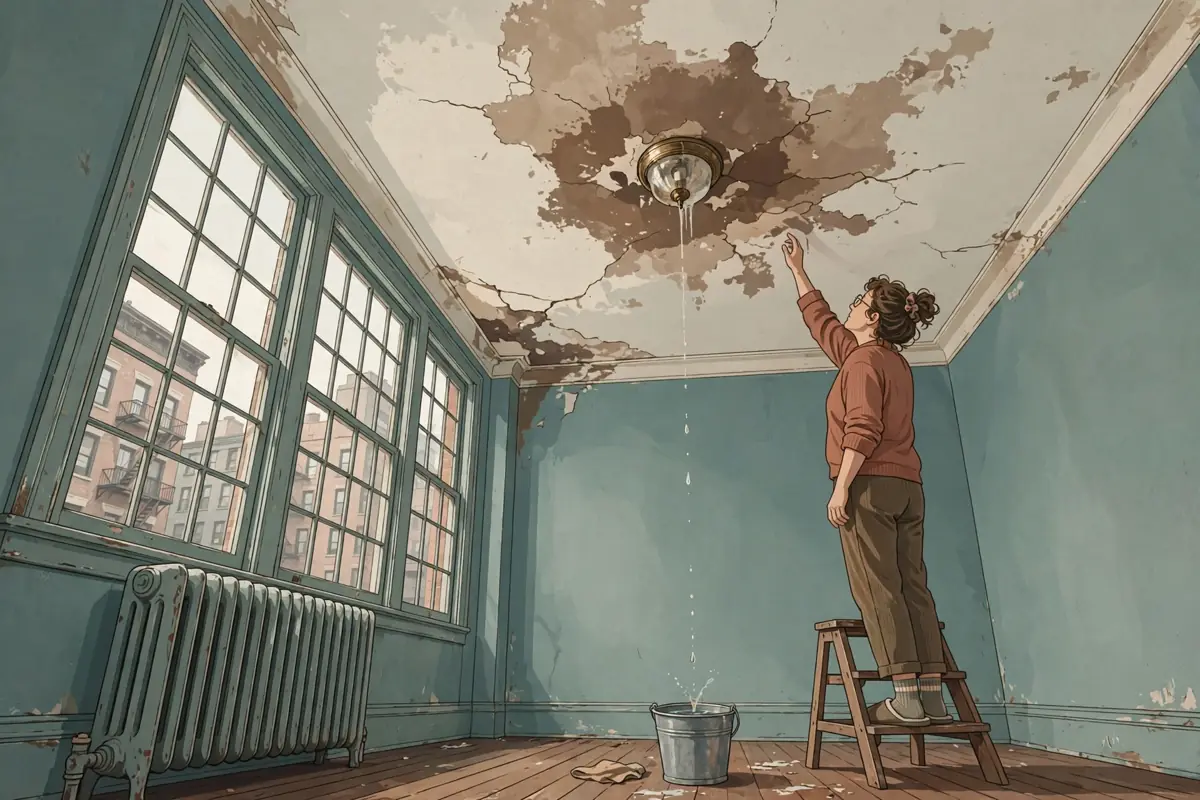
Illustration of a New York City living room being dried with air movers and a dehumidifier, furniture covered in the centre and baseboards removed along the wet wall
Drying is the same work on a covered claim and an uncovered one. Only the payer changes, which is why the cause has to be settled early and in writing.

There is a reading habit worth learning here, because it decides how you describe your own loss. Insurers and their adjusters listen for duration words. "It must have been leaking for a while" is a sentence that can cost a claim, even when the speaker means only that the stain looks old. Stains do look old fast; water marks darken in days. Describe what you know: when you first saw it, what you did that day, who you called. Guesses about how long water ran belong to the plumber's written finding, not to the first phone call. When people ask does insurance cover water damage restoration, part of the true answer is that the words used to report the loss become part of the loss.

None of this makes the slow leak a hopeless case for the home itself. It makes it an owner's repair instead of a claim, and the work still runs in the same order: find and fix the source, open what is wet, dry by readings, remove what is ruined, rebuild. This site's page on water behind walls covers the hidden leak problem in full, from finding the source to drying the cavity. What the denial changes is only the funding, and knowing that early, rather than after the rebuild, lets a household plan the work in stages instead of in panic. Even where the answer to does insurance cover water damage restoration is no, the repair plan can still be orderly.

Not Covered: Flood Water That Rises Outside

Flood is the exclusion every guide states first and every homeowner rediscovers the hard way. Water that rises outside the home and comes in, from a storm surge, an overflowing river or drain, rain that ponds against the foundation and enters over the ground, is flood water, and a standard homeowners policy does not cover it. The distinction is direction. Water that escapes from plumbing inside the home is a water damage claim. Water that arrives from outside at ground level is flood, however clean it looks and however it ruins the same floors. When the question is does insurance cover water damage restoration after a flood, the answer under a homeowners policy is no, and the only route to yes is a separate flood policy bought before the water came.

New York City teaches this distinction block by block. A basement in a coastal neighbourhood can take street water in a storm while the building two streets inland takes none, and a garden level home can flood from a surcharged drain while the burst pipe in the same building is a covered claim on the same night. The two losses look alike at the curb, debris and wet plaster in both, and they are funded from opposite sides of the insurance world. This is why the first question a good crew asks is not how deep the water was but where it came from. The answer to does insurance cover water damage restoration is written by that source, every time.

The city's own flood event pages on this site take the flood side of the story in full: the flood restoration page for storm events and rebuilding, and the flood cleanup page for the cleanup stage itself. This page stays on the coverage side: what a flood policy is, when it had to be bought, and the federal clock that has now run out on new contracts. Those three facts, set out in the next section, are the ones that decide whether a flooded New York home has any insurer in the picture at all. For flood water, does insurance cover water damage restoration is a question about a policy bought long before the storm.

A last warning belongs in this section, because it is the one that costs flooded households a second time. After a storm, the pressure to tear out and throw away is enormous, and for health reasons much of it is right. But a flood claim under a flood policy still runs on documentation: photographs of the water line inside and out, the depth marks, the ruined contents listed before disposal where safety allows. The emergency is real and the paperwork is still part of it. The worked examples and checklists further down this page keep returning to that pairing, because in flood work more than anywhere else, the claim is built in the worst hours or not at all. Flood claims prove that does insurance cover water damage restoration is answered by paperwork as much as by policies.

The Flood Program: A Thirty Day Wait and a Lapsed Clock

Flood cover in the United States runs mainly through the National Flood Insurance Program, a federal program sold through insurers but underwritten by the government, with private flood policies as a smaller second route. The program's best known rule is the wait: a new flood policy typically takes thirty days to go into effect. That word "typically" is the program's own, and exceptions exist, for example around a loan closing, but the working truth for a homeowner is blunt. You cannot buy flood cover with a storm already in the forecast and expect it to respond. So when a flooded neighbour asks does insurance cover water damage restoration, the flood answer was decided a month or a year before the water, by whether a policy existed and had cleared its wait.

The second fact is new, and this page prints it carefully because older pages across the internet still carry the old date. The federal statute that authorizes the flood program, at 42 U.S.C. §4026 as amended in February 2026, now reads that no new contract for flood insurance under the program shall be entered into after September 30, 2026. That date is about new contracts, not about policies already in force: an existing flood policy stays in force to its own term. But the new contract authority has lapsed, and any page that tells you to simply go and buy a new federal flood policy today is working from a stale statute. Renewals, private flood insurers and state level responses are moving ground, and the honest advice is to ask a licensed broker what is actually being written now, rather than trusting any page, this one included, on a market in motion. Until that market settles, does insurance cover water damage restoration after a flood stays a broker question, not a page answer.

Flood cover is also narrower inside the home than most buyers expect, and basements are where the narrowness bites. Under the federal program, cover for a basement is limited: the classic covered contents are things like a washer and dryer, a freezer and the food in it, along with certain building systems, not finished rooms full of furniture. A finished basement in a New York home, with its flooring, panelling and stored belongings, is largely outside what the flood policy restores. That gap surprises owners every storm season. It is one more reason the question does insurance cover water damage restoration after a flood has a layered answer: a flood policy may respond, a homeowners policy will not, and even the flood policy restores less of a basement than the homeowner pictures.

What should a New York household do with these facts? Three things. First, know your flood zone and your building's history, because the zone is set by address, not by neighbourhood feeling. Second, if you hold a flood policy, guard the renewal; in a lapsed authorization period, an existing policy is an asset. Third, treat the thirty day wait as the real deadline in any purchase conversation and start it long before storm season. None of this is restoration work, but it decides whether restoration after a flood is an insurance job or a savings account job, and that decision is made in quiet months, not wet ones. Quiet months are when does insurance cover water damage restoration after a flood is really decided.

Sewer Backup: The Rider Most Homes Never Bought

Between the clear yes of the burst pipe and the clear no of the flood sits the sewer backup, the cause that most often turns on a rider the homeowner may not know exists. When a city sewer surcharges in a storm or a building drain blocks and water comes up through a basement toilet, a floor drain or a tub, the water arrived from inside the plumbing but from the wrong direction, and standard homeowners policies generally exclude it unless the policy carries a water backup or sewer backup endorsement. Progressive, Allstate, Nationwide and the Texas regulator all say the same thing in their own words: not standard, available as an added cover, worth having. So does insurance cover water damage restoration after a backup? Only if the rider is on the policy, and the declarations page is where that answer is printed.

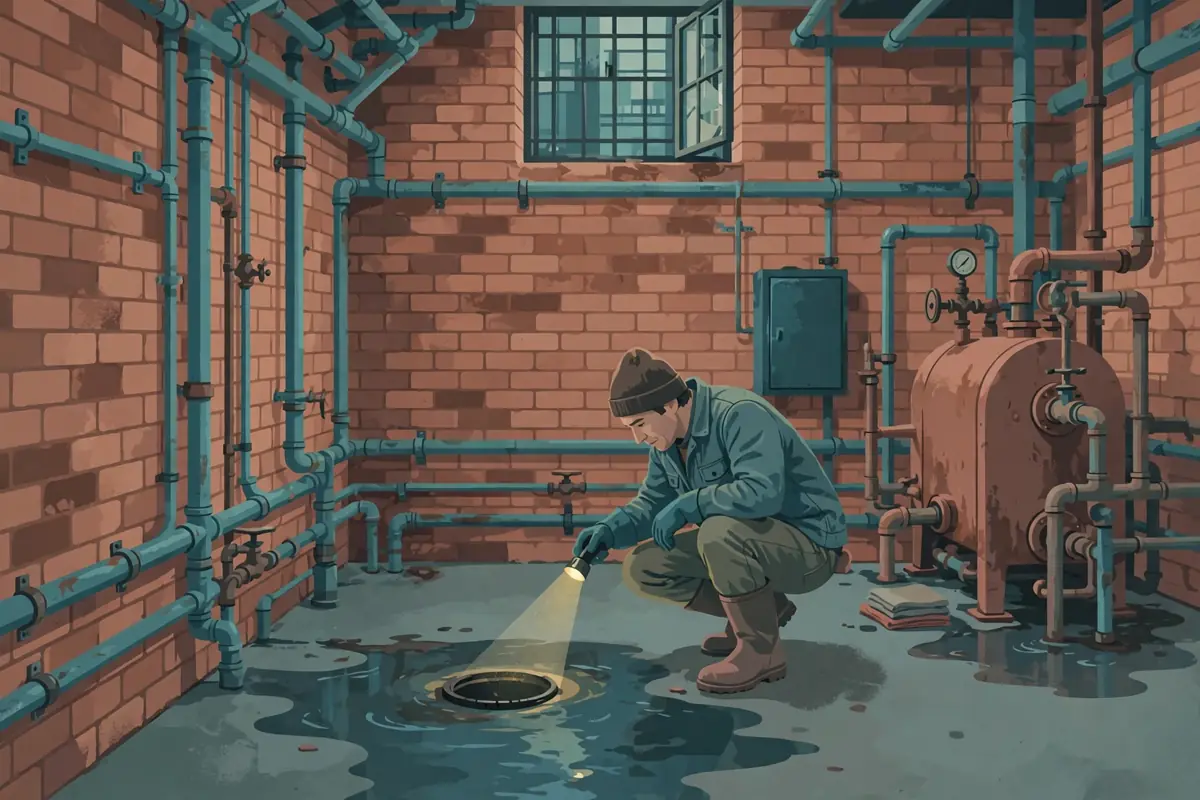
Illustration of a worker in boots and gloves inspecting a floor drain in a New York City building basement with dark water pooled near the boiler
A backup is a health job before it is an insurance job: the water is category three, and the cleanup rules change with it.

The backup is also the dirtiest water a home takes. Sewage carries bacteria and contaminants that clean water does not, and the restoration rules change with it: porous materials the water touched are removed rather than dried, surfaces are cleaned and sanitized, and the work runs under the discipline this site's cleanup pages describe. That health reality does not wait for the coverage answer. A household that spends the first day arguing with an insurer about the rider while sewage sits in the basement is making the damage worse and the eventual bill, theirs or the insurer's, larger. Extract, remove what is ruined, sanitize, dry: the coverage question rides along in the paperwork, where it belongs. The work cannot wait on does insurance cover water damage restoration, so the question is carried in the file instead.

New York buildings add a shared plumbing twist. In an apartment house, a backup can come from the building's own stack or house drain rather than from the city main, and which system failed points at whose problem it is: the building's, the city's, or, where a home's own lateral or fixture caused it, the homeowner's. Photograph which fixtures the water rose from, tell the super the same day, and if city infrastructure is involved, file the 311 report and keep the tracking number. Those records do not create the rider, but they decide which insurer or which public process the loss belongs to, and they are nearly free to gather on the day and nearly impossible to rebuild later. Those records decide whose version of does insurance cover water damage restoration applies inside a shared building.

The forward looking lesson is cheap and plain. If your home has any fixture below street level, a basement toilet, a floor drain, a laundry sink, ask your broker or insurer, in writing, whether water backup cover is on your policy and at what limit, and add it if it is not. It is one of the few places in this whole subject where a small decision in a quiet month removes a whole category of denial. Most of this page is about arguing well after a loss. This paragraph is about never needing the argument. One written question in a quiet month can settle does insurance cover water damage restoration for every future backup.

Mold: Covered Only When a Covered Loss Caused It

Mold is the conditional case, and the condition is parentage. A standard policy does not insure mold as an event. It may pay for mold that grows because of a covered water loss: the burst pipe that soaked a wall cavity, the appliance flood whose drying was part of the claim. Mold that grows from flooding, from chronic humidity, from a slow leak or from a maintenance failure follows its cause into exclusion. Progressive's guide says it in nearly those words, and the Texas regulator's page adds that insurers can set limits on mold cover and that a separate mold endorsement can provide more. So does insurance cover water damage restoration when mold is part of the damage? When the water was covered, the mold that water caused is usually inside the same claim, sometimes up to a stated limit. When the water was not covered, the mold is not either.

Timing is the hinge. Mold follows water on a schedule measured in days: the Environmental Protection Agency's guidance is to dry wet materials within twenty four to forty eight hours to prevent growth, and this site's page on how fast mold grows works through the timeline in full. A homeowner who reports a burst pipe at once and dries at once has mostly prevented the mold question. A homeowner who waits three weeks and then reports pipe and mold together has handed the insurer a gradual damage argument on a plate. The mold did not change. The story around it did, and coverage lives in the story the documents tell. In mold claims, does insurance cover water damage restoration is decided by the calendar pinned to the photographs.

New York adds a professional rule on top of the insurance rule. Mold remediation above a small scale is licensed work in this state, with its own assessment and work plan requirements, which this site's mold remediation page sets out. For the claim, that means mold work on a covered loss is scoped, licensed and documented like any other part of the restoration, and the paperwork is part of what the insurer pays for. It also means the do it yourself middle ground is narrow: small areas a homeowner can clean are one thing, and anything larger belongs to licensed professionals whose invoices and reports the claim file can actually use. Licensed, documented mold work keeps does insurance cover water damage restoration answerable with evidence instead of opinion.

A practical word about photographs and testing. Photograph mold where you find it, with the water source in the same frame where you can, because the photograph that shows growth under a burst supply line tells the parentage story better than any paragraph. Be wary of anyone selling expensive testing as the key to a claim. Insurers decide mold claims on cause and scope, not on laboratory theatre, and the adjuster's own inspection plus the restoration file usually carry the question. Spend on drying and documentation first. Those two are what the coverage answer is made of. Drying and documentation are the substance behind every yes to does insurance cover water damage restoration where mold is involved.

Should You Tell Your Insurer About Mold?

This question appears in Google's own People Also Ask box for this keyword, and it comes from a real fear: that reporting mold will raise premiums, mark the home, or start a fight. The honest answer is that it depends on whether the mold belongs to a claim. If mold grew from a covered water loss you are reporting anyway, it is part of that loss, and hiding it helps nobody: the adjuster will find it or smell it, the drying scope needs to include it, and a claim that discloses its full damage is stronger than one that dribbles it out. When the underlying question is does insurance cover water damage restoration including the mold the water caused, disclosure is how the mold gets into the scope at all.

The harder case is mold with no claim attached: an old patch in a bathroom corner, growth from a humid summer in a home you own outright, a stain you found while painting. There, reporting is not automatically wise or unwise; it is a coverage question with a predictable answer, since mold from humidity and maintenance is generally not covered, and a call to the insurer creates a record without creating a payment. Many homeowners in that position get the area assessed and remediated privately, using the licensed route where the size calls for it. The distinction is not secrecy. It is whether a covered event exists. If it does, report fully. If it does not, you are a homeowner with a repair, not a claimant with a secret. The dividing line in does insurance cover water damage restoration for mold is whether a covered event exists at all.

One boundary is absolute, and it is about health rather than money. Mold that is making people ill, spreading through a wall, or sitting in a child's bedroom is not a paperwork problem to be sequenced after a coverage debate. Assess it, contain it, and where the scale calls for it, remediate it under New York's licensing rules. The claim, if one exists, can be argued over a documented, finished job far more safely than over a growing colony. Insurers know this order of operations and the good ones say so. The bad outcome is never "we fixed it too fast". The bad outcome is a home that stayed wet and mouldy while letters crossed. Health first is the one ordering rule that does insurance cover water damage restoration never overrides.

There is also a selling and renting dimension New Yorkers should know. A known mold history can become a disclosure question when a home is sold, and a tenant's report of mold triggers a landlord's repair duty, covered in the landlord section below. In both cases the written record cuts the right way when it shows the problem was found, fixed properly and dried to readings. A record of concealment is the only version that reliably hurts. So the short answer to the search box question is: tell your insurer about mold that belongs to a covered loss, promptly and in the same report; handle mold that belongs to no claim as the repair it is; and in both cases, write everything down. Written records make does insurance cover water damage restoration a question with a checkable answer.

Three Things a Standard Policy Does Not Cover

Google's People Also Ask box asks for three things that are not covered by homeowners insurance, and in the water corner of the subject the three are consistent across every insurer guide read for this page. The first is flood: water rising outside the home, excluded always, covered only by a separate flood policy. The second is gradual damage: the slow leak, the worn seal, the ageing roof, the maintenance failure, excluded because the policy insures events, not entropy. The third is the sewer or drain backup without its rider: water arriving from the wrong direction, excluded unless the backup endorsement was bought. A homeowner who can recite those three understands most denials before they happen, because most water denials are one of those three wearing the facts of a particular home. Most denials are simply the answer no to does insurance cover water damage restoration, arriving in one of three standard shapes.

Each of the three has its own section on this page, because each fails differently. Flood fails on direction and on a separate federal program with a thirty day wait. Gradual damage fails on time, and its fights are about when a leak started and when the owner knew. Backup fails on a line in the declarations page, a rider present or absent, which makes it the most preventable denial of the three. When readers ask does insurance cover water damage restoration, the useful follow up is never "is water covered". It is "which of the three exclusions is anywhere near my facts", because if none of them is, the claim is probably a covered one and the work shifts to documentation.

Two near misses deserve naming, because they are often mistaken for a fourth and fifth exclusion. The failed part itself, the pipe or the appliance that wore out, is not covered, but that is not an exclusion of the loss; the damage around it is the claim, and the part is a repair bill. And mold is not excluded as such; it is conditional, covered when a covered loss caused it. Keeping those two straight matters when you read a denial letter, because a letter that denies the whole claim on a ground that only supports denying part of it is a letter worth answering, with the file open and the sections of this page that match your facts. A partial denial mislabelled as a full one changes does insurance cover water damage restoration for the parts it never addressed.

There is a wider list beyond water, of course: earth movement, neglect, intentional acts, and other standard exclusions sit in every policy. This page stays in its lane. It is the coverage page for one question, does insurance cover water damage restoration, and the water exclusions are the three above plus the conditions already covered. For the rest of the policy's fine print, your declarations page and your insurer's own guide are the sources, and a denial that cites an exclusion you cannot find in your policy is a denial to take to the regulator section below.

Why Water Damage Claims Get Denied

Denials feel personal and are almost never personal. They are the exclusions of this page applied to a file. The gradual damage denial is the most common: the insurer reads the file and concludes the loss happened over time. The flood denial is the most mechanical: outside water, no flood policy, closed. The late notice denial follows a policy condition: the loss was real and sudden, but it was reported so late that the insurer could not inspect it, and the policy's prompt notice duty was breached. The no rider denial ends the backup claim. And the maintenance denial, heat left off, a roof left to rot, a known leak left running, closes claims whose first event might otherwise have been covered. When people ask does insurance cover water damage restoration after a denial letter arrives, the first task is to find which of these five shapes the letter takes, because each has a different answer.

Some denials are wrong, and some are half wrong. A half wrong denial pays the burst and excludes the three weeks of hidden spread, or covers the structure and refuses the contents, or accepts the loss and prices the repair at a fraction of the written scope. Those are not really coverage fights; they are scope and price fights wearing coverage language, and they are answered with documents: the dated photos, the plumber's finding, the moisture log, the line by line estimate. A fully wrong denial, one that calls a documented burst a gradual leak, is answered the same way first, in writing, and then, if the answer does not move, with the complaint route in the regulator section below. New York built that route for exactly this letter. Half wrong denials are where does insurance cover water damage restoration gets renegotiated, document by document.

Illustration of a kitchen table laid out with claim paperwork, photographs of a flooded room, a camera, a tape measure and a notebook
The claim file is the argument: dated photographs, the written scope, the drying log and every letter, in one place.

Read the denial letter itself like a document, not a verdict. New York Regulation 64, section 216.6(d), requires an insurer that is disclaiming coverage to inform the claimant in writing as soon as it is determined that there was no policy in force or that it is disclaiming because of a breach of policy provisions, and to explain its specific reasons. A rejection under section 216.6(c) must also name any policy provision that limits the right to sue. A letter that does none of this, that waves at "long term damage" with no provision cited and no facts addressed, is not the finished product the regulation describes, and saying so, in writing, with the section numbers, is a legitimate and often effective reply. Section numbers turn a complaint about does insurance cover water damage restoration into a compliance question.

Finally, keep the two clocks of a denial in view. One is the insurer's: the deadlines in the deadlines section below govern how fast they must answer and pay, and a denial does not stop you from holding them to the remaining ones. The other is yours: the standard fire policy form in New York carries a twenty four month window, running from the inception of the loss, for bringing suit on the policy. That window is long and still manages to surprise people who spend two years exchanging letters. Diarize it the day the denial arrives. Arguments are cheap inside the window and worthless outside it. The suit window is the last deadline standing behind does insurance cover water damage restoration once letters fail.

Six Steps That Protect the Claim, in the Order They Happen

Coverage is decided by cause, but payment is decided by conduct: the things done in the first day and the first week. These six steps are the claim protecting version of the restoration order used across this site. They assume a sudden loss, the kind that can be covered at all. Follow them and the question does insurance cover water damage restoration gets answered on the strongest file your facts allow. Skip them and even a covered cause can arrive at the insurer as an unprovable one.

  1. Stop the water and make the rooms safe

    Shut off the water at the fixture, the apartment valve or the building main if you can reach it without wading through water that may be carrying electrical charge. Move people and pets out of wet rooms with sagging ceilings. Photograph the source before you touch it if that takes only a moment, because the broken pipe, the split hose or the failed valve is the single most important piece of evidence in the whole claim: it is what makes the loss sudden and accidental instead of gradual. Every minute the source runs adds water the insurer will ask about, so this step is measured in minutes. Minutes here protect the yes in does insurance cover water damage restoration more than weeks of letters later.

  2. Photograph everything before cleanup

    Walk every wet room slowly with a phone camera before anything is pumped, moved or thrown away. Take wide shots of each room, close shots of the water line on walls and furniture legs, the source itself, and serial numbers on appliances and electronics. Photograph the contents you will later list as damaged, in place, before they go into bags. Keep damaged items until the adjuster has seen them or released them in writing, and keep samples of carpet, flooring and finishes even when the rest goes out. These pictures cannot be retaken after cleanup, and they are the backbone of the claim. Photographs are the evidence every later answer about does insurance cover water damage restoration will stand on.

  3. Call the insurer and open the claim

    Report the loss the same day if you can. Policies expect prompt notice, and New York Regulation 64 starts its clocks when the insurer gets notice of the claim: the insurer must acknowledge receipt within fifteen business days and commence its investigation within fifteen business days. Write down the claim number, the name of the person who took the call, and the date and time. Ask what the policy needs from you, which forms, which statements, and by when, and get the list in writing. Everything after this step runs against those clocks, yours and theirs. The claim number is where does insurance cover water damage restoration becomes a tracked case instead of a worry.

  4. Protect the home from further damage

    Your policy expects you to stop the damage from growing: extract standing water, start drying, board or cover a storm opening, and move sound belongings out of wet rooms. This is not optional generosity, it is a duty written into home policies, and damage that grows because nobody dried the rooms can be carved out of the payment later. Keep every receipt and invoice for this emergency work, because mitigation spending on a covered loss is part of the claim. Drying cannot wait for an adjuster visit that may be days away, and no honest adjuster expects it to. Mitigation done early is the part of does insurance cover water damage restoration that the policy itself demands.

  5. Get the restoration scope in writing

    Have the restoration company write the scope before the rebuild starts: what was extracted, what was dried, what was removed and why, with moisture readings from the first visit and the daily log that follows. Insurers price this work in estimating software, most often Xactimate, line by line, so a written scope in the same shape is what gets compared, approved or argued over. If hidden damage appears when a wall opens, that is a supplement: photograph it, notify the insurer before it is covered up, and add it to the same claim rather than starting a new one. A written scope is how does insurance cover water damage restoration gets priced, compared and paid.

  6. Keep every paper until the claim closes

    Keep one file, paper or digital, with the claim number, every letter, every estimate, every photo, the drying log, receipts for emergency work and for anything you replaced, and notes of every phone call with dates and names. New York gives the insurer fifteen business days after a properly executed proof of loss to accept or reject the claim, and five business days to pay an amount once it is agreed, so your file is how you hold those clocks. If the claim is denied or stalls, that same file is what the Department of Financial Services will ask to see. The file is the household's half of does insurance cover water damage restoration, kept in one place.

Two of these steps are the ones households most often skip, and they are worth singling out. The photograph step is skipped because the water feels urgent, and it is, but three minutes of photographs taken while the pump is being rigged cost the drying nothing and buy the claim everything. The written scope step is skipped because the crew is already working and the conversation feels handled, until the estimate arrives priced from a desk and the argument has no document to stand on. Does insurance cover water damage restoration? On a covered cause, yes. Does it pay the full scope without the file? That is the fight these steps exist to prevent.

The New York Deadlines: Regulation 64, in Business Days

New York is one of the states that puts claim handling on a clock, and the clock lives in Regulation 64, Part 216 of Title 11 of the state rules. Four of its deadlines govern an ordinary water claim, and every New York claimant should know them by section. Section 216.4(a): on notification of a claim, the insurer must acknowledge receipt within fifteen business days. Section 216.5(a): the insurer must have procedures to commence the investigation within fifteen business days of notice, and to tell the claimant what items, statements and forms it needs. Section 216.6(c): within fifteen business days after receiving a properly executed proof of loss and everything it requested, the insurer must advise the claimant in writing of acceptance or rejection. Section 216.6(f): the insurer must pay any amount finally agreed in settlement not later than five business days after receiving the agreement or after the claimant performs any condition the agreement sets, whichever is later. When a New Yorker asks does insurance cover water damage restoration, these four sections are the part of the answer that is pure New York, and no national competitor page carries them.

The regulation has more in it that claimants rarely hear about. If the insurer needs more time after the proof of loss, section 216.6(c) does not let it go silent: it must notify the claimant within the fifteen business days, give its reasons, and follow with a letter every ninety days while the claim stays unsettled, unless the claim is in litigation or arbitration. Section 216.6(e) requires the undisputed parts of a claim to be paid even while other parts are disputed, which matters in water claims where the drying is agreed and the rebuild is argued. Section 216.6(g) forbids check language that turns accepting a payment into a final release, and any release broader than the settlement itself. And section 216.6(b) defines actual cash value for claim purposes as the lesser of the cost of repair to pre loss condition or replacement with a substantially identical item, including sales taxes. Each of those lines has settled a real argument in a real claim file. Each of those lines is a small, citable answer inside the larger question of does insurance cover water damage restoration.

Two honest qualifications belong with the clocks. First, they run in business days, not calendar days, and the proof of loss clock runs from a properly executed proof of loss plus the items the insurer requested, which is why step three of the six steps asks you to get the insurer's list in writing: the list defines when their clock starts. Second, where arson is suspected the accept or reject period stretches to thirty business days, a provision that belongs to fire claims and is named here only so a reader who meets it in the regulation is not confused. For the ordinary burst pipe, the four clocks above are the law of the claim, and an insurer that passes them in silence has handed you the subject of the complaint in the regulator section below. Silence past a deadline converts does insurance cover water damage restoration into a conduct complaint.

How do you use the clocks without becoming a full time claim manager? Put four dates in the file the day each trigger happens: the date of notice, the date the investigation should have commenced, the date the proof of loss went in complete, and the date any agreed amount was settled. Count business days forward and write the deadline beside each. When a deadline passes, write once, briefly, citing the section, and keep the reply. Most insurers respond to the first letter that shows the claimant knows the regulation, because most claimants never learn it. That, more than any argument about water, is the local advantage this page exists to hand over. Knowing the clocks is the New York edge in does insurance cover water damage restoration that no national page offers.

After a Declared Disaster, Different Clocks: Section 2618

When water damage comes from a declared disaster, a local state of emergency, a governor's disaster emergency or a Presidential major disaster declaration tied to a natural disaster or terrorism, a different section of New York Insurance Law takes over the timing. Section 2618 exists because ordinary clocks fail in a catastrophe, when every insurer in a region is holding thousands of claims at once. Its accept or reject clock for a homeowner claim is fifteen business days after a properly executed proof of loss and all requested items, stretching to thirty where arson is suspected. A one time extension of fifteen business days is allowed with written reasons, and where access to the property is prohibited, more time runs with updates every fifteen days. Commercial claims get their own version: fifteen business days, a one time thirty business day extension, then notice every thirty business days. Disaster claims answer does insurance cover water damage restoration on a separate statutory timetable.

The payment clock under section 2618 is faster than the ordinary one, which surprises people: an amount finally agreed in settlement of a disaster claim must be paid not later than four business days. Set beside Regulation 64's five business days, the disaster rule is the stricter one, and the two should never be merged in a claim letter. Cite the clock that matches your claim's posture: ordinary claim, Regulation 64; disaster claim under a declaration, section 2618. A letter that cites the wrong clock invites a reply about the citation instead of the delay, and the delay is the point. Cite the right clock and does insurance cover water damage restoration stays an argument about payment, not about citations.

Section 2618 carries one more provision that matters enormously in the first week of a storm loss, and it answers a question frightened homeowners ask while standing in a wet kitchen: may we fix anything before the insurer sees it? The section allows immediate repairs where necessary for health and safety to windows, exterior walls, doors, roofs, heating, water and electrical systems, and provides that alternative proof, photographs, video, inventories and receipts, satisfies the policy's proof requirements for that work. In plain terms: make the home safe, document as you go, and the law protects the claim. It is the disaster version of step four of the six steps, written into statute. The statute protects the claim while the home is made safe, which is does insurance cover water damage restoration working as intended.

Storm losses are also where this page's two worlds meet. A declared disaster in coastal New York produces flood claims under flood policies and wind and rain claims under homeowners policies, often in the same home, with the same contractor drying both. Keep the files separate from the first day: separate photo sets, separate scopes, separate claim numbers. The question does insurance cover water damage restoration has two different answers in a storm home, one per policy, and a merged file blurs exactly the line, where the water came from, that decides both.

The Other Clock Nobody Mentions: Thirty Working Days Under Section 2601

Regulation 64 is not the only New York clock, and the second one is the one claimants almost never hear about. Insurance Law section 2601 is the unfair claim settlement practices statute. Most of it describes standards, acknowledging claims with reasonable promptness, investigating promptly, not compelling suit by offering substantially less than a claim is worth. But subsection (a)(4) carries its own deadline in plain words: after receiving a properly executed proof of loss, the insurer shall advise the claimant of acceptance or denial of the claim within thirty working days. Thirty working days under the statute, fifteen business days under the regulation: two clocks, both real, running on the same claim, and a claimant may hold the insurer to the framework without needing to resolve which a court would apply first. Two clocks give a claimant two ways to press does insurance cover water damage restoration toward an answer.

Why print both? Because claim letters get written from pages like this one, and a letter is stronger when it is accurate. The regulation's fifteen business day accept or reject clock is the working deadline of an ordinary claim, and it is the one to cite first. Section 2601 stands behind it as the statute the regulation serves, with its thirty working day outer line and its catalogue of unfair practices, which is the vocabulary a complaint to the Department of Financial Services will use. Knowing the difference also protects you from a common internet error: pages that merge the two numbers into one confident figure are merging two different instruments, and an adjuster who spots the merge discounts the whole letter. Accuracy about the clocks keeps does insurance cover water damage restoration letters credible.

Section 2601 is also where the state's attitude is written down. It forbids failing to disclose pertinent coverage facts, refusing to pay without a reasonable investigation, and settling for less than a reasonable person would believe they were entitled to on the strength of the insurer's own advertising. None of that wins a claim by itself. All of it frames what a complaint says when a claim has been handled in silence, in circles or in bad faith. The homeowner who asks does insurance cover water damage restoration is asking a coverage question; the homeowner three months into a stalled claim is asking a conduct question, and section 2601 is the conduct statute.

A practical note on counting. Business days and working days both skip weekends and holidays, and the two clocks start from the same trigger, the complete proof of loss package. If your file shows the package complete on a date the insurer disputes, the dispute is about completeness, which is why the written list from step three matters: it proves what was requested and when it was supplied. Keep the delivery receipts. In clock arguments, the side with the receipts usually wins the calendar. Receipts decide whose calendar governs does insurance cover water damage restoration when the dates are disputed.

The Disclaimer Duty, and the Liability Law That Does Not Apply

Every subject has one error that gets copied from page to page until it looks like fact, and in New York water claims the error is a section number. Insurance Law section 3420(d) is quoted across the internet as the deadline for an insurer to disclaim a property claim. It is not. Section 3420 is the liability insurance section: its disclaimer rule, written notice as soon as is reasonably possible, governs liability policies, death and bodily injury claims and the related provisions listed there. A homeowner's burst pipe claim is a property claim, and section 3420(d) sets no deadline on it at all. Pages that cite it for water damage are citing the wrong law, and a claim letter built on it starts by telling the insurer's lawyers that the writer did not check. A wrong citation weakens any letter about does insurance cover water damage restoration before its facts are even read.

The property claim disclaimer duty lives in Regulation 64, section 216.6(d), and it is a duty of substance rather than of days. The company must inform the claimant in writing as soon as it is determined that there was no policy in force, or that it is disclaiming liability because the policyholder breached the policy's provisions, and the insurer must explain its specific reasons for disclaiming coverage. Read that against the denial letters households actually receive and its value is plain: a disclaimer must arrive when the determination is made, must be in writing, and must carry specific reasons. A vague letter, late, citing no provision and addressing no facts, fails the section on its face, and the reply writes itself. Specific reasons are the minimum content of a lawful no to does insurance cover water damage restoration.

There is one part of section 3420 that does touch ordinary claimants, and it is worth knowing so the correction is not overread. On written request, the liability provisions require an insurer to confirm in writing, within sixty days, whether a policy was in effect and its liability limits, which matters when you are the injured neighbour pursuing the home whose pipe flooded yours, a situation the neighbour section below works through. The section has its uses. A property claim deadline is simply not one of them, and precision here is not pedantry: in a disputed claim, the side citing the right law keeps the pen. Precision about sections is part of how does insurance cover water damage restoration gets answered in a claimant's favour.

This page corrects the point at length because the rest of the page depends on it. The deadlines section cites Regulation 64. The disaster section cites section 2618. The conduct section cites section 2601. Each is the right instrument for its job, checked against the state's own published law in November 2026, with the Senate's code cited as ISC, the code the Senate actually uses for Insurance Law. When you ask does insurance cover water damage restoration and the answer turns legal, the sections matter as much as the answer.

The Suit Window and the Sixty Day Terms: Section 3404

One more New York instrument belongs in a complete answer, and it is the oldest of them: section 3404, the standard fire insurance policy of New York, whose form terms ride inside property policies across the state. Three of its numbers matter to a water claimant. The form requires a proof of loss within sixty days after the loss, unless the time is extended in writing. It makes the loss payable sixty days after the proof of loss is received and the amount is ascertained by agreement or award. And it bars any suit or action on the policy unless it is commenced within twenty four months next after the inception of the loss. That twenty four month window is a term of the standard form, not a universal statute of limitations for every dispute, and this page attributes it exactly that way. The standard form is the quiet third document behind does insurance cover water damage restoration in New York.

Keep the three pay clocks of this page separate in your mind, because they answer different questions. Sixty days under the standard form is the policy's own pay term, running from proof and ascertainment. Five business days under Regulation 64 is the regulator's deadline for paying an amount finally agreed in an ordinary claim. Four business days under section 2618 is the disaster version. A claimant who merges them into one number will cite the wrong one at the wrong moment. A claimant who keeps them apart can ask the sharp question: which instrument governs this payment, and what does it say? Keeping the clocks apart keeps does insurance cover water damage restoration arguments aimed at the right deadline.

The proof of loss deserves a paragraph of its own, because it is the document all the clocks hang from and the one claimants most often treat as a formality. A proof of loss is a sworn statement of the loss: when it happened, how, what was damaged, and what is claimed. The sixty day form deadline for it is real, and insurers grant written extensions routinely when a claim is being worked in good faith, but routinely is not automatically, and the extension should be in writing in the file. This site's insurance claim page walks the proof of loss and the claim process step by step; this page's job is only to mark that the coverage clocks in the sections above start and stop on that document's dates. Every clock in does insurance cover water damage restoration hangs from the proof of loss and its dates.

The twenty four month window shapes strategy more than any other number here. It is long enough to negotiate, complain to the regulator and try again, and short enough to punish a household that lets a denied claim sit in a drawer. If a denial is final and the amount matters, the window is the reason to put the file in front of a New York insurance lawyer while months remain, not weeks. Lawyers who do this work will ask first for the policy, the denial letter and the dates. By now you know why: the whole subject runs on them. Policy, denial and dates are the whole file of does insurance cover water damage restoration in three folders.

When the Insurer Stalls: The Department of Financial Services

New York gives its insurance consumers a regulator with a complaint desk, and water claimants should know its name before they need it: the Department of Financial Services, DFS. The complaint route is published and plain. Complaints can be filed through the department's site at dfs.ny.gov/complaint, or by email at complaints@dfs.ny.gov, and the consumer hotline is (800) 342-3736, staffed Monday to Friday, 8:30 in the morning to 4:30 in the afternoon. The department tells complainants to expect a letter with information on the review process and a DFS file number. That file number changes the weather inside an insurer's claims department in a way a fourth phone call from the claimant rarely does. A DFS file number is the state's way of joining the argument over does insurance cover water damage restoration.

When is a complaint the right move? The pattern this page has built points to three moments. A clock has passed in silence: no acknowledgement, no investigation, no accept or reject inside the Regulation 64 deadlines. A disclaimer has arrived that fails section 216.6(d): no specific reasons, no provision, no engagement with the file. Or a settlement posture has hardened into the conduct section 2601 describes, offers far below a documented scope with no reasonable investigation behind them. In each case the complaint is not a tantrum; it is the mechanism the state built, and using it is a normal part of a New York claim, not an escalation to be apologized for. The complaint desk exists for the moments when does insurance cover water damage restoration stops moving on its own.

What should the complaint carry? The claim file you have been keeping: the policy and claim numbers, the dates of notice and proof of loss, the letters both ways, the denial if there is one, and a short chronology that lets a reviewer see the clocks without hunting. Regulation 64 even obliges insurers to furnish the department information on a claim inquiry within ten business days, section 216.4(d), so the complaint starts a clock on the regulator's side too. Households that kept the file from step one can file in an afternoon. Households that did not will spend the afternoon rebuilding it, which is the last argument this page will make for keeping it. A complete file lets the regulator test does insurance cover water damage restoration against the clocks in a single reading.

One expectation to set honestly: DFS reviews and presses; it does not pay claims, and it is not a court. Its power is the supervised answer, the insurer required to explain itself to its regulator on the record. Many stalled claims move at exactly that point. Claims that still do not move go to the remaining routes: the appraisal clause in the standard form, where each side picks an appraiser and an umpire settles the amount, or to a lawyer inside the twenty four month window. The order matters. Document, cite the clocks, complain, then litigate if you must. Each step uses the file the step before it built. Ordered that way, does insurance cover water damage restoration is pressed by process rather than by volume.

Public Adjusters in New York: The Twelve and a Half Percent Cap

A public adjuster is a licensed professional the policyholder hires to prepare, present and negotiate the claim, the mirror image of the insurer's own adjuster. The question that follows is always the fee, and New York answers it by regulation, 11 NYCRR section 25.7: no public adjuster shall charge a fee in excess of twelve and a half percent of the recovery. The fee is computed on the money the insurer pays after the adjuster is retained. There is one refinement, and it is widely misstated: on a supplemental claim, a fee of up to twenty percent is allowed only if the total fee across the claim stays at or under twelve and a half percent of the full claim payment. Referral compensation counts toward the cap as well. Any contract that asks for more than the cap allows is asking for more than New York permits, whatever it says about other states. The cap is printed here because does insurance cover water damage restoration sometimes needs a professional negotiator.

When does hiring one make sense? The honest answer is arithmetic and stamina, not drama. On a small, clean, covered claim, a good file and the six steps usually get the household to the same place without giving up a share of the recovery. On a large loss, a denied claim with arguable facts, a co-op or commercial tangle, or a household with no time to run a claim for months, a good public adjuster can be worth the fee, because the difference between a first offer and a fully scoped settlement on a big water loss can be many times the fee. The cap makes the arithmetic knowable in advance, which is what it is for. Ask for the contract in writing, check the licence, and read the fee line against section 25.7 before signing anything. On the right claim, an adjuster's share buys a fuller answer to does insurance cover water damage restoration.

Two cautions belong here. The first is timing: a public adjuster cannot recover money the file never documented, so the photographs and the timeline from the first day still decide the ceiling of the claim, whoever negotiates it. Hiring help is not a substitute for the first forty eight hours. The second is fit: the restoration company on your job cannot also be your public adjuster on the same loss in the ordinary way these roles are kept apart, and anyone who offers to fold the adjusting into the building contract deserves a careful read of the paperwork. Roles stay clean in a good claim: the crew documents and builds, the adjuster negotiates, the insurer pays, the regulator supervises. Clean roles keep does insurance cover water damage restoration a negotiation about the loss, not about the negotiators.

So, does insurance cover water damage restoration more fully when a public adjuster is involved? The coverage does not change; the policy is the policy. What changes is the presentation of the loss and the persistence of the negotiation, and on the right claim that changes the outcome. The cap, the licence and the contract are the three checks. Everything else is reputation, and in New York that can be checked with the same department, DFS, that licenses them.

How Much Insurance Usually Pays: The Honest Non Answer

One of Moz's recorded People Also Ask questions for this keyword is how much insurance usually pays for water damage, and it is the one question on this page that will not be given a number, because no honest number exists. Payment is the documented scope of your loss, priced line by line, minus your deductible, up to your limit, adjusted by whether your policy pays replacement cost or actual cash value on each part. Two homes on the same Brooklyn block can flood on the same night and receive settlements that differ by an order of magnitude, because one lost a kitchen and the other lost a ceiling. Any page that prints an average payout for water damage is printing a number assembled from other people's losses, and it will mislead every reader who compares their own claim to it. This page does not do that, here or anywhere else. Machinery, unlike averages, actually answers does insurance cover water damage restoration for a particular home.

What can be explained is the machinery, because the machinery is knowable. Actual cash value, as Regulation 64 section 216.6(b) frames it, is the lesser of repairing to pre loss condition or replacing with a substantially identical item, including sales taxes; in practice it means the depreciated value of what was lost. Replacement cost cover, where the policy carries it, pays to actually replace or rebuild, often in two stages: an initial payment at cash value, and the balance when the work is done and documented. That two stage structure surprises households every claim. The first cheque is not the settlement; it is the first instalment of it, and the withheld balance is recovered by finishing the work and sending the invoices. Files that close early leave that balance behind. The second stage is the forgotten half of does insurance cover water damage restoration payments.

The deductible does quiet work in the arithmetic too. It is subtracted once per claim, not once per room or per invoice, which is one reason a single sudden event that damages three rooms is one claim with one deductible, while three separate slow problems discovered together are not magically one event. And the limit caps the whole thing: a loss larger than the policy's dwelling limit is paid to the limit and no further, which is a declarations page conversation to have at renewal, not at the adjuster's visit. When a reader asks does insurance cover water damage restoration and means "how much of my bill", the true answer is a tour of their own declarations page, and any shorter answer is a sales device.

There is one more component households forget to claim because nobody lists it for them: the reasonable extra costs the loss itself imposed. Emergency mitigation invoices are part of the claim, as step four explained. Damaged contents are part of it, down to the contents list photographed in step two. Where a home is uninhabitable and the policy carries loss of use cover, the cost of being elsewhere while it dries and rebuilds can be part of it too, within that cover's own limits. None of these arrive by themselves. They are claimed, documented and receipted, or they are not paid. The claim file, again, is the difference. Claimed, documented and receipted is how the extra costs inside does insurance cover water damage restoration get paid.

Xactimate: The Price Language Insurers Speak

Almost every water claim of any size is priced in one piece of software, and knowing its name changes how a homeowner hears an estimate. Xactimate is the estimating platform insurers use to price restoration and repair work line by line: so many square feet of drywall removed, so many days of dehumidification, so many hours of extraction, each line carrying a price from a regional price list the platform maintains. The adjuster's estimate, the restoration company's estimate and any public adjuster's estimate are usually the same document wearing three letterheads: an Xactimate scope. Arguments about money are therefore arguments about lines: lines missing, lines undercounted, lines priced from the wrong list. Once both sides price in the same lines, does insurance cover water damage restoration becomes an argument that can actually be settled.

For the homeowner, the practical skill is reading a scope for absence. Does it include the tear out the crew actually did, the drying days the log actually shows, the baseboards, the paint to the nearest break, the contents handling? A scope that prices a dry, clean, simple version of your loss is not a conspiracy; it is a first draft written from a desk, and the correction mechanism is the documented file: photographs, moisture logs, the crew's own written scope from step five. Supplement requests, covered in their own section below, are how missing lines get added after the fact, and they are a normal, expected part of water claims rather than an accusation. Supplements are the built in correction when does insurance cover water damage restoration was first priced from a desk.

Restoration companies that work claims daily write their scopes in Xactimate for exactly this reason: it removes the translation argument. When the crew's scope and the insurer's scope are in the same format, the disagreement narrows to specific lines, and specific lines can be settled with photographs and readings. When the crew hands over a one page lump sum invoice instead, the insurer prices the job from its own template and the lump sum loses. So when you ask does insurance cover water damage restoration and at what price, part of the answer is procedural: it pays the documented scope, in the industry's format, and choosing a company that works in that format is a coverage decision as much as a building decision.

One boundary to keep: Xactimate prices the repair; it does not decide coverage. A perfectly formatted scope for a gradual leak is still a gradual leak. Software settles how much; the policy and the cause settle whether. Households that keep those two questions in their separate boxes argue better at every stage, because they never ask a pricing tool to win a coverage fight or a coverage letter to win a pricing one. Software settles how much; the policy settles does insurance cover water damage restoration at all.

Can You Start Restoration Before the Insurer Approves?

Yes, and in the emergency phase you are expected to. This is the point where coverage law and building physics agree completely: standing water and soaked material get worse by the day, mold follows the schedule set out earlier on this page, and a policy that required its owner to wait a week for permission to dry would be manufacturing its own larger claim. The duty to protect the home from further damage runs the other way. Extraction, drying, emergency tear out of ruined material and temporary repairs to keep weather and more water out are mitigation, and mitigation on a covered loss is claimable. After a declared disaster, section 2618 writes the same permission into statute for health and safety repairs, with photographs and receipts standing in for pre approval. Documented mitigation is where does insurance cover water damage restoration and common sense fully agree.

The line to respect is the rebuild line. Drying and making safe proceed on your own authority; rebuilding, replacing finishes, closing walls, is where an insurer reasonably expects to have scoped or at least seen the damage first. The practical sequence used on well run claims is: mitigate at once and document everything; get the crew's written scope in front of the insurer; let the adjuster inspect or release the work in writing; then rebuild. Where an adjuster cannot attend for days and a wall must open to dry, the photographs and the moisture log are the inspection, taken before, during and after. Nobody honest in this trade tells a family to live with sewage or a sagging ceiling while a diary clears. The rebuild line is the one place does insurance cover water damage restoration asks for patience instead of speed.

Payment for early work follows documentation, not courage. Keep the emergency invoices separate from the rebuild estimates, keep receipts for everything bought in the rush, tarps, fans, a hotel night if it comes to that, and keep the photo timestamps intact. The claim that gets its mitigation paid in full is the one whose file shows a home being saved, hour by hour, at reasonable cost. The claim that struggles is the one with a single large invoice, no dates and a finished room nobody can inspect. Does insurance cover water damage restoration started before approval? The emergency half, yes, when it is documented. The rebuild half, get the scope agreed first whenever the building allows it.

There is a version of this question asked in fear, usually at midnight: will starting work void the claim? No honest reading of a New York homeowners policy voids a claim because the owner stopped the damage. Claims are voided by misrepresentation, not by mopping. What can be lost by haste is evidence, and evidence is protected by the camera, not by delay. Photograph first, then work as fast as the water demands. That order has run through every section of this page because it is the whole game in one sentence. Photograph first, then work: the order that keeps does insurance cover water damage restoration intact.

Choosing Your Own Restoration Company

Two questions from the claim forums belong together: can the insurer force you to use their contractor, and can you choose your own restoration company? The working answer in New York is that the choice of who repairs your home is yours. Insurers maintain preferred vendor programmes and will offer them, sometimes warmly, sometimes as if they were compulsory. A preferred vendor can be a perfectly good choice: the billing is smooth, the scope format matches, the insurer knows the work. But an offer is not an assignment, and a homeowner who wants their own company, one they found, checked and trust, may hire that company, with the insurer paying the documented, reasonable scope of the covered work whoever performs it. The choice of crew does not change does insurance cover water damage restoration; it changes who performs the covered work.

Why does the choice matter enough to argue about? Because the incentives differ. A vendor whose work flows from an insurer's programme serves two masters and knows which one sends next month's jobs. Your own company's only programme is your home and its reputation on your block. Neither fact makes either party dishonest. Both facts belong in a grown up decision. What protects the claim in either arrangement is the same: a written scope, a drying log, photographs, and invoices that match the work. A preferred vendor who will not document is a worse choice than an independent who will, and the reverse is equally true. Documentation, not allegiance, is what does insurance cover water damage restoration pays against.

Direct billing sits inside this question too. Many restoration companies will bill the insurer directly, and many insurers will pay the company on the claim, with the homeowner's authorization. That arrangement is convenience, not a transfer of the claim: the policy is still yours, the settlement still belongs to the loss, and any difference between the company's full scope and the insurer's approved scope still lands in a conversation you are part of. Read what you sign at the door. A work authorization that assigns your insurance benefits wholesale to a contractor is a stronger instrument than most midnight signatures should be, and reputable companies work happily under a plain authorization to perform documented work and bill the claim. Direct billing moves the money inside does insurance cover water damage restoration without moving the claim itself.

This site's page on choosing a restoration company works through licences, questions and red flags in full. For the coverage page, the short version is enough: the company should document like an insurer is reading, because one is; should write its scope in the format claims are priced in; should tell you plainly which parts of your loss it thinks are coverage fights; and should never promise to make the insurer pay, because nobody can promise that. Does insurance cover water damage restoration by the company you choose? It covers the loss. The company is your choice. Keep both halves of that sentence and the arrangement stays healthy.

When More Damage Is Found Mid Job: Supplements

Water hides. The ceiling comes down and the joists are rotted. The baseboard comes off and the wall cavity is black to the studs. The floor lifts and the subfloor beneath is soft across two rooms the meter could not reach. On claims, newly found damage of this kind is handled as a supplement: an addition to the existing claim, documented and priced, not a new claim and not an ambush. Insurers expect supplements on water losses because the physics guarantees them; the adjuster scoped what could be seen, and opening the building is how the rest becomes visible. The supplement process is the system working as designed, provided the finding is documented before it is covered up again. Supplements are how does insurance cover water damage restoration grows to fit the building as it opens.

The discipline is a three step rhythm: stop, photograph, notify. When the crew opens a surface and finds damage beyond the scope, the find gets photographed in place, with the moisture reading that goes with it, and the insurer gets notified before the new damage is repaired or closed. Sometimes the adjuster returns to see it; often the photographs and the log suffice and approval follows on paper. What breaks supplements is sequence failure: damage found, repaired and closed in the same afternoon, presented later as a fait accompli with no evidence but an invoice. Even a sympathetic adjuster cannot pay for what nobody can inspect, and the file rule from the whole page applies again: the camera is the claim. Unphotographed damage is where does insurance cover water damage restoration quietly stops applying.

Supplements are also where the gradual damage fight most often reopens. Hidden rot did not happen in a night, the insurer may say, and sometimes that is true and sometimes the rot is exactly what a sudden leak does inside a closed wall over the weeks before it showed. The argument is won with the timeline: the sudden event, dated; the discovery, dated; the opening, photographed. A burst three weeks ago explains wet rot in a cavity. It does not explain a decade of decay, and a good restoration company will tell its own customer that plainly rather than load a claim with damage the event did not cause. Credibility is a claim asset. Crews and homeowners who protect it get their honest supplements paid. Credibility carries supplements further than pressure in does insurance cover water damage restoration.

For the homeowner, the practical takeaway is budgetary calm. A first estimate on a water claim is a floor, not a ceiling, and a settlement conversation is not over when hidden damage appears; it has a built in second act. Keep the claim number on every supplement paper, keep the original scope beside the revised one, and do not sign a final release while openings are still being made in your walls. Regulation 64's bar on over broad releases, section 216.6(g), exists for this exact pressure point. The claim closes when the building is open no longer and dry readings say so, not before. A claim closes on readings, which is does insurance cover water damage restoration ending the way the work does.

When You Do Not Know When the Leak Started

A steady share of New York claims begin with an honest shrug: the stain was there when we noticed it, the floor cupped sometime this season, the downstairs neighbour knocked and we had no idea. Not knowing is not a confession, and it should never be dressed up as one in either direction. Do not invent a start date to sound sudden, and do not volunteer a guess that makes a new loss sound ancient. The claim can be built on what is knowable: the discovery date, the plumber's findings, the physical evidence in the materials themselves. A split pipe is a split pipe whenever it is found. A corroded fitting that has wept for a year shows its age to any inspector. The building keeps the record; your job is to read it with professionals, not to improvise it on the phone. Improvised dates damage does insurance cover water damage restoration more than honest uncertainty does.

The plumber's written finding is the document that carries this question. A good finding states what failed, the physical signs of how it failed, and the signs bearing on duration: mineral crusting, corrosion patterns, the state of surrounding material. Adjusters read those findings closely because they are the closest thing to a timestamp the loss will ever have. Pair the finding with the discovery evidence: the text message to the super, the photograph with its date, the neighbour's complaint, the first invoice. Together they frame the honest window, and claims are decided on honest windows far more often than on exact hours. The plumber's finding is the closest thing to a timestamp does insurance cover water damage restoration will ever have.

What should you expect the insurer to do with an uncertain start? Expect the hidden period to be argued and the post discovery period to be treated more kindly, which is another way of saying that everything after discovery is within your control and should be exemplary: same day calls, immediate drying, a dated file. Where the evidence genuinely cannot separate a sudden event from a gradual one, outcomes vary, and that is the truthful answer rather than a defect of this page. It is also the strongest argument for the boring habits in the prevention direction: look under sinks, feel supply lines, know the age of the hoses, so the next leak's start date is a fact you own. Inspections in quiet months are how the next claim's does insurance cover water damage restoration starts with a date attached.

And if the shrug is met with a denial that treats uncertainty itself as proof of gradual damage, read the letter against section 216.6(d): the insurer must state its specific reasons. "Long term" asserted without findings is a conclusion, not a reason, and a reply that asks for the factual basis, with your plumber's finding attached, is a proper use of the regulation. Does insurance cover water damage restoration when the start is unknown? Sometimes, on the strength of the physical evidence. Never on the strength of a guess, which is why this page keeps telling you to collect the evidence instead.

Water From Upstairs: Whose Insurance Pays?

Illustration of a resident on a step stool touching a spreading water stain on the ceiling of a New York City apartment while a drip falls into a bucket below
The most common New York water claim starts one floor up: a neighbour's pipe, appliance or tub, and your ceiling.

The most New York question in the whole subject comes from the city's own forums, where r/AskNYC threads ask it in plain words: a leak in the apartment above has damaged my ceiling, my walls, my things; who do we ask for the money? The answer has three lanes, and a soaked downstairs home often uses more than one. Lane one is your own policy: your insurer pays your covered damage and may then pursue the responsible party, a process called subrogation, which is their errand, not yours. Lane two is the upstairs neighbour's liability cover, the part of their policy that answers for damage they are legally responsible for, which is where the written confirmation route in section 3420 has its real use. Lane three is the building: where the failed part is a common element, a riser or a shared stack rather than the neighbour's own fixture, the co-op, condo or landlord's insurance and repair duty enter the picture. Three lanes mean does insurance cover water damage restoration can have three answers inside one wet ceiling.

Which lane pays first in practice? Usually your own claim gets your home dried and repaired fastest, because your insurer's duty runs to you and does not wait for the neighbours to finish arguing about fault. That is not an admission that the loss was yours; it is how first party cover works, and the subrogation that follows is the insurers settling it between themselves. Keep your deductible in mind and keep every document, because recovery of that deductible rides on the same file. Meanwhile the building's role should be established early and in writing: tell the super and the managing agent the same day, and get the building's reading of whose pipe it was into the record while the ceiling is still open. The building's reading, taken early, steers does insurance cover water damage restoration to the right carrier.

Co-op and condo documents complicate the lanes in ways worth respecting. The proprietary lease or the condo bylaws allocate repair duties between the unit owner and the corporation or association, and insurance requirements sit inside those allocations: who insures the walls in, who insures the finishes, whose carrier is primary for a shared stack. This page will not pretend to read your building's documents for you, and it flags plainly that the co-op liability threads on the city forums turn on documents no website has seen. The workable order is: dry your home under your own claim, notify the building in writing, ask the managing agent for the building's insurance position in writing, and let the three files converge. Where they do not converge, the amounts at stake in a gutted ceiling usually justify a lawyer's hour. In shared buildings, does insurance cover water damage restoration is partly a documents question, and the documents are the building's own.

One habit protects downstairs homes more than any other: be the neighbour who documents. Photograph the stain's growth day by day, keep the bucket and the damaged items until released, save the super's visit notes and every message with the upstairs home. Upstairs leaks repeat in old buildings; the second event is argued with the first event's file. And if you are the upstairs home in the story, the mirror advice holds: your liability cover exists for exactly this, your own claim covers your own floors, and prompt honesty with the neighbour below is worth more than any wording strategy, because their file will be thorough either way. Being the neighbour who documents is the downstairs half of does insurance cover water damage restoration.

What Your Landlord Has to Fix

Renters ask a different version of the coverage question: not what their policy pays, but what their landlord must do. New York law answers that version directly, and the Attorney General's tenants' rights guide is the source this section follows. Every residential tenancy in the state carries the warranty of habitability, Real Property Law section 235-b: the right to a home that is livable, safe and sanitary, a right lease clauses cannot waive. Landlords of multiple dwellings must keep apartments and public areas in good repair, under the city Administrative Code section 27-2011 and the Multiple Dwelling Law sections 78 and 80, and must provide hot and cold water. A burst pipe, a leaking ceiling, a soaked wall in a rental is therefore not the tenant's repair problem in the first instance. It is the landlord's duty, triggered by notice. For renters, does insurance cover water damage restoration begins as a repair duty question, not a policy question.

Notice is the tenant's job, and it should be written. Tell the landlord or the managing agent what happened, when, and what is damaged, in a form that keeps a date: email, a letter kept in copy, the building's own reporting system with its confirmation. Repairs must follow within a reasonable time, which the guide explains varies with the severity of the condition; a home without water or with an active leak sits at the urgent end of that scale. If the breach of the warranty is established, a tenant may sue for a rent reduction reflecting the lost use of the home, and in pressing circumstances tenants may make necessary repairs and deduct the reasonable cost, a step to take with advice rather than impulse. Where water damage makes a home uninhabitable through no fault of the tenant, Real Property Law section 227 addresses the lease itself. The Attorney General's hotline, (800) 771-7755, is the state's own ear for these questions. Written notice turns a landlord's duty into a dated obligation inside does insurance cover water damage restoration.

Where does insurance sit in a rental? In two places, neither of them the landlord's duty. The landlord's own policy covers the landlord's building and the landlord's loss; it is not the tenant's contents cover. The tenant's belongings, the furniture under the drip and the clothes in the soaked closet, belong to the tenant's own renters policy if one exists, which is why the city forums carry threads from renters asking whether renters insurance covers flooding and discovering the same flood exclusion everyone else meets, plus the same sudden and accidental cover for the burst pipe above them. A renter asking does insurance cover water damage restoration should split the question: the building's restoration is the landlord's legal duty; my belongings are my policy's business; and the two conversations run in parallel from the first day.

Co-op shareholders sit between the renter and the owner in this scheme, and the Attorney General's guide notes the warranty of habitability covers co-op owners too. The corporation's repair duties and the shareholder's own policy divide the work along the lines of the proprietary lease, which is the same documents point made in the neighbour section. The practical sequence does not change: written notice to the corporation, your own claim for your interior and contents, photographs of everything, and the building's position in writing. Paper first, arguments second, is as much the rule between a shareholder and a board as it is between a claimant and an insurer. Paper first is the rule wherever does insurance cover water damage restoration involves a building as well as a policy.

Renters, Condos and Co-ops: What This Page Will Not Pretend

Most coverage pages on the internet glide smoothly across the differences between a house policy, a condo policy, a co-op policy and a renters policy, often with form numbers attached. This page declines to glide, and says why in plain words: when the research for this page went looking for a primary New York source that verifies the form level distinctions, it did not find one it could stand behind. The insurer guides read for this page mention renters and condo cover mostly in passing, the state consumer guide pages the research tried did not load, and no statute read for this page draws the lines. So the distinctions will not be printed here as fact. A page that invents precision about your policy form is worse than a page that admits the edge of its knowledge, and this site's rule is to print the admission. On policy forms, does insurance cover water damage restoration gets answered from your own documents, not from a stranger's chart.

What can be said safely is structural, and it is still useful. In every arrangement, cover splits between the structure and the interior, and between the building and the belongings, with the split set by documents: the policy itself, and in shared buildings the bylaws or proprietary lease. In every arrangement, the sudden and accidental rule governs water, the flood exclusion applies, and the backup rider question must be asked. In every arrangement, the New York clocks in Regulation 64 govern the claim handling, because they govern insurers, not policy shapes. A renter, a condo owner and a co-op shareholder who hold those universals and then read their own documents for the splits know more than a reader who memorized a stranger's form chart. The universals hold in every arrangement: sudden events, the flood exclusion, and does insurance cover water damage restoration decided by cause.

The questions to ask your own insurer or broker, in writing, are short. What does my policy cover when water damages my unit and my belongings? Where does the building's cover end and mine begin, in this building's documents? Is water backup on my policy? What are my limit and my deductible for a water loss? Four questions, answered from your own papers, replace every generic chart. Ask them in a quiet month; the answers are the declarations page tour that the how much section of this page refused to fake. Four written answers from your own insurer settle does insurance cover water damage restoration for your home better than any generic chart.

This honesty is also a competitive fact, and the page will state it once. The national pages competing for this keyword were read in full for this page's research. None of them carries New York law, New York clocks or New York housing duties at all, and the ones that print form level detail print it without local verification. The gap this page fills is not length. It is jurisdiction: the rules that will actually be applied to a claim arising in a home in this city, checked against this state's published law, with the unverified parts labelled unverified. That is the standard the rest of the page has tried to keep, and this section is where it shows most plainly.

Making a Water Leak Claim Succeed

Google's People Also Ask asks how to make a successful water leak insurance claim, and by now the answer can be assembled from the parts this page has built, because a successful claim is not a trick. It is a covered cause, reported promptly, documented before cleanup, mitigated at once, scoped in writing, and followed against the New York clocks. Every failed claim this page has described failed at one of those six joints. Every smooth one passed through all six without drama. The households that describe their claim as easy are rarely lucky; they are the ones whose first day looked like the six steps and whose file could answer any question the insurer asked without a return trip to a dried and rebuilt room. Smooth claims are what does insurance cover water damage restoration looks like when the first day is done right.

Three habits separate the smooth files from the hard ones, and they are worth isolating. The first is speed with evidence: the same day produced the photographs, the call and the drying, in that order, so the file's timeline argues suddenness by itself. The second is written everything: the insurer's list of needs, the plumber's finding, the crew's scope, the building's position, each in a form that survives a change of adjuster, which happens often on long claims. The third is calm specificity in every communication: dates, amounts claimed line by line, provisions cited by section. Adjusters handle hundreds of files; the file that is easiest to approve is the one that arrives pre answered. Success, in claims, is mostly a filing quality. Filing quality is the controllable half of does insurance cover water damage restoration.

There is a summary level truth about the claim process itself that belongs here, with the detail deliberately left to the page that owns it. The process runs: notice, acknowledgement, investigation, adjuster inspection, proof of loss, accept or reject, payment, with supplements where hidden damage appears and the regulator behind the whole line if the clocks are ignored. This site's insurance claim page walks each stage with its forms and its pitfalls, and it is the right next read once the coverage question on this page is settled. Coverage first, process second: a household that reverses the order files beautiful paperwork for a loss that was never covered, and this page exists to prevent exactly that waste. Coverage first and process second keeps does insurance cover water damage restoration ahead of its own paperwork.

One last word on the word successful. A successful claim is not always a fully paid first estimate; on real water losses the first estimate is a draft and the supplement process is part of success. Nor is it always fast; a large loss with hidden damage takes the time the building takes. Success is the covered loss paid to its documented scope without the household funding the insurer's share, and with the home dry, rebuilt and warranted at the end. Measured that way, the six steps and the clocks are not bureaucracy. They are the shortest known route from a wet room to that ending.

How to Get Insurance to Pay: The Levers That Actually Exist

Moz's People Also Ask phrases it bluntly: how to get insurance to pay for water damage. Stripped of folklore, the levers are few and they are all on this page. Prove the cause is covered, with the source photographed and the plumber's finding in writing. Prove the scope, with the crew's line by line estimate in the format the insurer prices in. Hold the clocks, Regulation 64's fifteen and fifteen and fifteen and five, cited by section when they slip. Use the duties the law gives you: specific reasons for any disclaimer under section 216.6(d), undisputed portions paid under section 216.6(e), no over broad release under section 216.6(g). Complain to the Department of Financial Services when the pattern matches section 2601's list. And where the amount justifies it, bring in a licensed public adjuster under the twelve and a half percent cap, or a lawyer inside the twenty four month window. That is the entire toolkit. Anyone selling a seventh lever is selling weather.

Notice what is not in the toolkit. Volume is not a lever; ten calls say less than one letter with dates. Threats are not a lever; the clocks and the complaint are stronger than any adjective. Withholding the home from inspection is not a lever; it converts a coverage question into a cooperation breach, the one ground on which a good claim can genuinely be lost. Exaggerating the contents list is not a lever; it is misrepresentation, the fastest route from a paid claim to a denied one with legal edges. The levers that exist are documentary and procedural because a claim is a documentary and procedural event. The water was the emergency. The claim is paperwork with deadlines, and it rewards exactly the temperament that does paperwork well.

There is a timing lever hidden in the two stage payment structure described earlier, and it deserves its own sentence or two. Where replacement cost cover pays in stages, the second stage is released on proof the work was done: invoices, photographs, a final walk through. Households that finish the rebuild and never send the completion file leave that money unclaimed in a closed looking file. The claim is not over when the first cheque clears. It is over when the scope is built, the withheld balance is recovered, the supplements are settled and the release you sign matches the settlement and no more. Diarize the second stage the day the first cheque arrives.

And when none of the levers move the outcome, the honest endgame is the one the suit window section set out: an appraisal demand under the policy's own clause for amount disputes, or counsel for coverage disputes, chosen while the twenty four months still have room in them. Does insurance cover water damage restoration when every lever has been pulled on a covered, documented loss? In the working experience of everyone who runs these claims, yes, because the system, for all its friction, is built to end there. The households that lose covered claims lose them early, in the first day, to missing photographs and unmade calls. Which is why this page began where it began.

How Fast Must You Report? The Notice Duty

Policies require prompt notice of a loss, and prompt is one of those words that means more in a claim file than in a dictionary. There is no single New York statute that gives a homeowner a fixed number of days to report a burst pipe, and this page will not invent one. What exists is the policy's own condition, read against the facts: when did you know, when could you have known, and what did the delay cost the insurer's ability to inspect? A loss reported the day it is found, with photographs from that day, never argues about notice. A loss reported after the room is rebuilt argues about nothing else. Between those poles, the discovery evidence rules: the stain's first photograph, the neighbour's knock, the super's log. The discovery date you can prove is the start of your promptness, so make it provable.

Regulation 64's clocks run from the insurer's receipt of notice, which makes the notice itself a dated legal event worth handling like one. Report by a channel that keeps a record, note the claim number given, the handler's name and the time, and follow with the written summary the same day if the first report was by phone. The acknowledgement duty, fifteen business days under section 216.4(a), cannot be enforced against a notice the insurer says it never received. Households that treat the first call as a formality sometimes discover it was the foundation. Treat it as the foundation.

Late discovery is the sympathetic case and it is common in this city's housing: the second home visited monthly, the leak inside a wall, the storage room nobody opens. The defence of a late reported claim is a documented discovery plus exemplary conduct afterward, and the physical evidence that the loss, whenever it began, was not visible to reasonable attention. What no late claim survives is a second delay: discovering in March, reporting in June. If you take one rule from this section, take that one. The first delay can be explained by the building. The second can only be explained by the owner, and insurers know it.

Renters and shareholders should report in two directions at once: to their own insurer for their belongings and interior, and to the landlord or corporation whose repair duty the water triggers, both in writing, both the same day. The two notices protect two different rights, and either one alone leaves a flank open. The building cannot say it was never told; the insurer cannot say the same. In a city of shared walls and shared pipes, notice is a broadcast, not a letter, and the soaked home that notifies everyone it should, on the day it should, has done the cheapest claim work there is.

Two Videos Worth Watching, With Their Locations Stated Plainly

This page embeds no video, following the rule of the pages before it, but two verified videos belong in its research and both are linked here as text, with their origins stated the way this site always states them. The first is from the Texas Department of Insurance, titled "Does your insurance cover water and mold damage?", a regulator's explainer of about a minute and a half covering the same sudden versus gradual ground as this page. It is a Texas production, made by a Texas agency for Texas policyholders, not a New York source and not a case study of any home. Its value is the regulator's framing, which matches the framing New York claimants will meet. Watch it on YouTube: the Texas Department of Insurance explainer.

The second is a real case, and the harder watch: "Veteran battles home insurance over damaged floor", a report by Atlanta News First, about two and three quarter minutes long. Watch it on YouTube: the Atlanta News First report. A veteran's home suffered a burst pipe, the floor was damaged, and the claim was denied or underpaid into a public fight. It is an Atlanta, Georgia case, not a New York one, and this page will not borrow it as local colour. Its value is the anatomy: a covered sounding cause, a paperwork fight, a household learning the levers of the previous section in public and in the wrong order. New Yorkers should watch it for the sequence of mistakes, every one of which the six steps on this page are designed to prevent, and then note that New York hands its claimants clocks and a regulator that the Georgia household had to replace with a television station.

Why link two videos and embed none? Because the pages of this site keep their weight in text that can be checked, and because both videos earn their place as testimony rather than decoration: a regulator explaining the rule, and a household living the exception. The claim Squad style catalogue of claim tips, the frozen pipe news packages and the rest of the search results for this keyword were reviewed in the research and left out, on the same principle as the competitor pages: what could not be verified, or added nothing but volume, did not make the page. Watch the two that remain with the file mentality this page teaches, and they repay the minutes.

What People Actually Ask Online

The research for this page read the forums where this question is asked by people standing in wet rooms, and their questions correct the emphases of every insurer guide. On Reddit's r/AskNYC, the city specific threads ask about a co-op's liability for a ceiling leak, about who to ask for money when a leak damages an apartment, about renters insurance that covers flooding, and about who is responsible for accidental water damage in a shared building. On r/HomeImprovement, the threads ask how to increase an approved scope of repairs, what to do with a low storm damage roof offer, how a claim compares with just repairing, what to do after a denial, and whether the remediation company brought in during the wait is taking the poster for a ride. On r/Insurance, the threads are rawer: denied claims, flood versus water arguments, a burst pipe claim refused. Quora carries a long running question on homeowners insurance and water damage with dozens of answers behind a sign in wall the research could not pass, and the WikiHow and Medium versions of the question could not be read at all, one gone, one blocked. Those gaps are stated here rather than papered over.

Read as a set, the forum questions cluster exactly where this page has spent its length. Almost nobody online asks whether water damage in the abstract is covered; the guides answer that and it settles nothing. They ask who pays when the water came from another home, how to argue a scope upward, what a denial leaves them, whether the contractor's bill is honest, and whether their building's structure changes the answer. In other words, the lived question behind does insurance cover water damage restoration is not coverage in general. It is coverage at the joints: between neighbours, between scopes, between a first offer and a fair one, between a renter and a landlord. The sections of this page were ordered by those joints, not by the order of an insurer's brochure.

Two forum lessons deserve to be promoted into advice. The first is that the scope fight is normal: thread after thread treats the first estimate as an opening position, and the supplement mechanism on this page is the formal version of what those posters discovered by instinct. The second is that the contractor question, am I being taken for a ride, is answered the same way everywhere: a written, line by line scope that can be compared with the insurer's own estimate, plus a drying log, makes a bill auditable, and an unauditable bill is the problem regardless of its total. Households that arrive at the forums with those two documents get arithmetic for answers. Households that arrive with a lump sum and a feeling get sympathy. Aim for the arithmetic.

The Keyword Research Behind This Page

This page exists because two research tools, read on November 24, 2026, described the same keyword in two different sizes, and this site's rule is to print both and never average them. SEMrush records the keyword does insurance cover water damage restoration at a United States search volume of 70, a keyword difficulty of 48 percent, labelled Possible, informational intent, and no cost per click. Moz records the same keyword at a volume of 5, inside a range of 0 to 10, a difficulty of 50, labelled Moderate, a click through rate of 82 percent, and a minimum domain authority of 13 for the ranking pages, also informational. Seventy and five are not reconciled on this page; they are reported, the way the two tools reported them, and any writer who merges them into a single confident figure is manufacturing a third number neither tool produced.

The results pages both tools show explain why this page was built the way it was. The top of the ranking is insurers and government: a state regulator's page, Progressive, Allstate, Nationwide, a bank, an AAA club page, and a Reddit thread, with the only restoration company in SEMrush's top ten, a SERVPRO blog post, returning a 404 when the research visited it, alongside two other dead or removed pages in the ten. Moz's own list adds two small restoration companies near the bottom, the only pages in either list written by anyone who dries buildings. Not one ranking page, in either tool, is written for New York: no Regulation 64, no Department of Financial Services, no co-op or landlord law, nothing about the housing this city actually lives in. The keyword's gap is not effort. It is jurisdiction, and jurisdiction is what this page supplies.

The keyword gap analysis behind the page, run against the national restoration brands, found the wider family this keyword belongs to: the homeowners phrasings of the same question carry thousands of monthly searches nationally, does homeowners insurance cover water damage chief among them, and the exact restoration phrasing is a smaller, sharper member of that family. This page answers the family inside its sections, the burst pipe, the flood, the mold and the denial questions are all here, while keeping its own title and its own keyword, because the site's standing rule is one page per question and no cannibalization between pages. The claim process family belongs to the claim page; the coverage family is answered here, whole, once.

Google itself, asked the exact keyword in a live search during the research, answered in its AI Overview with the sentence this page opened with: insurance often covers the work when the damage is sudden and accidental, such as a burst pipe or an overflowing appliance. Its People Also Ask box and Moz's box between them supplied eight of the thirty questions in this page's question section, verbatim, because those are the questions the search engines themselves record people asking. A page that answers the recorded questions, in the jurisdiction the asker lives in, with the primary law open beside it, is the whole strategy. The rest is typing.

A Worked Example: The Burst Pipe in Brooklyn

Take a brownstone in Brooklyn on the coldest night of January, and run it through this page. A heating pipe splits on the top floor at two in the morning. The owner wakes to water through the kitchen ceiling, shuts the building valve in the cellar, and photographs the split pipe and every wet room before the crew arrives, because she has read a page much like this one. The crew extracts, opens the kitchen ceiling, and dries for four days against a written log. She calls her insurer that morning, gets a claim number, and receives the acknowledgement inside the Regulation 64 window without ever needing to cite it. The adjuster scopes the drying, the ceiling, the floor refinishing and the damaged contents. The pipe itself is her plumber's bill, as this page said it would be. A supplement follows when the opened ceiling shows a rotted joist end, photographed and approved on paper. The settlement arrives in the regulation's shape: agreed amounts paid inside five business days of each agreement. Nothing about the claim was dramatic, which is the point. A covered cause, a first day done right, and a file that answered its own questions.

Now change one fact and watch the same night fork. The pipe did not split; it wept, and had been weeping, from a corroded joint the owner had noticed staining the ceiling in October and meant to deal with. The water is the same, the kitchen is the same, the crew does the same work, and the claim is denied as gradual damage with the October stain as the insurer's Exhibit A. The restoration still happens, because a wet brownstone cannot wait for philosophy, but it happens on the owner's account. Two kitchens, one borough, opposite answers, and the only difference is the cause and the calendar. If a reader remembers nothing else from twenty two thousand words, that fork is the thing to remember: does insurance cover water damage restoration is a question about the pipe's biography, not the kitchen's condition.

A Worked Example: The Slow Leak in Queens, Denied

A semi detached home in Queens, and a bathroom on the second floor that has been feeding water into the floor and the ceiling below for, the plumber eventually writes, the better part of a year. The owners find it when the kitchen ceiling sags. The damage is extensive: subfloor, joists, ceiling, cabinets below. The claim is filed with confidence and denied in full as long term, gradual damage excluded under the policy, the letter citing the exclusion and the plumber's own duration finding. The owners arrive at the forums asking the r/HomeImprovement question, denied claim, what now, and the honest answer this page gives is layered. The denial, on those facts, is the policy working as the guides describe; a complaint to DFS would test its handling, its clocks and its reasons under section 216.6(d), and those are worth testing, but the coverage ground itself is the weakest in the subject. The realistic levers are narrow: check whether any part of the loss was a distinct sudden event, check the letter's compliance, and then turn to the repair itself, staged, documented and funded as an owner's project, with the behind walls guidance on this site for the drying and the rebuild.

The Queens example earns its place because it is the common case, not the dramatic one. More New York water damage is discovered late than arrives loudly, and the insurance answer for discovered late damage is usually the hard one. The page's prevention advice is unglamorous because the alternative is this section: look under every sink twice a year, run a hand along supply lines, replace washing machine hoses on age rather than on failure, photograph your ceilings when you paint so a new stain announces itself against a dated picture. None of that is restoration. All of it is claim protection of the only kind that works on a slow leak, which is never having one run long enough to become a biography.

A Worked Example: The Upstairs Bath in Manhattan

A co-op on the Upper West Side, and a tub in the unit above that overflows on a Saturday, sending water through a light fixture into the dining room below. The downstairs shareholder does the four things this page prescribes: photographs the stain and the dripping fixture before anything dries, calls the super, notifies the managing agent in writing the same day, and opens a claim under her own policy for her ceiling, her floor and her damaged table and rug. Her insurer pays her covered damage and takes up the recovery question with the upstairs unit's liability cover through subrogation, which proceeds without her attendance. The building establishes from its own records that the failed part was the upstairs unit's own tub and valve, not a common riser, so the corporation's carrier stays out of the repair, while the corporation's rules govern the upstairs owner's duty to fix the valve. The upstairs owner, whose own floors also took water, runs his own claim in parallel. Three files, one tub, each in its lane, and the dining room is replastered inside the season. The example is ordinary in every particular except one: everyone wrote everything down on the first day, and the argument that fills the r/AskNYC threads on this exact fact pattern never had to happen.

Run the same overflow with the building's riser as the failed part and the lanes rearrange: the corporation's repair duty and its insurance take the structure, the shareholders' policies take their interiors, and the managing agent's written position becomes the key document in both files. The overflow does not change; the plumbing's ownership does. That is why the neighbour section insists on the building's reading in writing while the ceiling is open. In shared buildings, does insurance cover water damage restoration is a question with a building sized footnote, and the footnote is the bylaws, the proprietary lease and the super's log, read together on the day, not reconstructed in the spring.

Why This Page Prints No Prices

Regular readers know the rule, and new readers deserve it stated once: this site prints no prices, no average claim figures and no payout ranges, on this page or any other. The user's standing instruction for the whole site is that cost content stays off every page, because the work is scoped in person and the leads this site exists to earn arrive by phone, not by price list. The coverage subject makes the rule easy to keep honestly, because in insurance the numbers that matter, your limit, your deductible, your backup rider's cap, live on your own declarations page, and the numbers that circulate online, average payouts and typical costs, are stitched from strangers' losses and mislead everyone who leans on them. What this page prints instead of numbers is machinery: the causes, the clocks, the caps the law sets on adjusters, the sections to cite. Machinery transfers. Averages do not.

The one apparent exception proves the rule. The public adjuster cap, twelve and a half percent of the recovery under 11 NYCRR section 25.7, is printed on this page because it is not a price; it is a legal limit set by the state, as checkable as the fifteen business day clocks, and a New Yorker signing an adjuster's contract needs it the way they need the DFS hotline. Law is printed here. Prices are not. The distinction is the site's whole editorial policy in one paragraph, and it is why the how much section answered with structure instead of figures and why no table on this page has a money column.

A Short Glossary for a Wet Week

Actual cash value. The value of what was lost with its age and wear counted, framed by Regulation 64 as the lesser of repair to pre loss condition or replacement with a substantially identical item, including sales taxes. Adjuster. The person who inspects and values the claim, the insurer's own, or a public adjuster hired by you. Declarations page. The sheet that states your policy's limits, deductibles and riders; the first document of every claim. Deductible. The part of a covered loss you absorb before the policy pays, once per claim. Disclaimer. The insurer's written refusal of coverage, which under section 216.6(d) must carry specific reasons. Mitigation. The emergency work that stops damage growing, extraction, drying, temporary covering, expected of you and claimable on a covered loss.

Proof of loss. Your sworn statement of the loss, its cause and its amount, the document the New York clocks run from. Replacement cost. Cover that pays to actually replace or rebuild, often in two stages, the balance on proof of completion. Rider or endorsement. An added cover bolted onto the standard policy, of which water backup is the one this page keeps naming. Scope. The line by line statement of work a claim is priced on, usually in Xactimate. Subrogation. Your insurer's pursuit, after paying you, of the party responsible for the loss. Supplement. An addition to an open claim for damage found after the first scope, documented before it is covered up. Twelve terms, and a claimant who owns them can read any letter an insurer sends without translation.

The Services on This Page, Listed Plainly

The business behind this site does the work this page discusses, across New York City and the counties around it, and the services are listed here the same way they are listed in this page's structured data, so that what a search engine reads and what a reader reads are the same list. Water damage restoration. Emergency water extraction. Structural drying and dehumidification. Water damage insurance documentation. Claim file photography and moisture logs. Burst pipe water cleanup. Appliance leak cleanup. Sewer backup cleanup and sanitizing. Mold prevention after water damage. Ceiling leak drying. Hardwood floor drying. Drywall drying and removal. Contents drying and restoration. Odor removal after water damage. Flood damage restoration.

Two of those lines deserve emphasis on a coverage page, because they are the ones households do not know to ask for. Insurance documentation is a service in its own right: the dated photographs, the moisture readings, the drying log and the written scope, produced as the work runs, in the shape a claim file needs. And claim file photography is its first hour: the source, the water lines, the contents in place, taken before extraction begins. A crew that treats documentation as part of the trade rather than as the customer's hobby is worth choosing on a claim job, and the questions on this site's choosing a company page will draw out which crews do. The restoration line is (212) 555-0147.

Why This Page Is This Long

Because the question deserves it, and because the competing answers are short in the way that fails people. The insurer guides that rank for this keyword run to a few thousand words, answer the easy half, the sudden and accidental rule, and stop before the jurisdiction, the deadlines, the disclaimers, the neighbours and the denials, which is where New York claims are actually decided. This page was built to be the answer a New Yorker can run a whole claim against: cause by cause, clock by clock, with the primary law named by section and the unverified parts labelled unverified. Length is not the goal. Completeness at the joints is the goal, and completeness took the room it took.

It is also the fifty-third page of a site that has made a habit of this: one question per page, answered to the bottom, linked to its fifty-two predecessors and by them to it. The pages below this one in the index at the foot of this page cover the water itself, the drying, the mold, the timelines, the boroughs and the regions. This page covers the money question that runs underneath all of them. Read together they are the whole subject as this site understands it: get the water out, dry by readings, document everything, and know exactly which rules decide who pays.

Questions People Ask About Coverage

Does insurance cover water damage restoration in New York City?

Yes, when the water damage is sudden and accidental. A burst pipe, a failed water heater or an overflowing appliance is the kind of loss a standard homeowners, condo, co-op or renters policy is built to pay for, and the restoration that follows it, the extraction, drying, tear out and rebuild, is paid as part of repairing that loss. The same policy refuses damage that arrived gradually, flood water that rose outside the home, and sewer backup where no backup rider was bought. In New York the claim also runs on state clocks: Regulation 64 gives the insurer fifteen business days to acknowledge the claim and fifteen business days to start investigating. The cause decides the answer, and the documentation decides how hard the answer is to get.

What is water damage coverage on homeowners insurance?

It is the part of a homeowners policy that responds when water damages the building or the belongings inside it. The dwelling part pays to repair the structure: floors, walls, ceilings and built in fittings. The personal property part pays for ruined belongings: furniture, rugs, clothing and electronics. It is not a separate product and there is no separate restoration policy; the restoration bill rides on the property claim. Coverage is limited by the policy limit printed on your declarations page and reduced by your deductible, which is charged once per claim. The water itself is only covered when its cause is covered, which in practice means sudden and accidental events rather than gradual ones.

What kind of water damage is not covered by insurance?

Three kinds account for nearly every water denial. Flood water that rises outside the home and comes in is excluded from standard policies and needs a separate flood policy. Gradual damage is excluded: the slow leak, the worn seal, the ageing roof, the maintenance failure that let water in over weeks or months. And sewer or drain backup is excluded unless a water backup rider was added to the policy. Mold follows its cause, so mold from any of those three is excluded with it, while the failed part itself, the pipe or appliance that wore out, is treated as a repair rather than a covered item even when the damage around it is paid. If your loss matches none of those, it is probably a covered claim.

What are three things that are not covered by homeowners insurance?

In the water corner of the policy, the three are flood, gradual damage and uninsured sewer backup. Flood means water rising outside the home; a standard policy never pays for it, and only a separate flood policy responds, usually after a thirty day wait from purchase. Gradual damage means anything that happened over time: drips, seepage, rot, wear and tear, and the maintenance failures behind them. Sewer backup means water arriving up through drains and toilets from a surcharged sewer or a blocked drain, which is covered only where a backup endorsement was bought. Those three exclusions, printed in some form in every insurer guide on this subject, are the frame for the whole coverage question.

Does homeowners insurance cover a burst pipe?

Yes, in the ordinary case it is the clearest covered cause there is. A pipe that splits in cold weather or a supply line that blows off a fitting is sudden and accidental, and the policy pays for the water damage that follows: the extraction, the drying, the floors, walls and ceilings, and usually the cost of opening and closing the structure to reach the break. One part surprises people: the failed pipe itself is generally not covered, because it is treated as a worn component, so the plumber's replacement of the pipe is the owner's bill while the restoration around it is the claim. Photograph the split before it is cut out and keep the failed section, because that evidence is what makes the claim easy.

Does homeowners insurance cover a slow leak?

Almost always no. A slow leak is the textbook gradual loss: water escaping over weeks or months from a weeping joint, a failing seal or a pinholed pipe, and standard policies exclude damage that happens gradually, along with the wear and maintenance failure behind it. The restoration still has to be done, because wet structure rots whether or not a claim pays, but it is done at the owner's cost. The argued cases sit at the boundary, where a sudden break hid inside a wall and ran undiscovered; there the timeline decides, the date of discovery, the plumber's written finding on duration, and what was done the day it was found. Report and dry the day you discover any leak, whatever its age.

Does homeowners insurance cover water damage from leaking plumbing?

It depends on how the plumbing leaked, which is the whole subject in one sentence. Plumbing that fails suddenly, a burst pipe, a split hose, a valve that lets go, produces a covered loss, and the resulting water damage is paid. Plumbing that leaks gradually, a dripping trap, a sweating joint, a seal that has wept for a season, produces an excluded loss, and the damage is the owner's. The plumbing repair itself is generally not covered in either case; the policy responds to the damage the water did, not to the worn part that released it. When an adjuster asks about a plumbing claim, the questions are always the same: what failed, how fast, when was it found, and what does the plumber's finding say.

Does homeowners insurance cover an overflowing appliance or water heater?

Yes. An appliance that lets go in one event, a washing machine hose that bursts, a dishwasher that overflows, a water heater whose tank splits and empties, is a sudden and accidental discharge, and the water damage it causes is a standard covered loss. As with a burst pipe, the appliance itself is generally not covered when it simply wears out and fails; the claim is for the floors, walls, ceilings and belongings the water ruined, and for the restoration that repairs them. In apartment buildings the same event often damages the home below, which brings the neighbour's claim and the building's records into the picture. Photograph the failed hose or tank before it is replaced, and keep the part if you can.

Does homeowners insurance cover a leaking roof?

Only when the leak was made by a covered peril. Rain entering through storm damage, shingles torn off by wind, a branch through the deck, is covered, and the water damage inside follows the storm into the claim. Rain entering because the roof is old, the flashing has failed over years or the seams were never maintained is a maintenance loss and is excluded. The evidence that decides between the two is weather and timing: a storm on record, photographs of the damage to the roof itself, a roofer's written finding. In New York's shared buildings the roof often belongs to the building rather than the top floor home, so the building's insurance and repair duty may carry the structure while your own policy carries your interior and belongings.

Does homeowners insurance cover flood damage?

No. A standard homeowners policy does not cover flood damage, meaning water that rises outside the home and comes in at ground level, from storm surge, overflowing water or rain ponding against the building. Flood cover comes from a separate flood policy, most often through the National Flood Insurance Program, and a new flood policy typically takes thirty days to go into effect, so it cannot be bought against a forecast storm. Note also that the federal statute now bars new contracts under the program after September 30, 2026, while policies already in force run to their own terms. Even under a flood policy, basement cover is limited. The direction the water travelled is what decides this claim, every time.

Does homeowners insurance cover sewer backup?

Only if the policy carries a water backup or sewer backup endorsement. Water that comes up through a drain, a toilet or a sump because the city sewer surcharged or the building drain blocked is excluded from the standard policy, and the rider that covers it has to have been bought before the event. Check your declarations page for the endorsement and its limit. A backup is also the dirtiest water a home takes, category three, so porous materials it touches are removed rather than dried and the cleanup includes sanitizing, whether the claim pays or the owner does. If your home has any fixture below street level, asking your insurer in writing whether backup cover is on the policy is the cheapest claim protection there is.

Does homeowners insurance cover mold?

Conditionally. Mold is covered when it grows because of a covered water loss: the burst pipe that soaked a wall cavity, the appliance flood whose drying was part of the claim. Mold from flooding, from chronic humidity, from a slow leak or from any maintenance failure follows its cause into exclusion. Insurers can also set limits on mold cover, and a separate mold endorsement can provide more, so the declarations page and the policy's mold wording are worth reading on any claim where growth has started. Speed is the practical protection: drying wet materials within the first day or two, the window the Environmental Protection Agency gives for preventing growth, keeps most covered losses from growing a mold question at all.

Should I tell my insurance company about mold?

If the mold belongs to a claim, yes, in the same report and without delay. Mold that grew from a covered water loss is part of that loss, the drying scope needs to include it, and the adjuster will find it anyway; a claim that discloses its full damage is stronger than one that reveals it in stages. If the mold belongs to no covered event, an old patch from a humid bathroom, growth from a maintenance problem, reporting it creates a record without creating a payment, because that mold is generally not covered, and many owners simply have it assessed and remediated privately, using licensed remediation where the size calls for it under New York rules. Either way, mold that is spreading or affecting health gets fixed first and argued about second.

Why would insurance deny a water damage claim?

The common reasons are the exclusions applied to a file. The loss is read as gradual rather than sudden. The water is flood water and there is no flood policy. The backup rider was never bought. Notice came so late that the insurer could not inspect the loss. Or maintenance failures, heat left off in winter, a known leak left running, undermine a claim whose first event might have been covered. Some denials are also partial or wrong: the loss accepted but priced far below the documented scope, or one part denied on a ground that only fits another part. Read the letter against Regulation 64 section 216.6(d), which requires specific written reasons for a disclaimer, and answer it with the dated file.

How do I make a successful water leak insurance claim?

A successful claim is a covered cause handled in the right order. Stop the water and photograph the source and every wet room before cleanup. Report the loss to the insurer the same day and write down the claim number. Start drying at once, because protecting the home from further damage is a duty under the policy, not a favour. Get the restoration scope in writing, line by line, and keep the plumber's finding, the moisture log, every receipt and every letter in one file. Then follow the claim against New York's Regulation 64 clocks: acknowledgement in fifteen business days, investigation commenced in fifteen, accept or reject fifteen business days after a complete proof of loss. Claims rarely fail on drama; they fail on missing photographs and missed dates.

How to get insurance to pay for water damage?

Use the levers that exist, which are documentary and procedural. Prove the cause is covered, with the source photographed and the plumber's finding in writing. Prove the scope, with a line by line estimate in the estimating format insurers use. Hold the insurer to Regulation 64's deadlines, cited by section when they slip. Demand the duties the law sets: specific reasons for any disclaimer under section 216.6(d), undisputed portions paid under section 216.6(e), and no release broader than the settlement under section 216.6(g). If handling stalls into the conduct listed in Insurance Law section 2601, complain to the Department of Financial Services at (800) 342-3736. On a large or denied claim, a licensed public adjuster, capped at twelve and a half percent of the recovery in New York, or a lawyer inside the twenty four month suit window, are the remaining levers.

How much does insurance usually pay for water damage?

There is no honest average, and this page will not print one. What a claim pays is the documented scope of your own loss, priced line by line, minus your deductible, up to your policy limit, with each part paid at replacement cost or at actual cash value depending on your policy's terms. Regulation 64 frames actual cash value as the lesser of repair to pre loss condition or replacement with a substantially identical item, including sales taxes. Two homes on the same block can flood on the same night and settle at wildly different amounts because one lost a ceiling and the other lost a kitchen. The figures that decide your claim are on your declarations page, and the scope that decides it is the written estimate backed by photographs and readings.

How fast must I report water damage to my insurer?

As fast as you can, ideally the day the loss happens or the day you discover it. Policies require prompt notice, and while no New York statute sets a homeowner a fixed number of days, the claim is judged on when you knew, when you could have known, and what the delay cost the insurer's inspection. Regulation 64's clocks run from the insurer's receipt of notice, so report through a channel that keeps a record, note the claim number, the handler's name and the time, and follow a phone report with a written summary the same day. Late discovery can be defended with evidence and exemplary conduct afterward. A second delay, discovering in one month and reporting in another, is the one that damages claims beyond repair.

Can I start restoration before the insurer approves the claim?

Yes, and for the emergency phase you are expected to. Extraction, drying, removing ruined material and temporary repairs that keep water and weather out are mitigation, and a home policy obliges you to protect the property from further damage; damage that grows because nobody dried the rooms can be carved out of the payment later. Keep the emergency invoices and receipts and photograph before, during and after. The rebuild is the line to respect: replacing finishes and closing walls should wait until the adjuster has inspected or released the work, or until the photographs and moisture log are complete enough to stand in for the inspection. After a declared disaster, Insurance Law section 2618 expressly allows immediate health and safety repairs on documented proof.

Can my insurer force me to use their contractor?

No. Insurers run preferred vendor programmes and will offer them, sometimes as if they were compulsory, but the choice of who repairs your home is yours. A preferred vendor can be a good choice: billing is smooth and the paperwork format matches the insurer's own. But an offer is not an assignment, and you may hire your own restoration company, with the insurer paying the documented, reasonable scope of the covered work whoever performs it. Judge either route by the same test: a written line by line scope, a drying log, dated photographs and invoices that match the work. Read anything you are asked to sign at the door, and be careful with a work authorization that assigns your insurance benefits wholesale to a contractor.

Can I choose my own restoration company?

Yes. The claim belongs to your policy and your home, and the company that dries and rebuilds it is your choice, whether or not the insurer suggests one of its preferred vendors. Many companies will bill the insurer directly under your authorization, which is a convenience and does not transfer the claim. Choose on documentation habits as much as on drying skill: the company should photograph the source and the damage before work, write its scope line by line in the format claims are priced in, keep a daily moisture log, and tell you plainly which parts of your loss it thinks are coverage fights. A company that promises to make the insurer pay is promising something nobody controls; a company that builds an auditable file is delivering the part that can be delivered.

What happens if more damage is found during repairs?

It is added to the same claim as a supplement. Water hides damage that no inspection can see until surfaces open: rotted joists under a ceiling, blackened cavities behind baseboards, soft subfloor under a lifted finish. Insurers expect supplements on water claims because the physics guarantees them. The discipline is stop, photograph, notify: the crew photographs the find in place with its moisture reading, and the insurer is told before the new damage is repaired or closed up. Sometimes the adjuster returns; often photographs and the log suffice. What fails is repairing and closing the damage the same day and presenting an invoice for work nobody can inspect. Keep the original scope beside the supplemented one, and do not sign a final release while walls are still being opened.

What if I do not know when the leak started?

Say so, and build the claim on what can be known instead of guessing in either direction. Do not invent a start date to sound sudden, and do not volunteer a guess that makes a new loss sound ancient. The evidence that carries the question is physical: the plumber's written finding on what failed and the signs bearing on duration, the date of discovery proved by photographs, messages to the super or the neighbour's complaint, and exemplary conduct from discovery onward, same day calls and immediate drying. Expect the hidden period to be argued and the post discovery period to be judged on your response. If a denial treats uncertainty itself as proof of gradual damage, answer it under Regulation 64 section 216.6(d) and ask for the specific factual reasons.

What if my claim is denied or underpaid?

Work the denial in order. Read the letter for its stated ground and check it against Regulation 64 section 216.6(d): a disclaimer must be written, prompt once determined, and carry specific reasons, and a rejection must name any provision limiting your right to sue. Answer in writing with the dated file: photographs, the plumber's finding, the scope, the moisture log. If parts are undisputed, section 216.6(e) requires those to be paid while the rest is argued. If handling has stalled or the conduct matches Insurance Law section 2601's list of unfair practices, complain to the Department of Financial Services through dfs.ny.gov/complaint or at (800) 342-3736. On a large claim, a licensed public adjuster or a lawyer are the next levers, and the standard policy form's twenty four month suit window is the deadline behind them all.

Can the restoration company bill my insurer directly?

Usually yes, with your authorization. Direct billing is a common arrangement on claim work: the company performs the documented work, submits its scope and invoices to the insurer, and is paid from the claim, with any difference between the company's scope and the insurer's approved scope settled in the open. It does not transfer your claim or your rights; the policy stays yours and the settlement still belongs to the loss. Read the paperwork before signing. A plain authorization to perform specified work and bill the insurer is normal. A broad assignment of your insurance benefits to the contractor is a stronger instrument, rarely necessary, and worth a careful read and, on a large loss, independent advice before it is signed in a wet hallway at midnight.

What are Xactimate estimates and why do insurers use them?

Xactimate is the estimating software insurers use to price restoration and repair work line by line: measured quantities of extraction, drying days, tear out, materials and labour, each priced from a regional price list the platform maintains. The adjuster's estimate, the restoration company's estimate and a public adjuster's estimate are usually all Xactimate scopes, which turns money arguments into line arguments: lines missing, lines undercounted, lines priced from the wrong list. That is why the crew's written scope matters so much; a line by line scope in the same format can be compared, approved or supplemented, while a one page lump sum cannot. Xactimate prices the repair. It does not decide coverage, which is settled by the cause and the policy, and keeping those two questions separate makes every negotiation clearer.

Who pays when an upstairs neighbour's leak damages my apartment?

Often more than one policy is involved, in lanes. Your own policy is usually the fastest lane: it pays your covered damage, your ceiling, floors and belongings, and your insurer may then pursue the responsible party through subrogation, which is their errand rather than yours. The upstairs neighbour's liability cover is the second lane, answering for damage they are legally responsible for. The building is the third lane: where the failed part is a common element like a riser or a shared stack, the co-op, condo or landlord's insurance and repair duty take the structure. Notify the super and the managing agent in writing the same day, and get the building's reading of whose pipe failed into the record while the ceiling is open, because that one fact steers all three lanes.

What does my landlord have to fix after water damage?

Under New York law, the structure and its systems are the landlord's duty. The warranty of habitability, Real Property Law section 235-b, guarantees a livable, safe and sanitary home and cannot be waived by a lease. Landlords of multiple dwellings must keep apartments and public areas in good repair under the city Administrative Code section 27-2011 and the Multiple Dwelling Law, and must provide hot and cold water. So the burst pipe, the leaking ceiling and the soaked wall are the landlord's repair, triggered by your written notice, to be done within a reasonable time that shortens with severity. A proven breach can support a rent reduction claim, and where damage not caused by the tenant makes the home uninhabitable, section 227 addresses the lease. Your own belongings are your renters policy's business. The Attorney General's hotline is (800) 771-7755.

What are the New York deadlines for my insurer to answer and pay?

Regulation 64 sets them for an ordinary claim, in business days. Section 216.4(a): acknowledge receipt of the claim within fifteen business days of notice. Section 216.5(a): commence the investigation within fifteen business days. Section 216.6(c): accept or reject within fifteen business days after a properly executed proof of loss and everything the insurer requested, with written reasons and ninety day updates if more time is taken. Section 216.6(f): pay an agreed amount within five business days. Insurance Law section 2601(a)(4) adds a statutory thirty working day accept or deny line after proof of loss, and after a declared disaster section 2618 replaces the payment clock with four business days. Keep your trigger dates in the claim file; the clocks can only be held by someone who counted them.

What does a public adjuster cost in New York?

New York caps the fee by regulation, 11 NYCRR section 25.7. A public adjuster, the licensed professional a policyholder hires to prepare and negotiate a claim, may charge no more than twelve and a half percent of the recovery, computed on the money the insurer pays after the adjuster is retained. One refinement is widely misstated: on a supplemental claim a fee of up to twenty percent is allowed only if the total fee across the claim stays at or under twelve and a half percent of the full claim payment. Referral compensation counts toward the cap too. Any contract asking for more than the cap allows is asking for more than New York permits. Get the contract in writing, check the licence with the Department of Financial Services, and weigh the fee against the size and difficulty of the claim.

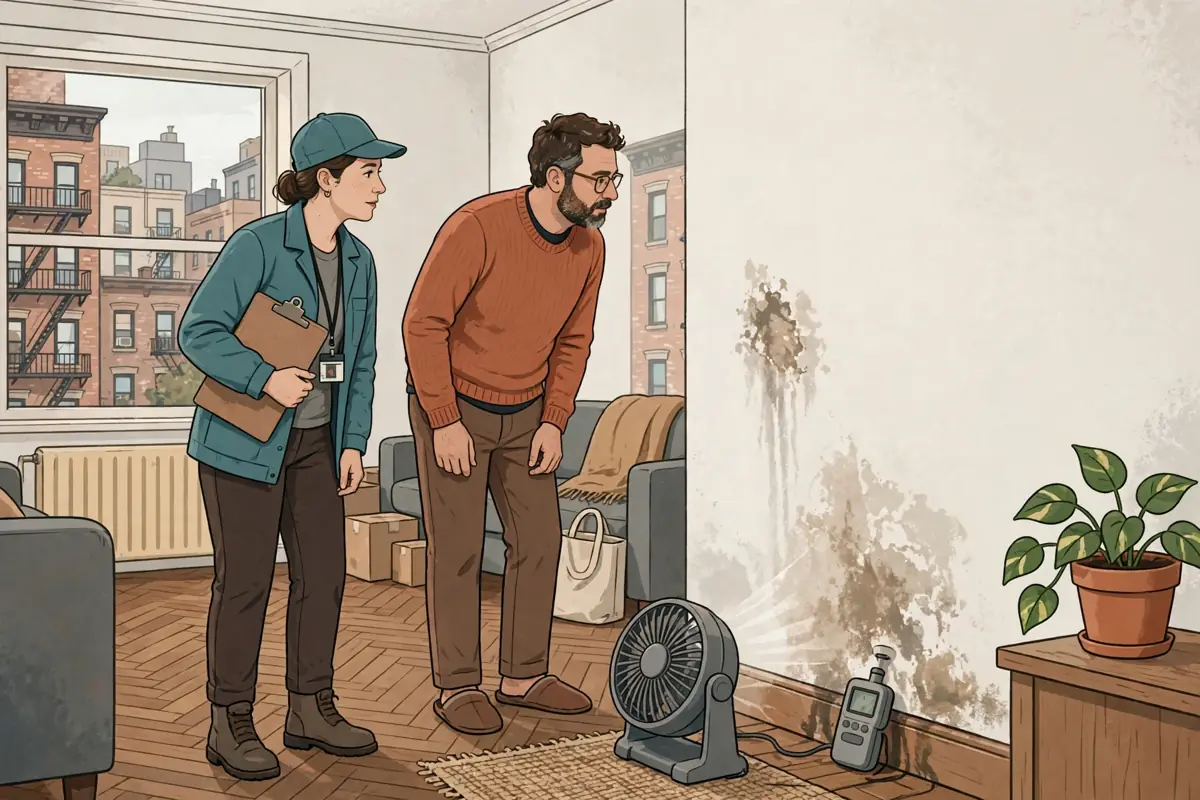
All Fifty-Six Pages, in One Place

Every page on this site, in the order it was built. The other fifty-five each take one question, one place or one stage of the work. This page, the fifty-third, takes the coverage question: what insurance pays for, by cause, under New York rules, and what to do when the answer comes back no.

Site Home

Home page for restoration help across New York

Brooklyn

Borough page for Brooklyn homes hit by leaks and floods

Queens

Borough page for Queens homes, from Astoria to Far Rockaway

The Bronx

Borough page for Bronx homes and buildings

Staten Island

Borough page for Staten Island homes

Long Island

Regional page for Nassau and Suffolk homes

Manhattan

Borough page for Manhattan apartments and buildings

Insurance Claims in New York

How claims work in New York, step by step

Water Behind Walls in NYC

Finding and fixing hidden water inside walls

Fire Damage in NYC

Help after fire, smoke and the water that put it out

Flood Cleanup in NYC

Cleanup after flood events, street water and storms

Remediation in NYC

The remediation stage explained for city homes

Fire Cleanup in NYC

Cleaning up after a fire, room by room

Rochester

City page for Rochester homes

Albany

City page for Albany homes

Buffalo

City page for Buffalo homes

Syracuse

City page for Syracuse homes

Yonkers

City page for Yonkers homes

New Rochelle

City page for New Rochelle homes

Mount Vernon

City page for Mount Vernon homes

Schenectady

City page for Schenectady homes

Utica

City page for Utica homes

White Plains

City page for White Plains homes

Troy

City page for Troy homes

Niagara Falls

City page for Niagara Falls homes

Binghamton

City page for Binghamton homes

Westchester County

County page for Westchester homes

Hudson Valley

Regional page for Hudson Valley homes

Capital Region

Regional page for Capital Region homes

Western New York

Regional page for the western end of the state

Finger Lakes

Regional page for Finger Lakes homes

Central New York

Regional page for Central New York homes

Southern Tier

Regional page for Southern Tier homes

NYC Hub

The city hub page tying the borough pages together

How Fast Mold Grows

The timeline of mold growth after water gets in

Mold Removal in NYC

Removing mold from city homes, safely and legally

The Full Process

The whole restoration process, step by step

What Restoration Means

A plain definition of the whole trade

Mold Remediation in New York

Licensed mold work under New York rules

Water Removal in NYC

Extraction only: pumps, vacuums and standing water

Water Damage in the City

The broad city page for water problems at home

Nyack Cleanup Page

Cleanup help for Nyack homes in Rockland County

Choosing a Company

How to pick a restoration company you can trust

Commercial Properties in NYC

Water problems in shops, offices and buildings

Basements in NYC

Basement water problems, from seepage to floods

Repairs in New York

The repair stage that follows cleanup and drying

Poughkeepsie

City page for Poughkeepsie homes

Emergencies in NYC

The emergency page: speed, safety and the first hour

Cleanup After Water in NYC

The cleanup stage after water is out, room by room

Flood Restoration in NYC

The flood event page: storm water, basements, claims and rebuilding

The Timeline Page

How long each stage takes, from first call to dry rooms

Washington Heights Flood Cleanup

Neighbourhood page for flood work in upper Manhattan

Water Damage Mold Remediation

Mold that grew after a leak or flood, remediated the New York way, by licensed assessor and remediator.

Water Damage Restoration Companies New York

Compare the companies serving New York: national franchises, regional firms and local independents, and how to verify licences and certification before you hire.

Water Damage From Upstairs Neighbor

Water damage from an upstairs neighbor in New York City: who pays, what to do in the first hour, and how to document, report and claim.