Water Damage Restoration in Mount Vernon: Hutchinson River Floods, Century-Old Sewers and Flooded Basements in the City North of the Bronx

The short version, with sources
Seven Facts That Decide a Mount Vernon Water Loss
Seven facts decide most water damage restoration mount vernon jobs, and each one below is stated with the source it comes from, so it can be checked and quoted exactly as it stands.
Last updated: November 2026
- Mount Vernon holds 73,893 people in 4.36 square miles, a density of 16,519 people per square mile, according to the 2020 census, which makes it the third largest and most densely populated city in Westchester County.
- Failing sewer infrastructure has caused sewage to overflow into thousands of Mount Vernon homes, with even light rain triggering backups, according to the Natural Resources Defense Council (NRDC) report first published on 27 June 2022.
- Governor Hochul announced a 150 million dollar state investment in April 2022 to rebuild Mount Vernon sewers, including the Third Street Sewer Project, in a three way partnership between the state, the City of Mount Vernon and Westchester County.
- The Bronx River Parkway flooded at Oak Street in Mount Vernon on 29 September 2023, according to the Westchester County Department of Emergency Services, and at the same Oak Street spot again on 21 July 2026, according to lohud.
- The U.S. Small Business Administration (SBA) opened a Business Recovery Center at Mount Vernon City Hall on 22 November 2021 for Hurricane Ida, under declaration 17147.
- Mold can begin growing within 24 to 48 hours on material that stays wet, according to the U.S. Environmental Protection Agency (EPA).
- New York Insurance Law Section 3404 gives a policyholder 24 months from the date of a loss to sue the insurer over the claim, and Section 2618 requires payment of an agreed, undisputed amount within 4 business days.
How a job is run
Readings Before Promises: The Paper Trail Behind Every Mount Vernon Job
A water damage restoration mount vernon job stands or falls on its record. Moisture readings, dated photographs and a written scope are what an adjuster pays from, what a co-op board accepts, and what proves a home is actually dry when the fans leave.
Measured from hour one
The first visit on a water damage restoration mount vernon job maps moisture with meters and thermal imaging and records a dry standard from an unaffected room in the same home, so every later reading has something honest to be compared against.
Licensed where the law asks
Mold assessment and mold remediation in New York are separate licensed jobs under Article 32 of the state Labor Law, and this page explains that split plainly instead of hiding it.
One standard, in writing
Drying follows the ANSI/IICRC S500 standard, the same reference insurers and adjusters use, and the scope names what will be dried, opened, cleaned or removed before work starts.
Business details are placeholdersLocal facts, checked
The storm dates, sewer history and river facts on this page come from named public sources, the county, the USGS, the SBA, the NRDC and the city itself, stated in the same sentence as the figure they support.
Water standing in a Mount Vernon basement right now?
Extraction started today is a water damage restoration mount vernon drying job. Extraction started next week is a drying job plus a mold job plus a harder claim. The first call is the cheapest decision in the whole loss.
The geography of the problem
Two Rivers, One Small City: How the Bronx and Hutchinson Rivers Get Into Mount Vernon Homes
Mount Vernon is the eighth largest city in New York State and the largest African-American majority city in the state, and it does all of that living in 4.36 square miles of land squeezed between two rivers, and that squeeze shapes every water damage restoration mount vernon job in the city.
The Bronx River forms the western border of Mount Vernon and the Hutchinson River forms the eastern border, and the city between them drains toward both. That single fact explains more water damage restoration mount vernon work than any other. Rain that falls on Fleetwood runs west to the Bronx River or east to the Hutchinson. Rain that falls on the south side runs through the oldest pipes in the city toward outfalls that empty into those same two rivers. When the rivers are low, the system works quietly. When a storm drops inches of rain in hours, the rivers rise, the outfalls drown, and the drainage runs backwards, into streets, into yards and into the basements that sit below street level all over this dense city.
That is why water damage restoration mount vernon work is planned by neighbourhood and by building type on this page, not by a single citywide script. The density is the multiplier. At 16,519 people per square mile, according to the 2020 census, Mount Vernon packs more homes, more basements and more below grade living space into a flood footprint than almost any suburb in the region. A street flood that would wet lawns in a spread out town wets boiler rooms, ground floor apartments and finished basements here. Three Metro-North stations and the parkways bring people home to that density every night, and the Bronx River Parkway on the west and the Hutchinson River Parkway on the east both run in the low corridors beside their rivers, which is why the same two parkway spots, Oak Street and East Lincoln Avenue, appear again and again in the county flood reports quoted on this page.
Inside the city, the Metro-North rail tracks divide the two halves that every local knows. The North Side, just over 2 square miles of it, is the more residential half: Fleetwood with its co-op buildings on Gramatan Avenue, Chester Heights, Huntswood, Estate Manor and Oakwood Heights. The South Side is the more urban half: downtown around City Hall at 1 Roosevelt Square, Parkside with its industrial businesses, the South Side neighbourhood and Vernon Park. The water respects that divide loosely. The north floods at its river edges and dries out through old laterals. The south floods from its own sewers, which is the harder story, and it gets its own full section on this page.
For a homeowner the practical reading is simple. A Mount Vernon address is never far from a river, a parkway sag or a century old sewer main, and often it is close to all three. Knowing which of the three threatens your street is the start of every sensible prevention plan, and it is the first question a water damage restoration mount vernon crew should ask on the phone: not only where the water is, but which water it is. River water, street water and sewage each carry a different category, a different cleanup and a different insurance story, and this page treats them separately all the way through.

Case lesson one: September 2021
Hurricane Ida in Mount Vernon: The Night the Rain Outran Every Drain in the City
Ida is the storm Mount Vernon measures other storms against, because it proved that the limiting factor here is not the size of the rain. It is the speed of it.
The remnants of Hurricane Ida crossed the region on 1 to 3 September 2021 and delivered 4 to 9 inches of rain, at rates up to 3 to 4 inches per hour, according to the U.S. Geological Survey (USGS). No drainage system in a city of 100 year old pipes is built for 3 inches an hour. Governor Hochul declared a state of emergency that included Westchester County, and State Fire, State Police and Department of Environmental Conservation teams took part in about 100 rescues across Rockland and Westchester counties, with a DEC swiftwater team of six forest rangers working through the night of 1 to 2 September. Across New York, 86 people were rescued, including children in the Hudson Valley, according to the DEC. This page does not move county figures into the city. The five Westchester County Ida deaths were a county toll, and honest local writing keeps them there.
What Ida left in Mount Vernon basements followed the pattern this page keeps returning to. Water came up through floor drains as the sewers surcharged. It came in at foundation joints as groundwater rose with the rivers. It came down through roofs and windows where the wind drove it. The damage that cost the most was not always the deepest water. It was the water that sat. Homes where extraction started within a day dried in days. Homes where owners waited for the water to leave on its own, or for a callback that came late, were still cutting out plaster and treating mold weeks later, because the 24 to 48 hour mold clock the EPA describes does not wait for a storm backlog to clear.
The recovery paper trail matters to this page because it is still the template. The U.S. Small Business Administration (SBA) opened a Business Recovery Center at Mount Vernon City Hall, in the Memorial Room at 1 Roosevelt Square, on Monday 22 November 2021, under declaration 17147. The filing deadline for physical damage was 6 December 2021 and for economic injury 6 June 2022. Loans ran up to 2 million dollars for businesses, 200,000 dollars for homeowners and 40,000 dollars for renters and personal property, with a mitigation increase of up to 20 percent for measures such as a sump pump, elevation, a French drain or a retaining wall. That 20 percent detail deserves underlining. Even the federal recovery program treats the next flood as a certainty and pays extra to prepare for it, which is exactly the argument the prevention section of this page makes in household terms.
Ida also reset what a water damage restoration mount vernon crew has to be ready for. Not one house at a time, but a whole city at once: that is the scale a Mount Vernon crew faces after a storm like Ida,: hundreds of basements in the same 48 hours, adjusters working from photographs because they cannot visit every loss, and documentation deciding who gets paid in full. The homes that came through Ida best had three things ready before the rain: a working sump pump, belongings off the basement floor, and a phone number they trusted already saved. None of those can be arranged at midnight in a storm. All three can be arranged this week, in dry weather, for very little effort.
Case lesson two: September 2023
29 September 2023: Oak Street, East Lincoln Avenue and a City Under a State of Emergency
Two Septembers after Ida, the remnants of Tropical Storm Ophelia gave Mount Vernon the same lesson in a smaller dose, and this time the county wrote the street names down.
Westchester County received 3 to 6 inches of rain on 29 September 2023, according to the Westchester County Department of Emergency Services, and the U.S. Geological Survey (USGS) put the wider regional figure at 4 to 8 inches. The Bronx River at the New York Botanical Garden, USGS gage 01302020, reached major flood stage. The county report is specific about Mount Vernon. The Bronx River Parkway was closed between New York City and Main Street in White Plains, with significant flooding at Oak Street in Mount Vernon. The Hutchinson River Parkway had partial closures between the city line and North Avenue in New Rochelle, with significant flooding at Wolf's Lane in Pelham and at East Lincoln Avenue in Mount Vernon. The Cross County Parkway closed in sections as well, and states of emergency were declared in the cities of New Rochelle, Mount Vernon and Yonkers.
Read those two street names as a map of the city's weak points. Oak Street is the low sag on the west side where parkway, river and city drainage meet at nearly one level, so the road floods, the nearby drains lose their outfall, and the streets around the sag take water at the same hour. East Lincoln Avenue is the east side mirror: a Hutchinson River corridor street where river level and street drainage fight over the same few feet of elevation. A homeowner on either corridor does not need a flood map to know their risk. The county emergency report is their flood map, published twice now in three years.
For water damage restoration mount vernon crews, 29 September 2023 is now a training date: the storm that proved the Oak Street and East Lincoln Avenue corridors flood together, and that a crew staged for one river can be needed on both in the same night. Inside homes, the 2023 storm repeated the Ida pattern at neighborhood scale. Basements on the south side took drain backups as the sewers surcharged. Ground floors near the parkway corridors took street water. And the losses that turned expensive were again the slow ones: the finished basement that was mopped and left, the carpet that felt dry on top while the padding held water against the subfloor, the wall that was painted over a stain that was still wet behind the paint. Every one of those is a drying failure, not a flooding failure, and drying failures are the part of a loss a good crew fully controls.
The date also belongs in every Mount Vernon insurance conversation. A documented storm date, a county emergency declaration and a named street flooding two blocks from a home are powerful context for a claim. Adjusters work from records, and a water damage restoration mount vernon claim that opens with the storm, the declaration and the dated photographs of the loss is a claim that starts ahead. The documentation section of this page shows how to build that file, and the FAQ section answers the deadline questions that follow from it, including the Regulation 64 clock and the 24 month suit limit under Section 3404.
Case lesson three: July 2026
21 July 2026: The Ordinary Summer Storm That Flooded Oak Street Again
The most recent Mount Vernon flood case on this page is not a hurricane at all. It is a summer thunderstorm, and that is exactly why it matters.
On 21 July 2026, rain fell at 1 to 2 inches per hour over Westchester County, according to lohud, and the National Weather Service issued a Flash Flood Warning. Flooding closed areas of the Bronx River Parkway and the Taconic State Parkway, Westchester County Police expanded the closures as the event developed, and lohud recorded considerable flooding on the northbound Bronx River Parkway at Oak Street in Mount Vernon. Same street. Same sag. Third documented flood in five years, in a storm with no name.
The lesson for homeowners is a change of category. Parkway corridor flooding in Mount Vernon is no longer a hurricane story that arrives with days of warning. It is a summer story that arrives with a phone alert and an hour of hard rain. A basement near Oak Street or East Lincoln Avenue can be dry at dinner and wet by the late news, from street water at the door and drain water at the floor at the same time. Prevention that depends on watching a hurricane track is useless here. Prevention that works is mechanical: a tested sump pump with a battery backup, a backwater valve on a drain that has surcharged before, belongings stored off the floor, and a water alarm that speaks up while the water is still an inch deep.
The response lesson matches. In a fast summer event, the water damage restoration mount vernon crew that helps you is the crew that answers, asks the right four questions and tells you what to do before they arrive. Close the shutoff if a pipe is involved. Stay out of rooms where water meets electricity. Photograph from the doorway. Move what you can. Those moves, taken from the first hour section of this page, cost nothing and they change the size of the job. A call made during the storm, with photographs taken during the storm, produces a smaller loss and a stronger claim than the same call made the following weekend.
There is a wider point, and this page will not dodge it. The city sewer rebuild described in the next sections is real, funded and under way in phases over five to seven years. It will reduce the backup burden street by street. It will not change the elevation of the Oak Street sag or the path of the Hutchinson River, and it is not finished. Until it is, the honest position for a Mount Vernon homeowner is the one this page takes throughout: respect the dated record, prepare the basement you actually have, and treat every Flash Flood Warning as a personal instruction, not background noise.
The signature story
Sewage in the Basement: Mount Vernon's Century of Old Pipes and the Long Fight to Fix Them
No page about water damage in Mount Vernon is honest if it treats sewage backups as bad luck. Here they are infrastructure history, and the record is long, documented and still being written.
Start with the human version. The Natural Resources Defense Council (NRDC), in a report first published on 27 June 2022 and updated on 2 April 2026, described failing infrastructure causing sewage to overflow into thousands of Mount Vernon homes since the turn of the century, with even light rain or mild storms triggering backups. The report told the story of resident Linda McNeil, who battled raw sewage in her basement for 22 years, wet vaccing mess after mess. The majority of the backups fall on the densely populated south side of the city. The Hutchinson River receives the contaminated overflow. A sewage bypass pump installed in 2020 gave temporary relief while the permanent fix was argued over and funded.
Every water damage restoration mount vernon professional who works the south side learns the engineering version eventually, usually standing in it. The engineering version matches the human one. The City of Mount Vernon maintains nearly 200 miles of stormwater and sanitary sewers, the majority over 100 years old, according to the city's own Comprehensive Sewer Investigation and Rehabilitation Program. Century old clay pipes crack, joints open, roots enter, and capacity shrinks in exactly the decades when rainfall intensity grows. Historically, sewage was discharged through a 10 inch vertical pipe about 100 feet long on Third Street between Ninth and Tenth Avenue. It clogged, and buildings along West Third Street backed up. The city is entering a consent decree with the U.S. Environmental Protection Agency (USEPA), the New York State Department of Environmental Conservation (NYSDEC) and the U.S. Department of Justice (USDOJ), because sewage infiltrating storm sewers that flow to the Hutchinson and Bronx Rivers violates the city's MS4 permit and the Clean Water Act. In the city's sampling, the Outfall 24 drainage area alone accounted for 95 percent of the pollutant load from the storm outfalls sampled, across 39 miles of storm and sanitary sewer.
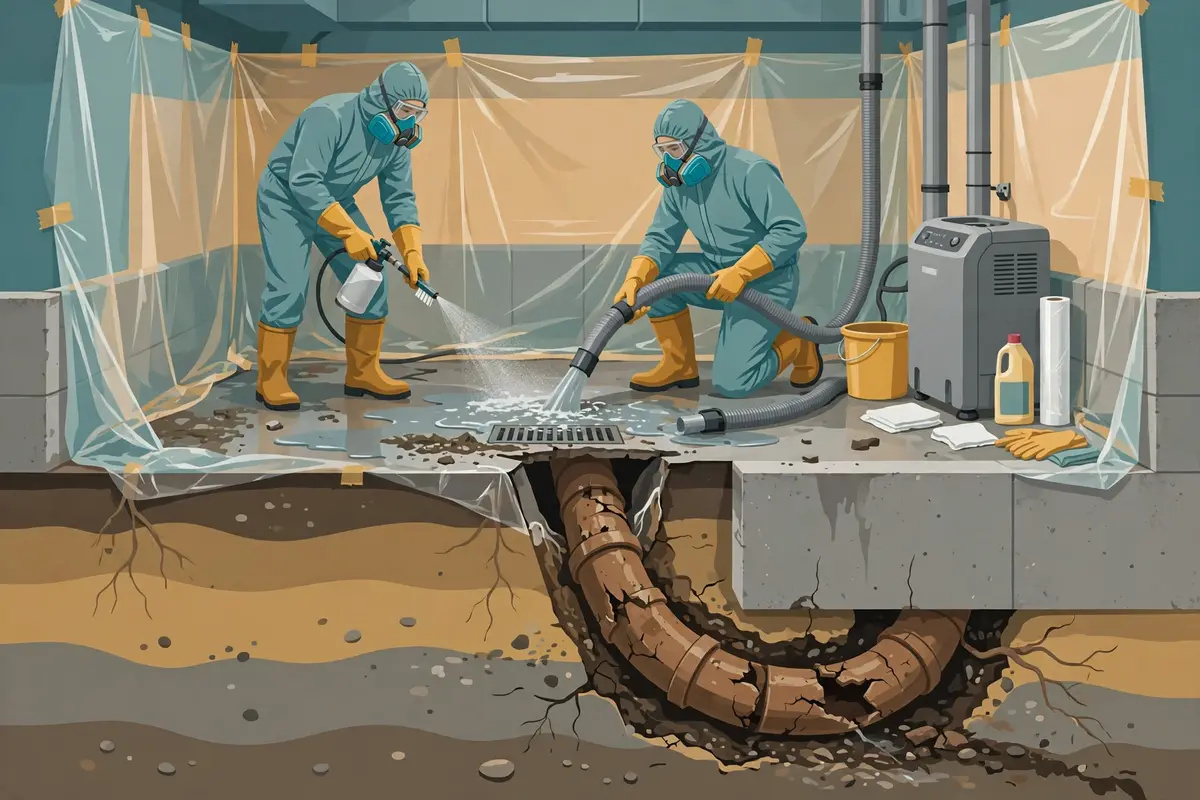
For the homeowner reading this in a wet basement, the sewer crisis has one more practical meaning: a water damage restoration mount vernon crew here must be fluent in Category 3 work, because the city system makes sewage a routine part of the trade rather than a rare one. The money version arrived on 15 April 2022, when Governor Hochul announced a historic 150 million dollar investment and a three way partnership between New York State, the City of Mount Vernon and Westchester County to replace the century old clay pipes. Seven million dollars went immediately to the Third Street Sewer Project: a new underground pumping station, about 400 linear feet of sewer piping on West Third Street and an emergency generator, for a neighbourhood where about 500 households had been served by temporary pumps and a makeshift system staged in the street. A further 8 million dollars came through the Environmental Facilities Corporation (EFC) for emergency repairs and lead pipe planning, and 3 million dollars funded a Healthy Homes pilot for backflow prevention devices, water and sewer line replacement and pipe repair in the homes that needed it most.
The progress version is worth stating carefully, from the city's own three years of progress reporting. The Third Street Sewer Project construction is complete. The Healthy Homes pilot was completed on 24 low to moderate income households. Five million dollars in Clean Water Infrastructure Act (CWIA) grants funded 33 priority projects to repair nearly 200 miles of storm and sanitary sewers, and more than 4,100 residents were impacted by the Third Street work. Sewers repaired in 2022 included Grand Street, Macquesten Parkway, Beechwood Avenue and Hutchinson Boulevard, and the full program runs in phases over five to seven years. A water damage restoration mount vernon page should say all of that, because it is true, and then say the rest: a phased rebuild means your street may be years from its turn, and your basement lives in the city as it is today.
So the household version, which is where this page can actually help, is a short list of decisions. If your floor drain has ever surcharged, price a backwater valve and treat it as urgent, because the Healthy Homes pilot chose backflow prevention as its first household measure for a reason. If sewage has entered your home, treat it as Category 3 every time: children and pets out, no fans blowing across it, porous material out, disinfection by a water damage restoration mount vernon crew in protective gear. Photograph the drain, the water line and the street outside, and note the rainfall, because a backup that matches a documented storm and a documented city problem is a different insurance conversation than an unexplained wet floor. And if your home is on the south side, where the burden is heaviest, do not wait for the second backup to act on any of this. The first backup was the warning.
The deep history
1901: The Year the Hutchinson River Sewage Fight Reached Albany
Mount Vernon's water troubles are older than its sewers. In 1901 the river itself was the sewer, and the neighbours downstream said so, in writing, to the state.
In early 1901, James F. Secor Jr. of Pelham Manor and others petitioned the State Board of Health in Albany with a complaint that sounds grimly modern: Mount Vernon, Pelham and Pelham Manor were discharging raw sewage directly into the Hutchinson River, then also called East Chester Creek. The state inspector visited on 8 January 1901 and found the stream, in the words of the record, reeking with sewage in all stages of decomposition. The river's natural flow had by then been nearly all appropriated for the water supplies of New Rochelle and Mount Vernon, which meant the creek ran low and the sewage ran strong, the worst possible combination for the communities along its banks.
Why does a water damage restoration mount vernon page carry a 1901 story? Because it explains the ground the modern city stands on. Mount Vernon was settled by colonial Americans in the late 17th century, named after George Washington's Virginia homestead, and grew into a dense streetcar city long before modern drainage standards existed. Its pipes were laid for the city of 1900, its river was used as the city of 1900 used rivers, and the 21st century inherited both the pipes and the consequences. The consent decree, the 150 million dollar program and the Third Street pumping station in the previous section are the latest chapter of an argument that the Secor petition opened 125 years ago.
There is a practical thread too. Streets that were low and wet in 1901 are, in the main, low and wet now. The river corridors, the old creek beds filled and built over, the sags where the parkways now run: the water remembers the old map even where the city has paved over it. When a Mount Vernon home floods in the same place for the third time, it is rarely a mystery. It is usually the old geography announcing itself. A crew that asks where the water entered, and a homeowner who learns the answer for their own street, are both working with the real map of this city, the one drawn by water.
Where the water lands
Flooded Basements in Mount Vernon: Five Ways the Water Gets In
Almost every water damage restoration mount vernon job ends in a basement, but the water arrives by different doors, and each door has its own fix.
One: the floor drain, backwards. When the city sewer surcharges in heavy rain, the lowest opening in the house is where the system relieves itself. That is the signature water damage restoration mount vernon loss, heaviest on the south side, and it is Category 3 from the first inch. The fix is a backwater valve, the cleanup is protective gear and disinfection, and the insurance story usually turns on a sewer backup endorsement, which is why this page keeps naming it.
Two: the sump pit, overwhelmed or dead. Groundwater rises with the rivers and with saturated soil, the pit fills, and the pump either cannot keep pace, loses power, or fails silently after years of sitting dry. The fix is a tested pump, a battery backup and an alarm. The failure mode to fear is the quiet one: a pump that died in March announcing itself in a September storm.
Three: the foundation, through joints and cracks. Hydrostatic pressure pushes groundwater through the cove joint where wall meets floor, through cracks in older stone and block foundations, and through pipe penetrations. This water often arrives clear and is mistaken for a plumbing leak. The reading that separates them is pattern: foundation water follows rain and river level, plumbing water follows use.
Four: the street, over the threshold. On the parkway corridors and the low streets, storm water ponds against the house and enters at door thresholds, window wells and garage slabs. The 29 September 2023 and 21 July 2026 cases in this page are the dated proof. This is flood water in insurance language, which is why the NFIP section of this page exists.
Five: from above, down through the house. Burst pipes, radiator failures, water heater and appliance leaks start upstairs and finish in the basement ceiling, the walls and the floor. In Fleetwood co-ops the same event arrives from the neighbour above. This water starts as Category 1 and is the most saveable kind, if the shutoff is closed fast and drying starts the same day. The five doors share one rule: the category and the clock decide the size of every water damage restoration mount vernon loss, and both are set in the first hours, which is why the next section is the most practical one on this page.
The response, in order
The First Hour in a Mount Vernon Home: Six Steps While the Water Is Still Moving
The first hour decides whether a water damage restoration mount vernon loss is a drying job or a demolition job. These six steps are the same six steps carried in this page's structured data, in the same order.
Call and shut off the water
Phone (914) 555-0147 (placeholder) and, if a pipe or appliance is feeding the water, close the main shutoff valve where the service enters the basement. In a Fleetwood co-op water damage restoration mount vernon call, phone the superintendent at the same time so the riser can be closed.
Safety check
Keep clear of rooms where water has reached outlets, a panel or ceiling lights. Sewage and river water are treated as contaminated from the first minute, so keep children and pets out and do not run fans or a household vacuum on them.
Inspection and moisture mapping
The crew traces the water path with pin and pinless moisture meters and thermal imaging, marks the wet line on each wall and records the starting readings that the whole drying plan and the insurance file are built on.
Water extraction
Truck mounted and portable extractors lift standing water from floors, carpet and padding, and furniture is blocked or moved so finishes and legs are not stained or swollen while the room dries.
Structural drying setup
Air movers, dehumidifiers and cavity drying systems are placed from the moisture map, sized to the rooms and the materials, and set to follow the ANSI/IICRC S500 drying approach from the first day.
Insurance documentation
Photographs, the moisture map, daily reading logs and the list of removed material are assembled into one dated record, so the adjuster sees the loss, the response and the dry standard proof in a single file.
Homeowners who want the short version can hold it in one line: on any water damage restoration mount vernon job, stop it, stay safe, photograph it, then dry it to readings. Two habits make these steps work. The first is sequence: source stopped before safety, safety before salvage, salvage before drying, documentation running through all of it. Homeowners who mop before they photograph, or throw away the split pipe before anyone sees it, are undoing step six while doing step four. The second habit is honesty about category. A homeowner who tells the crew the water came from the floor drain gets the right crew, the right gear and the right cleanup. A homeowner who calls it a little leak gets a mop crew at a sewage job. Say which water it is. In Mount Vernon, of all cities, nobody will be surprised.
Know your water
Clean, Gray and Black: The Three Categories of Water in a Mount Vernon Loss
Every decision on a water damage restoration mount vernon job, what can be saved, who can stay in the room, what the cleanup involves, flows from one classification made in the first visit.
The ANSI/IICRC S500 standard, the reference the trade and the insurers share, sorts water into three categories by contamination. Category 1 is clean water from a sanitary source: a supply line, a water heater, melting ice. It is the water of burst pipes and appliance failures, and its danger is time, because clean water left sitting picks up material from floors and walls and degrades. Category 2, gray water, carries significant contamination: dishwasher and washing machine discharge, toilet overflow with urine only, or Category 1 water that has sat long enough to change. Category 3, black water, is grossly contaminated: sewage, river water, street flood water and groundwater that has crossed soil. It can carry bacteria, viruses, chemicals and debris, and on a water damage restoration mount vernon job it is handled with protective equipment, containment and disposal of porous materials that cannot be reliably cleaned.
Mount Vernon gives each category a local face. Category 1 is the Fleetwood radiator line and the Chester Heights pipe that froze in a cold snap. Category 2 is the washing machine hose in a Parkside two family house. Category 3 is the south side floor drain in a heavy rain, the East Lincoln Avenue street water, and the Oak Street corridor basement in a flash flood. Notice what that means: the most common Mount Vernon losses are the most contaminated kind. A city whose signature water problem is a century old sewer system does not get to treat its floods as clean water with dirt in it, and neither do the water damage restoration mount vernon crews who clean them.
Category also decides the conversation about belongings. Clean water carpet can often be cleaned and dried. Sewage touched carpet and padding come out, every time, and so do wet soft furnishings, cardboard storage and paper goods that took black water. Homeowners sometimes hear that as a sales line. It is a hygiene line, and it comes from the standard, not the invoice. The same standard drives the safety call about staying in the home, the protective gear you will see on the crew, and the disinfection step that follows extraction on any Category 3 water damage restoration mount vernon job. When a crew explains its category call and the reasons in plain words, that is the sound of the standard being followed, and it is one of the clearest quality signals this page can teach you to listen for.

The building stock
Plaster, Stone and Clay: Drying the Older Homes of Mount Vernon
Mount Vernon was largely built before modern drywall, modern plumbing and modern drainage, and old materials on a water damage restoration mount vernon job dry on their own schedule. Readings, not impatience, set the pace.
Start with the walls. Much of the city's housing stock carries plaster on wood or metal lath over old framing, and plaster behaves nothing like the paper faced drywall of a new suburb. It holds water deep, releases it slowly, and can look and feel dry at the surface while the lath and the cavity behind it are still wet. The honest tool is the meter, used daily, at several heights, because water wicks upward in plaster further than the visible stain suggests. Where flood or sewage water entered a plaster cavity, the water damage restoration mount vernon crew may open the wall at the base, remove wet material inside and dry the cavity directly, then repair the opening as one clean line rather than a patchwork.
Foundations tell the same story in stone and block. Older Mount Vernon homes stand on stone or early concrete block foundations that pass groundwater at joints and mortar lines under pressure. Drying a basement in this stock means drying the floor assembly and the lower wall, checking the sill plate and the bottom of the framing where they meet the foundation, and expecting the readings near the floor to fall last. A water damage restoration mount vernon crew that packs up because the middle of the wall reads dry, while the base still reads wet, has left the job half done in exactly the place mold likes best.
Below the floor sits the third old system: the clay lateral that connects the house to the city sewer. The city mains get the headlines, but the house lateral is the pipe that actually delivers the backup, and in a century old housing stock many laterals are cracked, root filled or bellied. After any sewage event, a camera inspection of the lateral is money spent on information, because it separates a city surcharge, which a backwater valve answers, from a failing private pipe, which only excavation answers. A water damage restoration mount vernon crew that cleans the basement and never raises the lateral question has solved the symptom in a city famous for the disease.
None of this makes old homes fragile. Plaster, stone and solid framing have survived a century of Mount Vernon weather, and they survive water too when the drying respects their pace. What they do not survive is a fast, cosmetic cover up: paint over wet plaster, new flooring over a damp slab, a wall closed over a wet cavity. The old stock rewards patience and punishes hurry, and the daily reading log is how patience is proved on a water damage restoration mount vernon job.
The cold season
Frozen Pipes and Radiator Failures: Mount Vernon Water Damage in Winter
Summer brings Mount Vernon its rivers. Winter brings its own water, from inside the walls: frozen supply lines, split pipes and the steam and hot water radiator systems that heat the older stock.
The freeze pattern is reliable. A cold snap drops temperatures, wind finds the gaps in older framing, and the pipe in the exterior wall, the unheated crawlspace or the garage ceiling freezes first. Ice expands, the pipe splits along its length, and nothing happens until the thaw, when water under full pressure pours into the wall cavity and runs down through the house. Homeowners often meet this kind of water damage restoration mount vernon loss as a ceiling stain, a bulging plaster ceiling or water at a light fitting, hours after the actual break. The shutoff is the whole game in that moment, which is why this page repeats its location until it sticks: where the service enters the basement, near the meter, and in a co-op, the riser valve your superintendent controls.

Radiators are the second winter system. Mount Vernon's older homes and Fleetwood co-ops heat with steam and hot water radiators fed by risers that have cycled hot and cold for decades. Valves weep, unions corrode, and a failed valve on an upper floor sends water down through every ceiling below it, which is why winter co-op losses so often arrive as a neighbour problem. The drying approach is the same measured one, with extra attention to plaster ceilings, which hold water, sag under its weight and must be checked for safety before anyone walks under them.
Winter losses are the most preventable kind of water damage restoration mount vernon work, because the failure points announce themselves in advance to anyone who walks the basement in October. Prevention here is unglamorous and effective. Insulate the runs that froze, or the runs in the same cold places. Seal the air leaks that let wind reach them. Know that a pipe that froze once has marked its spot. During a hard cold snap, keep cabinet doors open on exterior wall plumbing, let a vulnerable faucet drip, and hold indoor heat steady even when travelling. And if a pipe does split, keep the failed section. Photograph it, bag it, and hand it to the record, because a frozen pipe claim is one of the cleanest claims in the business when the evidence survives, and one of the most argued when it goes out with the debris.
Shared walls, shared water
Co-ops, Rentals and the Apartment Above: Multi Unit Water Damage in Mount Vernon
In a city this dense, a large share of water damage restoration mount vernon calls begin in somebody else's home: the unit above, the unit beside, the riser behind the wall that belongs to everyone.
Fleetwood is the centre of this story. Its large co-op buildings along Gramatan Avenue stack dozens of homes on shared risers, shared drains and shared heating lines. A dishwasher hose that lets go on the sixth floor is a ceiling claim on the fifth, a wall claim on the fourth and a floor claim on the third. The co-op setting changes the first call as well: a water damage restoration mount vernon crew arriving at a Fleetwood tower needs the superintendent, the riser and the board paperwork moving in parallel with its own extraction, or the drying waits on permission while the water does not. The response runs on two tracks at once. The building track belongs to the board, the managing agent and the superintendent: shut the riser, open the incident report, notify the building insurer, dry the common elements. The unit track belongs to the shareholder or tenant: photograph everything, report in writing the same day, open your own claim, and get your own drying started inside your walls, because building crews dry corridors and shafts first and unit interiors when the paperwork reaches them.
The money question follows the facts. The building master policy generally covers the structure and common elements. The unit owner policy covers finishes, improvements and belongings. Liability for the loss can follow whoever failed to maintain the pipe, valve or appliance that let go, and insurers sort that out between themselves through subrogation, using exactly the dated photographs and incident reports created in the first days. That is why the boring advice matters so much in a co-op: written notice, photographs before cleanup, the incident report number in your own file. In a single family house, the documentation from a water damage restoration mount vernon job persuades an adjuster. In a co-op, it decides which of three insurers pays.
Renters across the south side apartment buildings and the two family stock hold a different hand. The landlord owns the structure and the duty to repair it, and the tenant owns the belongings and the right to a habitable home. A tenant's jobs in a water damage restoration mount vernon loss are to report the leak fast and in writing, protect belongings, document damage to their own property for their renters policy, and keep access open for the drying crews. A landlord's jobs are the building ones: stop the source, dry the structure, and keep the record. When both sides do their half in the first 48 hours, a multi unit loss is an inconvenience. When either side waits, it becomes a dispute with wet walls, and wet walls do not care whose fault the dispute says they are.
Three stocks, three plans
Co-op Towers, Two Family Houses and North Side Colonials: Three Drying Plans
Mount Vernon holds three housing stocks in 4.36 square miles, and each one floods, dries and files its water damage restoration mount vernon claim in its own way.
The Fleetwood co-op towers
Vertical water, shared risers, board paperwork and plaster ceilings. The plan: riser shutoff with the superintendent, incident report the same day, drying that follows the stack down floor by floor, and unit by unit documentation because three insurers may read the same file.
The two family and multi family stock
The working houses of the south side and Parkside, often with a basement unit or a basement business at the lowest level. The plan: Category 3 caution at every floor drain, backwater valve conversation after every backup, and fast decisions about basement finishes that took sewage.
The north side single family homes
Chester Heights, Huntswood and Oakwood Heights colonials and capes with stone foundations, finished basements and clay laterals. The plan: readings led drying in plaster and stone, a camera in the lateral after any backup, and sump and backflow hardware checked before storm season, not during it.
Across all three stocks, one rule holds: every water damage restoration mount vernon loss ends with the entry point named in writing, because a dried room with an unnamed door is a room that will be dried again. The stocks differ, but the standard does not. Every one of them gets the same first hour, the same moisture map, the same daily readings and the same written record. What changes is the emphasis: paperwork and risers in the towers, category and backflow in the two family stock, materials and laterals in the colonials. A Mount Vernon crew worth hiring can tell you, in the first phone call, which stock you are describing and which emphasis your job will take. A crew that gives every address the same speech has not yet looked at your city.
Neighbourhood by neighbourhood
Mount Vernon by Neighbourhood: Fleetwood Co-ops, the South Side and the River Streets
Pick a part of the city and read its water honestly: where it comes from, what it hits first, and the first moves that match the ground.
Mount Vernon by ZIP code
| ZIP code | Area it covers | Population | The water it knows |
|---|---|---|---|
| 10550 | Downtown, the South Side and the city centre | 38,972 | Sewer backups on the oldest mains, street water in the low corridors, City Hall and the main post office blocks |
| 10552 | Fleetwood and the north west of the city | 22,341 | Co-op riser and radiator losses on Gramatan Avenue, Bronx River edge streets, frozen pipes in older frames |
| 10553 | The east side toward the Hutchinson River | 11,011 | Hutchinson River street flooding near East Lincoln Avenue, groundwater at foundations, drain surcharge in heavy rain |
| 10551 | Post office boxes only | n/a | No homes, listed here so the record is complete |
ZIP populations as carried in the research behind this page from census based ZIP data. City population 73,893 and land area 4.36 square miles, 2020 census.
The work, job by job
Fifteen Services, One Mount Vernon Standard: From Extraction to Reconstruction
Fifteen services make up a complete water damage restoration mount vernon offering. Not every job needs all fifteen, and any crew that sells all fifteen to every caller is selling, not restoring.
Water Extraction
Standing water lifted by truck mounted and portable extractors, including weighted extraction that pulls water out of carpet and padding, the step that shortens every drying day on a water damage restoration mount vernon job.
Structural Drying
Air movers, dehumidifiers and cavity systems placed from a moisture map and adjusted daily, drying walls, floors and framing to a recorded dry standard.
Flood Cleanup
Street and river water jobs: debris and silt removal, cleaning and disinfection of hard surfaces, and disposal of porous material that flood water has claimed.
Sewage Cleanup
Category 3 work in protective gear: extraction, removal of contaminated porous material, disinfection and odour treatment, run the way the city sewer record demands.
Burst Pipe Repair
The emergency response around a split or frozen pipe: shutoff, documentation of the failed section, extraction and drying of everything the water reached on its way down.
Mold Remediation
Removal of mold growth under New York Article 32 licensing, with a licensed assessor writing the plan and a licensed remediator doing the work, as two separate jobs.
Contents Cleaning
Furniture, textiles and belongings cleaned, dried, deodorised or honestly written off, with pack out and storage where a room has to be emptied to dry.
Dehumidification
Refrigerant and desiccant dehumidifiers sized to the space and the materials, the quiet half of drying that keeps removed moisture from settling back into the structure.
Moisture Detection
Pin and pinless meters, thermal imaging and humidity readings, the instruments of water damage restoration mount vernon work that find the water you cannot see and prove the dryness you cannot feel.
Basement Drying
The Mount Vernon speciality: floor drains, sump pits, foundation joints and finished basement assemblies dried as one system, with the entry point identified, not just the puddle removed.
Storm Damage Repair
Roof, window and siding openings secured, wind driven rain losses dried, and the building made weather tight so the next storm does not re-enter through the last one's hole.
Roof Leak Repair
Tracing roof water through attics, ceilings and wall cavities to the actual entry point, then drying the whole path, not only the ceiling stain that reported it.
Odor Removal
Musty, sewage and flood odours removed at the source material, then treated in the air and the surfaces, in that order, because perfume over a wet wall fools nobody for long.
Reconstruction
Drywall, plaster repair, flooring, trim and paint that put the dried structure back together, matched to the older materials this city is built from.
Insurance Claim Documentation
The moisture map, photographs, daily logs, removed material list and scope assembled into the dated file an adjuster can pay from, built from day one, not reconstructed later.
How dry is proven
Measured Drying in Mount Vernon: Moisture Maps, Daily Readings and the Dry Standard
Drying is the centre of water damage restoration mount vernon work, and it is a measurement discipline, not a fan rental. This is how the numbers run a job.
Day one sets the reference points. The technician maps every wet material with pin meters, which read inside wood and drywall through two small probes, and pinless meters, which scan a surface without marking it, backed by thermal imaging that shows the shape of the wet area by its temperature pattern. Crucially, the water damage restoration mount vernon crew also reads a dry standard: the same materials in an unaffected room of the same home. A plaster wall in a Chester Heights colonial does not dry to a number in a book. It dries to what its own dry twin across the hall reads, and that comparison is what makes the finish line honest in old and varied stock.
Each following day is a short visit with the same instruments. Readings are logged by location, equipment is moved, added or removed as the map shrinks, and the log becomes the spine of the insurance file. Most homes reach standard in three to five days. Plaster, stone and finished basement assemblies can take longer, and the log shows why, in numbers, which protects the homeowner twice: once against a water damage restoration mount vernon crew leaving early, and once against a crew staying forever. When readings meet the dry standard on two consecutive visits, the equipment leaves, and not before. A crew that dries by the calendar, three days because three days were quoted, is guessing with your walls as the stake.
The reading log is also the document that follows a water damage restoration mount vernon job into every later conversation, with the adjuster, the co-op board, the buyer and the next crew. Homeowners can audit this with three questions. What is my dry standard, and where did you take it? Can I see yesterday's readings against today's? What number are we waiting for on the wettest wall before the fans leave? A Mount Vernon crew running a measured job answers all three from the log without hesitation. A crew that cannot answer them is not drying your home. It is airing it, and airing is what the 24 to 48 hour mold clock eats for breakfast.

What survives
Hardwood, Carpet and Contents: What a Mount Vernon Flood Lets You Keep
The honest question after any flood is what can be saved. The answer runs by material and by category, and a good water damage restoration mount vernon crew gives it item by item, not as a blanket promise in either direction.
Hardwood is the fighter. Solid wood floors that took clean water briefly can often be dried in place with mat systems that draw moisture through the boards, then monitored as the wood releases water and settles. Cupping that looks alarming in week one frequently relaxes as drying completes. The limits are real: water that arrived from below and soaked the subfloor, water that sat for days, and boards that have buckled rather than cupped all point toward replacement of the affected runs. Engineered and laminate floors are weaker candidates, because their layered cores swell and delaminate, and no honest water damage restoration mount vernon crew will promise them back.
Carpet splits into two answers. The carpet itself, in a clean water loss, can usually be cleaned, dried and kept. The padding beneath it is a sponge by design, holds the water against the floor, slows the whole water damage restoration mount vernon drying job, and is normally removed and replaced even when the carpet stays. In any Category 3 loss, sewage or river water, both carpet and padding in the affected area are removed and disposed of. That is not upselling. It is the standard, and it is the difference between a room that is clean and a room that merely smells clean until the first warm week.
Contents follow the same logic. Hard furniture can be cleaned and dried. Upholstery that took clean water can often be professionally cleaned; upholstery that took sewage is a disposal conversation. Cardboard storage, paper records and books are the weakest materials in any basement, which is why this page keeps advising Mount Vernon homeowners to lift storage off basement floors and into plastic bins before the storm, not after it. Photographs and documents caught early can be frozen and dried by specialists. The pattern across every material is identical: the first day decides, the category decides, and delay converts saveable into disposable on a water damage restoration mount vernon job more surely than the water itself ever does.
The second problem
Mold After Water Damage in Mount Vernon: The 48 Hour Clock and Article 32
Mold is the reason water damage restoration mount vernon work runs on a clock. Handle the water in the first two days and mold is usually a footnote. Miss them and it becomes a second project with its own law.
The clock is the EPA's: mold can begin growing within 24 to 48 hours on material that stays wet. Growth needs moisture, food and time, and a Mount Vernon home supplies the food for free, in paper faced drywall, wood framing, dust inside wall cavities and the backs of cabinets. Drying attacks the moisture, which is the only leg of the three a water damage restoration mount vernon crew fully controls, and it works, provided it is real drying to readings. The failures are predictable: the wall that was surface dried and closed, the basement that was mopped and dehumidified by a single household unit, the ceiling stain painted while the plaster above it was still wet. Each one grows quietly and announces itself by smell or by a stain weeks later, when the fix costs several times the drying that was skipped.
When mold is found, or suspected inside walls, New York law sets the process. Article 32 of the state Labor Law licenses mold assessment and mold remediation as separate occupations. A licensed assessor inspects, tests where testing helps, and writes the remediation plan: what is removed, what is cleaned, how the area is contained and how success is verified. A licensed remediation contractor then performs the work to that plan. The same company cannot do both jobs on the same project, and that separation is a consumer protection, not a bureaucratic quirk: the firm paid to remove mold never grades its own homework or sizes its own job. Areas under 10 square feet sit outside the licensing trigger, which covers the small bathroom patch a homeowner can handle, and nothing about a flooded basement on a water damage restoration mount vernon job is small.
There is a Mount Vernon specific reason to respect the clock here: in a city where the next storm can rewet a slow drying home, a water damage restoration mount vernon job that drags is a job that can be overtaken by weather. Two practical rules close the section. First, never let a water loss sit unexamined because it looks small. The visible area of a mold problem is routinely the smallest part of it, and the cavity behind the wall is where the decision lives. Second, keep the paper. The assessor's plan, the remediator's verification and the drying log from the original loss together prove to a future buyer, a co-op board or an insurer that the problem was handled by the book. In a city of old, shared and closely inspected buildings, that proof is worth keeping as carefully as the home itself.
The claim, clock by clock
The Claim Clocks of New York: Regulation 64, Section 2618 and the 24 Month Suit Limit
A Mount Vernon water claim runs on New York clocks that most homeowners meet for the first time mid loss. Here they are in one place, in the order they bite.
The first clock is yours, and it starts immediately. Policies require prompt notice of a loss and reasonable steps to protect the property from further damage. In practice that means: report the loss the day you find it, start extraction and drying right away, and keep every receipt, because mitigation you can prove is mitigation the policy honours. Waiting a week to report a burst pipe while the home sat wet is the single most avoidable claim problem in water damage restoration mount vernon work.
The second clock is Regulation 64. Under New York Regulation 64, once the insurer receives notice of a claim it has 15 business days to acknowledge the claim and begin its investigation. The insurer must then investigate promptly, tell you what it needs, and if it cannot settle within the set periods it must explain the delay in writing. Homeowners who know the 15 business day figure make calmer, firmer phone calls to their insurer about a water damage restoration mount vernon claim, and they keep a simple dated log of every contact, which is the evidence that a clock was met or missed.
The third clock is Section 2618. New York Insurance Law Section 2618 deals with payment once amounts are settled: the insurer must pay the agreed, undisputed part of a claim within 4 business days. That clock matters in the middle of a job, when the first agreed payment funds the drying and the rebuild, and it is separate from any argument about the remainder of the claim. Section 3420(d) sits behind the process as the liability rule for late payment conduct, the provision insurers themselves watch when a claim drags.
The last clock is the hard one: Section 3404 and 24 months. New York Insurance Law Section 3404 carries the standard policy terms, including the rule that a lawsuit against the insurer over the claim must be brought within 24 months, two years from the date of the loss. Two years sounds generous in month one. By month twenty, in a claim that has been through supplements, reinspections and a change of adjuster, it is suddenly close. The defence is boring and complete: a dated file from day one, written follow ups, and advice taken early if a claim stalls. A water damage restoration mount vernon crew builds the first of those for you as a by product of doing the drying properly, which is one more reason the reading log matters beyond the walls it describes.
Flood is a separate policy
Flood Insurance in Mount Vernon: The NFIP, the 30 Day Wait and What a Basement Policy Really Covers
The hardest sentence in Mount Vernon water damage is this one: the standard homeowners policy does not cover flood. In a city between two flooding rivers, that sentence deserves its own section.
Flood, in policy language, means water that rises from outside the home and affects the ground or more than one property: river water over its banks, street water ponding against the house, storm surge. The Hutchinson River at East Lincoln Avenue and the Bronx River corridor at Oak Street produce textbook flood by that definition, and both are excluded from the standard homeowners policy. Cover for a water damage restoration mount vernon flood loss comes from a separate flood policy, most commonly through the National Flood Insurance Program (NFIP), run by the Federal Emergency Management Agency (FEMA) and sold through ordinary insurance agents, or from a private flood insurer.
A water damage restoration mount vernon crew cannot sell you flood cover, and should never pretend a cleanup changes what a policy says. What it can do is document the water source so precisely that the right policy, whichever one responds, has no argument about where the water came from. Timing is the trap. Most flood policies carry a 30 day waiting period before cover takes effect, according to FEMA, so the policy bought when a storm is named in the forecast is a policy for the next storm, not this one. The time to settle flood cover in Mount Vernon is a dry week in a quiet month, with the dated record on this page as the argument: Oak Street flooded in September 2023 and again in July 2026, in one case from a storm with no name at all.
Basement cover needs clear eyes. Under NFIP rules, a basement, meaning an area with its floor below ground level on all sides, gets limited treatment. The policy covers the foundation and listed building equipment down there, the furnace, the water heater, the electrical and plumbing systems and similar essentials. It does not cover most finished basement improvements or the belongings stored below grade: the carpet, the panelling, the sofa and the boxes. Mount Vernon homeowners with finished basements should hear that plainly and plan in layers: flood cover for the structure and systems, sewer backup endorsement on the homeowners policy for the drain risk, and storage habits that assume the basement floor will get wet one day and keep the irreplaceable things upstairs. One honest caveat belongs on this page too. A local competitor blog has stated that Mount Vernon has 694 structures in its flood hazard inventory representing about 3.38 billion dollars in building value. That figure is competitor stated and has not been independently verified, so this page carries it labelled as such and builds nothing on it.
AEO: direct answers
Mount Vernon Quick Answers: Six Questions From a Wet Basement Door
Short questions get short, complete answers first, then the long sections of this page behind them. Each answer below stands on its own.
How fast should help arrive after water damage in Mount Vernon?
Help should be called the same hour and extraction should start the same day. Mold can begin within 24 to 48 hours, according to the EPA, so a water damage restoration mount vernon crew that starts today is running a drying job, while one that starts next week is running a drying job plus a mold job.
Why does my Mount Vernon basement flood in every heavy rain?
Because the city drains toward two rivers through sewers the majority of which are over 100 years old, according to the City of Mount Vernon. Heavy rain surcharges those pipes, high rivers block the outfalls, and the water relieves itself at the lowest opening in your home, usually the floor drain or the sump pit.
Does insurance cover a sewage backup in Mount Vernon?
Usually only with help. A standard homeowners policy commonly excludes sewer backup unless a specific backup endorsement was added, and flood water from outside needs a separate flood policy. Given the documented backup record in Mount Vernon, check both covers on a dry day and keep the dated photographs if a backup happens.
How long does drying take in a Mount Vernon home?
Most homes dry in three to five days once extraction is done, and plaster, stone foundations and finished basements in the older Mount Vernon stock can take longer. Drying ends on meter readings matched against a dry standard from the same home, never on a date promised before the first reading was taken.
What is the first thing to do when a pipe bursts?
Close the main shutoff valve where the water service enters the basement, near the meter, and in a co-op call the superintendent to close the riser. Then photograph the damage and the split pipe before anything is moved or cut out, keep clear of wet electrical fittings, and call for extraction and drying the same day.
What did the city do about the sewer backups?
New York State committed 150 million dollars in April 2022 in a partnership with the City of Mount Vernon and Westchester County, and the Third Street Sewer Project, a new pumping station and about 400 feet of pipe for some 500 households on temporary pumps, has since been completed, according to the city progress reporting.
The numbers, in one table
Mount Vernon Key Facts: The Numbers Every Homeowner Asks For
Every figure below is stated with its source, and the same figures run through the sections of this page in full sentences.
| Fact | Figure | Source |
|---|---|---|
| City population | 73,893 in 4.36 square miles | 2020 census |
| Population density | 16,519 people per square mile | 2020 census |
| City sewer network | Nearly 200 miles, majority over 100 years old | City of Mount Vernon sewer investigation program |
| State sewer investment | 150 million dollars, announced April 2022 | Governor Hochul announcement, 15 April 2022 |
| Third Street project | 7 million dollars, about 400 linear feet of pipe, about 500 households | State announcement, April 2022 |
| Ida rainfall | 4 to 9 inches, rates up to 3 to 4 inches per hour | U.S. Geological Survey (USGS) |
| 29 Sept 2023 rainfall | 3 to 6 inches across Westchester County | Westchester County Department of Emergency Services |
| 21 July 2026 rainfall rate | 1 to 2 inches per hour, Flash Flood Warning | lohud reporting |
| Mold growth window | 24 to 48 hours on material that stays wet | U.S. Environmental Protection Agency (EPA) |
| Insurer acknowledgement clock | 15 business days to acknowledge and begin investigating | New York Regulation 64 |
| Agreed payment clock | 4 business days for the undisputed amount | New York Insurance Law Section 2618 |
| Suit limit | 24 months from the date of loss | New York Insurance Law Section 3404 |
| SBA Ida recovery center | City Hall, opened 22 November 2021, declaration 17147 | U.S. Small Business Administration (SBA) |
| Hutchinson River gauge | USGS gage 01301500 at Pelham | U.S. Geological Survey (USGS) |
Asked out loud
Voice Answers: What Mount Vernon Homeowners Ask Out Loud
Five questions people ask a phone or a speaker in a wet kitchen at midnight, answered the way they were asked: directly, briefly and without a sales speech.
Who do I call for water damage in Mount Vernon right now?
Call (914) 555-0147 (placeholder) at any hour. Say which part of Mount Vernon you are in, where the water is coming from if you know, and how long it has been running. You will be told what to shut off, what to photograph and what to stay out of while the water damage restoration mount vernon crew travels.
Is sewage in my basement an emergency?
Yes. Sewage is Category 3 water. Keep children and pets out of the room, do not run a fan or a household vacuum on it, and call for a water damage restoration mount vernon crew in protective gear. In Mount Vernon this is a documented citywide problem, not a personal failure, and it is handled as a health job first.
How long until mold grows after a flood?
Mold can begin within 24 to 48 hours on material that stays wet, according to the EPA. That is why extraction and measured drying start the same day, and why a room dried to readings is a different outcome from a room mopped and left to air.
Will insurance pay for my flooded basement?
It depends on the water. A burst pipe is usually covered by a homeowners policy. Sewer backup usually needs its own endorsement. River and street flood water needs a separate flood policy. Photograph everything first, report the same day, and let the dated record make the argument.
Why does Oak Street always flood?
Oak Street sits in a low sag of the Bronx River Parkway where the road, the river and the city drainage meet at nearly the same level. Westchester County recorded significant flooding there on 29 September 2023, and lohud recorded it again on 21 July 2026. When the river runs high, the sag has nowhere to drain.
Watch the work
Two Filmed Drying Jobs Worth Watching Before You Hire a Crew in Mount Vernon
Two filmed jobs, watched and checked for this page, teach more about water damage restoration mount vernon standards than any brochure. Both open on YouTube in a new tab. Nothing is embedded here.
Home RenoVision DIY, "Water Damage? Do This BEFORE Mold Takes Over." A working renovator walks a real water loss in the order this page teaches: find the source, stop it, get the wet material decision right early, and respect the mold clock instead of admiring the damage. Watch the sequence he gives the first hours, because it matches the first hour section of this page step for step, and notice how much of a water damage restoration mount vernon job is decisions, not machines. Watch on YouTube
Certified Restoration, "Test Before You Tear." A restoration firm demonstrates the habit that separates measured drying from demolition: test and map the moisture before removing material, so walls are opened where readings demand it and left alone where they do not. For a Mount Vernon homeowner facing a plaster wall decision, this is the single most useful half hour of viewing on this page, because it shows what a meter led first visit looks like from the homeowner side of the room. Watch on YouTube
No Mount Vernon specific filmed case with a verified transcript was found for this page, and this page will not pretend otherwise. What the city offers instead is a written case, in the next section, drawn from its own dated record, which is the honest local equivalent.
A written case
Twenty Two Years of Wet Vacuuming: The South Side Backup Story
The most instructive Mount Vernon water case is not a single storm. It is one resident, one basement and 22 years of the same water coming back.
The Natural Resources Defense Council (NRDC) told the story in its Mount Vernon sewer reporting, first published on 27 June 2022. Resident Linda McNeil battled raw sewage in her basement for 22 years, wet vaccing mess after mess, in a home on the densely populated south side where the majority of the city's backups fall. Read that sentence the way a restoration professional reads it. Twenty two years of Category 3 water in a living space. Twenty two years of porous material wetted, cleaned at household level, and wetted again. Flooring, wall bases, stored belongings and the building fabric itself cycling through contamination that no household vacuum or cleaner is built to resolve.
The case teaches three lessons this page is built on. First, repetition changes the job. A first backup is an emergency cleanup. A recurring backup is a building diagnosis: the lateral, the backwater protection and the drainage path all need answers, or the cleanup is a subscription. Second, documentation compounds. A homeowner with dated photographs and records of repeated events holds a different hand, with the insurer, with the city and with any program, like the Healthy Homes pilot, that targets the worst affected homes. Third, the fix eventually came from outside the basement: a bypass pump in 2020 for temporary relief, then the 150 million dollar program and the Third Street pumping station for the structural answer. The household lesson inside the infrastructure story is to work both levels at once: protect the home you have, with a backwater valve and a Category 3 plan, while the city rebuilds the system under the street.
This page carries the story with its source named because it is the truest short explanation of why water damage restoration mount vernon work is different from the same work in a newer suburb. The water here has a history, an address pattern and a paper trail, and a crew that knows all three will run your job differently from a crew reading the city off a map pin.
Hiring, honestly
Choosing a Crew in Mount Vernon: Questions That Separate Real Firms From Templates
The search results for this keyword mix real New York firms with templates and with pages for Mount Vernon in Washington State. These questions sort real water damage restoration mount vernon firms from templates in one phone call.
- Which Mount Vernon are you in? Pages rank here for Washington, Virginia, Illinois, Ohio and Indiana namesakes. A water damage restoration mount vernon crew that cannot name the Hutchinson River, the Bronx River Parkway and ZIP code 10550 is not local to this city, whatever its page says.
- How do you decide a job is dry? The answer should name meters, a dry standard from your own home and daily readings. Any answer built on days, dates or touch is a guess wearing a uniform.
- What category is my water, and what does that change? Sewage and river water should trigger protective gear, containment and disposal talk without prompting. If a drain backup is quoted by a water damage restoration mount vernon firm like a mop job, keep dialling.
- Who writes my insurance record? Ask for the moisture map, the daily log and the removed material list by name. Firms that build the file from day one will say yes easily, because they were already doing it.
- How do you handle mold if you find it? In New York the answer must respect Article 32: a licensed assessor writes the plan, a licensed remediator does the work, and one firm does not do both on your project.
- What happens at 2 AM? Storms here peak at night. Ask who answers, what they will ask you, and what they will tell you to do before the truck rolls. The answer is the service, in miniature.
One more test costs nothing. Read how a firm writes about this city. A template page could be pasted onto any town in America. A real Mount Vernon page knows that Oak Street floods, that Third Street got a pumping station, that Fleetwood runs on risers and boards, and that the south side carries the backup burden. Local knowledge is not decoration. In this trade it is the difference between a water damage restoration mount vernon crew that dries your home and a crew that learns your city at your home's expense.
Before the next storm
Before the Next Storm: A Mount Vernon Prevention Walkthrough, System by System
Prevention in Mount Vernon is not generic advice. It is a short list of mechanical checks aimed at the five doors water uses to enter the basements of this specific city.
The sump system. Test the pump by lifting the float or pouring water into the pit until it fires. Fit a battery backup, because the storms that fill pits also cut power. Add a water alarm that sounds while the water is an inch deep, not a foot, because on a water damage restoration mount vernon job the first inch is the cheapest one. Replace a pump that is slow, noisy or older than its service life before storm season, in a dry week, at a planned hour.
The drain path. If your floor drain has ever surcharged, get a backwater valve priced and fitted. It is the single measure the city's own Healthy Homes pilot chose to install in the worst affected homes. Keep floor drains clear, know where your lateral runs, and after any backup get a camera in the lateral to separate a city surcharge from a failing private pipe.
The shutoffs. Find the main shutoff today, turn it, confirm it works, and show every adult in the home where it is. In a co-op, save the superintendent and managing agent numbers in the same phone as the emergency water damage restoration mount vernon crew number, and learn which riser serves your line.
The storage rule. Nothing irreplaceable lives on a Mount Vernon basement floor. Plastic bins, raised shelving, documents and photographs upstairs. This costs an afternoon and it converts a future flood from a contents loss into a cleaning job.
The paper. Check the sewer backup endorsement on your homeowners policy and your flood cover position in the same sitting, on a dry day, remembering the 30 day flood waiting period. Photograph every room and the basement as they are now. Those photographs are the before pictures every future claim wishes it had.
The watch. Learn your two gauges and your two street names. The Hutchinson River gauge at Pelham, USGS 01301500, and the Bronx River gauge at the Botanical Garden, USGS 01302020, tell you what the rivers are doing. A Flash Flood Warning for Westchester County means move the car off the low street, check the pit, and keep the phone charged. In this city, that warning is a household instruction, and July 2026 proved it does not need a hurricane to matter.
The year in water
Month by Month in Mount Vernon: River Water, Sewer Water and Freeze Water
Mount Vernon water damage has a calendar. The source changes with the season, and so should the checks a homeowner runs.
Winter, December to March: freeze water. Split pipes at the thaw, radiator valves and riser failures in the co-op stock, ice dam roof leaks on the older north side homes. The checks: insulation on cold runs, steady heat, shutoff known by everyone in the house.
Spring, April to June: groundwater and river water. Saturated soil, high rivers, sump pits working their hardest quarter, and the first drain surcharges of the year in heavy rain. The checks: pump tested, backup battery charged, backwater valve confirmed, basement storage lifted.
Summer, July to September: storm water in its fastest form. One to two inches an hour in a July thunderstorm flooded Oak Street in 2026, and September delivered Ida in 2021 and the Ophelia remnants in 2023. The checks: Flash Flood Warnings treated as instructions, cars off low streets, the emergency number saved, photographs current.
Autumn, October to November: the administrative season, and this page means that as a compliment. Leaves clog the drains and area drains that protect basements, the heating system restarts and shows its leaks early, and it is the right season for the dry day paperwork: endorsements checked, flood cover settled before any waiting period matters, lateral camera booked, pump replaced at leisure. The homes that handle the other three seasons of water damage restoration mount vernon work best are usually the homes whose owners used the fourth one.
Shops, offices and institutions
Commercial Water Damage in Mount Vernon: Downtown Blocks, Gramatan Avenue and the Institutions
A flooded shop on Gramatan Avenue or an office near Roosevelt Square loses money by the hour, and commercial water damage restoration mount vernon work is planned around that clock.
The downtown pattern mixes the city's risks into single buildings. Ground floor retail takes street water at the threshold. Upper floors take riser, sprinkler and roof water from above. Basements take the drain and the foundation water that this page has described at length, and in Parkside the light industrial stock adds a complication: flood water that has crossed a workshop floor, a fuel store or a chemical shelf is contaminated water, and it is cleaned as such until testing or a crew assessment says otherwise. Institutions carry their own version of the stakes. Mount Vernon holds schools, houses of worship, the public library and landmarks such as St. Paul's Church National Historic Site, where the building fabric itself is the asset and water damage restoration mount vernon drying decisions are made with conservation in mind.
Commercial water damage restoration mount vernon work also starts earlier than owners expect: the time to walk a building with a crew, map its shutoffs and agree a priority order is a dry week in a quiet month, not the morning the lobby is wet. The commercial method differs from the domestic one in three ways. First, documentation doubles: the insurer wants the loss record, and the business wants an interruption record, with times, closures and affected operations logged from the first hour. Second, phasing: extraction and drying are sequenced so that part of a premises can reopen while the rest dries, with containment keeping dust and air where they belong. Third, communication: staff, customers, a board or a congregation need a plain account of what happened, what is being done and when normal use resumes, and the crew's daily readings give that account its facts. A business that can say, with numbers, that its walls met the dry standard on a named date reopens with confidence. A business guessing at dryness reopens with a smell three weeks later and a second closure nobody budgeted for.
Inside the home
Room by Room in a Mount Vernon Home: Where the Water Goes and What to Watch
Water reads a house from the bottom up and the inside out. A room by room pass shows what a water damage restoration mount vernon crew checks, and what a homeowner should watch in the weeks after any loss.
The basement is the city's front line: floor drain, sump pit, foundation joints, the bottom plate of every wall and the lowest run of every duct and wire. After any event it is read first and dried last, and its readings close the water damage restoration mount vernon job. The kitchen hides its water under cabinets and behind the dishwasher and refrigerator lines; toe kick spaces and cabinet backs are metered, not assumed. Bathrooms fail at wax rings, supply lines and shower pans, and their leaks travel down into the ceiling below long before the bathroom floor itself looks wrong.
Bedrooms and living rooms report other rooms' problems: the ceiling stain from the bathroom above, the wall that shares a chase with a riser, the hardwood that cups near a radiator. The attic and roof space hold the quiet losses, where a small roof leak wets insulation for months; insulation that has been wet loses performance and holds moisture against the ceiling, so it is checked and, where soaked, replaced. The stairwells and halls of co-op buildings are the shared rivers of a vertical loss, carrying water from the unit of origin to the units below, which is why building crews dry them as common elements while unit crews work inside the homes.
The watch list after drying is short and worth keeping on the refrigerator. A musty smell that returns on a humid day. A stain that grows or darkens. Paint that bubbles, flooring that lifts at an edge, a door that suddenly sticks in a frame it used to clear. Any of those in the first month is a phone call, not a worry to sit on, because each one is moisture announcing that a water damage restoration mount vernon reading somewhere was optimistic. A good crew would rather recheck a room in week two than rebuild it in month six, and the daily log makes that recheck a comparison, not an argument.
After the first hour
The Rest of the First Day: Hours 2 to 24 on a Mount Vernon Job
The first hour stops the loss getting worse. The rest of the first day sets the size of everything that follows: the drying time, the claim and the rebuild.
Hours two to six belong to extraction and decisions. Standing water comes out, room by room, and as each space clears, the category calls are made final: what is cleaned in place, what is lifted and dried, what comes out. Furniture is blocked or moved to a dry room or a pack out. Wet padding leaves. Baseboards in wet walls are assessed, and where a cavity must be dried, the openings are made cleanly and photographed. By the end of this block of a water damage restoration mount vernon job the home looks worse and is, in every way that matters, better: the water is out, the plan is physical, and the equipment count on the floor matches the moisture map on paper.
The evening hours belong to the drying setup and the first full reading set. Air movers are aimed along wet walls, dehumidifiers are sized and placed, cavity systems are connected where walls were opened, and the whole array is checked for the practical things that decide whether it works all night: circuits that hold, hoses that drain, doors that can stay closed. The water damage restoration mount vernon crew leaves the homeowner with three things: a plain account of what will be noisy and warm, a time for the next day's reading visit, and a phone number that is answered overnight. In a city where the next band of rain may arrive before morning, that overnight number is not a courtesy. It is part of the equipment.
By hour twenty four, a well run water damage restoration mount vernon job has changed character: it is no longer an emergency, it is a documented project with a drying curve, a scope and a claim file, and everything after this point is execution. The claim moves in parallel. The insurer has been notified, the first photographs and the moisture map are in the file, and the adjuster visit is booked against a home that is already drying, which is the strongest negotiating position a policyholder ever occupies. Homeowners sometimes ask whether all this speed is really necessary for a modest loss. The EPA clock answers for the walls, and the Regulation 64 clock answers for the paper: both reward the first day and tax every day after it.
Which rules apply here
Westchester Rules, State Law: What Governs a Mount Vernon Job, and What Does Not
Mount Vernon is a Westchester County city with its own government at 1 Roosevelt Square, and it is not part of New York City. That distinction decides which laws run a water damage restoration mount vernon job.
What governs here is New York State law and Westchester County practice. Insurance is state law: Regulation 64 claim clocks, Section 2618 payment timing, Section 3404 and its 24 month suit limit, and Section 3420(d) behind them. Mold work is state law: Article 32 of the Labor Law, with its licensed assessor and licensed remediator split. Flood insurance is federal: the NFIP and FEMA rules, including the 30 day waiting period and the basement cover limits. The sewer system is the city's own, run from City Hall, currently under a state and county partnership program and moving toward a consent decree with the USEPA, the NYSDEC and the USDOJ over the storm and sanitary system described earlier on this page.
What does not govern here is New York City's machinery. The city DEP, HPD and DOB do not run Mount Vernon water, housing or building enforcement, and New York City local laws quoted on the city pages of this site do not apply across the Bronx border, however short the drive. Pages that blur that line are telling you they were written from a template. This page keeps the line bright, because a homeowner who calls the wrong agency in the first week of a water damage restoration mount vernon loss loses days the clocks do not give back. For Mount Vernon, the doors are City Hall for the sewers and streets, the county for emergency management and the parkways, the state for insurance and mold licensing, and the federal programs, SBA and NFIP, for recovery loans and flood cover. The dated cases on this page show every one of those doors being used, in Ida, in the 2023 storm and in the sewer program itself.
The first visit, in detail
The First Visit, Minute by Minute: What a Mount Vernon Inspection Actually Looks Like
Homeowners who have never watched an inspection do not know what good looks like. Here is the visit this page promises, in the order it happens.
A first visit done properly is the moment a water damage restoration mount vernon firm either earns the job or reveals itself, and it happens before any equipment is unloaded. The visit starts at the door with questions, not equipment. Where is the water, when did you find it, where do you think it came from, has it happened before, and has anything been moved, mopped or thrown away. In Mount Vernon the history question does real work: a basement that flooded in September 2023 and again now is a different job from a first event, and a drain that surcharged in the last storm names its own category. Then the source is confirmed and stopped, if it is still running, and the safety pass is made: electrical, structural, contamination, in that order.
The middle of the visit is the moisture map. Room by room, the technician meters walls at several heights, floors at their joints and edges, and the materials around the obvious damage, because water is always in one more place than the stain shows. Thermal imaging sketches the wet area's shape. The dry standard is taken in an unaffected room. Photographs run the whole time, wide shots from doorways first, then the details: the water line, the split pipe, the drain, the meter readings themselves. The homeowner hears the category call and the save or remove calls as they are made, with reasons, and can ask the three audit questions from the drying section while the water damage restoration mount vernon technician who must answer them is standing in the room.
The visit ends with a written scope and a plain conversation: what will be extracted today, what equipment will run tonight, what will be opened or removed and why, what the next visits look like, and what the insurance file will contain. Nothing in that scope should surprise the homeowner later. If a water damage restoration mount vernon crew's first visit produces no map, no readings and no written scope, only a verbal figure and a start date, the homeowner has learned something important about the firm, at the cheapest possible price. In a market where the top search result is a national template and the second is a page for a different state, the first visit is the interview. Make the crew pass it in your hallway, not on their website.
One small machine
The Sump Pump: The Small Machine a Mount Vernon Basement Bets On
In a city where groundwater rises with two rivers, the sump pump is the hardest working appliance in the house, and the most commonly neglected.
The sump pump is also the one device a water damage restoration mount vernon crew asks about on the first call, because its answer predicts the basement: a working pump means a drying job, a dead one often means a flood that stood for hours. The machine's job is simple. Groundwater collects in the pit below the basement floor, a float rises with it, the pump fires and sends the water out through a discharge line, and a check valve stops it running back. Every part of that chain fails in its own way. Floats stick. Pumps burn out after years of sitting dry between storms. Discharge lines freeze, clog or were never run far enough from the foundation, so the pump recycles the same water all night. Power fails in exactly the storms that fill pits fastest. A battery backup answers the power failure, a water alarm answers the silent mechanical ones, and a twice yearly test, pouring water into the pit until the pump fires and clears it, answers the question nobody can answer from the stairs: does it actually work today.
The SBA understood this machine's value after Ida, when its Mount Vernon recovery offer included a mitigation increase of up to 20 percent on loans, with a sump pump named first among the example measures, ahead of elevation and French drains. Federal recovery money does not name appliances by accident. It names the measures that change outcomes, and in a basement city the pump, the backup and the alarm are the cheapest outcome changers on the list. A water damage restoration mount vernon crew that finishes a basement job without testing the pit, or without asking when the pump last fired, has dried the room and left the door open behind it. Ask for the test. It takes five minutes and it is the difference between the last flood and the next one being the same size.
A job, day by day
A Drying Diary: Five Days in a Flooded South Side Basement
A composite job, built from the pattern of real Mount Vernon losses: a south side finished basement, a heavy rain, a floor drain that ran backwards.
Read the diary as a standard, not a story: any water damage restoration mount vernon job in this city should be able to produce the same five day account from its own log, with its own readings, dates and decisions. Day one. The call comes during the rain. The crew arrives to two inches of water that smells of the street and the sewer, calls it Category 3 without hesitation, and works in protective gear. Extraction clears the water by evening. The carpet and padding, sewage touched, are photographed, cut and bagged out. The lower wall readings are taken, the dry standard is set from the upstairs hall, and dehumidifiers and air movers are placed. The homeowner sleeps upstairs with a written scope, a claim number and a visit time.
Day two. The wall cavities tell their story: readings behind the baseboards are high, so the lower wall sections are opened at a clean line, wet insulation comes out, and cavity drying goes in. The lateral conversation happens at the kitchen table, with a camera inspection booked and a backwater valve explained. The log shows the floor assembly falling and the wall base holding, exactly as the old stock section of this page predicts.
Days three and four. The readings fall in order: floor first, then the open cavities, then the stubborn base of the stone foundation wall. Equipment is thinned as areas reach standard. The adjuster visits a drying, documented job and agrees the water damage restoration mount vernon scope from the paper. The homeowner's job shrinks to keeping doors closed, pets clear and the log book on the counter where the crew left it.
Day five. Two consecutive reading sets meet the dry standard. Equipment leaves. The disinfection record, the removed material list and the final log are handed over, and the rebuild conversation starts from facts: what was opened, what was removed, what goes back. Five days, one storm, no mold: a water damage restoration mount vernon job closed properly, and a basement whose next defence, a backwater valve and a tested pump with a battery backup, is fitted before the carpet is even ordered. That is what the whole system on this page is for.
Your belongings
Pack Out Day in Mount Vernon: Where Your Belongings Go While the House Dries
On larger losses the fastest way to dry a room is to empty it. A pack out sounds drastic. Done properly it is the most careful day of a water damage restoration mount vernon job.
Pack out is the part of water damage restoration mount vernon work homeowners understand least in advance and value most afterwards, because it is where their belongings are either treated as an inventory or treated as an obstacle. The process runs on inventory. Every item leaving the room is photographed, listed and labelled, and the list distinguishes three fates as it goes: items to be cleaned and stored, items to be cleaned and returned quickly, and items the water has claimed, which are documented for the claim before disposal, never after. In a Category 3 loss that third list is honest and sometimes long, and the photographs are what turn it from an argument into a settlement line. Clean items travel to storage and come back when the rooms are rebuilt and verified dry. Nothing returns to a room that has not met its readings, because a clean sofa in a damp room is a future claim of a different kind.
Homeowners can make pack out day easier with decisions made in advance. Keep a short list, somewhere outside the basement, of what matters most: documents, photographs, the irreplaceable rather than the expensive. Tell the water damage restoration mount vernon crew chief where that list is before the first box is taped. And keep the inventory copy with your insurance file, because the pack out list, the drying log and the moisture map together tell the whole story of the loss in a form any adjuster, board or buyer can follow months later, when memory has faded and the paper is all that is left.
When the home is rented
Renters in Mount Vernon: Drying, Duties and Paperwork When the Home Is Not Yours
A large share of Mount Vernon lives in homes other people own. A flood does not change the duties on either side of that arrangement, and knowing them speeds everything.
The renter's duties are speed and record. Report the water to the landlord or management in writing the moment it is found, with photographs attached, and keep the copy. Protect your belongings, open your renters insurance claim for your own property, and keep receipts for anything the loss forces you to spend. Allow access for inspection and drying, because the structure cannot be saved from outside the door. The landlord's duties are the building: stop the source, dry the structure, repair what the water damaged, and keep the home habitable while it happens, with the same clocks and standards that govern an owner occupied job.
The fastest renter jobs share one feature: the first water damage restoration mount vernon call is made jointly, landlord and tenant on the same call or in the same hour, so nobody dries half a problem. Most renter losses go wrong in the gap between those two lists: a leak reported by phone and forgotten, a landlord waiting on a tenant who has already moved the furniture and mopped away the evidence, a basement unit dried cosmetically because neither side owned the decision. The written report closes that gap. So does one shared fact from this page: the mold clock runs at the same 24 to 48 hours in a rented basement as in any other, and it does not pause while two parties decide whose problem the water is. A Mount Vernon crew working a rental will usually deal with both sides at once, drying the structure for the owner and documenting the contents loss for the tenant, and that dual record is exactly what keeps a wet week from becoming a legal one.
Small devices, large differences
Hardware That Earns Its Shelf Space: Valves, Alarms, Sensors and Backups in Mount Vernon Homes
After the crews and the claims, prevention in this city is a handful of devices. Each one below answers a dated Mount Vernon failure described earlier on this page.
The backwater valve answers the south side backup. Fitted on the house drain, it lets sewage out and refuses it re-entry when the city main surcharges. It is the device the Healthy Homes pilot installed first, and it needs an annual check that its flap still moves. The battery backup pump answers the storm power cut. The water alarm, a small sensor at the pit, the water heater and the washing machine, answers the silent failure, turning a 2 AM flood into a phone alert while the water is still shallow. Automatic shutoff valves on washing machine and water heater lines answer the unattended appliance failure, closing the supply when flow runs longer than it should. Steel braided supply hoses, replaced on schedule rather than on failure, answer the commonest clean water loss in the co-op stock.
None of these devices is exotic, and together they cost less than one finished basement deductible argument. What they share is that they work at the hour Mount Vernon water actually arrives: at night, in a storm, with nobody watching. A home defended by devices does not need a hero. It needs a float that rises, a valve that closes and an alarm that speaks, and a homeowner who tested all three in a dry month and knows they will answer.
Reading the search results
Reading the Other Mount Vernon Pages Closely: Templates, Washington Pages and One Real Local Story
This page was built after reading the pages it competes with, one by one, including their structured data. Here is what that reading found, stated plainly.
The top result for this keyword is the national SERVPRO location page for Mount Vernon, New York. Its visible strength is its reviews: named local customers, a named supervisor praised for arriving fast and helping with insurance, a local phone number. Its structured data, checked in the live validator during the research behind this page, is a single sitewide WebSite entry with the national phone number, no local business detail for this city, no questions and answers marked up at all, and the live page shows three different local numbers in different places. The second New York result, a Rainbow Restoration franchise page, is served from an office in Yonkers, carries a handful of general questions, and holds no Mount Vernon address. A local lead generation blog about Mount Vernon flooding carries eight visible questions but marks up only five of them, a mismatch this page avoids by building its questions once and using the identical text in both places.
The rest of the results explain the confusion a searcher meets. Strong pages exist for Mount Vernon, Washington: a Skagit Valley firm with a real filmed style case of a failed drain line and four day drying, and others with deep local detail about a river and a valley 3,000 miles away. Their structure is good and their facts are useless here. The lesson this page takes from all of them is the standard it has set itself: thirty questions answered in full and marked up identically, a six step first hour guide that no competitor in the set offers in structured data, dated cases from this city's own record, and local facts with their sources named in the same sentence. Judge every page in the results, this one included, by whether it could only have been written about Mount Vernon, New York.
After the job
After the Fans Leave: The Thirty Days After a Mount Vernon Drying Job
A drying job ends on readings. A recovery ends about a month later, when the rebuild is done, the claim is settled and the home has proved itself through a few humid days.
The thirty day window is also when the prevention decisions made during the job get finished: the valve fitted, the pump replaced, the endorsement checked, so the next water damage restoration mount vernon call from this address is smaller than the last one. The first week after the fans leave is for verification and decisions. The final log is filed with the claim. Rebuild choices are made from the removed material list, not from memory: flooring matched or replaced as runs, plaster repaired where it was opened, paint carried to a natural break so a wall does not wear its history in two tones. If a lateral camera or a backwater valve was recommended during the job, this is the week to book it, while the lesson is fresh and the basement is open enough to work in.
Weeks two to four are for watching, lightly. The refrigerator list from the rooms section applies: returning smells, growing stains, lifting edges, a sticking door. Any of them earns a recheck visit, and a good water damage restoration mount vernon firm treats that call as part of the job it already sold. The claim, meanwhile, moves through its state clocks: acknowledgement under Regulation 64 long past, the agreed amounts paid under Section 2618, and the file kept open in writing until the last supplement lands. Keep the whole record, the map, the logs, the photographs, the inventories, in one folder. In a city of co-op boards, buyers and repeat weather, that folder is a household asset. It proves the loss happened, proves it was handled properly, and proves the home was verified dry, which is the sentence every future reader of your home's history will be looking for.
How a job is specified
Scoped on Site, in Writing: How a Mount Vernon Job Is Specified Without a Price List
This page carries no prices, deliberately. A water loss cannot be priced honestly from a photograph of a different house, and any page that tries is guessing with your money.
That honesty is itself a quality signal in water damage restoration mount vernon work, where the firms worth hiring compete on records, readings and response, not on figures invented before anyone has seen the home. What can be promised, and is promised here, is the specification process. Every job is scoped on site from the moisture map: the rooms and materials affected, the category of the water, the equipment the readings require, the material that must come out and the material that will be dried in place. That scope is written, shared with the homeowner and the insurer, and revised only when the readings or an opened wall change the facts, with the change documented the same way. It is the same discipline that runs the drying: decisions from measurements, changes from evidence, everything on paper.
The leads for this service come through the phone, and that is by design. A two minute call tells a water damage restoration mount vernon crew more than a form ever will: which part of the city, which water, how long it has run, whether anyone is unsafe. The number is (914) 555-0147 (placeholder), answered day and night, and the call itself follows the first hour shape this page teaches, so a homeowner who has read this far has already rehearsed it. Read the page, save the number, and hope the basement stays dry. In Mount Vernon, preparation is not pessimism. It is local knowledge.
Thirty questions
Mount Vernon Water Damage: Thirty Questions, Answered in Full
The thirty questions Mount Vernon homeowners ask most, drawn from competitor question sets, search data and the calls this trade takes in this city, each answered in full and carried in this page’s structured data in identical words.
How fast should I call after water damage in Mount Vernon?
Call the same hour you find the water. Mold can begin growing within 24 to 48 hours on material that stays wet, according to the U.S. Environmental Protection Agency (EPA), and every hour of standing water pushes moisture deeper into plaster, hardwood and the framing behind them. A water damage restoration mount vernon crew called in the first hour can usually extract, set drying equipment and start the insurance record the same day. Waiting until morning rarely saves anything. It usually adds a mold question to the water damage restoration mount vernon job, a swollen floor and a harder conversation with the adjuster, so treat the first call to a water damage restoration mount vernon crew as part of the repair itself.
Does homeowners insurance cover water damage in Mount Vernon?
A standard homeowners policy in New York usually covers sudden and accidental water damage, such as a burst pipe, a failed water heater or an appliance line that lets go, and it usually excludes flood water that rises from outside the home. Sewer backup cover is commonly a separate endorsement, which matters in Mount Vernon, where backups are a documented citywide problem. The deciding questions are where the water came from and how fast it was reported. Photograph everything before cleanup, keep the failed part, and open the claim the same day so the record starts while the damage is fresh.
How long does drying take in a Mount Vernon home?
Most Mount Vernon homes dry in three to five days once extraction is finished, following the drying approach in the ANSI/IICRC S500 standard used across the trade. Plaster and lath walls, stone foundations and finished basements in older Mount Vernon stock can take longer, because those materials hold water deep inside and release it slowly. Drying ends on readings, not on a calendar. A technician takes moisture readings every day, compares them with a dry standard from an unaffected part of the same home, and removes equipment only when the numbers meet that standard two visits in a row.
What should I do first when water is coming in?
Stop the water if you safely can, then protect people, then protect the record. Close the main shutoff valve if a pipe or appliance is feeding the leak. Keep clear of any room where water has reached electrical outlets, a panel or a ceiling light. Move what you can off wet floors, take photographs and short video of every affected room before anything is moved or mopped, and call a water damage restoration mount vernon crew for help. Do not tear out walls or throw material away before it is documented, because the photographs and the removed material are the evidence an insurance claim stands on later.
Is it safe to stay in the house while it dries?
Often yes, and sometimes no, and the category of the water decides it. Clean water from a supply line, dried promptly with normal equipment noise and warm air, is usually safe to live alongside. Sewage, river water and any water that has sat long enough to grow mold change the answer, because the air in those rooms is not clean until the space has been cleaned and verified. Children, older residents and anyone with asthma or a weak immune system should stay out of affected rooms in every case. Your water damage restoration mount vernon crew should give you a plain answer room by room, not one answer for the whole house.
Why do Mount Vernon basements flood so often?
Mount Vernon packs 73,893 people into 4.36 square miles, according to the 2020 census, and much of its housing stands on low ground between two rivers, the Bronx River on the west and the Hutchinson River on the east. The city maintains nearly 200 miles of stormwater and sanitary sewers, the majority over 100 years old, according to the City of Mount Vernon sewer investigation program. Heavy rain overwhelms those pipes, high river levels block the outfalls, and water looks for the lowest opening it can find. In a dense city of basements, that opening is very often a floor drain, a sump pit or a foundation crack.
Why does the Hutchinson River flood Mount Vernon homes?
The Hutchinson River runs along the eastern border of Mount Vernon, and the city drains toward it. When intense rain falls across the watershed, the river rises faster than the storm sewers can discharge into it, so street water ponds, outfalls back up and low streets near East Lincoln Avenue take water first, as Westchester County emergency officials recorded on 29 September 2023. Homes near the river also face groundwater that rises with the river level and pushes through foundation joints. The river gauge on the Hutchinson at Pelham, USGS gage 01301500, is the reading local water damage restoration mount vernon crews watch when a storm is coming.
Why does the Bronx River Parkway flood at Oak Street?
Oak Street in Mount Vernon sits in a low sag of the Bronx River Parkway where the road, the river and the city drainage all meet at nearly the same level. Westchester County Department of Emergency Services reported significant flooding at Oak Street on 29 September 2023, with the parkway closed between New York City and Main Street in White Plains, and lohud reported considerable flooding at the same Oak Street spot again on 21 July 2026. When the Bronx River runs high, the sag has nowhere to drain. Drivers should never cross it flooded, and nearby homeowners should expect street water and backed up drains on the same nights.
What happened in Mount Vernon during Hurricane Ida?
The remnants of Hurricane Ida delivered 4 to 9 inches of rain across the region on 1 to 3 September 2021, at rates up to 3 to 4 inches per hour, according to the U.S. Geological Survey (USGS). Governor Hochul declared a state of emergency that included Westchester County, and state teams took part in about 100 rescues across Rockland and Westchester counties. The U.S. Small Business Administration (SBA) later opened a Business Recovery Center at Mount Vernon City Hall, 1 Roosevelt Square, on 22 November 2021, under declaration 17147, offering loans of up to 200,000 dollars for homeowners and an extra mitigation increase of up to 20 percent for measures such as sump pumps and French drains.
What happened on 29 September 2023?
The remnants of Tropical Storm Ophelia dropped 3 to 6 inches of rain on Westchester County on 29 September 2023, according to the county Department of Emergency Services, and the U.S. Geological Survey (USGS) put the wider figure at 4 to 8 inches. The Bronx River at the New York Botanical Garden, USGS gage 01302020, reached major flood stage. The Bronx River Parkway flooded at Oak Street in Mount Vernon, the Hutchinson River Parkway flooded at East Lincoln Avenue in Mount Vernon, and states of emergency were declared in Mount Vernon, New Rochelle and Yonkers. Basements across the south side took street water and drain backups the same night.
What happened on 21 July 2026?
A slow moving storm on 21 July 2026 dropped rain at 1 to 2 inches per hour over Westchester County, according to lohud reporting, and the National Weather Service issued a Flash Flood Warning. Flooding closed parts of the Bronx River Parkway and the Taconic State Parkway, and lohud recorded considerable flooding on the northbound Bronx River Parkway at Oak Street in Mount Vernon, the same low sag that flooded in September 2023. Westchester County Police expanded road closures through the event. For homeowners the lesson is plain. The Oak Street sag floods in ordinary summer storms now, not only in named hurricanes, so nearby basements need working pumps and backflow protection before the rain starts.
How do I stop a burst pipe in winter?
Close the main shutoff valve first. In most Mount Vernon homes it sits where the water service enters the basement, near the meter, and in Fleetwood co-op buildings the building staff control the riser valves, so call the superintendent at the same time. Open a low faucet to drain the line, keep clear of electrical fittings in wet rooms, and photograph the split pipe before it is cut out, because insurers often ask to see the failed part. Then call a water damage restoration mount vernon crew to extract and dry. A pipe that froze once has told you exactly where the cold air reaches, so insulate that run before the next cold snap.
What is clean, gray and black water?
The ANSI/IICRC S500 standard sorts water into three categories. Category 1, clean water, comes from a sanitary source such as a supply line or a melting ice maker line and carries little risk at first. Category 2, gray water, carries significant contamination, for example dishwasher or washing machine discharge, or clean water that has sat and picked up material. Category 3, black water, is grossly contaminated and includes sewage, river water and flood water from outside. The category sets the protective gear, the cleaning chemistry, what porous material can be saved and whether a room is safe to occupy while work runs.
Is a sewage backup in Mount Vernon dangerous?
Yes. Sewage is Category 3 water under the ANSI/IICRC S500 standard, carrying bacteria, viruses and chemicals, and it should be treated as a health hazard from the first minute. Keep children and pets out of the room, do not run a household vacuum or fan on it, and do not try to bleach your way through a large backup yourself. Mount Vernon knows this problem at scale. The Natural Resources Defense Council (NRDC) reported in June 2022 that failing infrastructure had caused sewage to overflow into thousands of Mount Vernon homes, with even light rain triggering backups, most of them on the densely populated south side.
When does mold start after water damage?
Mold can begin growing within 24 to 48 hours on material that stays wet, according to the U.S. Environmental Protection Agency (EPA). That clock is why extraction and drying start the same day, and why a room that smells dry at the surface can still be growing mold inside a wall cavity that nobody opened. Growth needs moisture, a food source such as paper faced drywall or wood, and time. Remove any one of the three and growth stops. Professional drying attacks the moisture leg of that stool, with readings that prove each material reached its dry standard rather than a guess based on touch.
Who can assess mold in New York?
In New York State, mold assessment and mold remediation are separate licensed jobs under Article 32 of the state Labor Law. An assessor inspects, samples where needed and writes the remediation plan. A licensed remediation contractor then does the removal work, and the same firm cannot legally do both jobs on one project. That separation protects the homeowner, because the firm that profits from removal is not the firm that decides how much removal is needed. Small areas under 10 square feet fall outside the licensing trigger, but anything larger, or anything inside walls, should run through the licensed two step process.
How does professional drying work?
Professional drying is measured evaporation. After extraction, technicians place air movers to sweep wet surfaces, dehumidifiers sized to the space to pull that moisture out of the air, and in wall and floor systems that dry cavities and assemblies from inside. The crew maps moisture with pin and pinless meters and thermal imaging on day one, records readings daily, and adjusts equipment as the numbers fall. The job follows the ANSI/IICRC S500 standard and ends when readings match the dry standard taken from an unaffected area of the same building. Fans switched off by date or by feel leave hidden moisture behind, and hidden moisture is what grows mold two weeks later.
Will my walls have to be cut open?
Sometimes, and the meter decides, not habit. If readings show the wall cavity and the back of the drywall are dry, nobody cuts. If flood water or sewage entered the cavity, or insulation inside is holding water, the lower section of wall is opened, usually at a clean horizontal line, wet insulation comes out and the cavity is dried and cleaned before closing. In plaster and lath homes, drying holes behind the removed baseboard can sometimes dry a cavity without removing the plaster face. Every cut is photographed and measured for the insurance record, and a good crew explains which walls, and why, before the first blade touches paint.
Can wet hardwood floors be saved?
Often yes, if drying starts fast. Solid hardwood that gets surface water for a short time can be dried in place with floor mat systems that pull moisture down through the boards, followed by careful monitoring for cupping as the wood releases water. The answer darkens when water sat for days, when it arrived from below through the subfloor, or when the boards have already buckled. Engineered and laminate floors survive far less often, because their layered cores swell and separate. The honest sequence is test, attempt drying with daily readings, and replace only the runs that miss the dry standard or stay deformed after drying completes.
What happens to wet carpet and padding?
Carpet that took clean water can often be cleaned and dried in place or lifted, dried and reinstalled. The padding underneath is different. Standard carpet padding acts like a sponge, holds far more water than the carpet, slows drying of the floor below and is usually removed and replaced even in clean water losses. Any carpet or padding that took sewage, river water or flood water from outside is Category 3 material and is removed and disposed of, not cleaned, under the ANSI/IICRC S500 approach. The subfloor beneath is then cleaned, disinfected and dried to readings before new padding and carpet go down.
A leak from the apartment above damaged my home. Who pays?
Usually the claim starts with the unit where the water escaped and the building master policy, and the facts decide the rest. Photograph your damage, report the leak to building management in writing the same day, and keep every receipt. In Fleetwood co-ops and Mount Vernon apartment buildings, the co-op corporation typically carries insurance for the building structure while each shareholder covers their own finishes and belongings, and liability can follow whoever failed to maintain the pipe or appliance that let go. Open your own claim as well so your insurer can pursue the responsible side. That recovery process is called subrogation, and your dated photographs are its strongest fuel.
What does the co-op board do after a leak?
In a Fleetwood co-op, the board and the managing agent control the building side of the response. They send the superintendent to shut the riser, authorise access to the unit where the leak started, notify the building insurer, and arrange drying of common elements such as corridors and shafts. Shareholders remain responsible for their own unit interiors and for reporting damage fast. Ask for the building incident report number, the name of the building insurer and written confirmation of what the building will dry and what is yours to handle. Keep your own photographs regardless, because board paperwork moves slowly and memories fade faster than moisture readings.
How do I document damage for an insurance claim?
Document before you clean, and keep documenting while you clean. Photograph and film every affected room from the doorway first, then close up, including water lines on walls, damaged finishes and belongings where they sit. Photograph the source, a split pipe, a failed hose, a floor drain that surcharged. Keep the failed part in a bag. List damaged items with approximate age and where they were bought. Save every invoice, and start a simple dated log of calls, visits and promises. Adjusters decide from paper. A water damage restoration mount vernon crew that maps moisture and logs daily readings hands the adjuster exactly the paper the claim needs.
What are the New York claim deadlines?
New York Regulation 64 sets the first clock. Once an insurer receives notice of a claim, it has 15 business days to acknowledge the claim and begin its investigation. The insurer must then keep the claim moving and tell you in writing if it needs more time. Your own duties run faster. Policies require prompt notice, protection of the property from further damage, and cooperation with the investigation. Report the loss the day you find it, mitigate with extraction and drying right away, and keep the receipts, because mitigation you can prove is mitigation the policy respects. Every deadline after that depends on the claim staying documented and answered on time.
What is the 24-month suit limit?
New York Insurance Law Section 3404 sets the standard fire policy terms that homeowners policies follow, and it gives the policyholder 24 months, two years from the date of the loss, to bring a lawsuit against the insurer over the claim. That is a hard deadline, and it arrives faster than people expect when a claim drags through supplements and reinspections. It is separate from the payment clocks. New York Insurance Law Section 2618 requires the insurer to pay the undisputed part of a claim within 4 business days once the amount is agreed. Track both clocks from day one, in writing, and take advice well before month 24 if a claim is still open.
Is flood damage covered by a separate policy?
Yes. A standard homeowners policy excludes flood, defined as water that rises from outside and affects the ground or more than one property, so river water, street water and storm surge need their own cover. That cover usually comes from the National Flood Insurance Program (NFIP) or a private flood policy, and most flood policies carry a 30 day waiting period before they take effect, according to the Federal Emergency Management Agency (FEMA). In Mount Vernon, where the Hutchinson and Bronx Rivers both flood streets in heavy rain, the exclusion is not fine print. It is the difference between a funded recovery and an unfunded one, so check your position on a dry day.
What is NFIP and do Mount Vernon basements qualify?
The National Flood Insurance Program (NFIP) is the federal flood insurance program run by the Federal Emergency Management Agency (FEMA), sold through regular insurance agents. NFIP building cover can include the structure and its systems, and contents cover is a separate choice. Basements get limited treatment under NFIP rules. The policy covers the building foundation, the furnace, water heater and other listed equipment in a basement, but it does not cover most finished basement improvements or belongings stored below grade. Mount Vernon homeowners can buy NFIP cover whether or not the home sits in a mapped high risk zone, and low risk does not mean no risk in a city between two rivers.
What is the Third Street sewer project and the 150 million dollar fix?
In April 2022 Governor Hochul announced a 150 million dollar state investment and a three way partnership between New York State, the City of Mount Vernon and Westchester County to rebuild the city sewer system, including 7 million dollars immediately for the Third Street Sewer Project, a new underground pumping station and about 400 linear feet of new sewer piping on West Third Street. About 500 nearby households had been served by temporary pumps and a makeshift system staged in the street. The city later reported the Third Street construction complete, a Healthy Homes pilot finished on 24 households with backflow prevention and pipe repair, and grant funded work across nearly 200 miles of storm and sanitary sewers.
Which Mount Vernon neighbourhoods flood most?
The pattern follows the water. Streets near the Hutchinson River on the east side, including the East Lincoln Avenue corridor, take river and street water in heavy rain. The Oak Street low ground near the Bronx River Parkway floods on the west side, as county officials recorded in September 2023 and lohud recorded again in July 2026. The densely populated south side carries the heaviest sewage backup burden, according to the Natural Resources Defense Council (NRDC), because its homes connect to the oldest clay laterals in the city. Fleetwood and the north side sit higher, and their losses lean toward burst pipes, radiator failures and roof leaks rather than street flooding.
What areas around Mount Vernon do you serve?
The service area covers Mount Vernon first, all three ZIP codes, 10550, 10552 and 10553, and the neighbouring communities that share its rivers and its weather. That includes Bronxville, Pelham, Eastchester and Yonkers inside Westchester County, plus the wider set of city pages on this site, from New Rochelle and the Bronx to Brooklyn, Queens, Manhattan, Staten Island and Long Island, and the upstate pages for Rochester, Albany, Buffalo and Syracuse. Each of those pages carries its own local facts and its own crew guidance. Wherever the job sits, the standard is the same. Extraction the same day, drying to readings, and a written record the insurer can follow.
Words and sources
Glossary and Sources: Mount Vernon Water Words in Plain English
The trade words used on this page, defined once, and the public sources its facts rest on.
Category 1, 2 and 3
The ANSI/IICRC S500 contamination scale: clean water, gray water with significant contamination, and black water that is grossly contaminated, including all sewage and river water.
Dry standard
The moisture reading of the same material in an unaffected part of the same building, used as the finish line every drying reading is compared against.
Backwater valve
A one way valve on a house drain that lets sewage leave and refuses it re-entry when the city main surcharges in heavy rain.
Lateral
The private pipe that carries a home's drainage from the foundation to the city sewer main in the street. The city owns the main. The homeowner owns the lateral.
Subrogation
The process by which an insurer that paid a claim pursues the party actually responsible, common in co-op losses where water crosses between units.
MS4 permit
The municipal permit governing a city's storm sewer system discharges, the permit at the centre of Mount Vernon's consent decree discussions with state and federal regulators.
Sources used on this page
U.S. Census Bureau, 2020 census, for city population, area and density. City of Mount Vernon, Comprehensive Sewer Investigation and Rehabilitation Program and its three years of progress reporting, for the sewer network, the Third Street project and the repair program. Office of Governor Hochul, announcement of 15 April 2022, for the 150 million dollar investment. Natural Resources Defense Council (NRDC), Mount Vernon sewer reporting first published 27 June 2022 and updated 2 April 2026. Westchester County Department of Emergency Services, storm report of 29 September 2023. U.S. Geological Survey (USGS), Ida rainfall summary and river gages 01301500 and 01302020. lohud, storm reporting of 21 July 2026. U.S. Small Business Administration (SBA), Ida declaration 17147. U.S. Environmental Protection Agency (EPA), mold guidance. ANSI/IICRC S500 standard. New York Insurance Law Sections 2618, 3404 and 3420(d), New York Regulation 64, and Article 32 of the New York Labor Law. State Board of Health records of the 1901 Hutchinson River complaint.
Live Google search features and the local pack for this keyword could not be verified at build time because the live search check was blocked. Search volume and difficulty figures behind this page come from SEMrush and Moz research dated 20 November 2026. PageSpeed scores are unverified because the site has no public address yet.
The whole site
The Whole Library: Every City Page and Topic Guide on This Site
Mount Vernon is the twentieth page on this site, and this water damage restoration mount vernon page links out to every one of the nineteen pages that came before it. Every page below owns its own city or topic, with no shared headings and no shared keywords, so each one can rank for its own search.
Water Damage Restoration New York
The state hub page: the main keyword, the whole service area and the map of every local page.
Water Damage Restoration Brooklyn
Brownstones, basements and burst pipes across Brooklyn.
Water Damage Restoration Queens
Queens homes, co ops and flood prone low ground.
Water Damage Restoration Bronx
Bronx apartment buildings, houses and winter pipe work.
Water Damage Restoration Staten Island
Staten Island homes, coastal water and basement flooding.
Water Damage Restoration Long Island
Nassau and Suffolk: coastal storms, basements and second homes.
Water Damage Restoration Manhattan
High rise water damage, upstairs leaks and building rules in Manhattan.
Water Damage Restoration Rochester
Rochester and the Finger Lakes edge: lake snow, old stock and frozen pipes.
Water Damage Restoration Albany
Albany and the Capital Region: the Hudson, freeze and thaw, and state claim clocks.
Water Damage Restoration Buffalo
Lake effect snow, frozen pipes and flooded basements across Erie County.
Water Damage Restoration Syracuse
Syracuse and Central New York: snow, old stock and flooded basements.
Water Damage Restoration Yonkers
Yonkers and the Saw Mill River: river floods, hills and pre war stock.
Water Damage Restoration New Rochelle
New Rochelle and the Sound shore: storm surge, river floods and shore basements.
Water Damage Restoration Schenectady
Mohawk River floods, Stockade ice jams and frozen pipes across the Capital Region.
Water Damage Restoration Utica
Mohawk River floods, Sauquoit Creek overflows and frozen pipes across Oneida County.
Water Damage Restoration White Plains
Bronx River floods, Mamaroneck River overflows and frozen pipes across Westchester County.
Water Damage Restoration Troy
Hudson River floods, Poesten Kill overflows and frozen pipes across Rensselaer County.
Water Damage Restoration Niagara Falls
Niagara River ice jams, Cayuga Creek floods and frozen pipes across Niagara County.
Water Damage Restoration Binghamton
Susquehanna and Chenango River floods, burst pipes and frozen pipes across Broome County.
Water Damage Restoration Westchester County
Mamaroneck River floods, Bronx River and Saw Mill River flash floods, frozen pipes across Westchester County.
Water Damage Restoration Hudson Valley
Hudson River and creek floods, tidal surge, frozen pipes across the Hudson Valley.
Water Damage Restoration Capital Region
Hudson and Mohawk floods, burst pipes, ice jams across the Capital Region.
Water Damage Restoration Western New York
Lake effect snowmelt, ice jams and creek floods across the eight county region.
Water Damage Restoration Finger Lakes
Eleven lakes, Genesee River floods and canal towns across the fourteen county region.
Water Damage Restoration Central New York
Syracuse and Utica, Oneida Lake and the Mohawk River, across two state regions.
Water Damage Restoration Southern Tier
Binghamton and Elmira, Susquehanna and Chemung rivers, across eight counties.
Water Damage Insurance Claim New York
The claim guide: documentation, deadlines and the New York clocks in depth.
Water Damage Behind Walls
Hidden water: finding and drying what the walls are holding.
Fire Damage Restoration
Fire and smoke damage restoration, cleanup and rebuild.
Flood Cleanup
Flood cleanup for homes and buildings after storms and surges.
Water Damage Remediation
Remediation explained: assessment, removal and verification.
Fire Damage Cleanup
Soot, odor and debris cleanup after a fire.
Water Damage Restoration NYC
All five boroughs, the Hudson and East rivers, one fast response.
How Long Does Mold Take to Grow After Water Damage?
The 24 to 48 hour mold timeline, warning signs, and what stops it.
Water Damage Restoration Process
The full restoration process, step by step, from first call to dry home.
What Is Water Damage Restoration
What restoration really is, what it includes, and when to call.
Mold Remediation New York
New York's licensed remediation system, from assessment to clearance.
Water Removal NYC
Standing water pumped out fast, then dried safe, for every NYC home.
Water Damage NYC
Water damage in NYC explained plainly, with fast help for every home.
Water Damage Cleanup Nyack NY
Water damage cleanup in Nyack explained plainly, with fast help for every home.
How to Choose a Water Damage Restoration Company in New York
How to choose a water damage restoration company in New York, with every check that protects your home.
How to Choose a Water Damage Restoration Company in New York
Commercial Water Damage Restoration NYC | 24/7 Emergency Help
Commercial water damage in NYC explained plainly, with fast help for every business.
Commercial Water Damage Restoration NYC | 24/7 Emergency Help
Basement Water Damage Restoration NYC
Basement water damage in NYC explained plainly, with fast help for every basement.
Water Damage Repair New York
Water damage repair in New York explained plainly, with fast help for every home.
Water Damage Restoration Poughkeepsie New York
Water damage restoration in Poughkeepsie explained plainly, with fast help for every home.
Emergency Water Damage NYC
Emergency water damage in NYC explained plainly, with fast help when every minute counts.
Water Damage Cleanup in NYC
Water damage cleanup in NYC explained plainly, from torn-out materials to dry rooms again.
Flood Damage Restoration NYC
Flood damage restoration NYC explained plainly, from flood events and NFIP claims to dry rooms and a flood-resistant rebuild.
How Long Does Water Damage Restoration Take
How long water damage restoration takes explained plainly, from the first hour to dry rooms and rebuild.
Flood Damage Cleanup Washington Heights
Flood damage cleanup in Washington Heights explained plainly, with fast help for every home.
Does Insurance Cover Water Damage Restoration
Whether insurance covers water damage restoration, explained plainly, by cause and New York rule.
Water Damage Mold Remediation
Mold that grew after a leak or flood, remediated the New York way, by licensed assessor and remediator.
Water Damage Restoration Companies New York
Compare the companies serving New York: national franchises, regional firms and local independents, and how to verify licences and certification before you hire.
Water Damage From Upstairs Neighbor
Water damage from an upstairs neighbor in New York City: who pays, what to do in the first hour, and how to document, report and claim.
The phone at 2 AM
Phoning at 2 AM: How a Mount Vernon Night Call Is Supposed to Go
Most water damage restoration mount vernon jobs begin with a phone call made in the worst hour of the night, and it helps to know in advance how that call is supposed to go.
The call is short and it has a shape. Where in Mount Vernon are you. Where is the water coming from, if you know. How long has it been running. Is anyone unsafe, is power involved, is the water sewage or river water. Those answers decide what travels on the truck and what you are told to do in the meantime: which valve to close, which rooms to stay out of, what to photograph and what to move. A homeowner who has read the first hour section of this page has already done half the call before dialling, which is exactly why that section exists.
Night is not a slower version of the service. In this trade it is the main shift. Storms peak at night, pipes burst in the coldest night hours, sump pumps die during night rain, and the mold clock, 24 to 48 hours according to the EPA, does not pause for office hours. The crew that answers at 2 AM with questions, an arrival window and instructions is showing you its whole system in one call. The service that takes a message and promises a callback in the morning is showing you its system too. Water does not wait for the morning, and in Mount Vernon, with two river gauges running all night and a sewer system older than the city electric grid, neither does the damage.
Water in Your Mount Vernon Home Right Now?
Call (914) 555-0147 (placeholder) any hour, day or night. Say where in Mount Vernon you are, where the water is coming from and how long it has been running, and the crew will tell you what to do while they travel and arrive ready for the right category of water.
The phone number on this page is a placeholder until the real business line is supplied. Business name, street address, licence numbers and review counts are likewise placeholders and are never invented on this page.