Brooklyn, New York: Emergency Water Damage Service
What is water damage restoration? Water damage restoration is the process of removing standing water, drying the structure and contents of a building, cleaning and sanitising what the water touched, and repairing what cannot be saved, so the home is safe, dry and back to the condition it was in before the leak, flood or backup happened. In Brooklyn it most often means burst pipes in brownstones and pre war buildings, sewer backups into basements and garden apartments, and storm flooding in the coastal neighbourhoods.
Last updated: November 2026
Brooklyn is not one housing stock, it is about six of them stacked on top of each other. A brownstone in Park Slope, a pre-war co-op in Flatbush, a glass tower in Downtown Brooklyn and a garden apartment in Canarsie all flood in completely different ways, and the fix is different for each one. A crew that treats them the same will miss water, and missed water in this borough turns into mold, rotted joists and a fight with the building, the neighbour or the insurer.
The median Brooklyn building went up in 1932, and most of its plumbing is now 80 to 90 years old or more. Most of the borough was built before modern waterproofing existed. Brownstones and limestone row houses went up between roughly 1860 and 1920 with lime mortar foundations, no damp proof course and no membrane under the basement slab. Their plumbing is a mix of whatever each decade left behind: galvanised supply lines that corrode from the inside, cast iron drain stacks that crack after a century, and lead bends that nobody has touched since the house was built. When one of those fails, it rarely fails small.
Then there is the water that comes from outside. Brooklyn sits low on three sides. The combined sewer system, which carries rainwater and sewage in the same pipes, backs up into basements and garden level homes during heavy rain in neighbourhoods from Gowanus to East New York. Coastal neighbourhoods like Coney Island, Brighton Beach, Sheepshead Bay, Gerritsen Beach, Red Hook and Canarsie took storm surge in Sandy in 2012 and still sit in mapped flood zones. Add cloudbursts that now drop a storm worth of rain in an hour, and below grade living space in Brooklyn is the most flood exposed housing in the city.
Good restoration work is measurable, and you should ask any company, including us, to show the measurements. Drying follows the ANSI/IICRC S500 standard from the Institute of Inspection, Cleaning and Restoration Certification (IICRC), the same standard insurers and adjusters work from. That means moisture readings taken with meters, recorded daily, and compared against a dry standard from an unaffected part of your home. A job is finished when the readings say the materials are dry, not when the floor feels dry to your hand.
Mold work in New York has its own rules. Under New York State Labor Law Article 32, a mold project over 10 square feet needs a licensed mold assessor to inspect and write the plan, and a separate licensed remediation contractor to do the work. In New York City buildings with 10 or more apartments, Local Law 61 requires those two parties to be independent of each other. Local Law 55, the Asthma-Free Housing Act, makes owners of buildings with 3 or more apartments responsible for keeping homes free of mold and fixing the leak behind it. Any company working in Brooklyn should be able to explain these rules without hesitating.
On every job we photograph the damage before anything is moved, map the moisture, log readings each day, and hand you the full file at the end. That file is what your insurance adjuster, your co-op board, your landlord or your neighbour's insurer will ask for. It is also your proof if a dispute starts later.
Call now and talk to a person who can dispatch a Brooklyn crew, day or night.
Quick Answers
Short, straight answers to the questions Brooklyn homeowners and tenants ask first, each one written to stand on its own in the first minutes of a leak, a backup or a flood.
Most Brooklyn homes dry in 3 to 5 days with professional air movers and dehumidifiers running around the clock. A small clean water leak can finish in 2 to 3 days. Dense brownstone plaster, masonry and hardwood release moisture slowly, so deep losses in pre war buildings can take 3 to 6 weeks.
A standard homeowners policy usually covers sudden and accidental water damage in New York City, such as a burst pipe, a failed water heater or an overflowing appliance. It usually does not cover gradual leaks, poor maintenance or flooding from outside the home. Sewer backup needs its own endorsement. Flood damage needs a separate flood policy.
In a Brooklyn rental, the landlord pays to repair the building itself, including walls, floors and plumbing, and the tenant renters policy covers personal belongings. If the leak came from the unit above and that neighbour was careless, their insurer may end up paying. In co ops and condos, the building covers common elements and owners cover their own units.
Often it is not. Standing water near outlets, panels or appliances can carry an electric shock risk, and floodwater or sewage can carry bacteria that make people sick. Sagging ceilings can fall, and mold can start within 24 to 48 hours. If the water touched sewage or the power cannot be shut off safely, leave and call for help.
Stop the water at the source or the main shutoff, and cut power to wet rooms if you can do it safely. Photograph and video everything before you move it. Call your insurer, call 311 if you rent, file a city damage report at reportdamage.nyc.gov, and get extraction started the same day.
Walls are dry when a moisture meter reading on the wet area matches a dry reference spot of the same material in an unaffected part of the home. Touch and smell cannot tell you. Wood is generally dry below about 12 percent moisture. Crews check daily and remove equipment only when readings hold at the dry standard.
Yes. Mold can start growing on wet drywall, wood, carpet and plaster within 24 to 48 hours, which is why the United States Environmental Protection Agency (EPA) says wet materials should be dried within that window. Drying fast is the main defence. Once mold spreads through a wall cavity, the job grows from drying into licensed remediation.
Usually not under the standard policy. Water that backs up through a floor drain, toilet or sink is normally covered only when you have added a water backup endorsement to the policy. A flood policy pays for a backup only when a flood directly caused it. Without the endorsement, the cleanup and repairs come out of your pocket.
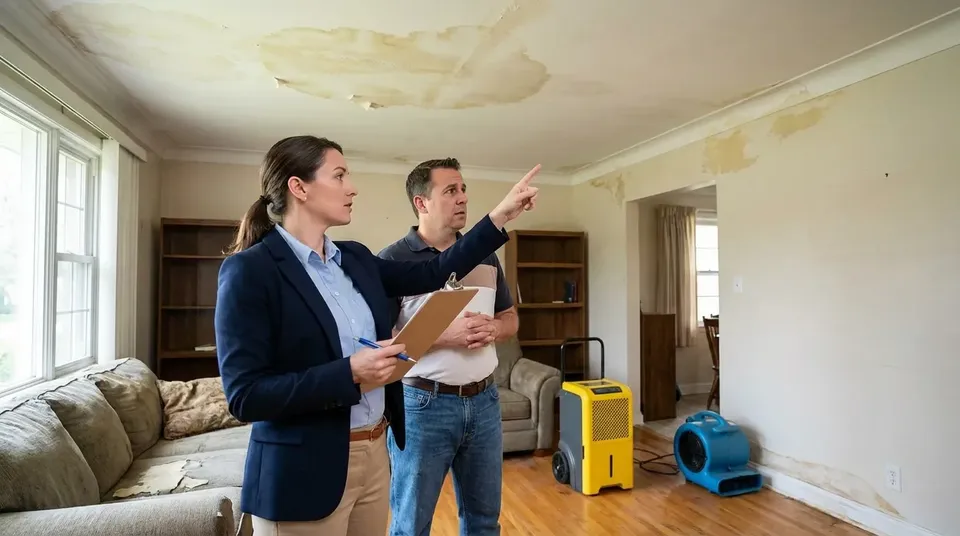
Call a water damage restoration company first, and call it the same day. A ceiling stain, bubble or drip usually means a leak in the unit or the roof above. Tell the upstairs neighbour and the building super or managing agent right away, shut off water to that area if you can, and put a bucket under active drips.
| Topic | The fact |
|---|---|
| Drying time | Most clean water losses dry in 3 to 5 days under the ANSI/IICRC S500 standard. Brownstone plaster and masonry can take 3 to 6 weeks. |
| Mold window | Mold can start growing on wet materials within 24 to 48 hours, the window the United States Environmental Protection Agency (EPA) gives for drying wet materials. |
| Combined sewers | About 60 percent of the city sewer system is combined, so one pipe carries stormwater and sewage, according to DEP. |
| Sewer backup report | Call 311 to report a sewer backup. DEP says it inspects within six hours of the complaint. |
| City damage report | Reporting storm damage takes two separate steps: call 311 and file a report at reportdamage.nyc.gov. |
| Flood policies | A flood policy usually starts 30 days after purchase, and a flood claim needs a Proof of Loss filed within 60 days. |
| Claim clock | For ordinary property claims, New York insurers work to a 15 business day acknowledgement clock under New York Insurance Law Section 2601 and Regulation 64 (11 NYCRR 216). |
| Local Law 55 | Buildings with 3 or more apartments must be inspected for mold at least once a year, and the leak or moisture problem behind the mold must be fixed. |
| Local Law 61 | Mold over 10 square feet in a building with 10 or more units needs a licensed mold assessor and a separate licensed remediator. |
| Dry standard | A home is dry when meter readings on wet materials match a dry reference spot of the same material, not when a set number of days has passed. |
| State help line | The New York State Department of Financial Services (DFS) Disaster Hotline is (800) 339-1759. |
Start Here
In the first 60 minutes after water damage in Brooklyn, stop the water, cut power to wet rooms from a dry spot, photograph everything, and call a restoration crew and your insurer. The first hour decides whether you are looking at a drying job or a demolition job. Work through this list in order. If anything on it feels unsafe, skip it and call us or 911 first.
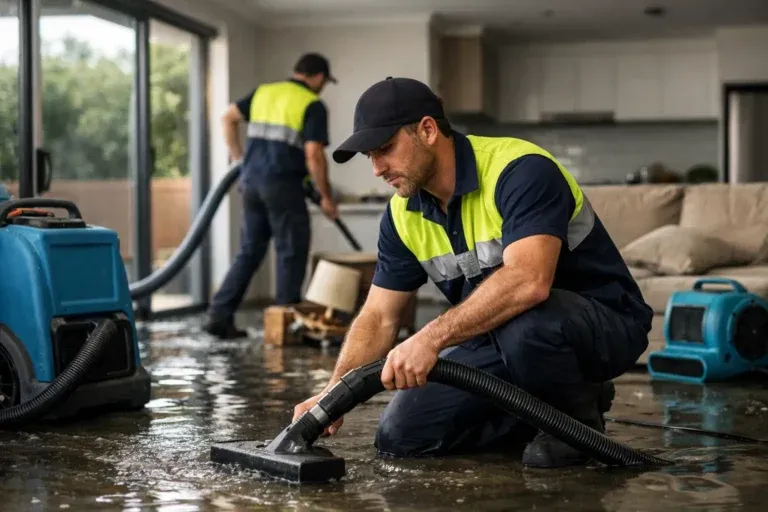
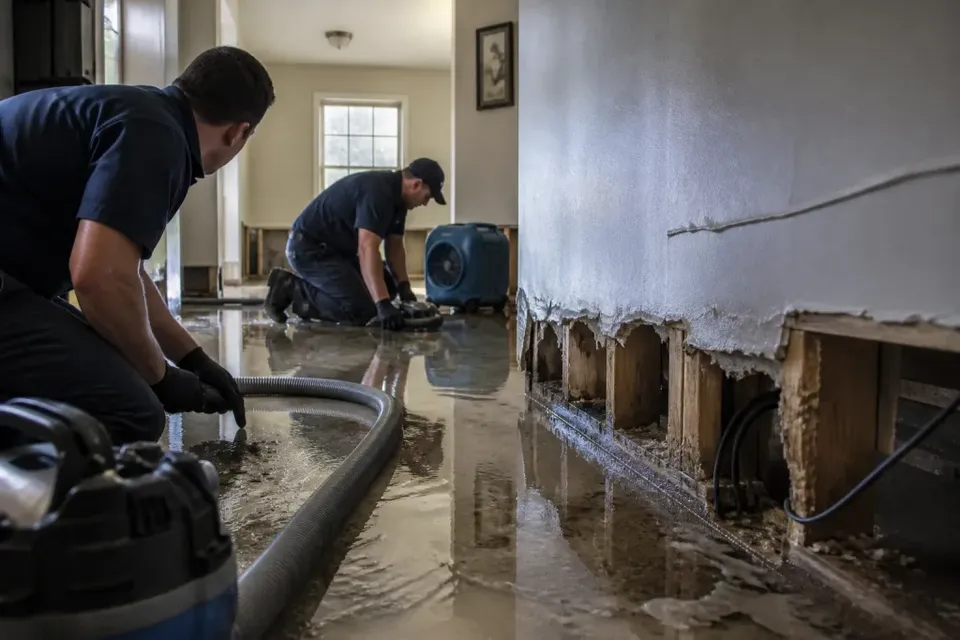
Once the crew arrives, the first visit is about stopping the damage from spreading. Standing water is extracted, usually with truck mounted or portable pumps and extraction tools that pull water out of carpet and pad, not just off the top. Wet baseboards may be removed and small inspection holes drilled at the base of walls so air can reach the wall cavity. Furniture is blocked up or moved. Contents that can be saved are separated from what cannot, and everything is photographed before it is touched.
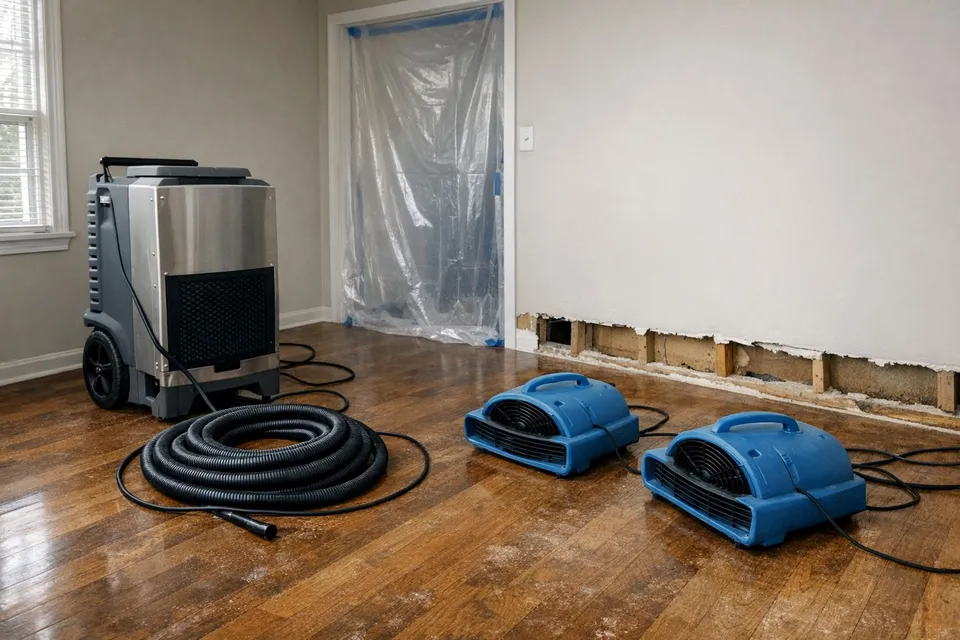
Then the drying equipment goes in: air movers to push air across wet surfaces, and dehumidifiers to pull that moisture out of the air. In a brownstone with thick plaster and masonry, the setup is different from a new condo with gypsum and engineered floors, because dense materials hold water longer and release it slower. The crew will take moisture readings and set a dry standard from an unaffected room. Those first readings are the baseline every later day is compared to.
Your part on day one is decisions and access. Make sure the crew can get into every wet space, including the unit below if water travelled down, and the cellar if the source is there. In co-ops and condos, the managing agent may need to arrange access to neighbouring units. The faster that happens, the less damage there is to argue about later. Keep the equipment running. Turning dehumidifiers off at night because of the noise is understandable and expensive: it adds days to the job and gives mold its opening.
The Basics
Water damage restoration in Brooklyn is a measured sequence: stop the source, extract the standing water, remove what cannot be saved, dry to a meter verified standard, clean, and rebuild. Restoration is not mopping, and it is not a fan from a hardware store pointed at a wall. It is a sequence, and skipping steps is how homes end up smelling musty six months later.
The sequence runs like this. First, find and stop the source, because drying a home that is still leaking is pointless. Second, extract the standing water. Every gallon removed by a pump is a gallon the dehumidifiers do not have to pull out of the air, which is far slower. Third, remove the materials that cannot be dried or cannot be cleaned: swollen laminate, soaked carpet pad, contaminated insulation, drywall that has lost its strength or taken on sewage. Fourth, dry what remains, with measured airflow and dehumidification, until meter readings match the dry standard. Fifth, clean and apply an antimicrobial treatment to the affected surfaces. Sixth, rebuild: patch, plaster, paint, refit floors and trim, and put the room back together.
Two technical ideas run through all of it. The first is the category of water: how contaminated it is. Category 1 is clean water from a supply line. Category 2 carries significant contamination, like discharge from a washing machine or a toilet with urine. Category 3 is grossly contaminated: sewage, rising floodwater, and the combined sewer backups Brooklyn basements know too well. Category decides what can be cleaned and what must go. The second idea is the class of loss: how much of the room is wet and how hard the materials are to dry, from a small corner of one room to deep saturation in dense materials like hardwood, plaster and concrete. Class decides how much equipment and how many days the drying takes.
| Category | What it means | Brooklyn examples |
|---|---|---|
| Category 1: Clean | Water from a sanitary source. Safe to dry in place if caught fast. | Burst supply pipe, leaking water heater, rain through a roof before it picks up contamination |
| Category 2: Grey | Water with significant contamination that can cause illness. | Washing machine or dishwasher discharge, toilet overflow with urine, sump pump failure water |
| Category 3: Black | Grossly contaminated water with pathogens. Porous materials it touches usually cannot be saved. | Sewage backup, combined sewer overflow in a storm, floodwater from the street or a waterway |
Categories follow the ANSI/IICRC S500 standard. Water can degrade from one category to the next as it sits and picks up contamination, which is one more reason the first day matters.
| Class | What it means | Typical drying time |
|---|---|---|
| Class 1 | Small area, materials that give up water easily | 2 to 3 days |
| Class 2 | A whole room or more, water wicked up walls | 3 to 5 days |
| Class 3 | Water from above: ceilings, walls and insulation wet | 4 to 7 days |
| Class 4 | Deep saturation in dense materials: hardwood, plaster, masonry, concrete | 5 to 10 days, sometimes longer in brownstone masonry |
Classes describe materials. What homeowners actually ask is simpler: how long for my situation? These are the working ranges Brooklyn crews plan around, and the brownstone line is the one no competitor page will tell you.
| Situation | Typical drying time | Why |
|---|---|---|
| Contained supply leak, caught fast | 2 to 3 days | One area, clean water, materials that give up moisture easily |
| Standard room loss | 3 to 5 days | A whole room wet, water wicked up the walls, professional equipment running |
| Flooded basement | 5 to 10 days | Slab, masonry and framing all saturated, plus cleaning before drying can start |
| Wet plumbing stack, several floors | 7 to 14 days | Ceilings, walls and insulation wet down the whole line of units |
| Pre war plaster and lime mortar | 3 to 6 weeks | Plaster and rubble masonry take moisture in slowly and give it back even more slowly. A flooded brownstone basement is the extreme case. |
Ranges follow the ANSI/IICRC S500 standard and the published drying guidance of Brooklyn restoration firms. Category matters as well as size: clean Category 1 losses sit at the fast end, Category 2 grey water runs longer, and Category 3 sewage work runs 7 to 14 days once cleaning and reconstruction are counted.
The same amount of water is three different jobs in three different Brooklyn homes. The building decides the source to expect, the drying time, and who pays.
| Home | Usual source | How the job differs |
|---|---|---|
| Brownstone or row house | Burst galvanised or cast iron pipe, failed roof leader, party wall leak from next door | Plaster and masonry are Class 4 materials, so deep losses can take 3 to 6 weeks to dry. The owner carries the structure, the systems and the sewer lateral. |
| Apartment in a pre war building | Riser or stack leak, or water from the unit above | Access to the units above and below decides the speed of the whole job. The landlord pays for the structure, and the tenant renters policy covers belongings. |
| Garden apartment or basement home | Combined sewer backup, groundwater, street flooding | Sewer water is Category 3, so extraction and disinfection come before drying, and porous materials it touched come out. A backwater valve is the fix that stops the repeat. |
A job is dry when a moisture meter reading on the wet material matches a dry reference reading taken from the same material in an unaffected part of the home. Touch and smell prove nothing: plaster can feel dry on its face while the cavity behind it is still wet. As working numbers, wood below about 12 percent moisture content counts as dry, the 16 to 20 percent band is damp with mold possible, and above about 20 percent the wood is wet and needs more drying. The EPA puts healthy indoor humidity between 30 and 50 percent. Any crew that cannot show you the readings, the reference point and the daily log is asking you to take dryness on faith.
Professional drying is done with kit you can ask about by brand. Look for Dri-Eaz and Phoenix dehumidifiers, including low grain refrigerant models that keep pulling moisture in cool basements, Phoenix and B-Air air movers, Injectidry systems that dry inside wall cavities and under hardwood without opening the whole wall, Hydramaster truck mounted extractors for standing water, Tramex moisture meters and FLIR thermal cameras for the mapping and the daily checks. The brands matter less than the readings they produce, but a company that names its equipment and shows its logs is a company that measures.
The quiet killers are the lines you never see: the fridge ice maker line, the dishwasher supply and drain, and the sink trap. Water runs under cabinets and sits on the subfloor for weeks before a toe kick feels soft. Cabinets made of particle board swell and cannot be saved. Stone and tile can hide a soaked subfloor under a surface that looks fine.
Failed wax rings, cracked grout, tired caulk and leaking supply lines send water into the floor structure and the ceiling below. In stacked Brooklyn bathrooms, the same leak repeats floor after floor down the line. The ceiling stain downstairs is often the first anyone knows of it.
Sewer backups, groundwater through foundation walls, water heater failures and sump problems all land here first. Brooklyn basements hold the boiler, the electrical panel, storage and, in garden apartments, someone's whole home. Below grade water is the borough's number one restoration job.
Radiator leaks in pre-war buildings, window air conditioner drains, and leaks from the bathroom or kitchen next door. Hardwood cupping is the warning sign: boards lifting at the edges mean moisture from below. Caught early, floors can often be dried in place with floor mat systems. Left wet, they buckle and have to come up.
A burst washing machine hose can release hundreds of gallons before anyone notices, and in-unit laundry in converted Brooklyn apartments often sits over a neighbour's bedroom. Braided steel hoses, a drain pan and a water alarm with automatic shutoff are cheap insurance against the most common apartment flood there is.
Flat roofs, parapet walls and box gutters age out quietly. A top floor leak may travel inside a wall and appear two floors down, nowhere near the actual failure. After heavy rain, check the ceiling corners and the walls under roof lines and terrace doors first.
Know Your Building
Most water damage in Brooklyn homes starts one of three ways: a pipe or appliance fails inside the building, the combined sewer backs up into a basement, or storm water floods in from outside. Which ones apply to you depends on the building you live in.
Brooklyn's signature houses were built between roughly 1860 and 1925, and their age is the story. Galvanised steel supply lines were expected to last 40 to 50 years. Many are now decades past that, corroding from the inside until a pinhole leak sprays inside a wall or the pipe lets go entirely. Cast iron drain stacks last longer, 50 to 100 years, but original stacks from the 1890s through the 1920s are at or past the end, corroding from the inside out and cracking at the joints. Clay sewer laterals out to the street crack and separate at their joints and let tree roots in, which is how a house line slowly chokes until one hard rain pushes it back into the basement. A stack failure does not leak clean water. It leaks whatever the house sends down the drain.
The buildings themselves move water in ways newer construction does not. The brownstone facade is a porous sandstone veneer over brick. It absorbs rain, and failed pointing lets that water into the wall. Flat roofs with parapets and internal gutters drain through leaders that run inside the house, so a blocked or split leader pours roof water into the walls. Party walls are shared with the houses on both sides, so your neighbour's leak can become your ceiling stain, and yours can become theirs. Stacked plumbing means one third floor bathroom leak can mark every ceiling below it on the way down. And underneath it all, the cellar sits in a foundation of stone or brick set in lime mortar, with no waterproofing membrane, so groundwater presses through in wet weather by simple hydrostatic pressure.
The big elevator and walk up buildings of Flatbush, Crown Heights, Borough Park and Bay Ridge bring steam heat problems. Radiator valves weep, steam traps fail, and condensate lines leak under hardwood and behind plaster for months before anyone sees a stain. Risers run in chases that carry a leak past several floors. Terracotta and cast iron drain lines crack and separate at the joints, which is how sewage ends up in a ground floor bathtub during a storm. These buildings also stack every bathroom on the same line, so one unit's failed toilet seal becomes a recurring ceiling problem for the unit below, and the fix has to happen in the unit above, which takes coordination with the super, the managing agent and sometimes HPD.
Newer buildings fail differently. The water is usually from appliances and fittings: washing machine hoses, dishwasher lines, fridge lines, HVAC condensate drains that clog and overflow their pans, and sprinkler or standpipe incidents. Conversions in Williamsburg, Greenpoint, DUMBO and Bushwick add their own twist: heavy old industrial floors and masonry that dry slowly, and residential plumbing threaded through a structure never designed for it. In towers, one failed line on a high floor can run down through a dozen units before it is stopped, which is why buildings ask who has a water alarm and an automatic shutoff.
The lowest homes flood first and worst. A garden level sits partly below the sidewalk, exactly where street runoff and sewer backups arrive. Many Brooklyn basement apartments, legal and otherwise, were finished with drywall and laminate over slabs with no vapour barrier, so even groundwater wicking up through the slab keeps them damp. During Hurricane Ida in 2021, most of the New Yorkers who died were in basement homes, many of them in Brooklyn and Queens. If you live below grade, a working backwater valve, a sump pump with battery backup, and a plan for where you go when the street floods are not optional extras. They are the difference between a cleanup and a catastrophe.
About 60 percent of the city's sewers are combined, according to DEP: one pipe carries stormwater runoff and sewage from buildings together. Most of Brooklyn drains into combined sewers built between the 1860s and the 1950s. In hard rain the system fills, and the water has to go somewhere: out of floor drains, toilets and shower drains in the lowest homes, carrying sewage with it. That is Category 3 water, the most hazardous kind. Inside the house, many row houses and brownstones still have a house trap, a U shaped trap on the main line near the front wall with two cleanout caps on top. When it clogs, every drain in the house backs up to the basement first. Low lying blocks near the Gowanus Canal, along Newtown Creek and around Jamaica Bay feel it first and most often. The city's rain gardens and sewer upgrades help at the margins. They do not change the basic fact that a Brooklyn basement in a cloudburst is downstream of the whole neighbourhood.
A sewer backup and a burst pipe can look similar in a dark basement, and they are opposite problems: one is contaminated water arriving from the city system, the other is clean water escaping from your own plumbing.
| Sign | Sewer backup | Burst pipe |
|---|---|---|
| Where the water appears | Up through the lowest openings: floor drain, basement toilet, shower drain | At or below the failed pipe: a wall, a ceiling, a cabinet, the floor near a fixture |
| What the water is | Category 3 black water, carrying sewage, bacteria and viruses | Category 1 clean water at first, degrading the longer it sits |
| First moves | Keep people and pets out, do not flush or run water, call 311 so the DEP can inspect, then call a crew | Shut the main water valve, cut power to wet rooms if that is safe, then call a crew |
| Insurance position | Covered only with a water backup endorsement on the policy | Usually covered as sudden and accidental damage |
Sandy in 2012 pushed the sea into Coney Island, Brighton Beach, Manhattan Beach, Sheepshead Bay, Gerritsen Beach, Red Hook, Canarsie and parts of DUMBO and Gowanus. Those neighbourhoods sit in mapped flood zones today, and flood insurance through the National Flood Insurance Program (NFIP) is a separate policy from homeowners insurance, with its own rules and waiting period. Salt water is also harder on a building than fresh: it corrodes wiring, fasteners and appliances, and it leaves salt in masonry that keeps pulling moisture out of the air long after the walls look dry.
Some of the city's water mains are a century old. A break can send tens of thousands of gallons down a street and into every cellar on the block in minutes. If the water in your basement came from a city main or a city sewer, document everything and note the time: claims against the City go through the NYC Comptroller, and a notice of claim generally has to be filed within 90 days of the incident. That deadline is short and it does not move.
Storm Flooding
After a Brooklyn flood, the first 48 hours decide the size of the job: photograph everything, report the damage to 311 and at reportdamage.nyc.gov, and get extraction and drying started before mold can begin, within 24 to 48 hours. Brooklyn has now had the lesson twice in one season. In July 2026, storms turned Neptune Avenue in Coney Island into a river and sent serious flash flooding down East 28th Street in Sheepshead Bay. In November 2026, heavy rain and coastal flooding hit the borough again: on 5 November 2026 Governor Hochul announced that New York State is requesting federal assistance for coastal storm damage on Long Island and in New York City, and on 12 November a nor'easter brought a National Weather Service Flood Advisory for Brooklyn and Queens, with JFK Airport recording just over 3.3 inches of rain, its second wettest November day on record. When the next one comes, the first 48 hours decide the size of the job.
Wait for the water to go down before you go in, and do not step into standing water anywhere near outlets, appliances or the panel. If you smell gas, leave, and call 911 and the gas company from outside. Photograph and video everything first, before anything is pumped, moved or thrown out. Report the claim to your insurer promptly. Then report the damage to the City twice, because they are two separate steps that feed two separate systems: call 311, and submit a damage report at reportdamage.nyc.gov. A sewer backup gets its own 311 report, and DEP says it inspects within six hours of the complaint. After that: pump or extract the water, move dry items up and out, and open the space up to dry.
Treat floodwater with respect. In Brooklyn it usually mixes with sewer water, so porous items it touched, carpet padding, mattresses, upholstered furniture, cardboard and drywall below the water line, are handled as contaminated. Mold can start growing within 24 to 48 hours, which is why the drying clock starts the moment the water does. And know the cover position before you need it: standard homeowners and renters policies usually do not cover outside flooding at all, and FEMA help only exists if a federal disaster declaration is approved, which is what the November 2026 request was asking for.
911 for emergencies. 311 for city services, DEP sewer backups and HPD housing complaints. National Grid for gas emergencies: (718) 643-4050. Con Edison for electric emergencies: (800) 752-6633. If a disaster leaves you stuck with an insurer, the New York State Department of Financial Services (DFS) Disaster Hotline is (800) 339-1759. Save them in your phone before the storm, not during it.
| Zone | What it means | Brooklyn areas |
|---|---|---|
| Zone AE | The 1 percent annual chance floodplain. Flood insurance is required here for federally backed loans. | Marine Park, Mill Basin, the Sunset Park waterfront and parcels along the Jamaica Bay shoreline. Most of Red Hook sits in Zone AE too. |
| Zone VE | The coastal wave action zone, where breaking waves of 3 feet or more are expected on top of the flooding. | Coney Island, Sheepshead Bay and Gerritsen Beach. |
Zones follow FEMA flood mapping for New York City. The Base Flood Elevation, BFE for short, is the height the 1 percent flood is expected to reach at your address, and it drives both insurance and rebuild decisions after a flood.
One warning the maps cannot give you: a zone line is not a promise. Hurricane Ida flooded inland Brooklyn neighbourhoods that sit outside every mapped FEMA zone, because rainfall flooding follows sewers and low ground, not map boundaries. City data work counts more than 150,000 New York buildings that face rainfall flood risk while sitting outside the FEMA zones, and roughly three quarters of them are in Queens and Brooklyn. If your basement has ever taken water, plan as if it will again, whatever the map says.
Salt water adds its own chapter. Storm surge leaves chloride salts inside electrical panels, copper lines and heating equipment, where they keep corroding long after the water is gone. Panels and equipment that went under salt water are checked by an electrician, flushed or replaced on professional advice, and the corrosion is documented for the adjuster, because it shows up as failures months later.
Hidden Damage
Water damage behind walls is found with moisture meters and thermal cameras, not by touch: a wall counts as dry only when its meter reading matches a dry reference spot of the same material. The water you can see is rarely the whole job. Water runs along joists, soaks insulation, and wicks up inside wall cavities well above the visible line on the surface. In one widely watched restoration walkthrough, a technician demonstrates the wet test on a flooded basement wall: he pushes a screwdriver through the soaked drywall with almost no effort, then works upward, punching gently, until the board starts to resist. The wet, unsavable material reached far above the stain. Moisture readings inside that wall ran from about 90 percent near the floor, falling as he climbed, and board that looked merely stained was still too wet to keep. That is why professionals cut where the meter and the test say to cut, often at a clean line around doorknob height, instead of guessing from the stain.
Signs that water is hiding behind a wall include a musty smell that does not clear, paint bubbling or peeling, baseboards separating or going soft, a wall that feels cold or damp, staining that keeps growing after the surface dries, and floors that start to cup or creak near the wall. In plaster and lath brownstone walls, add crumbling plaster and hairline cracks that follow the studs.
What happens if you wait is predictable. Wet insulation loses its value and holds moisture against the framing. Mold colonises the paper face of drywall and the back of baseboards. Joist ends sitting in wet masonry pockets begin to rot, and in a brownstone those joist ends are structural. Every week of waiting moves work from the drying column to the demolition and rebuild column.
A free inspection with moisture meters finds what is hiding behind the wall before it spreads.
What We Do
Water damage restoration in Brooklyn covers emergency extraction, structural drying, sewage backup cleanup, flooded basement cleanup, leak detection, mold prevention, hardwood drying, contents pack out and rebuild. One call covers the whole job, from the first extraction to the last coat of paint. Here is the full service list, then each service explained properly underneath.
Standing water removed with pumps and extraction tools, day or night, before it spreads into walls and floors.
Measured drying with air movers and commercial dehumidifiers, logged daily until readings meet the dry standard.
Category 3 cleanup for combined sewer backups: extraction, removal of contaminated porous materials, disinfection.
Basement and garden level pumping, cleaning, drying and sanitising, plus the checks that keep it from happening again.
Meters and thermal imaging to find where the water went, including behind walls and under floors.
Fast drying and antimicrobial treatment to stop mold starting, and licensed assessment and remediation partners when it already has.
Floor mat drying systems that pull moisture out of hardwood in place, when the floor is caught in time.
Furniture, rugs and belongings cleaned, dried, stored and returned, with an inventory your insurer can use.
Drywall, plaster, floors, trim, kitchens and baths put back, so you are not left finding your own contractor mid job.
Emergency water extraction. Speed is the whole game. Truck mounted and portable extractors pull water from carpets, pads and hard floors far faster than any wet vacuum, and weighted extraction tools squeeze water out of carpet and pad that surface suction leaves behind. In a flooded Brooklyn basement, extraction alone can remove hundreds or thousands of gallons. Every hour the water stands, it wicks higher into walls and deeper into floors.
Structural drying. After extraction, the building itself is still wet. Air movers drive evaporation from surfaces and dehumidifiers remove that moisture from the air before it condenses somewhere else. Crews calculate how much equipment a room needs from its size and class of loss, then return daily to take readings and adjust. Brownstone plaster and masonry are Class 4 materials: they dry slowly and need patience and the right setup, sometimes including heat or specialised drying of wall cavities through small holes at the baseboard line.
Sewage backup cleanup. When the combined sewer comes up through your floor drain, the water carries bacteria and viruses. The work changes completely: protective equipment, containment, extraction, and removal of every porous material the water touched, because sewage soaked drywall, insulation and carpet pad cannot be cleaned to a safe standard. Hard surfaces are washed and disinfected. Anyone offering to simply dry a sewage soaked carpet and leave it is offering you a health problem.
Flooded basement cleanup. Brooklyn's most common big job. Pump out, muck out, remove what cannot be saved, wash down, disinfect, dry the structure, and check the systems that live down there: boiler, water heater, panel, laundry. Then the honest conversation about prevention: a backwater valve on the house sewer, a sump pump with battery backup, and raising storage and utilities off the floor.
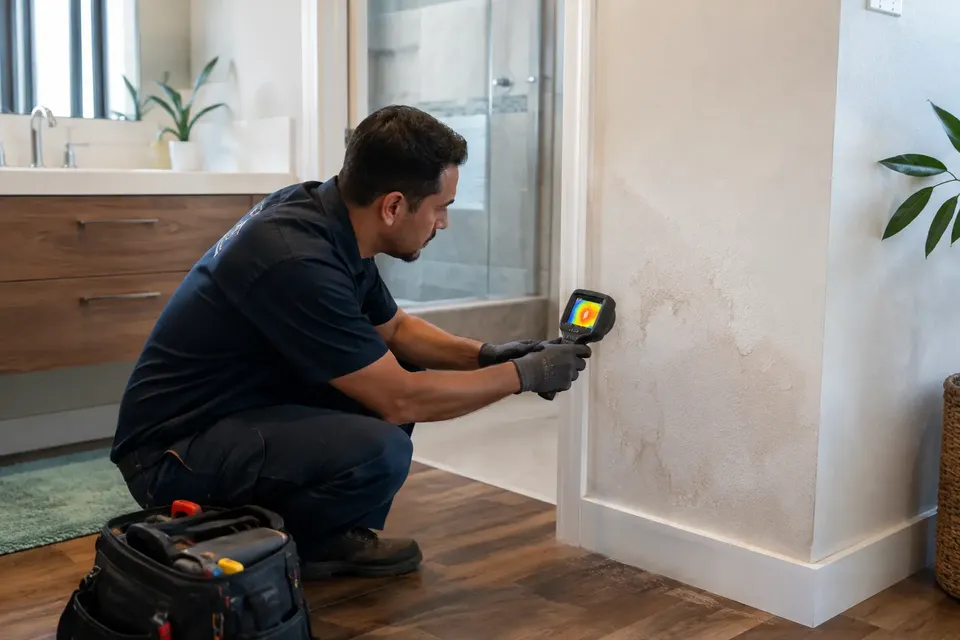
Leak detection and moisture mapping. Water rarely stays where it lands. Pin and pinless moisture meters, and thermal cameras that show cold wet areas as colour changes, let a technician map the true outline of the damage, including the unit below and the wall you thought was dry. That map becomes the drying plan and the scope your adjuster sees.
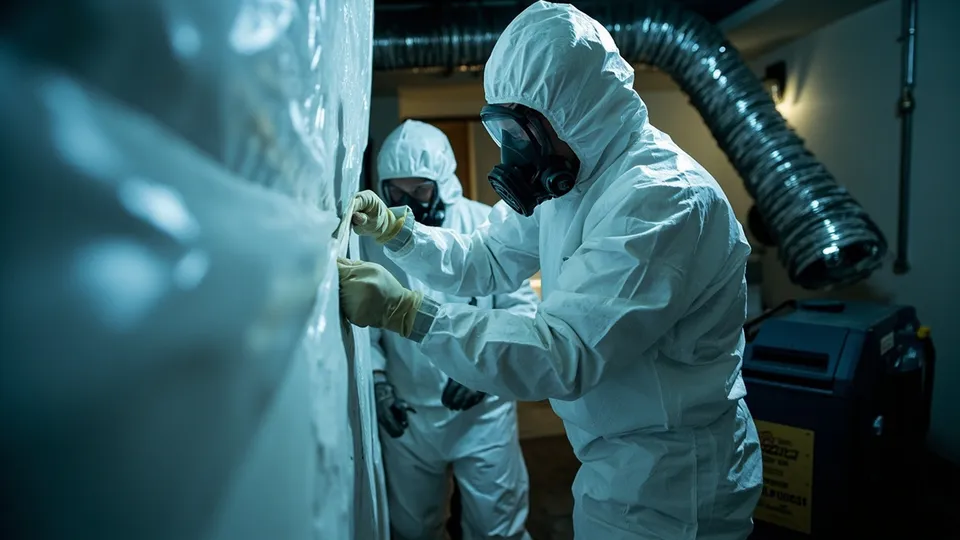
Mold prevention and remediation support. The cheapest mold job is the one that never starts, which is why drying inside the first 24 to 48 hours matters so much. Where mold is already present, New York law sets the process: over 10 square feet, a licensed assessor writes the plan and a separate licensed remediator does the work, with containment and negative air so spores do not spread through the home during removal. We coordinate that process and handle the water side that caused it, because remediation without fixing the moisture is money spent twice.
Hardwood rescue. Real hardwood can often be dried in place with mat systems that draw moisture down through the boards, if the crew arrives before the floor cups badly or buckles. Engineered and laminate floors are less forgiving: once the core swells or the layers separate, replacement is the honest answer, and we will tell you that on day one rather than after a week of rent on drying equipment.
Contents and pack out. Wet furniture, rugs, clothing and papers need decisions fast. We inventory, photograph and, where needed, pack out contents to be cleaned and dried off site, which also clears the space so structural drying and rebuild can proceed. The inventory doubles as your contents claim list.
Rebuild. Restoration ends with the home whole again: framing repairs, drywall and plaster, flooring, trim, paint, and refitting kitchens and bathrooms. One team from flood to finish means one scope, one paper trail and no gap where the drying company blames the builder and the builder blames the drying company.
How It Works
A professional water damage restoration job in Brooklyn runs in eight steps, in order, on every job: triage and dispatch, inspection and moisture mapping, documentation, extraction, removal of unsavable materials, cleaning and antimicrobial treatment, measured drying, and rebuild. You get the photos, the moisture map and the daily readings, not just a bill.
You describe what happened, we talk you through shutting the water off safely, and a Brooklyn crew is dispatched. For sewage or electrical hazards we will tell you to stay out and call 911 or the utility first.
On site, the crew finds the source, confirms it is stopped, tests materials where the building's age requires it, and maps moisture in floors, walls and ceilings, including rooms and units beyond the obvious damage.
Photos and video of the source, the damage and the contents, taken before anything is moved or removed. This file goes to your insurer, and to the building or neighbour's insurer where they are responsible.
Standing water pumped and extracted, including from carpet and pad. In basements, pumping is staged so the structure is not stressed by removing deep water too fast where groundwater pressure is high.
Contaminated or ruined materials come out: sewage touched porous materials, swollen laminate and particle board, soaked insulation and drywall past saving. Cuts are made at clean lines set by meter readings, like the flood cut at a measured height, so rebuild is faster and cheaper.
Remaining surfaces are cleaned, and an antimicrobial is applied where the category of water or early growth calls for it. For sewage jobs, disinfection of hard surfaces is a full step of its own.
Air movers and dehumidifiers placed by calculation, then checked daily. Readings are logged against the dry standard until every material passes. Equipment comes out when the numbers say so, not when the calendar does.
Repairs and refinishing put the space back together. We walk it with you, hand over the complete job file, and note anything your insurer or building still needs from you.
Day 1: extraction, removal of unsavable materials, equipment set, first readings logged. Day 2: readings checked, equipment adjusted, wall cavity drying confirmed or added. Day 3: most clean water jobs are well down the curve; dense materials like plaster and hardwood are still giving up moisture. Days 4 to 5: readings approach the dry standard and equipment starts coming out room by room. Beyond day 5: Class 4 materials, thick masonry, or a job that started late. If a company cannot show you this curve for your home, they are guessing.
Local Knowledge
Brooklyn's water damage risk changes by neighborhood: combined sewer backups hit low inland blocks first, storm surge hits the coastal neighborhoods, and each housing stock dries differently. Brooklyn has more than 2.7 million residents and dozens of distinct housing stocks. Where you live in the borough decides what floods, why, and how the drying has to be done. Crews work in every neighborhood below.
Limestone and brownstone row houses from the 1880s to the 1910s, with below grade basements built without waterproofing, so groundwater wicks through lime mortar foundation walls in wet weather. The blocks sloping down toward the Gowanus Canal add combined sewer backups on top. Finished basements here are often rental units or family rooms, which raises the stakes on drying speed and mold prevention.
Some of the oldest houses in the borough, many in landmarked districts, where repairs may need Landmarks Preservation Commission awareness and like for like materials. Garden levels sit below the sidewalk and take street runoff first. Old plumbing stacks, shared party walls and deep cellars are the usual story. City data counts 185 active water and plumbing complaints and 10 open HPD violations here, low numbers that reflect a small, well kept stock rather than low risk: in these buildings, asbestos testing on plaster and pipe insulation is a routine step before drying starts.
Brownstones and big pre-war apartment houses side by side. In the houses: radiator leaks, roof leaders inside walls, cellar seepage. In the apartment buildings: riser leaks that mark a whole line of units, and bathroom stack leaks that repeat floor to floor until the unit above is opened up and fixed.
One of the largest collections of 1880s to 1920s row houses in the country. Original cast iron waste lines are a recurring source of sewage trouble, and many basements were finished without any dewatering system at all. A battery backup sump pump and a camera inspection of the old house sewer are the two highest value prevention steps here.
Pre-war elevator buildings along Eastern Parkway and Empire Boulevard, plus limestone row houses on the side streets. Steam heat leaks under hardwood, aging risers, and garden apartments that take combined sewer water in cloudbursts. Managing agent coordination matters here: access to the unit above or below is often the whole battle. The numbers say this is the borough's hardest pressed neighbourhood for water: 5,729 active water and plumbing complaints and 920 open HPD violations in city data, about 4.3 times the Brooklyn average. The 1890 to 1930 limestone stock dries slowly too: plaster here can take 3 to 6 weeks, against 7 to 10 days in a modern building.
Converted industrial lofts, new condo towers and older frame and brick homes near Newtown Creek, which floods its banks in major storms. Loft conversions hide residential plumbing inside heavy old structures that dry slowly. In the towers, one failed appliance line can run down through many units before it is found.
Frame houses, small apartment buildings and converted warehouses, with a lot of rental housing and basement units. Fast reporting is the weak point: leaks in rentals often go unreported until the ceiling below gives way. Tenants here should know the 311 and HPD route cold, and landlords should know Local Law 55 makes the fix their job.
Waterfront conversions and high rise towers. Sandy pushed water into parts of DUMBO, and the tower stock adds high floor leak cascades, sprinkler incidents and HVAC condensate overflows. Building staff and managing agents are part of the response: risers, freight elevators and access rules decide how fast a crew can work.
Low, flat and surrounded by water on three sides. Red Hook took some of the worst surge in Sandy and still floods in lesser storms. Ground floor homes, studios and businesses here need flood thinking, not just leak thinking: backwater protection, raised utilities, and materials below the flood line that can survive getting wet.
Row houses on the slope, big industrial and commercial spaces near the water, and basement apartments throughout. Street flooding in heavy rain is a known pattern on the lower avenues. Commercial water damage here often involves stock and equipment, which makes contents documentation as important as drying.
One and two family homes, co-ops along Shore Road, and plenty of finished basements. Water heaters, laundry lines and sewer laterals are the common calls, plus groundwater in the lower blocks near the Narrows. Shore Road buildings add wind driven rain through facades during nor'easters.
Attached and semi detached homes, many with below grade family rooms and in-law units. House sewer laterals are aging, and tree roots in those lines are a classic cause of repeat backups. A camera inspection after a second backup is not an upsell, it is the diagnosis.
Large homes, pre-war apartment buildings and a lot of multi generational living, which means more bathrooms, more laundry and more plumbing in use around the clock. In Midwood, the boiler, the water heater and the washer all live in the basement, so when something lets go, the water damage almost always ends on that floor, and the basement systems check is part of every job. Flatbush's detached Victorian era homes in the historic districts nearby add old roofs, old leaders and deep basements to the list.
Pre-war apartment houses, limestone and frame homes, and busy commercial strips. The apartment stock brings riser and stack leaks; the houses bring roof, leader and cellar problems. After Ida, basement safety in this part of Brooklyn is not an abstract topic, and below grade units deserve working alarms and a flood plan. East Flatbush carries one of the highest flood risks in the borough: one in three properties there is at risk, driven by coastal storms, heavy rainfall and aging drainage.
Built around Jamaica Bay, much of it low and in mapped flood zones. Sandy flooded Canarsie deeply. One story homes with slab and low first floors, attached garages that take water first, and a high water table that keeps basements damp year round. Flood insurance and elevation of utilities are live questions for nearly every homeowner here.
Waterfront homes where the bay is part of daily life. Gerritsen Beach was inundated in Sandy. It is a low peninsula where surge comes over the shoreline and rain pools on narrow streets with very little storm sewer, and the blocks between Jamaica Bay and Marine Park drain slowly after every storm. Bulkheads, tidal flooding on the lowest streets, and salt water exposure that corrodes wiring and fasteners long after a storm. Drying after salt water needs the salt addressed, not just the moisture.
Bay and ocean on both sides. Co-ops and condos along the water, single homes on the side streets, and ground floor businesses along Sheepshead Bay Road and Brighton Beach Avenue. Surge, wind driven rain and old building drainage meet here. High rise co-op rules and board approvals shape how rebuilds get done.
High rise public and co-op housing, older homes, and amusements and businesses built for the shore. Sandy hit Coney Island head on. Large buildings here mean large riser and sprinkler events, and the housing authority stock has its own reporting routes that tenants should use early and in writing.
Row houses, public housing, small apartment buildings and some of the fastest street flooding in the borough during cloudbursts, as the Ida storm showed. In Cypress Hills, two and three family houses by the Queens line take water running downhill through a basement door in hard rain, or dropping floor to floor from a leak upstairs. Combined sewer backups into basements are the signature loss. Backwater valves and battery backup sump pumps are the two fixes that change outcomes on these blocks.
Small row houses near Prospect Park and Green-Wood Cemetery, with the Prospect Expressway trench changing how stormwater moves through the lower blocks. Cellar seepage, roof leaders and garden level runoff are the common calls, and the housing stock is old enough that lead and asbestos testing before demolition is routine prudence.
Do not see your neighborhood named? If it is in Brooklyn, we cover it. The list above is where the borough's distinct building types and flood patterns are, and every other block in the borough shares one of them.
Brooklyn Housing Rules
Who pays for water damage in a Brooklyn home follows the cause of the water and the kind of home you are in: the landlord or building pays for the structure, a renters policy covers the tenant's belongings, and a careless upstairs neighbour's insurer may pay in the end. This is general information about how it usually works in New York, not legal advice.
| What happened | The building and structure | Your belongings |
|---|---|---|
| Burst or leaking pipe in a wall or riser | Landlord or building owner pays | Your renters policy covers them |
| Roof, facade or window leak, including wind driven rain | Landlord or building owner pays | Your renters policy covers them |
| Leak from the unit above: their tub, toilet or appliance | Landlord repairs, then the upstairs resident may be liable if they were negligent | Your renters policy pays first, and insurers may recover from whoever was at fault |
| Your own appliance, an overflow you caused, or your negligence | Landlord repairs but may charge you or your insurer | Your renters liability cover pays for damage to the building and other units |
| Sewer or drain backup | Landlord or building owner pays | Covered only with a water backup endorsement. Standard renters policies exclude it |
| Outside floodwater: storm surge or overland flow | Landlord or building owner pays | Not covered by renters insurance. Only a separate flood policy pays |
Every residential lease in New York carries the warranty of habitability, under Real Property Law Section 235-b. The landlord must keep the home fit to live in, and that duty covers stopping leaks, drying and repairing the structure, and fixing building systems. The building's failures are the landlord's: pipes in the walls, risers, the roof, the facade, a building water heater. Your belongings are yours, which is what renters insurance exists for, and renters insurance also carries liability cover if your own appliance or overflow damages the building or a neighbour.
For mold specifically, Local Law 55 requires owners of buildings with 3 or more apartments to inspect every unit for mold at least once a year, fix it and fix the underlying defect behind it, meaning the leak or moisture condition causing it, using safe work practices. Before a vacant apartment is rented again, the owner must remediate visible mold and its cause and certify that in writing to the new tenant. Local Law 61 adds that in buildings with 10 or more units, a mold job over 10 square feet needs a New York State licensed mold assessor and a separate licensed remediator, and state law bars one licensee from doing both jobs on the same property.
Keep two sets of HPD classes separate, because they are often confused. For mold violations, the classes run by size: Class A is under 10 square feet in a room, with 90 days to correct; Class B is 10 to 29 square feet, with 30 days; Class C is 30 square feet or more, with 21 days. For water damage conditions themselves, HPD uses a different scale: Class C means immediately hazardous, with 24 hours to correct, covering an active sewage leak, a large ceiling collapse or mold in occupied rooms; Class B is hazardous, 30 days, like a persistent wall leak; Class A is non hazardous, 90 days, like a minor drip. If the landlord does not act, report it: written notice to the landlord first, then call 311 or use portal.311.nyc.gov for HPD, and if repairs still do not happen, an HP Action in Housing Court is the next step, with free help available through the Legal Aid Society. Rent abatement, a reduction proportional to the living space you lost, may apply, and rent stabilized tenants can apply for a rent reduction through the state housing agency. Whether rent can be withheld is a legal question with real risks, so talk to a tenant legal service before changing how you pay.
One more right worth knowing before you need it: if the apartment becomes genuinely untenantable through no fault of yours, and your lease does not say otherwise, Real Property Law Section 227 generally lets you surrender the home and owe no rent after you move out. And under Real Property Law Section 231-b, a residential lease must state whether the property sits in a FEMA floodplain or a mapped flood zone, so the answer should already be in your paperwork.
This is the most common apartment water damage story in Brooklyn, and it starts the same 24 to 48 hour mold clock as a burst pipe. Get the leak stopped at the source first: knock, ask for their water to be shut off, and involve the super or managing agent immediately. Photograph everything before anything is patched. In a rental, your landlord still owes you a repaired, mold free home, and the landlords' insurers sort out between themselves who ultimately pays, a process called subrogation. In a co-op or condo, responsibility turns on whether the leak came from a common pipe or from the other owner's unit and fixtures, and on what the proprietary lease or bylaws say. Notify the managing agent in writing, notify your own insurer, and keep your photo file. It decides the argument later.
The split is usually this: the corporation or association insures and repairs the building structure and common elements, and you insure and repair the inside of your unit, your fixtures and your belongings, under a homeowners policy written for co-ops and condos. In many co-ops the line runs right through the wall itself: the corporation is responsible for the wall down to the unfinished surface of the sheetrock, and the shareholder is responsible for the painting and decorating on top of it. Damage that starts inside another shareholder's unit, a burst supply line or an overflowing tub, is typically that shareholder's responsibility, and the proprietary lease and board rules spell out the exact split.
Alteration agreements and board rules control how rebuild work is done, who may do it, and when, including insurance certificates from contractors and, for bigger work, Department of Buildings (DOB) filings. Wet work like extraction and drying is emergency work and should not wait for a board meeting: notify the managing agent at once, mitigate, and document. Boards and managing agents respond far better to a clean photo file and a moisture log than to a phone call three weeks later.In a brownstone or a detached house, the systems are yours from the meter and the house sewer to the roof, including the sewer lateral out to the street connection. That is why the prevention list further down this page matters so much for owners: the backwater valve, the sump pump, the camera inspection of the old lateral, the repointing and the roof leaders are all owner jobs, and they are all cheaper than one finished basement lost to a backup. If city infrastructure caused the loss, a water main break or a street sewer event, document the time and the source carefully, because a claim against the City runs through the Comptroller with a notice deadline of generally 90 days.
Brooklyn plumbing is stacked: kitchens over kitchens, baths over baths, one riser serving a whole line. One failure therefore rarely damages one home. When we dry a unit, we check the units below and beside it as a matter of routine, and the building should expect that request. Water found on day one in the unit below is a drying job. Water found there in week three, after it has sat in the ceiling, is a demolition, a mold question and a dispute about who knew what, when.
Insurance
A standard New York homeowners policy covers sudden and accidental water damage, such as a burst pipe or a failed water heater, and usually does not cover gradual leaks, flooding from outside, or a sewer backup without a specific endorsement.
Standard homeowners, co-op, condo and landlord policies in New York generally cover water damage that is sudden and accidental: a burst pipe, a failed water heater, an appliance line that lets go, an accidental overflow from a sink, tub or toilet, and rain that enters because a storm damaged the roof or windows. The key words are sudden and accidental. The same water, arriving slowly, is treated completely differently.
Gradual leaks and deferred maintenance are the biggest denial category in Brooklyn, because old buildings leak slowly and quietly. A pipe that has been weeping into a wall for a year is a maintenance problem in the insurer's eyes, not an accident. Flooding from outside, meaning rising surface water, storm surge and overflowing waterways, is excluded from standard policies and needs separate flood insurance, usually through the National Flood Insurance Program, which has a waiting period before it takes effect. Sewer and drain backup is also excluded from most base policies and is added by a specific endorsement, which is the single most valuable add on for a Brooklyn basement or garden apartment. Mold is typically covered only when it results from a covered water event, and often up to a sublimit, which is one more reason the underlying event must be documented properly.
The adjuster's job is to scope the loss from evidence. Give them evidence: the photo and video file from before cleanup, the moisture map, daily drying logs, the list of removed materials and the contents inventory. Do not authorise anyone to throw away damaged items before the adjuster has seen them or released them in writing. If part of a claim is denied, ask for the denial in writing with the policy language relied on. Denials based on gradual damage sometimes change when the documentation shows a sudden event, which is exactly what a good job file shows.
Your policy expects you to mitigate: stop the source, and do not let a bad situation get worse while you wait.
Photograph and video the source, the water lines, every room and every damaged item. Wide shots and close ups.
Call the insurer or your broker, open the claim, and record the claim number and the name of everyone you speak with. Most New York policies require prompt notice, and a delay can put coverage at risk.
Call 311 and submit a damage report at reportdamage.nyc.gov. They are two separate steps feeding two separate systems, and doing both puts the event on record for city help and for your claim. A sewer backup gets its own 311 report, and DEP says it inspects within six hours of the complaint.
Extraction and drying are claim friendly: they limit the loss, which is what the policy wants. Keep every invoice and the drying log.
Walk the adjuster through the moisture map and the photos. Point out hidden damage: wall cavities, the unit below, under floor areas.
Repairs should match the agreed scope of damage. If you find more damage during opening up, document it and supplement the claim before covering it back up.
Logs, invoices, photos and correspondence in one folder. In co-op, condo and neighbour cases, this same file serves the building and any subrogation.
Mold
Mold can start growing within 24 to 48 hours after a water event, the window the United States Environmental Protection Agency (EPA) gives for drying wet materials, so fast drying is the real mold prevention. True: mold spores are everywhere, indoors and out, and given moisture, a food source like drywall paper or wood, and time, growth can begin within 24 to 48 hours of a water event. Brooklyn summers, with high humidity and warm apartments, shorten that clock. True: the fix is always the same order of operations. Stop the moisture, dry the structure, then deal with the growth. Killing or removing mold while the wall is still wet is theatre.
Exaggerated: that every patch of mold is a catastrophe requiring a home to be emptied, or that a bleach spray from a tenant or a super settles a real problem. Small surface growth on non porous material is a cleaning matter. Growth over 10 square feet, growth inside wall cavities, growth after sewage water, and growth in a home with a child with asthma or anyone immunocompromised are professional matters, and in New York they are regulated ones. The licensed assessor and remediator structure exists because the person who profits from removing mold should not be the only person deciding how much mold there is.
Black mold is the phrase everyone uses, usually for Stachybotrys, the dark mold that grows on chronically wet drywall and paper. Its colour alone does not tell you the species, and species alone does not decide the response: any mold growing indoors because of a leak gets the same answer. Find the water, dry the structure, remove the damaged material under containment where the size calls for it, and verify the area is clean and dry afterwards. If a company tries to sell you fear before it has shown you a moisture reading, call someone else.
Point 6 of the research for this page was to watch how this work is actually done on video and put what the recordings show into the page, because most homeowners have never seen a flood cut or a moisture check. The clearest walkthrough we found is a restoration video transcript covering a flooded finished basement with about 6 inches of water from a sewer backup during heavy rain. Here is what it shows, step by step.
The technician starts with the water itself: in a backup like this, the water in the room is mixed with sewage, so everything porous it touched, baseboards included, comes off and goes in the garbage. Doors tell the height story: a watermark stain on a door shows exactly how deep the water stood. Then comes the wet test. Wet drywall has almost no strength, so he pushes a screwdriver through it easily, the way, as he puts it, a child could. He works upward, testing as he climbs. The moisture content falls as he goes, from around 90 percent low on the wall through 80, 70 and 60, but even above the visible stain the board is still too wet to save. He keeps testing until the screwdriver meets real resistance. That point, where the board is sound again, is where the cut line goes, commonly at a clean height around the doorknob, well below the top of a full sheet. He scores the line twice, at every stud, then works the cut section until the board pops free of its screws, opening the cavity so the soaked insulation and framing behind it can be removed and dried.
A second video, from a testing firm, makes the companion point: test before you tear. In older buildings, and Brooklyn is full of them, drywall compound, pipe insulation and floor tiles can contain asbestos, and paint can contain lead. Cutting first and asking later spreads that material through the home. The order that keeps everyone safe is extraction and drying, testing of suspect materials, safe removal, clearance, then rebuild. Both recordings make the same underlying point as the standards do: measure first, cut where the measurements say, and never trust a wall that merely looks dry.
Call now. The first visit is a free inspection, and the drying clock is already running.
Prevention
The two devices that prevent the most Brooklyn water damage are a backwater valve on the house sewer, which stops the combined sewer entering the basement, and a sump pump with battery backup. None of this is glamorous. All of it is cheaper than one flooded basement, and most of it is a weekend or a single plumber visit.
Ask five questions and listen carefully to the answers. Do you work to the ANSI/IICRC S500 standard, and will I get the moisture readings and daily logs? Who does the rebuild, you or a subcontractor I have not met? For a sewage job, what exactly gets removed and what gets cleaned, and why? For mold over 10 square feet, how do you handle the New York licensed assessor and remediator rules? And what does your documentation for my insurer look like: can I see a sample job file with the names removed?
Be wary of anyone who quotes a firm total over the phone without seeing the property, anyone who wants to start demolition before documentation, and anyone who cannot explain the difference between drying a clean water loss and cleaning a sewage loss. Be equally wary of the opposite: a company that finds catastrophe in every stain. The readings settle these arguments. Work with the company that shows you readings.
Restaurants on Court Street, storefronts on Flatbush Avenue, warehouses in Sunset Park and Bushwick, offices Downtown: commercial water damage adds stock, equipment, health department rules and business interruption to the same basic physics. A burst line over a dining room or a backup into a commercial kitchen is a closure until it is cleaned and, for sewage, disinfected to a standard an inspector accepts. The response priorities are extraction, protection of stock and equipment, documentation for the business interruption claim, and drying scheduled around trading hours where that is safe. Lease language decides much of who pays between landlord and tenant in commercial space, so get the lease and both insurers involved on day one.
Rebuild is where good mitigation pays off twice. Clean flood cuts at measured heights patch faster than ragged tear outs. A documented scope means the adjuster and the contractor are pricing the same job. In brownstones, rebuild often means plaster repair rather than full drywall replacement, matching old trim profiles, and refinishing hardwood that was saved by fast drying. In landmarked districts, exterior work may need approval, and interior work should still respect the fabric of the house. The goal is not a renovated room that looks like a different house. It is your home, back the way it was, with the wet chapter closed and the paperwork to prove it.
Three Brooklyn patterns explain most restoration calls: a garden apartment taken by a sewer backup in a cloudburst, a co-op ceiling stain fed by a slow leak from the unit above, and a basement that floods from groundwater every spring.
The Park Slope garden apartment, after a cloudburst. Rain overwhelms the combined sewer, and water with sewage in it comes up through the floor drain and the shower. The call comes in with 3 inches standing. Extraction and disinfection happen that night. Sewage touched drywall comes out to a measured flood cut, the slab and framing are washed, disinfected and dried over 4 days, and the rebuild puts the unit back together. The prevention conversation adds a backwater valve, because without one the next cloudburst repeats the job.
The Flatbush co-op ceiling stain that kept growing. A brown stain on a fourth floor ceiling, painted over twice by the super. The meter shows the wall cavity wet to the studs and the unit above has a toilet seal that has been leaking for months. The fix is in the unit above, arranged through the managing agent, then drying of both units and a small, contained mold cleanup under the state rules. The photo file from day one is what moves the building to act.
The Canarsie basement that floods every spring. Not a pipe, not a sewer event: groundwater, pressing through the foundation as the water table rises near Jamaica Bay. Pumping alone would be a subscription, not a solution. The answer is drainage and a sump system with battery backup, interior finishes kept off the floor, storage raised, and a realistic conversation about flood insurance. Drying still matters after each event, but the honest job here is water management, not just water removal.
Below Grade
Brooklyn basements flood three ways at once: groundwater pressing through unwaterproofed foundations, combined sewer backups rising through floor drains, and storm water arriving at street level. More Brooklyn restoration work happens below the sidewalk than anywhere else. This section is the deep version: why it floods, what happens during a storm backup, and what actually prevents the repeat.
Start with the ground itself. Brooklyn's elevation falls toward its edges, and near Jamaica Bay, Newtown Creek, the Gowanus Canal and the Narrows, the water table sits high, in places only a few feet below the basement slab. A foundation built before waterproofing membranes existed is not a barrier in that ground, it is a wick. Lime mortar is porous. Stone and brick foundations pass moisture. Slabs were poured without vapour barriers, so moisture migrates up through the concrete itself. In a wet season, hydrostatic pressure, the simple weight of waterlogged soil, pushes groundwater through every crack and joint. That is why some Brooklyn basements are damp every spring with no leak anywhere to fix: the water is not coming through a pipe. It is coming through the building.
Layer the sewer on top of that. The combined system was designed for a smaller, less paved city. A cloudburst that drops an inch or more of rain in an hour fills the pipes, and the mixture of stormwater and sewage looks for the lowest exits: floor drains, basement toilets, shower drains and laundry sinks. Buildings closer to the big interceptor lines and in the low spots of the network feel it worst. The water that arrives this way is Category 3, and everything porous it touches, carpet, pad, drywall, insulation, stored cardboard and soft furniture, has to be treated as contaminated.
Then there is the human layer. Brooklyn basements are not empty utility space. They hold boilers, water heaters, electrical panels, laundry rooms, storage for whole buildings, workshops, and in garden and basement apartments, people's homes. Hurricane Ida in September 2021 made the danger undeniable when fast rising water trapped residents in below grade homes across the city: 11 people died in New York City basement apartments that night, 13 New Yorkers in total, and in one Brooklyn townhouse the basement filled to the ceiling in about half an hour after water came up through a bathroom drain. Two more New Yorkers died in basement flooding in the heavy rain of October 2025, one of them a 39 year old man in a Brooklyn townhouse basement. A basement that floods in a storm is not only a property problem. It is a life safety problem, and it should be planned for like one: know how the water gets in, know your exit, and never sleep through a flood warning in a below grade room without a way out and an alarm that will wake you.
During a backup, in the moment: keep people and pets out of the water, cut power to the basement from a dry location if water is near outlets or the panel, and do not run the washing machine or flush toilets, which adds your own water to a system that is already coming back at you. If sewage is rising from a city line, report it through 311 so DEP has the event on record, and note the time: DEP says it inspects within six hours of the complaint, and if your neighbours are backing up too, that pattern points at the street main, which is the city's side of the line. Photograph the drains it came from. That record matters for the claim and, where a city main is involved, for the 90 day notice window.
After the water goes down, the work is extraction of what remains, removal of contaminated porous materials, washing and disinfection of hard surfaces, and drying the structure, including the framing and masonry that stay wet long after the floor looks dry. Boilers, water heaters and panels that were submerged need professional checks before they are run again. Submerged electrical equipment is replaced, not dried and hoped for.
Prevention, honestly ranked. First, the backwater valve on the house sewer: it is the only measure that stops the combined sewer itself from entering. It needs a permit aware plumber and occasional maintenance, and it protects the whole house. Second, a sump pump with battery backup, sized for the pit and the water table, tested quarterly. Third, interior drainage where groundwater is the problem, collecting water at the footing and sending it to the sump instead of letting it press through the slab. Fourth, the unglamorous exterior work: grading soil away from the foundation, extending downspouts well away from the walls, keeping areaway and yard drains clear. Fifth, adaptation: storage raised, finishes chosen for a room that may get wet, utilities elevated at replacement time. No honest contractor will promise a low Brooklyn basement can never flood. The goal is a basement that floods rarely, shallowly, safely, and dries fast when it does.
A word about illegal and informal basement units. Brooklyn has many below grade homes that were never legalised, and their residents are the most exposed people in the borough when water rises. If you live in one, the restoration advice in this page still applies, and so does the safety advice, with extra force: working egress, a water alarm, and a plan to get out fast matter more than any property question. If you own a building with such a unit, a flood is the moment the legal and safety questions stop being theoretical. Get proper advice.
Water spreads along floors and wicks into drywall, baseboards and insulation. Furniture in standing water begins to swell and stain. Electrical hazards exist wherever water meets outlets, appliances or the panel. Clean water is already picking up contamination from floors and walls.
Mold growth can begin on wet drywall paper, wood and dust. Hardwood starts to cup. Odours set in as bacteria multiply, faster with grey or black water. Category 1 water left sitting is no longer Category 1.
Drywall loses strength and may need removal even where it could have been dried on day one. Swollen doors and cabinets stop closing. Metal surfaces corrode. In wall cavities, insulation stays wet and feeds growth against the framing.
Rot begins in wood that stays wet, including joist ends in masonry pockets. Plaster keys fail and plaster delaminates. Flooring that might have been saved buckles. What was a drying job is now demolition and rebuild, and insurers start asking hard questions about delay.
Structural repairs join the scope: rotted framing, damaged subfloors, compromised stairs and landings. In rentals, habitability and HPD violations enter the picture. In co-ops and condos, the dispute about responsibility is now larger than the original loss.
Every stage costs more time and more demolition than the stage before it, and none of the stages require bad luck, only delay. The entire economics of water damage is the first 24 hours. That is why this page keeps returning to the same advice: stop it, call, document, dry.
Craft
Drying a Brooklyn brownstone takes weeks, not days, because plaster, masonry and old growth timber are Class 4 materials under the ANSI/IICRC S500 standard: they take moisture in deeply and give it back slowly. Materials decide drying, and Brooklyn's old materials are in a class of their own. The S500 standard calls them Class 4: low porosity, deeply saturated, slow to release moisture. Lime plaster over wood lath, brick party walls a foot thick, stone foundations set in lime mortar, original joists and old growth timber floors. These materials can absolutely be dried, and drying them is usually the right call, because replacing them means losing the fabric of the house and paying for demolition and rebuild on top. But they dry on their own schedule, and the equipment plan has to respect it.
In practice that means a few things. Wall cavities in plaster and lath are dried through small holes at the baseboard line, with air pushed in or drawn out, rather than by opening the whole wall. Masonry is monitored at depth, not just at the surface, because a brick wall can read dry on its face and still hold water at its core that will migrate back out for weeks. Timber joist ends, which sit in pockets in the masonry, get individual readings, because that pocket is exactly where rot starts. Heat is used carefully: warming air increases its capacity to hold moisture and speeds evaporation from dense materials, but plaster and old finishes are not baked carelessly. And readings are taken for more days than a gypsum and stud wall would need, because the cost of pulling equipment two days early in a brownstone is a wall that blooms with mold in August.
The condo at the other end of the borough's history dries differently. Gypsum board, metal studs, engineered flooring and MDF trim are fast to wet and, past a point, not worth drying: engineered floors delaminate, MDF swells permanently, and gypsum that has been soaked with anything worse than clean water comes out. The skill there is the opposite one: knowing quickly what cannot be saved, removing it cleanly, and drying the slab and structure so rebuild starts on time. Towers add logistics: freight elevator bookings, building staff coordination, work hour rules, and neighbours above, below and beside the work, all of which a Brooklyn crew should handle as part of the job, not as a surprise.
Between those poles sit the borough's frame houses, brick semis, post-war co-ops and converted warehouses, each with its own mix. The point of this section is the point of the whole page: a restoration company worth hiring in Brooklyn talks about your building first and its equipment second. If the plan sounds identical for a Prospect Heights brownstone and a Downtown tower, it is not a plan. It is a script.
What to Expect
A professional restoration visit starts with measurement, not demolition: meters and a thermal camera map the true outline of the damage before any material is cut. People who have never had a restoration crew in their home picture chaos. A well run first visit is the opposite: quiet, methodical and heavy on measuring. The crew leader walks the whole property with you first, including the rooms you think are dry, asking where the water came from, when you first saw it, and what has already been moved or cleaned. Then the meters come out. Readings are taken at the obvious damage and well beyond it: the far side of the wall, the room below, the floor on the other side of the corridor. A thermal camera sweep shows cold, wet areas the eye cannot see. By the end of that walk, the crew can draw the true map of the loss, which is often a different shape from the stain that made you call.
Only then does equipment move. Extraction comes before demolition, always. If materials have to come out, you will be told which ones, why, and what the readings say, before a single cut is made, and suspect materials in an older building are tested where the building's age and the scope call for it. Everything removed is photographed first. Drying equipment is placed, the first full set of readings is logged in front of you, and you are told plainly what the next days look like: when the crew returns, what they will check, and what would make them change the plan.
Brooklyn's housing stock predates modern materials rules, and water work in it has to respect that. Lead paint is present in most pre-1978 homes, and federal and city rules govern how painted surfaces are disturbed, especially where children live. Asbestos can be present in old pipe insulation, some floor tiles and mastics, boiler coverings and certain plasters and joint compounds. None of this makes restoration impossible. It makes sequence important: test suspect materials before cutting them, use containment and wet methods where required, and use licensed abatement where the law requires it. A company that starts swinging hammers in a 1910 brownstone without a word about testing is telling you something about itself.
The same care applies to the building's historic fabric. Original plaster, old growth trim and century old hardwood are worth drying precisely because they cannot be replaced like for like at any sensible effort. The craft of restoration in Brooklyn is mostly this: knowing what the building is made of, measuring honestly, and cutting only where the measurements, and the safety rules, say to cut.
Timing
Brooklyn water damage follows the calendar: frozen and burst pipes in winter, rising groundwater in spring, cloudbursts and combined sewer backups in summer, and hurricanes and nor'easters in autumn.
The cold months are pipe season. Pipes in exterior walls, unheated cellars, crawl spaces and vacant units freeze first, and the burst usually announces itself at the thaw, when water starts flowing again through a split nobody saw happen. Brownstones with pipes run in the facade wall and houses left empty between tenants are the repeat victims. Steam heating runs flat out at the same time, so radiator valves, traps and condensate lines leak under floors all winter. The winter rules: keep heat on in every unit, even vacant ones, insulate pipes in cold spaces, know the shutoff, and treat a sudden drop in water pressure or an unexplained water bill rise as a leak until proven otherwise.
Spring rain on saturated ground raises the water table, and Brooklyn's low neighborhoods feel it in their basements for weeks after the rain itself stops. This is the season of damp cellar walls, musty smells and sump pumps that run constantly. It is also the honest test of a basement: a cellar that stays dry through April has decent drainage. One that weeps every spring needs the drainage and sump conversation, not another coat of waterproof paint on the inside wall, which traps moisture in the masonry and peels off by summer.
Summer brings the cloudburst: storms that drop an inch or more of rain in an hour and surcharge the combined sewers into basements from Gowanus to East New York. It also brings the borough's highest humidity, which is why a summer leak grows mold faster than a winter one, and why drying in August needs dehumidification sized for the weather, not just air movement. Window air conditioners and split systems add their own quiet leaks: clogged condensate drains that overflow inside walls. Check the drain line of any unit that cools a room you care about.
The Atlantic hurricane season runs into the autumn, and Brooklyn's coastal neighborhoods plan around it: Coney Island, Brighton Beach, Manhattan Beach, Sheepshead Bay, Gerritsen Beach, Mill Basin, Canarsie and Red Hook. Sandy arrived at the end of October. Nor'easters follow with wind driven rain that finds every facade and parapet failure on the waterfront rows. Autumn is the season to clear roof drains and yard drains, test the sump and its battery, confirm the backwater valve works, and check that flood insurance, which has a waiting period, is already in force. None of that can be done usefully the week a storm is named.
If you own or manage rental housing in Brooklyn, water damage is a legal process as much as a repair job, and the clock runs against the owner. The warranty of habitability puts structural repairs on you. Local Law 55 puts mold and its causes on you in buildings with 3 or more units, with HPD violation classes and correction deadlines that shorten as the area of mold grows. In buildings with 10 or more units, larger mold projects require independent licensed assessors and remediators, and the paperwork is filed with the city. A slow response is therefore not a saving. It is a violation, a possible rent reduction fight, and a bigger demolition bill when the work finally happens.
The economics argue the same way. A riser leak dried in the first day is a modest mitigation invoice. The same leak discovered after a month is two units opened up, a mold project with licensed parties, a displaced tenant, and a paper trail in which your delay is the central fact. Buildings that handle water well share habits: supers trained to shut risers fast and to escalate rather than paint over stains, a standing relationship with a restoration company before the emergency, access protocols so crews can reach the unit above and below without a week of letters, and a written log for every incident.
Documentation protects owners as much as tenants. A dated photo file, moisture logs and a clear scope show an insurer, an adjuster, HPD or a housing court judge exactly what happened and how fast you acted. Where a tenant's own appliance or overflow caused the damage, that same file is what supports recovery from the tenant's renters liability cover. Where the cause was a building system, the file supports your own property claim and any subrogation against a contractor whose work failed.
Two management practices prevent more damage than any equipment. The first is a real inspection rhythm: annual checks of risers, traps, radiator valves, roof drains and basement systems, plus the Local Law 55 inspections done properly rather than on paper. The second is making it easy and safe for tenants to report leaks early. Tenants hide leaks when they expect blame or a rent argument. They report them when the last leak was fixed fast and without drama. Every super in Brooklyn knows which buildings find leaks at the drip stage and which find them at the ceiling collapse stage. The difference is almost never the building. It is the response.
For portfolios and larger buildings, we work to management's process: one call, crews who understand access and insurance certificate requirements, documentation formatted for your files and your insurer, and drying scheduled to keep as many units occupied as safely possible. Call (212) 555-0147 (placeholder) to set that up before you need it, because the middle of a flood is the worst time to exchange certificates.
Questions and Answers
The questions Brooklyn homeowners, tenants and boards actually ask, answered straight. Tap a question to open the answer.
It depends on the category of water, how much of the home is wet, and which materials are involved, which is why no honest company quotes a firm total from a website or a phone call. What we can promise is a free on-site inspection: we map the moisture, explain exactly what needs to happen and why, and your price comes from that inspection, not from a guess.
Extraction usually happens the day you call. Structural drying takes 3 to 5 days on a typical clean water job, and longer, up to 10 days or more, for dense brownstone materials like plaster, masonry and hardwood. Rebuild follows drying and depends on the scope of repairs, from a few days of patching and painting to several weeks for kitchens, baths or whole basements.
We answer 24 hours a day, 7 days a week, and dispatch Brooklyn based crews around the clock. Call (212) 555-0147 (placeholder) and a person will talk you through making the home safe while the crew is on its way. In a fast rising flood or any situation with electrical danger, call 911 first.
Mold can begin growing on wet materials within 24 to 48 hours, and Brooklyn's humid summers speed that up. That window is why extraction and drying on the first day matter so much. Once materials are dried to standard, mold has no moisture to grow on, which is why drying, not spraying, is the real prevention.
Usually, when the damage is sudden and accidental: a burst pipe, a failed water heater, an appliance line that lets go, or an accidental overflow. Damage from gradual leaks, poor maintenance, outside flooding and sewer backup is usually excluded or needs separate cover. Document everything from the first hour, because the claim turns on showing a sudden event.
Not in most base policies. Sewer and drain backup is normally added through a specific endorsement, and in Brooklyn, with its combined sewers, it is the most valuable add on a homeowner, landlord or garden apartment owner can carry. Check your policy today, before a storm does the checking for you.
No. Rising surface water, storm surge and overflowing waterways are excluded from standard homeowners policies. Flood cover comes from a separate flood insurance policy, usually through the National Flood Insurance Program, and it has a waiting period before it takes effect. In mapped flood zones like Canarsie, Coney Island, Red Hook and Sheepshead Bay, it is essential.
Insurers draw a hard line between them. Water damage comes from inside the building or from a specific sudden event, like a burst pipe or a storm breaking a roof. Flood damage is water that rises from outside and covers land or enters from the ground. The first is usually a homeowners claim. The second needs flood insurance.
Stop the water at the source if you safely can, keep clear of water near electricity, photograph and video everything, then call a restoration crew and open an insurance claim. The full step by step list is in the First 60 Minutes section at the top of this page.
Usually in the cellar, by the water meter near the front wall of the house. Turn the valve clockwise to close it. If the valve is seized or the leak is between the street and the house, call 311 and ask for DEP to close the curb valve outside. Every adult in the house should know where the shutoff is before they need it.
The usual causes are the combined sewer surcharging and pushing water back through your drains, groundwater pressing through an unwaterproofed foundation, or both together. A failed or missing sump pump makes it worse. The fixes that work are a backwater valve, a sump pump with battery backup, drainage where groundwater is the issue, and clear exterior drains.
A backwater valve is a one way valve fitted on your house sewer line. It lets your sewage out and closes when the city sewer surcharges, so combined sewage cannot flow back into your basement. If your Brooklyn basement has ever taken water through a floor drain or a toilet during a storm, you need one, installed by a plumber who handles the permit side.
Get the leak stopped first, then document. In a rental, your landlord must repair your home and deal with the mold, and the insurers sort out who ultimately pays. In a co-op or condo, it depends on whether the leak came from a common pipe or the other owner's unit, and on the building's governing documents. Notify the managing agent and your own insurer in writing.
For the building and its systems, yes. New York's warranty of habitability makes the landlord responsible for stopping leaks and repairing the structure, and Local Law 55 makes owners of buildings with 3 or more apartments responsible for fixing mold and the leak behind it. Your belongings are covered by your own renters insurance, if you have it. Report problems in writing and keep copies.
Local Law 55 of 2018, the Asthma Free Housing Act, requires owners of New York City buildings with 3 or more apartments to keep homes free of mold and indoor allergen hazards, inspect units regularly, and fix mold and its underlying causes, like leaks, using safe work practices. In buildings with 10 or more units, larger mold jobs also require independent licensed assessors and remediators under Local Law 61 and state law.
Housing complaints go to HPD, the Department of Housing Preservation and Development, which can inspect and issue violations with correction deadlines. Active flooding and large mold areas are treated as hazardous, with the shortest deadlines. Call 311 after you have told your landlord in writing, or immediately if the landlord will not respond and the condition is dangerous.
Usually the building's insurance covers the structure and common elements, and your own co-op policy covers the inside of your unit, your fixtures and your belongings. The proprietary lease decides the exact split, and the managing agent should be notified immediately. If another unit caused the leak, their insurance may ultimately be responsible. Document everything from day one.
It depends on the water. Clean water caught fast: often floors, walls and most contents can be dried and saved. Sewage or street floodwater: porous materials it touched, carpet, pad, soaked drywall and soft furnishings, generally cannot be cleaned to a safe standard and are removed. Hard surfaces, structure and many hard contents can be cleaned, disinfected and dried.
Often, yes, if drying starts fast. Floor mat systems can pull moisture out of real hardwood in place before it cups badly or buckles. Once boards have buckled or the finish has failed from long standing water, sections usually need replacement. Engineered and laminate floors are less forgiving: once the core swells or layers separate, replacement is the honest answer.
No. Drywall wet with clean water, caught early, can often be dried in place, especially with air flow into the wall cavity. Drywall comes out when it has lost strength, when the water was contaminated, when insulation behind it is soaked, or when mold has started inside the cavity. A moisture meter and a simple strength test, not the stain, make the decision.
A flood cut is the removal of the bottom section of a drywall wall at a clean, measured height, so soaked material and insulation can come out and the cavity can dry. The height is set by moisture readings, often around doorknob height, not by the visible stain, because water wicks higher inside the wall than the surface shows. Cutting at a clean line also makes the rebuild faster.
Yes, it is dangerous: combined sewer water carries bacteria and viruses, and it should be treated as hazardous. Keep children and pets away and do not walk through it unprotected. Sewage soaked carpet and pad cannot be cleaned to a safe standard and are removed and disposed of. Hard surfaces are washed and disinfected, and the structure is dried.
Mitigation is the emergency phase: stopping the source, extracting water, removing what cannot be saved, and drying, all to stop the damage getting worse. Restoration is everything that follows: repairs and rebuilding that return the home to how it was. Insurers use the same split, and your policy expects mitigation to start immediately, even before the adjuster visits.
Emergency mitigation, extraction, drying and like for like repairs generally do not need a Department of Buildings permit. Work that changes plumbing, structure, electrical systems or the layout usually does, and co-ops and condos add their own alteration agreement process on top. In landmarked buildings, exterior repairs may need Landmarks approval. A reputable company will tell you plainly which parts of your job need filings.
Usually, yes, for clean water losses: the equipment is noisy and the affected rooms are out of use, but the home is safe. For sewage losses, major mold work under containment, or homes where bathrooms or the kitchen are gutted, some families choose to stay elsewhere for a few days. Your insurer may cover additional living expenses when a covered loss makes the home uninhabitable. Ask them early.
Mold within days, then swelling, delamination and odour, then rot in framing and floors, and eventually structural repairs. Insurers also treat delay badly: damage that grew because nobody acted can be excluded as a maintenance failure. The damage timeline section on this page walks through it stage by stage.
By meter readings compared against a dry standard taken from an unaffected part of the same home, logged daily. Not by touch, and not by how the room smells. Ask any company working in your home to show you the readings and the log. On our jobs, that file is yours at the end, and it is the same file your adjuster sees.
Row houses share party walls, so a neighbour's plumbing failure can wet your wall from inside the masonry. Document your side thoroughly, notify your insurer, and approach the neighbour with the photo file: their homeowners liability cover is usually the route to payment. Drying your side still cannot wait for that conversation, because wet masonry keeps moving moisture into your rooms.
Yes. Storm surge and coastal floodwater are contaminated like other outside floodwater, and the salt adds corrosion of wiring, fasteners, appliances and heating equipment, plus salt left in masonry that keeps attracting moisture from the air. Submerged electrical equipment is replaced, not reused. Coastal Brooklyn homes in surge zones should treat flood insurance and raised utilities as standard, not optional.
Generally yes, when the cause is a covered peril like a burst pipe, even if the pipe was the landlord's. The landlord's policy covers the building, not your furniture, clothing and electronics. Renters insurance also carries liability cover if your own appliance or overflow damages the building or a neighbour's home. Photograph your belongings during the first hour: that footage is your contents claim.
Call a restoration company right away, and at the same time get the source stopped: find where the leak is coming from, shut off water to that area if you can do it safely, and notify the upstairs neighbour and the super or managing agent. A bubble growing in a ceiling is holding water and can let go without warning, so keep people and valuables out from under it until it has been checked.
Yes. Extraction, drying and interior demolition are interior work and do not need Landmarks approval, so emergency work never waits on paperwork. Rebuild work that touches the facade, windows or other exterior elements of a landmarked building or district may need Landmarks Preservation Commission approval first, and that approval can add weeks, which is worth knowing before the rebuild is scheduled.
Yes. Crews are based here and dispatch to every Brooklyn neighbourhood, day and night, from Greenpoint and Williamsburg to Canarsie, Coney Island and Gerritsen Beach. The neighbourhood section of this page covers the borough area by area, and if your block is in Brooklyn, it is in the service area.
Category 3 is the most contaminated class of water in the IICRC S500 standard: sewage, combined sewer overflow, rising floodwater and storm surge. It carries bacteria and viruses, so porous materials it touches, carpet, pad, drywall and insulation, are removed rather than cleaned, hard surfaces are washed and disinfected, and the work is done in protective gear.
Age, mostly. Cast iron drain lines crack and rust through from the inside, clay laterals out to the street let roots in at the joints, and many row houses still have a house trap on the main line that clogs and sends every drain back to the basement first. Heavy rain makes it worse, because about 60 percent of the city's sewers are combined, so stormwater and sewage share one pipe.
Photograph and video the source of the water, the water line on the walls, every wet room from the doorway and in close up, and every damaged item before anything is moved or thrown away. Keep going during the job: the drying readings, the materials removed and the finished repairs. That file is what the adjuster scopes from, and it is the same file used if a neighbour or a building is responsible.
Call 311. The complaint goes to DEP, the Department of Environmental Protection, which owns the sewer main in the street, and DEP says it inspects within six hours of the complaint. The split of responsibility is simple: DEP maintains the street main, and the property owner maintains the service line from the house to that main. Reporting also puts the event on record for your claim.
Only partly. Flood insurance through the National Flood Insurance Program covers the building and its systems, but coverage for basement contents and finishes is limited, and many items below grade are excluded. Flood policies also usually have a 30 day waiting period before cover begins, and a flood claim needs a Proof of Loss filed within 60 days. Read the basement wording before you finish a basement, not after it floods.
In a Brooklyn rental, the landlord pays to repair the building itself, including walls, floors and plumbing, and the tenant renters policy covers personal belongings. If the leak came from the unit above and that neighbour was careless, their insurer may end up paying. In co ops and condos, the building covers common elements and owners cover their own units.
Often it is not. Standing water near outlets, panels or appliances can carry an electric shock risk, and floodwater or sewage can carry bacteria that make people sick. Sagging ceilings can fall, and mold can start within 24 to 48 hours. If the water touched sewage or the power cannot be shut off safely, leave and call for help.
The Full Site, Area by Area
This Brooklyn page is one part of a New York wide site. Each borough, area and service below has its own full page, written for that place or that problem, with its own local detail, questions and guidance. Start from the page that matches your situation.
The state hub page: water damage restoration across New York, with the full process, rules and questions.
Houses, basement apartments and combined sewer backups, from Astoria to Far Rockaway.
Pre war rentals, steam heat leaks, landlord duties and Local Law 55 in the Bronx.
Detached homes, finished basements and coastal flooding on Staten Island.
Finished basements, burst winter pipes and slow leaks across Nassau and Suffolk.
Co-ops, condos and pre war towers: upstairs leaks, risers and board paperwork.
Lake Ontario shoreline, Genesee River flooding and frozen pipes across Monroe County.
Hudson River flooding, frozen pipes and historic homes across the Capital Region.
Lake-effect snow, frozen pipes and basement floods across Erie County.
Lake-effect snow, frozen pipes and creek floods across Onondaga County.
Saw Mill River floods, burst pipes and pre-war buildings across Westchester County.
Long Island Sound storms, Hutchinson River floods and pre-1980 homes across Westchester County.
Hutchinson River floods, century-old sewers and basement backups in Westchester's most densely packed city.
Mohawk River floods, Stockade ice jams and frozen pipes across the Capital Region.
Mohawk River floods, Sauquoit Creek overflows and frozen pipes across Oneida County.
Bronx River floods, Mamaroneck River overflows and frozen pipes across Westchester County.
Hudson River floods, Poesten Kill overflows and frozen pipes across Rensselaer County.
Niagara River ice jams, Cayuga Creek floods and frozen pipes across Niagara County.
Susquehanna and Chenango River floods, burst pipes and frozen pipes across Broome County.
Mamaroneck River floods, Bronx River and Saw Mill River flash floods, frozen pipes across Westchester County.
Hudson River and creek floods, tidal surge, frozen pipes across the Hudson Valley.
Hudson and Mohawk floods, burst pipes, ice jams across the Capital Region.
Lake effect snowmelt, ice jams and creek floods across the eight county region.
Eleven lakes, Genesee River floods and canal towns across the fourteen county region.
Syracuse and Utica, Oneida Lake and the Mohawk River, across two state regions.
Binghamton and Elmira, Susquehanna and Chemung rivers, across eight counties.
Filing a water damage insurance claim in New York, step by step, with the paper trail.
Hidden water damage behind walls: signs, meter checks and black mold removal.
Fire and smoke damage restoration, from board up to rebuild, in New York City.
Flood cleanup after storms and sewer surcharges: extraction, disinfection and drying.
Water damage remediation explained: mitigation, drying, verification and rebuild.
Fire damage cleanup: soot, smoke odour, debris removal and contents care.
All five boroughs, the Hudson and East rivers, one fast response.
The 24 to 48 hour mold timeline, warning signs, and what stops it.
The full restoration process, step by step, from first call to dry home.
What restoration really is, what it includes, and when to call.
New York's licensed remediation system, from assessment to clearance.
Standing water pumped out fast, then dried safe, for every NYC home.
Water damage in NYC explained plainly, with fast help for every home.
Water damage cleanup in Nyack explained plainly, with fast help for every home.
How to choose a water damage restoration company in New York, with every check that protects your home.
How to Choose a Water Damage Restoration Company in New York
Commercial water damage in NYC explained plainly, with fast help for every business.
Commercial Water Damage Restoration NYC | 24/7 Emergency Help
Basement water damage in NYC explained plainly, with fast help for every basement.
Water damage repair in New York explained plainly, with fast help for every home.
Water damage restoration in Poughkeepsie explained plainly, with fast help for every home.
Emergency water damage in NYC explained plainly, with fast help when every minute counts.
Water damage cleanup in NYC explained plainly, from torn-out materials to dry rooms again.
Flood damage restoration NYC explained plainly, from flood events and NFIP claims to dry rooms and a flood-resistant rebuild.
How long water damage restoration takes explained plainly, from extraction and structural drying times to rebuild, material by material.
Flood damage cleanup in Washington Heights explained plainly, with fast help for every home.
Whether insurance covers water damage restoration, explained plainly, by cause and New York rule.
Mold that grew after a leak or flood, remediated the New York way, by licensed assessor and remediator.
Compare the companies serving New York: national franchises, regional firms and local independents, and how to verify licences and certification before you hire.
Water damage from an upstairs neighbor in New York City: who pays, what to do in the first hour, and how to document, report and claim.
Mitigation: the emergency work that stops damage getting worse. Dry standard: the moisture level of unaffected materials in your home, used as the target for drying. Category and Class: how contaminated the water is, and how much of the space is wet and how hard it is to dry. Subrogation: when your insurer pays, then recovers from whoever was actually responsible, like a neighbour or a contractor. Endorsement: an add on to a policy, like sewer backup cover. Scope: the agreed list of damage and repairs a claim will pay for. Pack out: removing contents to be cleaned and stored off site while structural work proceeds. Knowing these seven terms will make every insurance conversation shorter.
If you are reading this page with wet floors, a flooded basement or a stain spreading across a ceiling, the most useful thing on it is the phone number. Call now, describe what you see, and we will tell you honestly what needs to happen next, starting with the steps that protect your home and your claim.