Fire Damage Cleanup NYC: The Fire Is Out. Now the Soot, Debris and Smell Have to Go
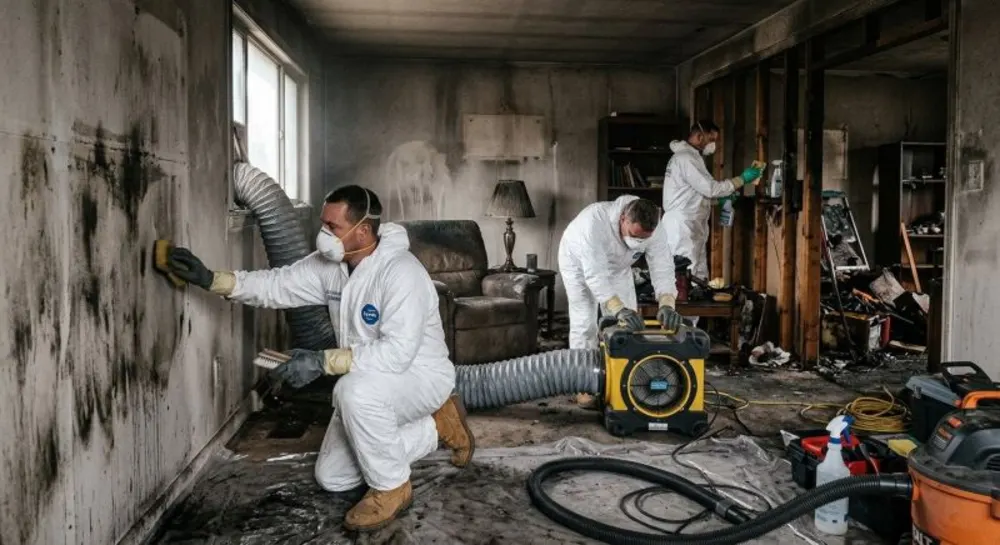
Why homeowners call us for cleanup
Cleaning Standards You Can Check, Not Slogans You Have to Trust
Fire damage cleanup NYC is the part of a fire job that decides what you keep and what you lose. A careless wipe can ruin a paint finish in one pass. A skipped closet can keep a whole apartment smelling of smoke for a year. The crew you hire should work to a method you can read, watch and hold them to.
Trained to the standard
Our cleanup work follows ANSI/IICRC S700, the Standard for Professional Fire and Smoke Damage Restoration, first edition, 2 January 2025, the same framework insurers and adjusters work from, so our scope, our methods and your claim all speak the same language. No other fire damage cleanup NYC page we have read names it.
Add your certification hereTested before touched
Soot is tested before a single wall is wiped, because the wrong cleaner on the wrong residue smears it in for good. Test patches prove the method on your surfaces before the full clean starts.
Sample report on requestDocumented from hour one
Photos, video, a room by room inventory and a written scope, taken before anything is moved or thrown away. That file is what your adjuster pays from, and it is yours to keep.
Add your licence number hereCleanup to rebuild, one crew
Debris, soot, odor, contents and drying under one roof, and the same company can carry the job into full fire damage restoration when you are ready, so nothing gets lost between trades.
Add your review profile hereCleanup, in plain words
What Fire Damage Cleanup Actually Means, and What It Is Not
People use cleanup, repair and restoration as if they were the same word. On a fire job they are three different phases, and knowing which one you are buying keeps you from paying for the wrong thing, or missing the right one.
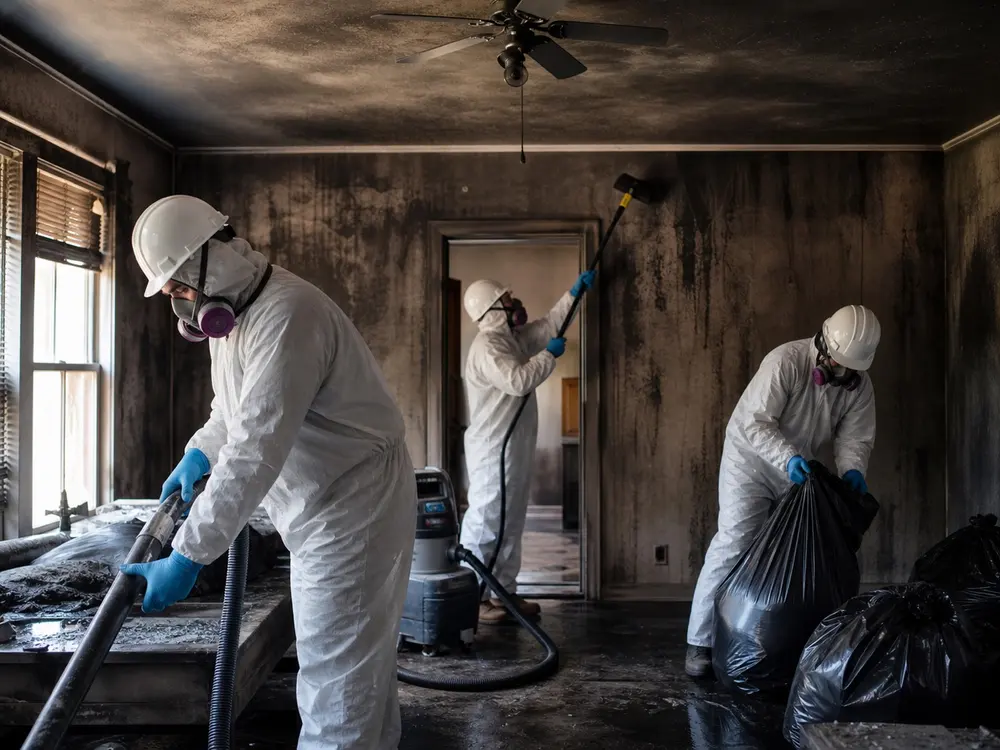
Cleanup is the removal phase. It takes out what the fire ruined beyond saving, and it cleans what the fire only dirtied. Charred furniture, burned drywall, fallen ceiling plaster, ash and grit go out in bags and dumpsters. Soot comes off walls, ceilings, cabinets, tile, appliances and fixtures. Smoke odor is treated where it lives, inside porous surfaces and soft goods, not sprayed over with scent. The air itself gets cleaned, because soot particles stay airborne for days and resettle on anything you just wiped. When fire damage cleanup NYC crews finish this phase, the home is clean, dry, safe to be in and honestly assessed: you can see exactly what survived and what did not.
Repair is the fixing phase. A burned stud gets sistered or replaced. A scorched cabinet door gets rebuilt. Broken glass, warped doors, melted fixtures and damaged wiring get made good. Repair works on the parts of the building the flames and heat physically damaged.
Restoration is the whole road back. It runs from the first board over a broken window to the last coat of paint, and cleanup is its first real phase. Our sister page on fire damage restoration NYC covers that full road, including rebuild and city filings. This page stays on the cleanup phase itself, because cleanup is where most fire losses are won or lost, and because a great many New York fires, stove fires, puff backs and neighbour smoke, need thorough cleanup and little or no rebuilding at all.
Here is why the order cannot be shuffled. Soot left under new paint bleeds through and smells every warm day. Debris left in a room keeps feeding odor into clean surfaces around it. Belongings cleaned after the rooms, instead of with them, pick the soot right back up. And a wall closed over damp, sooty framing grows mold behind fresh drywall. Cleanup first, cleaned to a standard you can test with a white glove and a deep breath, then repair on a clean shell. Every shortcut around that order comes back as a callback, a smell complaint or a second claim.
One more thing cleanup is not: it is not a maid service with stronger soap. Fire residue is chemically active, acidic, often greasy or powdery depending on what burned, and it bonds to surfaces in ways plain soap makes worse. The tools are different, dry chemical sponges, HEPA filtered vacuums, degreasers mixed for protein residue, encapsulants, hydroxyl generators. The safety gear is different too, because soot carries fine particles you should not breathe. And the paperwork is different, because every bag of debris and every cleaned sofa is also a line on an insurance claim.
Key takeaways
Key Takeaways: The Facts This Page Stands On
Seven facts, each one sentence long, each with its source named in the same sentence, written to be quoted exactly as they stand.
- The standard: fire damage cleanup NYC work follows ANSI/IICRC S700, the Standard for Professional Fire and Smoke Damage Restoration, first published on 2 January 2025 by the Institute of Inspection, Cleaning and Restoration Certification (IICRC).
- The soot clock: soot turns acidic within 24 to 72 hours of a fire and begins corroding metal surfaces within 24 hours, per PuroClean and Golden Touch restoration guidance.
- The cleaning order: dry cleaning comes before wet cleaning on every fire job, because a wet wipe first smears soot into the surface, per the American Red Cross cleanup guidance and the professional cleaning sequence.
- The 2024 baseline: the Fire Department of New York (FDNY) Bureau of Fire Investigation counted 77 civilian fire deaths in New York City in 2024, down from 104 in 2023.
- The battery trend: New York City lithium ion battery fires rose from 13 in 2019 to 277 fires with 6 deaths in 2024, 292 fires with 1 death in 2025, and 401 fires by 28 October 2026, per FDNY press reporting.
- The air threshold: the United States Environmental Protection Agency (EPA) treats indoor PM2.5 levels above 35 micrograms per cubic meter over 24 hours as unhealthy.
- The Twin Parks lesson: all 17 people who died in the Twin Parks North West fire at 333 East 181st Street, Bronx, on 9 January 2022 died of smoke inhalation, per the New York City medical examiner.
Last updated: November 2026
Direct answers
Fire Damage Cleanup NYC, Answered Straight
The questions New Yorkers ask first about fire damage cleanup NYC, answered in plain sentences short enough to quote. Each answer is expanded in the sections and FAQs further down this page.
Does insurance pay for fire cleanup?
Fire is a core covered peril in standard homeowners, renters, co-op and condo policies, and cleanup, debris removal and contents cleaning are standard claim items within it. What decides how smoothly it pays is documentation: same day notice, dated photos, residue test notes, the three part scope and a contents inventory. That file is built into every job we run.
Can smoke-damaged materials be repaired or do they need to be replaced?
Some can be repaired, and some must be replaced. Non-porous surfaces such as metal, tile and sealed stone often clean up well when heat damage is light. Porous materials like drywall, insulation, carpet and unfinished wood absorb smoke and acidic soot deep inside. When heat weakens a material, or odor cannot be fully removed, replacement is the honest call.
Is it safe to stay in my home during cleanup?
On a small, contained job, often yes, in the unaffected part of the home with doors closed and air scrubbers running. Children, older people, anyone with asthma and pets should stay out of smoked rooms until cleaning is finished. After a larger fire or any vacate order, no, and loss of use cover in your policy usually pays for a hotel or rental meanwhile.
Can you clean soot yourself, and is soot dangerous?
Light soot on one hard surface can sometimes be cleaned with a dry sponge, but soot is dangerous. It is fine carbon mixed with toxic substances from whatever burned, and its PM2.5 particles can enter the lungs and bloodstream. Wet wiping smears it deeper, and a standard vacuum blows it back into the air. Fire soot needs testing first.
The key facts about fire damage cleanup NYC, in short
- Fire damage cleanup in New York City follows ANSI/IICRC S700, the standard for professional fire and smoke damage restoration, first published on 2 January 2025.
- On any fire damage cleanup NYC job, dry cleaning comes before wet cleaning, because a wet wipe first smears soot into the surface.
- Soot is acidic, and corrosion on metal and electronics can start within 24 hours of a fire.
- Surfaces that clean easily at the two hour mark may need full replacement by the 72 hour mark.
- Mold can start growing in firefighting water within 24 to 48 hours.
- The EPA treats indoor PM2.5 above 35 micrograms per cubic meter over 24 hours as unhealthy.
- Ozone is never run in an occupied space. Hydroxyl generators can run while people are in the room.
- Smoke travels through shared wall cavities, pipe chases and HVAC systems, so a unit with no visible soot can still carry residue and odor.
Asked out loud about fire damage cleanup NYC, answered short
Five questions people ask their phone or their neighbour at the door, each with the short answer first.
What should I do first after a fire in my apartment? Wait until FDNY clears the building before you go back in. Photograph every room, open your insurance claim the same day, and do not wipe any soot. Cleanup starts once the building is cleared and the damage is documented.
How fast does soot damage get worse? Within hours. Soot starts etching glass and metal the same day, and firefighting water can grow mold within 24 to 48 hours, so the first two days decide how much of the home can be saved.
Can I sleep in my home after smoke damage? Only when testing says the air is safe. Smoke residue carries PM2.5 particles, and the EPA treats indoor levels above 35 micrograms per cubic meter as unhealthy. Until residue is cleaned and air is tested, sleep somewhere else.
Who pays when the fire was in my neighbour's apartment? Usually your own policy first. Standard homeowners and renters policies cover smoke and soot damage from a fire next door, and your insurer can pursue the party at fault afterwards. Document everything before any cleaning begins.
How long will fire cleanup take at my home? A smoke only apartment usually takes two to four days of cleaning plus odor treatment. One burned room with debris runs one to two weeks. A heavy fire takes several weeks before repair can begin.
Every short answer above is backed by a full section below, because fire damage cleanup NYC rewards the homeowner who understands the order of the work before the crew arrives.
Before any cleaning starts
After a Fire: The First Steps Before Cleanup, in Order
Fire damage cleanup NYC cannot start the minute the trucks leave, and rushing in with a mop does real harm. Work this list in order. Each step protects your family, your claim, or the surfaces a cleanup crew is about to try to save.
- Stay out until you are cleared to enter. The FDNY or the fire marshal decides when a burned building is safe. Floors and stairs weaken, gas and wiring get damaged, and hot spots smoulder inside walls. If a vacate order is posted, it is the law, not a suggestion.
- Do not start cleaning, not even a little. This is the step everyone gets wrong. Wiping soot with a wet rag smears it into paint and grout. A home vacuum blows fine soot back into the air and into clean rooms. Scrubbing a test patch in the middle of a wall can set a stain the right method would have lifted.
- Photograph and video before anything moves. Film every room slowly, open cabinets, closets and drawers, and read serial numbers aloud on appliances and electronics. Soot covered items look identical in a pile. On camera, in place, they are proof for your claim and a map for the cleanup crew.
- Open your insurance claim the same day. Write down the claim number and the adjuster name, and ask what emergency work is approved right now. Debris removal and cleanup are core claim items, and same day notice keeps the whole file simple.
- Tell your landlord, super or management company. In a rental, co-op or condo, the building controls the freight elevator, the dumpster placement, the risers and the insurance certificate your crew needs before it can start.
- Take only the basics, once entry is allowed. Medication, documents, chargers, glasses, pet supplies. Leave everything else where it sits until it has been photographed and listed. Every item you carry out sooty spreads residue to your car and your temporary home.
- Do not throw burned things away yet. A melted toaster and a charred sofa are evidence of value and of what burned. Keep them, or photograph them thoroughly, until your adjuster releases them in writing. Thrown away too early is the most common reason contents claims get cut.
- Keep people and pets out of the worst rooms. Soot particles are fine enough to stay airborne when disturbed, and they irritate lungs, eyes and skin, children and anyone with asthma first. Closed doors on burned rooms help more than you would think.
- Do not run the heating or cooling system. If smoke reached the ducts or the unit, running it pushes soot into every room on the system, including rooms the fire never touched. Leave it off until the system has been checked.
- Book the cleanup assessment. A fire damage cleanup NYC crew tests the residue, maps how far smoke traveled, checks what can be cleaned and what cannot, and writes the scope your adjuster works from. The inspection is free, and the written quote comes before any work starts.
The cleanup clock is already running
On every fire damage cleanup NYC job, soot etches metal within hours and sets into paint within days. Assessment and emergency debris removal can start the same day you call, in any borough.
The first 48 hours
Fire Damage Cleanup NYC in the First 48 Hours: The Numbers Behind the Urgency
Soot turns acidic within 24 to 72 hours, and firefighting water can grow mold within 24 to 48 hours, so cleanup and drying both start inside the first two days. Fire damage cleanup NYC work is a race against chemistry, and the city numbers explain why the race matters. This section is dated 19 November 2026, because the 2026 figures are still moving.
The 2024 baseline. The FDNY Bureau of Fire Investigation counted 77 civilian fire deaths in New York City in 2024, down from 104 in 2023, a fall the FDNY press release of 13 March 2025 put at 25 percent. The borough split for 2024 was Manhattan 24, Brooklyn 21, Queens 17, Bronx 12 and Staten Island 3. Lithium ion battery fires killed 6 people in 2024, down from 18 in 2023.
The 2026 reversal. As of early November 2026, the FDNY counted 86 fire deaths citywide in 2026, against 44 at the same point in 2025, reported by the New York Daily News on 8 November 2026. Gothamist put the figure at 87 on 9 November 2026, against 45 a year earlier. The City Council set an emergency oversight hearing on residential fires and lithium ion batteries for 20 November 2026, still a future date as this page is written. Structural residential fires also rose about 6 percent, from 20,180 in fiscal year 2025 to 21,475 in fiscal year 2026, per the Mayor 2026 Management Report. More fires means more smoked homes, and more fire damage cleanup NYC calls where the first two days decide what survives.
Why 48 hours is the window. Soot turns acidic as it absorbs moisture, and the window sources agree on is 24 to 72 hours before etching becomes permanent, with metals, chrome, marble and grout at the tighter 24 to 48 hour end. Firefighting water runs its own clock in the same window: the EPA and the CDC both give 24 to 48 hours to dry water damaged areas before mold growth becomes likely. A fire damage cleanup NYC scope written on day one is racing both clocks at once, which is why this page treats the first 48 hours as one combined job, cleaning and drying together, not two jobs booked a week apart.
Do, in the first 48 hours
- Get FDNY clearance before anyone re-enters, and photograph and video every room before anything is moved, cleaned or thrown away.
- Call your insurer the same day and write down the claim number. Fire damage cleanup NYC documentation starts with that number on the file.
- Board up broken windows and tarp a damaged roof so weather and strangers cannot add a second loss to the first one.
- Book the fire damage cleanup NYC assessment so residue testing, the three lists and the drying plan are set inside the acid window.
- Keep receipts for everything: hotel, food, pet boarding, medication. Loss of use claims are built from that folder.
Do not, in the first 48 hours
- Do not wipe soot with anything wet. Wet wiping dry soot is the single most damaging first move in fire damage cleanup NYC work. It smears powder into paste and drives it into paint, plaster and grout.
- Do not run the heating or cooling system if smoke reached it. The system will deliver soot to rooms the fire never touched.
- Do not power on fire exposed electronics. Acidic soot plus moisture can short a board the moment power is applied.
- Do not eat food, take medicine or use cosmetics that sat in heat or heavy smoke, sealed or not, until the crew judges them.
- Do not throw damaged belongings away before they are photographed, listed and released. Discarded too early is the commonest reason contents claims get cut.
If you have been displaced: the American Red Cross in Greater New York helps fire displaced families with emergency lodging and essentials, and the city Department of Housing Preservation and Development (HPD) emergency housing path exists for tenants whose homes are under a vacate order. Ask the fire damage cleanup NYC crew you call what they see other families use. There is no shame in any of it, and none of it weakens your claim. This page is general information, not legal or financial advice, and the claim sections below carry the same warning.
What cleanup covers
The Cleanup Scope: What Comes Out, What Gets Cleaned, What Gets Left Alone
Every fire damage cleanup NYC job is scoped room by room into three lists. Knowing the lists exist, and what decides them, tells you more about a company than any promise it makes.
List one: removal. Anything charred through, melted, collapsed or so loaded with residue that cleaning cannot reach it. Burned furniture and mattresses, charred drywall and insulation, fallen plaster, ash, grit and the contents of a burned refrigerator. Items are photographed and listed before they leave, because the removal list doubles as part of your contents claim, and debris is bagged inside the home so soot does not travel through halls and elevators on its way out.
List two: cleaning. Everything the fire dirtied but did not destroy. Walls, ceilings, woodwork, cabinets, tile, stone, appliances, light fixtures, doors, windows and floors. Most furniture, clothing, curtains, rugs, books, electronics and keepsakes, cleaned either in place or at a contents facility. On most jobs this list is far longer than the removal list, and it grows the sooner cleaning starts, because soot that lifts on day one can set by day ten.
List three: untouched. Rooms and items the smoke never reached, proven by testing rather than guessed. A closed bedroom on the far side of the apartment, a sealed closet, the inside of a shut refrigerator in a smoked kitchen. Honest scoping names these too, in writing, so you are never paying to clean what was never dirty. When a company scopes your home, ask to see all three lists. Fire damage cleanup NYC work that cannot show you the third list is guessing with your money.
| Surface or item | How it is cleaned | When it comes out instead |
|---|---|---|
| Painted walls and ceilings | Dry sponge first, then a wet wash matched to the residue, working ceiling down | When paint is blistered, charred or the soot has set past a test patch |
| Cabinets and woodwork | Degreasing wash for protein soot, wood safe cleaners for trim and doors | When veneer is heat warped or the wood itself is charred |
| Tile, stone and grout | Alkaline wash and grout scrubbing, one of the best responding surfaces in a home | Almost never for soot alone, only when heat has cracked it |
| Appliances and fixtures | Detail cleaning inside and out, vents and filters included | When heat has damaged wiring, seals or control boards |
| Upholstery and mattresses | HEPA vacuum, extraction cleaning and deodorizing for light exposure | When burned, melted, or so loaded that odor survives a test clean |
| Clothing and curtains | Specialist laundry with ozone treatment, never a home wash first | When scorched, melted, or the odor survives specialist treatment |
| Carpet and rugs | HEPA vacuum, hot water extraction and deodorizing | When the backing is heat damaged or padding has soaked up residue |
| Electronics | Specialist bench cleaning, unplugged and never powered on while coated | When boards are corroded past cleaning or heat warped |
| Books, papers and photos | Dry cleaning sponges, air washing and careful page by page work | When pages are charred or stuck together by heat and water |
| Hardwood and laminate floors | Cleaned last, after everything above them, then checked for water from firefighting | When boards are charred, cupped by water or delaminated |
The test patch decides. On every material, a small area is cleaned first and judged before the room is scoped as cleanable or not. Any company that scopes a whole home from the doorway is guessing.
One habit worth copying from the crews: finish a room before starting the next. Half cleaned rooms are how soot migrates, on shoes, gloves and equipment. On a well run fire damage cleanup NYC job the home divides into zones, dirty, in progress and done, and the done zone is entered only with clean gear. It looks slow from the doorway. It is the fastest way a cleanup ever finishes, because no finished room is ever cleaned twice.
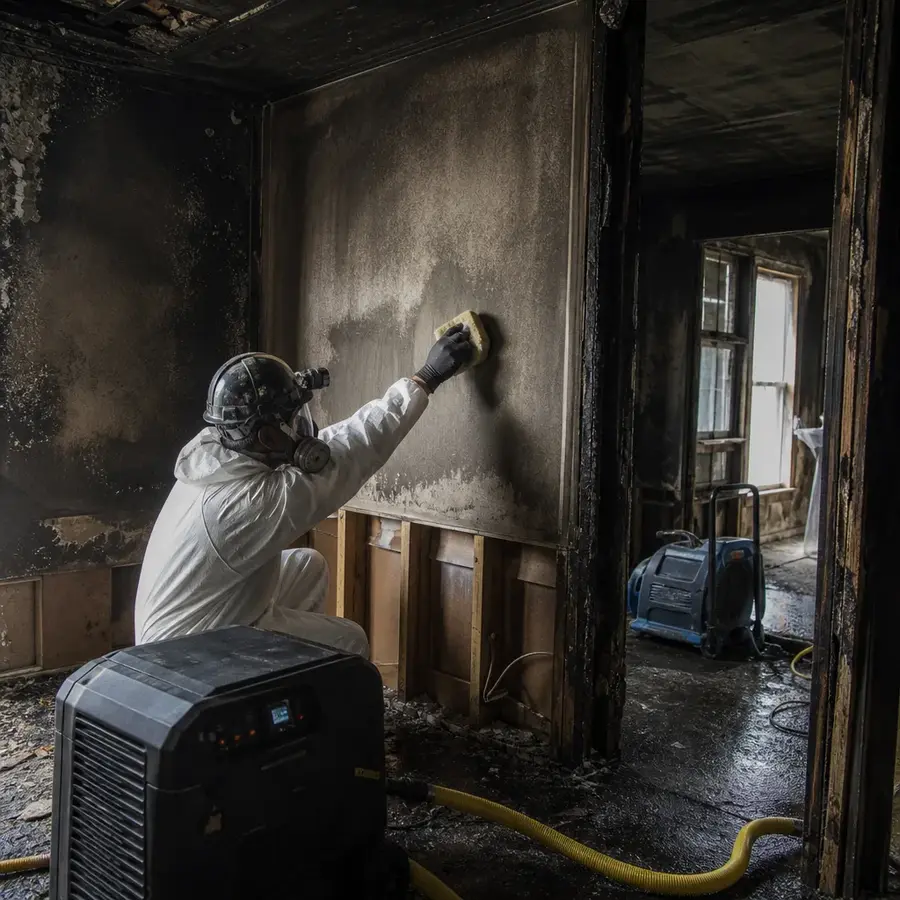
Soot is not one thing
Four Kinds of Soot, Four Different Cleaning Jobs
What burned decides what the residue is, and the residue decides the cleaner, the tool and the order of work. This is the single biggest difference between professional fire damage cleanup and a bucket of soapy water.
Dry soot
From fast, hot, oxygen rich fires burning wood, paper and natural materials. It is powdery, sits on top of surfaces, and lifts with a dry chemical sponge and a HEPA vacuum when it is handled before anyone touches it wet. It is the most forgiving residue there is, and the one most often ruined by a well meaning wipe with a damp cloth.
Wet soot
From slow, smouldering, oxygen starved fires, the upholstery and bedding fires that burn for a long time before anyone wakes. Wet soot is sticky, smeary and thick, with a heavy smell. It needs careful dry removal first, then matched wet cleaning, and it punishes rushing.
Protein soot
From burned food, grease and cooking oil, the signature of the New York kitchen fire. It is yellowish, greasy, sometimes nearly invisible, and it carries a rancid smell that outlasts every visible trace. Protein residue needs degreasing cleaners and full deodorizing, and painted kitchen surfaces often need a sealing coat before repainting.
Fuel oil soot
From a furnace or boiler puff back, where unburned oil ignites late and blows soot through the heating system and out of every register in the home. There may be no flame damage anywhere, and still every room is coated. Cleanup has to include the duct system and the unit itself, or the soot blows back at the next heating cycle.
Real fires mix residues. A kitchen fire lays protein soot in the kitchen, dry soot in the hall and a fine film in the bedrooms, and each room gets the method its residue needs. That is why fire damage cleanup NYC crews test in more than one room, and why the test results, not habit, write the cleaning plan. Testing takes minutes. Skipping it costs surfaces.
| Soot type | Source fire | How it looks | Cleaning sequence | The wrong first move |
|---|---|---|---|---|
| Dry smoke | Fast, hot fires burning paper, wood and natural materials | Powdery, dry, fine, sits on top of surfaces | Dry removal only first: HEPA vacuum, then dry chemical sponge | Wet wiping, which turns powder into paste and drives it deeper |
| Wet smoke | Slow, smouldering fires with limited oxygen, often plastics, rubber and foam | Sticky, smeary, dense, black, with a heavy odor | HEPA vacuum, dry sponge, then degreasing agents, often several passes | Wiping with a dry cloth or paper towel, which spreads it |
| Protein residue | Kitchen and cooking fires burning food, meat, eggs and grease | Nearly invisible, thin yellowish film, the worst odor of any residue | Enzymatic or solvent based agents plus full odor treatment | Painting over it. The smell comes straight back through the paint |
| Fuel oil soot | Furnace puff backs and oil burning appliance malfunctions | Thick, greasy, black, concentrated near ductwork, heavy petroleum odor | Industrial degreasing over several passes, duct cleaning, then thermal fogging and ozone for the odor | Surface wiping only, which leaves the petroleum odor in place |
Soot tags, the cobweb like chains of soot that appear in corners after a fire, are an agglomeration of particles, not a fifth residue type. Fire damage cleanup NYC crews vacuum them away in the dry pass like any other loose soot.
The decision rule is simple: identify the residue first, then choose the cleaner. Dry soot wants dry removal only, wet soot wants degreasing after dry removal, protein soot wants enzymatic agents plus odor treatment, and fuel oil soot wants the duct system and the heating unit inside the scope, not just the rooms.
The cleaning order, and the one rule above all of it
Never wipe wet first. That warning sits at the top of every professional guide on this work, and it is the first thing a fire damage cleanup NYC crew will tell you on the phone. Wiping dry soot with a wet cloth smears it, turns it into paste, drives particles deeper into drywall, grout and upholstery, and can set the stain permanently. The order below is the sequence the transcript lessons in the jobs section describe, and it is the order fire damage cleanup NYC work follows on every wall.
- Safety and clearance first. No entry until the FDNY or the fire official clears the building. No HVAC running. No fire exposed electronics powered on. Photograph and video everything for the claim. A respirator rated N95 or P100, not a paper dust mask, plus gloves and eye protection for anyone inside.
- HEPA vacuum first. A vacuum with a HEPA filter, brush attachment, nozzle held just off the surface and never pressed into it, worked top to bottom in overlapping passes. A standard vacuum blows fine soot back into the air and into clean rooms. One honest conflict belongs here: a WikiHow expert answer advises against vacuuming walls before removing soot, saying it can smear. The Red Cross, county fire guides and the professional sources in this research say HEPA vacuum first, held slightly off the surface. Fire damage cleanup NYC crews follow the professional sequence, and this page shows the conflict rather than hiding it.
- Dry chemical sponge second. A soot sponge of dense vulcanized rubber, used dry, wiped in one direction with light pressure in long overlapping downward strokes. No scrubbing back and forth, and the sponge never gets wet. When a face turns black, it is cut away or turned to a clean side. On pre-war plaster, several guides say dry methods only, because water can set soot into plaster and damage the plaster itself. That rule matters on a large share of fire damage cleanup NYC jobs.
- Wet washing third, only after dry removal. Hard surfaces are washed with a mild degreasing cleaner or a trisodium phosphate solution mixed per the product label. The guides conflict on the mix: the American Red Cross gives 4 to 6 tablespoons of tri-sodium phosphate per gallon of warm water, while a PuroClean guide gives 1 tablespoon per gallon. This page does not merge those into one recipe. Mix per the label, wear gloves, rinse with clear warm water, dry right away, and spot test first. TSP is for stubborn staining after dry sponging, never as a first wipe.
- Shellac based primer before any repainting. Never paint directly over soot: paint adheres to the contaminant instead of the wall, then fails or bleeds through. After the surface is fully dry and shows no visible soot transfer, a sealing primer goes over the full wall, not spot primed patches. Shellac based primer is the strongest choice for severe smoke damage and odor, because it flashes off fast, leaves a hard film and locks soot and smell in place. Oil based primer is the alternative for most smoke stained walls. A second full coat is used where stain or odor still shows, and primer cures per the manufacturer directions before any topcoat.
Cleanup services
Fire Damage Cleanup Services, From the First Bag of Debris to the Last Wipe
Nine services make up a complete fire damage cleanup NYC job. Some jobs need three of them, a big fire needs all nine, and your written scope names which ones your home needs and why.
Debris and ash removal
Charred furniture, burned building material, ash and grit, bagged inside the home, carried out cleanly and hauled away legally. The removal list is photographed and itemised first, because it is part of your claim.
Soot washing, walls and ceilings
Dry sponge passes, then residue matched wet washing, ceilings first and walls after, room by room. The method changes with the soot type and the surface, and test patches prove it before the room is committed.
HEPA vacuuming and air scrubbing
Every surface vacuumed with HEPA filtered equipment before wet work begins, and air scrubbers run through the job so loose soot is captured instead of resettling on what was just cleaned.
Smoke odor removal
Odor treated at the source: source removal, surface cleaning, then thermal fogging, hydroxyl or ozone treatment matched to the home, and sealing of porous material only after it is clean.
Contents cleaning and packout
Belongings inventoried, photographed and split three ways: cleaned in place, packed out for specialist cleaning and storage, or documented as beyond saving and held for your adjuster.
Kitchen and appliance detailing
Cabinets inside and out, appliances, vents and the grease loaded corners a stove fire leaves behind. Protein soot hides where you cannot see it, and this is where it hides most.
HVAC and duct cleaning
When smoke entered the heating or cooling system, the ducts, registers and unit are cleaned as part of the job, so the system stops spreading soot and smell to clean rooms.
Floor and carpet cleaning
Floors are cleaned last, once everything above them is done, with extraction cleaning for carpet and rugs and careful washing for hard floors, plus a moisture check for firefighting water.
Final detail and clearance check
A white glove walk of every room, a smell check with fresh noses, and a written list of anything that did not respond, so repair and repaint start on a shell that is honestly clean.
Two honest notes about this list. First, cleanup does not include rebuilding, and any company that blurs the two in one vague line is blurring the price too. Your scope should price cleanup as cleanup. Second, if the fire also soaked the home, and most do, the drying side belongs to the same visit. Our water damage restoration crews work alongside the cleanup crew so wet structure is dried while soot is being cleaned, not discovered after.
How cleanup runs
Cleaning Up After a Fire: Our 8 Step Process
The order below is not a preference. It is how soot behaves. Change the order and cleaned rooms get dirty again, stains set, and smells survive. This is the sequence every fire damage cleanup NYC job on this page follows.
Walkthrough, testing and the written scope
Every room is walked, photographed and tested. Residue types are identified, smoke travel is mapped through closets, drawers and cavities, and you get the three lists, removal, cleaning and untouched, with an exact written quote before work starts.
Safety setup and air control
Air scrubbers go in and start pulling soot out of the air. Work areas are sealed where needed, crews suit up with respirators, and anything that protects the clean parts of the home, floor protection, sealed doorways, goes in before the first bag is filled.
Debris and ash removal
Charred and ruined material comes out first, bagged at the spot where it sits. Removing the worst sources early matters because debris keeps feeding odor and grit into every room around it for as long as it stays.
Contents triage
Belongings are inventoried and split: clean in place, pack out for specialist cleaning, or hold as documented losses. Nothing leaves without a photo and a line on the list your insurer will work from.
Dry cleaning pass, ceiling down
HEPA vacuuming and dry sponges lift loose soot from ceilings, then walls, then fixtures and furniture, always top to bottom, so what falls lands on surfaces that have not been cleaned yet.
Wet washing, matched to the residue
Surfaces are washed with the cleaner their soot type needs, degreasers for protein residue, gentle methods for delicate finishes, one room at a time, with rinse water kept off finished floors.
Odor treatment and duct cleaning
With surfaces clean, odor is treated where it lives: fogging, hydroxyl or ozone as the job calls for, duct cleaning where smoke entered the system, and sealing of porous framing or subfloor only where cleaning proved the odor is locked in.
Floors last, then the clearance walk
Floors and carpets are cleaned at the end, moisture from firefighting water is checked and dried, and the whole home is walked with you: white glove test, smell check, and the written list of anything that did not respond, ready for repair.
Not sure how much of your home can be cleaned?
That is exactly what the free inspection answers, room by room, with test patches. You get the three lists in writing before you commit to anything.
The standard behind the work
ANSI/IICRC S700: The Fire and Smoke Standard No Competitor Names
Before 2025, fire cleanup had trade habits but no single national standard of its own. That changed on 2 January 2025, and fire damage cleanup NYC work is better for it.
What S700 is. ANSI/IICRC S700, the Standard for Professional Fire and Smoke Damage Restoration, first edition, published 2 January 2025 after more than a decade in development, describes how to assess the presence, intensity and boundaries of fire residues and odors in a building, its systems including HVAC, and its contents after a fire. It sets out the methods, equipment and materials for restoration cleaning and fire odor management, and it requires a written Restoration Work Plan, documented project events, qualified contractors and compliance with the authorities having jurisdiction. A consensus body has already begun revising it, checked in September 2026, but no second edition exists yet, and any fire damage cleanup NYC company claiming one is ahead of the facts.
What S700 does not do. The standard does not comprehensively address reconstruction, wildfires, chemical or industrial fires that pose environmental hazards, or buildings with special requirements such as healthcare facilities and laboratories. That limit is honest and useful: fire damage cleanup NYC scopes that involve rebuild belong partly to other standards and to city filings, and a crew that knows where its standard stops knows where the permit process starts.
The standards that work alongside it. ANSI/IICRC S500, fifth edition 2021, governs the water extraction and drying side, which matters because firefighting water is part of almost every fire damage cleanup NYC job. ANSI/IICRC S520, fourth edition 2024, governs mold remediation if the drying window is missed. ANSI/IICRC S590, the Standard for Assessing HVAC Systems Following a Water, Fire, or Mold Damage Event, first edition 2023, governs the assessment of HVAC systems after a water, fire or mold event, and it gets its own section below. When you interview a fire damage cleanup NYC company, ask which standard governs which part of your job. The answer should come back in those numbers, not in adjectives.
Test before you tear
Test Before You Tear: Asbestos, Lead and the New York Rules That Come Before Demolition
Fire damage cleanup NYC work disturbs old materials, and in this city old materials carry legal duties. Testing comes before cutting, always, and the sequence taught in the best training videos on this work is the sequence used here: extract and dry, test, mitigate safely, get clearance, then rebuild.
Asbestos, and the correct cutoff. Buildings built before 1 April 1987 need a survey by a DEP certified Asbestos Investigator before a Department of Buildings permit, filed as an ACP-5 when the job is not an asbestos project and an ACP-7 when it is, under the city asbestos rules including Rule 56 handling for larger work. The New York State Department of Labor has clarified that surveys are required regardless of construction date, and that material should otherwise be assumed to contain asbestos. One competitor page in this research gives 1980 as the cutoff year. That figure is wrong, and fire damage cleanup NYC scopes should not repeat it. The guides also quote a threshold of more than 25 linear feet or more than 10 square feet of asbestos containing material triggering an ACP-7 filing. Treat that as a guide figure and let the investigator call your job.
Lead. Housing built before 1978 is presumed to have lead paint under Local Law 1 of 2004. The EPA Renovation, Repair and Painting rule requires certified firms and lead safe practices when paint is disturbed, at thresholds as small as 2 square feet in a room. Local Law 31 of 2020 required XRF testing in pre-1960 buildings by 9 August 2025, at a threshold of 0.5 milligrams per square centimetre. A fire that blisters paint in a pre-war apartment is a lead job as well as a soot job, and fire damage cleanup NYC crews plan for both from the first test.
Mold law, if the water clock was missed. If firefighting water sat and mold grew, two more New York rules stack on top. Local Law 55 covers buildings with 3 or more apartments: Class A mold under 10 square feet corrected in 90 days, Class B from 10 to 29 square feet in 30 days, and Class C at 30 square feet or more in 21 days, the mold exception to the general 24 hour Class C rule. Local Law 61 and Labor Law Article 32 cover buildings with 10 or more units, or 25,000 or more square feet of non-residential space: mold work over 10 square feet needs a licensed assessor and a separate licensed remediator, and the remediator files a Mold Remediation Work Plan and Notification Form with the DEP no later than 2 business days before work. One competitor guide in the wider research states Local Law 55 applies at 10 or more units. That is the Local Law 61 threshold, not Local Law 55, and it is corrected here because fire damage cleanup NYC readers in smaller buildings deserve the right number.
Looks dry does not mean is dry, and looks clean does not mean is clean. The test before you tear habit applies at both ends of a fire damage cleanup NYC job. Moisture readings, not fingertips, decide when a wall cavity is dry. Residue tests and a white glove, not a quick look, decide when a room is clean. And clearance, a documented final check before walls are closed or repainted, is what turns a cleanup from a promise into a record your insurer, your board and your own nose can all rely on.
Suspect material in your building?
Tell the crew before work starts what you know about the age of the building and any past surveys. Fire damage cleanup NYC testing is fast, and it is far cheaper than stopping a job mid tear out.
Debris and ash
Getting the Burned Stuff Out: Debris, Ash and New York Disposal Rules
Debris removal is the first working step of a fire damage cleanup NYC job, and every item that leaves is photographed and listed for the claim before it goes. The first visible progress on any fire damage cleanup NYC job is a pile of black bags and a home that suddenly looks bigger. Debris removal sounds like the simple part. In New York it has rules, and in a claim it has paperwork.
What counts as debris. Charred furniture and mattresses, burned and fallen building material, ruined carpet and padding, ash, grit and the general wreckage of the room that burned, plus anything in other rooms that testing shows cannot be cleaned. A burned refrigerator and its contents are debris too, and a special kind: sealed, taped and removed whole where possible, because opening it indoors is a mistake nobody makes twice.
Why nothing leaves unlisted. Every item that goes out is a line on your contents claim, with a photo taken where it sat. Crews that haul first and list later, or never, are throwing your money into the dumpster with the sofa. On our jobs the removal list is signed off before the truck leaves, and anything you or your adjuster want held is held, bagged and labelled, until it is released in writing.
How it leaves a New York building. Debris is bagged inside the unit, never dragged loose through halls. In apartment buildings the freight elevator is booked, floors and elevator walls are protected, and management gets the certificate of insurance it requires before the first trip down. Houses in Brooklyn, Queens, the Bronx and Staten Island are simpler, with driveway or curb placement, and Long Island jobs usually have the easiest haul out of all.
Where it goes. Fire debris is not regular household trash, and ash and soot covered material do not belong in a building compactor or out with the weekly bags. It is hauled by licensed carters to the right facilities, and where suspect material is involved, testing and the handling rules come before tear out, not after. Ask any company you interview where the debris goes and how it is documented.
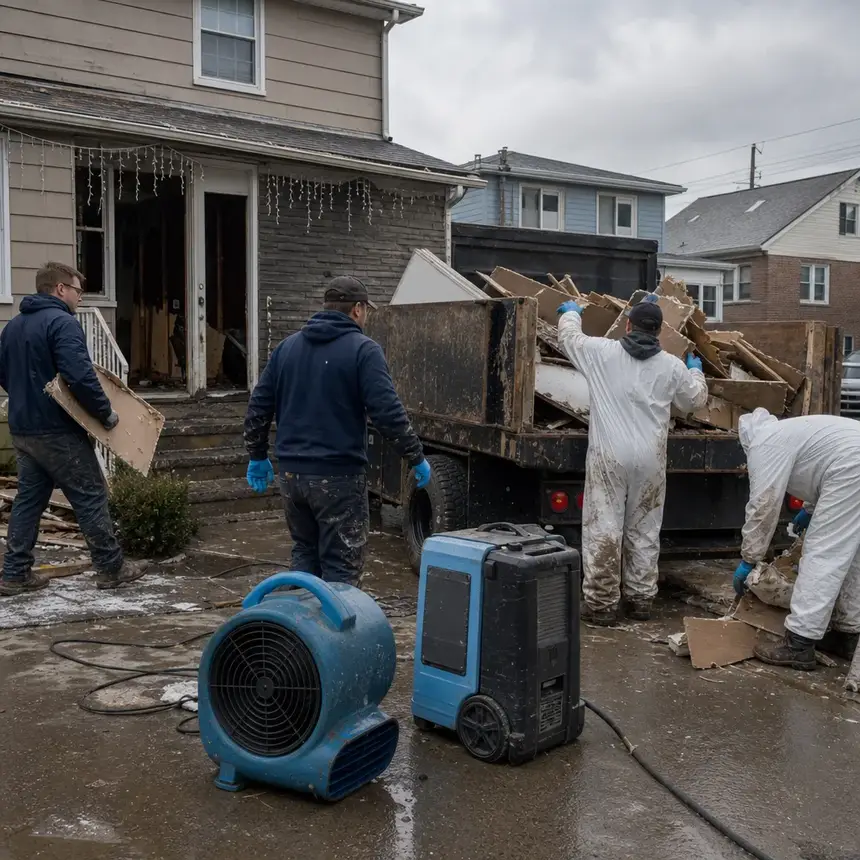
Ash deserves its own warning. Ash and grit are abrasive and alkaline, and every footstep grinds them deeper into floors and carpets. Keep traffic through burned rooms to a minimum until the dry pass is done, keep children and pets out entirely, and never use a home vacuum on ash: the fine fraction passes straight through the filter and into the air of the next room.
Soot and odor
Smoke Odor Removal: Why the Smell Survives the Cleaning, and How It Actually Goes
Ask anyone who has lived through a fire what they remember a year later and most say the smell. Odor is the part of fire damage cleanup NYC homeowners judge hardest, and the part most often done badly. Here is how it works, honestly.
Why the smell is so stubborn. Smoke is made of tiny particles and gases that behave like a searching liquid. Hot smoke rises, expands and pushes into every gap: behind cabinets, inside drawers and closets, into wall cavities around pipes and wires, deep into upholstery foam, carpet padding, curtains and clothing. As it cools it settles and bonds. The particles are small enough to enter the pores of paint, plaster, raw wood and fabric, which is why a room can look perfectly clean and still smell like a campfire every warm afternoon.
The order that works. Odor removal follows a strict sequence, and skipping steps is why it fails. First, the source goes: charred material and loaded debris are removed, because no treatment outruns a source that is still in the room. Second, every surface is cleaned, because soot film itself is an odor source. Third, the air and the cavities are treated. Fourth, and only where cleaning proved the odor is locked into porous material, a sealer locks down what is left before repainting. Painting over untreated smoke damage is the classic failure in this trade: the job looks finished, and the smell returns within weeks, strongest in summer heat.
Thermal fogging
A heated deodorizing fog that behaves like smoke itself, travelling the same paths into the same gaps, and neutralising odor particles where they settled. Used after cleaning, on an empty, sealed space.
Hydroxyl treatment
Generators that break down odor molecules in the air and on surfaces while the space is occupied, slower than ozone and gentler, often the right call for apartments where the family is living in part of the home.
Ozone treatment
A powerful oxidiser that destroys odor at the molecular level in an emptied, sealed space. People, pets and plants stay out during treatment. It is the heavy tool, used when the case calls for it, never as a first resort.
| Method | How it works | Can people stay? | Best for | Safety warning |
|---|---|---|---|---|
| Thermal fogging | Heats a deodorizer into a dry fog with particles sized like smoke, so it follows the same paths smoke took into cracks and cavities | No. The space is empty during application and ventilated afterward | Moderate to severe odor where smoke penetrated deeply | Requires soot removal first. Fogging over residue is masking, not removal |
| Ozone | An aggressive oxidizer that attacks the chemical bonds in odor molecules and destroys them | Never in an occupied space | Severe smoke, cigarette and heavy protein odor | Ozone is a lung irritant. The EPA notes it is only effective in unoccupied spaces, the Occupational Safety and Health Administration (OSHA) workplace limit is 0.1 parts per million over an 8 hour day, and no federal agency has approved ozone generators for occupied spaces. A documented off gassing period and full ventilation come before re-entry, and ozone can damage rubber, artwork, some electronics and fabrics |
| Hydroxyl generators | UV light reacting with humidity and oxygen produces hydroxyl radicals, the same oxidizer the atmosphere uses to break down pollutants | Yes. People, pets and plants can stay while it runs | Light to moderate smoke, protein and mold odor in lived in homes | Slower than ozone. A heavy fire odor can need 3 to 7 days, and hydroxyl is an adjunct after source removal and cleaning, not a replacement for them |
One correction matters here, because a competitor answer in this research gets it wrong: hydroxyl treatment does not require evacuation. Ozone does. If a fire damage cleanup NYC contractor offers to run ozone while your family is still living in the apartment, that is a red flag. Hydroxyl is the occupied space option, ozone is the vacated structure option, and thermal fogging is the deep penetration option after cleaning.
Soft goods carry the smell longest. Curtains, bedding, clothing, upholstery and rugs hold odor deep in their fibres, and they get their own treatments: specialist laundry with ozone washing for textiles, extraction and deodorizing for upholstery and carpet, air washing for books and papers. A room is not finished when the walls pass the smell test. It is finished when the curtains go back up and the room still passes.
The honest limit. Some things do not come back. A mattress that took heavy smoke, upholstery foam loaded with wet soot, insulation inside a burned wall cavity: these hold odor past any treatment worth paying for, and a good crew tells you so at scope time, with the item on the removal list and documented for your claim, instead of billing you for treatments it knows will fail. Fire damage cleanup NYC work earns its trust in those calls as much as in the cleaning itself.
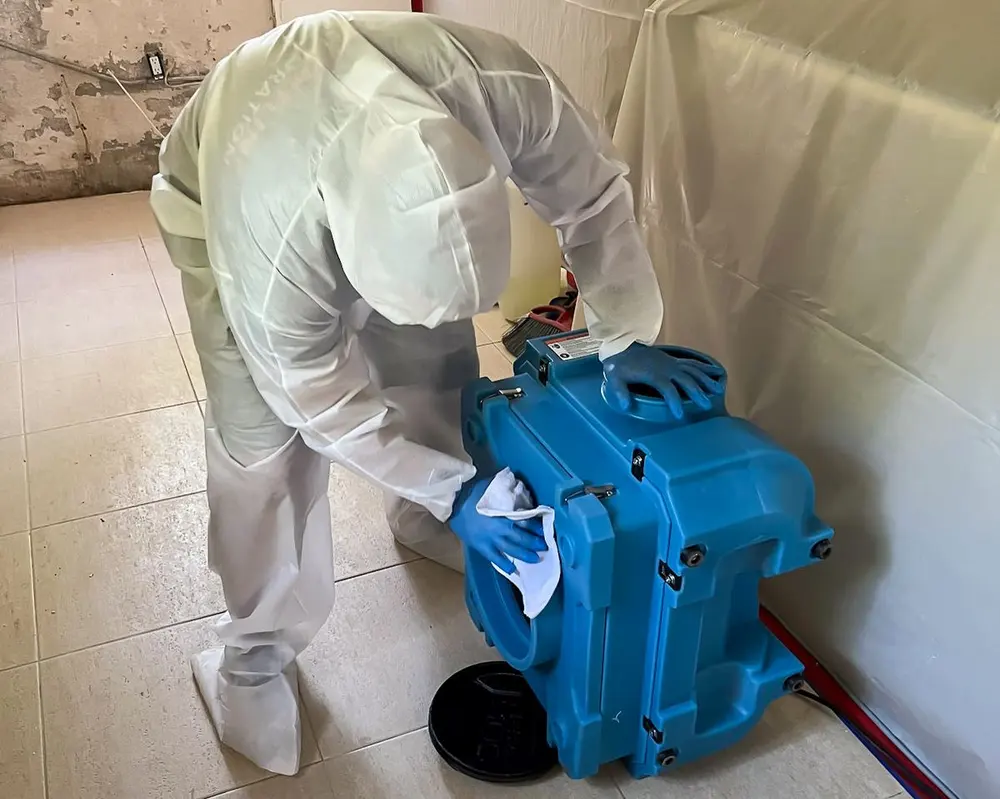
Cleaning your belongings
Contents Cleaning: Clothes, Electronics, Furniture, Papers and the Things You Cannot Replace
The building is half the loss. The other half is everything inside it, and much of it can be saved when it is handled in the right order. Contents cleaning is where fire damage cleanup NYC crews quietly save families the most money and the most heartbreak.
Electronics. Soot is corrosive to circuit boards, and the damage continues while residue sits on them. Electronics are unplugged, never powered on while coated, photographed with serial numbers for the claim, and sent for bench cleaning and testing. Televisions, computers, game consoles and kitchen electronics survive far more often than owners expect, when they are handled fast and not wiped down with a household cleaner first.
Furniture. Hard furniture, wood, metal, glass, cleans well with residue matched methods. Upholstered pieces are judged by a test clean: light exposure usually responds to HEPA vacuuming, extraction and deodorizing; heavy wet soot in foam usually does not, and the piece is documented as a loss instead of billed for hopeless treatment.
Paper, books and photographs. Paper holds smoke odor and soot on every page edge. Dry sponge cleaning, air washing and careful handling save most books and documents. Photographs are fragile when wet or heat curled and should not be stacked, separated or wiped at home. Freeze drying can save water soaked papers and photos when it starts early.
Kitchen contents. Dishes, glassware and sealed metal clean reliably. Anything porous that held food is usually discarded, and all opened food, medicine and cosmetics exposed to smoke or heat go out, no exceptions. That rule feels wasteful and is not negotiable: soot and heat byproducts do not belong in a body.
How packout works when items leave. Each box is labelled by room, each item photographed and listed, and the inventory is shared with you and your adjuster. Cleaned items are stored until the home is ready, then returned room by room against the same list. The inventory is also your contents claim, which is why fire damage cleanup NYC documentation is written to adjuster standard from the first box, not assembled from memory later.
Pack out is not moving boxes. A proper pack out runs a chain of custody: inventory, photographs, categorising by damage type, a barcode or tracking line per box, transport to a secure climate controlled facility, cleaning off site, storage, and pack back after structural work is complete. Contents guides put standard storage at 30 to 90 days, stated here as a guide figure, not a promise. One contents guide claims up to 90 percent of belongings can be saved with a fast professional pack out. That is a vendor claim, not a verified industry figure, and fire damage cleanup NYC readers should hear it labelled as one. What is not in dispute is the direction: the faster the pack out starts, the more of the home comes back.
The electronics clock is the tightest of all. Acidic soot begins corroding circuit boards, connectors and internal components within 72 hours, and within about a week many electronics that could have been restored become unrepairable, per the contents guides in this research. Specialist cleaning uses ultrasonic baths in a pH neutral solution with anti-corrosion treatment and functional testing, and it is the best technology currently available for smoke damaged electronics. It cannot restore heat melted plastic, warped boards or broken solder joints, which is why fire damage cleanup NYC crews collect electronics early and why the rule stands: never power one on to see if it still works.
Documents, photographs and fine art. Dry papers are HEPA vacuumed, gently cleaned page by page and deodorized. Wet papers have a critical window of 24 to 48 hours before pages bond and mold develops, and the professional answer inside that window is immediate freeze drying, the same method used for photo recovery and digitizing. Fine art and antiques are a separate discipline: a museum grade conservator assesses paintings, sculpture, rare furniture and instruments before any general cleaner touches them. On a fire damage cleanup NYC job, flagging the art and the family papers at the walkthrough is what gets them conservator and freeze drying time instead of a place in a general cleaning queue.
Health and safety
Is It Safe to Be in the Home During Cleanup? Soot, Air and Common Sense
On fire damage cleanup NYC calls, families ask this in the doorway, usually holding a child back with one hand. The honest answer depends on the size of the fire and the stage of the work, and it is worth understanding rather than just obeying.
What is in soot. Soot is the unburned and partly burned remains of everything the fire touched: wood and fabric, but also plastics, foams, treated materials, cleaning products and electronics. The particles are extremely fine, small enough to float for hours when disturbed and to reach deep into lungs, and smoke residue contains fine particulate matter, PM2.5, which the EPA treats as unhealthy above 35 micrograms per cubic meter over 24 hours, and unhealthy for sensitive groups above 55. Soot also carries toxic substances that vary with what burned, including carcinogens the International Agency for Research on Cancer classifies in its Group 1 category for soot itself. After a fire that burned mostly natural materials, the risk is mostly irritation. After a fire that burned plastics, foam and electronics, treat the residue with real respect.
Who should stay out. Children, older people, pregnant women, anyone with asthma or breathing trouble, and pets, should stay out of burned and heavily smoked rooms until cleaning is complete and the air has been scrubbed. On a small, contained kitchen fire, living in the far side of the home during cleanup is usually fine with doors closed and scrubbers running. On anything bigger, or where a vacate order stands, the answer is simply no, and your policy loss of use cover exists for exactly that situation.
What crews do about it. Respirators and suits on the team, air scrubbers pulling particles out of the air from the first hour, sealed work zones where the damage is heavy, and a final air scrub before rooms are handed back. If your home has a baby, a grandparent or a breathing condition in it, tell the crew at the walkthrough: it changes the setup, and it should.
The older building question. Pre-war New York homes can hold lead paint and asbestos in plaster, pipe insulation, floor tile and roofing. Fire disturbs those materials, and cleanup near them follows the city and state handling rules, with testing first where they are suspected. Any fire damage cleanup NYC company working in older buildings should be able to explain its approach to suspect materials without blinking. If it cannot, keep interviewing.
The system behind the walls
HVAC After a Fire: Assessment Under ANSI/IICRC S590 Before Any Duct Is Cleaned
Smoke does not respect the room it started in, and the duct system is its fastest road through a building. Fire damage cleanup NYC jobs that skip the system are the ones that smell again at the next heating cycle.
Assessment is not cleaning. ANSI/IICRC S590, the Standard for Assessing HVAC Systems Following a Water, Fire, or Mold Damage Event, first edition, published November 2023, describes how to assess an HVAC system and produce a written report and Restoration Work Plan. The assessment identifies impacted and non-impacted internal surfaces, using visual deposition and odor retention checks. A revised S590 consensus body was being recruited in 2025, but no revised edition is claimed here. On a fire damage cleanup NYC job the order is fixed: assess first, then clean or replace what the assessment names, and keep the system off until the work is done. Running the system after a fire spreads soot through ducts, gaps around outlets and attic spaces into rooms the flames never reached.
What usually cleans and what usually goes. Sheet metal ducts, the blower and many coils can often be cleaned, if the odor clears and the fins show no heat or corrosion damage. Contaminated lined duct, duct board and flex duct are usually replaced. Any furnace, heat exchanger or wiring exposed to heat needs evaluation before restart, full stop. The ducts are cleaned after the rest of the home, not before, so cleaned ductwork is not reloaded by a dirty house. The 2025 edition of the NADCA ACR standard names two verification methods, the Surface Comparison Test and the NADCA Vacuum Test, and a fire damage cleanup NYC scope can ask for either by name.
The New York wrinkle. Steam heat, pre-war risers and shared ductwork mean one apartment fire can contaminate a whole stack. That is a local observation from this city building stock, not a line from S590, and it is labelled as one. It is also why fire damage cleanup NYC testing checks the units above and beside the fire unit, and why the building engineer hears about the job early.
The fastest growing fire cause in the city
E-Bike and Lithium Ion Battery Fires: Cleanup Rules and the Law Behind Them
Lithium ion battery fires are the fastest growing fire cause in New York City, reaching 401 fires by 28 October 2026, already past the full 2025 total of 292. Fire damage cleanup NYC readers deserve the full picture, because these fires now set the city fire calendar.
| Year | Lithium ion battery fires | Deaths | Source note |
|---|---|---|---|
| 2019 | 13 | Not stated in the series | First year the FDNY tracked these fires |
| 2020 | 44 | Not stated in the series | FDNY press reporting series |
| 2023 | 268 | 18 | FDNY press reporting series |
| 2024 | 277 | 6 | FDNY press figure. The Bureau of Fire Investigation investigations count is 279. The two figures count different things and are not merged here |
| 2025 | 292 | 1 | FDNY press reporting series |
| 2026 | 401 by 28 October, and 406 by 5 November, with 70 injuries | 9 by 5 November, per Gothamist. Later secondary reporting said 12, which is not a settled FDNY figure and is not used as one here | Dated figures. The 2026 total was still moving when this page was written on 19 November 2026 |
Since 2019, when the FDNY first kept these statistics, battery fires had caused 46 deaths and 628 injuries, per THE CITY on 9 November 2026. About 70 percent of the 2026 battery fires involved e-bikes and scooters. The first lithium ion fire death of 2026 came on 4 July 2026, a 76 year old woman in a Queens restaurant fire started when a charging e-bike exploded, per the NFPA account.
The law: Local Law 39 of 2023. Effective 16 September 2023, powered bicycles, powered mobility devices and their storage batteries sold, leased or rented in New York City must be certified by an accredited testing laboratory: UL 2849 for e-bikes as a full electrical system, UL 2272 for other powered mobility devices such as e-scooters, and UL 2271 for standalone lithium ion batteries. Local Laws 49 and 50 of 2024 gave the FDNY enforcement authority alongside the consumer protection department, including padlocking repeat violators. One honest limit: Local Law 39 is a sale, lease and rental rule. It does not by itself regulate storage or charging inside a residential building, and no city law currently does. That gap is part of the Patterson Houses story in the case lessons below.
Cleanup rules after a battery fire. A damaged lithium ion battery is hazardous debris, never ordinary trash, and it is never carried through a home in an open bag. Tell any fire damage cleanup NYC crew before work starts if a damaged battery is anywhere in the home, because it changes how the room is entered and what gets touched first. Rooms near a battery burn are tested aggressively, because the residue mix is unlike a wood fire and the cleaning chemistry follows the test. And the storage rule that would have prevented the worst 2026 case on this page is simple enough to say plainly: never charge or store an e-bike in the path to the only exit, never charge overnight unattended, and never charge a battery that has been dropped, swollen or damaged. NYCHA rules since March 2024 say the same in building language: one device charging at a time, an awake adult present, nothing within five feet of heat, and never blocking an entrance or exit.
Jobs, and what they teach
Three Cleanup Jobs, and the Lessons Fire Cleanup Video Case Studies Teach
Three patterns cover most New York fire cleanup jobs, the kitchen fire, the furnace puff back and the bedroom fire, and every one teaches the same first lesson: dry first, test first. We study fire damage cleanup NYC case study videos the way other trades study game film, and we teach from them on our own jobs.
Job one: the Brooklyn kitchen fire. A pan fire in a railroad apartment kitchen, out in minutes, no structural damage at all, and protein soot through all four rooms. The owner had already wiped the kitchen walls with a wet sponge before calling, and that one wall had to be sealed and repainted while every other wall dry sponged and washed clean. The rest ran by the book: cabinets degreased inside and out, curtains and bedding to specialist laundry, hydroxyl running for two days, and a home that smelled like a home again inside the week. The lesson, shown in video after video, is that the first touch decides the surface. Dry first, test first, and never let a wet cloth be the first thing a sooty wall meets.
Job two: the Queens puff back. A boiler misfire on the first cold night of the year blew fuel oil soot through the ductwork of a two storey house. No flame, no char, and a grey film on every surface in the building, including inside closed closets. The cleanup ran room by room, top to bottom, and the ducts and the boiler were cleaned in the same visit. The lesson the puff back videos hammer home: if you clean the rooms and skip the system, the first cold night brings the soot back.
Job three: the Bronx bedroom fire. A space heater ignited bedding in a pre-war apartment. One room burned hard, the rest of the home took wet soot and firefighting water. Debris and the mattress came out the first day, bagged and listed. The clothing in a closed closet two rooms away cleaned fully at specialist laundry, and the electronics, unplugged and left alone by the family, mostly survived bench cleaning. The water, extracted and dried during the same days as the soot work, never became a mold job behind the baseboards. The lesson: on a real fire, cleanup, contents and drying are one job wearing three hats.
For readers who want to see the craft before hiring it, two videos teach the lessons this page is built on, and their lessons are written out here as text, because this page carries no video embeds. The soot cleaning lesson comes from Home Pride Restoration of Utah, How to Clean Soot Off Walls After a Fire, step by step: soot turns acidic within 24 to 72 hours, the dry chemical sponge goes first and never gets wet, the TSP wash comes only after dry removal and is mixed per the label, and a shellac based primer seals the full wall before repainting. Its honest limit is stated in the video itself: the do it yourself version covers a small, contained area of painted drywall after a natural materials fire. Plaster, protein residue, fuel oil soot and multi room smoke are professional work. The second lesson comes from Certified Restoration of San Diego, Test Before You Tear: extract and dry, test for asbestos and lead before cutting, mitigate safely, run clearance testing, then rebuild. Looks dry does not mean is dry. On a fire damage cleanup NYC job the California rules in that video are replaced by the New York rules in the test before you tear section above, Rule 56 and the ACP-5 and ACP-7 filings, but the sequence is identical. Watch for those habits, the dry pass, the test patch and the ceiling down order, in any crew that walks into your home. A crew that starts at the floor, or starts wet, is telling you how the job ends.
A third set of lessons, on timing, comes from a Texas process overview by IntensaDry, carried here as text only: day one is assessment and board up, days two to four are debris, soot and pack out, days five to ten are deep cleaning and deodorization, and rebuilding runs from week two onward. Labelled as a Texas overview, not a New York process, it still matches the rhythm of a fire damage cleanup NYC job, because soot behaves the same in every state. What changes in New York is everything around the cleaning: permits, boards, asbestos filings and shared building systems, and those are the sections this page spends its length on.
New York case lessons
Three New York Fires, Three Lessons Every Cleanup Starts From
Close the door, never block the exit, never assume the cause. Three dated New York fires, drawn from public news and official reporting with the conflicts shown rather than hidden, teach the lessons fire damage cleanup NYC work is built on.
Twin Parks North West, Bronx, 9 January 2022: close the door. A malfunctioning electric space heater, left running for days in a third floor bedroom at 333 East 181st Street, started the deadliest New York City fire in more than 30 years. Seventeen people died, and the medical examiner gave smoke inhalation as the cause of death for all 17. Several self closing doors did not work as designed, and smoke spread through the building, including into the stairwells, with victims found on every floor. Architectural Record and the Bronx Borough President put the child deaths at 8 of the 17. Some secondary reports say 9. This page uses 8 and shows the conflict rather than hiding it. The law changed because of this fire: the Council package signed 1 June 2022 made failure to maintain self closing doors a Class C immediately hazardous violation under Local Law 63 of 2022 (Int. 105-A), cut the correction time from 21 days to 14 days, and required HPD reinspection within 20 days after that. For fire damage cleanup NYC readers the lesson is plain: smoke, not flame, is what kills in apartment fires, and a door that does not latch shut on its own is a building defect worth a 311 call today.
Patterson Houses, Mott Haven, 28 October 2026: never block the exit. Shortly before 1 a.m., a lithium ion battery in an e-bike ignited in the kitchen of an 11th floor NYCHA apartment. The bike sat in the pathway of the front door, the apartment only exit, and firefighters who arrived within four minutes had to break in because the burning bike blocked the door. Four members of one family died: Zion Maine, age 11, at the scene, and CJ Maine, 15, Jamaree Adam, 16, and Syida Adam, 33, two days later on 30 October. A fifth family member, Courtney Maine, 37, survived in hospital. One report gives the youngest child age as 10. The Council and Brownstoner sourced accounts say 11, and this page uses 11 with the conflict noted. Fire Commissioner Lillian Bonsignore said the placement of the bike made it impossible for the residents to leave safely. Fire damage cleanup NYC crews repeat the lesson in every battery conversation: the exit path is not storage, for a bike, a battery or anything else.
Sunset Park, Brooklyn, 5 November 2026: never assume the cause. A three alarm fire in a two story wood frame row house at 653 58th Street, called in at about 1:39 a.m., killed 6 adults, the deadliest New York City fire of 2026 at that date. Four died at the scene and two after reaching hospital. Early reports said 7 others were hurt, including 3 firefighters. Later reports put the injured at 9, being 4 civilians, 3 firefighters and 2 police officers, and this page uses the later figure with the breakdown. A lithium ion battery, possibly two, was found at the scene and a charred e-scooter was removed, and still the cause was under investigation when this page was written, with the FDNY and the Mayor both saying it was too early to say whether a battery caused the fire or played any role. Together with Patterson Houses, the two fires took 10 lives in eight days, a combined death toll, not a combined battery caused toll. The lesson for fire damage cleanup NYC work is professional as much as personal: a battery found at a scene is evidence to document, not a cause to announce.
Together, the three fires explain the shape of this page. Doors and exits decide who survives the night. Testing and documentation decide what survives the month. And honesty about what is known, what conflicts and what is still under investigation decides whether a fire damage cleanup NYC page deserves the trust it asks for.
Real questions, real answers
Questions New Yorkers Actually Ask About Fire Cleanup, From Forums and Front Stoops
Most fire cleanup questions turn on order: document before you clean, dry clean before you wet clean, and test before you tear. These are the questions people type into Reddit, Quora and WikiHow at two in the morning after a fire, and the ones neighbours ask on the stoop. Short, straight answers, the way we give them on the phone.
Can I just clean the soot myself with vinegar and a sponge? On one small hard surface with light dry soot, a careful dry sponge can work. Vinegar and water on a sooty wall is the classic home mistake: it wets powdery soot into a stain and drives greasy soot deeper. The bigger the area, the more the answer tilts to no.
The fire was only in the kitchen. Why does my bedroom smell? Because smoke travels on warm air through every gap it can find, around pipes, under doors, through shared chases in apartment buildings, and it settles in the coolest, softest places it reaches: bedding, curtains, clothing, carpet. A bedroom that smells was a bedroom the smoke visited, and it needs cleaning even though it looks untouched.
How long does cleanup take? A smoke only apartment, two to four days of cleaning plus odor treatment. A home with a burned room and debris, one to two weeks for the cleanup phase. A heavy fire, several weeks before repair can start. The scope visit turns those ranges into dates for your home.
Will the smell ever really go away? Yes, when the source is out, the surfaces are clean and the treatment matches the home. The smell that never leaves belongs to jobs where something was skipped: debris left in a wall cavity, ducts never cleaned, paint rolled over untreated soot. If a quote promises the smell gone with a spray and a prayer, keep looking.
Should I open the windows and air the place out? Ventilation helps once the firefighters clear it. But airing out does not remove soot, and a strong draft can push loose soot deeper into clean rooms and soft goods. Open up, then close the doors on the worst rooms and let the crew set the air up properly. One conflict from the guides belongs here too: WikiHow advice to open windows and air a wet or smoked home out conflicts with professional closed system practice on a humid day, when outside air can feed the problem. Follow the crew setup, not the open everything instinct.
What do I do with the food in my kitchen? Opened food goes out. Sealed food that sat in heat or heavy smoke goes out too, and so does anything in the refrigerator if the power was off or the seals took smoke. Cans and sealed jars in a lightly smoked kitchen can be washed and kept. When in doubt, out.
My landlord says I have to clean it. Is that right? It depends on the cause, the lease and whose insurance responds, and the who pays section below walks through it. Do not sign anything or start paying for cleanup until you have read that section and made one call to your own insurer if you have a policy.
Can photos and documents really be saved? Often, yes, when they are handled early and handled dry. Do not try to separate stuck photos or wipe soot off papers at home. Keep them as they are, keep them cool, and flag them at the walkthrough.
Do I need to be there while the crew works? For the walkthrough and the clearance walk, yes, or someone who can decide for you. For the days between, no. Crews work fine in an empty home, and you will get photo updates as rooms finish while the inventory keeps track of everything that moves.
What if I already started cleaning before I found this page? Stop where you are, and do not hide it from the crew. Tell them exactly what was wiped, washed or thrown away, and show them any photos you took before you started. A wall that was wet wiped may need sealing and repainting instead of washing, and the crew would rather plan for that at the scope than discover it at the clearance walk.
Our building super offered to handle the cleanup. Should we let him? For a wiped handrail in a shared hall, maybe. For the inside of your home, almost never. Building staff are not equipped for residue testing, HEPA work or claim documentation, and their cleaning, however kind, happens before your adjuster sees the damage, which weakens the claim it was meant to help. Let the building handle the building side, halls, shafts, shared systems, and let a cleanup crew handle your side, with the two scopes coordinated.
What is the difference between smoke damage and soot damage? Soot is the residue itself, the fine carbon powder and grease a fire deposits on surfaces. Smoke damage is the wider harm the smoke did on its way through: soot deposits, odor bonded into porous materials, discoloration, and corrosion starting on metal and electronics. A fire damage cleanup NYC scope lists both, because a room can carry heavy smoke damage with almost no visible soot, and cleaning only what you can see leaves the rest behind.
How do I clean soot off furniture? Hard furniture, wood, metal and glass, responds to HEPA vacuuming, dry sponging and residue matched cleaning. Upholstery is judged by a test clean on a hidden area: light exposure usually extracts and deodorizes well, heavy wet soot in foam usually does not. Never saturate upholstery with a home cleaner to find out. On any fire damage cleanup NYC job the test patch comes first, and a piece that fails it is documented for the claim instead of ruined by effort.
Does renters insurance cover fire cleanup in New York City? Generally, yes, for your belongings: renters policies list fire and smoke as covered perils, and contents cleaning, pack out and additional living expenses sit inside that cover. The unit itself is the landlord side. The one verified reader case in this research asked the landlord side of the question: a JustAnswer poster whose mother New York apartment burned in an electrical fire asked whether the landlord had to provide housing and whether she still owed rent. The answer given was that surrender under Real Property Law 227 is possible if the home is untenantable and the fire was not the tenant fault, the landlord does not have to provide alternative housing, and rent stops after surrender. That is general information from a public answer, not legal advice, and your own lease and policy have the final word.
Why does the smoke smell come back weeks later, after it seemed gone? Because smoke particles bond chemically with porous materials at a depth surface cleaning cannot reach, and heat and humidity reactivate those bonded compounds. New York humid summers are famous for this in the trade: a room superficially cleaned in spring can smell of the fire again in July. Without molecular level treatment after proper cleaning, guides in this research describe untreated smoke odor as effectively permanent. A fire damage cleanup NYC job that ends with source removal, full cleaning and the right air phase treatment is how the smell stays gone.
What should I do with a damaged e-bike battery after a fire? Do not throw it in household trash, do not carry it through the home in an open bag, and do not charge it to test it. A damaged lithium ion battery is hazardous debris that can reignite. Leave it where it is if it is safe to do so, tell the FDNY responders and the fire damage cleanup NYC crew it is there, and let it be handled and removed as hazardous material. If a battery swelled, smoked or got hot without a fire, the same caution applies before any cleanup starts.
Who pays for cleanup
Owner, Renter, Landlord, Co-op or Condo: Who Pays for Fire Cleanup
Fire damage cleanup NYC sits at the crossing of several policies and one lease or set of bylaws. The table below is the usual pattern in New York. Your own documents have the final word, and the claim steps in the next section show you how to get them read early.
| Your situation | Who pays first | Who pays second | Note |
|---|---|---|---|
| Rental, fire not caused by the tenant | Landlord, for the building and structure | Tenant renters policy, for belongings | The landlord does not have to provide alternative housing |
| Rental, fire caused by tenant misconduct | The tenant may be liable | The landlord insurer may subrogate | The warranty of habitability has a fault exception for tenant misconduct under RPL 235-b |
| Rental, home untenantable, tenant surrenders | The tenant surrenders and rent stops | Landlord, for the building | RPL 227: no tenant fault and no written agreement to the contrary. Surrender is not the same as a rent abatement |
| Co-op, fire in your own unit | The building master policy, for structure | Shareholder HO-6, for interior and contents | The proprietary lease decides the split. The master policy typically covers floors, walls, ceilings, wiring conduits and structure, and the HO-6 covers furnishings, fixtures, repainting and improvements |
| Co-op, fire you caused damages the unit below | The causing shareholder | The master policy may pay first, then subrogate | Damage a shareholder caused, and items that shareholder installed later, move the cost to that shareholder |
| Condo, bare walls master policy | The association, structure only | Unit owner HO-6, for finishes and contents | The bare walls trap: custom cabinets, flooring and finishes are owner cost under a bare walls policy |
| Condo, single entity master policy | The association, structure plus standard finishes | Unit owner HO-6, for improvements and contents | Standard finishes are covered. Upgrades are not |
| Condo, all-in master policy | The association, structure plus finishes plus improvements | Unit owner HO-6, for contents | The broadest association cover of the three master policy types |
| Condo owner raising habitability against the association | The association is not a landlord | Not applicable | A condo owner cannot raise RPL 235-b against the association: Frisch v Bellmarc Management, First Department, 20 May 1993. Condo ownership is fee ownership, not a leasehold. A co-op shareholder can rely on 235-b, because a co-op is a landlord, and a condo owner tenant can raise it against their own landlord unit owner |
| Neighbour fire, smoke only, no negligence proved | Your own insurer | The neighbour insurer, only if liability is proved | Otherwise each policy covers its own property. This is the commonest neighbour dispute in New York apartments, and the least likely to be paid by the neighbour insurer |
| Neighbour fire, neighbour negligent | Your own insurer first | The neighbour insurer, through subrogation | Subrogation is your insurer recovering from the negligent side after paying you. Deductible recovery is possible but not automatic, and a direct claim with the neighbour insurer risks delays and actual cash value instead of replacement cost |
The habitability rule, in plain words. RPL 235-b, the warranty of habitability, is a landlord covenant: the home must be fit to live in. A waiver of it is void. It carries a fault exception where the condition was caused by tenant misconduct. RPL 227 is the companion rule for a destroyed home: if the premises are destroyed or rendered wholly untenantable, without tenant fault or neglect and with no written agreement to the contrary, the tenant may surrender possession and rent stops after surrender. Neither rule makes a landlord provide alternative housing. Fire damage cleanup NYC readers in rentals should hear that plainly before they plan around a hotel the landlord never owed them. This section is general information, not legal advice.
Two New York notes that matter for cleanup. First, mold law: if firefighting water soaked walls and the cleanup uncovers mold, New York City Local Law 55 duties fall on owners of buildings with three or more units, and New York State Article 32 licensing rules govern larger mold work. A cleanup crew working in this city should know both without being prompted. Second, the upstairs and next door rule: smoke does not respect unit lines, and neither do claims. If your neighbour fire smoked your apartment, your cleanup is claimable, usually under your own policy first, and the documentation standard is identical to a fire of your own. Our full guide to the money side, including denied claims and appeals, is the water damage insurance claim page, and the claim steps written for fire losses sit on the fire damage restoration NYC page.
Not sure whose policy covers your cleanup?
Bring the question to the free fire damage cleanup NYC inspection. We read the situation with you, document for every policy involved, and scope the work so each carrier sees its part clearly.
Cleanup and your claim
How Fire Cleanup Fits Your Insurance Claim, and How to Keep It Smooth
Fire damage cleanup NYC is usually the first paid work on a fire claim, and the best documented. Insurers expect it, price it from the scope and the inventory, and rarely argue with a cleanup that was tested, listed and photographed. Most claim friction comes from work that was none of those things.
What the adjuster wants to see. Dated photos and video from before anything moved. The residue test notes that justify the cleaning methods. The three lists: removed, cleaned, untouched. The contents inventory with serial numbers where they exist. And the fire report anchoring the date and the cause.
What gets claims cut. Belongings thrown away before they were listed. Cleaning started before documentation, so the before state exists only as a memory. Rooms cleaned that were never smoked, with no test notes to justify them. And emergency work done by a company that cannot produce an itemised scope afterwards. Every one of those is avoidable with the order on this page: document, test, scope, then clean.
Emergency work and your duty to limit loss. Policies expect you to act to stop damage growing: securing the home, removing debris that feeds odor and corrosion, starting cleanup. That duty is why same day calls and same day documentation matter, and why receipts for every emergency step, hotel, food, pet boarding, go into one folder from hour one. If your claim is large or disputed, the step by step filing guide on our water damage insurance claim page walks the whole ladder, including what to do when a claim is denied or cut.
A word on prices, since every reader wonders. This page carries no prices, on purpose. Cleanup scope is set by facts nobody knows before the walkthrough: how far the smoke traveled, which residues are present, how much debris there is, how much contents work, and how much of the home tests clean. A number published before those facts would be a guess dressed as a promise, and guesses are how homeowners end up paying twice. The inspection is free. The exact written quote is given on site, before work starts, and it is the same document your adjuster sees.
New York claim clocks
The New York Claim Clocks That Govern a Fire Cleanup Claim
New York insurance law runs on clocks, and fire damage cleanup NYC claims are priced inside them. These are the corrected clocks, checked against the statute text for this page. General information only, not legal advice.
| Clock | Time | Source | What it does not do |
|---|---|---|---|
| Acknowledge the claim | 15 business days | Regulation 64, 11 NYCRR 216 (New York Codes, Rules and Regulations), under Insurance Law 2601 | It does not come from Insurance Law 3420(d). See the correction below |
| Reply to the policyholder | 15 business days | Regulation 64 | It is enforced by the Department of Financial Services. Regulation 64 gives no private right of action, per Rocanova v Equitable Life, 1994 |
| Begin the investigation | 15 business days | Regulation 64 | It does not decide the claim. It starts it |
| Accept or reject after proof of loss | 15 business days, or 30 business days if arson is suspected | Regulation 64, and Insurance Law 2618 for natural disasters | One secondary summary, LegalClarity, says accept or deny within 30 days generally. That conflicts with the 15 business day rule, and this page uses 15 business days and shows the conflict |
| Pay an agreed settlement | 5 business days under Regulation 64 | Regulation 64 | For natural disaster claims, Insurance Law 2618 sets its own pay clock, in the next row |
| Pay after settlement, natural disasters | 4 business days from receipt of the settlement agreement, or from performance of a condition in it, whichever is later | Insurance Law 2618(d), checked against the current statute text in the Senate and Justia 2025 and 2026 versions | It is not 3 business days. The 3 day figure comes from the 2021 bill draft, S6595, that introduced 2618, and it is not current law. Any fire damage cleanup NYC page still printing 3 days is printing the draft |
| Disaster claim extension | One extension of 15 business days for non-commercial claims, 30 for commercial | Insurance Law 2618 | It is a one time extension, not a rolling one |
| Reply to the Department of Financial Services | 10 business days | Regulation 64 | The DFS hotline is (800) 342-3736, Monday to Friday, 8:30 a.m. to 4:30 p.m. The separate disaster hotline is (800) 339-1759 |
| Write while the claim is undecided | Every 90 days | Regulation 64 | Silence past 90 days is itself a rule breach worth a DFS complaint |
| Proof of loss | Signed and sworn within 60 days after the loss, unless the carrier extends it in writing | Standard policy term | Your fire damage cleanup NYC documentation file is what this form is filled from |
| Sue on the policy | 24 months from the date of loss | Insurance Law 3404, the standard fire policy | It does not pause while you negotiate. The Executive Plaza exception is narrow: 2 years may not be reasonable where the property cannot reasonably be replaced inside 2 years and replacement is a condition of payment |
| Public adjuster fee cap | 12.5 percent of the recovery | 11 NYCRR 25.7 | The fee is computed only on money paid after hiring, and up to 20 percent is allowed on a supplemental claim only if the total stays at or below 12.5 percent |
Wrongful delay has its own remedy. In Bi-Economy v Harleysville and Panasia v Hudson, decided together by the New York Court of Appeals on 19 February 2008, consequential damages beyond the policy limits were held recoverable where they were foreseeable when the policy was made, for wrongful delay or denial. And one proposed law to know by name: FISPA, bills S166A and A6010A, would add a private right of action for unfair claim practices. It was referred to the Insurance committee on 7 January 2026 and it is not law as of 19 November 2026. Fire damage cleanup NYC readers should plan around the clocks that exist, not the one that is proposed.
Permits and boards
After Cleanup: DOB Permits, Landmarks and Board Approvals That Set the Rebuild Calendar
Cleanup itself, board up, extraction, drying and cleaning, is emergency work. The rebuild that follows a bigger fire runs on filings, and fire damage cleanup NYC timelines stretch or shrink on these numbers.
| Filing | What it covers | Guide timeframe |
|---|---|---|
| ALT-3 | Minor alteration work | About 2 to 4 weeks for approval, per a Long Island restoration guide summary |
| ALT-2 | The standard restoration rebuild. In DOB NOW, ALT-2 and ALT-3 sit under one Alteration job type, and a Registered Architect or Professional Engineer files an ALT-2 | About 4 to 8 weeks for approval, per the same guide summary |
| ALT-1 | Major alteration: changes in use, egress, occupancy or number of units | About 8 to 16 weeks for approval, before construction begins, per the same guide summary |
| Landmarks, LPC | Advance approval for alteration, reconstruction or demolition on a landmark or in a historic district. Permit for Minor Work about 10 business days, Certificate of No Effect about 10 business days, Certificate of Appropriateness about 3 months with a public hearing. LPC phone 212-669-7817 | Legal deadlines run longer than the typical times: 20 business days, 30 business days and 90 working days |
The ALT timeframes are guide ranges from a competitor guide, labelled as such, not Department of Buildings primary figures. Your architect or engineer confirms the filing your rebuild needs.
Boards are the other calendar. In a co-op or condo, the alteration agreement, the board or management review, the elevator reservation and the work hour rules all sit between a finished cleanup and a started rebuild, and none of them move at cleaning speed. This is why fire damage cleanup NYC scopes separate the cleanup dates from the rebuild dates in writing. A crew that promises one date for both, before the board has seen a single document, is promising something it does not control.
Cleanup across the city
Fire Damage Cleanup Across the Five Boroughs and Long Island
The methods of fire damage cleanup NYC travel. The buildings, the access rules and the way smoke moves change from borough to borough. Pick yours for the notes our crews actually work from, and read the full borough page for the water side of the same buildings.
Cleanup timelines
How Long Fire Cleanup Takes: Phase by Phase, Honestly
Fire damage cleanup NYC timelines are ranges because homes differ, but the phases do not. Anyone who gives you a single date on the first phone call is selling, not scoping.
| Damage level | Typical cleanup and rebuild range | What drives the range |
|---|---|---|
| Soot only, contained room | A few days to 2 weeks | Soot type, odor depth, whether smoke reached the HVAC |
| Single room fire with repairs | 1 to 4 weeks | Drywall and flooring work, permit needs |
| Moderate, multi room, with pack out | 3 to 12 weeks | Contents volume, firefighting water, board approval |
| Severe, structural, full rebuild | 6 weeks to 12 months | DOB permit, asbestos clearance, structure, material lead times |
These ranges are drawn from several restoration guides in this research, and the guides conflict with each other, which is shown rather than hidden: one New York and Long Island guide gives an overall process of 2 to 8 weeks and also gives 6 to 12 weeks for severe fires on the same page. Treat every range here as a planning range for a fire damage cleanup NYC job, set by severity, smoke spread, water, asbestos, permit, board and insurance approval, never by the size of the home alone.
What stretches a cleanup is rarely the scrubbing. It is access, freight elevator windows in a co-op, a dumpster permit on a tight street, contents volume in a house a family has filled for thirty years, and decisions about borderline items that deserve a test clean rather than a guess.
Room by room
Fire Cleanup, Room by Room: What Gets Checked and Cleaned in Each Space
Smoke treats every room differently. This is the walk our crews make on a fire damage cleanup NYC job, and the checks that decide each room scope.
Kitchen. The room of origin on most jobs and the hardest clean in the home. Cabinets come open and get degreased inside, behind and under, because protein soot pools where eyes do not go. Appliances are detailed or judged, the range hood and its duct get their own pass, and every porous food item leaves. Painted walls near the stove often need sealing before repaint, and the scope says so plainly when they do.
Living room. The soft goods room: sofa, chairs, curtains, rug, books, electronics. Upholstery is test cleaned before it is promised. Books are dry cleaned page edge by page edge where they matter. Electronics are unplugged, listed and sent for bench cleaning. Walls and ceilings here usually carry dry or wet soot depending on how the fire burned, and the method follows the test.
Bedrooms. Bedding and clothing go to specialist laundry as a first move, because people judge a cleanup by whether they can sleep in the room. Mattresses are tested honestly and often lost on heavy jobs. Closets are opened and cleaned inside, since smoke enters them and stays. A bedroom is handed back only when it passes the smell test with the door closed for an hour.
Bathrooms. The best news in the house. Tile, porcelain, stone and glass clean beautifully, grout scrubs back, and fixtures detail well unless heat reached them. Medicine and cosmetics exposed to smoke or heat are discarded, and exhaust paths are checked, because smoke loves a duct.
Hallways, stairs and entries. The smoke highway. These spaces carry residue to every room they touch and get cleaned early, so crews stop tracking soot from dirty zones into finished ones. In apartment buildings the shared hall outside your door belongs to the building, and management coordinates that side.
Basements and utility rooms. Where puff backs begin and firefighting water ends. The boiler or furnace is inspected and cleaned as part of a puff back job, stored contents are triaged hard, and the space is dried and checked for mold after any water. If wet material sat behind walls here, our water damage behind walls guide explains the checks that follow.
Doing it yourself
DIY Fire Cleanup: What a Homeowner Can Safely Do, and Where the Line Sits
Plenty of fire damage cleanup NYC advice online is written as if every fire were a candle scorch. Some of a small job really is within reach of a careful homeowner. The rest of it punishes beginners in ways that cost more than the crew would have.
Reasonably safe to do yourself. After clearance to enter, and on a genuinely small, contained fire: ventilating the home, photographing everything, listing your belongings, bagging and discarding exposed food, and dry sponging a small area of light dry soot on a hard surface to test how it responds. Wear a proper respirator, not a paper dust mask, keep children and pets out, and stop the moment the area is bigger than a door or the residue feels greasy.
Where the line sits. Anything involving more than one room. Anything greasy, sticky or protein based. Anything overhead, because ceiling soot falls into eyes and lungs. Anything involving the heating system, electronics internals, or a room that burned. And anything your insurer will be asked to pay for, because undocumented DIY cleaning destroys the before state your claim is priced from.
The mistakes that cost the most. Wet wiping dry soot into paint. Running a home vacuum and seeding soot through the whole home. Washing smoked clothes at home and setting the odor. Throwing away damaged goods before the adjuster releases them. Painting over soot to make it look done. Each one converts cleanable damage into permanent damage or an unpaid claim line. Fire damage cleanup NYC crews are called in to fix the fire second, and the first weekend first.
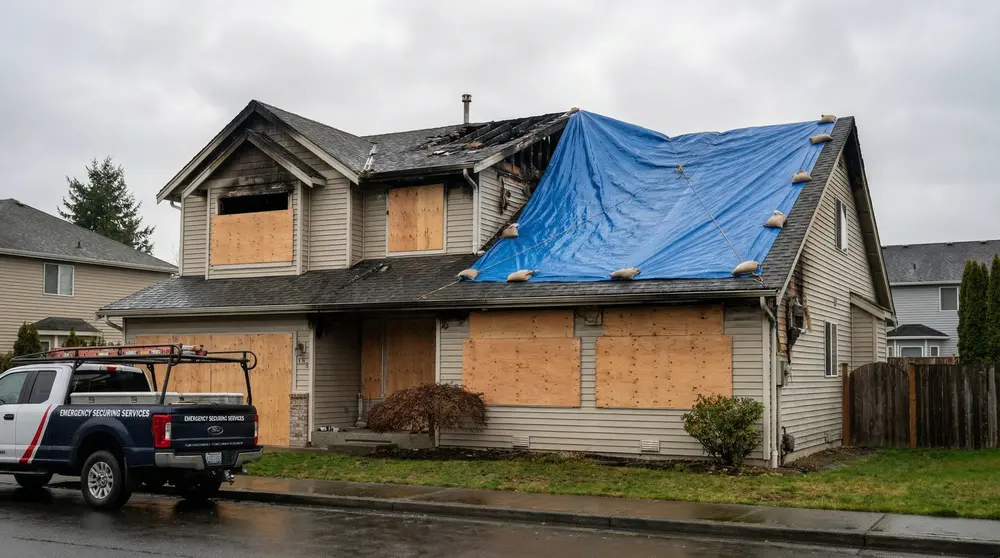
If you wait
What Happens If Cleanup Waits: How Soot Damage Grows Day by Day
Fire damage is one of the few home problems that keeps working while you think about it. This is the clock, roughly, that every fire damage cleanup NYC scope is racing.
The first hours. Acidic soot begins corroding metal within 24 hours, per Golden Touch restoration guidance: faucets, appliances, fixtures, tools. Ash and grit spread with every footstep. Odor particles are still mobile, still travelling into soft goods and cavities, and still comparatively easy to intercept.
The first days. Soot yellows paint, plastics and appliance finishes, and the staining starts becoming permanent. Odor sets deeper into upholstery foam, carpet padding and clothing. Firefighting water that reached wall cavities starts the mold clock, which runs in days, not weeks.
The first weeks. Corrosion pits metal past cleaning. Protein odor becomes part of the paint film in a kitchen. Wet structure that was never dried shows mold at baseboards. Items that would have cleaned in week one start failing their test cleans, and the removal list grows at the expense of the cleaning list.
The honest summary. Waiting does not save money on a fire. It moves items from the cheap list to the expensive one, cleaning to replacement, and it gives insurers an argument about damage that grew after the loss. The free inspection exists so the decision costs you nothing but a phone call, and fire damage cleanup NYC crews would rather scope a home on day one and clean half of what they feared than arrive on day twenty and remove half of what they find.
Choosing a company
How to Choose a Fire Cleanup Company in NYC: Questions That Separate Crews From Cowboys
You will probably hire the first company that sounds calm and competent, and that instinct is not wrong. These questions make it reliable. Ask them on the first call to any fire damage cleanup NYC company, and listen for specifics.
Do you test the soot before you clean? The answer should name residue types and test patches without hesitation. A company that cleans every fire the same way cleans some fires wrong.
Will I see the scope in three lists? Removal, cleaning, untouched, in writing, with a quote before work starts. Vague scopes produce vague bills and disputed claims.
How do you document for my insurer? Photos before anything moves, an itemised contents inventory, test notes and an itemised scope. If the answer is a shrug, your claim will feel it.
Do you clean the ducts and the air, or just the surfaces? On any job where smoke reached the system, surfaces only is half a job, and the soot will testify to that at the next heating cycle.
How do you handle a co-op or condo building? Insurance certificates, alteration paperwork, freight elevator booking, work hours. In this city, building logistics stop more jobs than soot does.
Who checks the finished work? A clearance walk with you, a white glove test and a smell check, and a written list of anything that did not respond. Cleanup that cannot be checked cannot be trusted.
Plain language
Fire Cleanup Terms, in Plain Language
The words on a fire damage cleanup NYC scope, translated. Knowing them makes the quote readable and the adjuster meeting shorter.
Dry sponge. A chemical sponge used dry to lift soot from surfaces without liquid. The first tool on almost every wall, and the reason the first pass is called the dry pass.
HEPA vacuum. A vacuum with a high efficiency filter that traps the fine particles regular vacuums blow back into the room. The only vacuum that belongs on a fire job.
Air scrubber. A machine that pulls room air through HEPA and carbon filters, removing soot particles and some odor while work runs.
Test patch. A small area cleaned first to prove the method and judge whether a surface or item can be cleaned at all. The patch decides the scope.
Puff back. A furnace or boiler misfire that blows fuel oil soot through the heating system into every room.
Protein soot. The greasy, rancid residue from burned food and cooking oil. Nearly invisible, hard to clean, and the reason kitchen fires smell for months when handled wrong.
Sealing, or encapsulation. A coating applied to clean but odor holding porous material, like framing, to lock down what cleaning could not lift. Always after cleaning, never instead of it.
Contents inventory. The photographed, itemised list of belongings and their condition. It runs the packout and prices the contents claim.
Clearance check. The final walk: white glove test on surfaces, smell check room by room, and the written list of non responders. Cleanup ends here, not when the truck leaves.
Next time, smaller
Making the Next Fire a Smaller Cleanup: Prevention That Fits New York Homes
Working alarms, a serviced boiler and batteries charged away from the exit decide whether a fire damage cleanup NYC job is a weekend of scrubbing or a month of removal. These are the habits our crews wish every home had.
- Smoke and carbon monoxide alarms, tested. Working alarms turn a smoulder into a scare instead of a burn. Test them, date the batteries, and put one inside every bedroom and on every level.
- A lid and a plan at the stove. Most kitchen fires start with oil and a distraction. A lid within reach smothers a pan fire. Water on burning oil does the opposite, every time.
- Space heaters given their space. Three feet from anything that burns, never left running in an empty room, never on an extension cord.
- Batteries charged with respect. E-bike and scooter batteries charged away from the door, never overnight, and never after damage. The FDNY has been plain about this risk for years.
- Boiler and furnace serviced yearly. Puff backs are maintenance failures before they are accidents. A serviced burner, a clean flue and a checked chimney prevent the soot job and the fire job alike.
- Dryer vents cleaned. Lint is fuel with a heating element beside it. A clear vent line is cheap insurance.
- An extinguisher you can reach. Kitchen and hallway, in date, and everyone in the home shown how to use it on a small fire, and when to leave instead.
- Your documents backed up. Photos of your rooms and your important papers, stored off site or in the cloud. After a fire, that folder is worth more than most furniture.
And one habit for the morning after any scare, however small: if a pan flared, a heater scorched a curtain or a battery swelled and smoked, treat the soot like the real thing. Small residues cleaned early and correctly stay small stories. The same residue, wiped wet and painted over, becomes the smell a family explains to guests for years. The borough pages linked in the all pages section below carry the water side of prevention for each housing stock.
Different buildings, different cleanup
Cleanup in Apartments, Brownstones, Houses and Businesses
On fire damage cleanup NYC jobs, the soot behaves the same everywhere. The building around it changes the logistics, the paperwork and half the decisions.
Apartments, co-ops and condos. Cleanup here is a coordination job as much as a cleaning job. Management needs the insurance certificate before crews enter, the freight elevator sets the pace of debris removal, and work hours are set by the building, not by the crew. Smoke in shared shafts means neighbouring units get tested, and the building engineer becomes part of the conversation early.
Brownstones and rowhouses. Plaster walls, high ceilings, original woodwork and party walls on both sides. The plaster and wood usually clean beautifully with matched methods. Party walls carry smoke and odor into the neighbouring house through joist pockets and old openings, so the neighbour conversation happens early and kindly. Garden level units take the water, and their cleanup always includes drying.
Detached and semi detached houses. The logistics champions: direct debris routes, easy dumpster placement, room to stage contents on site. The cleanup questions are different instead: attached garages that took smoke, attic insulation that caught odor above a kitchen fire, and basements where firefighting water and stored belongings meet.
Businesses and restaurants. Commercial cleanup runs on a different clock, because every closed day is revenue. Restaurant fires add health department reality: food contact surfaces, grease loaded hoods and ducts, and inspections before reopening. Retail and office jobs turn on inventory and electronics documentation, and on odor, because customers smell smoke long after staff stop noticing it. Work runs at night where the building allows it, and the scope is written so the business can reopen in stages, cleaned zones first.
The hardest calls
What Cleanup Cannot Save: Honest Salvage Judgments
Every fire damage cleanup NYC job leaves a short list of things no cleaning can bring back. A trustworthy crew names them early, explains why, and documents them so well that your claim treats them fairly.
What almost never survives. Anything the flames actually consumed or charred through. Mattresses and upholstered foam that took heavy wet soot, because the odor lives deeper than any extraction reaches. Carpet padding under a smoked carpet. Insulation inside a burned or soaked wall. Opened food, medicine and cosmetics, which are discarded on health grounds whatever they look like. Electronics that were powered, hot and coated at once, where corrosion started inside the case before anyone could unplug them.
What surprises people by surviving. Hard furniture and cabinetry, even with heavy film. Books, more often than owners fear. Clothing, when it went to specialist laundry unwashed. Sealed appliances. Photographs caught early. China, glass and metal almost always. The pattern is simple: hard and sealed survives, soft and open struggles, and speed tilts every borderline case toward survival.
How the judgment is made. Not by mood and not by quota. By test clean, on a hidden area or a single item, judged by sight, by touch and by smell after drying. The result goes on the list in writing, with the reason. If you disagree with a call on something that matters to you, say so: a second test on a family piece costs little. Sentimental value is a real input to a salvage decision, and honest crews treat it as one.
Why the paperwork matters as much as the verdict. An item on the removal list, photographed in place, described accurately and released by the adjuster, is paid as a loss. The same item tossed into a dumpster on day one by a helpful relative is an argument. This is why fire damage cleanup NYC documentation starts before the first bag is filled, and why we ask families to let the crew do the throwing away, however satisfying it would be to help.
Cleanup by cause
Cleanup After Specific Fires: What Changes With Each Cause
Ask a fire damage cleanup NYC crew what burned and they will tell you the job. Each common New York fire leaves its own residue pattern, its own hidden pockets and its own argument with the insurer. These are the five we clean most, and what each one demands.
After a stove or oven fire. The burn is small and the cleanup is wide. Protein soot from food and oil coats the kitchen and rides warm air into every room the apartment air reaches, settling hardest on ceilings, cabinet tops and the inside of closets left open. The cleanup centres on degreasing: cabinets emptied and washed inside, the range hood and its duct opened and cleaned, walls washed with protein matched cleaners, and soft goods through the whole home judged by smell, not by sight, because protein film is nearly invisible on fabric. The stove itself is documented carefully, since cause and origin questions follow kitchen fires, and nothing in the room of origin is discarded until the file is complete.
After a dryer fire. Lint burns fast and dirty, and the fire usually lives in the laundry area, a basement or a closet. The residue is a mix of fabric soot and melted synthetics, and the vent line is part of the damage: soot and partly burned lint coat the duct run, which must be cleaned or replaced before the machine is used again. Clothing inside the dryer and nearby laundry is judged piece by piece.
After a chimney or fireplace fire. Sometimes there is no flame in the room at all, just a roar in the flue and then smoke rolling back into the home when the draft failed. The soot is wood based and dry, which cleans well, but it arrives through every gap around the fireplace and settles with grit and ash that behave like sandpaper on floors. Cleanup includes the firebox and the room, a check of the mantel and the wall above it for heat damage, and a hard rule for the family: no fire in that fireplace until a sweep has inspected the flue.
After a candle, smoking or bedding fire. These are the smoulder specialists: upholstery, mattresses and bedding burning slowly, often for a long time before discovery, laying down wet soot with the heaviest odor of any common fire. The burned room usually loses its soft goods entirely, documented piece by piece, and the rest of the home needs the full odor sequence, not a light version of it. Neighbouring rooms test worse than they look after a smoulder, because the smoke had time to travel and settle deep.
After an e-bike or battery fire. The FDNY has warned New Yorkers about lithium battery fires for years, and the cleanup matches the warning. These fires burn extremely hot and fast, often in a hallway or by the door, and they leave heavy chemical soot plus the remains of the battery itself, which is handled as hazardous debris, never as ordinary trash, and never carried through the home in an open bag. Rooms near the burn get tested aggressively, because the residue mix is unlike a wood fire and the cleaning chemistry follows the test, not habit. If a damaged battery is anywhere in the home after any fire, tell the crew before they start: it changes how the room is entered and what gets touched first.
Five causes, five different jobs, one constant: the residue test at the start, because even within a single cause, what burned in your home is not exactly what burned in the last one. That is the whole argument of this page in one line. Cleanup is not a product poured from a bottle. It is a diagnosis, followed by the cleaning the diagnosis calls for. And when the diagnosis is written down, tested and photographed the way this page describes, it doubles as the strongest document in your insurance file, because it shows the adjuster not just what the fire did, but exactly what it took to put it right.
All pages on this site
Every Guide and Borough Page, in One Place
Fire damage cleanup NYC is one page of a fifty-sixth page site built for New York water, fire and smoke emergencies. Start where your problem lives.
Water Damage Restoration New York
The home page: the full New York water damage guide, from the first 60 minutes to the last drying check.
Water Damage Restoration Brooklyn
Brownstones, pre-war pipes, sewer backups and basement flooding across 20 Brooklyn neighbourhoods.
Water Damage Restoration Queens
Queens water systems, storm flooding and drying for the borough most varied housing stock.
Water Damage Restoration Bronx
Pre-war risers, steam heat, Co-op City and Ida lessons for Bronx apartment buildings.
Water Damage Restoration Staten Island
Sandy, the seawall, raised houses and three source flooding on the Island.
Water Damage Restoration Long Island
Nassau and Suffolk, sewers against cesspools, Sandy and the nor'easter record, town by town.
Rochester
Lake Ontario shoreline, Genesee River flooding and frozen pipes across Monroe County.
Albany
Hudson River flooding, frozen pipes and historic homes across the Capital Region.
Buffalo
Lake-effect snow, frozen pipes and basement floods across Erie County.
Water Damage Restoration Syracuse
Lake-effect snow, frozen pipes and creek floods across Onondaga County.
Water Damage Restoration Yonkers
Saw Mill River floods, burst pipes and pre-war buildings across Westchester County.
Water Damage Restoration New Rochelle
Long Island Sound storms, Hutchinson River floods and pre-1980 homes across Westchester County.
Water Damage Restoration Mount Vernon
Hutchinson River floods, century-old sewers and basement backups in Westchester's most densely packed city.
Water Damage Restoration Schenectady
Mohawk River floods, Stockade ice jams and frozen pipes across the Capital Region.
Water Damage Restoration Utica
Mohawk River floods, Sauquoit Creek overflows and frozen pipes across Oneida County.
Water Damage Restoration White Plains
Bronx River floods, Mamaroneck River overflows and frozen pipes across Westchester County.
Water Damage Restoration Troy
Hudson River floods, Poesten Kill overflows and frozen pipes across Rensselaer County.
Water Damage Restoration Niagara Falls
Niagara River ice jams, Cayuga Creek floods and frozen pipes across Niagara County.
Water Damage Restoration Binghamton
Susquehanna and Chenango River floods, burst pipes and frozen pipes across Broome County.
Water Damage Restoration Westchester County
Mamaroneck River floods, Bronx River and Saw Mill River flash floods, frozen pipes across Westchester County.
Water Damage Restoration Hudson Valley
Hudson River and creek floods, tidal surge, frozen pipes across the Hudson Valley.
Water Damage Restoration Capital Region
Hudson and Mohawk floods, burst pipes, ice jams across the Capital Region.
Water Damage Restoration Western New York
Lake effect snowmelt, ice jams and creek floods across the eight county region.
Water Damage Restoration Finger Lakes
Eleven lakes, Genesee River floods and canal towns across the fourteen county region.
Water Damage Restoration Central New York
Syracuse and Utica, Oneida Lake and the Mohawk River, across two state regions.
Water Damage Restoration Southern Tier
Binghamton and Elmira, Susquehanna and Chemung rivers, across eight counties.
Water Damage Restoration Manhattan
Stack leaks, co-op boards and pre-war plaster in the borough of apartment buildings.
Water Damage Insurance Claim New York
The claim clocks, the denial ladder and the paper trail, for water and fire losses alike.
Water Damage Behind Walls NYC
Moisture meters, hidden leaks and the tests that find water before the wall comes open.
Fire Damage Restoration NYC
The full road back after a fire: cleanup, repair, permits and rebuild, with the same New York fire record.
Flood Cleanup NYC
Storm, sewer and coastal flooding cleanup, flood zones and the basement rules that keep people safe.
Water Damage Remediation NYC
Mold remediation under IICRC S520 and New York mold law, with clearance testing explained.
Water Damage Restoration NYC
All five boroughs, the Hudson and East rivers, one fast response.
How Long Does Mold Take to Grow After Water Damage?
The 24 to 48 hour mold timeline, warning signs, and what stops it.
Water Damage Restoration Process
The full restoration process, step by step, from first call to dry home.
What Is Water Damage Restoration
What restoration really is, what it includes, and when to call.
Mold Remediation New York
New York's licensed remediation system, from assessment to clearance.
Water Removal NYC
Standing water pumped out fast, then dried safe, for every NYC home.
Water Damage NYC
Water damage in NYC explained plainly, with fast help for every home.
Water Damage Cleanup Nyack NY
Water damage cleanup in Nyack explained plainly, with fast help for every home.
How to Choose a Water Damage Restoration Company in New York
How to choose a water damage restoration company in New York, with every check that protects your home.
How to Choose a Water Damage Restoration Company in New York
Commercial Water Damage Restoration NYC | 24/7 Emergency Help
Commercial water damage in NYC explained plainly, with fast help for every business.
Commercial Water Damage Restoration NYC | 24/7 Emergency Help
Basement Water Damage Restoration NYC
Basement water damage in NYC explained plainly, with fast help for every basement.
Water Damage Repair New York
Water damage repair in New York explained plainly, with fast help for every home.
Water Damage Restoration Poughkeepsie New York
Water damage restoration in Poughkeepsie explained plainly, with fast help for every home.
Emergency Water Damage NYC
Emergency water damage in NYC explained plainly, with fast help when every minute counts.
Water Damage Cleanup in NYC
Water damage cleanup in NYC explained plainly, from torn-out materials to dry rooms again.
Flood Damage Restoration NYC
Flood damage restoration NYC explained plainly, from flood events and NFIP claims to dry rooms and a flood-resistant rebuild.
How Long Does Water Damage Restoration Take
How long does water damage restoration take explained plainly, from the first hours of drying to fully dry rooms and rebuild.
Flood Damage Cleanup Washington Heights
Flood damage cleanup in Washington Heights explained plainly, with fast help for every home.
Does Insurance Cover Water Damage Restoration
Whether insurance covers water damage restoration, explained plainly, by cause and New York rule.
Water Damage Mold Remediation
Mold that grew after a leak or flood, remediated the New York way, by licensed assessor and remediator.
Water Damage Restoration Companies New York
Compare the companies serving New York: national franchises, regional firms and local independents, and how to verify licences and certification before you hire.
Water Damage From Upstairs Neighbor
Water damage from an upstairs neighbor in New York City: who pays, what to do in the first hour, and how to document, report and claim.
You are on the fire damage cleanup NYC page. If your emergency is water rather than fire, the borough pages above are the fastest route to the local version of the same standards.
Fire cleanup FAQs
Fire Damage Cleanup NYC: FAQs
The questions every homeowner asks us about fire damage cleanup NYC, answered the way we answer them in the doorway of a smoked home.
What is fire damage cleanup?
It is the removal and cleaning phase after a fire: hauling out charred debris and ash, dry sponging and washing soot from walls, ceilings, floors and belongings, HEPA vacuuming and air scrubbing, cleaning the contents of the home, and removing smoke odor at its source. It happens after the building is cleared as safe and before any repair or rebuilding, and on smoke only losses it can be the whole job.
How is fire cleanup different from fire restoration?
Cleanup is the first phase of restoration: removing debris, cleaning soot and odor, and cleaning belongings. Restoration is the whole road back, cleanup plus drying, repair and rebuilding. Many New York fires, stove fires, puff backs and neighbour smoke, need thorough cleanup and little or no rebuilding, which is why cleanup has its own page and its own scope.
What should I do before the cleanup crew arrives?
Stay out until the FDNY or fire marshal clears the building. Photograph and video every room before anything moves. Open your insurance claim the same day. Take only medication, documents and basics. Do not wipe soot, do not run a home vacuum, do not wash smoked clothes, and do not throw damaged items away until they are documented and released.
Can I clean soot myself?
On one small hard surface with light, dry soot, a careful dry sponge can work. Beyond that, DIY cleaning causes real losses: wet wiping smears dry soot into paint, home vacuums spread fine soot through the air, and home laundry can set protein fire odor into clothes for good. If soot reached more than one room, or fabric and electronics are involved, professional cleaning usually saves more than it costs in avoided replacements.
Why does soot need testing before cleaning?
Because what burned decides the residue, and the residue decides the method. Dry soot lifts with a sponge, wet soot smears if rushed, protein soot needs degreasers, and fuel oil soot means the ducts are part of the job. The wrong cleaner on the wrong residue can set a stain permanently. Testing takes minutes and decides everything that follows.
How long does fire damage cleanup take?
A smoke only apartment usually takes two to four days of cleaning plus odor treatment. A home with one burned room and debris runs one to two weeks for the cleanup phase. A heavy fire takes several weeks before repair can begin. The scope visit turns those ranges into dates for your home, phase by phase.
Will the smoke smell come out completely?
Yes, when the work is done in order: the source material is removed, every surface is cleaned, the air and cavities are treated with fogging, hydroxyl or ozone as the case calls for, and porous material is sealed only after cleaning. The smells that never leave belong to jobs where a step was skipped, like ducts never cleaned or paint rolled over untreated soot.
What gets thrown away during cleanup?
Anything charred through, melted, collapsed or so loaded with residue that a test clean fails: burned furniture and mattresses, ruined carpet padding, charred drywall and insulation, and all exposed food, medicine and cosmetics. Nothing is discarded before it is photographed, listed and, where a claim is open, released by your adjuster.
Can my clothes be cleaned after a fire?
Most clothing, bedding and curtains come back fully from specialist laundry that uses ozone treatment and smoke detergents. The key rule is order: never run smoked clothes through a home wash first, because heat and household detergent can set the odor into the fibres. Tell the crew what you need urgently and an emergency set is cleaned first.
Can electronics survive smoke damage?
Often, yes, if they are handled fast and correctly. Soot corrodes circuit boards while it sits, so electronics are unplugged, never powered on while coated, photographed with serial numbers for the claim, and bench cleaned and tested by specialists. Televisions, computers and consoles survive far more often than owners expect.
Is it safe to stay in my home during cleanup?
On a small, contained job, often yes, in the unaffected part of the home with doors closed and air scrubbers running. Children, older people, anyone with asthma and pets should stay out of smoked rooms until cleaning is finished. After a larger fire or any vacate order, no, and loss of use cover in your policy usually pays for a hotel or rental meanwhile.
Does insurance pay for fire cleanup?
Fire is a core covered peril in standard homeowners, renters, co-op and condo policies, and cleanup, debris removal and contents cleaning are standard claim items within it. What decides how smoothly it pays is documentation: same day notice, dated photos, residue test notes, the three part scope and a contents inventory. That file is built into every job we run.
Why are there no prices on this page?
Because cleanup scope is set by facts nobody knows before the walkthrough: how far the smoke traveled, which residues are present, how much debris and contents work there is, and how much of the home tests clean. A price published before those facts would be a guess dressed as a promise. The inspection is free, and the exact written quote is given on site before any work starts.
What is a puff back, and how is it cleaned up?
A puff back is a furnace or boiler misfire: unburned fuel ignites late and blows soot through the heating system and out of every register. There is no flame damage, but the whole home can be coated in oily soot. Cleanup covers every room and the duct system and unit itself, or the soot returns at the next heating cycle. It is generally treated as a covered sudden event under property policies.
Do you clean the air ducts too?
When smoke entered the heating or cooling system, yes, as part of the same job: ducts, registers and the unit itself. Skipping the system on a job where soot reached it is the most common reason cleaned homes start smelling and filming over again. Your scope states plainly whether your system is in or out, and why.
What happens to my belongings during cleanup?
They are inventoried and photographed in place, then split three ways: cleaned in the home, packed out for specialist cleaning and storage, or documented as beyond saving and held for your adjuster release before disposal. The inventory doubles as your contents claim list, and cleaned items return room by room against the same list when the home is ready.
Can books and photographs be saved?
Often, yes, when they are handled early and handled dry. Books respond to dry sponge cleaning and air washing. Photographs should not be stacked, separated or wiped at home, and water soaked papers can often be saved by freeze drying when it starts early. Flag family papers at the walkthrough and they move to the front of the queue.
What should I never do after a fire?
Never re-enter before clearance. Never wipe soot with a wet cloth or clean it with a home vacuum. Never wash smoked clothes at home first. Never throw damaged goods away before they are documented and released. Never run the heating or cooling system if smoke reached it. And never paint over soot to make a room look finished. Each one turns cleanable damage into permanent damage.
How soon should cleanup start?
Assessment and emergency debris removal the same day the building is released, and the main cleaning within 24 to 48 hours. Soot is acidic: it etches metal within hours and yellows paint and plastic within days, and firefighting water starts a mold clock in the same window. Speed is the difference between cleaning a surface and replacing it.
What is a dry sponge, and why does cleaning start dry?
A dry sponge, also called a chemical sponge, lifts soot from surfaces without liquid. Cleaning starts dry because loose soot removed dry is gone, while soot touched with water first smears, streaks and soaks into paint, plaster and grout. The dry pass, HEPA vacuuming and dry sponging from the ceiling down, is what makes the wet washing that follows actually work.
Do you remove the debris and ash too?
Yes. Debris and ash removal is the first working step of the cleanup: charred material bagged inside the home, listed and photographed for your claim, carried out without dragging soot through halls or elevators, and hauled by licensed carters. In apartment buildings the freight elevator and building paperwork are arranged before the first trip down.
What about food, medicine and cosmetics after a fire?
Opened items go out. Sealed items that sat in heat or heavy smoke go out. Everything in a refrigerator that lost power or took smoke at the seals goes out. Medicine and cosmetics exposed to smoke or heat are discarded without exception. Cans and sealed jars in a lightly smoked kitchen can be washed and kept. When in doubt, out.
Can carpet and rugs be cleaned after a fire?
Usually, with HEPA vacuuming, hot water extraction and deodorizing, and area rugs often clean better at a facility. Carpet comes out when the padding beneath has soaked up residue or the backing is heat damaged, because padding holds odor past any surface treatment. A test clean decides, and the decision is written into the scope.
The fire was only in one room. Why clean the whole home?
Because smoke does not stay in one room. It travels on warm air under doors, around pipes and through shared chases, and settles in soft goods rooms away from the flames. We test rather than assume: rooms that test clean go on the untouched list and are not billed. Rooms that only smell clean at first sniff usually test smoked, and cleaning them is what keeps the smell from owning the home.
What is a test patch?
A small area cleaned first, before a room or an item is scoped, to prove which method works on that surface and whether the surface can be cleaned at all. The patch decides the three lists every job runs on: what comes out, what gets cleaned and what stays untouched. A company that scopes your whole home from the doorway, without a patch, is guessing.
Will cleanup deal with the water from putting the fire out?
Yes. Firefighting water is extracted and wet structure is dried as part of the same visit, with moisture readings taken where water traveled, into walls, floors and the rooms below. Left alone, that water grows mold within days and makes soot more corrosive. Cleanup and drying are scoped as one job, not two.
What about lead and asbestos in an older building?
Pre-war buildings can hold lead paint and asbestos in plaster, pipe insulation, floor tile and roofing, and fire plus cleanup disturbs those materials. Where they are present or suspected, testing and the city and state handling rules come before any tear out. Ask any company you interview how it handles suspect materials. The answer separates New York crews from generic ones.
How is cleanup documented for my claim?
With dated photos and video from before anything moves, residue test notes, a written scope in three lists, a contents inventory with serial numbers where they exist, and the fire report anchoring the date and cause. That file is written to adjuster standard from the first hour, shared with you, and it is what your claim is priced from.
What happens during the free inspection?
We walk every affected room with you or your representative, test residues, map how far the smoke traveled, run test patches, check moisture where firefighting water went, and photograph everything. You get the three lists in writing and an exact quote before any work starts. If part of the home tests untouched, we tell you that too, in the same writing.
How fast can you get to my building?
We dispatch 24 hours a day, every day, across all five boroughs and Long Island, and emergency securing and debris work starts the same day you call wherever the building has been released. Call (212) 555-0147 (placeholder number) and tell us what burned, whether the FDNY has cleared the building, and how many rooms took smoke. That lets us send the right first crew.
How do I clean soot off walls after a fire?
In the professional order a fire damage cleanup NYC crew uses: HEPA vacuum first with the nozzle held just off the surface, then a dry chemical sponge in one direction, then a wet wash with a degreasing cleaner or a TSP solution mixed per the product label, and only then, once the wall is fully dry, a shellac based primer before repainting. Never wipe wet first. The guides conflict on the TSP mix, the Red Cross gives 4 to 6 tablespoons per gallon and a PuroClean guide gives 1 tablespoon, so mix per the label. On plaster, use dry methods only.
Can smoke from a neighbor's fire affect my NYC apartment?
Yes. In row houses, brownstones, co-ops and condos, smoke travels through shared wall cavities, pipe penetrations, electrical chases and HVAC systems, and a fire in one unit can deposit measurable soot floors away. A fire damage cleanup NYC assessment tests your unit even when no soot is visible, because the residue and the odor are often there before the film is. Your own policy is usually the first route for the claim, as the who pays section explains.
How long does smoke odor last after a fire?
Without professional treatment, effectively permanently. Smoke particles bond chemically with porous materials deeper than surface cleaning reaches, and New York humid summers reactivate those compounds, so odors return months or years later in rooms that were only wiped. A fire damage cleanup NYC job removes the odor for good by removing the source, cleaning every surface, and then treating the air and cavities with thermal fogging or hydroxyl, with ozone reserved for emptied spaces.
What is ANSI/IICRC S700, and why does it matter for my cleanup?
ANSI/IICRC S700 is the Standard for Professional Fire and Smoke Damage Restoration, first edition, published 2 January 2025. It sets how fire residues and odors are assessed, how cleaning and odor management are done, and it requires a written Restoration Work Plan. No competitor page in this research names it. A fire damage cleanup NYC scope written to S700 gives you, your insurer and your board the same document to judge the work by.
What should I do with a damaged e-bike battery after a fire?
Leave it alone and say where it is. A damaged lithium ion battery is hazardous debris: it can reignite, it never goes in household trash, and it is never carried through the home in an open bag. Tell the FDNY responders and the fire damage cleanup NYC crew before work starts, because it changes how the room is entered. Local Law 39 of 2023 requires UL certified batteries, UL 2849 for e-bikes, UL 2272 for scooters and UL 2271 for standalone batteries, on anything sold, leased or rented in the city.
Does insurance cover smoke and soot damage from a fire next door?
Generally, yes, under your own policy: standard homeowners and renters cover smoke and soot from a sudden, accidental fire, including a neighbour fire. The neighbour insurer pays only if negligence or legal liability is proved, and a direct claim there risks delays and actual cash value instead of replacement cost. Document everything with photos and video before cleaning begins, exactly as you would for a fire of your own. One contrast worth knowing: fire related smoke damage is typically covered, while cigarette smoke damage is generally treated as gradual wear and tear and is not.
Do I need to leave my home during odor treatment?
It depends on the method, and any fire damage cleanup NYC crew should tell you which one it is running. Ozone treatment requires everyone out, people, children and pets, for the treatment and the off gassing period after it. Hydroxyl generators can run safely in occupied spaces, which is why they suit apartments where the family is living in the clean part of the home. Thermal fogging is done in an empty, sealed space and ventilated afterward. For a small single room cleanup, residents can often stay in unaffected areas throughout.
What is the difference between smoke damage and soot damage?
Soot is the residue itself, the fine carbon powder and grease deposited on surfaces. Smoke damage is the wider harm: soot deposits plus odor bonded into porous materials, discoloration, and corrosion starting on metal and electronics. Fire damage cleanup NYC scopes list both, because a room can carry heavy smoke damage with almost no visible soot, and cleaning only what shows leaves the rest behind to smell and corrode.
Does homeowners insurance cover fire damage restoration in NYC?
In most cases, yes. Standard homeowners policies, including HO-3 for houses and HO-6 for condo units, list fire and smoke as covered perils. Cover usually includes structure repairs, damaged belongings and extra living costs while the home is uninhabitable. In co-ops and condos, the unit policy and the building master policy share the loss.
What does a fire damage restoration company do?
A fire damage restoration company assesses structural and smoke damage, secures the building, removes debris and soot, cleans and deodorizes the structure and belongings, dries firefighting water, documents the loss for the insurer, and completes repairs and rebuilding until the property is back to its pre-fire condition, safely and to code.
How long does fire damage restoration take?
It depends on structural damage, insurance approvals and building access. Minor smoke damage repairs can take a few days. Partial rebuilding with drywall, flooring or local repairs runs several weeks. Heavy structural fire damage is scheduled in phases over multiple weeks or months, and New York permit and board approvals can extend every stage.
Can smoke-damaged materials be repaired or do they need to be replaced?
Some can be repaired, and some must be replaced. Non-porous surfaces such as metal, tile and sealed stone often clean up well when heat damage is light. Porous materials like drywall, insulation, carpet and unfinished wood absorb smoke and acidic soot deep inside. When heat weakens a material, or odor cannot be fully removed, replacement is the honest call.
Is it safe to stay in a home after smoke damage?
It depends on how heavy the smoke exposure is and what testing shows in the air. Smoke residue carries fine particles called PM2.5 that reach deep into the lungs. The EPA treats indoor PM2.5 above 35 micrograms per cubic meter over 24 hours as unhealthy. Until residue is cleaned and air is tested, sleeping elsewhere is the safer choice.
How much does fire damage restoration cost in NYC?
There is no honest single figure, because the scope decides everything. A light smoke clean in one room and a structural rebuild after a heavy fire are different jobs entirely. What sets the bill is damage severity, materials that must be replaced, building access and insurance cover. A professional inspection produces the written scope your insurer prices from.
Does homeowners insurance cover smoke and soot damage?
Standard homeowners and renters policies cover smoke and soot damage from a sudden, accidental fire, including a small kitchen fire, a furnace puff back, and smoke from a fire in a neighbouring unit. Damage from cigarette smoke is generally not covered, because insurers treat it as gradual wear. Photograph everything before any cleaning begins.
Do I need to leave my home during cleanup?
Sometimes, and the crew will tell you plainly. Ozone treatment always requires everyone, children and pets included, to be out while it runs. Hydroxyl machines can run in occupied rooms. Heavy soot work in a small apartment usually means staying elsewhere for a few days, while single room cleanup often lets you remain in unaffected rooms.
What are the emergency services for fire damaged homes?
Emergency services protect the home in the first hours of a fire damage cleanup NYC call: boarding up windows and doors, tarping a roof, pumping out firefighting water, removing debris, and starting soot control before residue sets deeper. Crews make the building safe to enter and document conditions for the claim. Fast first steps keep more of the home salvageable.
How does smoke remediation remove odors?
Smoke odor lives in two places: the air, and the porous materials it soaked into, such as drywall, upholstery and wood. Remediation cleans the source residue first, because odor treatment over dirty surfaces fails. Crews then run hydroxyl generators or thermal foggers to break down odor molecules that cleaning cannot reach, and HEPA air scrubbers clear the particles.
Can you clean soot yourself, and is soot dangerous?
Light soot on one hard surface can sometimes be cleaned with a dry sponge, but soot is dangerous. It is fine carbon mixed with toxic substances from whatever burned, and its PM2.5 particles can enter the lungs and bloodstream. Wet wiping smears it deeper, and a standard vacuum blows it back into the air. Fire soot needs testing first.
One call starts the cleanup
What Happens When You Call About Fire Cleanup
No pressure, no price guesses, no obligation. Just a clear sequence that starts with listening and ends with a written fire damage cleanup NYC scope.
1. You tell us what burned
What caught fire, when, whether the FDNY has cleared the building, and how far the smoke seems to have gone. Two minutes of questions that decide what the first crew brings.
2. We walk, test and scope
The free inspection: residue tests, smoke mapping, test patches, moisture checks and full documentation. You get the three lists and an exact written quote before any work starts.
3. Cleanup runs, claim documented
Debris out, soot cleaned ceiling down, contents handled, odor treated, and the documentation file kept current for your adjuster at every step, until the clearance walk signs the home clean.
Standing in a smoked home right now?
Call (212) 555-0147 (placeholder number). We dispatch day and night across all five boroughs and Long Island. The inspection and written quote are free. No price is quoted for cleanup before the property is walked and tested.