Water Damage Restoration Manhattan: Fast Help When Water Gets Into Your Apartment
A leak in Manhattan rarely stays in one home. Water that starts in a bathroom on the ninth floor is in the ceiling of the eighth floor by lunch, and in an argument about who pays by dinner. This page walks you through the whole job the way it actually runs in this borough: the first hour, the building staff, the paperwork, the drying, the claim and the rebuild.
Last updated: November 2026
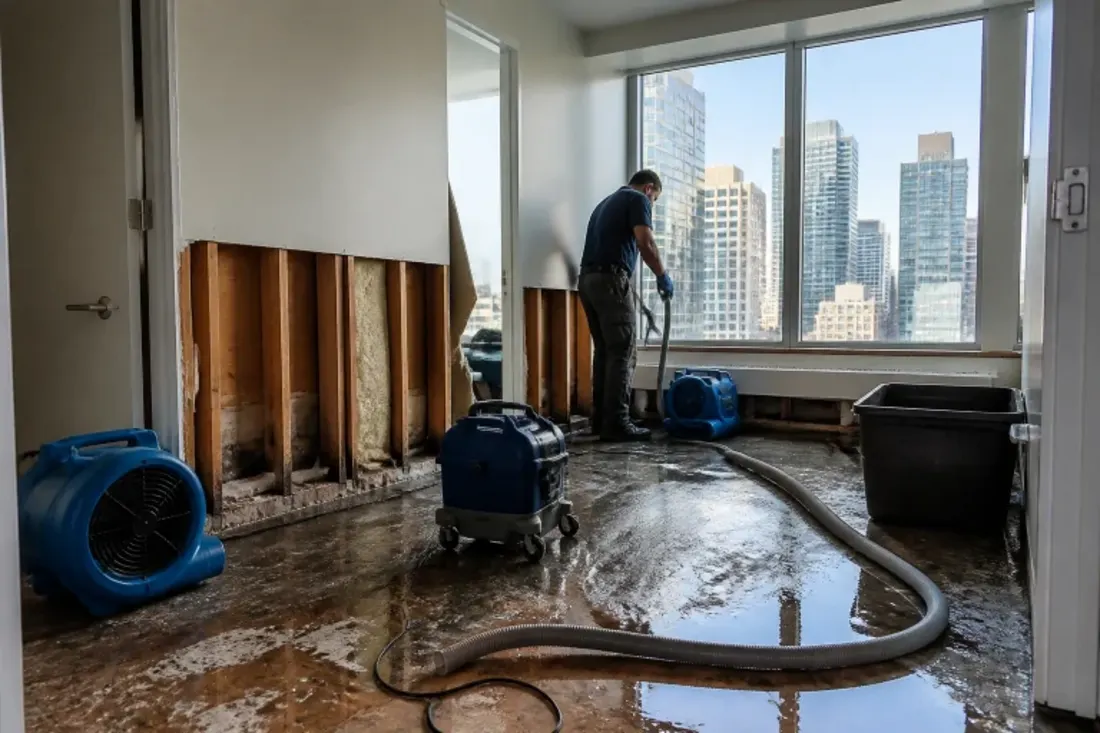
The short answer
Water damage restoration manhattan work starts with three calls in the first ten minutes: the building, so staff can shut the riser and stop the water for the whole line; the crew, so extraction and drying begin the same day; and your insurer, so the claim opens while the evidence is fresh. Most clean water jobs in Manhattan apartments dry in 3 to 5 days. Plaster walls in pre-war buildings take longer. The work that decides whether your floor survives and your claim gets paid happens in the first 24 hours, and most of it is in your hands before any crew arrives.
What is water damage restoration? Water damage restoration is the process of stopping a leak, extracting standing water, drying the structure and contents of a home with measured airflow and dehumidification, cleaning and disinfecting everything the water touched, and repairing what cannot be saved, verified dry by meter readings in Manhattan.
Key Takeaways
Four things decide a water damage restoration manhattan job: how far water travelled down the stack, how fast drying starts, the 24 to 48 hour mold window, and who pays.
- One burst supply line can send water down through five to ten floors of a Manhattan high rise, which is why All Star Restoration says every unit on the riser line needs a moisture check, not just the apartment that called.
- Clean water drying in a Manhattan apartment usually takes 3 to 5 days, the range Crown Mold Specialists states for Manhattan work, and building rules on hours and access can add days before repairs begin.
- Mold can begin growing on wet materials within 24 to 48 hours, and the Environmental Protection Agency (EPA) advises drying water damaged areas and items within 24 to 48 hours to prevent that growth.
- Under New York Insurance Law 2601 and Regulation 64 (11 NYCRR Part 216), an insurer must acknowledge a claim within 15 business days, and the New York State Department of Financial Services (DFS) is where a complaint goes when that clock is ignored.
- Who pays turns on the building form: in a co-op the corporation usually carries the risers and the structure while the shareholder carries the finishes inside the unit, and in a condo the owner carries everything inside the unit while the board of managers carries the common elements, a split Brick Underground attributes to the proprietary lease in a co-op and the Declaration of Condominium in a condo.
- About 75 percent of New York multifamily buildings heat with steam, per a 2019 report cited by Vital City, which is why radiator and riser leaks are the signature slow leak of prewar Manhattan.
- Standard homeowners and renters policies do not cover flood damage, and a policy through the National Flood Insurance Program (NFIP) normally takes 30 days to take effect, a waiting period set by the Federal Emergency Management Agency (FEMA).
On this page
- Key takeaways
- Quick answers
- The first 60 minutes
- The first 48 hours after a storm
- Why Manhattan is different
- Down the stack
- Causes
- Categories and classes
- Services
- The process, step by step
- Drying times and equipment
- Neighbourhoods
- Who pays
- Insurance claims
- Behind walls and mold
- Steam heat and radiators
- Manhattan water systems
- Three job patterns
- Lessons and resident questions
- Working with your building
- The rebuild
- FAQs
Quick Answers to the Questions Manhattan Residents Ask Most
Most clean water jobs in a Manhattan apartment dry in 3 to 5 days, and the work starts with three calls: the building, the crew and your insurer. Each answer below matches the fuller sections and the FAQs further down this page on water damage restoration manhattan work.
How long does water damage restoration take in Manhattan?
Most Manhattan jobs take 3 to 5 days of active drying for clean water in one or two rooms, then 1 to 3 weeks of repairs depending on scope. Pre-war plaster, multi floor stack leaks and contaminated water take longer. Building work hours, elevator bookings and board approvals can add days before repairs start.
How do I file a water damage insurance claim in NYC?
Stop the water and photograph everything before cleanup. Call your insurer the same day and open the claim. Start drying at once so damage does not grow. Keep every receipt, photo, moisture reading and call note in one file. Under Regulation 64 and Insurance Law 2601, your insurer must acknowledge the claim within 15 business days.
Will my insurance cover water damage if my neighbor burst pipe flooded my apartment?
Usually yes for your own belongings and interior damage. Your renters or HO-6 policy responds first, wherever the water came from. If your neighbour was careless, your insurer may recover the money from their liability cover afterwards. Photograph everything, tell your insurer the same day, and start drying without waiting for that argument to finish.
Key facts at a glance
| Fact | Figure |
|---|---|
| Active drying, clean water, one to two rooms | 3 to 5 days |
| Repairs after drying | 1 to 3 weeks, depending on scope |
| Mold can start growing on wet materials | Within 24 to 48 hours, per Environmental Protection Agency (EPA) guidance |
| Pre-war plaster drying | 3 to 6 weeks field range, confirmed by meter readings |
| Insurer must acknowledge a claim | Within 15 business days, under Regulation 64 (11 NYCRR Part 216) and Insurance Law 2601 |
| Flood policy waiting period | 30 days, National Flood Insurance Program (NFIP) |
| Notice of claim against the city | Within 90 days, under General Municipal Law 50-e |
| Wood reads dry at | Below 19 percent moisture, with many crews working to 15 to 16 percent before closing a wall |
Short answers, the way you would ask out loud
- Who do I call first for water damage in Manhattan? Call your super or resident manager first so the riser is shut, then call a restoration crew, then your insurer.
- How fast does mold grow after a leak? Mold can start within 24 to 48 hours on wet plaster, drywall and wood, so drying should start the same day.
- How long does drying take? Most clean water jobs in Manhattan dry in 3 to 5 days, checked daily with moisture meters.
- Does homeowners insurance cover a flood? No. Flood damage needs a separate flood policy, and it usually takes 30 days to take effect.
- Who pays if the apartment above leaks? The unit where the leak started usually pays for damage its pipes or appliances caused, and the building pays for shared risers.
The First 60 Minutes After Water Gets Into Your Apartment
The first hour decides the size of the job. Water moves down through a Manhattan building faster than it moves across a floor, and every hour of delay adds a room, a neighbour or a layer of plaster to the scope. A call that comes in during the first hour of a Manhattan leak is usually a one unit drying job. The same call two days later is often three units, a mold question and a dispute. Work through these steps in order.
Minutes 1 to 10: tell the building and stop the water
Call the doorman desk, the super or the resident manager before you do anything else. In most Manhattan buildings you cannot shut off the water to a whole bathroom line yourself, because the riser valves sit in a locked chase, a basement valve room or a neighbouring unit. Building staff can close the riser, drain the line and confirm whether the source is the shared pipe or a fixture inside someone home. If the leak is inside your own unit, close the small angle stop valves under the sink, behind the toilet or at the washing machine. If water is spraying and you cannot find a valve, staff will close the unit shutoff for you.
Minutes 10 to 20: make it safe
Keep people and pets out of standing water that has reached outlets, power strips or appliances. Never step into water to reach a breaker panel. If a ceiling is bulging, treat it as a bowl of water waiting to drop: move out from under it, and let the crew drain it in a controlled way with a small hole and a bucket rather than letting it tear the plaster down on its own. If you smell gas, or water is running into the electrical panel, leave the apartment and call 911.
Minutes 20 to 35: protect what water ruins fastest
Hardwood, parquet, books, paper, photographs and upholstered furniture suffer first. Lift area rugs off wet floors and drape them where air can reach both sides. Move furniture to a dry room, or raise it on foil covered blocks so the legs stop wicking water. Take drawers out of wet cabinets. Put documents and photographs in the freezer if they are soaked and you cannot deal with them today; freezing pauses the damage and buys you weeks. Mop or towel up what you can, but do not run a household vacuum in standing water.
Minutes 35 to 50: record everything
Walk the whole apartment slowly with your phone camera before anyone moves or pumps anything. Film the source, the path of the water, every stain and every damaged item, and say the date and time out loud as you record. Open the door of the unit above or below and, with permission, record their side too. Photograph the building incident report number if staff open one. This record is what your insurer, the building insurer and, if it reaches that point, the neighbour insurer will argue over. A water damage restoration manhattan crew will take its own readings, but your first hour footage is the only record of the water at its worst.
Minutes 50 to 60: warn the neighbours and make the calls
Knock on the door below you. Water that entered your floor is often already in their ceiling, and a neighbour warned early loses less and blames you less. Then call the restoration crew and your insurance company. Tell the crew four things: what leaked, which rooms are wet, what floor you are on, and what your building needs for access, meaning the service entrance, the freight elevator booking and any certificate of insurance the management company requires. That last detail saves more time in Manhattan than any truck or machine.
Water spreading through your ceiling right now? Call for a free inspection and same day drying.
Call (212) 555-0147 Placeholder number, add yours here. Lines answered 24 hours a day.The First 48 Hours After a Storm Hits Manhattan
After a storm hits Manhattan, the first 48 hours decide whether the loss stays a drying job or turns into a gut renovation. A burst pipe is a building problem, but a storm is a borough problem, and it runs on a different clock. When a nor'easter parks over the city, the water does not arrive through one pipe. It comes up through floor drains, in through ground floor doorways, down through roof drains that cannot keep up, and sideways through facades. The steps below are the order that works in Manhattan buildings.
What the 12 November 2026 nor'easter did here
On 12 November 2026 a nor'easter dropped heavy rain across the city. Kennedy Airport recorded 3.56 inches that day in the final National Weather Service figures, the second wettest November day on record there; Fox Weather reported just over 3.32 inches from the same storm, and both figures describe the same record breaking day. Central Park reported over 1.6 inches. Rain fell at up to two inches an hour at the peak, faster than the sewers under most Manhattan streets were built to carry. Cars pushed through high water on Park Row in Lower Manhattan at the base of the Brooklyn Bridge, Manhattan highways flooded, and the Weather Service issued a rare tornado warning for southern Queens that afternoon. No tornado was confirmed in the city. For a Manhattan resident the lesson is plain: a storm does not need to flood the lobby to flood your apartment. It only needs to overwhelm the drain your building shares with the whole block.
The September storm, and what Albany asked for
Six weeks earlier, the nor'easter of 25 to 28 September 2026 tore up beaches and dunes and flooded coastlines along Long Island and in New York City. On 5 November 2026 Governor Hochul directed the state Department of Environmental Conservation to ask the federal government for help repairing the coastal storm projects that storm damaged. Read that request carefully if you cite it: the four projects it names sit at Rockaway Beach, Long Beach and Fire Island, in Queens and on Long Island. It names New York City, and it shows how hard the September storm hit this coastline, but it does not name a Manhattan project and it does not pay for repairs to a Manhattan building. Your building claim still runs through your own insurer, your building policy, and, where a city sewer or water main caused the damage, the City Comptroller.
Your first 48 hours, in order
- Make it safe. Stay out of standing water that touches outlets, appliances or a breaker panel. If water is coming through a light fitting or the ceiling is bulging, keep everyone out from under it and call 911 if anyone is in danger.
- Tell the building. Call the super, the resident manager or the management company, and follow up in writing. Building staff control the riser shutoffs, the basement pumps and the freight elevator your crew will need.
- Photograph and video everything before you move it. Every room, every wall, the water line on the furniture, the drain it came up through. Storm claims are argued from photographs taken in the first hours.
- Get the water out and the drying started the same day. Mold can begin growing within 24 to 48 hours on wet materials, per Environmental Protection Agency guidance. Every day of delay is a day the scope grows.
- Report the damage to the city. File a report at reportdamage.nyc.gov and keep the confirmation. If the building is not responding to a leak or a habitability problem, call 311 and file a complaint with the Department of Housing Preservation and Development (HPD), and keep the Service Request number.
- Open your insurance claim the same day. Your policy sets the notice deadline. Do not wait for the building to decide who pays before you tell your own insurer.
- Watch the 90 day city clock. If a city sewer backup or a water main break caused your damage, a claim against the city starts with a notice of claim to the City Comptroller, and under General Municipal Law 50-e that notice must be served within 90 days of the incident. The clock starts on the day of the storm, not on the day the argument ends.
Storm water that has come up through a drain or in off the street is treated as contaminated water on a water damage restoration manhattan job, whatever it looks like. Carpets, padding and soft furnishings it touched are removed, not dried in place, and the rooms it entered are cleaned and disinfected before drying is signed off. That is slower and harder than a clean pipe leak, and it is why the first call matters more, not less, after a storm.
Why Water Damage in Manhattan Is a Different Trade
In Manhattan you own, or rent, a box inside a stack of other boxes, served by shared pipes that pass through your walls, heated by a shared steam plant, and governed by a board, a management company and a set of house rules. Most water damage advice is written for houses, where one family owns the roof, the pipes and the problem. Every part of a water damage restoration manhattan job bends around that fact.
The stack effect: your ceiling is someone floor
Apartments in a line share the same wet walls. The bathroom above yours sits on the same risers, and the bathroom below yours catches whatever misses your floor. A leak therefore has an address list, not just an address. Good crews check the units above and below as a matter of routine, take readings in all three, and write the scope so each owner and each insurer sees their own part clearly.
Risers, branches and the line between building and unit
The vertical supply and waste pipes are called risers. They belong to the building. The short branch pipes that run from the riser to your sink, tub and toilet usually belong to you. A burst riser is the building problem and the building claim. A split washing machine hose is yours. Much of the arguing after a Manhattan leak is really an argument about which side of that line the failed part sits on, and a clear set of photographs and a plumber written finding settle it faster than any lawyer letter.
Access is a job in itself
Equipment reaches your home through a service entrance, a freight elevator that must be booked and padded, and hallways the building wants protected. Management companies ask for a certificate of insurance before the first machine comes through the door. Doormen hold packages, not riser keys; supers and resident managers hold those. A crew that knows the borough builds the access plan into the first call, because a crew standing on Fifth Avenue with no elevator booking dries nothing.
Old buildings, old materials
A large share of Manhattan homes were built before the Second World War. Their walls are plaster on metal or wood lath, not drywall. Their floors are oak strip and parquet. Their heating is steam, delivered through pipes and radiators that are now many decades old. Plaster dries slowly and hides water. Parquet swells in patterns that look ruined and then settle. Steam leaks can run inside a wall for a whole heating season before they show. Drying these materials is measured work, not guesswork, and it is where local experience earns its keep.
Down the Stack: How One Leak Becomes Five Apartments
In Manhattan, water damage is a vertical problem: one leak on a riser line becomes the problem of every apartment stacked below it. Ask a Manhattan super what makes this borough different and you will hear one word: the stack. Apartments here are not separate houses sharing a fence. They are boxes stacked on shared plumbing, where one vertical riser carries water up and waste down past every kitchen and bathroom on the line. When a supply line bursts on the ninth floor, gravity takes the water through the eighth, the seventh and the sixth before anyone finds the shutoff. Experienced Manhattan crews describe one burst supply line cascading through five to ten floors, and one failed pre-war riser wetting eight floors on its way down. A leak in Manhattan is rarely a one apartment event, and treating it as one is the most common mistake on these jobs.
The moisture map comes before the machines
Because the water travels, the inspection has to travel too. On a proper water damage restoration manhattan call, the crew does not start in the apartment that phoned. It starts at the source, then works down the line, knocking on every door below with a moisture meter and a thermal camera, reading the ceilings, the wall cavities around the stack and the floors at the riser wall. Every affected unit goes on one moisture map, with readings written down unit by unit. That map does three jobs at once. It sizes the drying plan to where the water actually went, instead of where the first stain appeared. It gives every neighbour on the line a record that starts on the same day, which matters when five insurance files open over one pipe. And it catches the quiet units, the ones where water is sitting inside a closed wall cavity with no stain showing yet, which are the units that grow mold three weeks later.
Why the scope reopens, and why that is normal
On a stacked loss the scope is a living document. A meter finds water in a unit that was not on the first list, and that unit joins the job. A wall cavity reads wet two floors below the lowest stain, and the drying plan grows a floor. This is not a crew upselling. It is what water does inside a shared building, and any honest estimate for a multi floor loss says so up front: the first visit sets the map, and the daily readings revise it. What should never change is the record. Photos of every affected unit before equipment is placed, the water category unit by unit, daily moisture readings with the reading locations written down, and a written scope of what was removed, what was dried in place and what will be rebuilt. When the building, the board and three insurers all ask what happened, that record is the answer.
Clean water does not stay clean inside a wall
Water that starts clean at a burst supply line picks up whatever it passes through on the way down: plaster dust, insulation, old flooring adhesive, decades of grime inside a wall cavity. The longer it sits, the more contaminated it is treated as. That is why a water damage restoration manhattan crew classifies the water again on inspection rather than trusting how the loss started, and why water that has sat for days inside pre-war walls gets handled with the controls and the removals that contaminated water calls for, even when it began as a clean pipe leak on the floor above.
What Causes Water Damage in Manhattan Homes
The same six sources cause nearly every Manhattan water loss: the upstairs bathroom, steam heat, ageing pipes, appliances, the building envelope and the drains. Ask a super where the water comes from and you will hear the same short list, season after season. These are the causes a water damage restoration manhattan crew meets most often, and what each one tends to do inside a building.
The upstairs bathroom
The single most common call. A failed wax ring under a toilet, a cracked tub overflow, a split shower valve or a worn bead of caulk lets water through the floor slab or around the waste line, and it appears as a growing stain on the ceiling below. Because bathrooms stack, the stain lands in the same room downstairs, which is why the first diagnostic question is always what sits directly above the stain.
Steam heating: radiators, valves and risers
Steam buildings heat hard all winter, and the parts give way one at a time. Radiator air vents spit and then stream. Valve packings weep onto hardwood for weeks. A condensate line corrodes inside a wall and soaks plaster from the inside out. Heating season leaks are slow, warm and hidden, which makes them the leading cause of mold findings in pre-war buildings.
Ageing supply pipes and pin hole leaks
Galvanised and old copper lines thin from the inside. The first sign is often a damp patch, a paint blister or a musty smell near a pipe chase rather than a flood. Pin hole leaks can mist into a wall cavity for months. Thermal imaging and moisture meters find them; guessing does not.
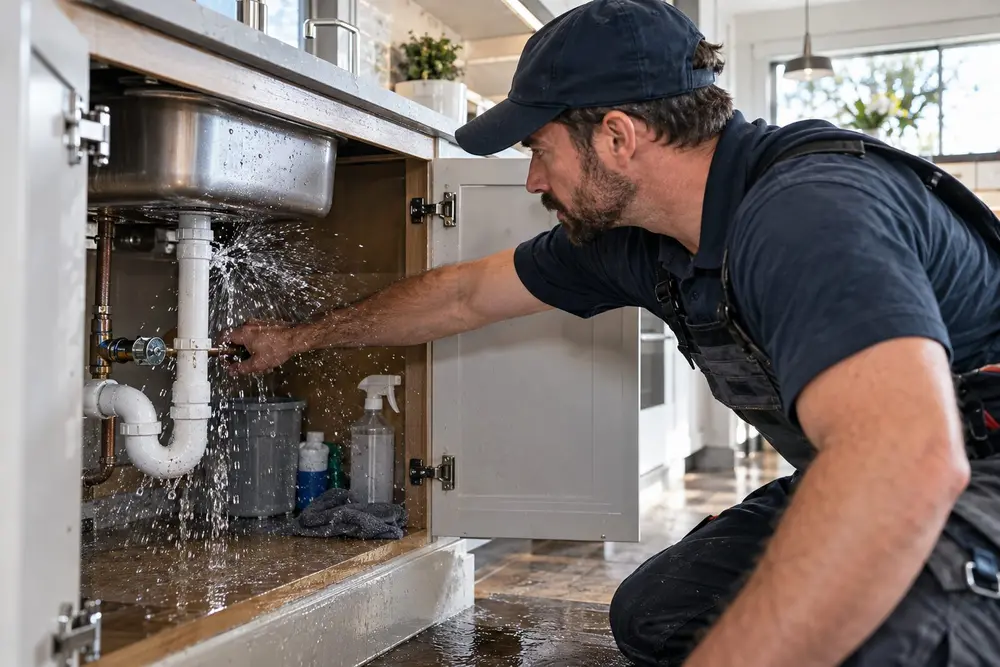
Appliances inside the unit
Washing machines in Manhattan apartments are often stacked in a closet with no floor drain. A burst supply hose or a blocked standpipe sends a full load of water across the floor and through the ceiling below. Dishwashers leak at door seals and inlet valves. Refrigerator ice maker lines, thin plastic or copper tubing, split quietly behind the fridge and ruin floors a room away. Hot water coils in fan coil and PTAC units in newer buildings drip condensate when their drain pans block.
Roofs, terraces and facades
Top floor and penthouse leaks start outside: a blocked roof drain, failed flashing, a terrace door threshold or cracked facade mortar. Heavy rain finds the path and the stain shows up far from the entry point. These are building envelope problems, and while the drying inside your home is yours to arrange, the repair of the entry point usually belongs to the building.
Drain and sewer backups
Ground floor, garden level and cellar spaces take the dirtiest water. A blocked building drain or a surcharged city line pushes waste water back through the lowest fixtures. This water is treated as contaminated from the first minute, and the cleanup rules change completely: porous materials it touches come out rather than being dried.
Frozen and burst pipes in cold snaps
Manhattan cold snaps burst pipes in the places you would expect once you think about them: lines on outside walls, unheated pipe chases, vacant apartments with the heat turned down, and townhouse cellars. The burst often shows itself at thaw, when the ice plug melts and the split line starts to flow.
Categories and Classes: How Crews Grade a Water Job
Two short scales decide how a job is cleaned and dried. The category says how dirty the water is. The class says how much of the room got wet and how hard it will be to dry. Every water damage restoration manhattan scope uses both, and your insurance file will too, so it is worth knowing the words.
| Category | What it means | Typical Manhattan source | What changes on the job |
|---|---|---|---|
| Category 1: clean water | Water from a clean supply source that has not sat or mixed with contaminants. | Split supply line, radiator leak, roof rain entry caught early. | Materials are dried in place where possible. Fastest and least destructive route. |
| Category 2: grey water | Water with enough contamination to cause discomfort or illness if swallowed. | Washing machine discharge, dishwasher leak, toilet tank overflow with cleaning chemicals. | Carpet padding usually removed, antimicrobial treatment applied, closer cleaning of everything touched. |
| Category 3: black water | Grossly contaminated water that can carry bacteria, viruses and chemicals. | Sewer or drain backup, toilet bowl backflow, water that has sat for days. | Porous materials removed, full disinfection, protective equipment, strict disposal. |
| Class | What it means | What drying looks like |
|---|---|---|
| Class 1 | Only part of a room wet, mostly non porous materials. | Extraction plus a small number of air movers for a short run. |
| Class 2 | A whole room wet, water wicked up the walls a short way. | Floor and wall drying together, daily readings, several days of equipment. |
| Class 3 | Water came from overhead, so ceilings, walls and floors are all wet. | The classic upstairs leak pattern in Manhattan. Ceiling drying and wall cavity drying added. |
| Class 4 | Water trapped in hard to dry materials like plaster, hardwood and masonry. | Specialist drying: floor mats, wall cavity systems, longer runs, patience. |
Most Manhattan apartment jobs land at Category 1 or 2 and Class 2 or 3. Pre-war plaster and hardwood push many of them into Class 4 drying behaviour even when the wet area looks small, which is why a moisture meter, not the size of the stain, sets the plan.
Services a Manhattan Crew Brings to Your Door
A full service water damage restoration manhattan company handles the job from the first bucket to the last coat of paint. These are the services that make up the work, and when each one is used.
Emergency water extraction
Standing water is pumped and vacuumed out with weighted extractors that pull water from deep in carpet and padding, not just off the surface. On hardwood, extraction is paired with squeegees and floor mats so the boards start drying within the hour. Extraction is the highest value hour of the whole job: water removed by machine is water that never soaks in.
Leak source coordination
The crew works with your super and a licensed plumber to confirm the source is truly stopped and documented. A written finding on which pipe or appliance failed, and on which side of the building line it sits, is the paper your claim turns on.
Structural drying and dehumidification
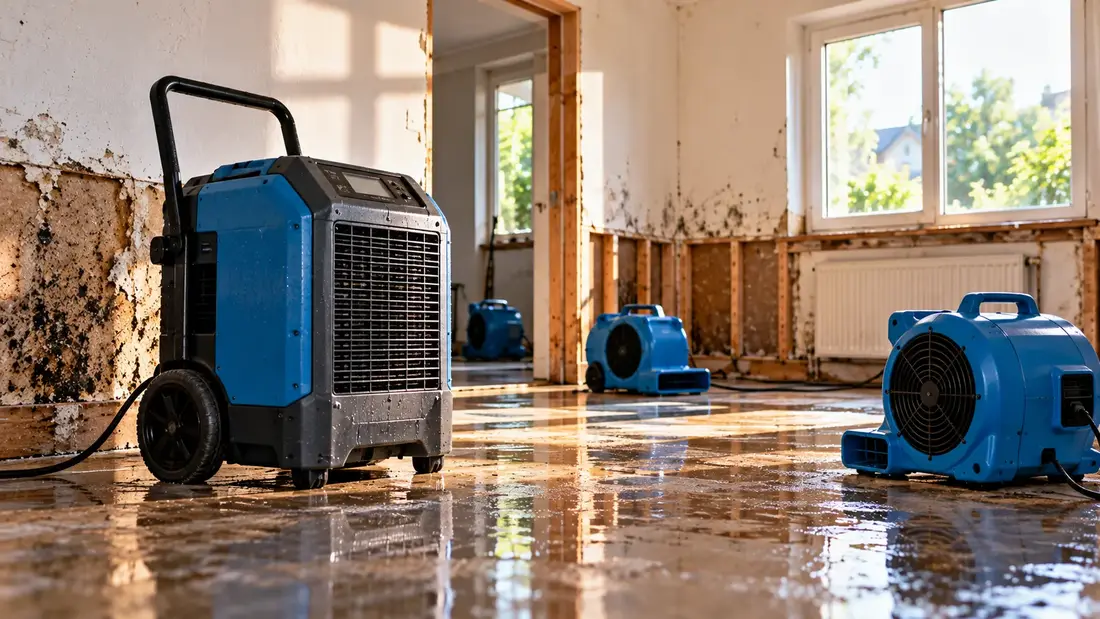
Air movers drive evaporation from wet materials while commercial dehumidifiers pull that moisture out of the air. The balance between the two is set by the room, the materials and the daily readings, and it is adjusted at every visit rather than left to run on hope.
Hardwood and parquet floor drying
Floor drying mats seal onto the boards and draw moisture down and out through the flutes of the flooring. Cupped boards are monitored as they dry and often flatten back. Floors are only lifted when readings show the wood or the subfloor cannot be saved.
Plaster and wall cavity drying
Pre-war plaster holds water like a sponge and releases it slowly. Crews dry cavities through small holes hidden behind baseboards, feeding warm dry air in and drawing moist air out, so walls can often be saved without opening them up. Where plaster has lost its key and bulges, that section comes out and is rebuilt.
Sewage and drain backup cleanup
Contaminated water work runs under different rules: protective equipment, removal of touched porous materials, hospital grade disinfection and careful disposal. In ground floor and garden units this is the service that makes the home safe to live in again.
Mold prevention and remediation
Fast drying is the main mold prevention. Where growth has already started, licensed New York State mold workers set containment, run negative air, remove affected material and clean under the rules that apply to mold projects in this state, with a licensed assessor writing the plan on larger jobs.
Contents care and pack out
Rugs, furniture, books and electronics are dried, cleaned or moved out to storage when a small apartment leaves no dry corner to work around. Every item is listed and photographed, which doubles as your contents claim record.
How a Proper Job Runs, Step by Step
However the water arrived, a water damage restoration manhattan job follows the same eight steps. Knowing them lets you judge any crew in the first visit, and it tells you what paperwork to expect for the building and the insurer.
Step 1: the call and the access plan
You describe the source, the rooms and your floor. The crew confirms what your building needs: certificate of insurance, elevator booking, service entrance hours. In Manhattan this step is not admin, it is the difference between a crew that starts today and one that starts tomorrow.
Step 2: inspection and moisture mapping
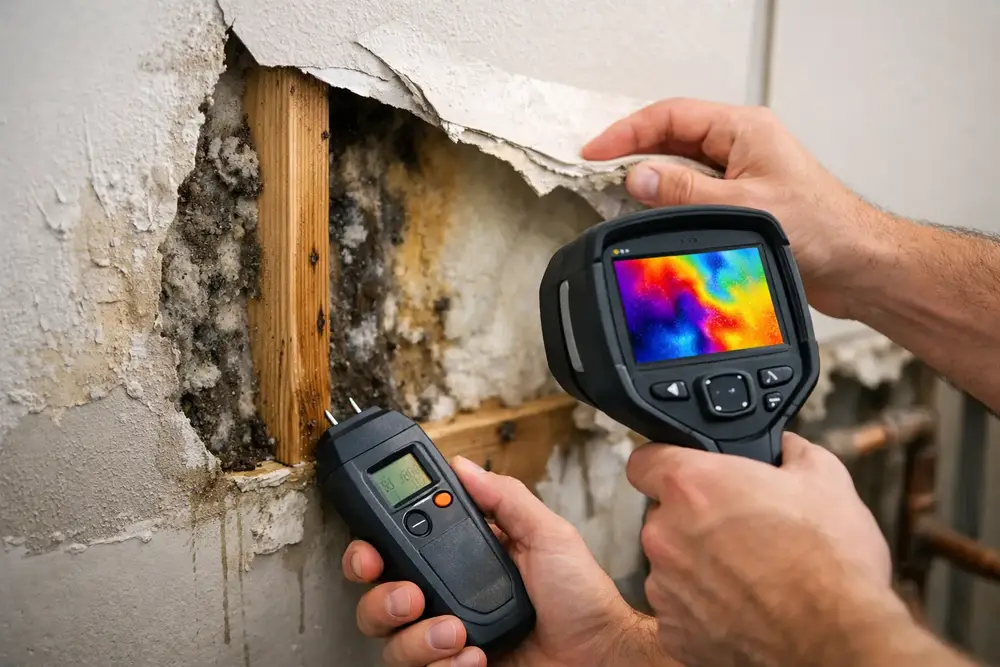
A technician walks every affected room with a moisture meter and, where needed, a thermal camera. Readings are taken in your unit and, with the building help, in the units above and below. The map of wet materials becomes the scope of work, and it is photographed and written down before machines start.
Step 3: source confirmed stopped
No drying plan survives a leak that is still running. The plumber or building staff repair or isolate the failed part, and the finding is written up: what failed, where, and whose side of the line it sits on.
Step 4: extraction
Standing water comes out, furniture is blocked up or moved, rugs are lifted, and wet padding that cannot be saved is removed and bagged. In a high rise this is also where hallway and elevator protection goes down, so the building stays clean and the management company stays calm.
Step 5: controlled demolition, only where needed
Baseboards come off to let walls dry. A flood cut is made where the cavity is wet or the water was dirty. Ceiling plaster that has lost its hold is taken down before it falls. Every cut is tied to a reading, and the crew should be able to show you the number behind each one.
Step 6: cleaning and antimicrobial treatment
Surfaces the water touched are cleaned, and an antimicrobial is applied where the category of water calls for it. On contaminated jobs this step includes full disinfection and safe disposal of removed material.
Step 7: drying, checked daily
Air movers, dehumidifiers, floor mats and wall cavity systems run together. A technician returns each day, takes readings at the same marked points, and adjusts or removes equipment as areas reach the dry standard. You get the readings in writing. In a typical clean water apartment job this takes 3 to 5 days; plaster and hardwood can run longer.
Step 8: rebuild and final walkthrough
Once readings confirm dry, the rebuild puts back what was removed: plaster or drywall, baseboards, paint, floor sections and cabinets. The job closes with a walkthrough, a final moisture check and a complete file of photos, readings and invoices for your insurer and your building.
Need the drying started today? A local crew can inspect, map the moisture and set equipment on the first visit.
Call (212) 555-0147 Placeholder number, add yours here. Free inspection, no obligation.How Long Drying Takes in Manhattan, by Situation
Drying a standard Manhattan apartment after clean water damage takes 3 to 5 days, per the ANSI/IICRC S500 standard of the Institute of Inspection, Cleaning and Restoration Certification (IICRC). Every competitor page in this borough will tell you the same 3 to 5 days. That line is true for one kind of job and wrong for most of the others, and no Manhattan page we can find prints the full table. Here it is. These are field ranges built on that S500 standard, the reference guide professional water damage restoration work follows. They are ranges, not promises, because drying ends when the meter readings say so, not when the calendar says so.
| Situation | Typical drying time | What drives it |
|---|---|---|
| Contained clean water leak, one room, caught the same day | 2 to 3 days | Drywall and carpet dry fast when the source stops early and the cavity stayed clean. |
| Standard apartment loss, one to two rooms | 3 to 5 days | The range behind the line every company quotes. Assumes prompt extraction and daily readings. |
| Multi room loss, or an appliance leak that ran through the subfloor | 5 to 7 days | Water under flooring and inside partitions takes longer to reach than water on a surface. |
| Sewage or flood water, Category 3 | 5 to 10 days | Contaminated materials come out first, cleaning and disinfection run before drying is signed off. |
| Pre-war plaster, hardwood, brick or concrete | 7 to 14 days | Dense, low permeance materials drink water deep and give it back slowly. They need patience and sometimes specialty drying. |
| Saturated pre-war plaster on lath | 3 to 6 weeks | A field range crews work to on Manhattan pre-war walls, not a measured standard. The lath and the masonry behind the plaster hold water long after the face feels dry. |
On a water damage restoration manhattan job, building rules sit on top of every range in that table. Many co-ops limit work hours, require approval before repairs, and shut work down on weekends, and a permit from the Department of Buildings (DOB) for plumbing, electrical or structural repair can add 2 to 6 weeks under formal review before the rebuild even starts. Drying itself rarely waits for paperwork. Rebuilding often does.
Dry is a number, not a feeling
A wall is not dry because it feels dry, and a floor is not dry because it looks dry. Crews sign a job off against meter readings compared with a dry reference reading taken in an unaffected part of the same apartment. For wood, the IICRC S500 ceiling is below 19 percent moisture content, and many restorers work to a stricter field target of 15 to 16 percent before they will close a wall, with 13 percent as the strictest target some extension guidance uses. If a crew cannot tell you the reading, the target and the dry reference they compared it with, the job is being signed off on a guess.
The equipment, by name and by job
Most Manhattan pages hide behind the words advanced equipment. The kit on a serious job has names, and each piece is there for a reason. Dri-Eaz LGR dehumidifiers, including the LGR 2800i, pull moisture out of the air down to grain levels where ordinary dehumidifiers stall. Phoenix LGR units, such as the 200 Max and the 270, do the same work in larger or hotter spaces. Injectidry wall cavity systems push dry air through small holes at the base of a wall, or behind a removed baseboard, to dry the cavity without opening the whole wall, which is how original pre-war plaster gets saved. B-Air air scrubbers with HEPA filtration clean the air while contaminated materials come out. Tramex moisture meters, including the Moisture Encounter line, and FLIR thermal cameras find the water and prove the drying, and adjusters recognise both names in a claim file. When a company will not name its equipment, ask why.
Neighbourhoods We Cover Across Manhattan
Water damage restoration manhattan work changes character every twenty blocks, because the buildings do. These are the areas served and the pattern a crew expects in each.
Upper West Side
Classic pre-war co-ops and condos along West End Avenue and Riverside Drive, plus brownstones on the side streets. Steam heat, plaster walls, parquet floors and long term residents who know their supers well. Radiator and riser leaks lead the call list, and buildings run strict alteration and insurance paperwork.
Upper East Side and Yorkville
Full service doorman buildings east of Lexington, older walk-ups and tenements in Yorkville. The doorman buildings move fast once the certificate of insurance lands; the walk-ups need equipment carried up stairs and neighbours coordinated floor by floor.
Harlem, Morningside Heights and Hamilton Heights
Brownstones, townhouses and pre-war elevator buildings, with a growing number of newer condos. Townhouse jobs centre on roofs, party walls and garden level units. Near the universities, the start of term and student turnover shape the rental leak pattern.
Washington Heights and Inwood
Pre-war elevator buildings on steep streets at the top of the island. Ageing risers, steam systems and hillside drainage all play a part. Ground floor units near the slope take storm water that crews further downtown rarely see.
Midtown and Hell's Kitchen
Large rental towers, converted commercial buildings and newer condos. Fan coil units, PTAC condensate and in unit laundry are the usual sources, and big management companies run formal work order and insurance systems that a crew has to work inside.
Chelsea and the Flatiron District
Loft conversions in old commercial buildings sit beside modern towers. Lofts bring high ceilings, big open rooms and long pipe runs; a leak can travel a surprising distance before it shows.
Greenwich Village and the West Village
Low rise, older housing stock, townhouses and small co-ops, many in landmarked blocks. Plaster, old waste lines and shared courtyards with old drains. Rebuild work here can meet Landmarks Preservation Commission rules on facades and, in some interiors, extra review.
SoHo, Tribeca and the Financial District
Cast iron lofts, converted office towers and luxury condos with full amenity floors. Big open floor plans mean one leak can wet a very large room. Buildings here run the most formal access systems in the borough: loading docks, booked freight elevators and security desks.
East Village and the Lower East Side
Tenement walk-ups, newer rentals and a dense bar and restaurant scene at street level. Commercial water from a ground floor business reaching the homes above is a pattern of its own, and fifth floor walk-up extraction is a workout no crew forgets.
Murray Hill, Gramercy and Kips Bay
Post-war towers, medical district rentals and townhouse blocks around Gramercy Park. Large buildings with professional management, clear rules and fast paperwork when the crew knows the system.
Battery Park City and Roosevelt Island
Planned communities with strong building management and, in Battery Park City, a direct memory of storm surge from Sandy. Roosevelt Island adds its own access rhythm, with the bridge and tram shaping how crews and equipment arrive.
Neighbourhoods and ZIP codes
No Manhattan restoration page we can find prints its coverage by ZIP code. Here is ours. ZIP boundaries do not follow neighbourhood names exactly, and some ZIPs are shared between neighbourhoods, which is noted where it happens.
| Neighbourhood | ZIP codes | What a crew expects there |
|---|---|---|
| Upper West Side | 10023, 10024, 10025, 10069 | Pre-war co-ops on the avenues, brownstones on the side streets, steam heat and plaster. |
| Upper East Side | 10021, 10028, 10044, 10065, 10075, 10128 | Doorman buildings east of Lexington, Yorkville walk-ups, strict building paperwork. |
| Morningside Heights | 10027 | Pre-war apartment houses around the Columbia campus. |
| Harlem, Central Harlem | 10026, 10027, 10030, 10037, 10039 | Brownstones, pre-war rentals and newer towers sharing old risers. |
| East Harlem | 10029, 10035 | Walk-ups and large housing complexes, kept separate from Central Harlem on this page. |
| Washington Heights | 10032, 10033, 10040 | Pre-war elevator buildings and co-ops on high ground above the Hudson. |
| Inwood | 10034 | The top of the island: pre-war buildings and co-ops near the parks. |
| Midtown | 10001, 10016, 10017, 10018, 10019, 10022, 10036 | Mixed use towers, hotels, offices and apartments sharing mechanical systems. |
| Hell's Kitchen, Clinton | 10018, 10019, 10036 | Tenement walk-ups beside new towers. 10019 is the core ZIP. |
| Chelsea | 10001, 10011 | Loft buildings, townhouses and post-war rentals. 10001 is shared with Midtown West. |
| Murray Hill | 10016 | Post-war towers and medical district rentals. |
| Gramercy | 10010, 10016 | Townhouse blocks and co-ops around Gramercy Park. |
| Greenwich Village and the West Village | 10003, 10011, 10012, 10014 | Low rise pre-war buildings and townhouses. 10014 is the West Village. |
| SoHo | 10012, 10013 | Cast iron loft buildings, big open floors, shared with the Village and Tribeca at the edges. |
| East Village | 10003, 10009 | Tenement walk-ups. 10003 is shared with Greenwich Village, 10009 with the Lower East Side. |
| Lower East Side | 10002, 10009 | Tenements and large co-op complexes along the East River. |
| Tribeca | 10007, 10013, 10278 | Warehouse lofts and newer towers. 10278 is a business ZIP. |
| Financial District | 10004, 10005, 10006, 10007, 10038 | Office conversions and towers, the blocks Sandy flooded first. |
| Battery Park City | 10280, 10282 | Planned residential towers with strong building management and a direct memory of Sandy. |
One landmark note for the Upper West Side: parts of the neighbourhood sit inside historic districts, including the Upper West Side and Central Park West Historic District, designated 24 April 1990, and the Riverside West End Historic District Extension II, covering West 89th to West 108th Streets west of Broadway. Landmark status does not hold up drying. Emergency repairs, tarps, temporary boards and broken glass replaced in kind, need no Landmarks permit. Permanent repairs do.
Who Pays: Shareholders, Owners, Renters, Landlords and the Building
Who pays for water damage in Manhattan depends on where the leak started: the building pays for risers and common elements, the unit owner for the pipes, appliances and finishes inside their own home. The rules differ by housing type, and a water damage restoration manhattan file that separates the parts cleanly from day one settles most arguments before they start.
Co-ops
In a co-op you own shares and hold a proprietary lease. That lease, plus the house rules, draws the line: the corporation owns the structure, the risers and the building systems, while you own the finishes inside your unit and the fixtures and branch pipes that serve only you. A failed riser is the corporation claim. Your split appliance hose is yours. Your co-op policy covers your interior and your belongings, and the corporation policy covers the building. Alteration agreements govern the rebuild if work goes beyond like for like repair.
Condos
Condo bylaws draw a similar line with different words. The association covers common elements; the unit owner covers the unit as the bylaws define it, which can include or exclude things like interior walls and fixtures, so the bylaws are worth reading before you need them. The unit below you will usually claim against the owner whose unit the water came from, and insurers handle it between themselves when the documentation is clear.
Rentals
In a rental, the landlord must keep the building systems, plumbing and structure in repair under the warranty of habitability, and tenants report leaks in writing and keep copies. Your renters insurance covers your belongings and a hotel if the home cannot be lived in. Damage caused by your own overflowing tub or your own appliance can be charged back to you, which is one more reason to document the true source carefully.
The upstairs neighbour question
When water comes from the unit above, the working rule is simple: the owner of the unit where the failure happened pays for the damage it caused, and the building pays where a common element failed. In practice, both insurers and the building insurer get notified, the plumber finding names the failed part, and the money follows that finding. Neighbours who share information early, photographs, readings and the incident report, reach the end of this process weeks sooner than neighbours who lawyer up on day one.
Local Law 55 and mold duties
Local Law 55 of 2018 made indoor allergen hazards, including mold and the leaks that feed it, a legal duty in New York City housing. Owners of buildings with three or more units, and owners of smaller buildings where a tenant has asthma, must inspect for and fix mold and its moisture source, using safe work practices. In rentals that duty sits with the landlord. In co-ops and condos it splits along the same lines as the rest of this page. A tenant whose landlord will not act can call 311 and ask for an HPD inspection.
The who pays table, by leak source
Advice sites argue this question in paragraphs. A water damage restoration manhattan file needs it in a table, because the answer changes with the pipe, not with the argument. This is the usual split. Your proprietary lease, your condo declaration and your policies have the final word, so treat this as the starting map, not legal advice.
| Leak source | Co-op | Condo | Rental |
|---|---|---|---|
| Riser or stack inside the wall | The corporation. The riser is a building system. | The association. The stack is a common element. | The landlord. |
| Branch pipe serving only your unit | Usually you, even where the pipe sits inside a wall. | Usually you, per the declaration. | The landlord for the pipe. You for your belongings. |
| Radiator or radiator valve | The steam riser is the building. The radiator and its valve are usually yours. | Same split: riser to the building, radiator to the unit. | The landlord. |
| Your appliance hose or fixture fails | You, and your insurer, including the damage downstairs. | You, and your insurer, including the damage downstairs. | You if the appliance is yours, the landlord if it is theirs. |
| Roof, parapet or facade leak | The corporation. The envelope is a building system. | The association. The envelope is a common element. | The landlord. |
| City sewer backup or water main break | A claim against the city may apply whoever you are. It starts with a notice of claim to the City Comptroller within 90 days, and your own insurer should still be told at once. | ||
One trap hides in that table. If your contractor opens a wall to reach a pipe and the pipe turns out to be a riser, you may have paid to open, repair and close the building pipe. If the building plumber opens it and it is a riser, the building opened its own wall. Get the building plumber to the wall first whenever the source could be a riser, and get their report in writing. That report, riser or branch, is the document every later argument turns on.
When the board will not fix it: the steps in order
- Write to the managing agent and the board. Date it, describe the leak and the damage, and keep a copy. A phone call starts nothing that a letter cannot prove.
- Get the incident report and the plumber report. Ask building staff for the incident report number, and get a plumber note that names the source pipe. Riser or branch decides who pays, so get it from the person who saw the pipe.
- Call 311 and file an HPD complaint. HPD contacts the managing agent and can send an inspector. Keep the Service Request number with your claim file.
- Know your habitability rights. Shareholders and tenants can raise the warranty of habitability under Real Property Law 235-b, which a lease cannot sign away. Where an apartment becomes unlivable through no fault of the tenant, Real Property Law 227 may also apply. Condo owners cannot raise the warranty against their association, because there is no lease. That difference is real, and it changes the route.
- Consider an HP Action. Housing Court can order repairs. Many residents take a lawyer at this point, and the paper trail from steps one to three is what the lawyer works from.
- Keep drying anyway. None of these steps stops water or mold. Dry first, argue second, and keep every receipt for the argument.
Two Manhattan cases that show how these fights run
Castle Village, Washington Heights. In 2023 a resident of the Castle Village co-op was told by her downstairs neighbour that a leak was coming from her unit, weeks after she moved in. Management says the leak comes from her shower pan and wants her to repair the shower. She says there is no leak to repair, and says a master plumber and repeated city inspections never found one. The building lawyer says the evidence shows a leak. The fight was still running three years later when it was reported in November 2026. Neither side account is proven, and this page takes neither side. The lesson for any shareholder is the gap between the two stories: a leak that nobody has proven by testing can cost more in argument than any repair on this page. Pin the source down with moisture readings and a plumber report before positions harden.
Siegal v 77 Bleecker Street Corp. A Bleecker Street co-op shareholder was hit by two leaks within seven months in 2014, a frozen sprinkler head and then a bathroom leak from the unit above that ran for months. The shareholder could not use the apartment for 16 months. The court ruled for the shareholder estate under the warranty of habitability and the lease, and the co-op was penalised for losing the failed valve and pipe parts that were the evidence. Two lessons travel with that case. A building that lets a known leak run owns the consequences, and the physical parts that failed are evidence. Photograph them, keep them, and never let a failed valve or a split pipe go out with the demolition bags.
Filing a Water Damage Insurance Claim, Step by Step
A water damage restoration manhattan claim is a paperwork job running beside a drying job. Policies for co-op and condo owners, often called HO-6 policies, and renters policies all expect the same thing: fast notice, proof of the source, and proof that you limited the damage. Here is the order that works.
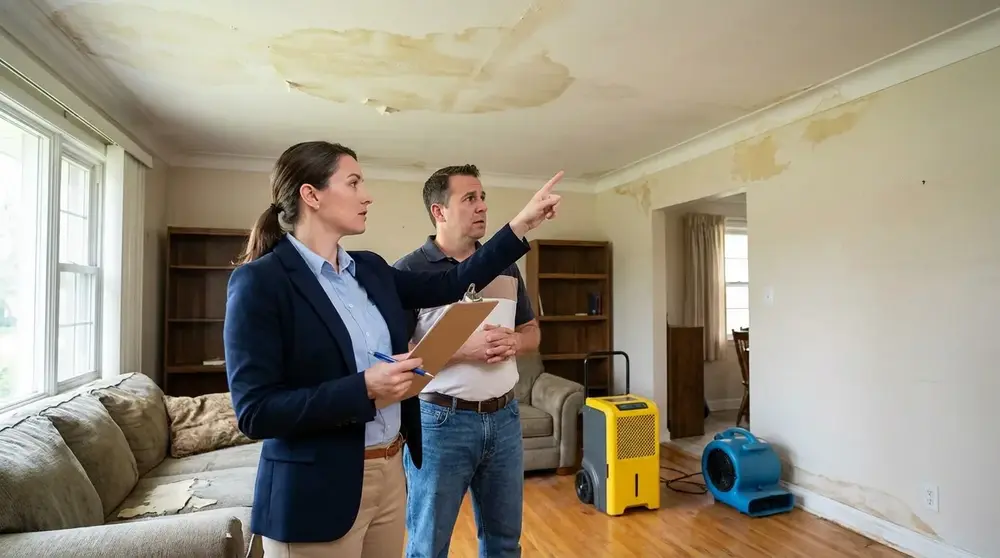
Step 1: stop the water and limit the damage
Your policy requires it. Shutoffs, towels, buckets and a same day call to a restoration crew are exactly the steps an insurer wants to see, and the invoices for emergency mitigation are normally part of the claim.
Step 2: notify everyone the same day
Open your own claim. Tell the building management in writing, and ask for the incident report number. If the water came from another unit, that owner notifies their insurer too. Late notice is one of the most common and most avoidable claim problems.
Step 3: build the file
One folder, physical or digital, holding: your first hour photos and video; the plumber written finding naming the failed part; the building incident report; the restoration scope with daily moisture readings; invoices; and a list of damaged belongings with photographs. Date everything. This file is the claim.
Step 4: meet the adjuster with the crew scope in hand
Adjusters price what they can see and measure. Walk the adjuster through the moisture map and the readings, including rooms that look dry but tested wet. If the unit below or above is part of the same event, say so, so the claims are linked rather than fought over.
Step 5: know what policies usually cover, and what they refuse
Sudden and accidental events are the core of cover: burst pipes, failed hoses, an overflowing appliance. Gradual damage is the common refusal: a leak that ran for weeks or months behind a wall, wear and tear, and maintenance failures. Flood water that rises from outside needs its own flood policy. None of this is a reason to delay drying; it is a reason to document the source and the timeline honestly, because the timeline is what the coverage decision turns on.
Step 6: keep every receipt until the claim closes
Hotel nights, laundry, rug cleaning, storage, replacement essentials: keep the receipts in the same file. Additional living expense cover, where your policy has it, is paid against receipts, not memories.
The claim clock: what New York law requires of your insurer
Residents are often told to be patient with an insurer. New York law is less patient than that. Insurance Law 2601 bans unfair claim settlement practices in this state, and Regulation 64, formally 11 NYCRR Part 216, sets the deadlines that put it into practice. Per the Department of Financial Services (DFS) Circular Letter No. 13 of 2011, your insurer must acknowledge your claim within 15 business days, start its investigation within 15 business days of your notice, answer your letters and calls within 15 business days, and tell you in writing within 15 business days whether your claim is accepted or rejected, or explain why it needs more time and keep updating you. It must also answer the Department of Financial Services within 10 business days when the department asks. If the loss follows a declared disaster, Insurance Law 2618 adds its own 15 business day accept or reject clock once a properly executed proof of loss and the requested documents are in, with a one time extension of 15 business days for a household claim and 30 business days for a commercial one. If your insurer goes quiet past these clocks, complain to the Department of Financial Services. The general hotline is (800) 342-3736, open Monday to Friday, and the separate disaster hotline is (800) 339-1759. One warning, because other guides repeat the error: New York Insurance Law 3420(d) is the timely disclaimer rule, not the source of the 15 business day clock, and a page that cites section 3420(d) for that clock has the wrong section of the law.
Flood cover runs on its own rules
A Manhattan basement, cellar or ground floor home that floods from storm surge, rising street water or a surcharged drain is a flood loss, not a burst pipe loss, whatever the water did to the rooms. Standard homeowners and renters policies exclude it. Flood cover comes from a separate policy, usually through the National Flood Insurance Program, and it normally takes 30 days from application to take effect, so it cannot be bought as the storm approaches. When a flood claim does run, a sworn Proof of Loss is due within 60 days. NFIP basement cover is narrow: it generally reaches installed building systems such as the furnace, the water heater, the sump pump and the electrical panel, plus cleanup for covered items, and it generally does not reach finished basement walls, floors and ceilings, carpet, furniture, electronics or most contents stored below grade. Sewer backup sits between the two worlds: it is usually excluded unless you bought a sewer backup endorsement, so check your policy for that rider before the next storm, not after it.
Water Behind Walls, and the Mold That Follows
The damage you can see in a Manhattan apartment is often the smaller half. Plaster and lath, tiled wet walls and pipe chases hide water well, and a water damage restoration manhattan crew earns its fee on the hidden half.
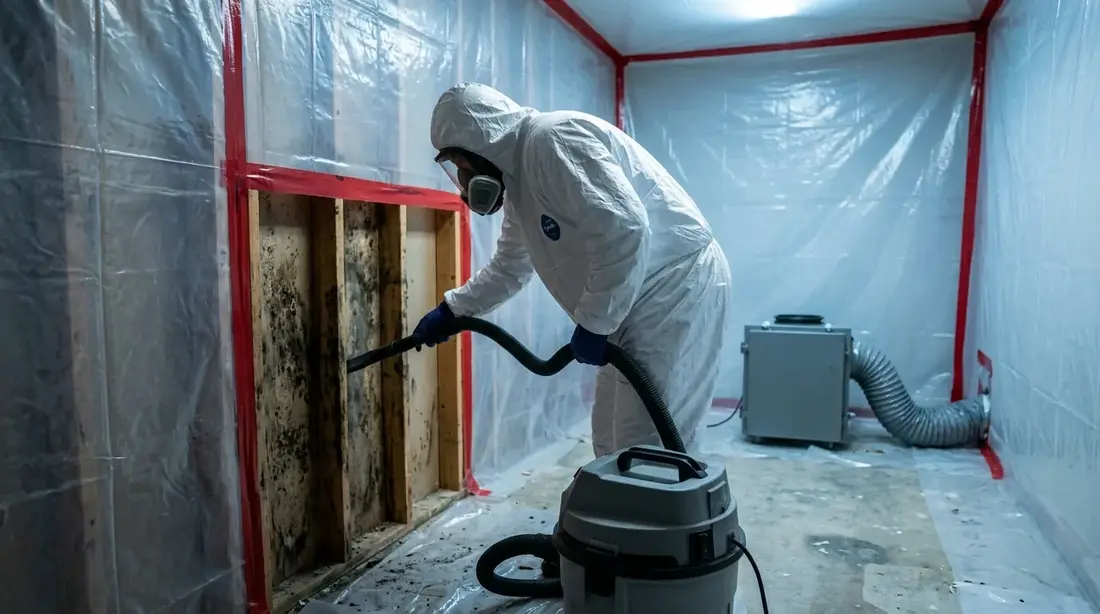
How water hides in a pre-war wall
A slow leak inside a wall wets the lath and the plaster from behind. The face of the wall can feel dry while the cavity is soaked. Signs on the surface arrive late: paint that bubbles or peels in one patch, a stain that grows at the edges, baseboards that swell or separate, a musty smell that is strongest near one wall or inside a closet on the other side of a bathroom.
How the hidden half is found
Pin and pinless moisture meters read the wall itself. A thermal camera shows the cold pattern of evaporation and points the meter at the right spots. A small inspection hole behind a baseboard, checked with a borescope camera, confirms the cavity without opening the whole wall. Readings are compared against a known dry wall in the same home, which sets the dry standard for the job.
When mold enters the picture
Mold needs moisture and time, and inside a warm wall it can get both within days. New York State requires mold remediation projects above a small size to follow Article 32 of the Labor Law: a licensed assessor writes the remediation plan, licensed remediators do the work, and the two roles stay separate. In New York City, Local Law 55 adds the owner duty to find and fix the source. Bleach and paint are not a plan; they leave the moisture and the growth behind them untouched.
Drying a cavity without gutting the room
Wall cavity drying systems push warm, dry air through small holes drilled behind the baseboard line and pull moist air out, drying lath and plaster in place. It is slower than open wall drying, and on many pre-war walls it saves original plaster that cannot be matched once it is gone. Where plaster has delaminated or growth is established inside the cavity, the affected section is opened, cleaned and rebuilt instead. The readings decide, and a good crew shows you the readings.
Pre-war plaster: why it dries on its own clock
A pre-war Manhattan wall is not a drywall wall. Until the 1930s and 1940s plaster was the standard finish: three coats, scratch, brown and finish, roughly 3/4 to 7/8 of an inch thick. In brownstones and rowhouses it went over wood lath, thin strips nailed across the studs, and the wet plaster squeezed through the gaps and hardened into keys that hold the wall on. In pre-war apartment buildings it was often troweled straight onto brick outer walls and onto partitions of hollow terra cotta tile or gypsum block. Water moves through that assembly slowly and hides inside it. A brown ring under a window, a closet that smells like a basement when the heat comes on, paint bubbling near a radiator: these are plaster telling you the cavity behind it is wet, sometimes a full floor below where the water entered. Wet gypsum plaster stains, crumbles and lets go of its lath, and repairs laid over a wet base fail again, which is why the field range for saturated pre-war plaster runs to 3 to 6 weeks of checked drying while a drywall room on the same job is done in days.
Test before you tear
The most useful habit in this trade fits in four words: test before you tear. On drywall, the wet test is simple. A screwdriver pushed into wet drywall pops through easily; pushed upward, hole by hole, it finds the line where the board resists again, and that line, not the visible stain, is where dry material starts. Water wicks above the stain, so cutting only to the stain leaves wet board in the wall. Where contaminated water has soaked drywall, the flood cut follows: a clean cut at about doorknob height, the wet board, baseboards, casings and any door the water touched come out, and the open cavity is treated and dried before anything is rebuilt. Two Manhattan warnings belong with that lesson. First, plaster on lath does not behave like drywall. It does not pop through under a screwdriver the same way, and it holds water in the lath and the masonry behind it, so a pre-war wall is judged by meter readings, not by the screwdriver test. Second, nobody cuts a co-op or condo wall on a hunch. Board and managing agent approval, and the building rules on work hours and the freight elevator, come before the first cut, not after it.
Testing also means testing the materials themselves before they are disturbed. The suspect list in a pre-war Manhattan apartment is short and specific: the plaster, the pipe insulation, the old floor tiles, and the many layers of old paint. Homes built before 1978 may carry lead based paint, and federal rules require lead safe work practices when painted surfaces in those homes are disturbed. Asbestos was used in homes from the 1940s through 1980, it cannot be identified by looking at it, and only laboratory testing settles the question. Federal rules require a certified asbestos inspection before demolition or renovation in commercial buildings, and testing is strongly recommended in any home built before 1980. The safe order never changes: extract and dry, test, mitigate safely, get clearance, then rebuild. Looks dry is not a test result, and a room is not finished because it looks finished. It is finished when the readings and, where the law calls for it, the clearance test say so.
Mold law in buildings like yours
Local Law 55 of 2018 requires owners of buildings with three or more apartments to inspect for mold and the moisture behind it and to fix both. HPD grades a mold violation by the size of the patch in a room: under 10 square feet is Class A, with 90 days to correct; 10 to 29 square feet is Class B, with 30 days; 30 square feet or more is Class C, with 21 days. In buildings with 10 or more units, Local Law 61 and state Labor Law Article 32 add a harder rule for any mold project over 10 square feet: the work must be assessed by one licensed mold assessor and remediated by a separate licensed remediator, the same party cannot do both, and notices are filed with the city Department of Environmental Protection (DEP). HPD issued 41,345 mold violations citywide in fiscal 2025, and more than 47,000 mold violations and 57,000 water leak violations in calendar 2024, different years counted differently, which tells you how ordinary this problem is in this city. If your landlord or board will not act, call 311. HPD contacts the managing agent and can send an inspector, and mold violations cannot simply be certified away online.
A stain that keeps growing is a leak that is still running. Get a moisture check before it becomes a mold job.
Call (212) 555-0147 Placeholder number, add yours here. Free inspection and moisture readings.Three Job Patterns Every Manhattan Resident Recognises
Three job patterns repeat across Manhattan every week, and most residential leaks in the borough match one of them. Names and addresses stay private, but if yours matches one of them, you already know most of what will happen next.
Pattern one: the Saturday morning ceiling stain
A brown ring appears on a bedroom ceiling in a pre-war Upper West Side co-op and grows through the morning. The super checks the unit above and finds a toilet that has been rocking on a failed wax ring, leaking a little with every flush for weeks. The water has travelled along the slab and down the waste chase, wetting the ceiling plaster and the top of one wall. The fix runs in the usual order: the toilet is reset with a new ring the same day, the ceiling is tested and found wet well past the visible stain, a small section of loose plaster comes down, cavity and room drying run for four days with daily readings, and the ceiling is rebuilt and painted. The claim splits cleanly because the plumber finding named the failed part: the upstairs unit covers the damage its fixture caused, and both owners files hold the same photos and readings.
Pattern two: the radiator that watered the parquet
In a Washington Heights pre-war rental, a radiator air vent fails during the first hard cold week and streams water while the tenant is at work. By evening the parquet in the living room is under a shallow pool and the ceiling below is dripping. Building staff close the steam riser for that line. Extraction starts the same night, floor mats go down on the parquet, and the ceiling below is opened at its lowest point to drain safely rather than collapse. The floor cups badly by day two, which alarms everyone, then settles flat over the drying week as the readings fall. The landlord carries the building system failure; the tenant renters policy covers a damaged rug and books. It is the clearest example in this trade of why fast drying beats fast demolition.
Pattern three: the washing machine closet with no drain
A stacked washer in a newer Midtown condo splits its supply hose on a Sunday. The closet has no floor drain, so a full cycle of water crosses the living room, finds the gaps at the floor edge and lands in the unit below, then the unit below that. Three homes, three insurers and one management company. The job that works here is coordination: one moisture map per unit, one shared timeline, equipment in all three homes on the same day, and a single written finding on the failed hose that every claim file uses. The rebuilds finish at different speeds, but nobody argues about the facts, because the facts were written down on day one.
Lessons From Real Jobs, Videos and Resident Questions
The clearest lesson from real drying jobs is test before you tear: moisture readings decide what gets cut, what gets dried in place and what gets left alone. Some of that teaching is on video, filmed by working crews, and some of the best questions are the ones residents ask each other online at midnight.
What job videos teach that brochures do not
Watch a real drying job filmed start to finish and three things stand out. First, the meter comes out before the machines: a technician walks the room pressing a moisture meter into baseboards, walls and floor edges, calling out numbers, because the scope is built from readings. Second, the wet test decides the cuts. Where a wall tests wet inside, a flood cut is made at a clean line, the wet insulation comes out in bags, and the cavity is dried open; where it tests dry, the wall is left alone. Third, nobody tears anything out on day one that a reading has not condemned. The phrase you hear on these jobs is test before you tear, and it is the difference between a room dried in place and a room demolished on a guess. Two videos teach the core lessons better than any brochure. In Water Damage? Do This BEFORE Mold Takes Over, Home RenoVision DIY walks through the wet test and the flood cut on a flooded finished basement: the screwdriver test that finds the true wet line above the stain, the cut at doorknob height, and the contaminated drywall, baseboards and doors going out in bags rather than being dried in place. It is a Canadian homeowner video about a basement, not a Manhattan apartment, and its bleach and water spray is a homeowner option, not a professional standard for contaminated water. Watch it for the test and the cut, and leave both to a licensed crew in a shared building. In Test Before You Tear, Certified Restoration and Vert Environmental explain why older building materials get tested for asbestos and lead before anything is cut, and why the order runs extraction and drying, testing, safe mitigation, clearance, then rebuild. That video was made for San Diego property managers, not for New York, and the lesson still lands hardest here, in the borough of pre-war plaster and old pipe insulation.
One honest note belongs in this section: no prominent Manhattan case study video exists. The biggest franchise pages serving this borough illustrate their work with a kitchen leak in Coral Springs, Florida. The lessons above are the best teaching available on video, used here as lessons, and no video on this page is presented as a Manhattan job.
Questions residents ask each other, answered straight
My upstairs neighbour leak ruined my ceiling. They say it is not their fault because the pipe is old. Are they right? Age does not move the line. If the failed part is inside their unit or serves only their unit, the cost of the damage it caused normally follows them and their insurer. If the failed part is a shared riser, it follows the building. The plumber written finding is the document that settles which one it is.
Can I just run a fan and a home dehumidifier? For a small spill caught in minutes, yes. For water that has entered walls, floors or the ceiling below, household machines move too little air and pull too little water. The risk is a home that feels dry on the surface while the cavity stays wet, which is the exact recipe for the mold questions that fill resident forums a month later.
The super says the building will handle everything. Should I still call my own insurer? Yes. The building covers building parts and its own liability. Your finishes, your belongings and your hotel stay sit on your policy. Open the claim the same day and let the insurers divide it.
How do I dry a rug in a small apartment? Take it off the wet floor at once, roll it and stand it where air can move, ideally with the crew drying machine or outdoors on a terrace if the building allows. A rug left folded and wet for two days usually cannot be saved. Professional cleaning after drying handles the water marks.
Is it safe to sleep in the next room while machines run? On clean water jobs, generally yes, though the noise and heat push many people to stay with family for a night or two. On contaminated water jobs, follow the crew advice and stay out of the affected rooms until cleaning and disinfection are done.
My landlord will not fix a leak. What can I actually do? Put the request in writing with dates and photos, keep copies, and call 311 to ask for an HPD inspection if the repair stalls. Local Law 55 and the housing maintenance code put leak and mold duties on the owner, and an inspection record changes the pace of most stalled repairs.
The upstairs neighbour runs a bath for two hours at full force, and my bathroom leaks. The board says its hands are tied. Are they? A version of this letter ran in the New York CooperatorNews question and answer column, from a writer on Long Island, and the short answer travels to Manhattan fine: the board hands are not tied. A neighbour habit that sends water into your home is a building problem. Put the pattern in writing to the board and the managing agent, with dates, times and photographs of each leak. Ask the building to inspect the upstairs bathroom, because two hour baths only leak through a failed seal, a cracked overflow or tired grout, and those are findable and fixable. If the board still will not move, the 311 and HPD path and the board steps in the who pays section above are the route, and a drying crew should check your ceiling cavity either way, because a leak that repeats weekly is a mold project in the making.
My shower was remodelled by the previous owner years ago. Water is seeping into the foyer wall opposite the stall and the plaster is peeling. Who pays, and what about mold? This question also comes from a real CooperatorNews letter, and it is the alteration trap in person. In most co-ops the building owns the pipes and the structure, but work a shareholder installed, including a remodel done by the owner before you, usually lands on the current shareholder, because leases commonly pass installed work down with the apartment. So the shower repair and the foyer wall are likely yours, and the mold question follows the same split, subject to the Local Law 55 and 61 rules in the behind walls section. Before anyone argues it, get the moisture mapped and the source proven. A seep that has raised plaster on the far side of a wall has been running a long time, and the cavity needs testing and drying whatever the lease says about the bill.
Room by Room: Where Water Does Its Damage in an Apartment
Most Manhattan claims start in a bathroom, hide in a kitchen, and are found in a closet, a ceiling or a cellar, which is why a crew reads the rooms in that order.
Bathrooms
The wettest room by design, and the source of most inter unit claims. Wax rings, tub overflows, shower valves and caulk joints fail quietly. Water escapes at the floor edge and around the waste line, which is why the ceiling stain below a bathroom is so often offset from the fixture above it. Drying a tiled bathroom is slow work: tile and cement board hold water and release it over days, and the subfloor beneath is the reading that matters.
Kitchens
Sink supply lines, dishwasher inlets, ice maker tubing and refrigerator pans. Kitchen leaks run under cabinets and come out at the toe kick or in the room behind the wall. Cabinets that sit in water for a day can often be dried on blocks; cabinets that sit for a week swell at the base and rarely come back.
Living rooms and bedrooms
These rooms receive water rather than make it: from the ceiling above, from a radiator at the wall, or across the floor from a washer closet. Hardwood and parquet are the concern, plus plaster ceilings that hold a surprising weight of water before they let go. Furniture legs, bookcases against a wet wall and rugs are the contents losses that hurt most.
Closets, halls and pipe chases
The forgotten spaces. A leak inside a chase can wet three rooms while showing in none. Closets on the other side of a bathroom wall grow mold on stored clothes and boxes before the stain shows in the room itself. Crews check closets and chase walls on every job, and residents should too when a musty smell has no obvious home.
Cellars, garden levels and ground floors
In townhouses and the ground floors of larger buildings, this is where drain backups and storm water arrive. The rules here are the contaminated water rules, and the finishes, often cheaper and more porous at this level, are treated accordingly.
Working With Your Building: Supers, Doormen, Managers and Boards
A water damage restoration manhattan job has more project managers than any other kind of home repair. Knowing who does what keeps the job moving.
The super and resident manager
They hold the riser keys, the valve maps and the building memory of every past leak on your line. They decide whether the source is a building pipe, and their incident report anchors every claim. Treat them as the first call and the first ally, and get the report number before the day ends.
The doorman and concierge
They run access: letting the crew in, logging deliveries, calling up for approval. In a full service building, a crew that the desk knows and expects moves twice as fast as a surprise arrival. Ask the desk what the crew should bring and where they should enter.
The management company
They hold the paperwork rules: the certificate of insurance with the right named parties, elevator reservations, working hours, hallway protection, and on bigger rebuilds the alteration agreement. Send their requirements to the crew before the first visit, not after the crew is standing in the lobby.
The board
Boards enter the story when the building own systems fail repeatedly, when a riser replacement is on the table, or when a dispute between shareholders needs a ruling under the proprietary lease or bylaws. Most single leaks never reach the board, and the fastest way to keep it that way is a clean file: finding, photos, readings and invoices in order.
Freight elevators and loading rules
Extraction machines, dehumidifiers and debris all move through the service entrance. Book the elevator for the first visit and for the rebuild days. Protect the cab and the hallway as the building requires. In landmark and luxury buildings these rules are enforced to the letter, and a crew that plans for them is a crew that finishes on schedule.
Seasons in Manhattan, and the Leaks Each One Brings
Manhattan leaks follow the calendar: steam failures lead in winter, roof and rain leaks in spring, condensate and downpours in summer, and the first steam of autumn restarts the cycle.
Winter: steam season
From the first cold week to spring, heating failures lead. Radiator vents and valves, condensate lines and riser expansion joints all work hardest in January. Frozen pipes join the list during cold snaps, especially in vacant units, on outside walls and in townhouse cellars. If your building runs steam, walk your radiators once a month in winter and look at the floor beneath each valve.
Spring: rain and roof work
Long rain finds every weak roof drain, terrace threshold and facade crack. Top floor residents should treat a new ceiling stain in spring as an envelope problem until proven otherwise, and buildings should clear roof drains before the season, not after the first leak call.
Summer: air conditioning and storms
Condensate is the summer leak. PTAC and fan coil drain pans block with dust and overflow into the wall or onto the floor, often for weeks, because the water is clean and the amounts are small. Window units drain onto facades and into walls when their tilt is wrong. Summer also brings the heavy downpours that surcharge drains and test every ground floor in a low lying block.
Autumn: the changeover
Heating systems restart, and the first steam of the year finds the summer corrosion. Buildings bleed radiators, tenants open valves that have sat shut for months, and the leak calls begin. A slow start to the heating season, with the super walking the risers in the first week, prevents a share of the winter work.
Steam Heat and Radiators: Manhattan Signature Leak
About 75 percent of New York multifamily buildings heat with steam, per a 2019 report on the city heating stock cited by Vital City, and in pre-war Manhattan the share runs higher still. Steam heat is a fine system and a relentless leak source. A boiler sends steam up through pipes to the radiators. The steam heats the radiator, cools, and condenses back into water, and that condensate has to drain back down to the boiler through the same pipe the steam came up, in a one pipe system sharing the road in both directions. The pipe needs a precise slope, about an inch in 20 feet, so the water can run home by gravity while steam pushes past it. Pre-war buildings settle. A pipe that sloped correctly in 1925 can slope the wrong way in 2026, which is why radiators knock, clang and spit, and why a radiator leak can drip inside a wall or under a floor for a whole heating season without ever making a puddle anyone notices.
Heat season, and what the law expects
Heat season in New York City runs from 1 October to 31 May. During it, HPD expects apartments to reach 68 degrees between 6 in the morning and 10 at night, and 62 degrees overnight. That is why the leak calls spike every October: the first steam of the year finds the summer corrosion, valves that sat shut for months get forced, and every weak joint on the line announces itself in the same fortnight. A slow start to the season, with the super walking the risers in the first week, prevents a share of the winter work on any water damage restoration manhattan route.
Radiator or riser: the split that decides the bill
| Part | Usually belongs to | Why it matters |
|---|---|---|
| The steam riser, the vertical pipe serving every floor | The building | A riser failure is a building repair, and the building plumber should open the wall. |
| The radiator sitting on your floor | Usually you, in a co-op or condo | Your radiator, your valve, your floor damage argument starts here. Read the lease. |
| The radiator valve | Usually you, same as the radiator | A valve left half open leaks. Steam valves want to be fully open or fully closed. |
| The branch pipe from riser to your radiator | Usually you, where it serves only your unit | The same riser versus branch line that decides every other leak in the building. |
A radiator leak in the first hour
Steam burns, so keep hands and children away from a hissing valve or a split radiator until the building shuts that line down. Call the super at once; the shutoff for a riser is a building job, not a tenant job. Move furniture and rugs back from the radiator, put towels at the baseboards to keep water out of the wall, and photograph the valve, the joint and the floor while it is still leaking, because that photograph is the source evidence your claim and your board argument both need. Do not wrap a hot valve in tape and do not force a stuck valve with a wrench. Forcing old steam fittings is how a drip becomes a burst. Once the line is down and the floor is dry to a meter reading, the who pays question follows the table above, and the lease has the last word.
Prevention: The Cheapest Restoration Is the One You Never Need
Most water losses inside your own Manhattan apartment shrink or vanish with a short list of habits, even though no habit removes the risk that the unit above you provides.
- Fit leak sensors with automatic shutoff under the washing machine, dishwasher and water heater if you have one. A sensor that closes the valve pays for itself the first time a hose lets go while you are out.
- Replace rubber washing machine hoses with steel braided lines, and replace both on a schedule rather than after a failure.
- Know your shutoffs. Find the angle stops under every sink and behind every toilet, and the unit main if your home has one. Label them. Teach everyone in the home where they are.
- Check caulk and grout twice a year around tubs and showers. Water through a failed caulk line is the slowest and most argued over leak in the borough.
- Service PTAC and fan coil units yearly, with the condensate drain cleared, if your building does not do it for you.
- Before a long trip, close your unit water valves if the building allows, leave keys and a phone number with the desk, and ask a neighbour to listen for running water.
- Keep the building number in your phone. The fastest shutoff in Manhattan is the super call, and it only works if you can make it at 2 in the morning without searching.
How Different Manhattan Materials Dry, and Why Some Cannot Be Saved
Manhattan materials dry at different speeds and fail in different ways: plaster on lath can take weeks and still be saved, drywall dries in days but feeds mold on its paper face, and particle board that has swollen cannot be saved at all.
Plaster on lath
The defining wall of pre-war Manhattan. Plaster dries slowly and evenly when the cavity is dried with it, and it can survive wetting that would destroy drywall. It fails when it loses its key, the bond to the lath, which shows as bulging, cracking or a hollow sound when tapped. Sound plaster is dried; loose plaster is removed and rebuilt in kind.
Drywall
Post-war and renovated homes use gypsum board, which dries faster than plaster but loses strength when soaked and feeds mold on its paper face. Clean water caught early can be dried in place. Dirty water, or board that has gone soft, comes out to the flood cut line.
Hardwood strip and parquet
Oak floors cup when the bottom of the board is wetter than the top, and the cupping often reverses as drying evens the moisture through the board. Floor mats and patience save most clean water floors. Floors that have buckled off the subfloor, or sat in dirty water, are lifted. Sanding and refinishing wait until readings confirm the wood is back to its normal moisture range.
Tile, stone and cement board
These surfaces shrug off water, but the layers beneath them do not. A tiled bathroom floor can look perfect over a soaked subfloor. Readings are taken at edges, thresholds and through grout lines, and drying runs longer in tiled rooms for exactly this reason.
Cabinets, doors and trim
Solid wood trim usually dries and survives. Particle board cabinet bases and hollow core doors swell and delaminate, and no drying reverses it. Knowing which is which, early, keeps the rebuild list honest and the claim argument short.
Choosing a Crew: Questions Worth Asking Before You Say Yes
Seven questions on the first call tell you more about a water damage restoration manhattan crew than any advertisement: readings in writing, building paperwork handled, the stack checked, and a claim file you can hold at the end.
- Will you give me moisture readings in writing, every visit? If the answer is vague, keep looking. Readings are the job.
- Can you send my building a certificate of insurance today, with the right parties named? In Manhattan this is the gate. A crew that cannot pass it cannot start.
- Who checks the units above and below mine? The right answer involves the building staff and a meter, not a shrug.
- What will you cut, and what reading decides it? You want test before you tear, explained in numbers.
- Are your mold workers licensed in New York State, and who writes the plan if one is needed? The assessor and remediator roles are separate by law on larger jobs.
- Do you handle the rebuild, or hand me back a dried shell? Either can work, but you should know which you are buying before the first machine arrives.
- What does the claim file look like at the end? Photos, readings, scope and invoices, in order. That file is half the product.
A water damage restoration manhattan crew that answers these plainly, in the first call, is telling you how the whole job will run.
After Drying: The Rebuild, Done in the Right Order
The rebuild starts only when the readings say dry. Closing a wet wall behind new plaster is how a finished job turns into a mold job two months later, and any crew that wants to board up early should be asked for the numbers.
The order of work
First, any plumbing or source repair is completed and, where the building requires it, inspected. Then framing and cavity cleaning are confirmed, insulation replaced where it was removed, and walls closed: plaster repair in pre-war rooms, board and tape in newer ones. Trim and baseboards follow, then paint, then floor repairs and refinishing, and cabinets and fixtures last. In a co-op or condo, check whether your building wants an alteration agreement or a simple repair notice for the scope you are doing; like for like repair after a leak is treated more lightly than a renovation, but buildings differ and a five minute call to management settles it.
Landmarked and pre-war details
Original plaster mouldings, medallions and parquet patterns are part of why people buy these homes. A rebuild that respects them uses plasterers who can run a moulding in place and floor workers who can lace in matching boards rather than replacing a whole room. Say this on day one, not at the painting stage, because it changes who is hired and how the claim scope is written.
The final walkthrough
Walk every room with the crew lead. Check that walls read dry at the marked points, that floors sit flat, that paint and plaster match at the repair edges, that cabinets and doors open and close as they did before, and that the equipment count leaving the building matches the count that came in. Sign off only when the file is complete: final readings, photos and invoices in your hands, ready for the insurer and the building.
Dried out but not sure it was done right? A free moisture check will tell you where you stand.
Call (212) 555-0147 Placeholder number, add yours here. Readings in writing, no obligation.A Drying Diary: What the Week Actually Looks Like
A typical Manhattan drying job runs about five days: one dramatic day of extraction and setup, then a quiet stretch of machines, daily readings and patience. In truth the dramatic part lasts hours. Here is how that week runs after a clean water leak, so you know what to expect at your door each day.
Day one: noise, plastic and a plan
The crew arrives through the service entrance, pads the elevator, and walks the home with meters before any machine starts. Furniture is blocked or moved, rugs come up, baseboards come off the wet walls, and the flood cut is made if the readings call for it. Extraction takes the standing water, then the machines go in: air movers along the wet walls, a dehumidifier or two sized to the space, floor mats on the hardwood, and a wall cavity system if the plaster tests wet inside. The apartment will be loud and warm from this point. You get the first set of readings and the drying plan in writing, and the building desk gets told the equipment is in.
Day two: the honest readings
The second visit tells the truth about the job. Surface readings fall fast; the numbers inside walls and under floors fall slowly, and those are the ones that matter. The technician moves a machine or two, adds a mat section where a floor edge is lagging, and checks the units above and below again. This is also the day the adjuster often visits, and the day the scope either settles or grows. If a hidden wet pocket shows up in a closet or a chase, it is found today, not in week three.
Days three and four: the long middle
The home starts to look dry while the meters say otherwise, and this is where jobs are won or lost. Leaving equipment in place while plaster gives up its water slowly feels wasteful to everyone except the person who has seen what happens when it comes out early: paint blisters by spring, baseboards swell, and a mold question opens where none needed to exist. Expect short daily visits, small adjustments, and readings trending down at every marked point.
Day five: the dry standard
When the readings in the wet materials match the readings in a known dry part of the same home, the job is dry. Equipment comes out the same day, the apartment goes quiet, and the crew photographs and records the final numbers. From here the rebuild can be scheduled: plaster and paint first, floors and trim after, with the building elevator booked for the days that need it.
When the week runs longer
Plaster walls, tiled wet rooms, water that sat for days before the call, and any job where the unit below is drying on its own clock can run past five days. Your crew should tell you on day two if your job is heading that way, and the readings will show you why. Longer is not worse; shorter than the readings allow is worse.
Townhouses and Brownstones, in Depth
Harlem, the Upper West Side and the Village are full of houses that behave nothing like the towers two avenues away. No doorman, no freight elevator, no riser key in a desk drawer, and a leak that can belong to two houses at once.
Party walls and shared blame
A brownstone shares its side walls with the houses on either side. Water that enters at a roof line or a cracked parapet can travel inside the shared wall and appear in the neighbour home, sometimes rooms away from the entry point. The first question in a townhouse leak is therefore not only what failed, but where the water got in, and the answer often sits on the roof: a blocked scupper, a split in the roofing at the parapet, or a leader line that has separated inside the wall.
Roofs, yards and the garden level
Townhouse roofs are flat, drained by internal leaders or scuppers to the rear yard. A blocked drain ponds water on the roof until it finds a seam. At the other end of the house, the garden level sits below the sidewalk, and its areaway drains and cellar doors are the entry points for storm water and for drain backups. Sump pumps appear here, and a pump that fails in a storm is a flood with a schedule.
Owner occupied, rentals and divided houses
Many townhouses hold an owner unit plus one or two rentals, or a small co-op or condo conversion. The who pays lines follow the same logic as the big buildings, drawn by the lease or the governing documents instead of house rules, but the practical difference is speed: the person who can shut the water off is often the owner on the top floor, not a staff member downstairs. Houses like these reward owners who keep a plumber number, a shutoff map and a neighbour phone list in one drawer.
Inside the Systems of a Manhattan High Rise
Newer and larger buildings heat and cool each home with machines that hold water of their own. These systems cause a steady share of the borough work, and their leaks have a signature: slow, clean and hidden.
Fan coil units
A fan coil sits in a closet or a ceiling pocket in each unit, with chilled water in summer and hot water in winter running through its coil. The condensate it produces drains through a small pan and line. When that line blocks, the pan overflows inside the closet, and the first sign is a stain on the closet wall or a smell that nobody can place. Buildings service these on a cycle; units that skip service meet their crews in August.
PTAC units
The through wall units under the windows of many post-war buildings drain condensate the same way, and their pans crack and their drains clog with the same result. A PTAC leak often wets the floor and the wall beneath the unit for weeks before the floorboards complain, which is why the reading under a PTAC is a standard check on any job in a building that has them.
Chilled water and condenser lines
In large towers, risers carry chilled water and condenser water as well as domestic water and steam. A pinhole in a chilled water line sweats and drips inside a chase all summer, feeding mold on the back of the drywall in two or three homes before anyone sees a stain. These are building system leaks, building claims, and building repairs, and they are the reason a stain that grows only in summer deserves a chase inspection, not another coat of paint.
Cooling towers and roof plant
At the top of the system, cooling towers, pumps and roof tanks serve the whole building. Their failures are rare and large, and they are managed by building engineers. Your part in one is the same first hour as any other leak: protect your home, record everything, and let the building run its side.
Manhattan Water Systems: Sewers, Surge and the Rain the Drains Cannot Take
About 60 percent of New York City sewer network is combined, carrying household wastewater and storm water in the same pipes, per the Department of Environmental Protection, and every water damage restoration manhattan job sits on top of that city system. The department runs about 7,500 miles of sewers moving an average of 1.3 billion gallons of wastewater a day to 14 treatment plants. Those sewers were generally built to handle 1.5 to 1.75 inches of rain an hour. When flows pass twice the design capacity of a treatment plant, the mix of storm water and untreated sewage overflows straight into local waterways, an event called a combined sewer overflow. When rain falls faster than the design rate, the same surcharge pushes water back toward the lowest openings in the system, which are basement drains, ground floor fixtures and cellar plumbing in buildings like yours. Three storms show the three ways this system fails Manhattan.
Sandy, 29 October 2012: the surge
Superstorm Sandy pushed a storm tide of about 14 feet at the Battery, the highest ever recorded there. About nine feet of that was the surge itself; the rest was a high astronomical tide near a full moon, and the distinction matters when the event is described. Surge overtopped the bulkheads all around Lower Manhattan. About 17 percent of the city, roughly 51 square miles, flooded, and 88,700 buildings citywide took water. The city count of the dead is 43, with the city Lower Manhattan Coastal Resiliency page giving 44; most of the dead were on Staten Island, and no honest source gives a Manhattan only count. Just before 8:30 that night the surge overwhelmed the Con Edison substation on East 14th Street, a transformer exploded, and Lower Manhattan went dark for days. Seven under river subway tunnels flooded with corrosive saltwater, and the Hugh L. Carey Tunnel filled with roughly 60 million gallons. NYU Langone evacuated more than 200 patients, babies on respirators among them, when its backup generator failed, a reminder that in Manhattan the critical equipment sits in the basement, in the flood zone. Above 14th Street the borough was barely touched. Sandy was a Lower Manhattan flood, and the buildings that remember it plan for surge, not for rain.
Ida, 1 September 2021: the rain
The remnants of Hurricane Ida failed the city the other way, from the sky. Rain fell at Central Park at 3.15 to 3.47 inches in a single hour, the range reflecting two honest measurements of the same hour, against sewers designed for 1.75 inches an hour. The city got its first ever Flash Flood Emergency. Thirteen people died in New York City per NYPD and Associated Press reporting, 11 of them in basement apartments, in Queens and Brooklyn; no Manhattan Ida death is documented in the record. In Manhattan the FDR Drive went under water on the east side, and a Manhattan restaurant basement took three inches. The Ida lesson for this borough is the drain, not the river: rain that arrives at twice the design rate comes back up through the lowest plumbing in the building.
14 July 2025: the hour that broke the record
On the evening of 14 July 2025, slow thunderstorms dropped 2.07 inches of rain in one hour at Central Park, on the way to a daily record of 2.64 inches that broke a July 14 mark standing since 1908. Fox Weather called it the second wettest hour on record; another careful account ranks it sixth, a difference of averaging windows rather than of fact, and the honest version carries both. Water seeped into a train stopped at the 28th Street station as the platform flooded, the 1, 2, 3, E, F, M and R lines were suspended or badly delayed, about 16 million gallons were pumped out of the subway, and the FDR Drive flooded again with water at tire height. No Manhattan death is documented for that storm either. What it proved, three years after Ida, is that the 1.75 inch design line is now crossed by ordinary summer weather, and a ground floor or basement home in Manhattan should be planned, insured and dried on that basis.
When One Line Keeps Leaking: Repeat Failures in the Same Stack
When the same stack leaks again and again, the building usually has a riser at the end of its life, and the leaks are the pipe announcing it one pinhole at a time. Every super knows a line like this: the C line bathrooms have leaked four times in three years, in four different homes, and each time it was treated as a private accident. Sometimes it is.
If your home has been wet from the same stack more than once, ask two questions in writing. Has the building camera inspected or pressure tested the riser? And is a riser replacement in the capital plan? A single camera inspection, shared with the affected owners, costs the building little and ends years of guessing. For owners on the line, the practical steps are the prevention list on this page, plus one more: keep your claim files from every event. A pattern, documented, is what moves a riser from the someday list to the budget.
There is a fairness point here too. When a building knows a riser is failing and a fifth home floods, the argument about who pays changes character. Boards that communicate early, share the inspection results and schedule the replacement openly have far fewer disputes than boards that let each flood arrive as a surprise.
The Paper Trail: Documents That Run a Manhattan Water Job
The documents that run a Manhattan water job are the certificate of insurance, the building incident report, the plumber finding, and the restoration scope with daily moisture readings and invoices.
Certificate of insurance
The building and its management company ask to be named on the contractor insurance certificate before work starts. This protects the building if a worker is hurt or a machine damages a hallway. No certificate, no elevator, no start. A water damage restoration manhattan crew sends this the same day it is asked, and the fastest thing you can do for your own job is to ask management for their exact certificate requirements the moment you know a crew is coming.
Incident report
Building staff open a report when a leak affects more than one unit or a common element. It records times, units and the first finding. Every insurer on the job will ask for it. Get the number, and later a copy, for your file.
The plumber finding
A short written statement of what failed and where. Two sentences from a licensed plumber settle more claims than any other page in the file, because liability follows the failed part.
Scope, readings and invoices
The restoration file: what was wet, what was done, the daily moisture readings with dates, and the invoices that match. This is what the adjuster prices from, and what the building or the neighbour insurer needs if they are paying any part of it.
Alteration agreement
For rebuild work beyond like for like repair in a co-op or condo, the building may require an alteration agreement with drawings, insurance and a deposit. Emergency drying never waits on this document, but a rebuild that changes anything, a moved wall, a new bathroom layout, will. Ask management which side of the line your rebuild sits on before the contractor starts.
Water Damage and Health: What Is Known, Said Plainly
Damp indoor spaces and mold are linked, in study after study, with worse asthma symptoms, coughs, wheeze and upper airway irritation, especially in children and in people who already have asthma or allergies. New York City wrote Local Law 55 on exactly that basis, naming mold an indoor allergen hazard and putting duties on owners to fix it and the leaks behind it.
What this means in practice after a leak is modest and clear. Dry the home fast and fully, because growth needs moisture. Remove materials that cannot be cleaned after dirty water. Keep people with asthma, and small children, out of rooms under active mold work until the cleaning is done and the containment comes down. And treat a smell that persists after drying as a finding, not a nuisance: it means moisture or growth is still present somewhere, and a moisture check is the right next step.
What it does not mean is that every stain is an emergency or that a home must be emptied at the first spot of growth. Small areas on hard surfaces, found early with the source fixed, are cleaned and closed out every day in this city. The honest line is the one the law draws: fix the water, clean the growth, and do both under the rules that fit the size of the job.
Words Your Super, Adjuster and Crew Will Use
| Word | What it means on a Manhattan job |
|---|---|
| Riser | The shared vertical pipe serving a stack of homes. Building property, building problem. |
| Branch line | The pipe that runs from the riser to your fixtures. Usually the unit owner responsibility. |
| Angle stop | The small shutoff valve under a sink or behind a toilet. Your fastest first move. |
| Chase | The enclosed shaft or wall cavity that pipes run through, often the hidden road a leak travels. |
| Flood cut | Removing the bottom section of a wall to dry or clean the cavity behind it. |
| Dry standard | The moisture level of a known dry material in the same home, used as the target for drying. |
| Mitigation | The emergency work that stops damage spreading: shutoff, extraction, drying. |
| Pack out | Moving belongings out of the home to storage while work runs. |
| COI | Certificate of insurance, the document your building requires from any contractor. |
| HO-6 | The policy type most co-op and condo owners carry for their unit and belongings. |
| Subrogation | When your insurer pays you, then claims the money back from the party at fault. |
| PTAC | The through wall heating and cooling unit under many apartment windows, with a condensate drain that can block and overflow. |
Three Buildings, Three Very Different Jobs
The borough has thousands of buildings, but three shapes cover most water jobs in it: the prewar co-op, the postwar tower and the converted loft, and each one leaks, dries and argues in its own way.
The pre-war co-op on the Upper West Side
Eight storeys, a resident super, steam heat and shareholders who have lived on their line for thirty years. When water comes here it comes from radiators, risers and the bathroom above, and it lands in plaster and parquet. The work is careful and paper heavy: certificates filed with the management company, the freight elevator booked in two hour blocks, plaster saved wherever the readings allow, and neighbours who expect, reasonably, to be told what is happening on their line and when the noise will stop. Drying runs a little longer in these buildings and demolition runs a little lighter, and that trade is the right one for walls that cannot be replaced in kind.
The post-war tower in Midtown
Thirty storeys, a professional staff, fan coils in every unit and a loading dock with its own schedule. Leaks here are system leaks: condensate in summer, a chilled water pinhole in a chase, a washing machine in a unit that was never meant to hold one. The building machinery is the story. Work orders, access lists, dock times and a management office that wants every document in a portal before the first visit. A crew that knows the system starts on day one; a crew that does not spends day one in the lobby. The drying itself is faster than in the pre-war building, because drywall gives up water faster than plaster, but three units on a stack may be drying at once.
The converted loft in Tribeca
One home per floor, ceilings high enough to echo, and a single bathroom and kitchen set into a space built for machines a century ago. A leak here covers ground: water crosses a huge open room before it finds a wall, and the floor, often wide plank and irreplaceable, is the whole claim. Access runs through a key locked elevator that opens into the home itself, which changes the security conversation and the scheduling. These jobs are won on floor drying and on documentation, because the value at risk in one room is higher than in most whole apartments.
Living in the Apartment While the Work Runs
You can usually stay in the apartment while a water damage restoration manhattan job runs, if you can live for a few days with loud machines, warm rooms and one part of the home run as a work site.
Noise, heat and sleep
Air movers are loud, roughly like standing near a busy road, and dehumidifiers warm the rooms they dry. Most households arrange the week around it: work and school outside the home, one quiet room kept machine free if the layout allows, and a night or two with family or in a hotel for light sleepers, small children and anyone whose health makes heat a problem. If your insurer is covering the claim, ask about additional living expense cover before you book anything, and keep the receipts.
Children and pets
On clean water jobs the rules are practical: keep small children and pets out of the rooms with equipment and open baseboard cavities, watch for cords and hoses at floor level, and wash hands after time in a room being dried. On contaminated water jobs the rule is simpler: stay out of the affected rooms entirely until the crew clears them, and board pets if the only route through the home crosses the work area.
Working from home
Tell the crew on day one which room you work in and when your calls are. Drying plans can often be staged so the work room runs its loudest hours while you are out, and a technician who knows your schedule will time the daily reading visit to a break rather than a presentation. What cannot be promised is silence; a drying apartment is a work site, and planning the week as if it were one is what gets people through it calmly.
Cooking, bathrooms and daily life
If the kitchen or the only bathroom is in the scope, say so early, because the crew can sequence the work to hand the room back at night in many cases, or tell you honestly that it cannot be used and help you document that for the insurer. A home that cannot be cooked in or washed in is a home that may qualify as uninhabitable for claim purposes, which is another fact worth having in writing.
After the Crew Leaves: The First Month
In the first month after the crew leaves, a returning musty smell, bubbling repair edges or a floor that stays cupped each signal moisture or a source that was not finished. A short watch list for the first month costs nothing and catches nearly all of them.
- Smell the rooms weekly. A musty smell returning to a dried room means moisture is still present somewhere. Call it in while the claim file is open, not after it closes.
- Watch the repair edges. New plaster and paint over a dried wall should stay flat and even. Bubbling or a stain bleeding through points back to a source that was not finished.
- Check the floor through one full weather swing. Hardwood that was dried can move a little as seasons change. Gaps that open in winter and close in summer are normal wood behaviour; boards that lift or stay cupped are not.
- Run the fixture above. If your damage came from the unit above, ask the building to confirm the repair there was completed, and keep that confirmation with your file.
- Keep the file for years, not weeks. Moisture readings, the plumber finding and the invoices answer questions that come up at resale, at refinance and at the next leak on the line, whenever it comes.
And one last habit, the one supers ask for most: the next time you see a stain, a drip or a valve weeping anywhere in the building, report it the day you see it. Every large job on this page began as a small report somebody meant to make tomorrow.
More of the Map: East Harlem, Stuyvesant Town and the Edges
The edges of the borough behave like different towns: East Harlem walk ups, the managed city within a city at Stuyvesant Town, and Marble Hill, which sits on the mainland and still counts as Manhattan.
East Harlem
Pre-war tenements and walk-ups stand beside large public housing campuses and newer mixed income buildings. In the walk-ups the pattern is the classic one: ageing waste lines, bathrooms stacked tight, and leaks that involve three small homes at once. In the larger managed buildings, formal work order systems apply, and NYCHA residents follow the Authority own repair reporting route, with ticket numbers that matter and should be kept.
Stuyvesant Town and Peter Cooper Village
A city within the city, with its own management, its own maintenance culture and thousands of near identical apartments. The advantage of that sameness is that the building knows its pipes intimately; the leak in your kitchen has happened in fifty identical kitchens, and the staff arrive knowing where the shutoffs hide. Follow the management reporting route first, and the response is usually the fastest in the borough.
The far edges: Marble Hill and the harbour islands feel
Marble Hill sits on the mainland but votes and lives as Manhattan, with low rise buildings and a suburban rhythm that brings sump pumps and garden level water back into the picture. At the other end of the borough, the Financial District residential conversions put homes inside old office towers, with risers and systems sized for commerce and maintenance teams that run like hotels. The borough is one island on the map and several different trades in practice, which is why local knowledge, building by building, is the whole game.
A Renter Walkthrough: From First Drip to Final Repair
After a leak, a Manhattan renter should report the damage in writing the same day, photograph everything and protect their belongings, while the landlord remains responsible for drying and repairing the building structure. Here is the whole event in the order a Manhattan renter meets it.
Day one. Water arrives, usually from above. You call the super and the management number, then your landlord or the landlord agent if you rent from a small owner. You photograph everything, move your belongings, and put the report in writing the same day, by email, so it carries a date. If you have renters insurance, you open the claim now. If the home cannot be lived in, say so in that first written report, in those words.
The drying days. The building arranges and pays for drying the structure, because the structure is theirs. Your policy handles your belongings: rugs, furniture, electronics, clothes. A crew working for the building should still take readings in your rooms and share them; ask for copies. If your belongings need to move out, your insurer pack out cover, where it exists, is the route, and the inventory list you make today is the claim.
The repair days. Ceilings and walls are the landlord repair. Set the access times in writing, keep a simple log of visits and promises, and photograph the finished work. If repairs stall, the city route is 311 and an HPD complaint, which creates an inspection and, where the inspector finds violations, a deadline with legal weight behind it. Local Law 55 gives that route extra force where mold is part of the picture.
Money questions. Renters sometimes ask whether they can stop paying rent or move out mid lease after a bad leak. Those are legal questions with answers that depend on the facts and the lease, and a tenant clinic or a housing lawyer is the right place for them. What this page can say is that the paper you built from day one, dated reports, photos, inspection records, is exactly what any of those conversations will run on.
City Services and Numbers a Manhattan Resident May Need
When the building will not act, three city agencies carry the next step: HPD for the housing code and mold duties, DEP for water in the street, and the Department of Buildings for permitted repair work.
311
The city service line and website take housing complaints, including leaks a landlord will not fix, no heat or hot water alongside a leak, and mold complaints that trigger HPD inspections in rental buildings. A complaint number is a document; keep it with your claim file.
HPD and the housing code
The Department of Housing Preservation and Development enforces the housing maintenance code. Inspectors can cite violations for leaks, water damage and mold, and Local Law 55 sets the mold duties and safe work practices owners must follow. In co-ops and condos the same inspectors have a narrower role, and the governing documents carry more of the weight.
DEP and water in the street
The Department of Environmental Protection runs the water mains and sewers. A main break, a flooded street or a surcharged catch basin starts with a 311 call that routes to DEP. When street water enters ground floor homes, that report and its timestamp become part of every claim file on the block.
Department of Buildings
The DOB enters when repair work crosses into permitted territory: plumbing moves, structural changes, or work in the building systems. Plain drying and like for like repair sit below that line. A contractor who does permitted work should be able to show the filing; a building that asks for one is following the rules, not stalling you.
Con Edison and gas safety
Water and building systems meet at one more point: if you smell gas at any stage of a leak, leave and call 911 or the utility emergency line from outside the building. No drying schedule outranks that rule, and every crew and super in the city works by it.
Before You Sign: Water Questions to Ask About a Manhattan Apartment
The cheapest time to learn a building water history is before you buy or rent in it. Sellers, landlords and boards will not volunteer a leak history, but the questions below are fair, common and hard to dodge, and the answers tell you more than a fresh coat of paint ever will.
Ask about the line, not just the unit
Has this stack had leaks in the last few years, and from what? A single appliance failure in one home is ordinary life. A pattern on one line is a building fact, and in a co-op purchase the board minutes and the managing agent can confirm whether a riser replacement is planned or funded. A building that answers plainly is a building that manages its pipes.
Look at the wet walls with fresh eyes
On a viewing, open the cabinets under every sink and look at the cabinet floors. Run a hand along the wall behind the toilet and under the bathroom window. Look at the ceiling corners of the rooms below bathrooms, including the closets, where stains are rarely painted as carefully as the ones in the middle of a ceiling. Fresh paint on one ceiling only, in an otherwise untouched home, is a question waiting to be asked.
Ask about the systems
Steam or hot water heat, and when were the risers last assessed? Fan coils or PTACs, and who services them, the building or you? In unit laundry, and if so, is there a drain pan and a sensor? Roof age if you are looking at a top floor, and terrace drainage if the home has outdoor space. None of these are trick questions; a good building has the answers in a folder.
Ask about the paperwork before you need it
What does the building require from contractors: certificate wording, elevator rules, work hours? How are emergencies handled at night and on weekends, and who holds the shutoff keys? The answers predict your worst week in the building better than the amenity list predicts your best one. People fall for the view from the window. The residents who sleep well bought the building behind the walls.
What the Free Inspection Actually Includes
A technician visits the home, finds and confirms the source with building staff where needed, tests every suspect material with moisture meters, checks the units above and below when access is granted, and writes down a scope: what is wet, what will be dried in place, what has to come out and why, and how many days the drying is expected to run. You keep that written scope whether or not you hire the crew, and it doubles as the first document in your insurance file. There is no charge for the visit and no obligation attached to it. The point of the inspection is that every later decision, yours, the building and the insurer, rests on readings taken before anyone had a reason to argue about them.
Frequently Asked Questions
What should I do first when water comes through my ceiling in Manhattan?
Call your doorman, super or resident manager at once, because building staff hold the riser shutoff keys. Move belongings out from under the drip, place a bucket under it, photograph everything, then knock on the door upstairs and call a water damage restoration manhattan crew. Do not open the ceiling yourself.
Who pays when the apartment above me leaks into mine?
In most Manhattan co-ops and condos, the owner of the unit where the leak started pays for damage caused by their pipes, appliances and fixtures, while the building covers common elements like risers and the roof. Your own insurance covers your belongings either way, so document everything and let the insurers sort out liability.
How fast can a crew reach a Manhattan apartment?
A local Manhattan restoration crew works around traffic, parking and building access rules. The honest answer is that arrival depends on the building: a doorman building with a service entrance and a booked freight elevator moves far faster than a walk-up. Call early, tell the crew your building rules, and book the elevator while you wait.
Does my building need paperwork before a crew can start work?
Most Manhattan co-ops, condos and rental buildings ask for a certificate of insurance naming the building and management company, plus an elevator reservation for equipment. A crew that works in the borough carries this paperwork daily. Send your building requirements to the crew before they set out.
Can hardwood floors in a Manhattan apartment be saved after a leak?
Often, yes, if drying starts within the first day. Crews use floor drying mats that pull moisture out of hardwood and parquet without lifting the boards. Cupping that looks alarming in week one often settles as the wood dries. Floors left wet for days, or soaked with dirty water, usually have to come up.
How long does drying take in a Manhattan apartment?
Most clean water jobs dry in 3 to 5 days. Plaster walls, common in pre-war Manhattan buildings, hold water longer than modern drywall and can need extra days. Your crew should take moisture readings every day and only remove equipment when the readings reach the dry standard.
What is the difference between a riser leak and a leak inside my unit?
A riser is the shared vertical pipe that serves a whole line of apartments, and it belongs to the building. Pipes and appliances inside your unit, from the branch valves onward, belong to you. The difference decides who pays, which is why building staff check the riser first on any leak call in the borough.
Will insurance cover water damage in my Manhattan co-op or condo?
Most policies cover sudden and accidental water damage, like a burst pipe or a failed appliance hose. Damage from a slow leak that ran for weeks, or from flooding that needs a separate flood policy, is often refused. Report the loss the same day, keep your photos and readings, and keep every receipt.
What does Local Law 55 mean for mold in my apartment?
Local Law 55 makes indoor allergen hazards, including mold, the responsibility of the building owner in most rental buildings, and sets duties to find and fix the moisture source. In co-ops and condos the duty splits between the shareholder or owner and the corporation or board, based on the governing documents.
How soon can mold start after a leak?
Mold can start growing on wet plaster, paper backed drywall and wood within 24 to 48 hours in a warm apartment. That short window is why a Manhattan crew treats drying as urgent, and why a ceiling stain that keeps spreading needs a moisture check, not just paint.
My steam radiator leaked all over the floor. What now?
Close the radiator valve if you can do it safely, lay towels to hold the water, and call the super, because steam systems are building systems. Photograph the valve and the floor. Radiator water is usually clean, so fast extraction and drying often save the floor and the ceiling below.
Do I need a permit for water damage repairs in Manhattan?
Plain drying, extraction and like for like repairs usually need no Department of Buildings permit. Work that moves plumbing, opens structural elements or changes layouts does. Your building may also require an alteration agreement for rebuild work inside a co-op or condo unit.
Can a crew work in my building on a weekend or at night?
Emergency extraction and drying run at any hour, and buildings accept that stopping water cannot wait for office hours. Noisy rebuild work follows house rules, which in most Manhattan buildings means weekday working hours. A local crew plans the loud work around your building rules.
What should I do about a leak while I am away travelling?
Give your keys and contact details to the doorman or a neighbour, and ask the building to check your unit if anything is reported below you. Shut your unit water valves before long trips if your building allows it. Many Manhattan leaks are found by the neighbour below, days after they start.
How do crews get equipment into a high rise apartment?
Through the service entrance and the freight or service elevator, booked with building staff. Crews protect elevator cabs and hallways with pads and boards, and carry compact extractors made for apartment work. Tell your crew about your building loading hours when you call.
Is water from a toilet or drain backup dangerous?
Yes. Water that has passed through drains or come back up from the sewer line carries bacteria and is treated as contaminated. Porous materials it touches, like carpet padding and the bottom of drywall, are removed rather than dried. Keep children and pets out of the room until the crew has cleaned and disinfected it.
What is a flood cut and will my walls need one?
A flood cut removes the bottom section of a wall, usually 12 to 24 inches up, so the crew can dry the cavity and remove wet insulation. It is used when water has wicked up inside the wall or the water was dirty. In plaster walls the cut follows the wet line the moisture meter finds.
Can I stay in my apartment during drying?
On most clean water jobs, yes. Drying equipment is loud and the rooms being dried get warm, so many people sleep in an unaffected room or stay with family for a few nights. If the water was contaminated, or your only bathroom is affected, the crew will tell you to stay elsewhere.
How do I know the apartment is really dry?
Ask for the moisture readings. A professional crew records readings from your walls and floors each visit and compares them with a dry area of your home. Equipment comes out when readings match the dry standard, not when the surface feels dry to the touch.
What happens to my furniture and rugs during restoration?
Furniture is lifted onto blocks or moved to a dry room. Area rugs are taken up, dried separately or sent for cleaning. In Manhattan apartments with little spare space, crews sometimes move contents into a rented storage unit or a pack out service until the rebuild is done.
My landlord says the leak is my problem. Is that right?
In a Manhattan rental, the landlord must keep plumbing, heating and the building structure in working order under the warranty of habitability, and Local Law 55 puts mold duties on the owner. Damage from your own appliance or an overflowing tub can fall on you. Put every request in writing and call 311 if repairs stall.
What is the difference between water mitigation and restoration?
Mitigation is the emergency part: stopping the water, extracting it and drying the structure so damage does not spread. Restoration is the repair part: plaster, paint, floors and cabinets put back. A full service Manhattan company handles both, so you are not left finding a second contractor.
Do brownstone and townhouse leaks work differently?
Yes. Harlem and Upper West Side townhouses have no doorman or freight elevator, but they have shared party walls, old roof drains and cellar level garden units. A leak in one house can show up in the neighbour house, and roof and facade water entry is a common cause that apartment crews rarely meet.
Why does my ceiling stain keep coming back?
A stain that returns after painting usually means the source above was never fixed, or the plaster is still wet and feeding mold behind the paint. Stain blocking paint hides the mark, not the moisture. Ask for a moisture reading of the ceiling before anyone paints again.
Should I call my insurance company or a restoration crew first?
Stop the water first, then call the crew, then the insurer. Your policy expects you to limit further damage, and drying that starts the same day is exactly that. Photograph everything before the crew starts, and keep the crew moisture logs for the claim file.
What are signs of a hidden leak in a Manhattan apartment?
Bubbling paint, a musty smell near one wall, floorboards that start to cup or squeak, a ceiling stain that grows, and a water bill or building notice that does not fit your use. In pre-war buildings, staining along the line of a riser or radiator run is a classic early sign.
Can a washing machine in my apartment really flood the unit below?
Yes, and it happens often in Manhattan. A split supply hose or a blocked standpipe can release a full wash load in minutes, and most of it finds the ceiling below. Steel braided hoses, a drain pan and a leak sensor with an automatic shutoff cut the risk sharply.
What does a crew check on the first visit?
The source, the water category, every wet material with a moisture meter, the rooms and units affected above and below, and the building rules for access and elevators. You should get a written scope, a drying plan and daily readings from any crew you hire.
How are penthouse and terrace leaks handled?
Terrace and roof leaks start outside the unit, at drains, flashing and door thresholds, so the building envelope is checked first and the building usually owns that repair. Inside, drying follows the same steps, with care for the doors and planters that often hide the entry point.
Does renters insurance cover my belongings after a leak?
Renters insurance usually covers your belongings for sudden water damage from a burst pipe or an upstairs leak, and can pay for a hotel if the apartment cannot be lived in. It does not cover the building structure, which is the landlord side. Photograph your belongings as the crew finds them.
How much does water damage restoration cost in Manhattan?
There is no honest price for a job nobody has measured yet, because the scope turns on how far the water travelled down the stack and which materials it soaked. That is why the first inspection and moisture check here are free. Call, get the readings and a written scope, and let your insurer see the same numbers before anyone talks about paying for repairs.
Who pays for water damage in a Manhattan co-op?
Start with the proprietary lease. In most co-ops the corporation pays for the risers, the structure and the building systems, while the shareholder pays for finishes, fixtures and the branch pipes that serve only their unit. If a neighbour caused the leak through carelessness, their insurer can end up paying in the end, but drying should never wait for that argument to finish.
Who pays for water damage in a Manhattan condo?
In a condo, everything inside the unit is the owner responsibility unless someone else negligence caused the leak, and everything outside the unit is a common element for the board of managers. Read the Declaration of Condominium to see where your unit ends. Unlike a co-op shareholder, a condo owner cannot use the warranty of habitability against the association, because there is no lease between you.
Does standard homeowners insurance cover flood damage in Manhattan?
No. Standard homeowners and renters policies cover sudden and accidental water damage from inside the building, like a burst pipe, but they exclude flooding from outside. Flood cover is a separate policy, usually through the National Flood Insurance Program, and it normally takes 30 days to take effect. Sewer backup cover is an optional endorsement on many policies, so check yours before you need it.
How long does my insurer have to respond to a water damage claim in New York?
Under New York Insurance Law 2601 and Regulation 64, your insurer must acknowledge your claim within 15 business days, start its investigation within 15 business days, and tell you in writing within 15 business days whether the claim is accepted or rejected, or explain why it needs more time. If the insurer will not answer you, the Department of Financial Services hotline is (800) 342-3736.
How long does pre-war plaster take to dry after a leak?
Longer than drywall, and it is not close. A field range crews work to is 3 to 6 weeks for saturated pre-war plaster on lath, checked with meter readings against a dry wall in the same apartment. Closing a plaster wall at 2 weeks because it feels dry is how mold gets sealed in. The readings, not the calendar, say when the wall is ready.
What can I do if my co-op board will not fix a leak?
Put the board and the managing agent on written notice, get a plumber report that names the source pipe, and keep copies of everything. If nothing moves, call 311 and file an HPD complaint, which can bring an inspector. Shareholders and tenants can also raise the warranty of habitability under Real Property Law 235-b, and a Housing Court HP Action can order repairs. Do not stop drying while the argument runs.
Why does the crew need to check the apartments below mine?
Because Manhattan water travels down a shared stack, not across one floor. A supply line leak on your floor can wet five to ten apartments below you before it shows in yours. A proper water damage restoration manhattan job moisture maps every unit on the line, so the drying plan matches where the water actually went, and so every affected neighbour claim file starts from the same readings.
How long does water damage restoration take in Manhattan?
Most Manhattan jobs take 3 to 5 days of active drying for clean water in one or two rooms, then 1 to 3 weeks of repairs depending on scope. Pre-war plaster, multi floor stack leaks and contaminated water take longer. Building work hours, elevator bookings and board approvals can add days before repairs start.
How do I file a water damage insurance claim in NYC?
Stop the water and photograph everything before cleanup. Call your insurer the same day and open the claim. Start drying at once so damage does not grow. Keep every receipt, photo, moisture reading and call note in one file. Under Regulation 64 and Insurance Law 2601, your insurer must acknowledge the claim within 15 business days.
Will my insurance cover water damage if my neighbor burst pipe flooded my apartment?
Usually yes for your own belongings and interior damage. Your renters or HO-6 policy responds first, wherever the water came from. If your neighbour was careless, your insurer may recover the money from their liability cover afterwards. Photograph everything, tell your insurer the same day, and start drying without waiting for that argument to finish.
Water Damage Help Across the City
This page covers Manhattan. The same crews and the same standards run across the city, and each borough page is written for its own buildings rather than copied from this one. Start with the citywide guide to water damage restoration in New York, or go straight to your borough: water damage restoration in Brooklyn, water damage restoration in Queens, water damage restoration in the Bronx, water damage restoration on Staten Island, water damage restoration on Long Island and water damage restoration in Rochester and water damage restoration in Albany. If your home sits on a line between two areas, call and describe the building; the building type matters more than the border.
Water Damage Restoration New York
The state hub page: city and region guides for water losses across New York.
Brooklyn
Brownstones, garden units, basement flooding and sewer backups across the borough.
Queens
Houses, basement apartments and combined sewer backups, from Astoria to Far Rockaway.
Bronx
Pre-war rentals, steam heat leaks, landlord duties and Local Law 55 in the Bronx.
Staten Island
Detached homes, finished basements and coastal flooding on Staten Island.
Long Island
Finished basements, burst winter pipes and slow leaks across Nassau and Suffolk.
Rochester
Lake Ontario shoreline, Genesee River flooding and frozen pipes across Monroe County.
Albany
Hudson River flooding, frozen pipes and historic homes across the Capital Region.
Insurance Claim
Filing a water damage insurance claim in New York, step by step, with the paper trail.
Behind Walls
Hidden water damage behind walls: signs, meter checks and black mold removal.
Fire Damage Restoration
Fire and smoke damage restoration, from board up to rebuild, in New York City.
Flood Cleanup
Flood cleanup after storms and sewer surcharges: extraction, disinfection and drying.
Water Damage Remediation
Water damage remediation explained: mitigation, drying, verification and rebuild.
Fire Damage Cleanup
Fire damage cleanup: soot, smoke odour, debris removal and contents care.
Buffalo
Lake-effect snow, frozen pipes and basement floods across Erie County.
Syracuse
Lake-effect snow, frozen pipes and creek floods across Onondaga County.
Water Damage Restoration Yonkers
Saw Mill River floods, burst pipes and pre-war buildings across Westchester County.
Water Damage Restoration New Rochelle
Long Island Sound storms, Hutchinson River floods and pre-1980 homes across Westchester County.
Water Damage Restoration Mount Vernon
Hutchinson River floods, century-old sewers and basement backups in Westchester's most densely packed city.
Water Damage Restoration Schenectady
Mohawk River floods, Stockade ice jams and frozen pipes across the Capital Region.
Water Damage Restoration Utica
Mohawk River floods, Sauquoit Creek overflows and frozen pipes across Oneida County.
Water Damage Restoration White Plains
Bronx River floods, Mamaroneck River overflows and frozen pipes across Westchester County.
Water Damage Restoration Troy
Hudson River floods, Poesten Kill overflows and frozen pipes across Rensselaer County.
Water Damage Restoration Niagara Falls
Niagara River ice jams, Cayuga Creek floods and frozen pipes across Niagara County.
Water Damage Restoration Binghamton
Susquehanna and Chenango River floods, burst pipes and frozen pipes across Broome County.
Water Damage Restoration Westchester County
Mamaroneck River floods, Bronx River and Saw Mill River flash floods, frozen pipes across Westchester County.
Water Damage Restoration Hudson Valley
Hudson River and creek floods, tidal surge, frozen pipes across the Hudson Valley.
Water Damage Restoration Capital Region
Hudson and Mohawk floods, burst pipes, ice jams across the Capital Region.
Water Damage Restoration Western New York
Lake effect snowmelt, ice jams and creek floods across the eight county region.
Water Damage Restoration Finger Lakes
Eleven lakes, Genesee River floods and canal towns across the fourteen county region.
Water Damage Restoration Central New York
Syracuse and Utica, Oneida Lake and the Mohawk River, across two state regions.
Water Damage Restoration Southern Tier
Binghamton and Elmira, Susquehanna and Chemung rivers, across eight counties.
Water Damage Restoration NYC
All five boroughs, the Hudson and East rivers, one fast response.
How Long Does Mold Take to Grow After Water Damage?
The 24 to 48 hour mold timeline, warning signs, and what stops it.
Water Damage Restoration Process
The full restoration process, step by step, from first call to dry home.
What Is Water Damage Restoration
What restoration really is, what it includes, and when to call.
Mold Remediation New York
New York's licensed remediation system, from assessment to clearance.
Water Removal NYC
Standing water pumped out fast, then dried safe, for every NYC home.
Water Damage NYC
Water damage in NYC explained plainly, with fast help for every home.
Water Damage Cleanup Nyack NY
Water damage cleanup in Nyack explained plainly, with fast help for every home.
How to Choose a Water Damage Restoration Company in New York
How to choose a water damage restoration company in New York, with every check that protects your home.
How to Choose a Water Damage Restoration Company in New York
Commercial Water Damage Restoration NYC | 24/7 Emergency Help
Commercial water damage in NYC explained plainly, with fast help for every business.
Commercial Water Damage Restoration NYC | 24/7 Emergency Help
Basement Water Damage Restoration NYC
Basement water damage in NYC explained plainly, with fast help for every basement.
Water Damage Repair New York
Water damage repair in New York explained plainly, with fast help for every home.
Water Damage Restoration Poughkeepsie New York
Water damage restoration in Poughkeepsie explained plainly, with fast help for every home.
Emergency Water Damage NYC
Emergency water damage in NYC explained plainly, with fast help when every minute counts.
Water Damage Cleanup in NYC
Water damage cleanup in NYC explained plainly, from torn-out materials to dry rooms again.
Flood Damage Restoration NYC
Flood damage restoration NYC explained plainly, from flood events and NFIP claims to dry rooms and a flood-resistant rebuild.
How Long Does Water Damage Restoration Take
How long water damage restoration takes explained plainly, from the first call to dry rooms and the finished rebuild.
Flood Damage Cleanup Washington Heights
Flood damage cleanup in Washington Heights explained plainly, with fast help for every home.
Does Insurance Cover Water Damage Restoration
Whether insurance covers water damage restoration, explained plainly, by cause and New York rule.
Water Damage Mold Remediation
Mold that grew after a leak or flood, remediated the New York way, by licensed assessor and remediator.
Water Damage Restoration Companies New York
Compare the companies serving New York: national franchises, regional firms and local independents, and how to verify licences and certification before you hire.
Water Damage From Upstairs Neighbor
Water damage from an upstairs neighbor in New York City: who pays, what to do in the first hour, and how to document, report and claim.
Some questions run deeper than one borough page. The full claim playbook is on the water damage insurance claim page. Hidden moisture has its own guide to water damage behind walls. Wet buildings that need the full strip out and dry out are covered under water damage remediation, standing water events under flood cleanup, and fire losses under fire damage restoration and fire damage cleanup. Each page is written for its own subject, the way each borough page is written for its own buildings.
One habit ties all of these pages together, and it is worth repeating at the end: the residents who come through a leak with the least damage, the least argument and the shortest claim are the ones who made three calls in the first ten minutes, to the building, to a crew and to their insurer, and who kept every photograph, reading and report in one file from that day forward. Everything else on this page is detail. That habit is the substance, in Manhattan and in every borough across the river.