Water Damage Restoration Companies New York: Who They Are, and How to Check Them
The short version, with sources
Key Takeaways
This is the fifty-fifth page of this site, and it is the one about the water damage restoration companies New York offers: who they are, where their offices actually are, and how to check them. Seven facts decide most hiring decisions, and each one below is stated with the source it comes from, so it can be checked and quoted exactly as it stands.
Last updated: November 2026
- SERVPRO is not one New York company but 31 separate franchises across the five boroughs: 3 in the Bronx, 7 in Brooklyn, 9 in Manhattan, 10 in Queens and 2 on Staten Island, counted on servpro.com/locations/ny on 25 November 2026. The local office, not the national name, is the business you are actually hiring.
- ServiceMaster Restore has no location in the five boroughs at all, and BELFOR has no five-borough office either; both serve the city from outside it, ServiceMaster from places like Valley Stream, White Plains and New Rochelle, BELFOR from Long Island. A famous name among the water damage restoration companies New York searches surface is not proof of a local crew.
- There is no New York State licence for general water damage restoration. Beyond mold licensing, licensing is county level: New York City, Suffolk, Nassau, Westchester, Putnam and Rockland counties, and the City of Buffalo, according to the New York Attorney General.
- In New York City, the repair and rebuild work of the water damage restoration companies New York homeowners hire sits under the Home Improvement Contractor licence issued by the Department of Consumer and Worker Protection (DCWP), not the Department of Buildings. The licence needs workers compensation proof, an EPA lead certification or signed affirmation, a surety bond or Trust Fund enrolment, a 30-question exam with 21 correct to pass, fingerprints, and it runs for two years.
- Mold work is different: since 1 January 2016, Labor Law Article 32 makes it unlawful to do or advertise mold assessment or mold remediation in New York without a state licence, the licence copy must be displayed at the work site, and the same firm may not assess and remediate the same project. A mold licence is not proof of any general restoration licence, because no such state licence exists.
- Certification can be checked by anyone in two minutes: the IICRC Global Locator at iicrc.org lists the certified water damage restoration companies New York has, firm by firm, and the IICRC also publishes an Invalid Firms list. The work itself follows ANSI/IICRC S500, the Standard for Professional Water Damage Restoration.
- The New York Attorney General's contractor warnings are specific: beware unsolicited door-to-door repair offers and non-local storm chasers, never give a cash deposit before signing a contract, never pay the full price up front, never sign blanks, insist on a written contract with a three business day cancellation right, and allow no permanent work before the claims adjustor approves it.
Who stands behind the work
Standards You Can Check, Not Slogans You Have to Trust
Every company named on this page was checked against its own website and public listings during research in November 2026, and every count, address and claim below carries its source. Where a claim belongs to the company itself and could not be independently confirmed, this page says so in plain words. That habit, claim labelled with its owner, is exactly the habit to demand from any of the water damage restoration companies New York puts in front of you.
Counts from the companies' own sites
Franchise and office counts on this page were taken from each brand's own location pages in November 2026, servpro.com, atirestoration.com, pauldavis.com, rainbowrestores.com, 1800waterdamage.com, puroclean.com, servicemasterrestore.com and belfor.com, not from directories or guesswork.
Licensed & insured in NYC
Certificates of insurance are sent to your co-op board, condo management or landlord the same day you call, before a single machine crosses your lobby.
Licence no.: add yours hereReviewed by a working technician
The guidance on this page is written from live NYC job experience, burst risers, sewer surcharges, pre-war plaster, and reviewed against EPA and IICRC guidance, not copied from a national template.
Expert name & cert.: add yours hereReviews you can verify
We would rather show you real, checkable reviews than a star graphic we drew ourselves. Read what past customers say on the public profiles of the water damage restoration companies New York offers before you decide.
Review profile links: add yours hereThe definition, in 46 words
What a Restoration Company Is, Defined Plainly
That definition hides four separate trades inside one sentence, and understanding them explains most of the confusion people feel when they start comparing the water damage restoration companies New York has to offer. Extraction is the removal of standing water, done with truck-mounted or portable extractors, submersible pumps in deep basement water, and weighted wands that pull water out of carpet and pad. Drying is the slower science that follows: air movers to move air across wet surfaces, refrigerant or desiccant dehumidifiers to pull moisture out of that air, and daily meter readings to prove the structure is actually returning to its dry standard rather than merely feeling dry to the touch. Cleaning covers the contamination side, from antimicrobial treatment on clean-water jobs to the full protective protocol a sewage backup demands. Repair is the rebuild: drywall, flooring, trim and paint, the part of the job that in New York City can pull a company into home improvement licensing law.
Not every one of the water damage restoration companies New York counts does all four trades with its own crews. Some firms are mitigation-only: they extract, dry and document, then hand the rebuild to a general contractor. Some are full service, carrying the job from the first pump to the final coat of paint. Some are really brokers or lead sellers wearing a company costume, a distinction the red flag section of this page takes apart in detail. None of these models is automatically wrong. What matters is knowing which model you are hiring before the contract is signed, because the model decides who is responsible when something goes wrong in week two.
This page is deliberately narrow in one way and broad in another. It is narrow because it covers only the companies question: who operates in New York, how they are structured, and how to verify them. The companion page on this site, how to choose a water damage restoration company, covers the hiring decision itself, check by check, and the two pages are designed to be read together. It is broad because the question of which water damage restoration companies New York hosts reaches further than most people expect: into franchise law, county licensing, state mold law, insurance regulation and the Attorney General's consumer warnings. All of that is here, sourced, because a wet home is no place to discover it by accident.
Water in the home right now?
Skip the research into the water damage restoration companies New York offers and start the drying clock. One call opens the job, the documentation and the insurance file together.
The market, mapped
The Companies, in Four Groups
Search results for the water damage restoration companies New York has blur four very different kinds of business into one list. Separating them is the first skill this page teaches, because each group is checked in a different way and fails in a different way.
Group one: the national franchises
The water damage restoration companies New York knows best, SERVPRO, Paul Davis, Rainbow Restoration, PuroClean and 1-800 WATER DAMAGE, all work the same way: a national brand, a national marketing machine, and local franchise offices that are separate businesses, separately owned, separately staffed and separately reviewed. When you hire the brand, you are really hiring one local office, and the quality of that office, its owner, its project managers, its drying discipline, is what you live with. The brand guarantees a system and a phone number that is answered around the clock. It does not guarantee the crew. That is why this page counts offices borough by borough: in a franchise city, geography is the honest unit of comparison.
Group two: the national companies without a city office
ATI Restoration keeps a Manhattan office and a Long Island office in New Hyde Park. ServiceMaster Restore and BELFOR, two of the biggest names in North American restoration, have no five-borough location at all. That does not make them bad choices; both run large commercial work and both will travel. It does mean the name on the truck may have driven in from Valley Stream, White Plains, New Rochelle or Ronkonkoma, and the response promises of the water damage restoration companies New York is served by should be read with that distance in mind. For a flooded shop or a large loss, a regional giant can be exactly right. For a burst pipe at 2 in the morning, the office ten minutes away usually wins.
Group three: the local independents
Underneath the national names sits the layer most New Yorkers actually end up hiring: independent firms based in the boroughs, firms like Water Shield Restoration in Brooklyn, Water Damage Restorations NYC, FWDS in Queens and Water Damages Restoration NY in Manhattan. These water damage restoration companies New York neighbourhoods rely on live on referrals, building relationships and repeat work from supers, managers and adjusters who see their drying logs week after week. They have no national call centre and no fleet of identical vans, and their claims deserve the same scepticism as any brand's, but their local knowledge, which buildings flood, which boards demand what paperwork, which streets park a truck badly, is knowledge no franchise manual contains.
Group four: the directories, which are not companies
Yelp, Thumbtack, GuildQuality and MapQuest dominate the search results for this page's subject, and none of them will ever dry your home. They are marketplaces and listing sites. Some listings are careful and current; some are stale, duplicated or attached to businesses that have moved or closed. A directory profile is a starting point for verification, never the end of it. The company behind the listing still has to pass every check on this page, and the directory's own star ratings belong to the directory's reviewers, not to any claim a company can make about itself.
Why this page exists at all
Most restoration websites are written by one company about itself, which makes them brochures. This page is written the other way: a survey of the whole field, researched from the companies' own location pages, the state's licensing rules and the Attorney General's warnings, with the sources named so a reader can re-run every check. Where this site's own placeholder service is described, it is labelled a placeholder, in the footer of this page and wherever the phone number appears. No company on this page paid for its place here, and no ranking on this page is for sale. The order below is by size and structure, not by merit, because merit is local, job by job, and any page that pretends otherwise is selling something.
What the search data says
Two Research Tools, Two Different Answers, Both Shown
The phrase at the top of this page, water damage restoration companies new york, was measured in November 2026 with the two research tools this site uses throughout, Moz Keyword Explorer and SEMrush, both through RankyTools. The two tools disagree, as they often do, and this page reports both figures side by side rather than averaging them into a number neither tool ever gave. Moz, checked fresh on 25 November 2026 for the United States, returned a monthly volume of 1, inside its 0 to 10 range, a Difficulty of 36 rated Low, a click-through rate of 100 percent, a minimum domain authority of 2 to compete, and an Informational intent label, with an AI Overview present on the query and a results page last updated 25 November 2026 showing 8 organic rows. SEMrush, from this site's keyword sheet of 18 November 2026, recorded a volume of 50 and a keyword difficulty of 22 percent for the same phrase. That SEMrush figure is flagged here as unconfirmed: the SEMrush service was down when the fresh check was attempted on 25 November 2026, so the sheet figure could not be re-verified, and it is printed as a sheet figure, not as a fresh measurement.
Read together, the two tools tell one consistent story even where their numbers differ. This is a small, specific, research-stage search: people typing it are usually comparing the water damage restoration companies New York has before or just after a loss, not looking for a plumber in a panic. Moz rates the difficulty Low and the minimum authority needed to compete at just 2, which matches what the results page itself shows: directories and small local firms, not giants. Moz's related suggestions point the same way, with the city variant of the phrase at a difficulty of 32, the short city abbreviation variant at 17 with a difficulty of 24, and the broader state phrase at 144 with a difficulty of 32. Two brand-name suggestions in the same list, a competitor's name at 102 and another at 39, are other companies' trademarks; this page names companies factually but never targets another firm's brand as a keyword, and neither should anyone building a page in this market.
| Measure | Moz Keyword Explorer, 25 Nov 2026 | SEMrush, sheet of 18 Nov 2026 |
|---|---|---|
| Monthly search volume, US | 1 (range 0 to 10) | 50, unconfirmed, service down at recheck |
| Difficulty | 36, rated Low | 22 percent, unconfirmed |
| Click-through rate | 100 percent | Not recorded on the sheet |
| Minimum authority to compete | Domain authority 2 | Not recorded on the sheet |
| Search intent | Informational | Not recorded on the sheet |
| AI Overview on the query | Present | Not recorded on the sheet |
| Organic results counted | 8 rows, updated 25 Nov 2026 | Not recorded on the sheet |
Sources: Moz Keyword Explorer via RankyTools, United States, checked 25 November 2026. SEMrush figures from this site's keyword sheet, 18 November 2026, marked unconfirmed because the SEMrush service was unavailable for a fresh check on 25 November 2026. The two tools measure differently and their figures are never averaged on this site.
What the results page itself looks like
Moz's eight organic rows for the phrase, in order, were: a Yelp page for Manhattan (page authority 57, domain authority 93), GuildQuality's New York listing page (31 and 51), a Yelp page for the city as a whole (53 and 93), SOS Mitigation, a Queens company (18 and 11), Thumbtack's water damage page (38 and 77), a local firm at waterdamagesrestorationny.com (19 and 2), MapQuest (41 and 88), and a mobile Yelp page (46 and 93). Three of the eight are Yelp. Five of the eight are directories or listing sites. Not one of the eight is a page by a company about the water damage restoration companies New York counts in its market, which is the gap this page was built to fill. The two weakest real competitors on the page, measured by authority, are the local firm at page authority 19 and domain authority 2, and SOS Mitigation at 18 and 11, which tells you the honest truth about this corner of search: it is held by whoever bothers to answer the question properly.
The AI Overview matters here too. Moz records an AI Overview present on the exact query, which means a growing share of searchers will read a machine summary before they click anything. Machine summaries reward pages that answer directly, name verifiable facts, and separate claims from sources, which is precisely how this page is built: the short answer at the top, the counts with their sources attached, the licence rules stated exactly, and the company claims labelled as company claims wherever they could not be independently confirmed.
The biggest name, counted properly
SERVPRO in New York City: 31 Franchises, Not One Company
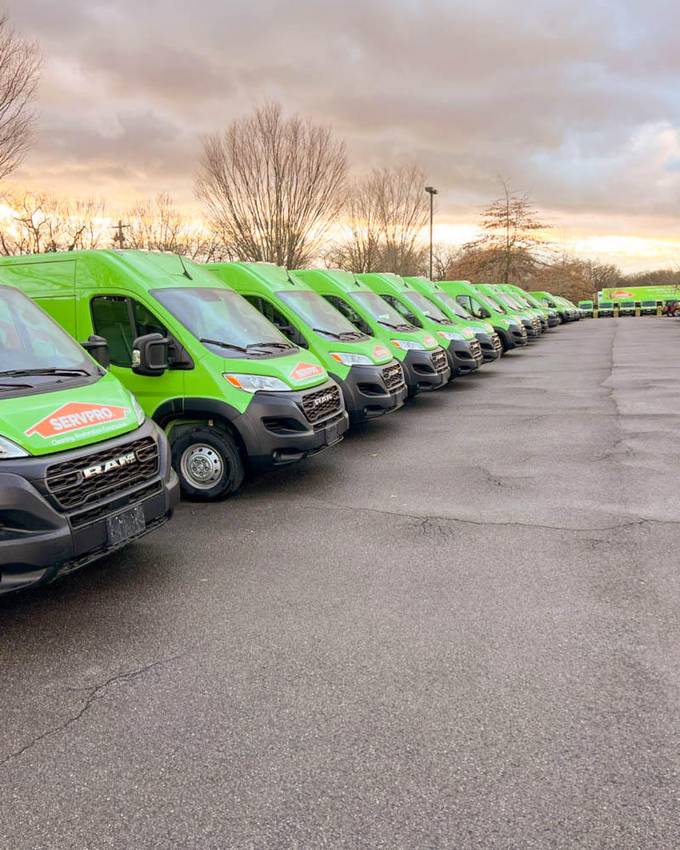
Counted on servpro.com/locations/ny on 25 November 2026, SERVPRO, the largest of the water damage restoration companies New York City has, lists 31 franchise locations inside the five boroughs, more than every other national brand on this page combined. That scale is real, and so is the catch: each of the 31 is a separate franchise business.
The Bronx: 3 franchises
South Bronx, North East Bronx and West Bronx. Three offices of one of the biggest water damage restoration companies New York has cover a borough of pre-war rentals, radiator and steam leaks, and landlord-side work where documentation decides disputes, so the Bronx offices live close to Housing Court realities whether they advertise it or not.
Brooklyn: 7 franchises
Bay Ridge, East Flatbush, Midwood, Mill Basin and Flatlands, Northwest Brooklyn, Southwest Brooklyn, and Williamsburg and Greenpoint. Seven offices for the city's most varied housing stock: brownstones with masonry party walls, garden units that take storm water first, and detached homes in the south and east with ordinary suburban leak patterns.
Manhattan: 9 franchises
Central Manhattan, East Village and Downtown, Lower East Side, Lower Manhattan and West Village, Midtown and Hudson Yards, North West Manhattan, Upper East Side North, Upper East Side South, and Upper West Side. Nine offices, the densest cluster any of the water damage restoration companies New York hosts keeps in one borough, and Manhattan work is paperwork work: certificates of insurance for co-op boards, elevator bookings, work windows, and upstairs-neighbour leaks where three insurance policies meet in one wet ceiling.
Queens: 10 franchises
Corona, Forest Hills and Ridgewood, Glen Oaks, Long Island City, Northern Queens, Oakland Gardens, Ozone Park, South Jamaica, Steinway, and Rockaways and Coney Island. Queens has the most SERVPRO offices of any borough, fitting the borough with the most houses, the most basement apartments and the most combined-sewer backups in the city.
Staten Island: 2 franchises
Northern Staten Island and Southern Staten Island. Two offices for a borough of detached homes, big finished basements and genuine coastal flood exposure, where extraction volume, not paperwork, is usually the size of the job.
What SERVPRO does for water damage
One of the most common questions attached to this subject in the research tools is what SERVPRO actually does for water damage, so here is the plain answer, true of SERVPRO and of every full-service name among the water damage restoration companies New York offers. The crew inspects and meters the damage, extracts standing water, removes materials that cannot be saved, sets air movers and dehumidifiers, returns to monitor moisture readings until the structure reaches its dry standard, treats microbial risk, and, where the office offers it, rebuilds what was removed. The brand's promise is a 24/7 response system behind that sequence. What varies by office is everything that decides your experience: how fast the phone is answered at 3 in the morning, how carefully the first metering is done, whether the drying log is meticulous or theatrical, and how the office behaves when the insurer questions the bill.
How to hire a franchise well
Treat the franchise name, here and across the water damage restoration companies New York counts, as an introduction, not a conclusion. Get the local office's own name and address, because that legal entity is your counterparty. Read reviews for that office specifically, not for the brand nationally. Ask who owns it and how long they have held the territory. Ask which of the 31 offices actually covers your address, because franchise territories are drawn on maps you cannot see, and the office that answers may hand you to the office that owns your street. None of this is an argument against the brand: a well-run franchise office, with a national drying system behind it and a local owner whose name is on the door, is a genuinely strong combination. It is an argument for hiring the office, eyes open, instead of hiring a logo.
The other national names
ATI, Paul Davis, Rainbow, 1-800 WATER DAMAGE and PuroClean
Beyond SERVPRO, five more water damage restoration companies New York readers will meet in every search operate as national systems, each with a different footprint. Counts and addresses below come from each brand's own location pages, checked 25 November 2026.
ATI Restoration
One New York City office, in Manhattan, plus one Long Island office in New Hyde Park, per atirestoration.com/locations. ATI is a national company with a heavy commercial and large-loss profile, so its city footprint is deliberately thin: it is built for big jobs, hospitals, hotels, campuses and disaster work, more than for a single flooded kitchen. For a large commercial loss it belongs on the shortlist. For a small residential job, expect to be one small job among giants, a scale few of the water damage restoration companies New York has can match.
Paul Davis
Two New York City franchises per pauldavis.com/new-york: Metro NY/NJ, and Brooklyn West at 4601C 1st Ave, Brooklyn, NY 11232, with statewide coverage claimed beyond the city. The company states that it responds to your call within 30 minutes and gets crews on site within hours, and that its technicians are IICRC certified; those response figures are the company's own stated service levels, reported here as its claims. The system counts more than 300 locations across the United States and Canada.
Rainbow Restoration
Five New York City locations per rainbowrestores.com/locations: Midtown North in the Bronx (10475), North Brooklyn (11203), Ozone Park in Queens (11416), Allerton in the Bronx, and Staten Island (10309). Note the shape of that map: Rainbow covers the Bronx twice, Brooklyn, Queens and Staten Island, and has no Manhattan-proper location, so Manhattan callers are served from across a river. Rainbow sits inside a larger home-services family of brands, unusual among the water damage restoration companies New York counts, which matters only in one way: the local franchise is still the business you hire.
1-800 WATER DAMAGE
One New York City location per 1800waterdamage.com/about/locations: 230 Richardson St, Brooklyn, NY 11222, offering 24/7 service. The brand name is a phone number, which tells you the model: national marketing, memorable number, local franchise delivery. A single Brooklyn base for the whole city, unique among the water damage restoration companies New York searches return, means Queens, Bronx and Staten Island jobs start with a drive, a fact worth one direct question on the first call: where will tonight's crew actually come from?
PuroClean
Five New York City offices per puroclean.com/offices: Midtown Manhattan (10001), Whitestone in Queens (11357), Bulls Head on Staten Island (10306), Elmhurst in Queens (11373), and St. Albans (11433), inside a system of 408 locations in total. PuroClean brands its franchisees as a Paramedics of Property Damage network, and its published drying guidance is among the sources this site cites for the standard 3 to 5 day drying window on clean-water jobs.
How the five compare
Footprint is not quality, but it is logistics. Paul Davis and PuroClean give you a named office in or near most neighbourhoods. Rainbow skips Manhattan. ATI and 1-800 WATER DAMAGE run the city from one base each, which suits planned and commercial work better than midnight emergencies. Whichever of the water damage restoration companies New York offers you call, the verification steps later on this page apply unchanged, because the brand's national standards only matter once the local office proves it follows them.
Big names, no city office
ServiceMaster and BELFOR Serve New York From Outside It
ServiceMaster Restore: 24 New York locations, none in the boroughs
ServiceMaster Restore lists 24 locations in New York State on servicemasterrestore.com/locations/ny, and not one of them is inside the five boroughs. The nearest are Valley Stream on Long Island, and White Plains and New Rochelle in Westchester County. A ServiceMaster crew at your door has therefore travelled, which is no sin: the brand is one of the oldest and largest in the industry, its published guidance on drying times is cited elsewhere on this site, and for commercial work its scale is a real asset. But a search result that shows you the name without the map invites a wrong assumption, and this page exists to correct assumptions with addresses. Ask any out-of-borough crew, from these or any of the water damage restoration companies New York is served by, two questions: where are you coming from tonight, and who handles the daily monitoring visits, because drying is a multi-day commitment and distance taxes every visit.
BELFOR: nearest office is Ronkonkoma, Long Island
BELFOR, the largest restoration company in the world by most measures, has no five-borough office. Its nearest base is its Long Island office at 60 Raynor Ave, Ronkonkoma, NY 11779, serving Suffolk and Nassau counties, per belfor.com. BELFOR states that it is IICRC certified and holds general contractor licences for Nassau and Suffolk counties and New York City, which is itself a tidy illustration of this page's licensing lesson: licences attach to places, and a serious company lists them place by place. BELFOR's centre of gravity is commercial, industrial and institutional disaster recovery. A homeowner can call, but should expect a machine tuned for very large losses, the biggest of all the water damage restoration companies New York callers can reach.
The pattern across both brands is the same one the SERVPRO count teaches from the other direction. What matters is never the size of the name. It is the distance to the office, the identity of the crew, and the paperwork the office can produce. A giant serving you from an hour away and a two-van independent serving you from six blocks away are not the same offer, and neither is automatically the better one. Large losses, commercial properties and multi-building events reward scale. Single homes, at night, in the rain, reward proximity. Match the company to the loss in front of you, not to the advertisement you remember, whichever of the water damage restoration companies New York offers you are weighing.
The borough layer
Local New York Companies Worth Knowing by Name
Four independent firms from the layer of water damage restoration companies New York boroughs produce themselves, researched from their own websites in November 2026. Details are stated as the companies publish them; claims that rest on the company's own word are labelled as exactly that.
Water Shield Restoration, Brooklyn
Based at 1422 Utica Ave, Suite 2, Brooklyn, phone (718) 587-1812. A family-owned company stating more than 12 years in business and service across all five boroughs. Water Shield is the local pattern at its clearest: a real Brooklyn address you can drive to, a named neighbourhood it answers to, and a reputation carried by the buildings and blocks around it. Verify it the same way as any of the water damage restoration companies New York counts: certification on the IICRC locator, licence for the work, insurance certificate, written scope.
Water Damage Restorations NYC
A local firm stating it has operated since 2001, phone (929) 223-6604. Its website describes the company as fully licensed; that wording is the company's own, and no licence number is published alongside it, so treat it the way this page teaches: a claim to verify, not a fact to repeat. Ask the company which licence, issued by whom, under what number, and check the answer against the DCWP and county records described in the licences section below. A good company will welcome the question.
FWDS, Queens
Fire and Water Damage Specialists, a Queens firm stating more than 20 years in the trade, phone 877-245-2284. FWDS states that it dispatches and arrives on site within one hour; that is the company's own service claim, reported as such. Its site also carries a BBB A+ rating claim and an IICRC certification claim, both stated here as the site's own claims, and both independently checkable in minutes: the BBB listing, and the IICRC Global Locator. That checkability is the point. Claims you can test are worth more than claims you cannot.
Water Damages Restoration NY, Manhattan
Based at 281 Ave C, New York, NY 10009, phone (347) 746-9911, stating more than 25 years in business, a tenure figure that is the company's own claim. This is the local firm that appears in the search results measured for this page, at page authority 19 and domain authority 2: proof that in this market a small firm with a real address can outrank the national marketing of far bigger water damage restoration companies New York has. One caution from the research: a directory-style listing of this company's address has circulated with the state written as NJ against the 10009 ZIP code. New York, NY 10009 is the address. Never copy an address, or anything else, from a listing without checking it.
SOS Mitigation, Queens
The second local firm on the measured results page, at page authority 18 and domain authority 11, with a Queens presence built around basement mitigation and restoration work. SOS illustrates the specialist end of the local market: narrower than a full-service firm, aimed at the below-grade losses Queens produces in bulk. A specialist is a reasonable hire for the loss it specialises in, provided the same verification passes: certification, licence, insurance, written scope, drying logs.
The unnamed layer beneath
Below the firms with websites sits a deeper layer: two and three person crews, super-referred handymen with extractors, and building staff moonlighting with rented dehumidifiers. Some are excellent and some are the red flag section of this page wearing a smile. The dividing line among the water damage restoration companies New York hides at this layer is not size. It is paperwork. The tiny crew that produces a certificate of insurance, a written scope and a drying log is a company. The smooth talker who produces none of those is a risk, whatever the logo on the van.
Why locals win so much of this work
Water damage in New York is a building business before it is a drying business. The crew has to get past a doorman, satisfy a co-op board's insurance office, book a freight elevator, work inside a management company's hours, and keep the neighbours below informed before their ceilings stain. Local firms do this weekly in the same buildings, and supers keep their numbers because a super's reputation rides on every referral. That referral economy is the strongest quality signal in the whole market of water damage restoration companies New York runs on, stronger than any directory rating, because it is repeat, professional and unforgiving: a firm that dries badly does not get the second call from the same building. When you ask around, ask the people who watch companies work for a living: supers, doormen, managing agents, and the adjusters who read the drying logs afterwards.
Reading the results page like an adult
Directories Dominate the Search. Here Is How to Use Them
Five of the eight organic results measured for the phrase water damage restoration companies new york are directories or listing sites: Yelp three times, GuildQuality, Thumbtack and MapQuest. That is not a conspiracy; it is arithmetic. Directories aggregate hundreds of businesses and reviews onto one page, and aggregation is what search engines reward for a companies-style query. The mistake is treating the directory page as the answer rather than as the index. Used properly, a directory does three jobs for you. It widens the longlist beyond the names you already know. It surfaces reviews in volume, which are useful read as a pattern, never as a score. And it exposes the basics, address, phone, hours, service area, that you then verify against the company's own site and the public records this page describes.
Used badly, a directory does three kinds of harm. It lets a stale listing send you to a closed or moved business in the middle of an emergency. It lets review counts substitute for licences, as if a hundred happy customers could certify a firm that the IICRC has never heard of. And on the pay-to-play platforms, it quietly reorders the market by advertising spend, so the first name you see is the name that paid, not the name that dries best. Thumbtack and its rivals are marketplaces: the water damage restoration companies New York searches surface buy the introduction. That model is legal and often useful, but you should know when you are reading a ranking and when you are reading an auction.
| Result, in order | What it is | Page authority | Domain authority |
|---|---|---|---|
| Yelp, Manhattan page | Directory listing page | 57 | 93 |
| GuildQuality, New York page | Review and listing directory | 31 | 51 |
| Yelp, New York City page | Directory listing page | 53 | 93 |
| SOS Mitigation, Queens | Local company | 18 | 11 |
| Thumbtack, water damage page | Lead marketplace | 38 | 77 |
| waterdamagesrestorationny.com | Local company | 19 | 2 |
| MapQuest listing | Directory listing | 41 | 88 |
| Yelp, mobile page | Directory listing page | 46 | 93 |
Source: Moz Keyword Explorer results for the exact phrase, United States, 25 November 2026. Authority scores are Moz's own measures of the pages, shown to explain the shape of the results, not as quality grades for the businesses.
One more directory habit deserves naming, because it decides real hires every week: the review profile read as biography. Read a company's reviews for the story they tell in aggregate. Do the complaints mention billing surprises, missed monitoring visits, or crews that changed mid-job? Do the praises mention documentation, adjusters and drying logs, or only friendliness? A company can be charming and still dry badly, and that is true across the water damage restoration companies New York reviews describe. The reviews that predict your experience are the ones that describe process, and process is the thing this entire page keeps pointing at, because process is what a wet home actually needs.
The real comparison
Franchise Office or Local Independent? An Honest Scorecard
What the franchise genuinely gives you
A system. National training, standard estimating software the insurers recognise, a call centre that answers at 3 in the morning, surge capacity when a storm soaks ten thousand homes at once, and a brand with something to lose if an office misbehaves. In a citywide event, the franchise networks are the only water damage restoration companies New York has that can put hundreds of crews into the field, and insurers know their paperwork formats by heart. If your loss is large, commercial, or part of a declared disaster, those are decisive advantages, and no honest page should pretend otherwise.
What the local independent genuinely gives you
Proximity and memory. The office is near, the owner is reachable, the firm has probably worked in your building or on your block, and its next job depends on your super, your managing agent or your neighbour saying its name. Independent water damage restoration companies New York neighbourhoods produce also tend to flex where systems cannot: odd hours in a co-op, a second visit the same evening, a project manager who stays the same person from first meter to final walkthrough. In a market where the job lasts a week and the relationship lasts as long as the building stands, memory is a quality system of its own.
Where each model fails
Franchises fail by variance: the brand is a floor, not a ceiling, and a weak office hides behind a strong logo for years. They fail by distance when territories are drawn wide, and by handoff when the call centre's promise meets the local office's schedule. Independents fail by thinness: no surge capacity in a storm, estimating habits an insurer may query line by line, and, at the smallest end, paperwork that would embarrass a school project. Both models of the water damage restoration companies New York offers fail the same final way, on documentation, which is why the verification steps on this page never ask which model a company belongs to. They ask for the locator listing, the licence, the certificate and the log, from everyone, every time.
The verdict this page actually gives
Hire the office, not the model. Build a shortlist of two or three, one franchise office and one or two independents if your neighbourhood offers both, run the six verification steps on each, compare written scopes rather than phone promises, and let the paperwork decide. Homeowners who do that rarely feature in the horror stories collected later on this page. Homeowners who hire the first logo they recognise among the water damage restoration companies New York advertises, or the first knock on the door, supply most of them.
The emergency question
Who to Call When There Is Water Damage, in Order
Among the real questions the research tools attach to the subject of water damage restoration companies new york, the most urgent is also the simplest: who to call when there is water damage? The answer is a sequence, and the order matters.
The building, first, if you live in one
In a co-op, condo or rental, call the super, doorman or management line before anyone else, before any of the water damage restoration companies New York offers. Only building staff can close a riser, and a riser leak adds a floor of damage below you for every minute it runs. Management also starts the building's own insurance and documentation trail, which your claim will later need.
A restoration company, second, the same hour
Call the company, among the water damage restoration companies New York has, whose local office is nearest and verified, using the checks on this page as far as time allows. Extraction and drying are mitigation, the step your policy expects you to take, and every hour of standing water widens the demolition and lengthens the drying. Photograph everything before the crew starts, and keep photographing as they work.
Your insurer, third, the same day
Open the claim the same day, while the clocks described later on this page are all in front of you. New York Regulation 64 gives the insurer 15 business days to acknowledge your claim once it has notice, and the rest of the timetable runs from your paperwork, so early notice and a complete proof of loss are worth real money.
A plumber, when the source is plumbing and still live
If a pipe, valve or appliance is still feeding the water and the building cannot stop it, a licensed plumber is the call that ends the loss. Restoration crews dry buildings; plumbers fix sources. Many jobs need both, the plumber and one of the water damage restoration companies New York offers, in that order: source stopped, then structure dried.
The city, when the water is the city's
Sewer surcharges, water main breaks and street flooding belong in a 311 report as well as in your claim file. The report creates the public record that supports claims and, in main break cases, the city's own responsibility file. Keep the confirmation number with your drying logs.
Notice who is not on that list: the stranger at the door. Every legitimate call in the sequence is one you initiate, to a number you chose, from a company you can verify. The Attorney General's warnings, set out in full in the red flag section below, begin with unsolicited offers for a reason. Disaster attracts a travelling trade that follows storms and breaks, knocks first, and is gone before the drying fails. The five calls above take twenty minutes to make, and they sort the water damage restoration companies New York offers from the travelling trade. They are the cheapest insurance on this entire page.
Trust, but check the register
How to Verify Any Company on This Page in Six Steps
These six steps are the HowTo this page is built around. They work on every one of the water damage restoration companies New York puts in front of you, and on the placeholder service behind this site too. They take about half an hour in calm times and about four minutes in an emergency, if you know which two steps cannot be skipped. Steps two and five cannot be skipped.
Find the local office behind the brand
Ask for the name, address and phone number of the actual local office that will send the crew. A national name is a franchise system, and the office near you, like every entry among the water damage restoration companies New York counts, is a separate business with its own record.
Check certification on the IICRC locator
Search the firm on the IICRC Global Locator at iicrc.org and confirm it appears as a certified firm, and that it does not appear on the IICRC Invalid Firms list.
Match the licence to your county
Ask which licence covers work at your address. In New York City that is the DCWP Home Improvement Contractor licence for repair work, and mold work needs a New York State Article 32 licence. Other counties run their own licensing.
Get the insurance paperwork before entry
Ask for a certificate of insurance naming your building, co-op board or landlord, and confirm the company carries workers compensation cover for its own crew.
Read the contract for the red flags
Never pay the full price up front, never hand over a cash deposit before signing, never sign blanks, and confirm the written contract carries the three business day cancellation right New York expects.
Confirm the documentation habit
Ask how the company records the job, the question that sorts the water damage restoration companies New York offers faster than any other: photographs, moisture readings and daily drying logs. A company that documents thoroughly protects your insurance claim as well as your home.
What the IICRC is, and what S500 means
The Institute of Inspection, Cleaning and Restoration Certification, the IICRC, is the industry's certification body. Firms, not just individuals, can hold IICRC certification, and the public check is the IICRC Global Locator at iicrc.org/iicrcgloballocator, labelled Locate a Certified Pro. The same organisation publishes an Invalid Firms list, naming firms that claim certification they do not hold, which is why the check has two halves: present on the locator, absent from the invalid list. The work standard is ANSI/IICRC S500, the Standard for Professional Water Damage Restoration, the document that defines water categories, drying classes and the dry standard a job is finished against. When a company says it works to S500, it is naming a published, checkable method. When one of the water damage restoration companies New York homeowners interview cannot say what standard it works to, that silence is also information.
What certification does not prove
Certification proves training and registration, not honesty, pricing fairness or availability tonight. A certified firm can still write a sloppy scope; an uncertified one can still own good equipment. That is why the six steps are a set, not a single test: the locator for competence, the licence for legality, the certificate of insurance for protection, the contract read for fairness, and the documentation habit for the claim that follows the job by months. Companies that pass all six are not guaranteed perfect. Companies among the water damage restoration companies New York offers that fail two or more have told you, in advance and for free, how your job will go.
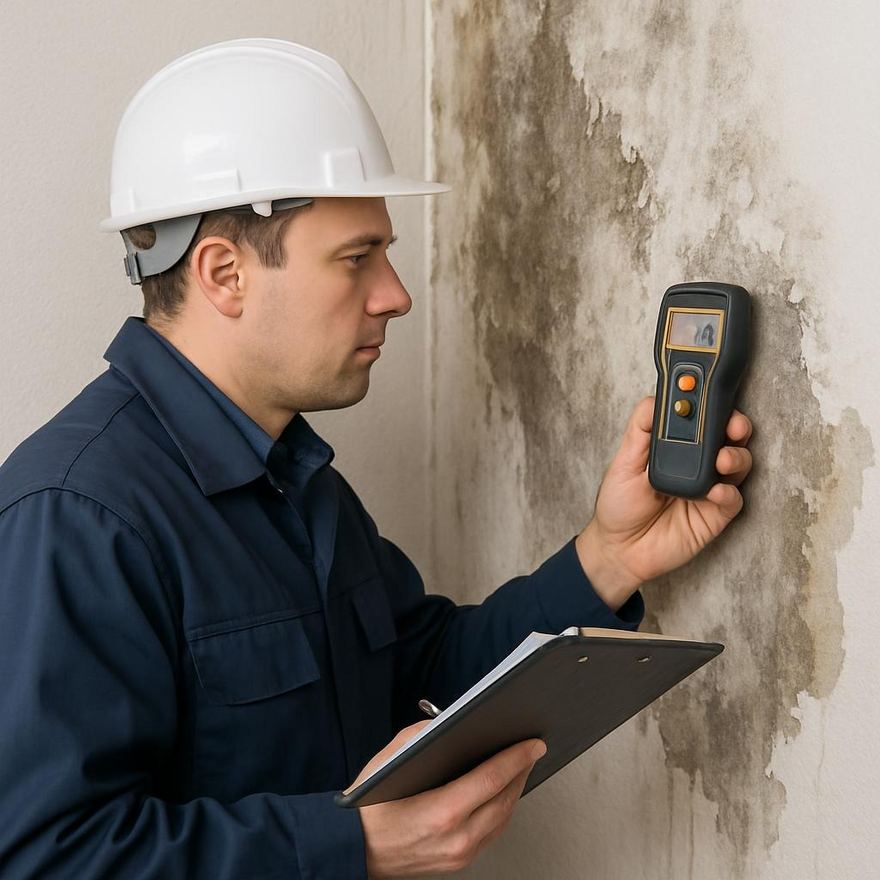
The question everyone gets wrong
Licences: There Is No New York State Restoration Licence
Ask a room of homeowners what licence a restoration company needs in New York and most will describe a state licence that does not exist. The position, resolved from the Attorney General's guidance and the Department of State's own scope, is this. There is no New York State licence for general water damage restoration, beyond mold licensing. Licensing for home improvement work is county level: New York City, Suffolk, Nassau, Westchester, Putnam and Rockland counties, and the City of Buffalo each run their own schemes. A company can therefore be perfectly legal in one county and unlicensed in the next, and a licence check that does not name the county where the work happens is not a check at all. That single fact surprises more people than any other in the world of water damage restoration companies New York.
New York City: the DCWP licence
Inside the city, the licence is the Home Improvement Contractor licence issued by the Department of Consumer and Worker Protection, DCWP. It is not issued by the Department of Buildings, a confusion this page corrects because homeowners waste real time checking the wrong register. The Department of State does not license home improvement contractors either; that register does not exist at state level. To hold the DCWP licence a business must show proof of workers compensation insurance, hold an EPA Renovation, Repair and Painting and/or Lead Abatement certification or file a signed affirmation, post a surety bond or enrol in the Home Improvement Business Trust Fund, pass a 30-question exam with 21 correct answers required, and submit fingerprints. The licence runs for two years. Each element is checkable, and the exam and bond requirements explain why legitimate city firms among the water damage restoration companies New York licenses treat the licence as a point of pride rather than a line of marketing copy.
The honest open question
One nuance remains genuinely unresolved, and this page leaves it open rather than guessing: whether pure mitigation work, extraction and drying only, with no repair or rebuild, requires a DCWP licence at all. The licence plainly covers home improvement contracting, and rebuild work plainly sits inside it. The mitigation-only edge is argued both ways by people who should know. What a homeowner should do with an open question is simple: hire from among the water damage restoration companies New York offers the ones whose licensing covers the whole job you are giving them, mitigation and rebuild together, and the edge case never becomes your problem.
County by county
Outside the city, the same discipline applies with different registers. Nassau and Suffolk counties license home improvement contractors at county level, which is why BELFOR's own page, quoted earlier on this page, lists general contractor licences for Nassau and Suffolk counties and New York City as three separate credentials. Westchester, Putnam and Rockland counties and the City of Buffalo run their own licensing as well. The practical rule travels with the work: check the licence for the county the building stands in, in the register that county keeps, and treat any company that waves a licence from somewhere else as unlicensed until it proves otherwise.
Why licence geography matters to your claim
Licensing is not bureaucratic decoration. Work done by an unlicensed contractor where a licence is required can poison a contract's enforceability, complicate an insurance claim, and leave a homeowner paying twice: once for the job, once for the lawyer. Insurers and adjusters know the registers too. A claim file that opens with a properly licensed, properly insured company starts from trust; a file that opens with an unlicensed operator starts from suspicion, and suspicion is priced into every negotiation that follows. The two minutes a licence check on the water damage restoration companies New York offers takes are the highest-value minutes in the whole hiring process.
The one state licence that does exist
Article 32: Mold Licensing, and What It Does Not Prove
Since 1 January 2016, New York Labor Law Article 32 has licensed mold work, and mold work only. Section 931 makes it unlawful to perform or advertise mold assessment or mold remediation without the state licence. The licence copy must be displayed at the work site, where any homeowner, tenant or inspector can read it. And the law builds in a separation that surprises people: the same firm may not assess and remediate the same project, because the firm that grades the problem must not be the firm paid to fix it. Assessment and remediation are two licences, two roles, deliberately kept apart.
Water damage and mold are neighbours, which is why this law belongs on a page about the water damage restoration companies New York homeowners hire. A wet home that stays wet becomes a mold job, and at that moment the legal ground changes under the contract: the mitigation crew drying your walls is one matter, and the firm assessing or remediating mold is another, with state licences, displayed copies and a statutory conflict rule. A company that handles both sides of your job should be able to explain, in one breath, which licence covers which phase and who the independent assessor will be. A company that has never heard of Article 32 is telling you it does not do mold work in New York, whatever its website says.
The misuse to watch for
Because the mold licence is real, state-issued and impressive looking, it is sometimes waved as if it were a general restoration licence. It is not, and now you know why: no general state licence exists for it to be. When any of the water damage restoration companies New York sends presents credentials, sort them into the three honest piles this page has built. Certification: IICRC, checked on the locator. Licence for the work and the county: DCWP in the city, county schemes outside it, Article 32 for mold. Insurance: the certificate, naming your building. A credential that does not fit one of those piles is decoration. New York's own rules for mold in rental buildings, including Local Law 55 duties for owners of buildings with three or more apartments, are covered on this site's borough and mold pages, linked in the full page index at the foot of this page.
The Attorney General's list
Red Flags: The Warnings New York Itself Publishes
The New York Attorney General publishes contractor warnings aimed at exactly this moment, when a wet homeowner is choosing among the water damage restoration companies New York has to offer. They are reproduced here in substance, because they are the state's own words of caution and they name the failure patterns that fill complaint files after every storm.
- Unsolicited door-to-door repair offers. A knock that arrives with the floodwater is a sales channel, not a rescue service. Legitimate water damage restoration companies New York homeowners can verify are busy answering phones in a disaster; the ones with time to canvass your street are telling you something about their order book.
- Non-local storm chasers. Travelling crews follow declared disasters, work fast, collect, and leave the state before the drying fails or the ceiling does. A company with no local address, unlike the water damage restoration companies New York boroughs know by name, has no local reputation to protect, and reputation is the only enforcement that works at kitchen-table scale.
- High-pressure tactics. Sign now, tonight only, before the mold takes the house: pressure is a technique for stopping you checking, and everything on this page that matters, the locator, the licence, the contract, takes minutes to check. Any company that fears your ten minutes of checking has answered the check already.
- Cash deposits before a contract. Never give a cash deposit before signing a contract. Money that moves before paper exists is money with no terms attached to it, and the Attorney General's phrasing is blunt because the complaint files are full.
- Full payment up front. Never pay the full price up front. Payment follows progress in every honest version of this trade, and deposits, where they are taken, are held in escrow rather than spent. A company that needs all of your money before it starts does not have the working capital to finish, or does not intend to.
- Signing blanks. Never sign a document with blank spaces to be filled in later. A blank signed by you is a term written by someone else, and it will be filled in at the moment of maximum advantage to the person holding the pen, which will not be you.
- No written contract, or no cancellation right. Insist on a written contract, and confirm it carries the three business day cancellation right. The contract is not paperwork for its own sake; it is the scope, the price mechanism, the timeline and the exit, and a company allergic to writing, among the water damage restoration companies New York counts, is allergic to being held to anything.
- Permanent work before the adjustor approves. Allow no permanent work before the claims adjustor has approved it. Mitigation, extraction and drying, proceeds at once; that is expected and documented. Rebuild ahead of approval invites the insurer to disown the rebuild, and the bill lands on the person who authorised it: you.
Read that list once and a pattern shows itself: every red flag is an attempt to separate you from either your money or your evidence before the paperwork exists. The defence is equally patterned. Paper first, money second, in stages, against a written scope, from a company whose name, address, licence and certification you have already checked. Nothing on the Attorney General's list can survive that sequence, which is why the sequence, and not any single warning, is the real lesson of this section.
Someone at your door right now?
You are allowed to say: leave a card, I will call you. A real company respects the pause, and the water damage restoration companies New York homeowners recommend all do. Pressure is the tell.
Why documentation decides claims
The Insurance Clocks Every Company Should Be Working To
The water damage restoration companies New York homeowners hire do not just dry your home; they manufacture the evidence your claim runs on, and New York law runs that claim on clocks. Under Regulation 64 (11 NYCRR Part 216), the insurer must acknowledge your claim within 15 business days of notice, section 216.4(a). It must commence its investigation within 15 business days, section 216.5(a). Once it receives your proof of loss, it has 15 business days to accept or reject the claim, section 216.6(c), and if it determines to disclaim, section 216.6(d) requires it to say so in writing as soon as the determination is made, with specific reasons. Once a settlement is agreed, payment is due within 5 business days, section 216.6(f). Insurance Law section 2601(a)(4) runs its own parallel clock: 30 working days after proof of loss to accept or deny. After a declared disaster, Insurance Law section 2618(d) tightens the payment clock to 4 business days. A lawsuit on the policy must be started within 24 months of the loss, under the standard fire policy terms in Insurance Law section 3404. And if you hire a public adjuster, 11 NYCRR 25.7 caps the fee at 12.5 percent of the recovery, with supplemental arrangements only where the aggregate stays within that cap.
| Clock | Deadline | Source |
|---|---|---|
| Insurer acknowledges the claim | 15 business days from notice | Regulation 64, section 216.4(a) |
| Insurer commences investigation | 15 business days | Regulation 64, section 216.5(a) |
| Insurer accepts or rejects after proof of loss | 15 business days | Regulation 64, section 216.6(c) |
| Insurer pays after settlement is agreed | 5 business days | Regulation 64, section 216.6(f) |
| Insurer accepts or denies after proof of loss | 30 working days | Insurance Law section 2601(a)(4) |
| Payment after a declared disaster | 4 business days | Insurance Law section 2618(d) |
| Suit on the policy must be started | 24 months after the loss | Insurance Law section 3404 |
| Public adjuster fee cap | 12.5 percent of recovery | 11 NYCRR 25.7 |
Complaints about an insurer go to the New York Department of Financial Services: hotline (800) 342-3736, Monday to Friday, 8:30am to 4:30pm, or complaints@dfs.ny.gov. One related correction this site maintains carefully: federal flood insurance through the NFIP is a separate policy from homeowners cover, and the NFIP's authority to write new contracts lapsed on September 30, 2026; existing policies remain in force to their own terms.
Now connect the clocks to the companies. Every one of those deadlines runs on documents: notice, proof of loss, the adjustor's inspection, the scope, the drying log. The company's photographs, moisture maps and daily readings are the raw material of your proof, and an adjustor deciding between two files, one with a dated photo set and a complete log, one with a verbal summary, is not making a difficult decision. This is the deepest reason the verification steps end with the documentation habit. You are not only hiring a crew to dry a building. You are hiring the author of your claim file, and authors should be chosen for how they write. Favour, always, the water damage restoration companies New York insurers learn to trust: the ones that document thoroughly and work openly with the adjustor; be wary of any company that treats the insurer as an enemy to be billed rather than a counterparty to be persuaded, because the persuasion happens on paper, and paper is a habit, not an event.
Asked by real homeowners
What People Actually Ask About Restoration Companies
These are real thread titles and questions posted by homeowners on Reddit and Quora, quoted verbatim during this page's research in November 2026, because the questions people ask each other are more honest than the questions marketers imagine. Each one is, underneath its wording, a question about the water damage restoration companies New York offers, answered briefly here, and in full in the FAQ at the foot of this page.
Recommendations, and warnings
"Water Damage Restoration Companies You've Used & Would Recommend?" posted in r/Denver, is the canonical version of the question, and its thread carries the pattern this page keeps teaching: alongside the recommendations sits a warning against a named company accused of overcharging and of refusing to hand over its drying logs. Read that pairing carefully. The recommendation economy and the warning economy are the same economy, and the drying log appears in both, as praise when produced and as accusation when withheld. Wherever you ask for names among the water damage restoration companies New York threads recommend, ask the follow-up: did they give you the logs?
"Plumber referred me to water restoration guy, was I deceived …" asks the referral question. Referrals from plumbers, supers and neighbours are the market's lifeblood and usually honest, but a referral is a starting point, not a verification. The referred company, like all the water damage restoration companies New York homeowners consider, still goes through the locator, the licence check and the contract read, and a referrer who is offended by your checking is telling you how the referral was earned.
"Water damage restoration company- initial steps/advice needed" and "Water Damage: Insurance Claim Questions" are the first-hour questions, answered by the sequence in the who-to-call section of this page: building, company, insurer, plumber if the source is live, city if the water is the city's.
The nightmare threads
"Dealing with a restoration company has been a nightmare" is the genre title nobody wants to write. Read across the nightmare threads and the causes repeat with dreary consistency: no written scope, money ahead of progress, a company that billed the homeowner while promising to bill the insurer, and documentation that did not exist when the dispute arrived. Almost none of the nightmare threads begin with a company that failed the locator check, because almost none of their authors ran one. The threads are the control group for this entire page: they show what the unverified market does, at retail, to people in wet homes.
The insurance threads
"Water damage homeowners claim: how to negotiate with [insurer]?", "Water Damage Remediation Claim", "Homeowners Water Damage Claim", "Need advice for a water damage claim", "Help: need advice on a water loss claim" and "Advice for handling a home insurance claim (water damage)" are six titles for one anxiety: the claim feels like a negotiation the homeowner is losing. The clocks section of this page is the factual answer: New York law sets the insurer's deadlines, and the documentation of the water damage restoration companies New York homeowners hire sets the claim's strength. Negotiation, in practice, is mostly evidence arriving in the right order.
"Restoration company is billing me and not the insurance company!" names the billing surprise. The homeowner is usually the contracting party even when the insurer pays, which is why the contract read matters before signature, and why any promise that the insurer will simply handle everything should be written into that contract, in words, before work starts.
"Restoration after water damage question: How should I proceed dealing with insurance and contractor?" and "[advice] water damage" from r/NYCapartments, the landlord-responsibility version, complete the set: two counterparties, one wet home, and a paper trail as the only referee. On Quora, the matching question, "How do I choose the best team of emergency water damage restoration professionals?", drew answers this research did not verify, so the question is quoted and the answers are left where they lie. That restraint is deliberate, and it is the same restraint this page asks of every company claim it prints.
Watch, labelled honestly
Two Videos About Companies, Linked and Labelled
This page links to two YouTube videos and embeds neither, following this site's rule that video is linked as text and watched on YouTube. Both are labelled for exactly what they are, including their limits, the same honesty this page asks of the water damage restoration companies New York covers, because a page about verification should verify its own links too.
The first is "How to Choose a Water Damage Restoration Company: 4 Checks" by HearthDry, running 0:55, published around 17 November 2026. Its central line deserves quoting because it is this page's thesis in one sentence: the national restoration brands are franchise systems, so the local office matters more than the name. The caveat matters as much: HearthDry is a tiny, new channel, with a handful of views and subscribers at research time, so treat the video as a sharp summary, not as an authority. The advice survives the caveat because it agrees with the registers and the Attorney General, not because the channel is famous.
The second is "Water Damage restoration Job, Part 1" by SERVPRO of Greater St. Augustine, a franchise office's own film of a real restoration job. It was verified as loading during this page's research, after being identified at snippet level. Watch it for the thing text cannot show: the sequence and texture of a working job, extraction, equipment placement, a crew moving through someone's home. Its limits are stated plainly: it is one franchise office's film of its own work, it is a Florida job, not a New York one, and a company's own video is marketing even when every frame is honest. Read it the way this page teaches you to read every claim by the water damage restoration companies New York homeowners are weighing: as evidence about that one office, offered by that office, to be weighed alongside the registers.
One deliberate absence: a short H2O Restoration clip about choosing among the water damage restoration companies New York offers appears on this site's companion page, the choosing guide, and is not repeated here. Each page on this site carries its own videos, its own images and its own research, so that no two pages lean on the same evidence.
What companies actually sell
Fifteen Services, and What Each One Should Come With
The websites of the water damage restoration companies New York searches return list services in a blur of near-synonyms. Here is the trade's real menu, the same fifteen services carried in this page's structured data, each with the standard of delivery to hold the company to.
Emergency water extraction
Standing water out, fast, with truck-mounted or portable extraction and pumps for deep basement water: the opening service of the water damage restoration companies New York homeowners call. Should come with: arrival metering, photographs before and after, and a stated plan for the drying that follows.
Structural drying and dehumidification
Air movers and dehumidifiers sized to the drying class of the job, run continuously. Should come with: a drying plan, equipment counts in the scope, and daily monitoring visits, not a set-and-forget drop-off.
Moisture mapping and daily monitoring
The measurement service underneath all the others offered by the water damage restoration companies New York homeowners hire: meters, thermal imaging where useful, readings logged wall by wall. Should come with: the log itself, shared with you and your insurer, every day of the job.
Sewage backup cleanup
Category 3 work: protective equipment, containment, removal of porous contaminated materials, disinfection. Should come with: a written protocol and honest demolition, because sewage-soaked porous material is removed, not perfumed.
Basement flood cleanup
The city's signature job: pumping, extraction, contents triage and drying for below-grade spaces. Should come with: electrical safety first, and a conversation about backwater valves and sump provision once the floor is dry.
Burst pipe water damage repair
The full sequence after a plumbing failure, drying plus the repair of what the water ruined. Should come with: coordination with the plumber who fixed the source, and licence cover for the rebuild portion in your county.
Ceiling, wall and cavity drying
Targeted drying of assemblies, including injection drying for wall cavities and care with pre-war plaster and lath. Should come with: class 4 patience, the slow, controlled drying that historic fabric needs, measured in days, not hours.
Hardwood floor drying
Panel and mat systems that pull moisture through boards from above, saving floors that demolition-first companies would rip out. Should come with: cupping assessment and honest odds, because some floors are saved and some are only mourned professionally.
Mold remediation
Licensed Article 32 work: containment, negative air, removal and clearance, with assessment kept separate from remediation by law. Should come with: licence copies displayed at the site and an independent assessor's name in writing.
Odour removal and sanitising
Antimicrobial treatment and odour work after cleaning, aimed at the source rather than the smell. Should come with: source removal first. Any company leading with fragrance is decorating a problem it has not solved.
Contents pack-out and storage
Inventory, packing, transport and storage of belongings while the structure is dried and rebuilt. Should come with: a photographed inventory, item by item, because the pack-out list becomes an insurance document.
Controlled demolition and debris removal
Removal of unsalvageable material, flood cuts where needed, bagging and lawful disposal. Should come with: restraint. Good demolition is surgical, and every wall opened should be opened for a metered reason.
Reconstruction and rebuild
Drywall, flooring, trim, paint and finishes: the home handed back whole. Should come with: DCWP or county licence cover for home improvement work, permits where the city requires them, and a written warranty position.
Commercial water damage restoration
The same trades at building scale, with business-interruption urgency and after-hours working. Should come with: a single accountable project manager and documentation formatted for commercial insurers and managing agents.
Insurance documentation and drying logs
The paper product: photo sets, moisture maps, equipment records and daily logs assembled for the claim. Should come with: copies for you as a matter of routine. A company, among the water damage restoration companies New York offers, that will not share its own log with its own customer has answered the only question that matters.
Company presence, borough by borough
Who Is Actually Based in Your Borough
Pick a borough. The panel summarises which of the water damage restoration companies New York boroughs host actually keep a base there, and links to the borough's own full page on this site.
Learn from other people's invoices
The Hiring Mistakes New York Homeowners Make Most Often
Hiring the brand and never learning the office's name
The contract arrives, the van arrives, the dispute arrives, and only then does the homeowner discover that the national name was a licence to a local company they never identified. Every protection in consumer law runs against a legal entity. Learn its name, its address and its licence before the first machine is plugged in, while learning is free.
Confusing a directory ranking with a credential
Stars are not licences, for SERVPRO or for any of the water damage restoration companies New York directories rank. A five-star average tells you past customers were pleased, which matters, and nothing about certification, insurance or county licensing, which matter more when something goes wrong. The registers take minutes. The regret takes months. The order of operations is not a close call.
Letting the plumber's, super's or neighbour's referral skip the checks
Referrals are the best starting point in this market and the worst finishing point. The referred firm, whichever of the water damage restoration companies New York neighbours recommend, earns the first call. It does not earn an exemption from the locator, the licence or the contract read, and a market that runs on referrals only stays honest because referred firms know they are still checked.
Signing for the rebuild before the adjustor has seen the damage
Mitigation cannot wait; rebuild can, briefly, and must. The Attorney General's warning about permanent work before adjustor approval exists because the sequence is where claims go to die. Dry now, document everything, rebuild on approval, the rhythm the honest water damage restoration companies New York has all keep, and keep the two phases visibly separate in the paperwork.
Paying like a friend instead of contracting like a customer
Cash early, full price up front, blanks signed on trust: each feels like goodwill in the moment and reads like negligence in the complaint file. Honest companies prefer paper, because paper protects them too. The homeowner who insists on a written scope, staged payments and escrowed deposits is not being difficult. They are being the customer every good company wishes it had.
Never asking who writes the drying log
The log is the claim, the proof of dryness and the defence against the mold conversation in month three, and homeowners routinely hire without asking whether one will exist. Ask, in the first call, in these words: will I receive the moisture readings and the drying log, daily, in writing? The pause before the answer is the most informative sound in the entire hiring process.
Assuming the biggest name is the nearest crew
ServiceMaster and BELFOR have no borough office; Rainbow has no Manhattan base; 1-800 WATER DAMAGE runs the city from one Brooklyn address. Geography is a fact, and facts beat impressions at 2 in the morning. Ask every company, whatever its size, where tonight's crew starts its drive.
Treating the first visit as a sales call
The first visit is an evidence-gathering exercise that happens to be free. Meter readings, photographs, a moisture map and a written scope should all exist by the time the technician leaves, and they are yours to keep and to show a second company. A first visit that produces only a verbal number has produced nothing you can compare, appeal or claim with, which is, of course, sometimes the point.
Ready to make the calls?
Shortlist two or three of the water damage restoration companies New York offers, run the six steps, compare written scopes. Or start with one call now and verify while the drying runs.
Inside the businesses
How a Restoration Company Is Actually Built: Brand, Owner, Office, Crew
To judge the water damage restoration companies New York puts in front of you, it helps to know how one is put together, because the structure explains most of the behaviour you will meet. A restoration company has four layers, and every promise you hear comes from one of them. The top layer is the brand, where a brand exists at all: it owns the name, the marketing, the training curriculum and the call centre. The second layer is the owner: the person or family whose money bought the franchise or founded the independent firm, whose name is on the licences and the insurance, and who carries the legal risk when a job goes wrong. The third layer is the office: the project managers, estimators and office staff who schedule crews, write scopes and fight with insurers over line items. The fourth layer is the crew: the technicians who arrive at your door with the meters and the machines.
Money flows up that structure and work flows down it, and the friction between the two explains the classic complaints. The brand is paid whether or not your job goes well, through franchise fees and royalties on the office's revenue, which is why a brand can be excellent while an office is mediocre: the brand's income does not depend on your ceiling. The owner is paid from what is left after labour, equipment and those brand costs, which is why owners guard their estimating margins and why an office under financial pressure starts trimming the invisible parts of a job, the monitoring visits, the extra day of drying, the second technician. The office staff are paid to keep crews utilised and files closed, which is why your project manager can be both genuinely helpful and visibly hurried. And the crew is paid by the hour, which is why the technician is usually the most honest person in the chain: ask the technician, at any of the water damage restoration companies New York homeowners hire, what the meter says, and you will generally be told.
Subcontracting adds a fifth, hidden layer on many jobs. Mitigation is usually done by the company's own crews, because the equipment and the certification live in-house. Rebuild is different: drywall, flooring, electrical and plumbing are frequently subcontracted to separate trades, sometimes disclosed, sometimes not. There is nothing inherently wrong with subcontracted rebuild; specialists often do it better. What matters is disclosure and responsibility. Your contract is with the restoration company, and the restoration company remains answerable for its subcontractors' work, licences and insurance. Ask, before signing, which parts of the job will be subcontracted and to whom, and get the answer in the scope. A company that answers plainly is managing its supply chain. A company that evades is preparing its defence.
Employment structure matters for a colder reason: insurance. A technician injured in your home looks to their employer's workers compensation cover, which is why the verification steps on this page ask about that cover by name, and why the DCWP licence demands proof of it. The informal end of the market, day labour hired off the books, carries no such cover, and an injury on an uninsured job can travel legally in directions no homeowner expects. When a quote from one of the water damage restoration companies New York homeowners compare seems impossibly light next to three others, this is often where the weight went: no comp cover, no licence costs, no certification renewals, no documentation staff. The cheapness is real. So is the reason for it, and the reason becomes your problem precisely when something goes wrong.
Finally, the call centre deserves a clear-eyed word, because it is the layer most callers mistake for the company. National brands route emergency calls through central systems that log, record and dispatch to the territory office. That system is a genuine strength at 3 in the morning. But the voice on the phone cannot promise what the local office's schedule will not bear, and experienced homeowners learn to ask the dispatcher's one revealing question: which office is taking this job, and what is that office's direct number? The answer converts a brand experience back into a business relationship, with a named counterparty you can verify, review and, if it comes to it, complain about to someone with the power to fix things.
The other side of the table
How an Insurance Adjuster Reads a Company
Homeowners meet a restoration company at the worst moment of their year. Adjusters meet the same companies every week, on file after file, and their accumulated judgement is the closest thing this market has to an informed rating. Understanding how an adjuster reads the water damage restoration companies New York files arrive from tells you what to look for, because the adjuster's tests and yours turn out to be nearly the same tests, run from the other side of the paper.
An adjuster reads a company first through its scope. Restoration estimating runs on standardised line-item software shared by insurers and contractors, so a scope arrives in a format the adjuster can price line by line against the same database. A competent company's scope is recognisable on sight: the water category and drying class stated, equipment listed by type and day, demolition measured rather than waved at, moisture readings attached. A weak company's scope is equally recognisable: lump sums, round numbers, equipment that appears on the invoice in quantities the floor plan cannot support, drying days that stretch exactly to the edge of plausibility. Adjusters develop long memories for both kinds of water damage restoration companies New York sends them, and the memory attaches to the office, not the brand, which is one more reason the office is the unit that matters.
Second, an adjuster reads the drying documentation, and here the log is either a narrative or a novel. In a real log, readings fall day by day in a pattern that matches the physics of the materials involved, equipment is added or removed for stated reasons, and the final readings reach the dry standard the first readings implied. In a padded file, readings stall suspiciously, equipment counts stay at maximum long after the structure is dry, and the paperwork reads as if written at the end from imagination. Insurers pay the first kind of file, from the water damage restoration companies New York adjusters trust, with little friction. The second kind generates supplements, disputes, partial payments and, eventually, a homeowner caught between a company demanding its invoice and an insurer refusing parts of it. The Reddit thread quoted earlier on this page, the one where the company billed the homeowner instead of the insurer, is what that collision feels like from inside a kitchen.
Third, adjusters notice behaviour around access and honesty. Companies that photograph before they demolish, that call when they find pre-existing damage instead of quietly absorbing it into the claim, that tell the homeowner what the insurer will probably not cover before the work is done rather than after: these companies build the only asset that compounds in this trade, which is being believed next time. Vendor and preferred-provider programmes, where insurers maintain lists of companies they steer work toward, formalise exactly this reputation. Being on such a list is a real signal, though not a decisive one for a homeowner: programme companies work to programme rules and programme pricing, which disciplines their billing and can also narrow their flexibility on your behalf. Ask any company whether it does programme work and for which insurers. The answer is informative either way, and a company that does none may simply be independent, while a company that does some has passed an insurer's own vetting at least once.
The practical translation for a homeowner is short. Hire the company whose file you would pay without argument if you sat in the adjuster's chair: scoped in line items, metered daily, photographed throughout, honest about what is and is not covered. You cannot run the adjuster's full test in an emergency, but the six verification steps on this page are its household version, and the documentation question in step six is the one that predicts the claim. The water damage restoration companies New York homeowners hire know which of them writes files that get paid. After a few hundred claims, so do adjusters. Your job is to borrow the adjuster's eyes for the length of one phone call.
Choosing at building scale
For Landlords, Property Managers and Boards: A Different Hiring Problem
Everything so far has addressed the homeowner hiring once, in a crisis. Buildings hire differently: repeatedly, in advance, and on paper, and the companies that serve buildings well are chosen by a process worth copying even at household scale. A managing agent or a co-op board does not wait for the flood to find its company among the water damage restoration companies New York offers. It keeps a shortlist, often two vendors deep, agreed before anything is wet, with certificates of insurance already on file, rate structures already discussed, and the building's own rules, work hours, elevator protocol, indemnity requirements, embedded in the arrangement. When the riser fails at midnight, the super is not comparing websites. The super is calling a number that was verified in a calm month by people with clipboards. That, in one paragraph, is the entire philosophy of this page, institutionalised.
The paperwork at building scale is heavier and more honest about risk. The building's insurance office specifies the cover a vendor must carry and the additional insureds its certificate must name. The management company checks the DCWP licence for rebuild work and the Article 32 licences where mold is in scope, because the building's own duties, including Local Law 55 obligations for owners of buildings with three or more apartments to investigate mold and fix its moisture source, run on deadlines the vendor's speed directly affects. A slow or sloppy vendor is not merely an inconvenience to a landlord; it is a violation clock, a Housing Court exhibit, a tenant claim. Buildings therefore grade the water damage restoration companies New York landlords use on the two things this page keeps returning to: documentation and licence hygiene, because those are the things that defend the building afterwards.
Landlords face one further question that homeowners do not: whose side of the line the water is on. A leak from a building system is the building's problem; a leak from an apartment's appliance may be the shareholder's or tenant's; the damage below belongs to a third party again. A good building vendor, among the water damage restoration companies New York buildings retain, works comfortably inside that triangle, documenting source, path and damage so precisely that three insurers can divide responsibility without a lawsuit. When you read the nightmare threads from tenants, the r/NYCapartments question quoted earlier among them, the misery usually traces to a vendor whose paperwork could not separate those questions, leaving everyone to argue from memory. If you sit on a board or manage property, the vendor interview should include one scenario question: a riser fails on six, damages five and four, and the building, the upstairs owner and the downstairs tenant all have different insurers. Walk me through your first day. The quality of the answer is the quality of the vendor.
Small landlords can steal the whole system at miniature scale. Keep the numbers of two verified water damage restoration companies New York landlords trust with the building's papers, not in a phone that may be on holiday. Hold their certificates of insurance and update them annually. Agree in advance how after-hours callouts are authorised and by whom. And after every job, file the drying log with the lease documents, because the next dispute about the same wall will be won by whoever kept the readings. None of this requires a management company. It requires deciding, in a dry week, that the wet week will be handled by a process rather than by panic.
The week that tests everyone
Storm Mode: What Happens to Every Company in a Citywide Flood
Most of the year, the market described on this page behaves like a normal trade. A declared storm or a hard freeze changes the physics of the water damage restoration companies New York depends on overnight, and understanding storm mode explains both the best and the worst behaviour you will ever see from restoration companies. Demand does not rise politely; it multiplies in hours, across whole boroughs at once, while supply, crews, trucks, dehumidifiers, generators, stays fixed in the short run. Every company in the city is suddenly triaging, and the differences between companies become the differences between triage systems.
The franchise networks show their structural advantage here. Sister offices outside the impact zone send crews and equipment into it, national logistics move dehumidifiers by the truckload, and the call centre absorbs a call volume that would melt a local office's phone system by breakfast. This is the scenario the franchise model was built for, and it is genuinely impressive to watch. The independent's advantage inverts: no surge capacity, but also no queue of ten thousand. A local firm with forty regular buildings will serve those forty buildings first, completely, while the giant is still allocating. If you are one of the local firm's regulars, among the smaller water damage restoration companies New York neighbourhoods keep, storm mode is when the relationship pays. If you are a stranger to everyone, storm mode is when you learn what your place in every queue is worth, and the answer is usually: less than you hoped.
Storm mode is also when the travelling trade arrives, the storm chasers of the Attorney General's warnings, following the disaster declarations the way they follow the weather map. They come with out-of-state plates, rented equipment, magnetic signs and a business model with a departure date. Their work is not always bad in the first forty-eight hours; extraction is extraction. The failure arrives later, at the monitoring visits that never happen, the drying that was declared finished by calendar instead of by meter, the mould that announces itself in spring, and the discovery that the company has dissolved back into the interstate system. Every protection on this page, for judging the water damage restoration companies New York offers, exists for this week in particular: the local address, the licence in the county register, the locator listing, the written contract. In storm mode those checks feel like luxuries. They are, in fact, the whole game, because storm mode is when the cost of skipping them is collected.
Practical storm doctrine, for the homeowner reading this in a dry week: decide your company, from the water damage restoration companies New York offers, before the storm, the way buildings do. Save two verified numbers. Know your shut-offs. Photograph your home in its dry, normal state, room by room, once a year; those photographs are claim gold and cost nothing. And when the water comes, make the sequence of calls from the who-to-call section early, because in storm mode the queue is the product: the same company, called six hours apart, is effectively two different companies. The firms themselves would tell you the same. The honest ones, in their calm-season interviews, all say some version of it: we can dry anything, but we cannot be in two queues at once, and the list forms in the order the phones ring.
What good looks like
A Job With a Good Company, Day by Day
Verification of the water damage restoration companies New York offers ends at hiring. This is what you should see afterwards, so you can tell a well-run job from a performance while there is still time to change it.
Notice what that timeline does not contain: surprises. No new charges materialising at day three, no equipment vanishing mid-dry, no silence where a monitoring visit should be, no invoice that describes a larger job than the one you watched. A well-run restoration job is, from the customer's chair, almost dull: the same people, the same meters, the same paperwork rhythm, until the readings say done. Dullness is the signature of competence in this trade, because the drama in water damage belongs to the water, not to the company. When the performance of one of the water damage restoration companies New York homeowners hire is exciting, it is usually exciting in the way the nightmare threads are exciting, and by the time the excitement is visible, the drying log that would have prevented it does not exist.
Hold the timeline loosely in one respect: buildings differ. A garden unit in Queens with a sewage surcharge is not a co-op on the Upper West Side with a riser leak, and the day counts above describe clean-water work in ordinary materials. What does not differ is the rhythm: measure, document, monitor, prove. Any company, franchise or independent, giant or two-van local, among the water damage restoration companies New York offers, that works in that rhythm will feel like the timeline above. Any company that does not will feel like improvisation, and improvisation is what the six verification steps were designed to filter out before the water ever rose.
Watching a job go off the rhythm?
Ask for the readings and the log, in writing, today. The water damage restoration companies New York homeowners recommend produce them in minutes. The answer you get is the answer to everything.
How the market got this shape
A Short History of Restoration Companies in New York
The market mapped on this page was not designed; it accumulated, disaster by disaster, law by law. Understanding its layers explains why a Queens homeowner in 2026 chooses between a franchise office, a family firm and a directory listing, the three faces of the water damage restoration companies New York has, when a homeowner in 1976 chose between the yellow pages and the super's brother-in-law. The trade itself is young. Professional water damage restoration, as a discipline with standards, certification and dedicated equipment, is largely a creation of the last four decades. Before it, flood recovery was demolition and patience: wet material was torn out or left to dry by weather, and the science of drying a structure in place, rather than gutting it, waited for the portable dehumidification and air movement technology that made in-place drying practical.
The franchise era built the modern market's skeleton. National systems took the trade's methods, wrapped them in training, branding and call handling, and sold territories to local owners, which is why the map on this page shows one brand as thirty-one separate entries among the water damage restoration companies New York counts. Insurers encouraged the development, because standardised estimating and documentation made claims cheaper to process, and the preferred-vendor programme was born from that convenience. Alongside the franchises, the independent layer never disappeared, because buildings kept their own counsel: supers and managing agents maintained their lists, and a firm that served a building well inherited the building. New York's market is that dual structure, national systems and building memory, competing on the same wet floor.
Then the water itself changed the market's scale. Hurricane Sandy's storm surge in 2012 flooded the region on a scale that overwhelmed every queue in the industry and taught a generation of New Yorkers the words storm surge, flood zone and NFIP in a single week; the travelling crews who followed Sandy into the region wrote the local chapter of the storm chaser story the Attorney General still warns about. In September 2021, the remnants of Hurricane Ida dropped historic rain on the city in hours, and basement apartments, Queens above all, flooded with a speed that turned a housing issue into a mortal one. Ida's legacy in this market is a permanent change in how basement work is regarded: below-grade units are now the first question in a Queens intake call, not an afterthought. Between those bookends, the law kept pace in its own way: mold licensing under Article 32 took effect on 1 January 2016, separating assessment from remediation by statute, and Local Law 55 of 2018 placed explicit mold and moisture duties on owners of the city's larger residential buildings. Each event added a layer to the market's shape: surge capacity from Sandy, basement urgency from Ida, licence architecture from Albany and City Hall.
The newest layer is the one this page's research section measures: the directory and AI layer, in which the first answer a homeowner reads is increasingly written by a platform or a model rather than by a company. Directories consolidated the discovery of companies into a handful of powerful listing pages, and AI Overviews now summarise the market before any company is clicked. That shift rewards exactly the virtues this page is built on: named facts, dated counts, sources attached, claims labelled with their owners. The companies that thrive in the summarised market will be the ones whose facts survive summarising: a real address, a checkable licence, a locator listing, a drying log. The history of this trade in New York is a history of water finding the weak points in buildings. Its future is a history of information finding the weak points in companies, and the weak points are the same as they ever were: paper that does not exist.
Words the trade uses
The Companies Glossary: Ten Terms, Translated
Restoration companies speak a dialect. These are the terms you will hear on the first call and read in the first scope, translated into the plain language this page prefers.
Franchise territory
The mapped area one franchise office is licensed by the brand to serve. Territories decide which office takes your job, which is why the office that answers the national number may hand you to another office you have never heard of. Always ask which office, among the water damage restoration companies New York territories divide, owns your address.
Mitigation
The emergency phase of a job: extraction, drying, containment and the measures that stop damage growing. Mitigation is what your policy expects you to arrange immediately, and it is legally and practically separate from the rebuild that follows it.
Programme work
Work a company performs under an insurer's preferred-vendor programme, to that programme's rules and pricing. Programme membership means an insurer has vetted the company, and also that the company's first loyalty conversation includes the programme. Ask about it directly.
Dry standard
The target moisture level for a material, taken from a comparable dry area or the standard's guidance, against which the drying is judged finished. A job is done when readings reach the dry standard, not when surfaces feel dry, and the log is the proof.
Scope
The written statement of what will be done: rooms, materials, equipment, demolition, rebuild, and how the price is built. The scope is the contract's working heart and the claim's central exhibit. A verbal scope, from any of the water damage restoration companies New York offers, is not a scope.
Pack-out
The inventoried removal of belongings to storage while the structure is dried and rebuilt. A proper pack-out is photographed item by item, because the inventory doubles as an insurance document for the contents claim.
Supplement
An addition to the claim or the scope when hidden damage appears after work begins, a soaked cavity behind a dry-looking wall, for instance. Supplements are normal in honest work and are exactly why the adjustor-approval rule for permanent work exists.
Category and Class
S500's two scales. Category grades the water itself, from clean to contaminated. Class grades the drying difficulty, from a small wet area to the deep, bound water in pre-war plaster. The pair, stated on your scope, tells you what kind of job you actually have.
Storm chaser
The Attorney General's travelling risk: a non-local operator who follows disasters, sells at the door, works fast and leaves before the failures surface. The defences are the local address, the county licence and the locator check, run even in a disaster week.
Drying log
The dated record of moisture readings, equipment and visits across the job. The log is simultaneously the proof of dryness, the spine of the insurance claim and the single best predictor of how a company behaves. Ask for it by name, daily, in writing.
Evidence, read properly
Reading a Company's Reviews Like an Investigator
Reviews are the evidence homeowners reach for first and read worst. A star average compresses hundreds of different jobs, buildings and expectations into one number, and then the number is treated as a verdict on the only job that matters, yours. Read the reviews of the water damage restoration companies New York directories carry like an investigator instead, and reviews become genuinely useful: not as a score, but as a witness statement, full of detail, bias and occasional perjury, to be weighed the way this page weighs every other claim.
Start with the complaints, and read them for pattern rather than for drama. One angry review is weather. The same complaint repeated across two years is climate. In this trade the repeating complaints are remarkably consistent, and they map exactly onto the failure points this page has already taught you: billing that grew beyond the scope without a conversation, monitoring visits that thinned out after day two, a crew that changed mid-job and took the knowledge with it, paperwork that never arrived when the insurer asked. When the bad reviews of one of the water damage restoration companies New York homeowners are weighing cluster on process, believe them, because process complaints are hard to fake and harder to earn by accident. When they cluster on price alone, read more carefully: restoration is expensive, insurers dispute honest bills too, and some reviewers are reviewing the cost of water itself. The investigator's question is never were they unhappy. It is what, precisely, went wrong, and does the same thing keep going wrong.
Then read the praise forensically, because praise has a texture too. Specific praise names things: the technician who metered the nursery wall twice, the project manager who sent the drying log every evening, the office that told the homeowner the insurer would probably refuse one item before doing it. Generic praise names feelings: great company, highly recommend, five stars, in batches, in similar phrasing, in suspicious clusters of dates. Clusters matter. A burst of short, warm, detail-free reviews arriving together is a pattern no honest job flow produces, because real jobs end one at a time, in different buildings, with different stories. Platforms police this with varying enthusiasm, and directories that sell services to the same companies they rank are not neutral referees, which is why this page treats every directory as an index and never as a judge.
Two structural cautions complete the method. First, review the office, not the brand: a franchise's reviews belong to the legal business that did the work, and brand-level averages blend thirty-one New York realities into a fiction. Directory pages that aggregate a whole brand or a whole borough, the pattern visible in the search results measured for this page, are the least informative pages of all. Second, remember what reviews cannot contain. No reviewer can tell you whether the company's licence is current in your county, whether its insurance certificate names your building correctly, or whether its name sits on the IICRC Invalid Firms list. Those facts live in registers, not in stars, and they are the facts that decide disputes. A company with modest reviews and perfect paper, among the water damage restoration companies New York offers, is a safer hire than a beloved company whose paper you never saw. Reviews tell you how a company treats people when things go well and how it behaves when they go badly. The registers tell you whether it should be in your home at all. Use both, in that order of importance, and you will have read the evidence the way the professionals, adjusters, supers and managing agents, read it every week.
The whole page in one paragraph
Hire the Office, Check the Paper, Keep the Log
Everything on this page reduces to three habits. Hire the office: the named local business, franchise or independent, whose address you can visit and whose reviews describe the work you are buying, never the logo alone and never the directory that listed it. Check the paper: the IICRC locator and its Invalid Firms list, the licence for the county your building stands in, DCWP inside the city and Article 32 wherever mold is in scope, the insurance certificate naming your building, and a written contract with staged payments, escrowed deposits and the three business day cancellation right in it. Keep the log: photographs, moisture readings and daily drying records, in your hands as the job runs, because that file is your claim, your proof of dryness and your defence in every later argument. Companies that welcome all three habits, the water damage restoration companies New York homeowners should be looking for, exist in every borough and at every size, from the largest franchise network counted on this page to the family firm on Utica Avenue. Find one of those, and the wet week becomes what it should be: a well-run job, a paid claim, and a story you tell without the word nightmare in it.
Straight answers
Water Damage Restoration Companies New York: FAQs
Thirty questions about the companies themselves: who they are, how they are licensed, how the insurers' clocks run, and how to tell a real firm from a travelling risk. Answered plainly, with the sources named where a number or a rule is stated.
What are the biggest water damage restoration companies in New York?
By physical footprint, SERVPRO is the biggest presence in New York City, with 31 separate franchise offices across the five boroughs, counted on the company's own location pages in November 2026. Behind it come PuroClean and Rainbow Restoration with five city offices each, Paul Davis with two, and ATI Restoration and 1-800 WATER DAMAGE with one city base each. Two of the largest names in North American restoration, ServiceMaster Restore and BELFOR, have no office inside the five boroughs at all. Size, though, is a logistics fact, not a quality grade: the business you actually hire is always one local office, and that office is what you verify.
How many SERVPRO locations are there in New York City?
Thirty-one, counted on servpro.com/locations/ny on 25 November 2026. The split by borough is 3 in the Bronx (South Bronx, North East Bronx, West Bronx), 7 in Brooklyn, 9 in Manhattan, 10 in Queens, and 2 on Staten Island (Northern and Southern). Each location is a separate franchise business with its own owner, crews and review record, which is why this page counts offices rather than repeating the brand name. If you call the national number, ask which of the 31 offices owns your address, because franchise territories decide who actually comes to your door.
Is SERVPRO a single company in New York?
No. SERVPRO is a franchise system, and its New York City presence is 31 separately owned franchise businesses trading under one brand. The brand supplies the system, the training, the estimating formats and the round-the-clock call handling. The local office supplies the crew, the project manager and the workmanship, and the local office's legal name is the name on your contract. That is why reviews, licences and insurance must be checked office by office: a strong brand average can hide a weak office for years, and a strong office deserves to be found even inside an average brand.
Which national restoration brands have no office in the five boroughs?
ServiceMaster Restore and BELFOR. ServiceMaster lists 24 locations in New York State and none inside the five boroughs; the nearest are Valley Stream on Long Island, and White Plains and New Rochelle in Westchester County. BELFOR's nearest office is on Long Island at 60 Raynor Ave, Ronkonkoma, NY 11779, serving Suffolk and Nassau counties. Both companies will travel into the city, and both are serious operators, particularly on commercial work. The point is not to avoid them. The point is to hire with the map in front of you, and to ask any out-of-borough crew where tonight's drive starts and who makes the daily monitoring visits.
What does SERVPRO do for water damage?
The same sequence every full-service company on this page performs. The crew inspects the loss and takes moisture readings, extracts standing water, removes materials that cannot be saved, sets air movers and dehumidifiers, returns to monitor readings until the structure reaches its dry standard, treats microbial risk, and, where the office offers rebuild, repairs what was removed. SERVPRO's brand promise is the 24/7 response system standing behind that sequence. What varies between its 31 New York offices is execution: how the first metering is done, how careful the drying log is, and how the office handles the insurer's questions afterwards.
Who should I call first when there is water damage?
In an apartment building, call the building first: the super, doorman or management line, because only building staff can close a riser, and a running riser adds a floor of damage below you every few minutes. Call a restoration company second, the same hour, and start extraction and drying, photographing everything as you go. Call your insurer third, the same day, to open the claim while every New York deadline is still in front of you. Add a plumber if a plumbing source is still live and the building cannot stop it, and file a 311 report if the water came from a sewer surcharge or a water main, so the public record exists.
How can I check whether a restoration company is really certified?
Use the IICRC Global Locator at iicrc.org, labelled Locate a Certified Pro. Search the firm's name and confirm it appears as a certified firm. Then make the second, forgotten check: the IICRC also publishes an Invalid Firms list, naming companies that claim certification they do not hold, so confirm the firm is absent from that list too. The whole check takes about two minutes and needs nothing from the company itself, which is what makes it trustworthy. A firm that passes both halves has cleared the industry's own register. A firm that fails either half has given you your answer before a single machine was plugged in.
What is ANSI/IICRC S500 and why does it matter?
ANSI/IICRC S500 is the Standard for Professional Water Damage Restoration, published by the IICRC with the American National Standards Institute. It is the document that defines the trade's working language: the categories of water, from clean to contaminated, the classes of drying, and the dry standard a structure must reach before a job is honestly finished. It matters because it turns drying from an opinion into a measurement. A company working to S500 can show you readings against a standard. A company that cannot name the standard it works to is asking you to take dryness on faith, and faith is not a moisture reading.
Does New York State license water damage restoration companies?
Not for general restoration work. Beyond mold licensing, there is no New York State licence for water damage restoration, and the New York Department of State does not license home improvement contractors. Licensing is county level: New York City, Suffolk, Nassau, Westchester, Putnam and Rockland counties, and the City of Buffalo each run their own schemes, a position confirmed in the New York Attorney General's guidance. The practical consequence is that a licence check must name the county where the work will happen. A company properly licensed in one county may be unlicensed in the next, and only the register for your county settles the question.
What licence does a restoration company need in New York City?
For repair and rebuild work, the Home Improvement Contractor licence issued by the New York City Department of Consumer and Worker Protection, DCWP. It is not a Department of Buildings licence, and checking the DOB register for it wastes your time. To hold it, a business must prove workers compensation insurance, hold an EPA lead certification or file a signed affirmation, post a surety bond or enrol in the Home Improvement Business Trust Fund, pass a 30-question exam with 21 correct answers required, and submit fingerprints, and the licence runs for two years. Whether pure mitigation alone, extraction and drying with no repair, needs the licence is an open question this page does not pretend to settle; hiring a company licensed for the whole job makes the question irrelevant.
Does a mold licence prove a company is licensed for restoration work?
No. A New York mold licence, issued under Labor Law Article 32, covers mold assessment or mold remediation and nothing else. It cannot prove a general restoration licence, because no such state licence exists. The confusion is understandable: the mold licence is real, state-issued and impressive, and it is sometimes presented as if it certified the whole business. Sort every credential a company shows you into its proper pile. IICRC certification proves training and registration. The DCWP or county licence covers home improvement work where you live. The Article 32 licence covers mold. A credential in the wrong pile is decoration, however official it looks.
Can one company both assess and remediate the mold on my project?
No. New York Labor Law Article 32, in force since 1 January 2016, deliberately separates the two roles: the firm that assesses a mold project may not be the firm that remediates it, because the firm grading the problem must not be the firm paid to fix it. Section 931 makes it unlawful to perform or advertise mold assessment or remediation without the state licence, and the licence copy must be displayed at the work site where you can read it. If a company offers to test its own mold work and clear it too, it is offering you an arrangement New York law forbids, and that offer is itself the loudest red flag on this page.
How do I check a company's licence for my county?
Start by asking the company a precise question: which licence, issued by which authority, under what name, covers work at my address? Then check the answer against that authority's own register. In New York City, that is the DCWP Home Improvement Contractor licence. In Nassau, Suffolk, Westchester, Putnam and Rockland counties, and in the City of Buffalo, it is the county or city licensing register. For mold work anywhere in the state, it is the Article 32 licence, whose copy must also be displayed at the site. Licence geography is the whole game: the licence must match the county the building stands in, not merely exist somewhere in the state.
What is the difference between the franchise brand and the company that shows up?
The brand is a system: a name, a marketing machine, national training and a call centre. The company that shows up is a local legal business, a franchisee or an independent, with its own owner, crews, insurance, licences and review history. Your contract is with the local business, your complaint runs against the local business, and your experience is manufactured entirely by the local business. Territories complicate things further: the office that answers your call may not be the office that owns your street. So always ask for the local office's own name and address, read reviews for that office rather than the brand, and verify that office, whichever logo is on the van.
Are local independent companies better than national franchises?
Neither model wins in the abstract, and any page that tells you otherwise is selling one of them. Franchises bring systems, insurer-recognised estimating, surge capacity in a citywide storm and a call centre that answers at 3 in the morning. Independents bring proximity, building-by-building memory, and a referral economy in which supers and managing agents stop calling firms that dry badly. Franchises fail by variance between offices. Independents fail by thinness, paperwork and storm capacity. The deciding test is identical for both: the IICRC locator, the licence for your county, the insurance certificate, the written scope and the drying log. Hire the office that passes, not the model you prefer.
What paperwork should a company give me during a drying job?
Four things, as a routine, without being chased. A written scope before work starts, stating what will be extracted, dried, removed and rebuilt. A certificate of insurance, naming your building, co-op board or landlord where the building requires it. Photographs of the damage and the work, taken before, during and after. And the drying record itself: moisture readings and a drying log, updated at every monitoring visit and shared with you and your insurer. That log is the evidence your claim runs on and the proof the structure reached its dry standard. A company that treats its own paperwork as a secret is telling you how your dispute will go.
What are the warning signs of a storm chaser or a bad operator?
The New York Attorney General's list is the checklist. Unsolicited door-to-door repair offers, especially right after a storm or a main break. Non-local companies with no address you can visit. High-pressure tactics built to stop you checking anything. A demand for a cash deposit before any contract exists. A demand for the full price up front. Documents with blanks you are asked to sign anyway. Reluctance to put the scope, the price mechanism and the cancellation right in writing. And pressure to begin permanent repairs before your insurance adjustor has approved them. Any two of these together should end the conversation, politely and immediately.
Should I pay a deposit before signing a contract?
No, and the Attorney General's guidance is unusually blunt on the sequence: never give a cash deposit before signing a contract. Money that moves before paper exists has no terms attached to it. The honest order is a written contract first, with the scope, the payment stages and the three business day cancellation right in it, and deposits, where a deposit is part of the deal, held in escrow rather than spent. Never pay the full price up front under any circumstances, and never sign a document with blanks left to be completed later. A company that runs its business properly will not ask you to, because the same paper that protects you protects it.
Can I cancel a restoration contract after I sign it?
Expect a three business day cancellation right, and make sure it is written into the contract before you sign. The written contract is the whole protection: it should carry the scope of work, how the price is set, the payment stages, and the cancellation right, in words you can read at your own table without a salesperson standing over you. If a company resists putting the cancellation right in writing, it is telling you it plans to hold you to a contract it will not fully show you. Walk away from that conversation. In an emergency, mitigation can start on a short, clear authorisation while the full contract is read properly, and any company that says otherwise is manufacturing urgency.
Should rebuilding start before my insurance adjuster approves it?
No. The Attorney General's warning is explicit: allow no permanent work before the claims adjustor approves it. Mitigation is different, and the distinction matters. Extraction, drying and emergency measures proceed at once; your policy expects you to limit further damage, and the drying record supports your claim. Rebuild is permanent work, and rebuilding ahead of approval invites the insurer to refuse the rebuild costs, leaving the bill with the person who authorised the work, which is you. Keep the two phases separate in the paperwork: mitigation authorised now, in writing, and reconstruction authorised after the adjustor has seen the damage and the scope.
How quickly must my insurer acknowledge my claim in New York?
Within 15 business days of receiving notice of the claim, under New York Regulation 64, section 216.4(a). The same regulation gives the insurer 15 business days to commence its investigation, under section 216.5(a). These clocks run from your notice, which is one more reason to open the claim the same day the water is found, in writing, and to keep proof of when you gave notice. The deadlines bind the insurer, but they only start when you act. A homeowner who files on day one has a timetable. A homeowner who files in week three has a hope, and the two are not interchangeable in a dispute.
How long does an insurer have to decide my claim after proof of loss?
Regulation 64, section 216.6(c), gives the insurer 15 business days after receiving your proof of loss to accept or reject the claim. Insurance Law section 2601(a)(4) runs a parallel duty: 30 working days after proof of loss to accept or deny. If the insurer decides to disclaim coverage, section 216.6(d) requires it to notify you in writing as soon as the determination is made, with the specific reasons stated. Vague delay is not one of the lawful options. Keep your proof of loss complete when you file it, photographs, the company's moisture maps and drying logs included, because a complete file is what the clocks were designed to reward.
How fast must an insurer pay once my claim is settled?
Within 5 business days of the settlement agreement, under Regulation 64, section 216.6(f). After a declared disaster, Insurance Law section 2618(d) shortens the payment clock to 4 business days. Two related deadlines complete the picture: a lawsuit on a New York property policy must be started within 24 months of the loss, under the standard fire policy terms in Insurance Law section 3404, and complaints about an insurer go to the Department of Financial Services hotline, (800) 342-3736, Monday to Friday, 8:30am to 4:30pm, or to complaints@dfs.ny.gov. Deadlines this specific are leverage, but only for the homeowner who knows them before the dispute, not after it.
How long do I have to sue on a New York property insurance policy?
Twenty-four months from the date of the loss, under the standard fire policy terms set by Insurance Law section 3404. The same standard form sets two other clocks worth knowing: your proof of loss is due within 60 days of the loss, and the loss is payable 60 days after proof of loss and ascertainment of the amount. Those are separate clocks from the Regulation 64 payment duty, and confusing them is common, so read your own policy's suit and proof provisions early, while every deadline is still comfortably ahead of you. Twenty-four months sounds generous in week one. In a slow dispute, it arrives faster than anyone expects.
What can a public adjuster charge in New York?
A public adjuster's fee is capped at 12.5 percent of the recovery, under 11 NYCRR 25.7. Supplemental fee arrangements are permitted only within that ceiling: the aggregate of what the adjuster receives must stay within 12.5 percent of the full claim payment. Anything above the cap is not a matter of negotiation or of what you signed in a stressful moment; the regulation sets the ceiling. Public adjusters can be valuable on large or contested claims, where their knowledge of the process outweighs the fee. On a small, clean claim, the same percentage buys little. Either way, get the fee agreement in writing, check it against the cap, and never sign it at the door on the day of the loss.
Where do I complain about an insurer in New York?
The New York State Department of Financial Services, which supervises insurers in this state. Its consumer hotline is (800) 342-3736, staffed Monday to Friday, 8:30am to 4:30pm, and its complaint email is complaints@dfs.ny.gov. Before you complain, assemble the file the Department will ask for: your policy, your dated notice of claim, the proof of loss, the insurer's letters, and the restoration company's documentation, photographs, moisture maps and drying logs. Complaints succeed on paper, like claims do. One caution this site maintains carefully: the deadlines in Regulation 64 and the Insurance Law are your leverage, so quote them accurately, section numbers included, rather than rounding them into a general complaint about slowness.
Why do Yelp and Thumbtack show up instead of actual companies when I search?
Because directories aggregate, and search engines reward aggregation for companies-style queries. When this page's phrase was measured with Moz in November 2026, five of the eight organic results were directories or marketplaces: Yelp three times, GuildQuality, Thumbtack and MapQuest. Only two were actual local companies. A directory page is an index, not an answer: useful for building a longlist and reading review patterns, useless as a credential. Marketplaces add a second caution, because companies pay for introductions there, so position can reflect spend rather than merit. Whatever a directory shows you, the company behind the listing still has to pass the locator, licence and contract checks before it earns the job.
Will the restoration company bill my insurance company directly?
Not automatically, and the gap between expectation and contract is where a common complaint is born: homeowners discover the company is billing them, not the insurer, only when the invoice arrives. In most arrangements you are the contracting party, even when the insurer ultimately pays, so the billing route must be settled in the written contract before work starts: who is invoiced, what the insurer has approved, what happens to any balance the insurer disputes, and whether any assignment of benefits is being asked for, a signature to read twice. A company that bills insurers routinely will explain its process in one clear paragraph. Vagueness on this point, at signing time, is a forecast.
What should happen on a company's first visit to my home?
Metering, photography and paper. The technician should inspect the affected rooms, take moisture readings at walls and floors, photograph everything before equipment is placed, and explain the water category and drying class of your job in plain words. You should receive, or be promised in writing for the same day, a written scope stating what will be extracted, dried, removed and rebuilt, and the company's certificate of insurance if your building requires one. Keep copies of everything the visit produces; the first visit's documents are the foundation of your claim file. A first visit that produces only a verbal price has produced nothing you can compare, claim on or appeal with.
How much does water damage restoration cost in New York?
Any company that names a price before it has metered your home is guessing, and the guess is built to win the job rather than to describe it. Honest companies in this market do not publish price lists, and this site does not print prices either. The price of a job is set by its written scope: how much water arrived, of what kind, across which materials, dried to what standard, with what taken out and what rebuilt afterwards. Ask for the inspection, read the scope line by line, and compare scopes from several companies instead of comparing numbers called out over the phone. When a number arrives before the meter does, treat the number as marketing.
The full site, page by page
All Fifty-Five Other Pages on This Site
This page is the fifty-fifth page of the site, and the companies survey. Every other page, the boroughs, the cities, the regions and the service and question guides, is below, each written for its own place or problem. Start from the page that matches your situation.
Home Page: The Full New York Guide
The state hub: the main guide for the whole market, with the boroughs, the services and the insurance rules in one place.
Brooklyn
Brownstones, garden units, basement flooding and sewer backups across the borough.
Queens
Houses, basement apartments and combined sewer backups, from Astoria to Far Rockaway.
Bronx
Pre-war rentals, steam heat leaks, landlord duties and Local Law 55 in the Bronx.
Staten Island
Detached homes, finished basements and coastal flooding on Staten Island.
Long Island
Finished basements, burst winter pipes and slow leaks across Nassau and Suffolk.
Manhattan
Co-ops, condos and pre-war towers: upstairs leaks, risers and board paperwork.
Insurance Claim Help
Filing, documenting and defending a New York water damage claim, clock by clock.
Behind Walls
Finding and drying hidden water inside wall cavities before it becomes a mold job.
Fire Damage Restoration
Fire and smoke damage restoration for New York homes and businesses.
Water Damage Remediation
Remediation standards and methods for contaminated and long-standing water damage.
Fire Damage Cleanup
Cleanup after fire: soot, debris, odour and the water the hoses left behind.
Rochester
Lake Ontario shoreline, Genesee River flooding and frozen pipes across Monroe County.
Albany
Hudson River flooding, frozen pipes and historic homes across the Capital Region.
Buffalo
Lake-effect snow, frozen pipes and basement floods across Erie County.
Syracuse
Lake-effect snow, frozen pipes and creek floods across Onondaga County.
Yonkers
Saw Mill River floods, burst pipes and pre-war buildings across Westchester County.
New Rochelle
Sound Shore homes, basement floods and storm water in New Rochelle.
Mount Vernon
Hutchinson River flooding and older housing stock in Mount Vernon.
Schenectady
Mohawk River flooding, frozen pipes and historic districts in Schenectady.
White Plains
Westchester homes and commercial buildings in White Plains.
Niagara Falls
Tourism properties, older homes and hard winters in Niagara Falls.
Binghamton
River confluence flooding and basement losses in Binghamton.
Westchester County
The county page: licensing, rivers and commuter-belt housing stock.
Hudson Valley
River towns, septic country and second homes across the Hudson Valley.
Capital Region
The Albany metro region page: rivers, suburbs and state capital buildings.
Western New York
The Buffalo metro region page: lake effect, older stock and rural losses.
Finger Lakes
Lakeside homes, seasonal properties and creek flooding in the Finger Lakes.
Central New York
The Syracuse region page: snow belt losses and small city housing.
Southern Tier
River valleys, flooding and older housing across the Southern Tier.
Water Damage Restoration NYC
All five boroughs, the Hudson and East rivers, one fast response.
How Long Does Mold Take to Grow?
The mold timeline after water damage, hour by hour and day by day.
Mold Removal NYC
Licensed mold removal in the city: assessment, remediation and clearance.
The Restoration Process
The full process, step by step, from first call to final walkthrough.
What Is Water Damage Restoration?
The definition page: what the trade is, in plain language.
Mold Remediation New York
Article 32 mold remediation across New York State, explained in full.
Water Damage NYC
The city damage page: causes, patterns and first responses in NYC buildings.
Water Damage Cleanup Nyack NY
Rockland County cleanup: Nyack homes, river weather and county licensing.
How to Choose a Company
The companion to this page: ten checks, in order, for the hiring decision itself.
How to Choose a Water Damage Restoration Company in New York
Commercial Water Damage NYC
Shops, offices and restaurants: commercial losses and business interruption.
Commercial Water Damage Restoration NYC | 24/7 Emergency Help
Basement Water Damage NYC
Below-grade losses: pumping, drying and finishing basements safely.
Water Damage Repair New York
The repair and rebuild side: drywall, floors, finishes and permits.
Poughkeepsie
Hudson River city losses, older homes and Dutchess County licensing.
Emergency Water Damage NYC
The emergency page: what to do in the first hour, any hour.
Water Damage Cleanup NYC
Cleanup methods and standards for city homes after a loss.
Flood Damage Restoration NYC
Restoring after flooding: categories, claims and the rebuild sequence.
How Long Does Restoration Take?
Realistic timelines for drying, monitoring and rebuild, by job type.
Washington Heights Flood Cleanup
The neighbourhood page: high ground, old buildings and Hudson weather.
Does Insurance Cover It?
Coverage questions answered: sudden losses, flood policies and endorsements.
Water Damage Mold Remediation
Where water damage becomes a mold job: the combined guide.
Water Damage From Upstairs Neighbor
Water damage from an upstairs neighbor in New York City: who pays, what to do in the first hour, and how to document, report and claim.
Water Doesn’t Wait. Neither Should the Verification.
One call starts extraction, documentation and your insurance file, tonight, not Monday. And the six checks on this page still apply to us, as they do to all the water damage restoration companies New York offers: ask for the local office, the licence, the certificate and the drying log, from whoever you call, us included.
Serving Manhattan · Brooklyn · Queens · The Bronx · Staten Island · Long Island